Vanadium Pentoxide: More Than Just a Chemical Curiosity
Unpacking a History Shaped by Industry
Vanadium pentoxide has a backstory that goes hand-in-hand with the rise of metallurgy and the race toward efficient energy storage. Early records show that vanadium itself took a roundabout route to acknowledgment—once mistaken for chromium, then rediscovered and named for a Norse goddess, Vanadis. Chemists figured out that vanadium pentoxide, that orange-yellow solid, could improve steel’s strength, giving industry a cheaper, lighter alternative to pure metals. By the early twentieth century, steelmakers in Europe and America turned vanadium pentoxide into a standard additive, with miners digging up vanadium-rich ores like carnotite or vanadinite. Every boost in steel demand, from building railways to launching satellites, coaxed scientists and engineers to rethink how they sourced, purified, and worked with this once overlooked compound.
So, What Does Vanadium Pentoxide Look Like in Practice?
Open up a sample bottle and you’ll find orange to rust-colored crystals that dissolve sluggishly in water but give their all in acidic or basic solutions. Vanadium pentoxide, V₂O₅, carries a reputation for catalytic flair. It prefers high heat, holding up under furnace conditions, and acts as a mainstay in the production of acids like sulfuric acid. Due to its robust oxidation powers, it pops up everywhere from ceramics to chemical synthesis to pollution control. Handling it isn’t child’s play. The stuff’s dust irritates lungs, and I’ve seen enough cautious technicians double up their gloves and masks during prep to know that lab protocols matter for both safety and sanity.
Getting Down to the Science: Properties and Preparation
Vanadium pentoxide melts at 690°C and starts to lose oxygen at higher temperatures, making it a good fit for redox reactions. Its layered crystal structure reminds me, in some ways, of graphite; ions can slip between sheets, which is handy in batteries. Preparing the compound is usually a matter of roasting vanadium ores with sodium salts, leaching out the soluble vanadate, then acidifying to drop out the pentoxide. Sometimes the product takes on impurities from the ore, and the purification steps get tricky since trace metals or sulfur change its behavior in delicate reaction systems. In the lab, converting vanadyl sulfate or vanadates by controlled heating gives you small-batch, ultra-pure V₂O₅—crucial for research-grade material. This isn’t stuff most folks toss in a beaker without a care.
Reactivity Plays a Starring Role
What sets vanadium pentoxide apart is its willingness to shuttle electrons. It flips between oxidation states; V⁵⁺ takes an electron to make V⁴⁺, a core feature for catalysts. In the Contact Process for making sulfuric acid, it takes SO₂, bumps it to SO₃, and just keeps going round and round. Over the years I’ve seen chemical engineers design reactors around just how well vanadium pentoxide can withstand being reduced or oxidized over thousands of cycles. Modifying it with alkali or alkaline earth metals tweaks the electronic structure, letting it target specific reactions. For instance, in organic synthesis, it helps swap out specific functional groups. Dopants like tungsten or molybdenum edge its selectivity one way or another, turning what looks like the same powder into a tailored precision tool. Synonyms abound: vanadic anhydride, divanadium pentoxide, and more, yet the applications keep coming back to its redox versatility and ease of modification.
Labeling, Standards, and Safety Aren’t Optional
Safety comes first. Vanadium pentoxide doesn’t just stain your gloves; its dust attacks mucous membranes and the respiratory tract. I’ve worked in labs where even the whiff of orange dust meant checking the fume hood and reviewing the MSDS. Regulatory bodies like OSHA and the European Chemicals Agency call for strict occupational exposure limits. Industrial users often go further, running local exhaust systems and mandating air monitoring, since inhaling fine particulates or chronic skin contact leads to health effects that linger far beyond a shift change. In research labs, chemical bottles wear clear hazard labels, with significant storage precautions and emergency response plans always set up and drilled.
A Universe of Application, From Industry to Energy
Steelmaking once dominated vanadium pentoxide consumption, thanks to its role in strengthening alloys. Lately, new uses compete for limited supply. In catalysis, it transforms raw materials in the chemical and petrochemical business, while in glass and ceramics, it refines color and boosts durability. Energy storage may be the next big thing. Redox-flow batteries, especially for renewables, depend on vanadium’s ability to switch oxidation states without breaking down. Countries pushing for grid-scale energy storage have nudged up demand, looking at V₂O₅ as a pivot toward cleaner, more stable energy infrastructure. Environmental techs rely on it for cutting industrial emissions—scrubbing out dangerous nitrogen oxides in exhaust streams using selective catalytic reduction systems that would falter without this catalyst.
Squarely in the Crosshairs of Researchers
Research never sits still with vanadium pentoxide. Materials scientists tinker with particle size, crystal habits, or doping strategies to push battery performance or uncover safer, more efficient routes in chemical synthesis. Surface defects or nanostructured forms can speed up reactions while saving energy, making every milligram more valuable. Toxicology teams test chronic and acute exposures, refining occupational guidelines as new data emerges from animal studies, accident reports, or workplace air sampling. Recent journals fill with papers chasing cleaner synthesis routes—using bioleaching or solvent-free methods to minimize waste. Others are after ways to recover vanadium from spent catalysts and industrial slags, addressing both supply chain and environmental challenges.
Sizing Up Toxicity and Finding a Responsible Way Forward
Vanadium pentoxide’s toxicity often comes up in argument between industry and public health advocates. Inhalation risks top the charts. Chronic exposure leads to bronchitis, pneumonia, or more severe conditions, which no engineer or technician wants to take lightly. Some studies also point to potential carcinogenicity. Effective risk management in the workplace comes down to good ventilation, personal protective gear, and education—every new hire in my experience faces a safety briefing before they set foot in a shop or lab. Researchers are studying alternatives to vanadium pentoxide in some industrial applications, not only for cost or performance, but for health as well.
What’s Next for Vanadium Pentoxide?
The journey for vanadium pentoxide is nowhere near done. Renewable energy demands reliable, large-scale storage, and vanadium redox-flow batteries look poised for growth, though prices and materials recycling pose hurdles. As old mines dry up or face environmental closure, companies and governments look to recycling scrap and industrial byproducts as new sources. New catalysts built on V₂O₅ frameworks press for higher selectivity and longer life, supporting greener chemical processes. The search for low-impact synthesis methods and safer forms continues. Funding agencies bet big on vanadium research, banking on discoveries that could push clean energy and sustainable industry into new territory. The unknowns are there, but history suggests the scientific community will keep finding ways to work with this tough, ever-versatile compound.
What are the main uses of Vanadium Pentoxide?
A Crucial Component for Steel Strength
Vanadium pentoxide brings real muscle to steel production. Steelmakers add it to their alloys because it toughens steel, giving bridges, skyscrapers, and pipelines longer life and resilience. I’ve seen reports from the World Steel Association that show how even a modest dose of vanadium pentoxide increases the strength-to-weight ratio. Lighter steel saves builders on transport and reduces structural weight, which makes construction both safer and more affordable. Without this compound, we’d still be relying on heavier materials that don’t last as long, and critical infrastructure would wear out faster.
Batteries: More Than Just a Buzzword
Energy storage grows in importance as the world shifts toward renewables. Vanadium redox flow batteries rely on vanadium pentoxide. Unlike lithium-ion batteries, these don’t degrade quickly. They store large amounts of energy, making renewables work around the clock. I’ve followed projects where these batteries power entire towns at night, drawing from solar and wind collected during the day. According to the U.S. Department of Energy, vanadium flow batteries offer better safety and longer lifespans than some common alternatives. This technology could help communities weather power outages and move away from fossil fuels, if it receives the investment it deserves.
Catalysts in Industry: Cleaning Up and Speeding Up
Industrial chemistry wouldn’t move as fast or run as clean without vanadium pentoxide. Factories use it as a catalyst, especially for making sulfuric acid, a chemical that’s everywhere from fertilizers to detergents. By accelerating reactions and lowering energy requirements, this compound helps manufacturers reduce emissions and costs. Less energy means a lighter environmental footprint and often less toxic byproducts. I once toured a sulfuric acid plant that cut its emissions by upgrading to better catalysts — vanadium-based systems did most of the heavy lifting. These efficiency gains make industrial chemistry safer for workers and the planet.
Ceramics, Pigments, and Glass: Everyday Applications
Many people live surrounded by vanadium pentoxide and don’t even notice. Ceramics get their color and durability with its help. Specialty glass producers add it for heat resistance — think of oven doors or laboratory equipment that won’t shatter under high temperatures. Paint manufacturers turn to vanadium-based pigments for hues that don’t fade easily. The pigment side touches art, architecture, and even smartphone screens. Small changes in chemistry ripple out to products used daily, often without much fanfare.
What Could Change: Supply, Safety, and Sustainability
Vanadium pentoxide doesn’t come from thin air. Mining and refining vanadium ore bring pollution risks, both to local water sources and to workers on-site. Some countries hold most of the world’s vanadium reserves, letting geopolitics influence global pricing. The International Energy Agency points out that secure supply chains and safer mining practices make a big difference in how responsibly we use these materials. Recycling steel and batteries can cut raw demand, but current recycling rates still lag. Stricter safety guidelines in processing facilities protect both communities and the workforce. Leaning on science, industry, and public oversight helps balance vanadium’s promise with its challenges.
Is Vanadium Pentoxide hazardous or toxic?
Understanding What Vanadium Pentoxide Is
Vanadium pentoxide sounds like one of those chemicals tucked away in dusty shelves at a factory or lab, but the reality is, it’s found in a lot more places than you might think. Used in producing steel, making batteries, and even in certain catalysts, this orange-yellow powder pops up wherever tough metals or powerful chemicals are made.
Direct Exposure: Toxicity in the Workplace
Breathing in vanadium pentoxide dust or fumes can leave your lungs and airways irritated. Extended exposure can bring headaches, coughing, and trouble breathing. The Occupational Safety and Health Administration and the National Institute for Occupational Safety and Health both flag this chemical as hazardous. Workers who’ve handled vanadium pentoxide for a long time can develop chronic bronchitis and lung problems that don’t just go away with clean air. Research in metal processing towns shows higher rates of respiratory problems among exposed workers than in the general population.
Beyond the lungs, there’s the risk to skin and eyes. Touching the powder can cause rashes or burns. Getting it in your eyes stings and can damage tissue if not rinsed out quickly. Some studies connect vanadium pentoxide with effects on the nervous system and even possible links to cancer, though the data is less clear here. The International Agency for Research on Cancer lists vanadium pentoxide as “possibly carcinogenic”, which should make anyone handling the stuff take its risks seriously.
Why the Conversation Matters
The world pushes for stronger, lighter metals and better battery storage, so demand for vanadium pentoxide keeps rising. As more factories open in urban and rural areas, the chances of accidental spills or leaks go up. Families living near these sites sometimes don’t learn about emissions until health issues show up. In China, vanadium processing facilities have led to local concerns about contaminated soil and crops.
Safety gear and proper ventilation in workplaces often work well, but companies sometimes cut corners when money is tight or oversight is weak. In countries that enforce safety codes strictly, workplace poisoning rates drop, but in places with little regulation, serious health issues aren’t rare. Having worked alongside tradesmen at refineries, I’ve seen tough folks knocked flat by chest tightness and long coughs after busy shifts near vanadium stacks.
Acting Responsibly: Health and Policy Fixes
Teaching workers how to handle this chemical, providing protective gear, and doing routine air tests cuts the risks. Medical monitoring catches early signs of poisoning so people get the help they need before problems turn severe. Factories should use air filters and closed systems to trap dust—a small fix that can make a difference.
Communities also need honest updates about what the factories around them are using and releasing. Public data about emissions lets people push for cleaner technology. Governments need to hold manufacturers accountable, making sure law matches up with modern science. Regulators in regions with heavy mining and refining have started to require companies to track their emissions and treat waste before release, which helps shield nearby families from exposure.
With enough attention and pressure, industry can balance progress with health. Workers and neighbors both deserve peace of mind that today’s growth won’t cost tomorrow’s health.
What is the typical purity of commercial Vanadium Pentoxide?
Looking at Purity Numbers—and What They Mean
Vanadium pentoxide stands out for anyone working with alloys, catalysts, and advanced batteries. It tends to show up as a yellow-orange powder, and the quality of what you get depends on the business putting it on the market. Most of the world’s supply clocks in at about 98% to 99.7% purity. The difference between those numbers? It’s not just decimal points. Even a small bump in purity makes a big impact on how it handles inside a furnace or battery cell.
Why So Much Attention to Purity?
Steel makers look for reliable vanadium pentoxide that won’t bring in too much noise from other metals. Low levels of iron, silicon, or even sulfur can trash the process. If the vanadium supplies aren’t pure, the final product can end up too brittle or inconsistent. Factories using vanadium pentoxide to make catalysts for creating sulfuric acid pick options with even fewer unwanted elements. If a plant lets through too many contaminants, it sees more maintenance costs—and its products can drop in quality. Everyone in these industries pays close attention to certificates of analysis, since these sheets show exactly how much residue might sneak in with every ton shipped.
Global Sources and Standards
China, South Africa, and Russia produce much of the vanadium pentoxide on the world market. There’s a lot of pressure on their mineral processing plants to meet strict export criteria. Most trading houses won’t even buy batches below 98% anymore for use in steel. Buyers who specialize in battery materials want purities of 99.5% or higher. For batteries, trace elements like sodium or calcium can trigger unplanned chemical reactions that ruin a batch of cathode material. It’s not hearsay—a handful of impurity atoms in the wrong place can throw off entire lines of lithium-vanadium batteries.
Where Does Purity Reach Its Limits?
Going above the 99.7% mark rarely makes sense for most applications, since cleaning up the last speck of impurity costs time and cash. Environmental controls during refining can drive up prices. Miners and refiners sometimes have to decide whether the gains of another round of purification outweigh the energy and cost demands. Compared to decades ago, modern refineries make fewer mistakes, but accidents still happen when old equipment leaks or measuring systems fall out of calibration. If you’ve spent time on a chemical plant floor, you know it only takes one missed check to force a whole batch off the commercial market.
Can Purity Be Improved Without a Price Spike?
Bigger industries keep pushing improved methods that recycle spent catalysts or battery electrodes to recover vanadium. R&D folks have shifted attention to solvent extraction and ion-exchange resins since these can zap away more impurities at lower cost and with less waste. The more plants adopt such approaches, the smaller the risk of sending subpar vanadium pentoxide down the line.
Purity in vanadium pentoxide isn’t just about chemistry—it shapes how much producers can sell, how much users can trust the end product, and how sustainable the supply chain becomes. With regulations getting tougher and applications growing, chasing those final points of purity remains a never-ending job.
How should Vanadium Pentoxide be stored and handled?
Why Care About Vanadium Pentoxide Storage?
Vanadium pentoxide doesn’t sit on the list of household names, but it plays a big part in industry. Folks who work with alloys, ceramics, and even batteries run into it. Those who haven’t seen it firsthand might wonder what could be so risky about a yellow-orange powder. Yet one unfortunate dust-up, literally, can make the body pay attention. Even brief exposure can lead to coughing fits, trouble breathing, and skin irritation. Chronic exposure comes with long-term lung trouble. The danger isn’t overblown. Chemists and warehouse workers still talk about their first time getting a whiff and how quickly the throat starts burning.
Storage: Respecting the Chemical, Not Fearing It
I once saw a few old drums stored in a corner, unlabelled and dusty. Turns out they held vanadium pentoxide, and the lids didn’t seal right. Whoever left them didn’t realize a tiny breeze could scatter dust across the room. That moment stuck with me.
A good practice involves keeping the powder in tightly sealed containers—ones built from glass or certain plastics, not metal that can corrode. Sticking to a cool, dry, well-ventilated place matters as much as the container. Humidity spells trouble. Moisture creates clumps and makes the powder harder to handle, sometimes forming acidic solutions if enough water gets inside. Labels must be clear, bold, and in a language the crew actually reads. Too many accidents happen because folks don’t know what’s inside.
Gloves, Masks, and the Importance of Routine
Folks working with vanadium pentoxide need to treat safety gear as non-negotiable. Regular nitrile gloves don’t always cut it for heavy handling. Thick, chemical-resistant gloves and goggles block particles from skin and eyes. A basic dust mask doesn’t do much for fine powder. Using a well-fitted respirator rated for particulates makes a difference. The sight of powder floating in sunlight should never show up in a vanadium pentoxide work zone.
Work surfaces deserve attention too. Store the chemical away from acids and reducing agents. Keep spill kits handy. After each use, surfaces and tools deserve a thorough clean—no shortcuts. Sinks connected directly to drinking water systems should stay far away from rooms storing this powder.
Disposal and Accident Response: No Room for Improvising
Shoving waste vanadium pentoxide down the drain isn’t just a bad idea, it’s illegal in most places. Waste counts as hazardous material. Workers need trusted protocols for shipping the stuff in special drums for disposal at licensed facilities. In case of a spill, shut off any airflow and sweep up the powder using damp cloths, never dry sweeping or vacuums meant for household dirt. Any contaminated gear deserves careful bagging and labelling.
Knowing the Stakes
News stories sometimes fail to cover the long shadow these chemicals cast. Vanadium pentoxide deserves respect, not just because it’s potent, but because its misuse echoes beyond factory walls. Training employees, inspecting labels, and enforcing PPE rules saves lungs and lives. Keeping the storage room boring—clean, dry, secure—works much better than risking drama on the clock. Anyone responsible for this material can’t afford shortcuts.
What industries commonly use Vanadium Pentoxide?
A Quiet Giant in Steelmaking
Step into any large steel mill, and there’s a good chance you’ll bump into vanadium pentoxide early in the process. Steel needs strength, durability, and resistance to wear—whether it’s for buildings, pipelines, or heavy machinery. Adding vanadium pentoxide to steel alloys gives beams their edge, letting them support skyscrapers or keep bridges standing through tough weather. Over 80% of vanadium pentoxide produced around the globe heads straight into steel foundries. This boost in steel performance reflects real engineering necessity. When car makers shave weight off vehicles with high-strength, vanadium-alloyed steels, drivers get better fuel efficiency and improved safety.
Powering Batteries and Energy Storage
Beyond steel mills, the push toward renewable energy calls for better batteries. Vanadium pentoxide plays a key role in vanadium redox flow batteries—a technology growing in importance as grids absorb more solar and wind power. Unlike regular lithium-ion cells, these batteries use vanadium dissolved in solution, allowing for easy scaling and long lifespans. Companies in California, Europe, and China have started installing vanadium flow batteries at wind farms, solar arrays, and even government buildings. These batteries soak up electricity when the sun shines, and then release it steadily long after dark. Storage like this doesn’t just support cleaner energy; it protects grids against blackouts. That’s not just clever chemistry—it’s practical infrastructure keeping cities running.
Boosting Chemical and Glass Production
Chemists value vanadium pentoxide as a catalyst. It speeds up reactions during the production of sulfuric acid, a chemical with wide industrial reach—from fertilizers to car batteries to cleaning products. Sulfuric acid sits near the top of the global production charts and none of it gets made efficiently without this vanadium compound to keep the process humming. Going into an ordinary glass or ceramics factory, workers blend in vanadium pentoxide when they need rich green or blue shades, or when they’re firing glass that won’t discolor after years in the sun. This oxide lets manufacturers craft stable, vivid pigments for everything from wine bottles to scientific equipment.
Emerging Uses in Smart Coatings and Polymers
Engineers and materials scientists keep finding new jobs for vanadium pentoxide. Startups focused on “smart windows”—glass that automatically responds to sunlight—use the material for its electrochromic properties. Apply a small current, and windows treated with vanadium pentoxide change from clear to tinted, cutting glare and saving energy inside buildings. Brands producing advanced polymers and plastics also experiment with it for improved thermal stability and flame resistance, which countries demand more than ever after high-profile fire disasters.
Staying Mindful About Safety
Every industry handling vanadium pentoxide navigates questions about workplace safety. It shouldn’t get inhaled as dust or fumes. Factories and labs invest in strong ventilation, safety training, and regular medical checks for workers. While incidents have dropped as oversight improves, regulators continue to update guidelines on exposure. In my time reporting on industrial safety, clear information and transparency always make the biggest impact: workers deserve to know the risks and how to protect themselves. Manufacturers recognize that cutting corners on safety is a sure way to lose community trust and skilled employees.
Looking Forward
Vanadium pentoxide won’t make headlines the way new semiconductor materials do, but its value in steel, energy, chemicals, and materials has real-world weight. Market trends show that as the world builds stronger infrastructure and develops cleaner energy, demand for this unassuming compound will only grow. The industries that rely on it—steelworkers, chemists, battery makers—stand at the crossroads of innovation and daily life. Their work with this orange crystalline powder touches things you see and use every day, reminding us that chemistry can quietly improve lives without much fanfare.
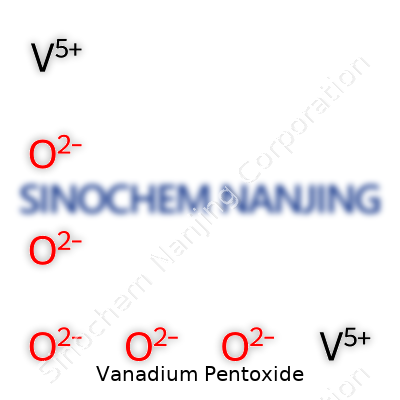
| Names | |
| Preferred IUPAC name | Vanadium(V) oxide |
| Other names |
Vanadic anhydride Vanadium(V) oxide Divanadium pentaoxide Vanadium oxide |
| Pronunciation | /vəˌneɪdiəm pɛnˈtɒksaɪd/ |
| Identifiers | |
| CAS Number | 1314-62-1 |
| Beilstein Reference | 3589230 |
| ChEBI | CHEBI:14144 |
| ChEMBL | CHEMBL1200841 |
| ChemSpider | 203440 |
| DrugBank | DB14527 |
| ECHA InfoCard | ECHA InfoCard: 100.033.487 |
| EC Number | 215-239-8 |
| Gmelin Reference | Gmelin Reference: 55 |
| KEGG | C18657 |
| MeSH | D014635 |
| PubChem CID | 24413 |
| RTECS number | YH4100000 |
| UNII | V95UVI0X2J |
| UN number | UN2862 |
| Properties | |
| Chemical formula | V2O5 |
| Molar mass | 181.88 g/mol |
| Appearance | Yellow to red crystalline powder |
| Odor | odorless |
| Density | 3.36 g/cm³ |
| Solubility in water | Slightly soluble |
| log P | -1.44 |
| Vapor pressure | Negligible |
| Acidity (pKa) | 3.37 |
| Magnetic susceptibility (χ) | +320.0·10⁻⁶ cm³/mol |
| Refractive index (nD) | 2.0 |
| Dipole moment | 0 D |
| Thermochemistry | |
| Std molar entropy (S⦵298) | 86.2 J·mol⁻¹·K⁻¹ |
| Std enthalpy of formation (ΔfH⦵298) | -1550 kJ/mol |
| Std enthalpy of combustion (ΔcH⦵298) | -1550 kJ/mol |
| Pharmacology | |
| ATC code | V03AX04 |
| Hazards | |
| Main hazards | Toxic if swallowed, inhaled or in contact with skin; causes severe skin burns and eye damage; may cause respiratory irritation; suspected of causing genetic defects and cancer. |
| GHS labelling | GHS02, GHS05, GHS06, GHS08 |
| Pictograms | GHS05,GHS06,GHS08 |
| Signal word | Danger |
| Hazard statements | H301 + H331: Toxic if swallowed or if inhaled. H315: Causes skin irritation. H319: Causes serious eye irritation. H335: May cause respiratory irritation. H373: May cause damage to organs through prolonged or repeated exposure. |
| Precautionary statements | P260, P264, P270, P271, P272, P301+P312, P304+P340, P305+P351+P338, P308+P313, P312, P314, P330, P405, P501 |
| NFPA 704 (fire diamond) | 3-2-2 |
| Autoignition temperature | 400 °C |
| Explosive limits | Not explosive |
| Lethal dose or concentration | LD50 oral rat 10 mg/kg |
| LD50 (median dose) | LD50 (median dose): Oral-rat LD50: 10 mg/kg |
| NIOSH | XN7700000 |
| PEL (Permissible) | 0.05 mg/m3 |
| REL (Recommended) | 0.05 |
| IDLH (Immediate danger) | 35 mg V₂O₅/m³ |
| Related compounds | |
| Related compounds |
Vanadium(III) oxide Vanadium(IV) oxide Ammonium metavanadate |



