Trimethyl Phosphate: More Than a Chemical Compound
Tracing the Story: Historical Development
Trimethyl phosphate has existed on the fringes of the chemical world since the early 20th century. Its story reflects the growth of synthetic chemicals as human curiosity met the needs of an industrializing world. Chemists discovered that altering and combining simple molecules often led to unexpected doors opening in countless industries. Trimethyl phosphate, or TMP, began as one of those curious discoveries. Through the years, its role shifted in response to scientific breakthroughs, regulatory changes, and the changing reputation of chemicals in public consciousness. Whenever I cross its path in industrial applications, it feels like touching the echoes of that transformative era, when makers and scientists sought both utility and safety as civilization pressed forward.
Understanding the Substance: Product Overview
TMP doesn’t usually make headlines. Most people who haven’t worked in labs or large-scale manufacturing plants have never heard of it. The molecule’s simple structure—three methyl groups bound to a central phosphate—gives it unique properties desired in specialized settings. It served as an ingredient for chemical synthesis and as an auxiliary in processes that needed both stability and a controlled reactivity. TMP rarely gets the spotlight, but it’s there in the background of plenty of technical undertakings, from fire retardants to methylating agents.
Physical and Chemical Properties in Practice
A clear, colorless liquid at room temperature, TMP carries an odor reminiscent of alcohol, but it isn’t the sort of thing you want to breathe in. It dissolves comfortably in many organic solvents, but don’t try mixing it in your kitchen sink; it demands respect due to its flammability and toxicity profile. Its boiling point hovers above most common household solvents, and its stability under regular storage conditions allows anyone handling it to avoid surprises—provided they don’t forget its potential to break down under strong acids or bases. The first time I worked near TMP, the crispness of its behavior in the beaker stood out: straightforward, predictable, but always requiring a careful hand.
Technical Specifications and Labeling Nuances
In labs and plants, everything comes down to knowing exactly what’s in the bottle. TMP usually arrives labeled with purity above 99 percent, though trace impurities have to be accounted for depending on the downstream usage. A proper label addresses toxicity, the necessity for gloves and goggles, and the requirement to avoid open flames or hot environments. What sets TMP apart is the intersection of technical clarity and practical caution that anyone handling it must keep in mind. Not every chemical winds up regulated in exactly the same fashion, but because of TMP’s use in sensitive synthesis and its toxicity profile, every shipment is a reminder that labeling isn’t just paperwork—it’s lifesaving information.
Preparation Method: From Lab Bench to Bulk
Manufacturing TMP relies on sharp process control and the right choice of raw materials. Most producers combine trimethyl orthoformate with phosphorus oxychloride under carefully controlled temperatures. Each step involves a trade-off between efficiency, cost, and batch purity. Watching these processes unfold, I always remember how a small misstep—a change in temperature, a contaminant introduced by chance—can render an entire batch unfit for even industrial use. Scale magnifies risk; what might seem forgiving in a beaker spells trouble in a 10,000-liter reactor.
Reactions and Chemical Modifications
TMP lends itself to methylation reactions, meaning it can transfer its methyl groups to other molecules. I once watched a researcher use TMP to introduce methyl groups into a target molecule, noting how controllable the reaction felt compared to more aggressive methylating agents. It acts as a fire retardant or plasticizer precursor when reacted with other agents. Chemical transformations involving TMP often demand deep knowledge, since some by-products can be more hazardous than the parent compound. In the right hands, TMP becomes a tool that unlocks further chemical complexity.
Knowing Its Names: Synonyms and Product Nomenclature
Outside the technical sphere, chemicals pick up a dozen nicknames. TMP appears as phosphoric acid trimethyl ester, methyl phosphate, and even O,O,O-Trimethyl phosphate in various literature. Navigating these synonyms takes practice, and mistakes here—switching one phosphate ester for another—carry consequences. Every chemist and technician working with TMP knows to double-check labels against documentation, especially given how closely some phosphate esters resemble one another in both name and appearance. Clarity saves both time and safety.
Keeping it Safe: Operational Standards in the Workplace
Safety around TMP is non-negotiable. From experience, the best teams foster a culture where nobody walks into a lab or process area without a strong respect for what’s in the bottle or pipe. Handling TMP means gloves, eyewear, and solid containment policies. Ventilation keeps fumes from building up, and spill procedures must be drilled until they come as second nature. Beyond the basic hazards, routine reviews and updated training keep the workforce ready to respond. Given the history of chemical accidents, relying solely on written rules doesn’t cut it; leadership and lived experience set the standard.
Where TMP Fits In: Application Area
Industry counts on TMP in some unexpected places. Fire retardants, particularly in plastics and textiles, count on its thermal stability and chemical backbone. As a methylating agent in fine chemicals, TMP gives chemists the handle they need for controlled molecular changes. TMP also appears in the formulation of hydraulic fluids and as a solvent in certain specialty reactions. Some old-school synthesizers used it in pesticides and insecticides, though the world’s growing focus on toxicity shifted many of those practices toward safer alternatives. TMP’s niche role comes from its reliable chemical personality, but knowing these application areas matters when tracking safety and environmental impacts.
In the Name of Progress: Research and Development
Scientific exploration hasn’t let TMP sit idle. Researchers look for new roles in more sustainable manufacturing, aiming to harness its methylating activity while cutting risks to workers and the environment. I’ve seen ongoing projects into using TMP as a component in semi-conductors and potential flame-retardant additives compatible with biodegradable materials. Ideas from green chemistry, which try to minimize waste and eliminate hazardous by-products, are influencing how chemists use TMP. The growth of alternative energy and electronics also generates interest in TMP as part of new electrolytes and solvents, showing the evolving relationship between this old chemical and the challenges of the modern world.
Toxicity Up Close: Research and Ongoing Challenges
TMP isn’t benign. Studies dating back decades highlighted risks from inhalation, skin contact, or accidental ingestion; headaches, nausea, and nerve issues show up in the literature. Chronic exposure cases tell a story few want to see repeated. Modern research focuses on clarifying those risks—separating anecdote from systematic studies and pinpointing exposure thresholds that inform safe handling. Regulatory groups keep a close eye on TMP, balancing the undeniable utility it brings against risks to both workers and communities. From my time in labs, the moment that safety training goes from a checkbox to lived awareness, the better the odds of keeping accidents rare and contained.
The Road Ahead: Future Prospects
Environmental concerns push industries to reevaluate chemicals like TMP. More companies now actively search for alternatives that pair similar technical capabilities with gentler health and environmental footprints. Yet TMP, with its limited but persistent demand, still finds supporters who argue that rigorous containment and better protective measures provide a workable path forward. Developments in closed-system synthesis, advanced personal protective equipment, and smarter labeling all influence TMP’s future. The road ahead hinges on innovation: either TMP adapts to a stricter regulatory world through safer use and new applications, or it gradually yields ground to gentler rivals as industries strive for sustainability. I see both the strengths and difficulties in maintaining a place for this chemical—its success or disappearance will tell a wider story about how people choose between progress and precaution.
What is Trimethyl Phosphate used for?
A Closer Look at a Chemical Behind the Scenes
Walk into any modern lab, and odds are good you’ll spot trimethyl phosphate on a shelf or in safety documentation. This colorless liquid doesn’t make for flashy headlines, but researchers and manufacturers have come to value it for how well it does some dirty work. I’ve seen chemists use it in situations where they need to coax a reaction that standard solvents can’t deliver. That firsthand experience shows how specialty chemicals play outsized roles in moving technology and medicine forward.
Crucial Work in Chemical Synthesis
Trimethyl phosphate acts as a powerful methylating agent. In simpler terms, it helps add methyl groups to other chemicals. This small shift in structure can change a harmless molecule into a building block for pharmaceuticals, agricultural compounds, or plastics. Many active ingredients in medicines get their start with this kind of chemical wizardry. I remember watching a team use this chemical to unlock a pathway for a cancer drug synthesis; it let them skip several hard steps and boost yields, saving both time and money.
Playing a Part in Fire Safety
Fire retardants don’t usually gather much public excitement, but they save lives when seconds count. Trimethyl phosphate goes into making some of these compounds. The phosphate inside greatly reduces how quickly objects catch or spread fire. I once toured a furniture testing lab where foam samples sat smoking behind glass. Those that had fire retardants with phosphate fared far better than untreated foams. This matters most in large-scale applications like construction insulation and mass transit, where a fire can become deadly in moments.
Fuel Cell Research and Electrolytes
Our world needs better batteries. As cities add electric buses and solar panels, researchers search for new electrolytes that can handle high temperatures and deliver reliable power. Trimethyl phosphate popped up in safety studies because it resists flammability better than many organic solvents. Practical chemists mixing custom electrolyte blends appreciate how its stability and low volatility help them tackle batteries for extreme conditions. I’ve read several papers that benchmarked it against more dangerous options like dimethyl carbonate—it regularly performs just as well, but with less risk for catastrophic fire or explosion.
Safe Use and Handling Concerns
Like many industrial chemicals, trimethyl phosphate doesn’t come without strings attached. Its potential to cause harm through inhalation or skin exposure leads manufacturers and regulators to push for careful handling. I remember my first brush with it as a student. Gloves on, goggles tight, fume hood ready—my supervisor drilled safety into my head before a single drop came out. There’s no shortcut around chemical safety. From what I’ve seen, companies putting in proper training and tight procedures rarely run into trouble.
Toward Greener Alternatives
Chemists everywhere keep hunting for safer, less toxic ways to do the tough jobs that trimethyl phosphate handles today. Green chemistry teams attack this problem from two angles: finding less hazardous substitutes, and improving containment and recycling to limit waste. Funding often goes to innovative process tweaks or bio-based alternatives. In some specialty cases, nothing else offers the same combination of performance and price. For now, careful use and ongoing research present the clearest path forward.
Behind many familiar products sits a string of mostly invisible helpers. Trimethyl phosphate stays largely out of the spotlight, but from medicine to fire safety to clean energy research, its impact reaches farther than most realize.
Is Trimethyl Phosphate hazardous or toxic?
Understanding the Risks of Trimethyl Phosphate
Trimethyl phosphate rarely pops up in everyday conversation, but in laboratories and chemical plants, it matters a lot. I’ve seen people treat it with a surprising level of comfort, probably because it’s less discussed than heavyweights like benzene or formaldehyde. That leads to an important question for workers, regulators, and anyone living near a facility where it’s stored or used: Is trimethyl phosphate hazardous or toxic?
Health Effects Linked to Exposure
The science is pretty clear. Direct skin contact or inhalation of trimethyl phosphate can irritate the eyes, nose, throat, and skin. Breathing in its vapors at work got reported to cause headaches, nausea, even more serious neurological symptoms. Once, a former colleague described feeling dizzy and lightheaded after an accidental splash during a spill cleanup. Occupational exposure over long periods can be much more damaging, affecting the nervous system. These are not rare or freak incidents; regulators receive reports on exposures and symptoms every year. Trimethyl phosphate hasn’t been as widely studied as some of the older industrial chemicals, but every sign points to a compound that can cause real harm to real people.
Animal studies add another layer, linking high-dose exposure to problems with coordination and even potential damage to internal organs. Chronic inhalation produced effects on liver and kidney function in rodents. These findings echo patterns seen with other organophosphate compounds, many of which have a reputation for disrupting nerve signals in people and animals. It’s worth noting, organophosphates as a group do not get much benefit of the doubt in toxicology circles any more.
Environmental Impact and Community Concerns
Accidental leaks or improper disposal matter beyond the plant fence. Trimethyl phosphate enters the environment most often through industrial discharges or waste streams. In water or soil, it doesn’t hang around forever, but it won’t vanish instantly either. Local fish and aquatic invertebrates exposed to it can take a hit, especially with consistent releases over time. Communities with heavy industry nearby have faced long-term headaches trying to track down and control sources of organophosphate pollution.
Sensible Solutions and Safer Handling
Practical solutions do exist. Whenever I’ve worked around potentially hazardous organic chemicals, having clear rules made all the difference: full protective clothing, sealed containers, proper ventilation, prompt cleanup of spills, and easy access to eyewash stations. Companies benefit when they invest in high-efficiency fume hoods, staff training, and emergency equipment. Labeling every bottle, registering and monitoring storage, and completing transparent annual inventory checks should not seem like a hassle but rather a baseline for safety. The Occupational Safety and Health Administration (OSHA) and the Environmental Protection Agency (EPA) both published clear workplace standards and waste management guidelines that aren’t too burdensome with the right planning.
Finding safer alternatives has become more popular in chemical manufacturing. Some industries have moved away from trimethyl phosphate when possible, turning to other solvents or flame retardants with a safer track record. But chemical substitution can be a long road, and sometimes performance requirements keep trimethyl phosphate in the lineup. In those cases, making sure every worker knows exactly what they’re handling, keeping process areas under strict control, and running drills for spill response become essential.
Accountability and Responsible Practices
I once visited a site where leadership gave as much attention to storage room air quality as to quarterly profits. In places like that, concerns about toxicity found a real answer in daily practice. Regulators, scientists, and chemical workers all have a part to play, but so do residents living near industrial sites. Community outreach and transparency count for a lot. When plant managers open their doors and talk openly about how they minimize hazards, local trust goes up.
What is the chemical formula of Trimethyl Phosphate?
Getting Familiar with Trimethyl Phosphate
Trimethyl phosphate holds the chemical formula C3H9O4P. This formula spells out three carbon atoms, nine hydrogen atoms, four oxygen atoms, and one phosphorus atom bonded together. Trimethyl phosphate falls into the broader family of organophosphates, which shows up everywhere from chemical manufacturing to research labs. People might not realize it, but this compound pops up in a range of products and processes, some with benefits and others sparking debates about safety. Safety remains a big theme when organophosphates come up, largely due to their track record in both beneficial and risky work environments.
What Makes Trimethyl Phosphate Useful?
The presence of three methyl groups attached to a phosphate core gives the molecule properties that chemists and engineers appreciate. In my time working in industrial research, trimethyl phosphate played a key role as a solvent and as a methylating agent. Its structure makes it tough against breakdown by water—something many organic solvents struggle with. Trimethyl phosphate steps up as a flame retardant for plastics and textiles, especially where fire risk needs to be managed without using toxic halogens. Chemists also use it to pass methyl groups onto other molecules, which becomes essential in pharmaceutical synthesis.
Understanding the Risks
Getting hands-on with trimethyl phosphate for research showed another side to the story. Without strict ventilation and proper protective equipment, exposure becomes possible. The compound stands out as less toxic than some organophosphates, but it can still irritate skin, eyes, and airways. Reports of chronic low-level exposure in unregulated facilities have raised questions about long-term effects. The U.S. Environmental Protection Agency groups it with other organophosphate flame retardants when checking for environmental and health risks. Studies have pointed to possible damage in aquatic life when large concentrations escape into waterways.
Responsible Use and Safer Alternatives
In the labs where I worked, good training in chemical handling paired with up-to-date ventilation systems allowed for productive use without major health scares. Real success means more than just following the minimum regulations. Companies sticking to best practices, like sealed systems during transfer and waste management plans that prevent emissions, see fewer incidents. Where possible, research now searches for alternatives that keep toxicity low and performance high, like phosphorus-free flame retardants and green solvents. Investment in this area can take pressure off firefighting teams and medical responders who face exposure risks from older organophosphate compounds.
Looking Forward
Trimethyl phosphate won’t vanish overnight, given its practical value in chemistry and materials science. Still, with growing consumer awareness and tighter regulations, demand will shift toward designs that reduce risk. Academic and industrial research continues to track exposure data and test replacement chemicals in real-world settings, so workers and the environment stay safer. This ongoing push for balance—between usefulness and responsibility—makes transparency and investment in smarter chemicals more important than ever.
How should Trimethyl Phosphate be stored?
An Overlooked Chemical That Deserves Respect
Anyone who works with chemicals in a lab knows that some bottles make you pay sharp attention. Trimethyl phosphate, usually a colorless liquid, definitely lands in that category. I've handled this compound in university settings and later in industry, noticing right away that its faint smell carries a warning. It's not just "another solvent" buried on the shelf. Trimethyl phosphate’s ability to act both as a methylating agent and as a corrosive irritant means storage mistakes can have painful, even dangerous, results.
Risks Shape Storage Rules
Health and safety guides call attention to its toxicity, especially by inhalation and skin contact. It can irritate the eyes, skin, and respiratory tract. Over time, unsafe handling carries risk of organ damage. The liquid also threatens the environment if spilled or dumped in drains. That reputation grows sharper if the material drips or slowly leaks.
Trimethyl phosphate reacts not only with strong oxidizers but also acids and bases. Unintentional mixing with those sorts of chemicals can kick off hazardous reactions. If a spill sits unnoticed, the clean-up could turn into a costly, risky affair. These facts outline why careless storage invites real headaches.
Practical Storage Steps from Experience
Many experienced chemists share the same lessons. Reliable storage of trimethyl phosphate always means a well-ventilated, cool, dry spot, far from direct sunlight and sources of heat. I’ve seen containers degrade quickly on shelves above radiators or in sun-baked window corners. That simple neglect can weaken the cap, invite leaks or cause the entire bottle to bulge — easily avoided by taking storage temperature seriously.
Storing away from incompatible materials turns out to be more than a box-checking exercise. Strong acids, oxidizers, and bases have to sit at least a cabinet apart, ideally behind their own locked doors. No one wants to play detective about a cloudy bottle after accidental mixing. Even “empty” solvent bottles can cause trouble if residues linger, so labeling and keeping proper distances between chemicals saves a load of grief down the road.
The safety cabinet you use should feature liquid-tight spill trays, which catch drips and make cleaning up much easier. Even a few drops can produce strong fumes if ventilation falls short, so it’s not only about safety for the person but everyone sharing the building. A chemical fume hood isn’t just for pouring or measuring — many keep frequently used chemicals in these hoods for extra peace of mind.
Don’t Cut Corners With Personal Safety
Every person handling trimethyl phosphate should wear the right gloves, goggles, and a lab coat. Shoes should cover the entire foot, not just the toes or heels. From experience, gloves with long cuffs, like nitrile or neoprene, help handle accidental splashes better than thin latex ones. I’ve slipped up with PPE before and felt the sting of a fast-evaporating liquid on bare wrists — not an experience worth repeating.
Everyone involved gets a benefit when proper chemical management trains become routine. Posting reminders about chemical hazards raises awareness, and setting up a working spill-kit within arm’s reach reduces panic in emergencies. Supervisors who restock PPE, check labels, and lead by example set a lasting tone for safe chemical storage.
Solutions for Modern Labs and Workplaces
Digital inventory systems flag outdated or mishandled chemicals, removing guesswork from the process. Quality assurance managers track expiry dates and container integrity, so nothing stays forgotten in the back corner. Routine inspections, clear labeling, and easy reporting encourage quicker responses to container damage and near-misses, limiting risk before small issues grow into real disasters.
Long-term, a culture that treats hazardous chemicals with care makes labs safer and helps the environment as well. Storing trimethyl phosphate isn’t glamorous, but the habits around it shape whether science remains safe, productive, and respected by everyone in and out of the lab.
What safety precautions are needed when handling Trimethyl Phosphate?
Understanding the Risks
Trimethyl phosphate tends to fly under the radar, but folks who handle chemicals for a living know it demands respect. This clear, colorless liquid has the usual features chemists recognize: low flash point, easy vaporization, and a sharp, irritating odor. Health risks deserve real attention. Breathing in vapors can bring on headaches, dizziness, throat pain, or even lung irritation, and skin contact leads to redness or burns. Scientists have even flagged potential reproductive and organ effects with chronic exposure. Anyone who has spent enough time in labs will tell you: it pays to take every safety label seriously.
Simple Smart Steps Really Matter
Start with what you wear. A lab coat, chemical splash goggles, and gloves—definitely not latex, which this substance can eat through quickly. Go for butyl rubber or nitrile. Pull on shoe covers or sturdy, closed shoes, since one dropped beaker can cause trouble fast. If you’re pouring or transferring this chemical, a face shield helps out, especially during splashes.
Make Ventilation Non-Negotiable
Good air movement isn’t something to skimp on. Work in a hood every single time. Most chemical fumes won’t hang around in wide spaces for long, but circulation keeps accidental inhalation rare. The few times I’ve seen people try to hurry and skip this step, trouble wasn’t far behind. No substitution makes up for bad air quality in a work area.
Storage—A Small Mistake Can Cost Big
Trimethyl phosphate lives best in a sealed, labeled container stored below eye level. Stash it in a cool, dry spot, far away from acids and oxidizers. One splash or spill next to a strong acid turns a regular cleanup into a real emergency. Stainless steel, glass, or high-density polyethylene do well for storage. Plastic that isn’t rated for organophosphates will degrade, which ends up making a mess down the line.
Spills Happen—Respond Fast and Smart
No one likes to talk about accident days. Cleaning up after minor leaks means grabbing an absorbent material—kitty litter works in a pinch—and scooping up every drop. Use tools that won’t react with the liquid. Contain, scoop, bag, and label the waste before disposal. Bigger spills send everyone out of the area. Open doors, kick the exhaust fans up, and call your hazmat team. Labs with a solid spill drill routine handle emergencies calmly, which helps prevent panic and bigger problems.
Good Habits Keep People Safe
No lab should go without regular refresher training. Written instructions on the wall, spill kits in easy reach, clear rules about food and drink—these old-school rules are often what keep accidents minor when mistakes happen. Supervisors who actually check up on storage and personal protection keep risk lower. Reporting near-misses builds knowledge and reminds folks that little mistakes can build up if nobody pays attention.
Solutions Are Practical, Not Fancy
Labs and production lines have plenty of real-world fixes that work: use less hazardous surrogates if the process allows it, rely on chemical fume hoods with alarms, and add regular safety walk-throughs to spot problems early. Sharing honest stories about accidents helps, too—even seasoned chemists profit from hearing where routines broke down. Fact is, real safety needs regular reminders, everyday habits, and a willingness to treat Trimethyl phosphate with the respect it’s earned after years in the field.
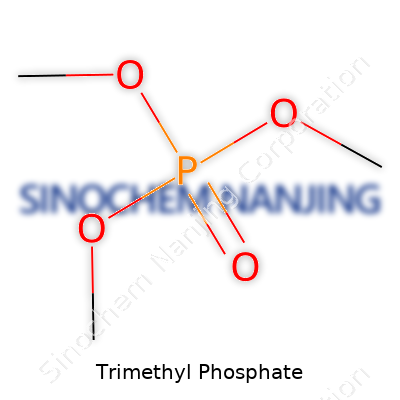
| Names | |
| Preferred IUPAC name | Trimethyl phosphate |
| Other names |
Trimethylphosphoric acid ester Phosphoric acid trimethyl ester Methyl phosphate TMP |
| Pronunciation | /traɪˈmɛθ.ɪl fəˈsfeɪt/ |
| Identifiers | |
| CAS Number | 512-56-1 |
| Beilstein Reference | 1461076 |
| ChEBI | CHEBI:132983 |
| ChEMBL | CHEMBL43076 |
| ChemSpider | 5326 |
| DrugBank | DB01752 |
| ECHA InfoCard | 103093 |
| EC Number | 204-703-1 |
| Gmelin Reference | 61327 |
| KEGG | C02330 |
| MeSH | D014260 |
| PubChem CID | 7867 |
| RTECS number | TJ6825000 |
| UNII | B2FWH5LO97 |
| UN number | UN1282 |
| Properties | |
| Chemical formula | (C3H9O4P) |
| Molar mass | 140.073 g/mol |
| Appearance | Colorless transparent liquid |
| Odor | Odorless |
| Density | 1.22 g/cm³ |
| Solubility in water | Miscible |
| log P | 0.16 |
| Vapor pressure | 0.48 mmHg (20 °C) |
| Acidity (pKa) | 1.51 |
| Basicity (pKb) | 12.2 |
| Magnetic susceptibility (χ) | -59.4·10⁻⁶ cm³/mol |
| Refractive index (nD) | 1.358 |
| Viscosity | 1.69 cP (20°C) |
| Dipole moment | 2.23 D |
| Thermochemistry | |
| Std molar entropy (S⦵298) | 274.0 J·mol⁻¹·K⁻¹ |
| Std enthalpy of formation (ΔfH⦵298) | -818.7 kJ/mol |
| Std enthalpy of combustion (ΔcH⦵298) | -1820.7 kJ/mol |
| Hazards | |
| GHS labelling | GHS02, GHS06, GHS08 |
| Pictograms | GHS06,GHS08 |
| Signal word | Danger |
| Hazard statements | H301 + H311 + H331: Toxic if swallowed, in contact with skin or if inhaled. |
| Precautionary statements | P210, P260, P264, P280, P301+P312, P301+P330+P331, P303+P361+P353, P304+P340, P305+P351+P338, P311, P330, P370+P378, P403+P233, P501 |
| Flash point | “199 °F (93 °C)” |
| Autoignition temperature | 225 °C |
| Explosive limits | Explosive limits: 1.7–10% |
| Lethal dose or concentration | LD50 oral rat 1600 mg/kg |
| LD50 (median dose) | LD50 (median dose): 2,150 mg/kg (oral, rat) |
| NIOSH | WI9275000 |
| PEL (Permissible) | PEL: 1 ppm |
| REL (Recommended) | 0.2 ppm |
| IDLH (Immediate danger) | 100 ppm |
| Related compounds | |
| Related compounds |
Dimethyl methylphosphonate Trimethyl phosphite Triethyl phosphate Phosphoric acid |



