Triethylene Glycol Monoethyl Ether: Going Beyond the Lab Bench
Peeling Back the Layers: Historical Perspective and Product Overview
Triethylene glycol monoethyl ether didn’t spring up overnight. Decades back, as the chemical industry evolved and global demand for complex solvents and intermediates rose, chemists started experimenting with glycols and their derivatives. This compound, sometimes tucked away under names like Ethoxytriglycol or TEGEE, caught the attention of formulators who were desperate for solvents that balanced performance with safety. It bridges a gap between ethylene glycol monoethers and heavier, bulkier glycols. Its introduction, and subsequent adoption, paralleled the rising sophistication of paint, pharmaceutical, and cleaning industries. Years of industrial use have shown this glycol ether doesn’t just sit on the sidelines — it plays a surprisingly versatile role.
Physical and Chemical Reality: What Sets it Apart
Glycol ethers like this one don’t behave like simple alcohols or plain glycols. Triethylene glycol monoethyl ether brings a gentle viscosity, a clear appearance, and manageability that stands out compared to shorter chain relatives. Its chemical backbone, with several ether linkages and an ethoxy kicking off the structure, creates a balance of solvent strength and a not-overpowering odor profile. Water grabs onto it easily — it dissolves well — but it also cracks tough, hydrophobic barriers when mixed with oils or waxes. Not easily volatile, this ether holds steady under heat, which means it sticks around longer during application processes instead of evaporating in a blink like lighter solvents.
Technical Specifications & Labeling: The Details That Matter
For those handling chemicals, the fine print can make or break a process. Triethylene glycol monoethyl ether typically arrives in drums labeled with chemical purity, molecular formula (C8H18O4), and safety-grade markings, as regulators demand. It’s closely watched for ethylene oxide content, water presence, and the inevitable impurities that can creep in during production or storage. Chemical plants that produce it often report content of the main substance above 99%, but, in practice, operators know that minute traces of water or sister glycol ethers come with the territory. Labeling bears lot numbers for traceability and hazard codes because no solvent should be handled blindly, especially one built off the ethylene glycol family, given what’s known about their metabolic fates.
How It’s Made: Preparation and Real-World Synthesis
The chemistry to make triethylene glycol monoethyl ether almost reads like a classic game of molecular legos. You start with triethylene glycol, itself the outcome of stringing together ethylene oxide units. Add ethylation (through ethyl chloride or ethanol in the presence of an acid catalyst), control temperature and pressure, and, with the right purification steps (like vacuum distillation), you end up with the finished ether. Batch or continuous reactors line up in industrial facilities, and the process must be tightly managed. Small changes, whether in pH, temperature, or reactant ratios, can push the reaction toward unwanted byproducts. From a hands-on perspective, running the distillation smooth enough to minimize hold-up times often calls for experienced operators who don’t rely blindly on automated sensors.
Chemical Reactions & Modifications: Versatility in Action
This glycol ether doesn’t just play nicely with water and organic solvents; under basic or acidic conditions, it reacts with chlorinating or acylating agents, producing derivatives used in specialty chemical synthesis. The ether linkages, while stable under normal use, can break down in harsher settings — think oxidizing environments or high-acid applications. Surface chemists regularly modify this molecule to tack on longer chains, making surfactants, or use it as a solvent carrier in developing new pharmacological agents. Painters and coatings developers, faced with high-performance requirements, appreciate its ability to dissolve and transport active ingredients without gumming up the mix.
Synonyms & Alternate Names: More Than Just a Mouthful
Chemical nomenclature gets unwieldy fast. Triethylene glycol monoethyl ether goes by several names, reflecting its adoption into different markets and regions. You’ll find it listed as Ethoxytriglycol in European inventories, Ethoxylated triethylene glycol on supplier catalogs, and sometimes even under more arcane registry identifiers. This range of names sometimes causes trouble for researchers combing international literature or for import-export documentation, but experienced hands learn to check CAS numbers and cross-examine safety data sheets before assuming two sample bottles contain the same thing.
Safety & Operational Standards: Lessons Learned from the Floor
Dealing with glycol ethers isn’t child’s play. Over the years, cases have surfaced from poorly ventilated workshops or lax handling in labs, reinforcing the need for clear workplace standards. Triethylene glycol monoethyl ether doesn’t share the acute toxicity of simpler ethylene glycol ethers, but chronic exposure concerns still gnaw at workers’ peace of mind. Gloves, splash goggles, and proper exhaust systems aren’t debated, they’re standard practice. Plant managers push for regular training because spills or leaks can catch even seasoned crews off guard. With public scrutiny of solvents rising, companies invest in monitoring vapor levels, double-checking closed-system designs, and auditing emergency response procedures. It boils down to respect for the material — not fear, but caution born of experience.
Where it Really Shows Up: Application Area
This ether doesn't restrict itself to over-glorified niche applications. It’s in the cleaning agents that leave glass streak-free without harsh fumes, in the resins that set at just the right speed for industrial coatings, and in hydraulic fluids designed to resist foaming and keep machines running longer. Some pharmaceutical processes rely on it to dissolve actives in early formulation stages. Textile operations turned to it for dyeing baths, leveraging its dual water/organic mixability. In paints, especially for professional-grade products, it lifts pigment and extends drying time just enough to give workers a smoother finish. Every facility that’s handled bulk chemicals over the years has probably found a use for it, even if only as a fix for another failing solvent.
What’s Next? Research, Toxicity, and the Road Forward
Toxicity research on triethylene glycol monoethyl ether has eased some fears fueled by its shorter-chained cousins, but authorities aren’t letting their guard down. Studies track metabolic breakdown, looking for the formation of potentially worrisome metabolites in animals and through biomonitoring of exposed workers. Regulatory agencies in North America and Europe periodically review new findings, sometimes shifting exposure limits based on long-term outcomes rather than short-term acute effects. New entrants to the green chemistry field ask if this ether can be produced from bio-based glycols instead of fossil feedstock, and early pilot projects have hinted at the possibility. Researchers watch market trends nudging formulators toward safer, lower-toxicity solvents, but know that old reliables like this glycol ether rarely lose ground unless a dramatic regulatory, supply, or cost shift makes an alternative irresistible. For now, innovation will likely focus on tightening production methods, reducing wastewater, and making sure each drum that rolls out meets more than just the basic chemical profile, but also leaves a lighter environmental footprint for the next generation of industrial chemistry.
What is Triethylene Glycol Monoethyl Ether used for?
Digging Into the Real-World Uses
Most people don't notice triethylene glycol monoethyl ether on a daily basis. This compound rarely sparks chat at the dinner table. Still, inside industries and even in households, it does some heavy lifting. It shows up in products that rarely make headlines—things like cleaning fluids, specialty paints, and electronics manufacturing. If you spend any time around maintenance teams or industrial shops, you might find this chemical tucked into storage cabinets, labeled for tasks nobody else wants to do.
Why Manufacturers Keep It Handy
Cleaners and degreasers need a boost to cut through stubborn grease. Water alone struggles with oily grime. Triethylene glycol monoethyl ether steps in as a solvent. Instead of dripping off metal or plastic, it lifts sticky materials so they can be rinsed away. I once saw a mechanic use a cleaner based on this substance to wipe decades-old engine sludge in half the time that soapy water would manage.
Electronic factories use this compound too. Circuit boards need careful cleaning during assembly and repair. One fingerprint can ruin a batch. The glycol ether dissolves residues left by solder or adhesive, leaving a surface that doesn't trap dust. It takes a lot to make that process both safe and energy efficient, and glycol ethers have pushed that work forward.
Helping Paints and Inks Flow Smoothly
Painters reach for products that cover quickly and dry without streaks. Glycol ethers help paints and inks spread out over surfaces. They make it easier to apply a thin, even coat—something that matters if you want an end table to look flawless or a magazine’s cover to pop with color. Without this ingredient, painters spend extra time fixing spots and artists see their work spoiled by poor drying.
Health, Safety, and Keeping a Close Eye
It’s never wise to ignore safety with chemicals that dissolve tough materials. Triethylene glycol monoethyl ether deserves respect in any setting. Ventilation matters. Personal protective gear makes sense. I remember a friend working in an auto-body shop. Gloves were not optional. Even minor skin contact led to dry, irritated hands. Reports from government agencies confirm overexposure can create risks, ranging from minor irritation to serious long-term health concerns. Factory supervisors have seen workers improve their well-being just by improving workplace habits around glycol ethers.
What Comes Next: Green Chemistry and Alternatives
Demand grows for processes that keep employees safer and pollution lower. Chemistry labs and industry leaders hunt for new solvents with less baggage. While triethylene glycol monoethyl ether still fills an important role, researchers test bio-based solvents hoping to replace it. Process changes—like switching to water-based cleaning or new application methods—have helped some companies move away from solvents altogether. As someone who watches businesses navigate tighter regulations year after year, I notice attention shifting from speed and efficiency to health and sustainability.
The Balancing Act
Triethylene glycol monoethyl ether stands as one of many uncelebrated helpers behind the scenes. Its presence in cleaners, coatings, and electronics keeps gears turning. At the same time, we need ongoing vigilance. Better training, modern equipment, and investments in new chemistry all help reduce risks. As new technologies catch up, manufacturers have a chance to keep jobs safer and the environment a little cleaner—without giving up the performance they count on today.
Is Triethylene Glycol Monoethyl Ether safe to handle?
Getting Familiar With Triethylene Glycol Monoethyl Ether
Triethylene glycol monoethyl ether often finds its way into labs, manufacturing plants, and sometimes even cleaning products. The chemical sees wide application as a solvent, especially for dyes, inks, and certain pharmaceuticals. Its chemical nature lets it mix well with water and many organic liquids. For anyone handling it, especially in workplaces or educational settings, the question of safety is more than just academic—it's about health, job security, and peace of mind.
Understanding Exposure and Health Risks
Direct contact with triethylene glycol monoethyl ether doesn't always cause immediate trouble. Accidentally getting a splash on your skin may result in irritation or, in some cases, mild allergic reactions. Prolonged exposure ramps up the risks—dry skin, dermatitis, and issues with the liver or kidneys if you're dealing with large quantities without protection. Breathing in its vapors over a long shift gives headaches or nausea. There's not much hard data pointing to major chronic illnesses for average exposures, but animal studies hint at risks that can’t be ignored—liver and kidney changes start showing up in the lab.
What Makes Personal Safety Non-Negotiable
Long days in the lab taught me that “just a little contact” with solvents adds up. Even if something isn’t the most hazardous substance on the shelf, constant skin exposure or poor ventilation means trouble. One busy week, a senior tech stopped by with red, itchy hands after ignoring gloves for months. He thought cleaning up a minor spill bare-handed sped things up. All it did was send him to the nurse and remind the team why gloves and eye protection aren't optional.
Data from workplace safety agencies like OSHA and NIOSH confirms incidents like these pile up when habits slip. In 2023, for example, the CDC flagged a series of minor chemical burns in an adhesives factory. Each report traced back to missing gloves or leaky eye protection. A strong case for robust safety routines isn’t fear-mongering—it’s backed by stories, records, and advice from real professionals.
Making Handling Safer
Old habits need updating as soon as chemicals show even moderate risk. Workers and students handling triethylene glycol monoethyl ether should use gloves made from nitrile or neoprene, not just thin plastic or bare hands. Splash goggles block eye irritation. Proper lab coats and fume hoods keep larger exposures from sneaking up. Even the most careful users check Safety Data Sheets every year; rules change as new studies come out.
Storage matters too. Keep containers tightly closed, away from strong acids and oxidizers. Ventilation systems should run at top efficiency, even for “mild” solvents. Spills happen. It’s much easier to control them in a tidy, well-ventilated space with clear cleanup plans and easy access to eyewash stations.
Continuous Education and Responsibility
People in charge—supervisors, teachers, business owners—carry the biggest responsibility. Regular training sessions, up-to-date signage, and honest communication keep everyone alert. Many accidents happen because new hires get rushed training or skip the “boring” safety talks. Respect for chemicals, even those without scary warning labels, grows from understanding real stories and data—not just memorizing rules.
In the end, health and safety aren’t just about following checklists. They’re woven into every step—from how we prepare, to what we wear, to how quickly we speak up about unsafe conditions. Triethylene glycol monoethyl ether can stay in the toolbox, but only in the hands of those who recognize its risks and take action every day.
What are the storage requirements for Triethylene Glycol Monoethyl Ether?
Understanding the Risks and What’s at Stake
Triethylene Glycol Monoethyl Ether shows up in a lot of industrial settings, from specialty solvent work to pharmaceuticals. Not everyone stops to think how proper storage affects not just the bottom line, but safety too. Chemical storage isn’t just a technical requirement—it impacts everyone working at or near a facility. As someone who’s seen the repercussions of sloppy storage in a lab, there are some truths that stick with me.
Temperature: Keeping It Cool for Safety
High temperatures encourage more evaporation and higher vapor pressures. This glycol ether isn’t the most volatile stuff on the planet, but above 30°C, you’re rolling the dice. Vapors build up, especially in poorly ventilated spaces. Fires don’t need much encouragement in those conditions. Reliable sources recommend ditched direct sunlight and storing in a building with good ventilation, away from heat-generating equipment. Keeping the space cool isn’t about comfort—it’s about stopping problems before they start.
No Room for Moisture or Contamination
Moisture sneaks in where it can. Glycol ethers play nicely with water, but water in the storage container means trouble. Water can kickstart unwanted reactions or lead to product degradation. Corrosive or rusty equipment becomes more likely, especially if the storage drum isn’t lined or tightly sealed. Clean, dry containers with tight-fitting lids matter more than anyone wants to admit on a budget, but in my experience, they save serious money and stress down the line.
Material Compatibility: Why Drums and Tanks Matter
The wrong container causes more headaches than anything. Polyethylene drums and tanks often get the nod because they don’t react with glycol ethers, unlike some metals. Steel tanks corrode over time, especially if even a little bit of water gets in. Every year, I’ve seen companies lose batches to container failure. Gossip runs fast in the plant when a barrel springs a leak, and nobody forgets a chemical spill on a Friday afternoon.
Ventilation and Spill Plans: Everyday Basics
Leaving containers open, even for a minute, sends vapors into the air and puts people at risk. I’ve always found that proper ventilation keeps the odor down and reduces exposure problems. A central part of any plan should cover spill containment and cleanup, because accidents happen no matter how careful everyone acts. An absorbent material, secondary containment trays, and signs nearby turn a potential disaster into a frustrating inconvenience instead of a major health or environmental risk.
Labeling and Access: Not Just for Compliance
Labeling isn’t busywork. Anyone entering a storage room deserves to know exactly what sits on each shelf. Clear labeling prevents mix-ups. Sometimes, shorter routes to disaster travel through unclear handwriting on an old drum. Locks or access restrictions keep folks from grabbing what they don’t understand.
Straightforward Solutions
Storing Triethylene Glycol Monoethyl Ether safely doesn’t demand new tech or fancy systems—it relies on common sense, vigilance, and lessons learned from hard experience. Regular walk-throughs, updated records, and honest conversations across shifts go further than any memo. Spending an extra five minutes today usually saves days of trouble down the road.
What is the chemical formula of Triethylene Glycol Monoethyl Ether?
Understanding the Molecule
Triethylene glycol monoethyl ether carries the chemical formula C8H18O4. Chemists recognize this substance as an ethoxylated alcohol—specifically, a product formed by introducing ethylene oxide units onto ethanol. The backbone is straightforward: three ethylene glycol units connect in a chain, and an ethyl group hangs off one end. The way those building blocks connect shapes its properties, like solubility and boiling range. Mentioning the formula alone doesn't usually grab the average person’s attention, yet everyone living in an industrial society has come across materials or products touched by glycol ethers.
Practical Reasons to Know the Formula
I spent several years in a lab testing paints meant for unpredictable climates. The right solvent in a paint formulation decides if a wall dries too fast and peels or dries slow and toughens up for years. Triethylene glycol monoethyl ether, as C8H18O4, turns up as a dependable choice because its properties sit between common solvents and heavy glycols. Its backbone offers a balance of volatility and the ability to dissolve both water-soluble and synthetic materials. Companies look for that balance in inks, paints, cleaning products, and even hydraulic fluids.
Misunderstanding a chemical structure can lead to real-world trouble. I’ve seen poorly labeled chemicals cause skin burns because someone expected a different level of skin absorption. Government safety data—and decades of industrial accident investigation—prove over and over that clear identification matters, not only for those blending chemicals but for everyone along the supply chain who loses track of what those numbers and letters represent.
Safety and Health Implications
Well-documented reports from the U.S. Environmental Protection Agency show that certain glycol ethers cause reproductive harm in animals at high exposures. The structure of C8H18O4 lets it pass more easily into animal and human tissue than heavier, bulkier glycols. So knowledge of this formula does more than satisfy chemistry curiosity—it helps safety officers and workers connect labels with real-world risks. If workers misidentify it or treat it like a harmless alcohol, it can sneak past gloves or into vapors. Industry guidelines spell out that solvents like this one belong in ventilated areas and with gloves rated for organic solvents, not simple latex or bare skin.
How Industry Deals with It
I’ve watched industrial hygienists debate which glycol ether fits a process. The right answer depends heavily on knowing those formulas. An extra CH2CH2O group might mean the difference between a safe process and one that requires costly upgrades in air handling or spill containment. The formula C8H18O4 helps companies pick substitutes, comply with regulations, or avoid restricted chemicals if exporting to the EU or California. Even the switch to green chemistry rides on comparing these foundational formulas. Replacing higher-risk glycol ethers with safer ones starts with matching structures and getting formulas right before they reach factory floors.
Room for Safer Solutions
Researchers keep playing with molecular structures, testing if swapping ethyl groups for something bulkier might drop absorption rates or increase drying times. Sharing clear formulas means those safer versions get noticed faster and picked up by paint makers, electronics manufacturers, or people trying to make cleaners gentler to workers and the planet. Without reliable chemical formulas on hand, that progress moves too slowly.
How should Triethylene Glycol Monoethyl Ether be disposed of?
Recognizing the Chemical’s Risks
Triethylene Glycol Monoethyl Ether turns up in plenty of labs and industrial settings. Its job list spans solvents, cleaning agents, and even specialty manufacturing. Most folks working with it appreciate its effectiveness, but the real question sneaks up when people consider what happens after its use. Dumping any chemical down the sink or tossing it into the regular trash isn’t just reckless—it opens the door to bigger safety and environmental headaches. The truth hits hard for anyone who’s had to mop up after a spill or deal with fumes: most solvents, especially ones like this ether, hold the kind of risk that sticks around.
The Human Element—Why Practices Matter
Experience shows that shortcuts come back to haunt. I’ve heard plenty of stories from techs and chemists about the domino effect of careless disposal. Employees have dealt with headaches, breathing trouble, or even mysterious rashes after exposure. Besides that, toxic runoff from improper disposal has harmed waterways, and regulatory fines don’t just sting—they leave reputational bruises on a business.
Ethical disposal isn’t only about avoiding trouble. It springs from a sense of protecting those who share our neighborhoods, our streambanks, and our air. Businesses hold a responsibility to their teams and the broader ecosystem. Triethylene Glycol Monoethyl Ether, even in low concentrations, poses risks for aquatic life and can seep into soil. Community health draws a direct line to these choices.
Practical Steps for Handling Waste
Proper disposal starts at the source. Label containers clearly and never mix this ether with other waste unless a professional confirms it’s safe. Once containers start to fill, storage away from heat and ignition points keeps emergencies in check. Secure lids and keep a log—this makes it easier when it’s time to move old stock.
Certified chemical waste handlers are the best route. Lookup local hazardous waste collections or schedule commercial pickups. Most regions classify this solvent under hazardous waste rules. Sending it for professional disposal often involves incineration at high temperatures, which breaks down the molecules without releasing toxins.
Don’t trust just anyone with the job; always ask for certification or evidence of legal compliance from disposal vendors. Staff training goes a long way. Set up short refreshers on the dos and don’ts—everyone who touches chemicals should know the proper steps. Posters in waste areas reminding people what to do cut down on forgetfulness in busy shifts.
Aiming for Fewer Problems Down the Line
Better habits make safer workplaces. Chemical inventories help avoid stockpiling, reducing the need for frequent disposal. Purchasing only what’s needed tightens safety and limits leftover waste. Supporting safer alternatives or reusing solvents when possible benefits everyone. Government and environmental agencies share guidelines online—keeping these bookmarked means answers are always on hand.
People often underestimate the impact of one splash, spill, or slip into stormwater. Each decision about disposal also shapes how future regulations look. Over time, communities with responsible management earn trust, keep fines off their backs, and avoid surprise cleanup bills.
Conclusion
Triethylene Glycol Monoethyl Ether doesn’t have to be a troublemaker. Keeping staff informed, working with reputable waste services, and treating every container like it matters—these actions foster an environment where safety and accountability thrive. Real care beats shortcuts every time.
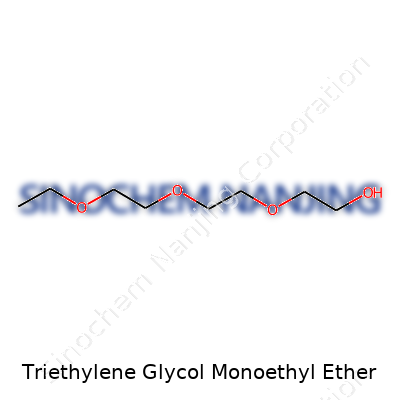
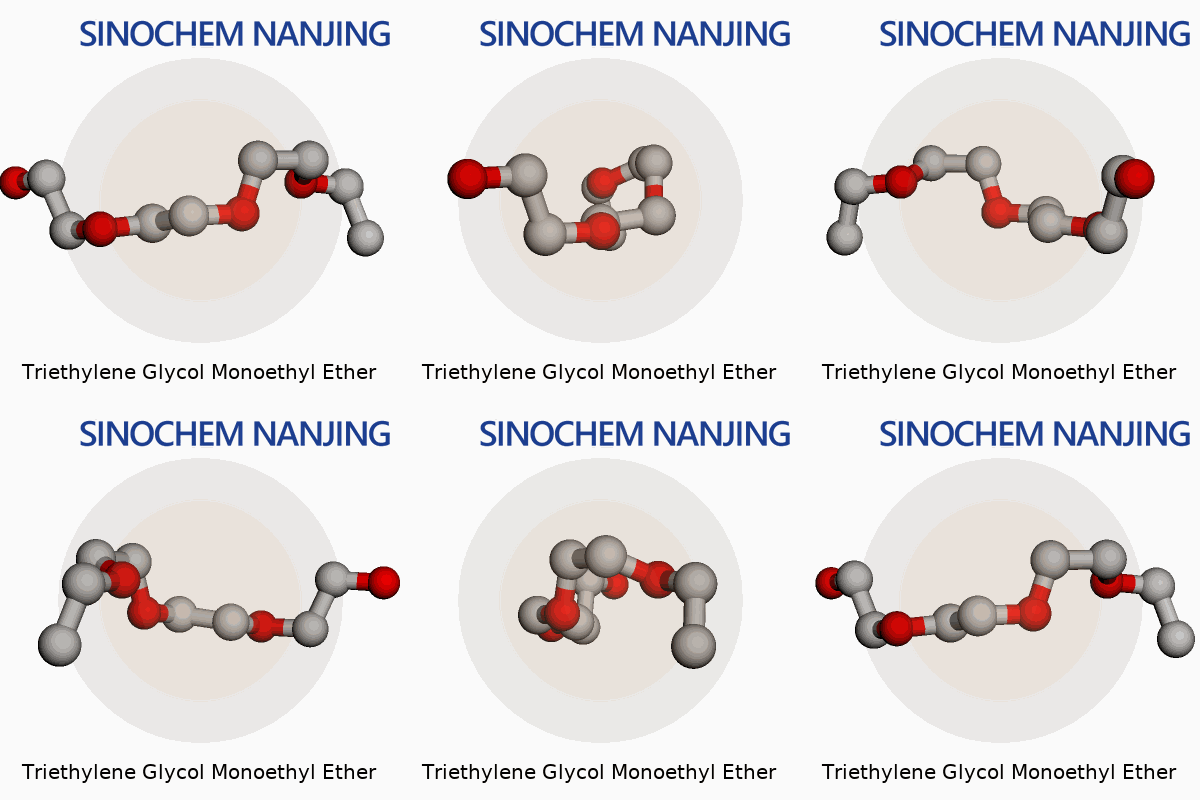
| Names | |
| Preferred IUPAC name | 2-[2-(2-ethoxyethoxy)ethoxy]ethan-1-ol |
| Other names |
Ethoxyethoxyethanol TEGEE Ethoxytriethylene glycol Triethylene glycol ethyl ether |
| Pronunciation | /traɪˌɛθɪliːn ɡlaɪˌkɒl ˌmɒnoʊˈɛθɪl ˈiːθər/ |
| Identifiers | |
| CAS Number | 112-50-5 |
| 3D model (JSmol) | ``` 3DStructGen!C(COCCOCCO)OCC ``` |
| Beilstein Reference | 3242349 |
| ChEBI | CHEBI:47499 |
| ChEMBL | CHEMBL1436431 |
| ChemSpider | 58827 |
| DrugBank | DB14006 |
| ECHA InfoCard | 17e3a704-64ad-4f18-b0b6-7154bb1bffde |
| EC Number | 203-919-7 |
| Gmelin Reference | 8597 |
| KEGG | C19504 |
| MeSH | D017208 |
| PubChem CID | 8217 |
| RTECS number | KL1575000 |
| UNII | JP0R2C701K |
| UN number | UN3082 |
| Properties | |
| Chemical formula | C8H18O4 |
| Molar mass | 178.23 g/mol |
| Appearance | Clear colorless liquid |
| Odor | Odorless |
| Density | 0.998 g/cm3 |
| Solubility in water | Soluble |
| log P | -0.34 |
| Vapor pressure | 0.01 mmHg (20 °C) |
| Acidity (pKa) | 14.6 |
| Basicity (pKb) | 5.15 |
| Magnetic susceptibility (χ) | -7.7×10⁻⁶ cm³/mol |
| Refractive index (nD) | 1.439 |
| Viscosity | 12 mPa.s (20°C) |
| Dipole moment | 3.06 D |
| Thermochemistry | |
| Std molar entropy (S⦵298) | 389.7 J·mol⁻¹·K⁻¹ |
| Std enthalpy of formation (ΔfH⦵298) | -721.6 kJ/mol |
| Std enthalpy of combustion (ΔcH⦵298) | -4330.7 kJ/mol |
| Pharmacology | |
| ATC code | D07AX01 |
| Hazards | |
| Main hazards | Harmful if swallowed, causes serious eye irritation, may cause respiratory irritation. |
| GHS labelling | GHS02, GHS07 |
| Pictograms | GHS07 |
| Signal word | Warning |
| Hazard statements | Harmful if swallowed. Causes serious eye irritation. |
| Precautionary statements | P210, P280, P305+P351+P338, P337+P313 |
| NFPA 704 (fire diamond) | 1-2-0 |
| Flash point | 118°C |
| Autoignition temperature | 238 °C |
| Lethal dose or concentration | LD50 Oral Rat 7290 mg/kg |
| LD50 (median dose) | LD50 (median dose): Oral-rat 7,160 mg/kg |
| NIOSH | NA8900000 |
| PEL (Permissible) | Not established |
| REL (Recommended) | 10 mg/m³ |
| IDLH (Immediate danger) | 500 ppm |
| Related compounds | |
| Related compounds |
Diethylene glycol monoethyl ether Tetraethylene glycol monoethyl ether Triethylene glycol Ethylene glycol monoethyl ether Polyethylene glycol monoethyl ether |



