Trichloromethane: A Closer Look at Its Role, Risks, and Research
Historical Development
People started working with trichloromethane in the early 1800s, back when chemistry felt more like magic than science. Samuel Guthrie, a physician in upstate New York, accidentally churned it out by mixing ethanol with bleaching powder. Around the same time, scientists in Germany and France figured out similar processes. There was no big announcement, just quiet trials leading up to its wider recognition. Folks first saw it as a wonder substance, especially doctors who reached for it during surgeries, hoping for pain relief in a world without solid anesthesia. By the late 1800s, trichloromethane had seeped into medical rooms and labs, sometimes as a cure, other times with results doctors couldn’t explain. The enthusiasm highlighted more blind spots than wisdom, but it laid the groundwork for later chemical industries and the push for safer solvents.
Product Overview
Some people still call trichloromethane by its common name: chloroform. In labs and factories, it usually arrives as a limpid, volatile liquid. For decades, small bottles of the stuff lined laboratory shelves, crowning every school’s demonstration counter. Its reputation shifted from enthusiastic acceptance to concern as folks started realizing its health risks. Though faded from the medicine cabinet, chloroform remains a regular at chemical plants, where its knack for dissolving stuff and forming other industrial compounds keeps it relevant. There’s no denying its persistence, even as new regulations try to keep it under control.
Physical & Chemical Properties
Take a bottle of trichloromethane, and you’ll notice the heavy, sweet odor right away. It doesn’t freeze up until hitting temperatures well below zero, and it starts boiling just above room temperature. Unlike water, it feels much denser, and it won’t light up easily since its vapors don’t catch fire easily in air. Under the microscope, its CCl3H structure tells chemists how it handles: pretty stable most of the time, but a lousy match with alkalis and open flames. It won’t mix with water, so it forms a stubborn layer when the two meet. This behavior, both in the bottle and in soil or water, continues to remind us that the sciences and the environment intersect whether we like it or not.
Technical Specifications & Labeling
Walk through any supply warehouse, and chloroform will carry COMAH diamonds and hazard phrases. Clear, sturdy bottles with clear warning stickers leave no secrets for those picking them up. The smell should remind anyone it’s no ordinary solvent. Truth is, these regulations and warnings grew not out of bureaucratic fuss, but from lessons learned the hard way in older factories and labs. The product isn’t a piece of nostalgia; it’s a chemical that demands respect for both its utility and its risk. Regulations keep getting updated, and anyone using chloroform should check for the latest safety data sheets and hazard labels because nothing beats understanding what’s inside that bottle.
Preparation Method
In the early years, trichloromethane came from mixing ethanol or acetone with chlorine, turning out clouds of gas and smelly liquid in makeshift vessels. Nowadays, industrial chemists lean on the chlorination of methane or chloromethanes in big reactors. These processes use temperature, catalysts, and pressure to refine the product with fewer nasty leftovers. The modern plant looks more like a fortress, with tight controls, scrubbers, and monitored vents because nobody wants accidental releases or health hazards. The production scene reflects a balance between chemical ingenuity and careful containment — a subtle nod to the lessons chemistry has learned from its bruises.
Chemical Reactions & Modifications
Chloroform steps into many reactions, particularly as a solvent or as a precursor for other chemicals. It often helps make refrigerants and plastics, feeding reactions that strip atoms or swap them with others. One famous reaction is its conversion into dichlorocarbene, a tiny and reactive entity, with the aid of strong base. It also takes part in making dyes, pesticides, and pharmaceuticals. A seasoned chemist knows how easy it is for chloroform to turn into phosgene, a toxic gas, especially in the presence of light and air. People take these risks seriously, and so should anyone who works with this liquid.
Synonyms & Product Names
Go through the literature, and you’ll find trichloromethane hiding behind names like chloroform, methyl trichloride, formyl trichloride, or TCM. Names might change, but the danger and utility remain. Doctors of long ago, perfumers, and manufacturers each had their own words, which can be confusing when learning from old papers. Modern safety protocols rely heavily on precise naming, which helps prevent dangerous mix-ups in a warehouse or research lab.
Safety & Operational Standards
Decades ago, folks didn’t know just how risky routine contact could be. Long-term exposure causes problems with the liver, kidneys, and nervous system. Breathing in vapors leads to dizziness, confusion, or worse. Modern safety means tight ventilation, no open containers, gloves, goggles, and careful storage. Spills get managed swiftly — not just for workers, but because the compound sticks around in the environment. Strict workplace limits and routine monitoring protect both users and communities nearby. While regulations can frustrate old-timers, they shield the next generation from repeating the costly mistakes of the past.
Application Area
Chloroform once starred in anesthesia, but that role faded as science showed its silent dangers. Today it finds work in chemical synthesis, extraction, and cleaning processes. Drug development leans on it for extracting active compounds, while the plastics and agrochemical industries use it behind the scenes to make things like PTFE and pesticides. Forensic experts rely on its ability to dissolve fats without breaking down evidence, and researchers keep it for DNA extraction. Its broad utility proves that even a chemical with scars can serve a purpose — provided safety comes first.
Research & Development
Ongoing research keeps trichloromethane relevant. Scientists explore how to recycle it from waste, limit emissions, and reclaim it safely from spent mixtures. As green chemistry picks up steam, researchers hunt for safer substitutes, working to keep the chemical’s unique properties alive in the lab without the baggage. Teams also evaluate the long-term health effects and fingerprint its journey through soil and water. Research rarely stops, especially for compounds with a checkered past — every new paper stands as a reminder that today’s safe process might need to change tomorrow.
Toxicity Research
The more deeply scientists look, the more they find reasons for caution. Liver and kidney damage — along with potential cancer risks — have dominated studies since the 1970s. Researchers study not only direct exposure but what happens when chloroform breaks down in the body and environment. Water utilities check their supplies for trace amounts because disinfecting water often generates the compound as a byproduct. Regulatory bodies around the world keep tuning their standards as new data arrives. While chloroform’s immediate risks are well-known, ongoing research digs into subtle, long-term consequences, especially at lower levels.
Future Prospects
The path forward for trichloromethane looks tougher and more scrutinized than its early days. Some industries continue using it — often because nothing else works quite the same way. Replacements are being developed, but so far, these work best for specialized cases. Environmental restrictions tighten every year, which forces companies to redesign processes and reclaim waste. On the horizon, green chemistry and tighter safety controls might nudge industry away from chloroform. Until then, its story stands as a call for respect, responsibility, and innovation. The best chance for a safer future lies in never letting its history of risk slide into the background, even as the chemical’s last chapters are still being written.
What is Trichloromethane used for?
What Purpose Does Trichloromethane Serve?
Trichloromethane, known in most science classes as chloroform, finds its way into many industries. Most people probably remember it as that clear liquid with a sharp, sweet smell, famous for its early medical use as an anesthetic. Today, its story has changed.
Big Role in Chemistry and Manufacturing
The biggest share of trichloromethane goes into making refrigerants, especially chemicals like HCFC-22. This refrigerant keeps air conditioners and refrigerators humming around the world. Even in an era when scientists and policymakers worry about the ozone layer and climate change, demand for alternative coolants hasn’t fully pushed trichloromethane out of the picture.
It works as a solvent, too. In the lab, chemists use it to dissolve fats, alkaloids, and other organic substances that water refuses to touch. That’s something you just can’t do with plain old H2O. Researchers turn to chloroform because its structure—three chlorine atoms attached to a single carbon—forces molecules to break apart and blend in.
Pharmaceutical companies value trichloromethane during the early stages of making active ingredients. It helps separate out the good stuff. Even the pesticide industry taps into it for the same reason: extracting and purifying compounds from complex mixtures.
Health and Safety: A Rocky Past and Present
Old movies sometimes show chloroform-doused rags used to knock people out, but reality tells a darker story. Direct inhalation brings big risks—liver damage, heart troubles, or worse. Workers exposed for too long can build up toxins in their bodies. Regulatory bodies like the EPA and OSHA set strict limits on how much vapor can reach people at work. That suggests a hard lesson learned.
Communities living near plants that produce or use trichloromethane keep a close watch on water and air quality. The chemical breaks down slowly outdoors, and spills can linger in groundwater. Drinking water might carry traces of chloroform, especially in places where chlorine gets used to disinfect city supplies.
Challenges and Ways Forward
The push for safer chemicals runs straight into the reality of how effective chloroform can be in its niche roles. Substitutes exist in some cases. For refrigeration, hydrofluorocarbons step up where CFCs and HCFCs once ruled, although some of these newer coolants still trigger concern over global warming. In the lab, researchers experiment with greener solvents. Industry, driven by tighter regulations and public concern, invests in cleaner production processes and advanced filtration.
If you’ve ever read the label on a bottle of drinking water and seen a warning about “disinfection byproducts,” you’ve caught a faint echo of trichloromethane’s footprint. For people who care about environmental health or work in settings where chloroform appears, attention to detail matters. Regular air checks, closed systems, and finding alternatives where possible—all these steps help shrink the risks. It’s not magic, just steady progress. Technology and public attention manage to bring the story along, one decade at a time.
Is Trichloromethane hazardous to health?
Getting Real About Everyday Risks
Ask around most neighborhoods and few people bring up trichloromethane—instead, they call it chloroform. At one point, it turned up in hospitals as an anesthetic and even showed up in crime novels. These days, you’re more likely to find it in some industrial settings or trace amounts in drinking water, rather than as a secret agent's knockout tool. I’ve spent time in towns near manufacturing plants and seen how little people know about what gets into their air. For a compound with such a notorious past, folks should know the real health stakes tied to accidental exposure, not just legends from old movies.
Health Hazards: Science Speaks for Itself
The facts tell a fraying story. Chloroform can enter your system quickly. Inhaling its vapors—even at low levels—sometimes leads to dizziness or headaches. Spill a high amount onto your skin or breathe too much at work, and suddenly, you’re at risk for liver and kidney problems. Years back, scientists realized even small doses in drinking water could build up, raising cancer risk over time. The US Environmental Protection Agency classifies it as a probable human carcinogen for a reason—it damages cells and disrupts DNA. It takes very little for these effects to show up compared to other common chemicals. Just ask any industrial hygienist or water quality expert: there’s no sentimental value in chloroform, only a need to keep it at bay.
Everyday Exposure Isn’t Just an Industrial Issue
People who work in chemical plants, labs, or even certain dry-cleaning shops see the hazards up close. For the rest of us, trace chloroform can sneak into homes through chlorinated water. Municipal treatment plants use chlorine to kill microbes, but when chlorine meets decaying plant material, chloroform forms as a byproduct. If you’ve ever caught the whiff of chlorine in a hot shower, there might be a bit of chloroform in that steam. It’s tempting to shrug, but every research paper I’ve read points out that chronic, low-scale exposure adds up. Decades of public health research agree: even tiny traces need tracking, especially over a lifetime.
Cleaner Water, Healthier Communities
Solutions start at the municipal level. Upgrading water treatment technology helps cut down on byproducts like chloroform. Some cities now blend ozone and ultraviolet treatments into their systems, reducing the need for chlorine. Home water filtration systems offer an extra line of defense, though no filter is perfect. EPA tap water rules set strict limits on trihalomethanes, but local authorities need real resources to hit those targets. I’ve watched small towns struggle to pay for safer water systems, and that shows how environmental health always ties back to community investment.
Personal Choices Still Matter
People who handle cleaning agents, solvents, or lab chemicals should read labels and use proper exhaust fans. Gloves and masks aren’t just optional in high-risk jobs—they’re basic shields. At home, venting your bathroom well and letting water run cold before heating it can lower exposure from steam. Every little move adds up, especially for kids, older folks, and families with deep well water. Community groups play a vital role by pushing for stronger monitoring and open reporting when something slips through the cracks.
Years of health data and life experience underscore a plain truth: nobody gets to opt out of environmental safety. Staying informed about compounds like chloroform isn’t alarmist—it’s sensible, science-backed, and worth talking about around the dinner table.
How should Trichloromethane be stored?
Understanding Trichloromethane’s Risks
People often call trichloromethane by a different name: chloroform. For years, it popped up in labs, found a spot in industry, and made its way into common household products. Many know its reputation, both in textbooks and pop culture, but the real story sits in the daily reality of working with something so volatile. The smallest slip – a cracked lid, a forgotten label, a too-warm storeroom – can carry big consequences.
I remember my first day in a university chem lab. Above every sink, safety charts hung as reminders. Chloroform stood out for a few reasons. It evaporates quickly, has no color, and its sweet smell tempts the unwary. Just because something looks harmless doesn’t mean it deserves a free pass. It’s a toxic substance, and long-term exposure damages the liver and nervous system. One accident can turn an afternoon into a crisis.
Keeping Toxic Vapors in Their Place
Storing chloroform safely means no shortcuts. Metal drums or glass containers with tight, chemical-resistant seals work best. Plastic rarely holds up, especially if the corners cut costs. I’ve seen old plastic jugs turn brittle, weep fumes, then split apart when bumped. Invest in high-quality containers designed for corrosive liquids. A couple of bucks saved upfront mean nothing compared to clean-up and medical bills later.
One thing folks learn quickly: chloroform degrades when exposed to light and air, and the resulting breakdown can form dangerous substances like phosgene. Keep containers sealed and out of direct sunlight. Use amber bottles or welded steel drums and tuck them inside sturdy cabinets. These cabinets need a cool, dry spot, away from any source of heat or flames. Never store chloroform near acids, alkalis, or most metals. Mixing mistakes often make news for all the wrong reasons.
Label, Track, and Control Access
Clear labels can turn confusion into order. Mark every bottle and drum with the chemical name, date, and hazard information. Don’t rely on memory or handwriting that disappears after a week. Printed, chemical-resistant labels last longer. Digital inventory systems, barcode scanners, and strict sign-out sheets build a culture of responsibility. Sloppiness fuels mistakes, and mistakes with chloroform give nobody a second chance.
Only trained staff should handle or move chloroform. Leaving a bottle out for “just a minute” gives curious hands a chance to poke around. Security controls – keyed cabinets, locked storerooms, logs of use – cost less than cleaning up theft or unauthorized disposal. Training drills and refreshers put best practices front and center, instead of letting risky habits slide.
Ventilation and Emergency Preparedness
Even with sealed bottles, some vapor finds a way out. Storage areas require dedicated exhaust fans, not the same systems used for offices or break rooms. I recall fumbling with a container during a summer job and feeling the whoosh of an overhead fan kick in. That split second kept my eyes from tearing up. Emergency eye-wash stations, spill kits, and fire extinguishers belong right next to storage units. Posters and reminders don’t fix accidents, but fast access to help makes all the difference.
Consider this: no single step guarantees safety. Trouble sneaks up on those who overlook the basics. Trichloromethane deserves respect. The way people treat it, day in and day out, reflects how much they value their own health – and the well-being of everyone in the building.
What are the safety precautions when handling Trichloromethane?
Why Trichloromethane Deserves Respect
Trichloromethane, better known as chloroform, pops up all across laboratories, from university research workbenches to industry-grade solvent jobs. The smell alone makes you stop and think, but there’s a bigger reason to pay attention. Breathing in those fumes for just a few minutes can leave you drowsy and confused. Keep at it, and you risk everything from liver damage to unconsciousness. Most of us don’t work with these chemicals daily, so it’s easy to forget just how potent a risk they can be. That’s why clear safety steps really matter.
Know the Hazards Before You Uncap the Bottle
There’s more to trichloromethane than what’s printed on the label. Inhaling it means you’re inviting central nervous system depression. It can also irritate the eyes and skin. Chloroform vapors float just above ground level and can stick around in still air. Take one whiff and you might not notice a strong odor, but your body feels the effects long before things smell off. This chemical attacks the liver, kidneys, and even the heart. Those real risks drive the need for strict precautions every single time.
Personal Protection: More than Just Gloves
People throw on a lab coat and think they’re ready for anything, but a cotton lab coat alone never stands between you and a chemical hazard like this. Thick, impermeable gloves, eye protection, and chemical splash goggles take top priority. Lightweight gloves give a false sense of safety—go with butyl rubber or laminate gloves because thin nitrile leaks fast. Lab coats pull double duty by keeping splashes off your clothes and reminding everyone that something serious is underway.
Keep the Air Moving
No safety gear can make up for stale air. Every bit of trichloromethane work belongs in a chemical fume hood with good airflow. Regular fans can move fumes around but don’t capture them; a real fume hood vents those vapors out and away from noses. Fume hood sashes should stay lowered as much as possible while you work. Don’t store the bottle outside—or you’ll risk breathing low levels all day. Proper ventilation sets the backdrop for safe work.
Handling Spills and Preventing Fire
Spills land you in hot water quickly because vapors go airborne. Clean up means thinking fast: you need an absorbent material designed for solvents. People sometimes forget chloroform can form phosgene—an even worse toxin—when it contacts hot surfaces or certain metals. Heat and open flames anywhere near trichloromethane ask for trouble. Keep fire extinguishers nearby, and make sure everyone in the workspace knows what to do. Regular chemical waste pickup and labeled containers keep things tight.
Training and Mindset
Nothing replaces good training. I remember my first real chemistry class, where a teacher walked us through the right way to pick up a bottle, pour just enough, and never leave the cap open. Those habits stuck for life. Every new person in the lab deserves the same one-on-one coaching, not just a safety video or a bulleted list. Taking a minute to remind coworkers, challenging shortcuts—those things stop accidents before they happen.
Better Solutions Ahead
Some labs now swap to less hazardous solvents. Others automate tasks or use enclosed systems, so skin and lungs stay far away from vapors. Safe practice doesn’t end with routine—review how things run every season, and always question if there’s a way to keep people further from harm. Staying proactive beats any lesson learned the hard way.
What is the difference between Trichloromethane and Chloroform?
The Chemistry Behind the Names
Trichloromethane and chloroform sound like they stand on different shelves, but they’re actually the same chemical. Trichloromethane is the more technical name, used by scientists and chemical suppliers. Chloroform, on the other hand, entered everyday language through history and medicine. Ask a seasoned chemist, and they’ll say both names describe a clear, almost sweet-smelling liquid with the formula CHCl3.
History and Public Image
Chloroform made headlines in the 1800s when it was used for anesthesia in surgeries and childbirth. Stories of its use in Victorian operating rooms and battlefield surgeries built its reputation. Plenty of folks also remember the stories—some more Hollywood than science—about chloroform’s role in crime fiction where it was used to knock people out instantly. That’s pure exaggeration. In reality, inhaling chloroform brings serious risks, and it takes more effort than fiction suggests.
In labs, trichloromethane signals purity and context. On a chemical drum or a research paper, this name means accuracy. For ordinary conversation or news reports, chloroform stays popular, probably because it rings with familiarity.
Health and Safety Matter Most
It’s tempting to brush chloroform aside as an artifact from another era, but the story isn't over. The chemical still finds use today, especially in laboratories where solvents are needed. Problems usually begin when people handle it without knowing its risks. Inhaling vapors or getting liquid on the skin can cause symptoms as mild as dizziness and as serious as liver damage or cancer over time.
Research from the U.S. Environmental Protection Agency links exposure to changes in kidney and liver health. The International Agency for Research on Cancer places chloroform as a possible human carcinogen. Stories from the lab stick with me—researchers recounting headaches from forgotten ventilation, students remembering strict training on glove and goggle use before they ever picked up a bottle.
Why Clarity Matters
People often get confused by chemicals with more than one name. At the pharmacy or in the hardware section, you might read “trichloromethane” on one label, “chloroform” on another. Both can end up in products like refrigerant or laboratory reagents. That sort of confusion can be dangerous with a compound as tricky as this one. Clarity in labeling, regulation, and education should stay at the front of everyone’s mind.
Simple Steps for Safety
There’s no silver bullet for chemical safety, but a strong training culture helps. Young scientists learn early that gloves, goggles, and fume hoods go hand-in-hand with solvents like chloroform. For households, the best move is to avoid direct handling unless a professional calls for it. Government agencies need to keep pushing for clearer chemical labeling and improved workplace guidelines.
It helps to wash away the old myths—chloroform isn’t a tool from detective novels. It’s a useful industrial chemical, but not a benign one. Better public awareness, clear labeling, and practical safety steps can stop confusion and protect health.
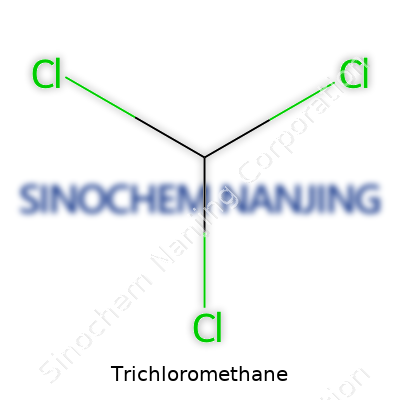
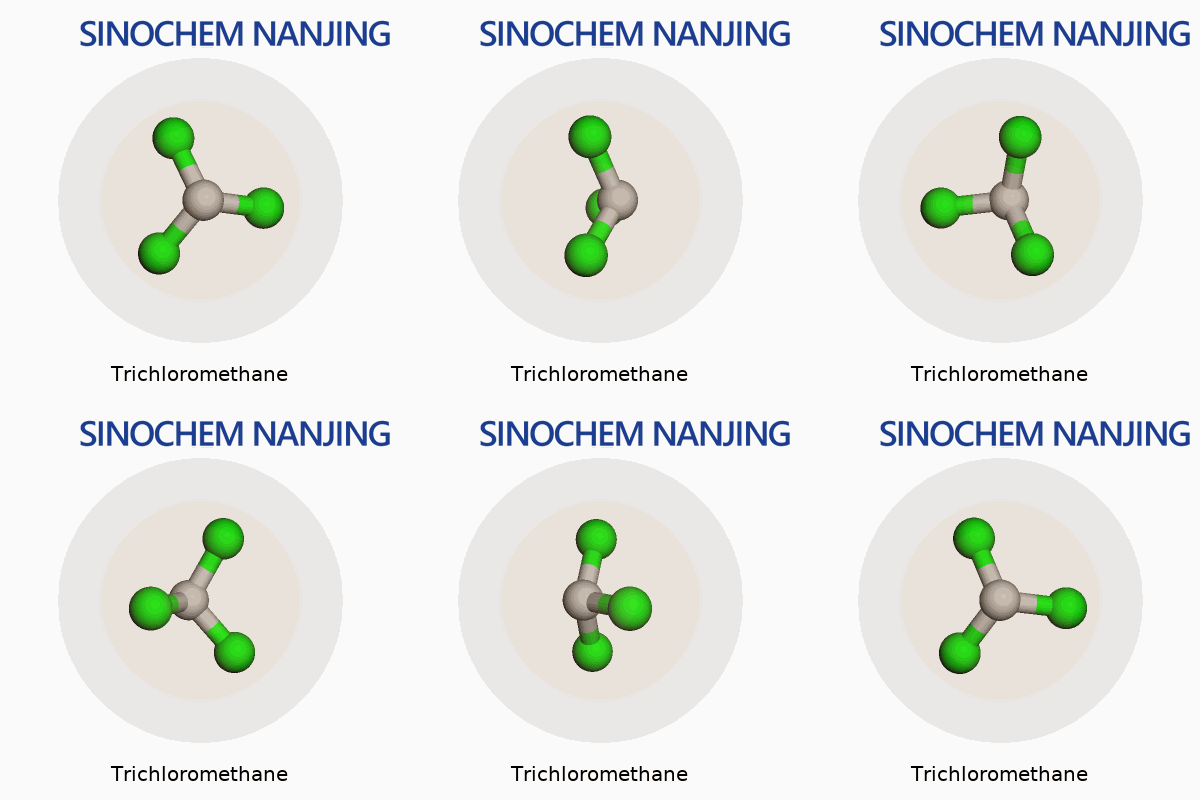
| Names | |
| Preferred IUPAC name | Trichloromethane |
| Other names |
Chloroform Methane trichloride Methyl trichloride TCM Trichloroform Formyl trichloride |
| Pronunciation | /traɪˌklɔːrəˈmiːθeɪn/ |
| Identifiers | |
| CAS Number | 67-66-3 |
| 3D model (JSmol) | `3D model (JSmol)` string for **Trichloromethane** (Chloroform, CHCl₃): ``` Cl[C](Cl)Cl ``` |
| Beilstein Reference | 1718733 |
| ChEBI | CHEBI:35255 |
| ChEMBL | CHEMBL1406 |
| ChemSpider | 5957 |
| DrugBank | DB12242 |
| ECHA InfoCard | 100.000.008 |
| EC Number | 200-663-8 |
| Gmelin Reference | 1363 |
| KEGG | C00217 |
| MeSH | D002766 |
| PubChem CID | 6212 |
| RTECS number | FS9100000 |
| UNII | 025EC0TC72 |
| UN number | UN1888 |
| Properties | |
| Chemical formula | CHCl3 |
| Molar mass | 119.38 g/mol |
| Appearance | Colorless liquid with a sweet odor |
| Odor | Sweet, chloroform-like |
| Density | 1.49 g/cm³ |
| Solubility in water | Low (0.8 g/100 mL at 20 °C) |
| log P | 1.97 |
| Vapor pressure | 21.1 kPa (at 20 °C) |
| Acidity (pKa) | 15.7 |
| Basicity (pKb) | 15.7 |
| Magnetic susceptibility (χ) | χ = −33.00×10⁻⁶ cm³/mol |
| Refractive index (nD) | 1.445 |
| Viscosity | 0.56 mPa·s (20 °C) |
| Dipole moment | 1.04 D |
| Thermochemistry | |
| Std molar entropy (S⦵298) | 187.0 J·mol⁻¹·K⁻¹ |
| Std enthalpy of formation (ΔfH⦵298) | -103 kJ·mol⁻¹ |
| Std enthalpy of combustion (ΔcH⦵298) | –374.2 kJ·mol⁻¹ |
| Pharmacology | |
| ATC code | D01AC01 |
| Hazards | |
| Main hazards | Harmful if inhaled, causes skin and eye irritation, suspected of causing cancer, may cause damage to organs through prolonged or repeated exposure, may form explosive mixtures with air. |
| GHS labelling | GHS02, GHS06, GHS08 |
| Pictograms | GHS06,GHS08 |
| Signal word | Danger |
| Hazard statements | H302, H315, H319, H331, H351, H361d, H372, H373, H412 |
| Precautionary statements | P210, P261, P271, P301+P310, P403+P233, P501 |
| NFPA 704 (fire diamond) | 2-1-0 |
| Autoignition temperature | 651°C |
| Explosive limits | Not explosive |
| Lethal dose or concentration | LD50 oral rat 695 mg/kg |
| LD50 (median dose) | 908 mg/kg (rat, oral) |
| NIOSH | **PS2000000** |
| PEL (Permissible) | 50 ppm |
| REL (Recommended) | 10 ppm (8 hr) |
| IDLH (Immediate danger) | 500 ppm |
| Related compounds | |
| Related compounds |
Chloromethane Dichloromethane Tetrachloromethane |



