Tributyl Borate: Beyond the Laboratory Bench
Looking Back: A Substance Born from 20th-Century Ingenuity
Tributyl borate didn’t pop onto the chemistry scene by accident. In the early 1900s, as chemists leaned into the potential of organoboron compounds, this ester emerged while researchers experimented with alcohols and boric acid. In those days, folks in labs mixed practicality with curiosity, so tributyl borate became a practical reagent in many organic synthesis pathways. Its emergence isn’t as storied as DDT or aspirin, but it’s had a quiet influence. Over the decades, its reputation grew in both chemical academia and industry, serving as proof that not every useful compound gets flashy headlines.
Product Overview: An Everyday Workhorse in Synthesis
Unlike some high-profile chemicals, tributyl borate hasn’t caught mainstream attention, but it does its job, especially in the realm of organic synthesis and flame retardant production. Chemists value it as a boron source because of its relative stability, and I’ve seen researchers reach for it as a reagent to deliver boron in reactions involving complex molecule construction. The fact that it’s a liquid at room temperature makes it much easier to handle than some crystalline or volatile reagents. While tributyl borate doesn’t come with a “wow” factor, it carries a quiet reliability useful for those who know what to do with it.
Physical & Chemical Properties: A Unique Profile
Tributyl borate sits as a colorless, slightly viscous liquid with a faint characteristic odor. Its boiling point is higher than water, and it shows decent solubility in some organic solvents but keeps its distance from water. This solubility profile shapes how folks use it: it blends better with other organic liquids, playing nicely when organic chemists whip up new molecules. Its main chemical action comes from the boron atom, which, sandwiched between three butoxy groups, offers a unique set of reactivity that not many other borates match.
Technical Specifications & Labeling: Real-World Standards
In most labs and factories, tributyl borate comes packaged with thorough labeling and quality certifications. Trace water content matters, since moisture can start breaking down the ester, which leads to purity loss. Specifications often point to purity levels—usually more than 97%—with free acid and alcohol content monitored because these impurities mess with reactions downstream. Labels use standard chemical identifiers like CAS number and IUPAC name to keep things straightforward. More importantly, safety pictograms warn about potential hazards, helping prevent careless handling in busy environments.
Preparation: From Simple Ingredients to Useful Reagent
Making tributyl borate involves reacting boric acid with n-butanol, often in the presence of an acid catalyst. This process strips out water molecules, encouraging ester bonds to form. It’s a classic dehydration synthesis, a reaction that high school chemistry teachers love to demonstrate on a small scale but that scales up well for commercial production. Careful removal of water keeps the reaction moving in the desired direction. I’ve seen setups using simple distillation glassware and more industrial batch reactors; the core chemistry remains unchanged. Recovering the product and getting rid of impurities usually involves distillation under reduced pressure, delivering a clean final liquid that meets the needs of both industrial and lab-scale users.
Chemical Reactions & Modifications: Getting Practical
Tributyl borate stands out for its flexibility as a boron donor. Reacting with nucleophiles or engaging in transesterification reactions, it’s a core ingredient for producing other organoboron species, often used to build new C-B bonds or as a mild reagent in Suzuki coupling reactions. Under the right conditions, it slowly hydrolyzes in water, making it a controlled source of boric acid when needed—not as brute-force as using boric acid itself. In my experience, its ability to add boron functionality in organic molecules makes it more than just another ester on the shelf; it has real legs in fine chemical manufacturing, especially where tailored boron chemistry matters.
Synonyms & Product Names: Many Faces, Same Molecule
Depending on who you talk to and the catalog they’re shopping from, tributyl borate sometimes hides behind different names: tributyloxyl borane, boric acid tributyl ester, or just TBB. Its CAS number—often the main fallback for avoiding confusion in the chemical world—reminds researchers they’re talking about the same liquid, regardless of branding. This variety in naming doesn’t cloud its function, but anyone ordering for a lab would do well to check all labels and identifiers before signing off.
Safety & Operational Standards: Chemical Respect in Action
Like many organic liquids, tributyl borate asks for respect—no bare-handed dumping into open beakers. Proper handling involves gloves, goggles, and sometimes a face shield in larger operations. Spill control matters, because it can irritate the eyes and skin and may release flammable vapors under certain conditions. Storage best practices keep it away from strong oxidizers, acids, and damp air to avoid slow hydrolysis. Disposal involves burning it in a chemical incinerator or following local environmental guidelines to avoid soil and water contamination. Any workplace using tributyl borate keeps detailed documentation, safety data sheets, and provides regular safety training as a rule, not a suggestion.
Application Area: More Than Just Reagent Duty
In the real world, tributyl borate’s biggest claim to fame comes from its use in producing borate esters for specialty polymers and fibers. Glass fiber manufacturers use it as a dopant to improve the boron content in fiberglass, lending strength and thermal properties to finished material. It also holds value in the synthesis of flame retardants, playing an unsung supporting role in products that need to slow the spread of fire in insulation or textiles. Once in a while, you’ll spot tributyl borate serving as a solvent or additive in the preparation of paints and coatings or sneaking into rocket propellant research. This spread of applications shows how a behind-the-scenes reagent can shape entire technologies, even if its name never lands on the final product label.
Research & Development: Innovation at the Margins
Researchers still study tributyl borate for new uses, especially in green chemistry initiatives that look to deliver boron in less hazardous or more sustainable ways. A growing focus on organoboron chemistry opens new avenues for using it to transfer boron efficiently and cleanly. In battery research, exploratory work investigates its use as an additive in non-aqueous electrolytes, seeking to stabilize the performance of lithium-ion cells. While it hasn’t replaced the old guard in these areas, steady progress shows that niche reagents like tributyl borate can drive subtle innovation in established industries. In academic circles, talks often turn toward using this ester for new cross-coupling reactions, emphasizing milder conditions and less waste.
Toxicity Research: Respecting the Risks
Toxicology studies reveal that tributyl borate isn’t benign, but it’s not the worst offender among boron compounds. Acute exposure can cause skin and mucous membrane irritation, and swallowing enough of it or breathing in vapors possibly brings on headaches, nausea, or more serious symptoms. Chronic exposure to boron, typically from more soluble borates, links to reproductive or developmental effects at high doses. Environmental impact also matters: tributyl borate breaks down into boric acid and butanol, so runoff finds its way into water systems. Factories keep strict tabs on emissions, and regulators set occupational exposure limits to reduce workers’ risk. Real-world safety comes down to keeping exposures low and resources like eye wash stations and spill kits close at hand.
Future Prospects: Subtle Influence, Real Promise
Looking ahead, tributyl borate may not headline new technologies, but it’s likely to play a foundation role as industries change. Battery technology, flame retardancy, and advanced material development all benefit from reliable boron sources. As manufacturers hunt for better efficiency and cleaner production, tributyl borate stands as a bridge from traditional synthesis to more sustainable processes. Research continues into new derivatization methods and more selective catalytic reactions using borate esters. For those willing to work at the boundaries of mainstream chemical practice, tributyl borate still holds promise: a modest compound with the capacity to quietly enable the next wave of everyday technological progress.
What is Tributyl Borate used for?
Why Tributyl Borate Matters
Most people never run into tributyl borate shopping for household goods, but this chemical quietly plays a key role in many processes that keep modern industries running. It pops up most often behind the scenes in industries that shape our daily lives, even if the name is unfamiliar.
Fuel Additive and Engine Performance
Car and aviation enthusiasts know that cleaner fuel means smoother engines and longer equipment life. Tributyl borate improves octane ratings in gasoline, which helps prevent engine knocking. The compound reduces carbon build-up on spark plugs and valves, letting engines run efficiently for longer periods. The reliability of logistics chains and even fire engines in emergency situations often gets a boost from well-maintained fuel.
Some research points out how fuel treated with tributyl borate burns cleaner. Emissions drop, and performance stays up. Environmental groups pushing for cleaner air pay attention to the impact of additives in the fight against air pollution, and tributyl borate has started to show up in papers that analyze reductions in harmful particulates.
Essential in Electrolytes and Battery Solutions
Electronics rely on dependable batteries. Tributyl borate stands out as a solvent and flame retardant in lithium-ion battery electrolytes. Engineers pick it because it lets batteries run efficiently while lowering the risk of fire—an important reassurance in everything from smartphones to electric cars. In practice, it’s become a go-to material for safer battery packs in laptops and electric vehicles.
Plastics, Paints, and Coatings
For those who have worked in plastics manufacturing or paint formulation, tributyl borate shows up as a tricky but helpful reagent. It enters the scene when making resins, where it acts as a crosslinking agent. This means it strengthens the final product, helping plastics hold up under stress and ultraviolet exposure. In paints and coatings, it curbs the build-up of static electricity. That matters in electronics factories, where a single stray spark can ruin a circuit board.
Specialized Glass and Ceramics
Industrial glassmakers and ceramic engineers rely on tributyl borate as a boron source. Adding boron lends strength and durability to glass, which becomes useful for labware, cookware, and even the screens on our smartphones. Tougher glass means fewer breaks and less wasted product, which cuts costs across manufacturing.
Safety and Handling Concerns
Like many chemicals made for industry, tributyl borate comes with risks. It can irritate the skin, eyes, and respiratory tract. Those working with it usually need gloves, ventilated workspaces, and proper storage containers. Years spent around industrial solvents teach you that safety data sheets and regular training keep workplaces safe. Companies balancing productivity and worker safety often set the standard for the industry.
Rethinking Chemistry with Sustainability in Mind
Demand for green chemistry and safer products is growing. Tributyl borate’s performance as a fuel additive and industrial reagent earns it a place in factories, but questions about potential alternatives—especially ones that break down faster in the environment—still need attention. Green chemistry isn’t a wildcard trend; it reflects the new priorities in manufacturing. Looking at safer substitutes, or tweaking processes to use less product, helps reduce long-term risk.
Looking Forward
Industry professionals, environmental regulators, and chemists who manage product safety all keep an eye on the chemical’s use. As battery research marches forward and fuel standards tighten, tributyl borate’s role may shift toward safer, more efficient blends. The chemical toolbox constantly evolves, but looking at the story behind a compound like tributyl borate gives insight into the values and choices guiding technology today.
Is Tributyl Borate hazardous or toxic?
Understanding the Risks
Tributyl borate doesn’t show up on most people’s radar, but it has a place in some chemical labs and factories. This colorless liquid gets used in things like solvents and catalysts. If you’ve ever worked in a setting with organic chemistry, you’ve probably run into bottles stamped with odd labels—tributyl borate among them. Looking at its hazard profile, most notices focus on flammability and moderate toxicity. Breathing in vapors can irritate your airways and eyes. Splash a bit on your skin, and you’ll likely feel a sting or itch. Not exactly battery acid, but far from harmless.
Long-term and Environmental Concerns
Not many people think about chronic effects when handling chemicals unless something dramatic happens. Tributyl borate hasn’t racked up headlines for long-term health disasters. Still, lab guidelines suggest keeping exposures low on purpose. You don’t always get warnings about cancer with this substance, but that doesn’t mean it’s safe to handle carelessly. Studies haven’t fully mapped out what happens after years of low-level exposure, so best practice leans toward caution.
Pouring leftover borates down the drain does more than just clear your beaker. Even “mild” organic chemicals disrupt local water life. In small labs, it’s tempting to believe rinsing a flask is no big deal. Collect enough runoff in the city sewer, though, and the story changes. Tributyl borate may break down, but its transformation products, like butanol, bring their own set of risks. Waste management teams advise collecting these liquids as hazardous waste, especially near rivers or places with sensitive wildlife.
What’s in the Science?
A few toxicology databases list tributyl borate as having moderate oral and inhalation toxicity. Researchers find that rats exposed to fairly high amounts develop symptoms such as breathing struggles and sluggish movement. The acute effects look reversible if exposure stops, but that’s a gamble for real-life situations. Safety Data Sheets from major suppliers always push for using gloves, goggles, and proper ventilation—for good reason. One accidental spill, and you’ll smell a sharp, sweet odor that signals it’s time to get out or turn on the fume hood.
The Reality in the Lab or Workshop
Some labs keep this chemical behind secure cabinets with labeling that stands out. Workers with experience know that skipping the gloves leads to dry, cracked skin or stubborn rashes. Taking a shortcut with ventilation lets that chemical tang hang in the air, which often leads to irritated throats at best and headaches at worst. I remember watching a colleague rinse a test tube with tributyl borate without a fume hood running. Within minutes, his eyes watered, and the fatigue made it hard for him to focus the rest of the afternoon. These reactions remind everyone to follow the rules, not just trust the luck of previous clean-ups.
Practical Safety and Solutions
Staying safe starts with clear storage, strong labeling, and not rushing through procedures. Using the right gloves, goggles, and a working fume hood goes a long way. Training sessions help people see what a minor mistake can look like and how fast symptoms can hit. Collecting waste for proper disposal protects both staff and the local environment. With quickly changing lab staff and turnover, building a culture that respects chemical risks becomes just as important as reading the labels.
Tributyl borate won’t make most headlines, but it rewards respect. The lessons aren’t only about one chemical—they’re reminders that smart habits protect people and keep work moving forward.
What is the chemical formula of Tributyl Borate?
Breaking Down Tributyl Borate
Tributyl borate holds the chemical formula B(OC4H9)3. That looks long on paper, but its structure makes perfect sense once you look a little deeper. The boron atom connects to three butoxy groups, each with four carbons and nine hydrogens. If you write it all out, it turns into C12H27BO3. This is the form chemists record in their books.
Why Do Chemists Care About Its Formula?
Getting the formula right isn’t just an academic game. Safety data sheets, regulatory filings, and manufacturing recipes depend on having the right numbers. If you’ve ever measured out a chemical for a high school experiment, you know that a single misplaced digit can ruin everything. For companies, mistakes mean wasted money, workplace hazards, and sometimes worse.
Tributyl borate shows up in the lab as a colorless liquid with a faint odor. It serves as a solvent, a plasticizer, and pops up in the production of other boron compounds. Its precise formula lets workers calculate amounts for mixing, hazard procedures, and quality checks.
Sticking to details like this cuts down on risks. The Environmental Protection Agency and Europe’s ECHA both list rules that start with correct identification. If the formula was off, the safety and transportation requirements might not fit the actual risk. This oversight could spell trouble for everyone from truck drivers to lab techs down the line.
Personal Perspective From the Lab
Back in my chemistry days, the care behind each label felt almost excessive—until something went wrong. One day, a container tagged as “tributyl phosphate” was accidentally swapped for tributyl borate on a shared shelf. Both look similar, and unless you check the formula and structure closely, it’s an easy mistake. But the lab protocols for each differ, and the wrong method could set off a safety incident.
I remember double-checking and cross-referencing formulas in textbooks and reputable sources, especially after near-misses. For tributyl borate, looking up C12H27BO3 made all the difference. Strict adherence to chemical formulas became a habit. My peers did the same. It wasn’t just for exams—these details mattered in everyday work, especially in shared lab environments.
These experiences echo the teaching that every single compound deserves attention to detail. The number of atoms in a formula isn’t just trivia. It aligns with regulations, health guidelines, and good laboratory practice. Everyone in the field shares responsibility for keeping things transparent, accurate, and, above all, safe.
Solutions and Best Practices
Label everything with chemical formulas—plain names don’t cut it. Require cross-checking of new chemicals against supplier specs before opening containers. Encourage questions anytime someone’s unsure. In bigger organizations, digital inventories linked with regulatory databases help even more. Each of these steps creates a barrier against careless misidentification.
Rely on trusted resources for chemical data, such as university libraries, official material safety sheets, or established regulatory catalogs. Open access platforms also help, providing reliable answers without gatekeeping knowledge. Maintaining a healthy skepticism toward mystery bottles and unlabeled containers can save a lot of regret afterwards.
As simple as it seems, nailing facts like the formula for tributyl borate forms the core of chemical safety, smart decision-making, and responsible stewardship in both labs and industry.
How should Tributyl Borate be stored and handled?
Why Tributyl Borate Demands Respect
Anyone who’s spent time around chemicals like tributyl borate knows it’s not just another item on the shelf. With a faint fruity odor and a knack for catching fire when given the chance, this compound brings its own set of rules to the lab or warehouse. Mishandling it can cause problems much bigger than a minor nuisance—think fire risks, health hazards, and environmental messes. Safety isn’t about paranoia. It’s about protecting people and staying productive without interruptions from accidents.
Hazards: More Than Just a Fire Risk
People using tributyl borate often remember one thing: it’s flammable. Give it an ignition source, and it won’t hesitate to burn. What doesn’t get enough attention is how it affects health. Breathing in the vapors can irritate the nose and throat. Longer exposure sometimes brings headaches, dizziness, or nausea. Contact with skin or eyes might trigger redness or burning. No one wants to become the cautionary tale for carelessness in storage.
Best Practices from Experience
Walking into a properly run storeroom, you’ll see tributyl borate sealed tight in labeled containers, tucked away from heat and direct sunlight. Metal drums with secure lids hold up better than plastic options, which can warp over time. People keeping this chemical on hand know the importance of good ventilation. In spaces without fresh air, vapors can build up fast—and that’s when trouble starts.
Leaning on past lessons, it’s smart to space out containers, giving each enough room so nothing bumps or leaks by accident. Every label tells you exactly what you’re reaching for. Confusion only leads to mistakes. I’ve found it best to group chemicals by their properties. The flammable ones stay far from acids, oxidizers, and anything prone to react violently. Static electricity gets handled with grounded shelves and non-sparking tools. The small steps matter.
Handling Without Cutting Corners
The urge to skip gloves or goggles creeps up after handling the same materials for months. That shortcut often backfires. Nitrile gloves, splash-proof goggles, and protective clothing block direct contact. No debate there. If a spill happens—and it always does, sooner or later—proper gear gives you precious time to react and clean up without exposure. Larger spills require absorbent pads and immediate ventilation. Hoping someone else takes care of it just spreads risk.
Even after a long day, don’t toss rags or clothing soaked in tributyl borate anywhere near open air. Use closed, labeled bins for disposal and let professionals pick them up. Cleaning up with water alone creates slippery, hazardous surfaces. Dedicated solvents and a step-by-step approach keep surfaces safe for the next shift.
Investing in Training Builds Real Safety
Rules on paper don’t keep people safe—practicing those steps does. Routine training, even for veterans in the shop, keeps everyone alert to the latest guidelines and equipment. I’ve sat through dozens of these sessions. The stories of near-misses stick in your head, reminding everyone that diligence beats luck every time.
Real-world diligence comes down to regular inspections, replacing aging containers, and speaking up when something looks off. Even though tributyl borate is just one chemical among many, treating it with respect protects everyone. The investment pays off in fewer injuries and uninterrupted workdays.
What are the safety precautions when working with Tributyl Borate?
Understanding the Risks on a Personal Level
Tributyl Borate brings a certain edge to industrial chemistry, often landing on the desk of anyone working in flame retardants or research labs. The harsh reality is, this chemical comes with dangers you can’t shrug off. In my own years in the lab, I found that ignoring details turned minor mishaps into near-misses. One spilled drop on a wrist, a carelessly recapped bottle, both can remind you how vulnerable skin and lungs can get in the presence of aggressive chemicals like this one.
Smart Handling Begins with Good Personal Protection
Personal protective equipment sounds routine, but it builds the real line between safe hands and a visit to the emergency room. Nitrile gloves, tightly fitting goggles, and a crisp lab coat do more than check boxes—they stop chemical burns and irritation before they start. Long sleeves matter just as much. Some might feel tempted to skip that extra protection to save five minutes, but a single splash changes habits forever. I’ve learned you can’t trust luck to shield your skin or eyes from a borate ester’s sting.
Ventilation: A Non-Negotiable for Air Quality
Tributyl Borate carries fumes that drift quickly, and even if they seem mild at first, they add up. I recall labs with poor airflow where the lingering smell never truly left, leaving me with headaches and an uneasy feeling at the end of the day. Always use a chemical fume hood—no exceptions. Portable fans or open windows won’t cut it. Mechanical ventilation pulls vapors away, and if the fume hood clicks instead of roaring, it means filters or motors need a look.
Storage and Spillage: Building Good Habits
Keep the container sealed tight, choose a cool and dry cabinet, and stow it far from heat. Storing flammable solvents next to incompatible substances might feel harmless but can ruin entire shelves of supplies. In my experience, clear spill kits nearby act faster than far-off emergency protocols. Once, a bottle cracked from a missed shelf pin, and only a dry-chemical absorbent and quick gloves-on response kept it from turning into a bigger problem.
Training Everyone in the Room
I’ve never trusted the notion that only senior staff can handle risky chemicals. A well-drilled team, no matter the mix of experience, works smoother and reacts quicker in emergencies. Safety isn’t just about remembering procedures—it’s about repeating them until even the quietest new hire can call out what happens next. At every safety meeting, we reviewed material safety data sheets, went over what tributyl borate actually does, and practiced emergency showers and eyewash drills till they felt routine.
After-Work Precautions
At the end of a shift, thorough cleaning protects everyone in the lab. Soapy water and the right wipes keep traces off benches and equipment. Contaminated gloves go in a proper bin, not a generic trash can. It’s surprising how often people forget these steps, like leaving glassware out with residue or skipping the fume hood cleanup. Good habits formed here keep people safe long after lights go off.
Toward a Safer Culture
Any team that works regularly around Tributyl Borate needs honest communication about risks and personal responsibility. Mistakes lose their sting when shared openly so everyone can learn. Regular reviews of chemical stocks help phase out old, degraded containers long before leaks happen. Companies that actively support continual safety training build trust in a way that top-down rules never achieve. Trust grows from everyday choices, not just written policy.
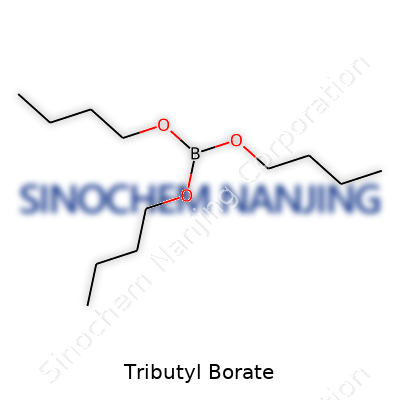
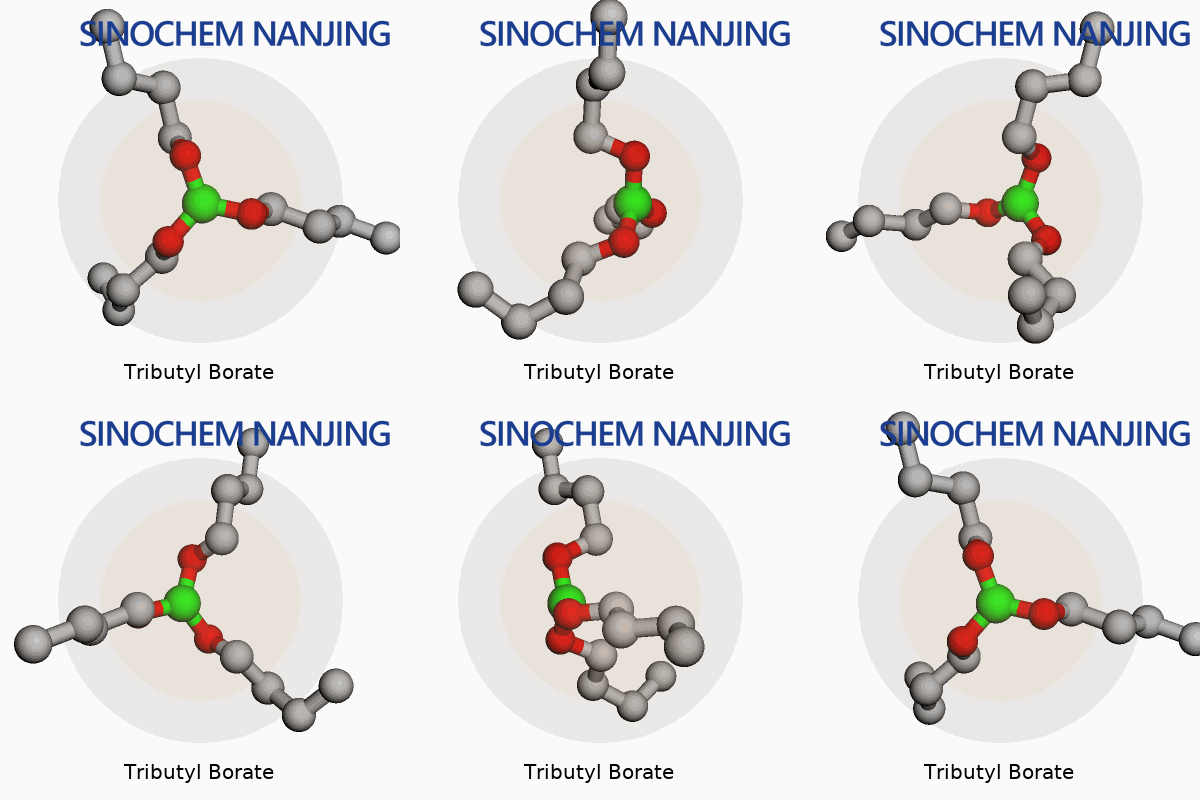
| Names | |
| Preferred IUPAC name | Tributoxyborane |
| Other names |
Borate(3-), tributyl-, Tributyloxyborane Boracic acid, tributyl ester Boracic acid tributylic ester Tributoxyborane |
| Pronunciation | /ˈtraɪ.bjuːtɪl ˈbɔː.reɪt/ |
| Identifiers | |
| CAS Number | 688-74-4 |
| 3D model (JSmol) | `JSmol" structure for Tributyl Borate: "B(OCCC)3"` *(This string is the SMILES notation, commonly used as input for 3D molecule viewers like JSmol.)* |
| Beilstein Reference | 361873 |
| ChEBI | CHEBI:68914 |
| ChEMBL | CHEMBL1200293 |
| ChemSpider | 5374079 |
| DrugBank | DB11189 |
| ECHA InfoCard | 03b1d03b-13a7-4c63-ac1d-c6bda1e0407e |
| EC Number | 213-014-9 |
| Gmelin Reference | 60770 |
| KEGG | C19539 |
| MeSH | D008153 |
| PubChem CID | 13509 |
| RTECS number | ED3325000 |
| UNII | YN959VU074 |
| UN number | UN2503 |
| Properties | |
| Chemical formula | B(OC4H9)3 |
| Molar mass | 266.24 g/mol |
| Appearance | Colorless liquid |
| Odor | mild, characteristic |
| Density | 0.885 g/cm³ |
| Solubility in water | slightly soluble |
| log P | 0.93 |
| Vapor pressure | 0.2 mmHg (20 °C) |
| Acidity (pKa) | 18.0 |
| Basicity (pKb) | 2.94 |
| Magnetic susceptibility (χ) | -52.5e-6 cm³/mol |
| Refractive index (nD) | 1.420 |
| Viscosity | 2.36 cP (25°C) |
| Dipole moment | 0.7 D |
| Thermochemistry | |
| Std molar entropy (S⦵298) | 569.6 J·mol⁻¹·K⁻¹ |
| Std enthalpy of formation (ΔfH⦵298) | -1428.7 kJ/mol |
| Std enthalpy of combustion (ΔcH⦵298) | -3627.8 kJ/mol |
| Hazards | |
| GHS labelling | GHS02, GHS07 |
| Pictograms | GHS02,GHS07 |
| Signal word | Danger |
| Hazard statements | H226, H302 |
| Precautionary statements | P210, P280, P305+P351+P338, P370+P378 |
| NFPA 704 (fire diamond) | 1-2-0-特殊: W |
| Flash point | 71 °C (closed cup) |
| Autoignition temperature | 285 °C |
| Explosive limits | Explosive limits: 1.1–10.6% |
| Lethal dose or concentration | LD50 (oral, rat): 3,200 mg/kg |
| LD50 (median dose) | LD50 (median dose): Oral (rat): 3,200 mg/kg |
| NIOSH | BZ8575000 |
| PEL (Permissible) | PEL (Permissible Exposure Limit) of Tributyl Borate: "2 mg/m3 |
| REL (Recommended) | 2.5 mg/m³ |
| IDLH (Immediate danger) | 250 ppm |
| Related compounds | |
| Related compounds |
Trimethyl borate Triethyl borate Triphenyl borate |



