The Living Legacy and Science of Thiophene
A Look at Its Journey: Historical Development
The story of thiophene takes us back more than a century, right into the heart of the early days of modern organic chemistry. Researchers in the nineteenth century, eager to untangle the mystery of coal tar and its cocktail of chemicals, stumbled across this five-membered ring compound. Its strange sulfurous smell told chemists they were dealing with something new. As curiosity grew and methods sharpened, thiophene went from an unexpected impurity to a key player in the development of heterocyclic chemistry. Through decades, as analytical techniques grew more rigorous, researchers started to grasp how fundamental thiophene is, not just in academic labs but across a wave of industries keen on reliable performance and unique reactivity.
Understanding Thiophene: Physical and Chemical Personality
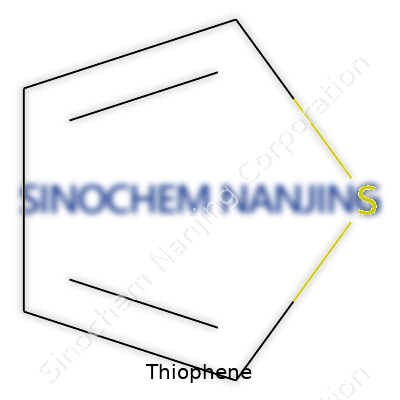
Holding a vial of thiophene, one would notice a colorless, mobile liquid that carries a scent reminiscent of benzene, with a clear twist of sulfur. The molecular formula—C4H4S—marks a simple yet elegant structure: four carbons with one sulfur atom in a tight aromatic ring. This structure hands thiophene an unusual blend of stability and reactivity, resisting casual oxidation better than some relatives, but ready enough to light up all sorts of chemical transformations. Its boiling point ticks in near 84°C, making it easy to distill but trickier to store if temperatures climb. In my own experience, storing thiophene in amber glass with minimal air exposure makes a difference; it delays oxidation and keeps the compound clean for the next experiment or synthesis.
Technical Details and Labeling in the Real World
Reading labels in a chemical storeroom is where practical knowledge hits home. Pure thiophene usually ships as a stabilized liquid, with clear hazard warnings on toxicity and flammability. Handling protocols make a difference, especially for new lab members. Standard GC or NMR checks confirm purity, which matters when trace isomers or stabilizers could skew an entire run of experiments. Labels usually carry not just the chemical name but also familiar synonyms, CAS number, hazard pictograms, and concentration. Having worked with both reagent and industrial-grade thiophene, I’ve seen that clear labeling prevents confusion—especially when modifications and derivatives show up in similar bottles.
Getting It Made: Preparation and Production Struggles
Traditionally, thiophene owed its presence to coal tar, a byproduct rich in aromatic flavors. Synthetic production, though, taught us more about scaling and control. Industrial preparation now leans into vapor-phase reactions between butane and sulfur, churning out bulk supplies needed for modern demands. Laboratory synthesis takes a more measured approach: the Paal–Knorr method is still a favorite, coaxing furans or 1,4-diketones to couple with phosphorus pentasulfide and yield thiophene in dependable yields. Precursor choice, temperature finesse, and a steady stream of nitrogen matter just as much as fancy equipment. Process optimization—choosing the right solvents, avoiding water interference, protecting yield against atmospheric oxygen—has turned what started as a tar impurity into a mainstay for chemists everywhere.
Reactivity and Modification: Unpacking the Toolbox
Thiophene’s aromatic ring opens the door to rich chemistry. It reacts readily with electrophiles, echoing the reactivity of benzene but adding some sulfur-centric flavor. Halogenations, nitrations, sulfonations—each path reveals more opportunities for functionalization. One memorable synthesis in the lab involved moving from a plain thiophene to a suite of bromo- and nitro-substituted analogs, each step marked by color changes and careful monitoring. The electron-rich ring helps attract substituents, paving the way for pharmaceutical and materials science breakthroughs. Making derivatives like polythiophenes, which power organic semiconductors and thin-film solar cells, often starts here—with careful, deliberate chemical modifications.
What’s in a Name? Synonyms and Aliases
Depending on the day or the catalog, thiophene answers to several names—sometimes spelled “thiophen,” or known as oxathiol. This list grows longer with derivatives, and cross-referencing names in journals sometimes brings surprises. It’s vital, especially for students or interdisciplinary teams, to clarify exactly which compound is being discussed to avoid mistakes when scaling up a reaction or ordering supplies. Clarity in naming saves both time and resources.
Raising the Bar: Safety and Operational Practices
Working with thiophene means accepting its hazards alongside its promise. Fumes drifting up from an open flask deliver more than a sharp, chemical smell; they also bring concern for respiratory, skin, and eye irritation. Local exhaust, secure storage, and protective gloves aren’t just checkboxes in training—they’re cost-effective steps that keep projects on schedule and people healthy. Spills respond well to absorbent pads, but prompt cleanup avoids stubborn stains and wider contamination. Safe handling keeps the focus on experimentation or production rather than accidental exposure or downtime.
Where Thiophene Goes: Application Areas
The value of thiophene stretches far past the lab. It powers the development of pharmaceuticals, serving as a building block for antibiotics, anti-inflammatory medications, and even anticonvulsants. Polythiophenes set the pace in organic electronics; their conductive properties help shape flexible displays and experimental solar panels. Agrochemical manufacturers favor thiophene-based pesticides for their blend of efficacy and breakdown rates. Analytical chemists welcome thiophene as a reference material or starting point for sensor calibration. Talking with engineers and formulators, it’s clear this compound rarely gathers dust—its flexibility keeps it in perpetual demand.
On the Front Edge: Research and Development
Academic and industrial efforts keep pushing thiophene’s boundaries. Green chemistry initiatives focus on lowering waste and avoiding heavy metals in its synthesis. Material scientists harness its polymer variants for better, more efficient semiconductors. Ongoing pharmaceutical innovation wrestles with the structure-activity relationships of thiophene derivatives, searching for new cures and more precise treatments. Every push for better synthesis or safer modification reduces real-world risk and speeds new technologies from lab benches to market.
Weighing Risks: Toxicity Research
Toxicological studies on thiophene show it’s not to be taken lightly. Regulators recognize its potential to cause irritation, central nervous system effects, and, with longer exposure, deeper toxicity. Animal studies and in vitro research have drawn lines between occasional contact and chronic exposure. The structure, full of aromatic stability, can foster bioaccumulation or tricky metabolism in some environments. As laboratories and plants scale up work with thiophene, safety teams benefit from focusing on sustained monitoring and swift response to accidental releases. As someone who’s participated in risk assessments, I believe results consistently bring home the lesson: the promise of thiophene relies on handling it with care and respect.
What Lies Ahead: Future Prospects for Thiophene
Looking forward, thiophene seems positioned for even greater impact. Energy researchers crave more efficient, lighter, and flexible electronics, and polythiophenes look ready to deliver. Pharmaceutical exploration unlocks new drugs as researchers fine-tune thiophene cores for highly targeted effects. Environmental scientists explore biodegradable variants, while regulatory agencies continue to set new thresholds ensuring community safety. Having witnessed the steady rise of sustainable chemistry, the drive to cut emissions and reduce toxicity matches the demand for new thiophene-based technologies. The compound remains a reminder that even the simplest ring can enable real progress—if curiosity, technical skill, and safety walk hand in hand.
What is Thiophene used for?
What The World Does With Thiophene
Thiophene carries a lot more weight in science and industry than most people realize. Its structure—four carbons and a sulfur, all packed into a ring—makes it show up in some unexpected places. I remember running into thiophene in university labs, mainly as a reference compound, never really thinking about where its journey actually went beyond a reagent bottle. Later, learning about its big picture uses changed my view entirely.
Fuel Quality and Environmental Impact
If you fill up your car in most parts of the world, sulfur content in gasoline is something government and industry both watch. Thiophene naturally sneaks into crude oil, winds up in fuel streams, and adds to air pollution—especially as sulfur dioxide—when burned. Regulators forced refiners to push down sulfur levels, which means people constantly tackle the challenge of removing thiophenic compounds from fuels. Techniques such as hydrodesulfurization have targeted thiophene for years, not only for better air quality but also to protect catalytic converters. Managing thiophene levels helps keep the air cleaner, something communities everywhere benefit from.
Making Pharmaceuticals and Dyes
Medicine and color science look to thiophene as a key building block. Its ring structure brings versatility that lets chemists twist it into drugs to fight infections or conditions like epilepsy. Several antibiotics like cefditoren or drugs developed for anti-inflammatory purposes use thiophene derivatives. Some of the dyes in our T-shirts or food, and even certain pigments in electronics, can be traced back to reactions involving this little sulfur ring. The sulfur atom open doors other carbon rings can’t, letting researchers design molecules with properties tailored for very specific effects.
Organic Electronics on the Horizon
A decade ago, reading about “organic solar cells” sounded like science fiction. Now, I see headlines talking about flexible phone screens and printed solar panels, and thiophene sits in that story too. Its ability to conduct electricity when linked in certain ways makes it the backbone of materials like polythiophene. These polymers drive the progress of organic light-emitting diodes (OLEDs) that power vibrant smartphone displays or televisions. At every trade show or research fair, folks looking for cheaper, more sustainable tech bring up thiophene-based semiconductors.
Striking The Balance: Production and Safety
Handling thiophene isn’t all upside. It’s flammable and toxic in bigger doses, and industries have had to learn to manage risks—especially in crowded plants or labs. Workers keep an eye on air quality, and facility rules enforce proper storage. Environmental protections also turn up, as bigger quantities may escape into waterways if not handled right.
It’s easy to overlook molecules hidden in the background, but thiophene isn’t fading away. Oil refiners keep engineering smarter catalysts to clean up fuels. Pharmaceutical innovators look for new drug candidates off the backbone of thiophene rings. Material scientists keep tweaking organic semiconductors to give us brighter screens and greener energy. The way we grapple with its hazards, balance efficiency, and keep public health front and center says plenty about how science deals with complex problems. As with many important molecules, the legacy of thiophene gets written into technology, medicine, and the choices communities and industries make every day.
Is Thiophene hazardous to health?
Understanding Why Thiophene Catches Concern
I’ve spent years speaking with folks dealing with chemicals in labs and on factory floors. A name that pops up from time to time is thiophene. This sulfur-rich ring shows up in everything from petroleum refining to the making of pharmaceuticals. Whether you run a reactor or mop up after an experiment, the questions stay the same: is it safe? Does it threaten long-term health?
What Science Says About Thiophene’s Hazards
Thiophene is a small molecule, colorless, and has a funny, gasoline-like smell. It evaporates quickly, which means the main risk comes from breathing in the vapor. The big toxicology studies say a lot. Animal tests show thiophene affects the central nervous system. High doses slow reflexes, cause lightheadedness, and may knock you out entirely. Prolonged exposure to higher levels harms the liver and kidneys in rodents. No one should dismiss animal results, especially if you’re in a confined workspace where chemicals linger in the air.
The U.S. Environmental Protection Agency and the European Chemicals Agency agree on a few things. Short-term exposure can make your eyes, nose, or throat burn. Skin contact may leave you with an itchy rash. So, the stuff isn’t outright deadly to touch, but being careless is never a good idea. There is still some uncertainty about its cancer risk. No one has run the big, expensive, decades-long human studies that lock down an answer. Still, cautious handling makes sense.
Why This Matters to Regular People
Not everyone works with pure chemicals. But for those near oil refineries or factories, airborne levels rise if safety rules slip. I once talked to a neighbor living by a chemical plant in Louisiana—folks there kept their windows closed on hot summer days because of the fumes. Factory spills, improper waste handling, or ventilation failures put whole communities at risk. Fears like that become real if companies cut corners or ignore leaks.
The Regulations Keeping People Safe
Most countries draw lines for how much thiophene workers can breathe. In the U.S., OSHA has set exposure limits. Many labs and factories monitor air quality using sensors. If the monitor beeps, everyone knows to get out or suit up. Proper training matters most. I’ve seen new workers rush through tasks without gloves. If management skips safety orientation, accidents rise. Respirators, gloves, and eye shields become the real difference between safety and an itch that won’t quit.
How Individuals and Companies Can Lower the Risks
Simple steps help avoid thiophene trouble. Regular equipment checks prevent leaks. Good ventilation moves vapors out before they grow strong enough to burn eyes or cause headaches. Spill kits with absorptive pads keep liquid off skin or floors. For workers, speaking up when something smells off can protect an entire crew. Outside of the workplace, reporting odors or spills to local agencies brings quicker follow-up.
I always tell young chemists—don’t let routine lull you into ignoring warning signs. Just because a liquid is clear and sounds scientific doesn’t mean it gets a free pass. Thiophene can harm those who take shortcuts, but basic safety habits can push risks way down. Science can’t erase every doubt, but everyone can use common sense, good gear, and honest communication to stay healthier on the job and at home.
What are the physical properties of Thiophene?
A Look at a Familiar Sulfur Compound
Thiophene makes its presence known long before anyone studies it formally. The compound’s smell brings back memories for many scientists—its sharp, distinctive, almost sweet-but-sulfurous odor clings to the skin long after a lab session. At room temperature, it shows up as a clear, colorless liquid. This isn’t all that common among heterocyclic organic compounds, since plenty of others, like furan or pyrrole, offer noticeable yellows or browns. Holding a bottle, the liquid feels quite volatile—any trace left on glass will be gone within a few minutes.
Boiling, Melting, and Handling
Thiophene’s boiling point comes in at about 84°C. In a typical chemistry lab, this means that flask contents start to disappear quickly while heating up. There isn’t much difference in boiling points between thiophene and diethyl ether, so the same cautions apply: don’t leave vessels open near any hot plate. The melting point lands far below room temperature, around -38°C, so the compound refuses to solidify unless dropped into a deep freezer or surrounded by dry ice.
Thiophene’s density clocks in close to 1.05 g/cm³. In a standard separation, it floats just above water—barely. I’ve seen technicians pipette the layer off by eye and realize too late that a small tilt sends thiophene rolling across the surface. Mixing isn’t an option; it doesn’t blend well with water but happily dissolves in most organic solvents. So, for chromatography or synthesis, it acts like an easy guest—never fussy in acetone or ether, and just as willing to hang out in benzene or toluene.
Flammability and Safety
Thiophene wins no medals for stability. It catches fire at room temperature and, once lit, gives off a bluish flame with that telltale sulfur edge to the smoke. Most labs store it in tight amber bottles, kept far from heat. This is not a compound you want to spill near a spark. Many safety datasheets list it right next to diethyl ether and hexane for flammability risk. My own habit remains to use it under a fume hood, window cracked, gloves on, and phone off—just in case.
Using Thiophene: Why the Details Matter
While thiophene’s smell and volatility grab your attention, its properties serve a bigger purpose. The low boiling point makes recovery easy in distillations, but this same trait means waste evaporates quickly, leading to air quality concerns. If you’re in a teaching lab or industrial setting, you start to appreciate how crucial ventilation and sealed containers become. And for anyone blending or handling it over a workday, even slight exposure sticks in the nose and throat. This pushes safety protocol beyond box-ticking—mask use, splash goggles, and good labeling switch from recommendations to absolute requirements.
Ensuring reduced vapor exposure should rank higher for those handling thiophene every day. This could start with improved fume hoods—some labs retrofit old units with stronger fans or lower sash stops. Storage needs attention as well. Specialized, ventilated cabinets keep containers tightly shut and minimize risk. For smaller labs with limited funds, a simple sealed box and a charcoal filter nearby might work as a low-cost step in the right direction.
Reflection from the Bench
It’s odd how a small molecule can leave such an impression. Properties like the boiling point, smell, and flammability offer daily reminders that even familiar chemicals demand steady respect. Learning to work with thiophene meant more than just memorizing its numbers. It shaped habits, cemented routine safety steps, and taught me to look out for those sharp, pungent warning signs. Every time I catch that scent, I remember the sort of practical, on-the-ground care science really needs.
How should Thiophene be stored and handled?
Understanding What Makes Thiophene Tricky
Thiophene’s reputation in chemistry labs isn’t about its name—it's all about the way it behaves. This flammable, colorless liquid starts to waft its strong, sickly odor even in small doses. My early days in the lab taught me just how fast vapors escape if you drop your guard. We’re not just dealing with fumes; this compound’s vapors can spark up pretty quickly if left near heat or static.
Storing Safely: No Shortcuts
The smartest storage isn’t about fancy equipment; it’s about common sense. Thiophene belongs in well-sealed glass containers—metal can sometimes react, and plastic might not hold up. Each container deserves a clear, sturdy label. I always keep anything volatile in a locked chemical storage cabinet with an explosion-proof fan system, tucked well away from open flames, radiators, or careless hands nursing a cup of coffee.
A cool, dry spot matters. Heat will nudge the vapors out, and a humid room invites corrosion or accidental mixing. Plenty of folks stack bottles too close. That’s risky. Give each one some breathing room, and keep containers below eye level—spills won’t spray your face if something goes sideways.
Hands-On Handling: Don’t Rush
Move slowly and deliberately with thiophene. My first real lesson came after a classmate uncapped a bottle too quickly; the splash didn’t hit skin, but the fumes sure hit his nose. Always work under a chemical fume hood. Never try to just “air out” vapors with a cracked window. Goggles and gloves aren’t optional. Nitrile gloves shield better than latex, and a heavy lab apron will save your favorite jeans.
Measuring, pouring, or transferring smaller amounts works best—less volume, less chance for a disaster. Double-check every cap before you clean up. Thiophene seeps through the smallest gaps. A bit of extra effort here spares you a headache later.
Spill Response: Ready Beats Sorry
Early on, nobody ever wants to talk about spills. It always feels like tempting fate. The truth is, even the most careful chemist drops a bottle eventually. Luckily, the best defense is simple: have a spill kit close. Absorbent pads, a bucket of sand, and a stack of disposable rags might seem basic, but these tools work every time.
If a spill does shock the room into silence, step back, take a breath, and clear everyone who doesn’t need to be there. Cover the liquid, don’t sweep or mop—those motions only spread invisible vapors. Scoop solids with scoops or cardboard, dispose of everything per hazardous waste rules, and never try to pour cleanup down a sink.
Looking Ahead: Small Systems, Big Results
Thiophene may not headline chemical safety seminars, but it’s these little compounds that teach lasting lessons. Regular checklists and quick training refreshers save more than one disaster each year. Eye wash stations and safety showers are only helpful if you know where to find them—take a walk and make sure. Good communication across teams stops someone new from walking into a risky situation.
Each safety step takes a minute or two and could save a lifetime of regret. Thiophene demands respect—give it the attention it deserves, and it’ll stay just another tool in the lab, not a headline in tomorrow’s news.
What is the molecular formula of Thiophene?
Understanding the Basics
Thiophene shows up in labs, textbooks, and even in fuel labs far from big cities. Its molecular formula is C4H4S. Behind those five simple atoms lies a story that people outside chemistry circles hardly ever hear about.
Why Thiophene Matters
The sulfur atom inside thiophene gets chemists talking. Blend four carbon atoms and four hydrogen atoms into a five-membered ring, toss in sulfur, and you have more than just another molecule. Some folks remember first smelling an earthy scent from a tiny vial labeled “thiophene." The odor, kind of sharp and slightly sweet, hints at its presence in coal tar oils and gasoline blends.
A century ago, chemists puzzling over coal tar stumbled on thiophene. Its formula gave fits to early scientists using combustion analysis, a reminder of how tough discovery used to be. Today, automated machines spit out numbers, but real understanding runs deeper than what a computer screen displays. People forget how sulfur atoms stir up electronic properties, but in thiophene, that keeps things interesting.
From Formula to Function
With the C4H4S ring, thiophene’s not just another aromatic compound. Chemists draw parallels with benzene, but that sulfur atom gives thiophene different tricks. It resists some reactions but takes part in others, especially when building electronic devices. Back in school, trying to make conductive plastics, adding thiophene units created films that could conduct just like metals. The molecular formula doesn’t change, but the applications keep growing.
Nobel-level research has leaned heavily on thiophene’s flexibility. Polythiophenes show up in OLED screens, solar cells, even sensors tracking environmental toxins. Sulfur inside the ring allows electrons to shuffle around in ways plain hydrocarbons can’t match. That edge comes straight from the five-atom formula handed down from those coal tar experiments.
Addressing Challenges
Even with all these uses, thiophene has its downsides. Sulfur compounds, even in small concentrations, bring headaches for fuel producers. Removing these molecules from gasoline takes energy and special catalysts. Some countries set strict limits on sulfur to cut down on pollution; refineries invest millions chasing compliance. Good quality control means constantly checking for sulfur content using advanced instruments.
Cleaner fuels benefit everyone’s lungs. After working in a lab testing gasoline samples, seeing a drop in sulfur readings always felt satisfying. Less sulfur means fewer acid rains and less corrosion in engines. Finding better catalysts for sulfur removal or new detection methods helps modern industry keep up with health standards.
Moving Forward
Thiophene’s simple molecular formula continues to make a difference, from early chemistry breakthroughs to the frontiers of electronics and clean energy. Each atom in C4H4S matters. Getting to know the story behind that formula gives a sense of respect for both history and the push toward healthier, smarter technology.
| Names | |
| Preferred IUPAC name | Thiophene |
| Other names |
Thiophol Thiofuran 1-Benzothiophene |
| Pronunciation | /ˈθaɪ.əˌfiːn/ |
| Identifiers | |
| CAS Number | 110-02-1 |
| Beilstein Reference | 1720231 |
| ChEBI | CHEBI:30856 |
| ChEMBL | CHEMBL14254 |
| ChemSpider | 5332 |
| DrugBank | DB02594 |
| ECHA InfoCard | 03b4b8a3-abe0-4414-9957-ce2fe40e7c57 |
| EC Number | EC 203-729-4 |
| Gmelin Reference | Gm:151 |
| KEGG | C01372 |
| MeSH | D013866 |
| PubChem CID | 7967 |
| RTECS number | XN8575000 |
| UNII | 9U1VM840SP |
| UN number | UN2417 |
| Properties | |
| Chemical formula | C4H4S |
| Molar mass | 84.14 g/mol |
| Appearance | Colorless liquid |
| Odor | penetrating odor |
| Density | 1.051 g/mL at 25 °C (lit.) |
| Solubility in water | slightly soluble |
| log P | 1.92 |
| Vapor pressure | 3.56E+04 mmHg at 25 °C |
| Acidity (pKa) | 6.58 |
| Basicity (pKb) | -3.55 |
| Magnetic susceptibility (χ) | -45.3·10⁻⁶ cm³/mol |
| Refractive index (nD) | 1.520 |
| Viscosity | 0.544 mPa·s (at 25 °C) |
| Dipole moment | 0.54 D |
| Thermochemistry | |
| Std molar entropy (S⦵298) | 170.1 J·mol⁻¹·K⁻¹ |
| Std enthalpy of formation (ΔfH⦵298) | 89.7 kJ/mol |
| Std enthalpy of combustion (ΔcH⦵298) | -2534 kJ·mol⁻¹ |
| Hazards | |
| GHS labelling | GHS02, GHS07 |
| Pictograms | GHS02, GHS07 |
| Signal word | Warning |
| Hazard statements | H226, H302, H315, H319, H335 |
| Precautionary statements | P210, P261, P280, P304+P340, P305+P351+P338, P337+P313 |
| NFPA 704 (fire diamond) | 2-3-0 |
| Flash point | 6 °C |
| Autoignition temperature | 310 °C |
| Explosive limits | 1.5% - 11% |
| Lethal dose or concentration | LD50 oral rat 2500 mg/kg |
| LD50 (median dose) | LD50 (median dose) of Thiophene: **460 mg/kg (oral, rat)** |
| NIOSH | KN7875000 |
| PEL (Permissible) | PEL (Permissible Exposure Limit) of Thiophene: 5 ppm (parts per million) |
| REL (Recommended) | 0.3 ppm |
| IDLH (Immediate danger) | 100 ppm |
| Related compounds | |
| Related compounds |
Furan Pyrrole Selenophene Tellurophene Benzothiophene Dibenzothiophene |



