Getting to Know Tetrahydrothiophene: The Story, Uses, and Future of a Chemical Workhorse
Tracing the Roots: How Tetrahydrothiophene Became Relevant
Tetrahydrothiophene, or THT as many in the chemical world know it, seems ordinary at first glance, but its origin stories go back to the innovative laboratories of the 1940s and 50s. The growth of the petrochemical sector set the stage for companies to seek compounds able to mark odorless gases for safety. Before THT, accidents involving natural gas leaks were often tragic. It took hands-on chemistry to find sulfur-containing rings like tetrahydrothiophene, which solved that problem almost overnight. That straightforward but meaningful impact quietly changed the game for industrial safety, making leaks detectable by nose instead of accident or mishap.
Meet THT: What Sets This Compound Apart
Looking at THT up close, you’ll find a pale liquid with a sharp, instantly recognizable smell, somewhere between hot rubber and burnt matches. Its four-carbon ring, interrupted by a sulfur atom, doesn’t just define the scent but also drives its chemical personality. This physical structure makes the molecule not only robust under standard conditions but also easy to handle, transport, and blend into fuels as needed. In the field, I’ve come to appreciate how small changes in molecular structure shift behavior—THT proves this lesson in everyday practice, where its balance between volatility and stability keeps it practical for use but dangerous in the wrong conditions.
What’s in the Bottle: Specs and Technical Labels
Anyone working with THT wants to know what’s inside the drum. Purity levels hit above 99 percent in most shipments, helping it fit strict gas industry rules. Technicians pay close attention to not just the content, but water inclusion, acidity, and color, because even small shifts spell trouble for metering and mixing. A narrow boiling range around 120°C to 122°C keeps storage and blending simple; it pours out as a colorless to pale yellow liquid with a density similar to water. Labels and drum markings flag the compound’s sulfur content, alerting handlers to safety risks right away. I've seen labs and field teams both double-check these figures before using a drop of THT, since errors carry big operational consequences.
Putting Science to Work: How Tetrahydrothiophene Gets Made
Industrial chemistry rewards the practical, and THT fits that ideal. Synthesis often relies on catalytic hydrogenation of thiophene, turning a reactive aromatic sulfur ring into its stable, saturated sibling. The process typically employs nickel or palladium catalysts under pressure, trimming down sulfur odors and laying the groundwork for THT’s distinctive odor note. Alternative routes sometimes include cyclization of 1,4-butanediol with sulfur agents, but the high-pressure route dominates for its efficiency and cost. Watching a capable process team bring these elements together reminds me how much skill and grit underpins modern chemicals. Clean product, high yield, less waste—those priorities echo in every batch.
Seeing THT in Action: Reactions and Modifications That Matter
THT’s signature lies in its functional sulfur atom, making this compound a versatile target for modifications in synthesis labs. It stands up well to mild bases, but strong acids and oxidizers work to break down the ring or swap out the sulfur atom. In some contexts, THT undergoes controlled oxidation, leading to sulfoxides and sulfones with unique reactivities and applications. Besides odorization, chemists also tap into THT as a building block or marker in tracing studies. Each reaction trail builds on the molecule’s strong, simple architecture, reinforcing the link between structure and utility that defines much of industrial chemistry.
Names To Know: Synonyms and Product Aliases
Dig through chemical catalogs and you’ll see THT traded under different names—tetrahydrothiophene, thietan, thiophane, and sometimes abbreviated as THT. These terms refer back to the same basic molecule, even though suppliers and users have their preferences. In the natural gas sector, “odorant” or “mercaptan replacement” pops up as a short-hand nod to its most common function. On product barrels, regulatory papers, and even MSDS forms, accurate labeling ensures the right material lands in the right place. That consistency carries weight, since a mix-up here could spell disaster on a job site.
Staying Safe: Precautions and Operational Practice
Chemicals like THT demand respect, both for their technical value and the risks they introduce. Exposure controls, such as proper venting, contained transfer systems, and fixed-point gas detection, aren’t negotiable in the workplaces I’ve seen. Handlers use gloves and goggles not out of show, but out of necessity, since spills or inhalation bring real harm. Emergency protocols flag the dangers of both acute exposure—headaches, nausea, and more severe nervous system effects in higher doses—and long-term contact, which researchers still monitor. Storage standards keep THT away from heat, oxidizers, and open flames due to the compound’s flammability and potential for pressure build-up. Field teams stay sharp about chemical hygiene and disposal, double-checking drum closures and vent lines at the close of any shift.
Fueling Progress: Core Application Areas
Every natural gas pipeline running to homes and industries relies on THT as a detection marker, giving an odorless, invisible risk a warning sign anyone can sense. The compound’s strong, distinctive smell turns an abstract safety risk into something practical and actionable. Pipelines, refineries, tanker trucks—each piece of the energy network benefits from swift leak detection thanks to THT. Beyond safety, researchers experiment with THT in synthesis and catalysis, probing new roles in plastics, pharmaceuticals, and performance fuels. In the classroom, THT serves as an example of practical organosulfur chemistry in real-world contexts, connecting basic science to public safety.
Keeping Science Moving: Research and New Developments
Chemical research never stands still, especially for compounds that anchor industry practice. Scientific studies on THT focus not only on refining production but also on understanding its chemical footprint in the environment and in occupational settings. Analytical chemists push for better detection methods, using everything from gas chromatography to advanced sensors that sniff out trace amounts in air. There’s an ongoing effort to tweak THT’s structure for even greater stability or sharper odor response, in the hope of minimizing product losses or accidental exposure. Teams also investigate breakdown routes and byproducts, trying to close gaps in understanding about how the molecule interacts with air, soil, and water.
Understanding Harm: Toxicology and Human Exposure
THT doesn’t just stay put in pipelines. It evaporates, sticks to surfaces, and in higher concentrations, threatens health. Researchers measure acute and chronic exposures, watching for nervous system effects, eye and throat irritation, and signs of toxicity, especially in confined or poorly ventilated spaces. Toxicology studies build a clearer map of what doses cause harm and which exposure patterns spark concern. Regulatory agencies match these findings with workplace limits, adjusting safety recommendations as more data rolls in. The goal always aims to balance the benefits THT brings to public safety with the need for accountable, responsible handling.
What Comes Next: THT’s Place in the Future
The road ahead for tetrahydrothiophene depends on both technology shifts and sharper environmental priorities. With renewable energy sources growing, some question whether natural gas will shrink in prominence or if hydrogen pipelines demand new odorants, but THT’s legacy and reliability keep it in the conversation. Research into greener production techniques, lower-toxicity alternatives, and improved leak detection offers a way forward. There’s also a place for better public education, supporting emergency responders and building owners on how to spot and act on gas leaks. In my own experience, the compounds shaping chemical safety often stick around because they work, adapt, and improve with time—and THT has shown it can meet that challenge.
What is Tetrahydrothiophene used for?
Why Natural Gas Needs a Scent
Most folks turn on a gas stove every day and barely think about what makes it safe. Raw natural gas, fresh from the ground, carries almost no smell. If a leak happens, you might not notice until it's too late. That’s where chemicals like tetrahydrothiophene come into play. This compound, with its strong, sulfur-like odor, gets mixed into natural gas supplies before they ever reach homes or factories. It’s not about flavor or efficiency—it’s about survival.
How Tetrahydrothiophene Changes the Game
Before working in building maintenance, I never considered how pipelines stay safe. Rotation included gas line checks. Even after years, the impact of that sharp, rotten smell sticks with me. Our noses become the best leak detectors. Tetrahydrothiophene does that heavy lifting by alerting anyone nearby before gas collects to dangerous levels.
The chemical doesn’t burn easily. It enters the supply chain early and heads down every pipeline that serves homes, businesses, and schools. After release, that distinctive scent kicks in quickly—giving just enough warning to shut off valves or call emergency crews. Fire departments and utility workers count on it as an invisible shield. Every time you hear about a home spared due to someone catching a gas leak early, you're seeing this chemical at work.
Regulation and Trust
In most countries, adding an odorant like tetrahydrothiophene isn’t optional. Gas companies must blend enough in to let most people recognize leaks even at tiny concentrations. The World Health Organization and agencies such as the U.S. Environmental Protection Agency have guidelines to limit risks without causing headaches or false alarms. This balance keeps utility workers safe, but also prevents constant nuisance calls from worried residents.
Some people, especially the elderly or folks with sinus problems, might not detect the smell as well. That adds a layer of complexity. Utilities run routine checks and community awareness programs, ensuring everyone knows what to do if they catch a whiff that shouldn’t be there. During training, I met several families who credit that sulfur stench as the reason their homes still stand. Real lives ride on this simple safeguard.
Environmental and Health Considerations
Debate continues over using sulfur-based chemicals in big quantities. Tetrahydrothiophene can add a mild risk of irritation if concentrated or if spills happen at distribution points. Strict handling rules keep those risks manageable. Most odorant systems use tightly sealed storage and monitored injection equipment. Any spill or overuse triggers a quick response.
Engineers keep innovating, looking for safer, greener ways to deliver effective odors. Right now, tetrahydrothiophene remains a top choice because it does the job and costs less than many alternatives. It doesn’t hang around after leaks vent, so there’s little worry about long-term pollution.
Moving Forward with Smarter Solutions
As gas networks modernize, companies work on better sensors and remote monitors, but a human nose still trumps fancy electronics in many cases. Research teams experiment with variations that stay detectable at even lower levels or carry less environmental footprint. Public education matters too—schools, renters, and homeowners benefit from reminders to act fast at the first sign of trouble.
For now, tetrahydrothiophene holds its place as an unsung ally against gas hazards. Every household helps make the system safer just by noticing that foul odor and responding quickly. In a field full of complex tech, sometimes the simple solutions save the most lives.
Is Tetrahydrothiophene hazardous to health?
What is Tetrahydrothiophene?
Tetrahydrothiophene, also called THT, carries a strong, sulfur-like odor. It's this smell that makes it useful in everyday life. Gas companies add THT to natural gas to create that telltale scent, warning people about leaks. The idea here is simple: natural gas itself has no smell, and an odorant like THT turns an invisible risk into something you can detect. Most people have smelled THT, maybe during a utility repair.
Breathing It In: Immediate Effects
Most exposure happens by breathing in air where THT has been released. High concentrations might show up around leaks or industrial settings. If breathing THT becomes too much, your nose starts to burn or itch. Nausea often follows, sometimes with a headache or dizziness. These symptoms usually clear up after you move into fresh air, but feeling sick leaves you uneasy about what the chemical did.
Guidelines from health agencies exist for a reason. The Occupational Safety and Health Administration (OSHA) recommends keeping THT below a certain limit in the workplace. At low levels, such as those used in gas odorization, THT has not caused serious health problems in most studies. Still, reacting to smells is just one part; some people are more sensitive than others. The odor threshold is well below the level thought to cause harm, but public concern lingers whenever a foul chemical gets added to things people rely on every day.
Looking Past the Smell: Long-Term Worries
The long haul is what most folks worry about. THT does not build up in the body, and the liver breaks it down after exposure. Research so far has not shown THT causing cancer or birth defects in humans or animals. Even so, folks on the front lines, like workers handling pure THT, deserve better safety practices. Gloves, goggles, and ventilation often get taken for granted until something goes wrong.
Sensitive Groups and Unintended Exposure
Asthma or allergies can make people more prone to irritation from THT fumes. Complaints sometimes happen in neighborhoods near chemical plants or pipes. Parents might worry when a classroom or playground smells like gas, not always sure if it's a leak or just a whiff of odorant. Quick fixes become a test of trust between companies and communities. There have been calls for more transparency about what goes into the air and how often levels get measured.
Safety Steps and Public Awareness
Companies supplying gas with added THT follow strict regulations for concentration, handling, and accidental release. Regular safety drills can help both workers and the public recognize hazard signs early. Signs warning about odorants, plus community hotlines, help people respond fast in emergencies.
Trust comes from keeping the public informed about the risks and keeping spills to a minimum. New monitoring tech can alert gas workers and city officials in real time. Modern filtration and quick repairs keep exposure levels low outside of rare accidents. Listening to folks affected by THT smells and reacting with facts, not dismissals, creates a safer environment for everyone. The solution doesn’t just rest in more rules—it relies on treating each report with urgency and respect.
What are the storage and handling requirements for Tetrahydrothiophene?
Understanding What’s at Stake
Tetrahydrothiophene pops up as an additive in natural gas, best known for its powerful odor. That sharp smell helps people and workers catch leaks before anything bad happens. Though it’s essential, few talk about the right way to treat this chemical at facilities, labs, and distribution centers. Overlooking storage or mishandling can cost lives, ruin equipment, and generate messy fines or lawsuits. From hands-on experience in chemical safety training, some risks stick with you long after you clock out.
Why Storage Demands Attention
Most folks working in facilities learn quickly: tetrahydrothiophene catches fire easily. One small spark in the wrong place, and the fire spreads fast. Closed steel containers always outperform plastic drums for storing this kind of material. Why? Steel holds up under pressure changes and stops leaks better than almost anything else. The room itself must stay dry and cool, with lots of air flow. If air sits still inside, vapor pockets grow and the fire risk spikes. So, regular checks of vents and fans are a must.
Never forget good labeling. Labels can fade or peel in hot or humid rooms. Fresh, bold warnings tell everyone what’s inside and push people to use the right gloves, goggles, and storage spaces. Simple mistakes—like putting it beside acids or oxidizers—have landed even big companies in trouble before. Mixing tetrahydrothiophene with strong chemicals triggers violent reactions, sometimes releasing toxic gases or heat. I’ve seen containers balloon up and alarms go off all because someone forgot a label or left a door open. It’s often the small details that prevent disaster.
What Proper Handling Looks Like
During transfer and use, only trained workers handle this material—no exceptions, no shortcuts. Fresh shoes, proper gloves, and splash-resistant eye protection all matter. One spill can create both a breathing hazard and a burn risk. Workers should work in pairs, just in case. I remember drills where a wrong move during a transfer meant instant evacuation. That wasn’t just theater. Hospital reports show skin burns and breathing trouble happen too often. Work areas need absorbent materials and sealed disposal bins nearby. Spills should never linger; cleanup happens right away, following clear playbooks.
Good training makes a world of difference. Bringing in new hires or temporary staff who haven’t seen spills or handled volatile chemicals before increases risk for everyone. Managers tracking who received safety refreshers notice lower incident rates. This also handles regulators, who look for detailed training logs during site visits.
Real Solutions for Growing Problems
Many sites use digital trackers and up-to-date safety sheets so information gets shared, not hidden in a binder. Chemical detectors in storage rooms catch leaks before they grow into emergencies. Even older facilities retrofit with spark-proof lighting. A few companies partner with local fire departments, sharing storage plans and response steps in advance. That way, during a bad day, outside responders know what they’re stepping into and grab the right gear.
Putting real resources into storage, training, and safety gear pays off. Most workplace accidents caused by tetrahydrothiophene tie back to skipped steps, tired staff, or broken equipment. Facilities that put effort into modern tracking, staff refreshers, and real oversight see fewer incidents and take pride in a safer workspace. Safety never sells itself short in places where people handle chemicals like these every day.
What is the chemical formula and physical appearance of Tetrahydrothiophene?
What You See and Smell with Tetrahydrothiophene
Step into a laboratory or industrial site and ask for Tetrahydrothiophene, usually called THT. Someone might hand over a clear glass bottle that holds a colorless liquid. The appearance isn’t anything fancy, just plain and transparent—nothing that jumps out if you ignore the smell. Pop the cap off, though, and the hit is immediate. It produces a strong, sulphurous odor that anyone working with natural gas will recognize right away. This smell isn’t an accident or a manufacturing quirk. Companies use THT for this stench; the odor serves as a safety marker where odorless gases would otherwise present a big hazard.
Chemical Make-up of Tetrahydrothiophene
THT comes with a simple but punchy chemical formula: C4H8S. Chemists call it a heterocyclic compound because it contains a ring structure made from four carbons and a sulfur atom. This ring structure stirs memories of high school chemistry lessons with ball-and-stick models featuring a funny yellow atom for sulfur tucked among black carbon ones. This formula gives THT its signature characteristics, most of which matter more for chemical engineers and safety officers than for most people reading safety data sheets.
Personal Experience in Gas Utilities
I spent time working with utility engineers, and anyone in the field swears by the importance of Tetrahydrothiophene. If a gas leak does happen, the only thing standing between a minor issue and disaster is often someone’s nose picking up on the “garlicky” whiff of THT. I watched as maintenance crews regularly checked for leaks by sniffing around valves and junctions—far more effective than relying solely on detectors, especially in older neighborhoods where equipment ages out. THT gave us peace of mind and a reliable tool in routine safety drills.
Why We Add Tetrahydrothiophene to Natural Gas
Natural gas does its job quietly—burns clean, heats homes, powers industry. The problem? Pure natural gas is nearly scentless. Without a warning system, leaks slip by unnoticed. After several incidents in the early days of widespread gas usage, regulators and utilities agreed to add chemical “odorants” so the gas would become instantly recognizable. Here’s where Tetrahydrothiophene earns its keep. Unlike some additives that break down or get masked by other environmental smells, THT holds onto its punch. It behaves predictably and gets the job done at low concentrations, so there’s no harm to pipes or household equipment.
Practical Concerns and Solutions for Tetrahydrothiophene Use
Despite THT’s reliable performance, issues still pop up. In very cold temperatures or with certain plastics in pipes, the chemical sometimes gets trapped, raising worries about under-odorization or over-odorization. Too much, and people complain about the smell even when there’s no danger; too little, and leaks escape notice. The solution isn’t flashy tech but honest field testing: regular checks, monitoring points throughout gas networks, and open lines of communication between labs and maintenance teams.
This hands-on work keeps everyone safe. Sharing what works and being open about lessons learned grows a culture of safety and technical know-how—both of which matter more to public health than squeezing a little more revenue out of a fuel delivery. Tetrahydrothiophene doesn’t steal the spotlight, but its presence reminds us the simplest fixes often do the heavy lifting.
What safety precautions should be taken when working with Tetrahydrothiophene?
What Tetrahydrothiophene Is and Why It Matters
Tetrahydrothiophene, often called THT, gets used as an odorant. Natural gas, on its own, carries no smell, so THT’s role is to let you “smell” leaks before any danger builds up. That stink is no accident—it saves lives every year. In my own work around laboratories and chemical warehouses, I’ve handled THT a handful of times. The first time sticks with me. I smelled that sharp, sulfur note through two layers of gloves, and even though it meant the PPE was working, I realized how quickly a tiny spill could make things go wrong.
The Need for Personal Protective Equipment
Before grabbing a bottle of THT, check your gear. Go for chemical-resistant gloves (nitrile works better than latex for this chemical). Add a lab coat and solid eye protection. THT can irritate both skin and eyes quickly. If there’s a risk of splashing, step up to a face shield.
I’ve watched coworkers try to skip “just this once,” only to regret it when a trace amount left their hands smelling for days, no matter how often they washed. It seems obvious, but full protection saves you hassle in the long run.
Ventilation and Air Quality
THT vapor is more than just unpleasant; prolonged breathing can mess with your lungs and your head. Every proper work area handling THT runs with pull-down fume hoods or strong local exhaust. If your workspace lingers with that telltale rotten odor, ventilation probably isn’t working the way it should. Simple air checks using portable detectors can pick up leaks before they pose a real problem.
Once, in a teaching setting, our detector went off unexpectedly—turns out someone had left a poorly sealed vial in an open bin. Moving big containers always needs two people, just in case one gets overwhelmed or dizzy.
Handling and Storage
Store THT in tight-sealed containers, away from sparks or open flames. Its vapors catch fire easily. Don’t leave THT near oxidizers or acids, either; unexpected reactions can create bigger hazards. Always label everything clearly. One mistake I’ve seen involves someone refilling a storage bottle but skipping the label—later, no one knew what was inside. That gap in documentation adds unnecessary risk.
Spills need fast attention. The proper absorbent materials (not just a paper towel) grab THT before it seeps out further. And don’t forget the importance of a good chemical spill kit stationed close by.
Training and Respect for the Risk
Every person on site should know the signs of THT exposure. Headache, dizziness, nausea—these mean you need fresh air right away. Short training classes, run more often than you think necessary, have helped my colleagues and me spot problems in time.
No substitute exists for experience and hands-on demonstrations. Watching someone with years of practice handle a THT transfer—careful, patient, double-checking every step—makes an impression. Younger staff learn by doing, but only under supervision.
Emergency Steps
Accidents happen. Clear instructions for shower stations, eye-wash stations, escape routes, and emergency contact numbers must be visible and part of every new staff orientation. Local fire marshals expect regular drills, and there’s wisdom in those routines.
In the end, physical safety and respect go hand-in-hand working with THT. People who know the dangers don’t take shortcuts, and leadership needs to keep that culture strong. In my years, those were the places where everyone left the lab just as healthy as they arrived.
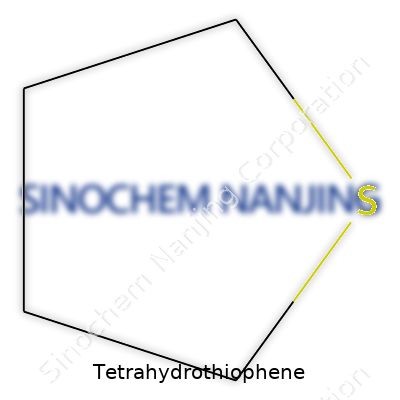
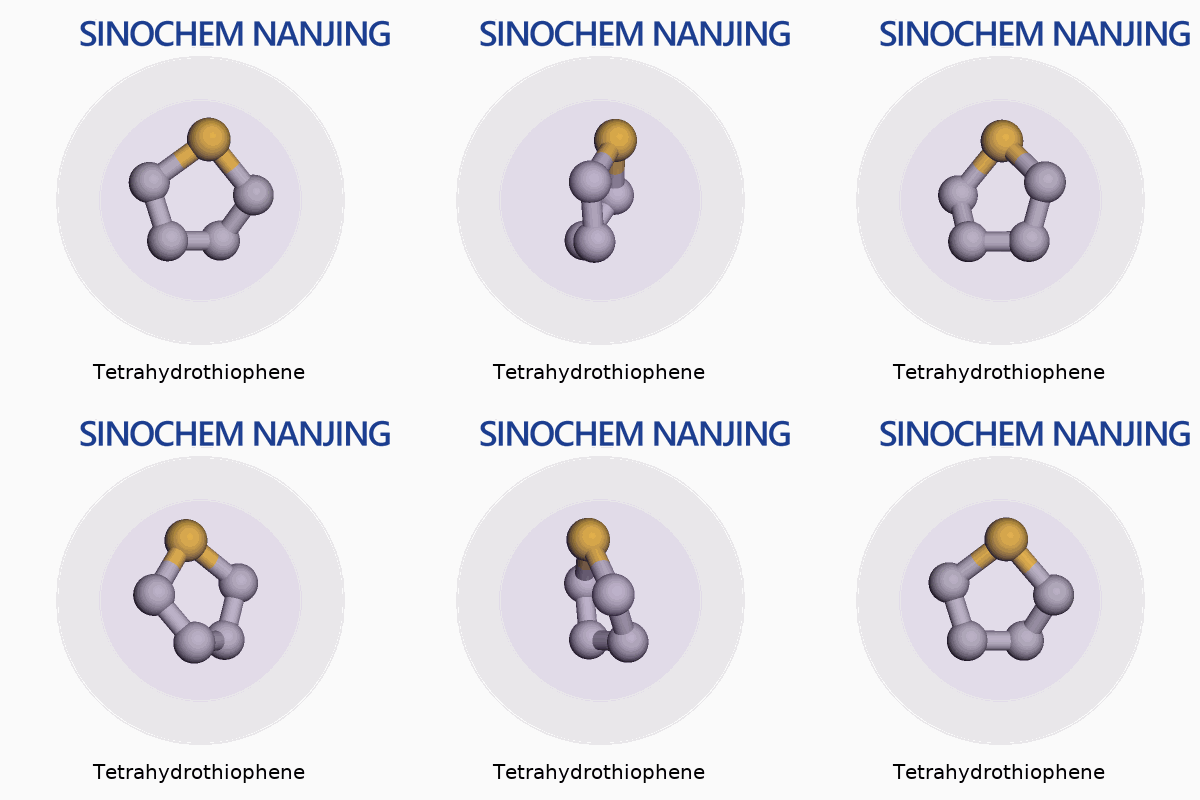
| Names | |
| Preferred IUPAC name | Thiolan |
| Other names |
THT Thiophane Tetrahydro-2-thiophene Thiolane |
| Pronunciation | /ˌtɛtrəˌhaɪdrəˈθaɪəˌfiːn/ |
| Identifiers | |
| CAS Number | 110-01-0 |
| 3D model (JSmol) | `3D model (JSmol) string of Tetrahydrothiophene:` ``` C1CCCS1 ``` |
| Beilstein Reference | 1209245 |
| ChEBI | CHEBI:132402 |
| ChEMBL | CHEMBL19216 |
| ChemSpider | 56451 |
| DrugBank | DB01890 |
| ECHA InfoCard | 03ea713d-ef75-49bb-83e5-d7b1f9017e43 |
| EC Number | EC 208-984-9 |
| Gmelin Reference | 68238 |
| KEGG | C02544 |
| MeSH | D013771 |
| PubChem CID | 8032 |
| RTECS number | XZ1050000 |
| UNII | 4G7K295V7E |
| UN number | UN2417 |
| Properties | |
| Chemical formula | C4H8S |
| Molar mass | 90.18 g/mol |
| Appearance | Colorless to pale yellow liquid |
| Odor | unpleasant |
| Density | 1.009 g/mL at 25 °C (lit.) |
| Solubility in water | Miscible |
| log P | 1.54 |
| Vapor pressure | 3.27 kPa (at 20 °C) |
| Acidity (pKa) | 8.7 |
| Basicity (pKb) | 2.55 |
| Magnetic susceptibility (χ) | -50.0·10⁻⁶ cm³/mol |
| Refractive index (nD) | 1.502 |
| Viscosity | 0.95 mPa·s (20 °C) |
| Dipole moment | 2.25 D |
| Thermochemistry | |
| Std molar entropy (S⦵298) | 179.8 J·mol⁻¹·K⁻¹ |
| Std enthalpy of formation (ΔfH⦵298) | -35.7 kJ/mol |
| Std enthalpy of combustion (ΔcH⦵298) | -2855.7 kJ/mol |
| Hazards | |
| GHS labelling | GHS02, GHS07 |
| Pictograms | GHS02,GHS06 |
| Signal word | Warning |
| Hazard statements | H226, H301, H311, H331, H315, H319, H335, H411 |
| Precautionary statements | P210, P233, P261, P273, P280, P305+P351+P338, P304+P340, P312, P337+P313, P403+P235 |
| NFPA 704 (fire diamond) | 2-4-0 |
| Autoignition temperature | 215 °C |
| Explosive limits | **2% - 19%** |
| Lethal dose or concentration | LD50 oral rat 600 mg/kg |
| LD50 (median dose) | LD50 (median dose): 220 mg/kg (oral, rat) |
| NIOSH | SNM |
| PEL (Permissible) | 100 ppm |
| REL (Recommended) | 0.5 |
| IDLH (Immediate danger) | 100 ppm |
| Related compounds | |
| Related compounds |
Thiophene Tetrahydrofuran 1,4-Dithiane 1,3-Dithiane Sulfolane |



