Tetrahydropyran: A Closer Look at a Versatile Chemical
Historical Development
Chemists started showing interest in tetrahydropyran as early as the late 19th century, a period marked by curiosity about cyclic ethers and their reactivity patterns. Researchers soon recognized that the six-membered oxygen ring could serve as a model compound for carbohydrates, so this small ether started cropping up in early carbohydrate studies. By the mid-twentieth century, tetrahydropyran had carved out its own place within synthetic organic chemistry, often linked to efforts in carbohydrate protection. Years spent understanding its unique properties translated into careful research around its structure, behavior with reagents, and the way it fits into reaction mechanisms. Now, laboratories and industry appreciate its role, whether for academic work or practical applications.
Product Overview
Tetrahydropyran brings to the table a neat, cyclical structure defined by five carbon atoms and a single oxygen atom, forming a ring that's both stable and reactive in the right hands. In the flask, it shows up as a colorless liquid with a faint odor—something reminiscent of ethers in general. Anyone who works with organic molecules knows how a simple ring like this one finds its way into a surprising range of reactions, acting as a building block or a protective group, especially for the stubborn hydroxyl groups in sugar chemistry. Its simplicity hides a versatility that continues to draw interest from researchers and chemists in labs of all sizes.
Physical & Chemical Properties
The liquid itself rolls around in the beaker at room temperature, boiling close to 88°C, which is lower than water but right in the range for plenty of ether solvents. The molecular weight remains light, letting it evaporate easily if left uncapped. Tetrahydropyran doesn't dissolve naturally in water—it leans toward organic solvents like ether or benzene, which matches what chemists expect for a molecule shaped like this. The oxygen in its ring gives it a polar edge, yet it behaves in a fairly nonpolar manner compared to the simple alcohols. Despite its relatively straightforward setup, that oxygen still leads to a handful of interesting reactions, especially when acids or electrophiles get involved.
Technical Specifications & Labeling
Labs using tetrahydropyran order it by purity, with special attention to how tightly it meets set standards for water and impurity content. Regulations often call for clear hazard labeling because of its volatility and flammability, echoing experience with other ethers. Its label usually displays GHS pictograms pointing out fire risks and health precautions, keeping in line with best industry practices. Shipping and storage guidelines never overlook the need for a robust cap and cool, well-ventilated environments to keep the compound from leaking or tipping over—lessons learned through lab mishaps and small accidents over the years.
Preparation Method
Tetrahydropyran comes from classic acid-catalyzed cyclization reactions, starting with 1,5-hexanediol. A strong acid convinces the diol to close into a ring, forming the signature oxygen bridge. Chemists pay close attention to controlling acidity, reaction time, and temperature, since pushing conditions out of balance leads to side-products and loss of yield. The process feels familiar to anyone who dabbles in ether syntheses: set up, heat, monitor, distill off the product, and take care to remove leftover acid. As with many organic syntheses, it’s the fine-tuning and experience behind the bench that decide success.
Chemical Reactions & Modifications
The true magic of tetrahydropyran lies in its ability to shield alcohol groups during tough chemical transformations. The THP-protecting group transforms an alcohol’s stubborn -OH into a more forgiving moiety, opening up possibilities for further reactions that don’t disrupt the original function. This move, usually carried out with 3,4-dihydro-2H-pyran and a touch of acid, forms the familiar THP ether. Later, a bit of acid washes it away, freeing the alcohol. Beyond protection, tetrahydropyran also acts as a precursor in ring-opening reactions—especially valuable in making specialized building blocks for complex synthetic targets.
Synonyms & Product Names
Conversations in the lab often bounce between “tetrahydropyran” and its shorter synonyms like “oxane.” The IUPAC calls it oxane, but most older literature still sticks with the common name. Catalogs may list it under either, so researchers hunting through chemical suppliers sometimes find themselves toggling searches between both terms until they land on the right bottle. The varying names can feel like a small hurdle, but enough chemists swap stories about ordering mishaps to signal the need for better clarity across older and newer references.
Safety & Operational Standards
Years of handling have made it clear that tetrahydropyran shares more than a few traits with other volatile ethers—flammability tops the list. Proper storage means keeping it away from hot plates, flame sources, or anywhere static discharge could set it off. Direct inhalation won’t help, either; working under a fume hood keeps things safe, especially since its vapors can drift. Gloves and eye protection become second nature after dozens of experiments, and everyone in the lab recognizes the importance of using only properly maintained containers to cut down on leaks or evaporation.
Application Area
Tetrahydropyran pulls its weight in synthetic organic chemistry labs everywhere. Its most celebrated role revolves around protecting groups in carbohydrate or natural product synthesis. Researchers cook up intricate molecules by toggling this protection on and off, letting challenging transformations happen without sacrificing sensitive alcohols. Outside traditional chemistry, some pharmaceutical and agrochemical research also puts tetrahydropyran derivatives through their paces, working toward improved drugs or crop treatments. Even as other protecting groups and ether solvents hit the market, tetrahydropyran sticks around because chemists trust its track record and know how to handle its quirks.
Research & Development
Investment in tetrahydropyran research carries forward because its chemistry links so closely with broader innovation in synthetic methods. Chemists keep finding new uses by tweaking its structure or exploring fresh reactivity under milder or greener conditions. My own time at the bench taught me the value of THP protection in enabling complex molecule assembly, supporting the long game in total synthesis projects. New catalysts, cleaner reaction conditions, and better deprotection protocols reflect ongoing work, all driven by the need to meet stricter environmental standards and boost efficiency. As academic and industrial labs face tighter rules and higher expectations, compounds like tetrahydropyran continue serving as proving grounds for smarter techniques.
Toxicity Research
Detailed animal studies on tetrahydropyran’s toxicity remain limited, but experience and available reports suggest its risks align with other small ethers: central nervous system depression at high exposure, irritation upon contact, and potential flammability concerns. Chronic risks, such as carcinogenicity or reproductive toxicity, lack strong evidence so far, but researchers warn against complacency since repeated exposure never does a chemist any favors. Local exhaust, gloves, and splash protection all count for more than just regulatory compliance—they help guard against the unexpected moments that every seasoned lab worker learns to expect.
Future Prospects
Looking ahead, the outlook for tetrahydropyran centers on two main fronts. First, there’s opportunity in refining how it’s made: pushing for greener routes and leveraging catalysis instead of stoichiometric acid. Second, ongoing exploration of its derivatives could unlock fresh applications for everything from medicinal chemistry to new materials. The trend toward sustainable lab practices drives a lot of this work, especially as societies demand stricter control over solvents, waste, and hazardous materials. Chemistry won’t stand still, and neither will the clever use of compact, reactive cyclic ethers like tetrahydropyran.
What is Tetrahydropyran used for?
The Backbone of Many Everyday Products
Laboratories always smell a bit strange. Not all chemicals can claim relevance in the outside world, but Tetrahydropyran makes a convincing case for its place beyond the bench. I’ve seen its plain structure written on chalkboards and tucked away in reaction schemes. It’s a six-membered ring that brings a certain stability to organic chemistry, but its true significance often hides in the background of commercial applications.
Why Chemists Rely on Tetrahydropyran
Tetrahydropyran doesn’t draw the spotlight in medicine cabinets or supermarket aisles. Still, this molecule supports both discovery and manufacturing. Chemists often use it as a protecting group—a way to guard valuable alcohol groups during tricky steps in drug synthesis. Without this extra layer, many delicate molecules would never make it from the flask to the pharmacy. Modern HIV treatments, pain medicines, and antibiotics sometimes owe part of their existence to shortcuts made possible by functional groups like the tetrahydropyranyl ether.
Perfumes and Flavors Start Here
In the world of scents and flavors, small changes in chemical structure shift aromas from grassy to floral, or from spicy to sweet. Tetrahydropyran brings a subtle, ethereal sweetness when used in fragrance design. Perfume houses look for molecules that linger and create nuance—using tetrahydropyran rings helps achieve those complex, layered notes that separate a high-end perfume from a cheap knockoff. Food scientists use similar molecules to round off flavors in candies, sodas, and baked goods. Knowing this, I can never look at an ingredient label without wondering what invisible chemistries shape what I experience.
Industrial and Research Workhorses
The strong, stable ring of tetrahydropyran isn’t just a chemical footnote. Industrial formulations—coatings, lubricants, specialty polymers—depend on intermediates built from this core. Epoxy resins, which glue together everything from wind turbine blades to electronics, often rely on compounds related to or derived from tetrahydropyran. In my own work with clean-energy startups, experts often chase better adhesives and longer-lasting materials. Tetrahydropyran drops into those conversations because it offers a balance: easy to build on, tough to break apart.
Challenges and Safer Practices
In research, every shortcut brings a trade-off. Tetrahydropyran requires careful handling—its preparation often involves flammable or toxic ingredients. Students and industrial workers must follow strict safety protocols. From my own fumbling in teaching labs, I remember the nervous sweat of running a reaction that involved volatile ethers. Scaling up, companies face questions about hazardous waste, emissions, and the risks of transporting such chemicals in bulk.
Sustainability experts focus on greener chemistry these days. They try to replace old solvents and reagents with safer alternatives, adopt renewable feedstocks, and lower waste. Though tetrahydropyran still stays in demand, companies work at finding new ways to recycle it or synthesize it more cleanly. Policies and partnerships guide this shift. Facts show that even a slight reduction in hazardous solvent use drops accident rates and cuts costs, with added benefit for air and water quality.
The Everyday Impact
It’s easy to overlook the impact of a small chemical like tetrahydropyran. Still, it helps unlock medicines, flavors, fragrances, and materials that most people touch every day. Its story traces the evolution of modern chemistry—always adapting, always solving real-world problems. The next time you open a bottle of perfume, chew mint gum, or take a prescription, a little ring structure may be quietly making the experience possible.
What is the chemical formula of Tetrahydropyran?
Understanding Tetrahydropyran: More Than Just a Formula
Tetrahydropyran stands as one of those quiet workhorses in chemistry labs everywhere. Its formula, C5H10O, might look straightforward, but there is a lot behind those numbers and letters. This compound sometimes pops up when people want to build larger, more complicated molecules, especially in drug research and the production of fragrances. Having worked with organic chemicals in a teaching lab, I saw students struggle to see why these basic building blocks matter. The value rests not only in knowing the formula but in what the ring-shaped structure can do.
How Formula Shapes Function
Getting to grips with C5H10O means thinking about more than just carbon, hydrogen, and oxygen. The oxygen atom sits inside a six-membered ring, not stuck at the end of a chain. This ring shape changes how tetrahydropyran behaves. In the right hands, this molecule becomes a handy tool. Chemists use it for protecting certain groups during reactions, holding back unwanted side reactions, and helping guide selectivity in building complex molecules.
From years in the lab, I saw researchers lean on tetrahydropyran’s unique ring to keep sensitive parts of other molecules safe during tough conditions. Ever tried baking bread and needing to cover the dough so it doesn’t dry out? Tetrahydropyran acts like that cover when building molecules, giving chemists room to work without ruining what they’ve already done.
Why Clarity on the Formula Matters in Practice
Plenty of problems start with tiny mix-ups. Imagine a pharmacy specialist orders the wrong compound because they mix up names with similar-sounding chemicals. Or a research group wastes weeks discovering a misprint in the formula led to bad results. Precise formulas like C5H10O cut down on confusion. Quality control in industry comes down to the fine details, including making sure the right molecule is going into each product.
My old organic chemistry professor used to hammer home that “structure means everything.” Small changes in a formula can create completely different behaviors, and the difference between a safe product and a dangerous one can be just one extra carbon atom or one misplaced oxygen. Reliable chemical information protects health and safety in everything from drugs to plastics.
Strengthening Chemical Literacy
Students today face information overload. Getting the basics right feels more important than ever. Making time to practice reading and drawing molecules like tetrahydropyran helps develop a kind of instinct that goes beyond memorization. For anyone working in science—whether in a university, a pharmaceutical company, or even just teaching a high school class—developing the habit of double-checking chemical formulas can head off mistakes early.
Professional associations and trusted textbooks continue to play a big role in spreading accurate data. Companies making or selling chemicals need to follow strict standards and communicate with clarity. Digital databases like PubChem or ChemSpider help both experts and learners double-check the formula and properties of tetrahydropyran, tightening the feedback loop and making accuracy the norm.
Building Better Habits in the Lab and Beyond
Keeping a close eye on chemical formulas such as C5H10O isn’t just for the textbook. It's a practical habit that shapes the outcome of projects where health, safety, and innovation are constantly at stake. By valuing the basic facts and understanding why these details matter, everyone in the field stays safer and more productive.
Is Tetrahydropyran hazardous or toxic?
The Importance of Knowing What’s in the Bottle
Spend enough time in a lab or a factory floor, and you start to realize that chemistry isn’t just a collection of mysterious bottles—there’s a real need to know what’s inside, and what the risks are. Tetrahydropyran (THP) pops up in synthetic pathways, especially for folks in the pharmaceutical or materials science world. It smells a little like ether and boils at a point lower than water, which gives you a hint about its volatility. People rarely talk about it outside specialty labs, but whether you’re handling small amounts in a research lab or using it for scale-up, the question keeps coming up: does this substance pose a serious risk?
Exposure and Health Effects
THP acts a lot like other low-molecular-weight ethers. It’s a flammable liquid, which means a single spark nearby can turn things sideways fast. If you’ve ever cracked open a container without proper ventilation, you know what a headache feels like. Breathing in those fumes is not just a minor annoyance—it can lead to lightheadedness, dizziness, and nausea. At higher concentrations, most solvents will irritate the respiratory system, and THP doesn’t stray from that pattern. Spilling some directly on your hands? The skin picks up small molecules easily, which can cause irritation and, depending on personal sensitivity, sometimes dermatitis after repeat exposure. Splashing any kind of organic solvent into your eyes is a one-way street to the emergency eyewash station.
Environmental Risks and Industrial Responsibility
THP finds its way into waste streams, and once in water or soil, it doesn’t stick around forever, but it isn’t a drop-in-the-ocean problem either. What happens at an industrial site ends up downstream, and the cumulative impact builds up over time. I’ve watched smaller facilities struggle with how to handle organic solvent waste without polluting their surroundings. Simple disposal stirs up a range of headaches for downstream ecosystems—fish and aquatic critters don’t always bounce back as easily as humans do. Industry regulations, from OSHA in the United States to guidelines in the EU, keep a close eye on solvents, and for good reason. The risk may not rival cyanide, but carelessness causes problems all the same.
Addressing Hazards with Real-World Solutions
The basics can’t be skipped: chemical splash goggles, gloves that resist organic solvents, and a working fume hood. Labels go a long way. I remember one time someone in my team substituted bottles, and confusion led to unnecessary risks. Simple protocols and clear training keep those moments rare. Spills get contained with absorbent mats, and ventilation gets top priority over closed doors. If you ever have to store it, check for tightly sealed containers far from sparks and open flames.
I’d like to see more labs and workplaces adopt safer alternatives or greener solvents where possible. Sometimes substitutes exist without the same flammability or health problems, but nobody notices unless management regularly reviews chemical inventories. Waste disposal companies earn their pay, too—proper incineration deals with most of these organics in a way that doesn’t chase environmental regulators to your door. Workers who speak up about poor ventilation or missing equipment do everyone a favor, and regular hazard assessments turn into a safety culture instead of a to-do list item.
The Bottom Line
THP points to bigger questions about everyday chemical safety—it’s not about panic or indifference but realizing every bottle on that shelf carries its own story. Respect for chemical safety keeps people healthy and businesses open. If in doubt, dig into the safety sheet and ask for help. Risk comes from what’s unknown or neglected, never from information clearly shared and acted upon.
What are the storage conditions for Tetrahydropyran?
A Closer Look at What Tetrahydropyran Needs
Tetrahydropyran often shows up in chemistry labs and industrial projects. If you’ve ever had to order or store this organic liquid, you know it’s not just another bottle you can shove on a windowsill. You pick up a drum of this stuff, and whether it’s for synthesis or research, you start thinking about three things: flammability, stability, and health. Storage isn’t just about following a rulebook—it’s about making sure people and projects stay trouble-free.
The Real Risks: Flammability and Vapor
Tetrahydropyran catches fire easily, and its vapors look for ignition sources like a moth to a flame. Leaving it near hot surfaces, open flames, or even uncontrolled static electricity opens up real danger, not just hypothetical risk. Every major chemical fire story I’ve followed usually links back to overlooked storage or lax labeling. The flash point of tetrahydropyran hovers around room temperature. So, regular lab ambient air drifts very close to the danger zone most days. Most manufacturers pack it in tightly sealed containers, but the minute you break open a drum, you need to think about fresh air. Good ventilation isn’t just a box-ticking exercise; it saves headaches and sometimes lives.
Container Choice Makes or Breaks It
I’ve seen folks try to stretch budgets and use whatever glassware or leftover bottles they have. With tetrahydropyran, cheap containers backfire in the worst ways. It dissolves certain plastics, reacts with poor-quality seals, and seeps through loose lids. Every drop that leaks isn’t just product lost—it could corrode shelving or stir up toxic fumes. Strong screw-capped glass bottles or tightly sealed metal cans outlast plastic any day. Keep the original label on; don’t risk mystery liquids in the lab fridge or store-room. One wrong pour can ruin experiments or, even worse, endanger someone who mistakes it for something safer.
Cool, Dark, and Dry: The Best Habitat
Direct sunlight messes up tetrahydropyran. The liquid gradually loses stability and can break down—sometimes without warning. Every chemical I’ve handled keeps a better shelf life away from UV and heat, tetrahydropyran included. Climate-controlled rooms or at least a dry, dark cupboard goes a long way. Humidity screws up chemicals fast; it’s like inviting mold and side reactions to the party. For personal work, I’ve always relied on an inventory log. This way, nothing sits forgotten or unlabeled in the back, where deterioration sneaks up and wastes product.
Simple Precautions for Health
The fumes alone can irritate your nose and lungs and prolonged exposure risks worse. Safety goggles and gloves make up the frontline every time. Invest in a decent chemical fume hood if you open tetrahydropyran frequently. I learned the hard way after a minor splash that skin irritation can derail work for days. The right personal protective equipment keeps productivity and safety balanced. It’s easy to get casual, but one slip changes everything.
Improving Storage Practices
Labs and facilities benefit from regular checks on their storage spaces. Lone bottles collecting dust in corners never end well. Encourage team members to log usage and check for leaks or crusty caps. Quick team huddles or reminders keep everyone alert. Training, especially for interns or newcomers, clears up any confusion about shelf placement and why certain chemicals take priority for locked cabinet space.
Simple steps—ventilate, label, seal, lock away from light and fire—save headaches and keep everyone out of the headlines. Real chemical safety starts with not cutting corners.
How is Tetrahydropyran synthesized?
A Look at an Unsung Workhorse of Chemistry
Tetrahydropyran doesn't get celebrated much, but its six-membered oxygen-containing ring pops up all over pharmaceutical and fragrance chemistry. Somehow, this small piece of molecular architecture keeps turning up in research projects—from designing cholesterol-lowering drugs, to figuring out the structure of natural products. A lot of essential molecules use tetrahydropyran rings as building blocks, so getting efficient ways to make it right matters for both academic and industrial work.
Methods That Chemists Rely On
The simplest synthetic route still starts with dihydropyran, a direct precursor. Adding hydrogen over a palladium or platinum catalyst turns the double bond into a single bond, yielding a clean tetrahydropyran. This hydrogenation step works under mildish conditions, doesn’t demand exotic reagents, and typically produces few side products. Most undergrad labs tackle reactions like this early on, since it teaches important lessons about catalytic hydrogenation and functional group tolerance.
Not every pathway follows the most direct route. Some chemists start with 1,5-hexanediol. Acid-catalyzed cyclization of 1,5-hexanediol generates the tetrahydropyran ring. Sulfuric acid or para-toluenesulfonic acid push the reaction forward. This method sometimes fits better when starting from bulk chemicals or biobased starting materials. I’ve seen this approach used in process chemistry settings, where cost and feedstock access shape decisions.
Another common strategy involves the Prins cyclization. Reacting an alkene with an aldehyde in acid gives a tetrahydropyran after a tidy ring closure. The Prins method can incorporate a range of side-chains around the ring, so it’s useful for making substituted derivatives. Sometimes controlling regioselectivity gets tough, but with careful setup, chemists can access a diversity of functionalized rings. People who work with complex natural products appreciate the flexibility here. Modern organic synthesis often borrows shortcuts from these methods when time or resources matter.
What Draws Industry to These Reactions?
Scalability challenges keep surfacing. A lab can punch out a few grams with ease, but big plants bring new problems like heat transfer, mixing, or safety hazards with hydrogen. Equipment design and real-world chemistry experience count just as much as textbook knowledge. A mistake with hydrogen gas isn’t just expensive—it’s dangerous. Working in the chemical industry taught me that process safety protocols and redundancy make or break scale-up success.
Catalyst recovery and waste also deserve attention. Palladium and platinum cost plenty, so industries develop recovery systems to recycle these metals. Acid catalysts present corrosion and waste disposal concerns, so choosing between different acids sometimes comes down to environmental rules or disposal costs. Sustainability pushes more groups to explore solid acids, continuous flow reactors, and greener solvents. Regulatory pressure and public expectation both nudge the industry away from hazardous processes.
What Should Change Moving Forward?
The main challenge: balancing efficient yield, low cost, and safety. With green chemistry taking a central role across science, the field benefits each time a more sustainable approach surfaces. In my experience, simple changes—like swapping to a reusable catalyst, or running reactions in water if possible—can cut waste and cost. Everyone wants methods that can adapt to changing feedstocks, whether petroleum-based or plant-derived. Faster, cleaner ways to build essential rings like tetrahydropyran will keep unlocking new medicines and materials. Chemists stay nimble by looking beyond tried-and-true recipes, searching for creative alternatives that deliver at scale.
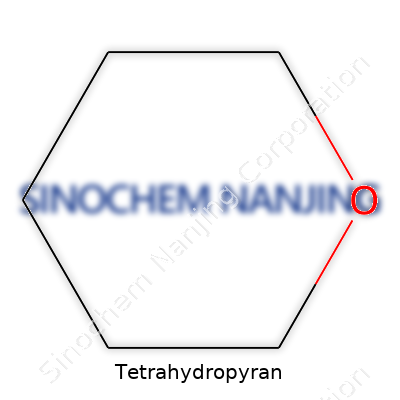
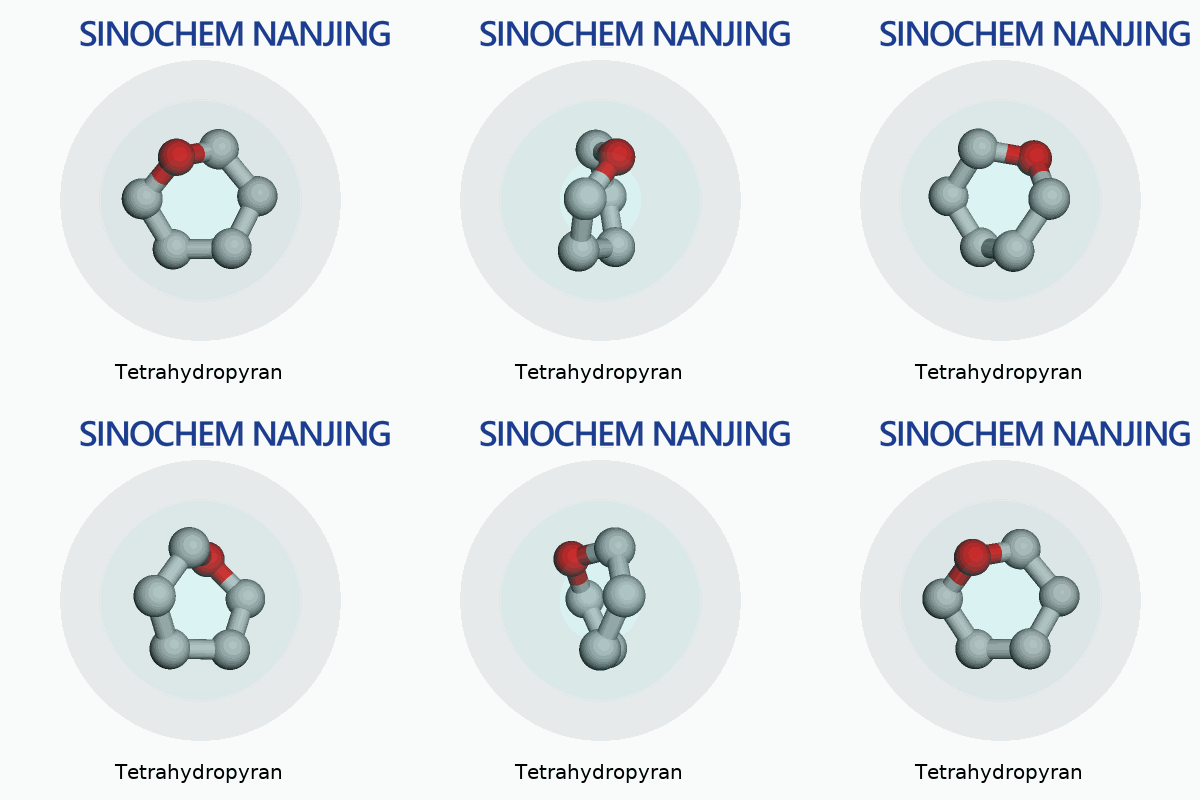
| Names | |
| Preferred IUPAC name | Oxane |
| Other names |
Oxane THP |
| Pronunciation | /ˌtɛ.trəˌhaɪ.drəʊˈpaɪ.ræn/ |
| Identifiers | |
| CAS Number | 109-99-9 |
| Beilstein Reference | 1361111 |
| ChEBI | CHEBI:35584 |
| ChEMBL | CHEMBL1231878 |
| ChemSpider | 70108 |
| DrugBank | DB02241 |
| ECHA InfoCard | ECHA InfoCard: 100.007.610 |
| EC Number | 216-586-1 |
| Gmelin Reference | 8220 |
| KEGG | C06181 |
| MeSH | D013806 |
| PubChem CID | 8031 |
| RTECS number | YK7175000 |
| UNII | 8F08I4280U |
| UN number | UN2378 |
| CompTox Dashboard (EPA) | DTXCID2024863 |
| Properties | |
| Chemical formula | C5H10O |
| Molar mass | 86.13 g/mol |
| Appearance | Colorless liquid |
| Odor | Weak, ether-like |
| Density | 0.945 g/cm³ |
| Solubility in water | slightly soluble |
| log P | 0.21 |
| Vapor pressure | 5.5 kPa (at 20 °C) |
| Acidity (pKa) | ~35 |
| Basicity (pKb) | 4.31 |
| Magnetic susceptibility (χ) | -62.4·10⁻⁶ cm³/mol |
| Refractive index (nD) | 1.424 |
| Viscosity | 1.01 mPa·s (20 °C) |
| Dipole moment | 1.63 D |
| Thermochemistry | |
| Std molar entropy (S⦵298) | 338.8 J∙mol⁻¹∙K⁻¹ |
| Std enthalpy of formation (ΔfH⦵298) | -380.7 kJ/mol |
| Std enthalpy of combustion (ΔcH⦵298) | -3800.9 kJ/mol |
| Hazards | |
| GHS labelling | GHS02, GHS07 |
| Pictograms | GHS06, GHS08 |
| Signal word | Warning |
| Hazard statements | H226, H319, H335 |
| Precautionary statements | P261, P305+P351+P338 |
| NFPA 704 (fire diamond) | 1-2-0 |
| Flash point | -15 °C |
| Autoignition temperature | 215 °C |
| Explosive limits | Explosive limits: 1.5–12% |
| Lethal dose or concentration | LD50 (oral, rat): 900 mg/kg |
| LD50 (median dose) | LD50 (median dose): Oral rat 1600 mg/kg |
| NIOSH | RN6600000 |
| PEL (Permissible) | PEL: 100 ppm |
| REL (Recommended) | 500 ppm |
| IDLH (Immediate danger) | Not established |
| Related compounds | |
| Related compounds |
Tetrahydrofuran Pyran Dioxane Oxane Piperidine |



