Tetraethyleneglycol: A Practical Look at History, Properties, and Applications
Rolling Through History
Tetraethyleneglycol didn’t just pop up in a laboratory one day. Its roots stretch back to the early twentieth century, when chemists chased down new solvents and polymer intermediates. Glycols like this played an important role as industry began shifting from coal tar and natural extracts to more controlled, synthetic products. Those first researchers had a knack for discovering long-chain polyethers, setting the stage for many compounds still making waves today. As plasticizers, lubricants, and solvents became more widely used, demand for improved glycols spurred engineers and scientists to develop purer, more predictable versions. This path shaped everything from antifreeze to textiles, where the behavior of each glycol fraction mattered.
Product Overview: More Than Just a Building Block
Tetraethyleneglycol, with its chain of repeating ethylene oxide units, brings more than just backbone flexibility to industry. In a bottle, it looks like a clear, thick liquid—some describe it as a little syrupy, which isn’t far off. The chemical formula C8H18O5 tells the story of its structure: four repeating oxyethylene units connecting two terminal hydroxyl groups. It behaves differently from its shorter siblings; compared to diethylene or triethylene glycol, the added ether units give it unique solubility and boiling features. As a result, users rely on it for jobs that need less volatility and higher boiling points. The blend of non-volatility and moderate water solubility sets it apart in a crowded field.
Physical & Chemical Behavior
Unlike many solvents destined for evaporation, tetraethyleneglycol holds onto its liquid form across a broad temperature range. It resists freezing until well below water’s familiar mark and boils at higher temperatures, making it stable for applications where sudden evaporative loss spells safety risks or product failures. Its faint, almost sweet smell reminds chemists of its glycol roots, though taste testing has no place in any lab or factory. It absorbs water but not obsessively, balancing hygroscopic tendencies that can help or hinder, depending on the application. It dissolves many polar and ionic compounds and teams up well with a range of organic substances, bolstering its spot as a go-to carrier or solvent in formulations.
Technical Specs & Labeling Routines
Working in manufacturing or research means paying close attention to the numbers behind the chemical. Buyers and regulators focus on purity—usually over 99 percent—as well as water content and color. Labels also carry warnings and unique chemical identifiers, so shipping and storage rarely go wrong if routines are followed. I’ve seen confusion crop up when similar glycols get stacked side by side on storage racks; tetraethyleneglycol’s label, with clear CAS numbers and hazard symbols, cuts mistakes. Most suppliers list technical spec sheets, but hands-on inspection—checking for color or cloudiness—gives early signs of mishandling or contamination, an issue anyone in a lab or plant should watch for.
Making Tetraethyleneglycol: Chemistry in Action
The pathway to producing this compound hinges on controlled polymerization. By reacting ethylene oxide with water or shorter glycols under heat and pressure, chemists encourage chain extension. Catalysts, often metal-based, help manage how far the reaction goes; small changes in temperature or surfactant additions can shift yields or produce unwanted byproducts. Plants built for glycol synthesis require robust monitoring, since runaway reactions or impure feeds quickly turn costly or even hazardous. Having worked with batch reactors before, I know slight missteps in feed rates or catalyst concentrations lead straight to off-spec material. Optimization and regular calibration become essential parts of anyone’s workflow.
Chemical Flexibility: Reactions & Modifications
Tetraethyleneglycol takes well to chemical tweaks. Its terminal hydroxyl groups make it a favorite for esterification or etherification, opening doors for custom surfactant and plasticizer designs. Industries that thrive on tailored properties—like pharmaceuticals, where molecule tweaking supports bioactivity—find its reactivity vital. It also forms coordination compounds with metals, finding utility in niche catalysis or stabilization applications. Modifying its structure, through oxidation, sulfonation, or halogenation, spins off derivatives that either soften or stiffen resulting polymers. Over the years, seeing how one glycol can branch out into surfactants, solvents, and chemical intermediates always reminds me why synthesis stands as such a fundamental industrial art.
Synonyms & Common Naming Oddities
Chemical names confuse even seasoned professionals if attention drifts. Tetraethyleneglycol shows up as TEG-4, TetraEG, and sometimes as a mouthful: 2,2'-[1,2-ethanediylbis(oxy)]diethanol. Missed deliveries have occurred because of mismatched nomenclature on purchase orders; having both IUPAC and trade names on documents avoids those headaches. Synonyms track closely with supplier preference or historic company traditions, so cross-referencing before purchase reduces risk of mix-ups, especially since some closely-related glycols behave quite differently and lead to process failures or even safety issues.
Workplace Health & Safety: Keeping Hazards in Check
In practice, safety with tetraethyleneglycol shares much with its glycol relatives. Splash proof goggles and gloves—preferably disposable nitrile—become routine, since skin contact sometimes leads to irritation after repeated exposure. Its low volatility doesn’t excuse ignoring ventilation; heated processes can still produce vapors that affect indoor air. Spills get slippery, creating fall hazards more than poisonings, but accidental ingestion has no place in any operation, since glycols move quickly through the digestive system and carry toxicity, especially if misunderstood or confused with safer substances. I remember weekly safety briefings where proper labeling and double-checking containers saved my team from needless injuries and lab mix-ups.
Where Tetraethyleneglycol Earns Its Keep
Industry leans heavily on this glycol’s versatility. Lubricant formulations benefit from its stability, especially when blended with other glycols to tune viscosity. Some specialized brake fluids and hydraulic systems use it for its low freezing points. As a polymer precursor, it weaves into polyesters, polyurethanes, and polyether chains, providing flexibility or strength based on the manufacturer’s blend. Laboratory settings value its solvent power for dissolving a wide range of inorganic salts and complex organics. From personal experience, I’ve watched it keep research projects moving where simpler glycols stalled—especially in extractions or chromatography setups where selectivity really mattered.
Digging Deeper: Research & Development Efforts
Ongoing research highlights strange and promising uses for long-chain glycols. Laboratory teams look at modifying tetraethyleneglycol to make new surfactants, chelating agents, or as safer alternatives in formulations where older compounds raised health flags. Academic labs sometimes use it as a probe molecule to unravel reaction mechanisms or as a medium for catalytic cycles that can’t tolerate water or less stable solvents. Businesses with a nose for green chemistry investigate ways to produce these glycols from renewable resources, cutting fossil fuel dependence and reducing environmental impact—a worthy goal, given public concern over chemical footprints.
Understanding Toxicity—and Responsibility
No chemical, even old friends like glycols, deserves to be taken lightly. Studies show that tetraethyleneglycol is less acutely toxic than smaller glycols like ethylene glycol, yet ingestion or repeated skin contact remains a risk, particularly in settings where children or uninformed users might gain access. Long-term exposure studies, some funded by government agencies, note that chronic ingestion can lead to metabolic stress, though the evidence stays less dramatic than for other industrial solvents. Following training, keeping clear signage, and using proper containment all cut down on accidental poisoning chances and keep those horror headlines out of the news cycle. In my time around chemical storage, vigilance always beat cleanup.
Looking Ahead: Prospects and Challenges
Tetraethyleneglycol isn’t going out of style soon. As manufacturing shifts toward biobased plastics, high-performance lubricants, and specialty polymers, the push for more sustainable and safer solvents puts glycols in an important spot. Innovations from university and startup research often trickle down into bulk chemical use, where greener feedstocks and improved catalyst recovery methods cut waste and energy use. At the same time, stricter workplace regulations and growing community attention to chemical handling heighten the need for transparency and accountability at every stage—from production to disposal. Having watched chemical plant evolution over the past decades, I’ve learned that better stewardship not only protects people; it also encourages long-term business growth and opens doors for fresh, creative uses. The future may see tetraethyleneglycol moving into new roles, shaped by science, safety, and society’s changing needs.
What is Tetraethyleneglycol used for?
Not Just Another Chemical in a Lab
Tetraethyleneglycol doesn’t grab headlines. You don’t see ads for it, or influencers raving about it online. But its impact reaches beyond lab walls into everyday products. The stuff looks a bit like syrup, has a mild odor, and attracts water. Yes, it sounds plain—but stick with me.
Hidden Workhorse in Industry
You may not see tetraethyleneglycol on ingredient lists at the grocery store, but plenty of industries rely on it daily. Chemical plants use it to make plasticizers. Those are the things that keep plastics from going brittle in the sun or cold. Cable insulation, shower curtains, car interiors—if they flex and bend, chances are someone’s counted on tetraethyleneglycol’s pliable magic to make them last.
Pharmaceutical companies also lean on this substance. Its ability to dissolve a wide range of compounds means it helps turn a powder or pellet into a liquid medicine. This process matters a lot in drug formulation. Medications need ingredients that mix well and stay mixed. If you’ve ever swallowed a gel capsule without a bitter aftertaste or seen a cough syrup that stays smooth and doesn’t clump, thank chemicals like tetraethyleneglycol.
Cooling Down What Would Otherwise Overheat
Industrial cooling is a beast of a challenge. Engines, transformers, reactors—these things churn out heat. Simply adding water isn’t enough because water evaporates fast and can corrode metal pipes. Tetraethyleneglycol, with its high boiling point and water-loving nature, works in coolants and antifreezes where regular water can’t keep up. This keeps things from freezing in the winter and overheating under strain.
Electronics manufacturing also takes advantage of this. Circuit boards get washed in solutions packed with chemicals to strip out gunk and heat. A well-chosen cooling agent saves factories a fortune in downtime and replacement costs, all while lowering fire and corrosion risks.
A Partner for Science and Tech
Polyurethane foams, solvents for dyes, even adhesives—tetraethyleneglycol steps in quietly. Take solvents: certain dyes and inks won’t disperse evenly in ordinary water. Without the right carrier, you end up with splotchy prints or unstable ink in markers and pens. This chemical brings consistency to the mix, keeping ink smooth and stable. Manufacturers of foam products depend on chemicals that don’t just make bubbles, but hold their shape and last. Tetraethyleneglycol, mixed in with other glycols, offers control over texture and durability.
Staying Safe and Looking Forward
Handling tetraethyleneglycol in industry calls for solid safety habits. Workers need masks, gloves, and well-ventilated spaces. Swallowing or inhaling any glycol isn’t safe. There’s a reason safety data sheets and chemical labels matter so much, even for folks who’ve been on the job for decades.
Looking ahead, people want chemicals that do less harm to the planet. Demand for greener alternatives grows each year, especially as factories look to reduce pollution and lessen human risk. Environmental rules are changing, nudging companies to swap in safer formulas or recycle solvents. New research promises glycol blends that break down faster or use less energy to make. There’s no quick fix, but a real shift starts with paying attention to the building blocks behind stuff we use every day.
Is Tetraethyleneglycol safe to handle?
Understanding Everyday Risks
Walking through most research labs, the names on the bottles and drums rarely make headlines. Tetraethyleneglycol is one of those names. Anyone who has mixed solutions, cleaned glassware, or tinkered with solvents has probably run across it. Its clear, viscous look doesn’t set off alarms. From personal experience, sometimes the things that look dull can lull us into a false sense of security—the “it looks like water, what could go wrong?” kind of thinking.
What We Know from Experience and Research
Tetraethyleneglycol shows up as a cleaning agent, plasticizer, and coupler for synthetic chemistry. The chemical data points out its low volatility and relatively high boiling point. You won’t catch it evaporating all over the place in a warm lab, so the risk of inhaling large amounts stays low compared to many solvents. Breathing in ordinary room air, I’ve never noticed any strong fumes from it, which lines up with occupational safety reports.
That said, manufacturers keep safety data close at hand. Safety Data Sheets flag potential health risks mostly with long-term exposure or large quantities. Skin contact can cause mild irritation for some people, but splashing a little on myself didn’t bring much more than the nagging feeling I should have worn gloves. The bigger concern kicks in if someone swallows it by accident—nausea, headache, more severe symptoms with enough exposure. Lab safety isn’t just about potential effects, though. Missing small details, like a wet ring on a table or a sticky bottle, makes it easy to lose track of where the chemical ends up.
Facts on Regulation and Handling
Regulators didn’t put tetraethyleneglycol on lists of highly hazardous substances. It doesn’t show up in discussions of carcinogens or top-tier toxins. This chemical sits in the same league as other glycols—propylene glycol in foods and cosmetics, ethylene glycol in antifreeze. One difference: you won’t chug a glass of this stuff and walk away unharmed, but the risks stay manageable compared to heavier hitters.
Trusted sources like the European Chemicals Agency and the U.S. National Library of Medicine have weighed in. They both logged minimal acute toxicity. No solid evidence links tetraethyleneglycol to cancer, serious allergic reactions, or major fires. For fire safety, the main thing—like most organics—is not pouring it near open flames, since high heat can break it down into less friendly substances.
Safer Habits for Everyday Work
Based on both published data and time spent in shared labs, the smartest move stays basic: gloves, goggles, ventilation, and good habits. Rubbing eyes or eating lunch after touching any glycol isn’t worth it. People forget to check bottles for leaks, or reuse gloves across different chemicals. Those slips tend to cause more trouble than the actual material itself.
Substitution comes up in campus safety meetings, especially where waste or skin sensitivity turns up. If a less hazardous option works as well, swap it in. For the most part, tetraethyleneglycol doesn’t ring the urgent alarms of some lab chemicals, but showing respect for any chemical keeps people, air, and water a bit cleaner. Sometimes experience means learning a chemical’s quirks—the hard way—before it really sinks in. Guidance and data only work if handled with the same thoroughness as the bottle itself.
What is the chemical formula of Tetraethyleneglycol?
The Formula and Its Groundwork
You’re likely to see Tetraethyleneglycol’s formula pop up as C8H18O5. That’s eight carbons, eighteen hydrogens, five oxygens. In practice, it’s like drawing a chain, where four ethylene glycol units connect by ether linkages. Most chemists spell it out as HO–(CH2CH2O)4–H—meaning it holds a hydroxyl group at each end and a flexible middle built from repeating ethylene oxide segments. This kind of information turns out essential in labs, where even a single extra oxygen can throw off a recipe or reaction. In school, textbooks sometimes oversimplify things, but careful notation helps real people avoid real mistakes.
Why the Formula Matters Beyond Classrooms
Looking at a formula doesn’t just satisfy curiosity. For folks working with solvents, thickeners, or plasticizers, these numbers tell a story about safety, compatibility, and performance. For example, Tetraethyleneglycol boils at nearly 325°C. That’s higher than water, ethanol, or even diethylene glycol, which changes how it’s handled in manufacturing. Spills clean up differently, ventilation needs shift, and workers count on the formula to tell them how to stay safe. Waste disposal guidelines depend on the molecular structure, too—we cannot toss everything down the same drain and hope nature sorts it out.
Industry Touchpoints and Practical Hurdles
If you’ve worked with inks or coolants, you’ve probably run into this chemical. Its low volatility and strong solvent properties let product designers stretch boundaries with water-based inks or engine antifreezes. Even in fields like cosmetics and textiles, knowing what C8H18O5 means influences texture, appearance, and skin feel. The confusion starts when different names, purities, or formulas circulate online and in catalogs. Without strict attention, someone can buy the wrong grade, damaging equipment or risking skin irritation for the end user.
Human Factor and Experience
I’ve seen teams fall for near-identical names—mistaking Triethyleneglycol for its tetra cousin in a pilot batch. It sounds small, but wasted batches and halted production lines tell a different story. One summer, we mixed up containers on a cramped workbench, relying only on labels. Formula memorization helped us catch the error before it reached customers, but the stress was real. Small lapses in chemical identification cost time, money, and sometimes trust.
Building Better Habits and Safer Systems
Clarity grows from a habit of double-checking formulas, not just names. Companies who photograph labels, enforce checklists, and run periodic training experience fewer costly incidents. Teams who invest the half-hour to understand why C8H18O5 has the properties it does—how its oxygen atoms interact, how it binds water, why it resists evaporation—lead to fewer surprises in production and cleanup. Keeping good records and revisiting the basics supports safe workplaces.
Looking for Solutions
To close the gap, mix in practical reminders with every chemical order. Encourage staff to quiz each other on formulas and safe handling tips. Suppliers clear up confusion by adding structural diagrams to packaging and datasheets. The industry benefits when schools, labs, and vendors work together to teach not just names, but what each formula spells out in practice. The numbers and letters in C8H18O5 mean the difference between safe innovation and guesswork. We owe it to each other to respect what those formulas hold.
How should Tetraethyleneglycol be stored?
Why Pay Attention to Tetraethyleneglycol Storage?
Tetraethyleneglycol shows up in all sorts of industries, from producing solvents to handling specialty fluids. Despite being less talked about than some chemicals, its presence in warehouses, labs, and workshops is undeniable. Responding to chemical leaks makes you appreciate how quick things spiral out of control, especially when containers are not maintained or chemicals are kept in the wrong place. Spills and evaporating vapors don’t just hurt bottom lines—they also put health and safety on the line. These experiences shape a real respect for even “basic” chemicals and how they’re stored.
Keep It Cool, Dry, and Sealed: Lessons Learned on the Floor
Tetraethyleneglycol handles air pretty well compared to more volatile stuff, but ignoring humidity and heat eventually causes trouble. Moisture creeping into storage containers can change the composition or lead to unexpected reactions. Heat can boost evaporation or degrade the material. If you’ve ever opened a poorly stored drum to find sticky residue or a weird smell wafting out, you know things went wrong—nobody wants to see unsafe changes that risk downtime or, worse, injury.
Shelves and racks far from direct sunlight, well inside ventilated rooms, shield both workers and goods. Some sites push storage near active machinery or hot equipment for convenience, but the risk isn’t worth those extra steps saved. On one job, warm indoor temps in summer warped containers and stressed seals. Any chemical leak, even from a drip or tiny crack, can wreck flooring, compromise surfaces, and affect air quality for everyone close by.
Material Choices and Labeling: Small Steps, Big Difference
The type of container matters—polyethylene drums or high-density plastic jugs outlast metal, since tetraethyleneglycol reacts with certain alloys over long periods. In a busy service area, a single unmarked bottle turned into a headache when someone grabbed it thinking it was coolant. An extra moment labeling containers clearly, sticking to chemical-safe plastics, and using tight-fitting lids spares endless cleanup, confusion, and risk.
Ventilation Isn’t Optional
Chemical storage and stuffy rooms never mix. Even glycol, which doesn’t off-gas like acetone, adds to air quality worries in enclosed spaces. Watching teams work around open containers in a closed room reminds me how easily headaches, eye irritation, or fatigue sneak up. Ducted exhaust, fans, or at least windows open enough to keep air circulating, do more than make inspectors happy—they make the work area safer. OSHA, NIOSH, and CDC do not just write guidelines; they respond to incidents every week caused by ignoring these basics.
Keeping Records and Training—Not Just Box-Ticking
Chemical logs, safety data sheets nearby, and regular training refreshes aren’t busywork. I’ve seen close calls avoided just because someone read the log and moved incompatible chemicals before stacking new stock. Refreshing everyone on safe handling gets overlooked after a busy season. Nonetheless, that single, mandatory reminder helps people working late or new to the site avoid costly mistakes.
Worth the Effort
Taking these steps protects more than just inventory or equipment. Anyone handling chemicals feels the relief of knowing their workspace backs them up with safe systems, not just “good enough” setups. Every accident avoided counts, for workers today and for those showing up tomorrow.
What are the physical properties of Tetraethyleneglycol?
Understanding What Tetraethyleneglycol Brings to the Table
Tetraethyleneglycol, or TEG for short, shows up in places that many folks outside the chemical industry rarely think about. It often sits in the background, helping lubricants perform, lending a hand to heat transfer fluids, or aiding cleaning products. Its importance has a lot to do with its physical traits, something that isn’t just an abstract idea but a matter of real chemical structure and behavior in practical environments. Knowing these characteristics helps make smarter decisions about how TEG enters our workplaces, homes, and even products we use every day.
Viscosity, Solubility, and Why They Matter
Let’s start with what it looks and feels like. Tetraethyleneglycol is a colorless liquid that doesn’t throw off much odor. Pour some in a beaker, and you’ll notice it flows thickly compared to water. This high viscosity means TEG doesn’t splash around easily, and that property makes it perfect for lubricating machine parts. Companies rely on that consistency under varying pressures and temperatures. Unlike thinner liquids, it keeps things running smoothly, cutting down noise and wear, so equipment stays operational for longer and maintenance cycles stretch out further.
Take a drop and watch it mix with water. TEG dissolves fully without protest, no layers or clumps left behind. Water treatment operations use that complete miscibility, and it matters for cleaning and de-icing too. Many solvents lose performance or even become hazardous when water enters the mix. TEG, though, continues working, so folks out in the field can trust it during winter or humid summers. The boiling point sits quite high, around 330°C. So, this liquid sticks around when heat ramps up—and that steadiness brings value for use as a heat transfer agent. Coolants and thermal fluids don’t just carry water; they need something stable, and TEG checks those boxes reliably.
Safe Handling and Environmental Impact
TEG comes with a moderate vapor pressure at room temperature. No large amount evaporates during regular use, and the risk of inhaling dangerous fumes drops as a result. This reduces workplace concerns related to toxic inhalation, which I see as a relief since many chemicals of similar use evaporate too quickly, creating real hazards in busy environments. Of course, no chemical leaves the environment untouched. TEG scores low on volatility, so spills stay put rather than shooting up into the air instantly. That allows for quicker cleanup, and helps avoid rapid, wide-area contamination. It’s not classified as a persistent bioaccumulator either, and that offers some peace of mind. Responsible handling still matters, but the risk of long-term pollution drops compared to substances that won’t break down over time.
Density, Freezing Point, and Everyday Applications
Take the density, which clocks in at about 1.12 grams per cubic centimeter at room temperature. This keeps TEG heavier than water, so it doesn’t float or separate out in mixtures. De-icing fluids need that stability, especially in aviation settings, since complex mixes can lose effect if parts start to separate. Engineering teams depend on a predictable freezing point, near -7°C. Road maintenance crews use formulations based on those numbers, and it helps keep highways safer through tricky months. Formulators and safety experts get extra assurance whether they’re dealing with railcars, aircraft, or household cleaners.
Improving Outcomes Through Smarter Use
Working with TEG always comes down to these physical qualities. It’s easy to look past until you’ve handled a frozen pump or gummed-up line from an inferior fluid. TEG’s versatility—from industry to consumer products—comes from the way these properties work together. As we look at safer, more effective chemicals in the everyday world, learning and leveraging these traits makes all the difference. Equipping teams with facts—not just labels—ensures healthier results for workers, customers, and the environment we all share.
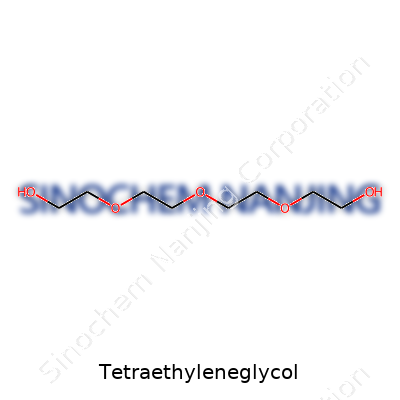
| Names | |
| Preferred IUPAC name | 2,5,8,11-Tetraoxadodecane |
| Other names |
Tetraethylene glycol TEG-4 3,6,9,12-Tetraoxapentadecane-1,15-diol |
| Pronunciation | /ˌtɛtrəˌɛθɪliːnˈɡlaɪkɒl/ |
| Identifiers | |
| CAS Number | 112-60-7 |
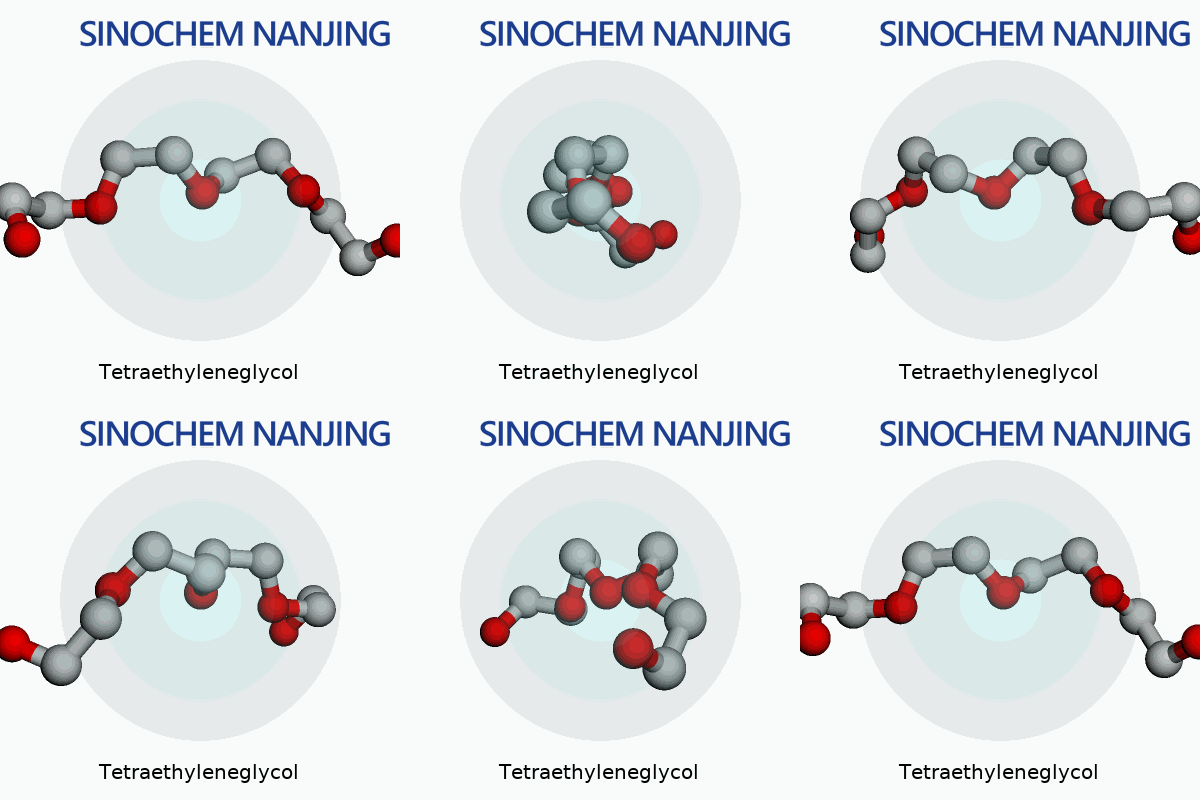
| 3D model (JSmol) | 3D model (JSmol) string for Tetraethyleneglycol: ``` CCOCCOCCOCCO ``` |
| Beilstein Reference | 1207937 |
| ChEBI | CHEBI:28198 |
| ChEMBL | CHEMBL1358 |
| ChemSpider | 9216 |
| DrugBank | DB14155 |
| ECHA InfoCard | 100.057.852 |
| EC Number | 203-978-9 |
| Gmelin Reference | 8226 |
| KEGG | C06450 |
| MeSH | D004059 |
| PubChem CID | 8173 |
| RTECS number | TY2000000 |
| UNII | 6L2KI66VD6 |
| UN number | UN3082 |
| CompTox Dashboard (EPA) | DTXSID9020636 |
| Properties | |
| Chemical formula | C8H18O5 |
| Molar mass | 222.28 g/mol |
| Appearance | Colorless liquid |
| Odor | Odorless |
| Density | 1.124 g/cm3 |
| Solubility in water | miscible |
| log P | 1.20 |
| Vapor pressure | 0.01 mmHg (20°C) |
| Acidity (pKa) | 14.77 |
| Basicity (pKb) | 15.21 |
| Magnetic susceptibility (χ) | -66.0·10⁻⁶ cm³/mol |
| Refractive index (nD) | 1.454 |
| Viscosity | 22.9 mPa·s (25 °C) |
| Dipole moment | 2.53 D |
| Thermochemistry | |
| Std molar entropy (S⦵298) | 359.8 J·mol⁻¹·K⁻¹ |
| Std enthalpy of formation (ΔfH⦵298) | -1399.35 kJ/mol |
| Std enthalpy of combustion (ΔcH⦵298) | -4027.7 kJ/mol |
| Pharmacology | |
| ATC code | D08AX04 |
| Hazards | |
| Main hazards | Causes serious eye irritation. |
| GHS labelling | GHS07, Warning |
| Pictograms | GHS07 |
| Signal word | Warning |
| Hazard statements | H315: Causes skin irritation. H319: Causes serious eye irritation. |
| Precautionary statements | P261, P273, P305+P351+P338, P337+P313 |
| NFPA 704 (fire diamond) | 1-1-0 |
| Flash point | 152 °C (closed cup) |
| Autoignition temperature | 285 °C |
| Lethal dose or concentration | LD50 Oral Rat 33,200 mg/kg |
| LD50 (median dose) | 7.5 g/kg (rat, oral) |
| PEL (Permissible) | PEL: 50 ppm |
| REL (Recommended) | 5 mg/L |
| IDLH (Immediate danger) | Not listed |
| Related compounds | |
| Related compounds |
Triethylene glycol Pentaethylene glycol Polyethylene glycol |



