Unpacking Tert-Butylamine: More Than Just a Chemical Building Block
Historical Development: Stepping Into Modern Organic Chemistry
Tert-butylamine didn’t emerge out of nowhere. The roots go back to the rapid development of organic chemistry in the late 19th and early 20th centuries, when chemists chased new pathways for building and modifying molecules. Once the distinction between primary, secondary, and tertiary amines became clear, tert-butylamine started drawing attention. The branching structure, with its lone nitrogen sprouting from three methyl groups, challenged old ways of thinking about reactivity. For years, this quirky amine remained an oddity until researchers found that the t-butyl group could push chemistry down routes nobody expected. During the 1950s and 1960s, when industry demanded novel intermediates for rubber, fuels, and pharmaceuticals, t-butylamine found solid ground as both a synthetic tool and a commercial product.
Product Overview: What Sets It Apart
Today, tert-butylamine stands as a key intermediate. Chemists banter about “steric hindrance”: tert-butylamine brings bulk to reactions, shielding reactive sites and stalling unwanted side steps. Unlike simple methyl or ethyl amines that slide into molecular nooks, tert-butylamine stalls, flusters, and opens up new paths. In the lab and plant, it shows up as a colorless, volatile liquid with a sharp ammonia-like odor. Anyone who’s worked with it recognizes that faint kick to the nose after opening the bottle, a reminder to double-check for leaks. No one mistakes it for an everyday ingredient, but its distinct presence in the synthesis of pharmaceuticals, agricultural chemicals, rubber vulcanization accelerators, and corrosion inhibitors marks its practical importance.
Physical & Chemical Properties: Why Bulk Matters
With a molecular formula of C4H11N and a compact-but-branched structure, tert-butylamine boils at a modest 44–46°C, making it easy to distill but also easy to lose through evaporation. Density sits lower than water, and the molecule packs a punch—flammable fumes, strong base-like behavior, and real reactivity when teamed up with acid chlorides or ketones. Solubility in water comes across as moderate; it dissolves enough to be useful, without the messiness of sticking around in every rinse. In the lab, its strong, fishy smell quickly fills the air if a lid goes missing. The molecule’s three-pronged group behind the nitrogen creates much of its character, blocking attacks, resisting oxidation more than its straight-chain cousins, and giving chemists control in multi-step syntheses.
Technical Specifications & Labeling: Going Beyond the Datasheet
If someone’s buying tert-butylamine, purity and water content matter above all. Most chemical suppliers ship it at 99% or better, sometimes with extra drying to keep reactions crisp and reliable. The label needs to warn users about its volatility, corrosiveness, and flammability. Eye protection and good ventilation keep safe labs running, and chemical compatibility charts help steer clear of dangerous mash-ups. Companies trading at high volumes stick to transport codes for flammable liquids and make sure full ingredient names, not mysterious abbreviations, adorn the drum. From my experience, precise labeling—down to the correct hazard symbols—turns what could be an accident-prone substance into one that fits safely within a well-managed workflow.
Preparation Method: From Raw Material to Reagent
Making tert-butylamine often relies on a reaction between isobutylene and ammonia, with catalysts like zeolites or acids to get things moving. Chemists favor this direct synthesis route since the raw materials are cheap and accessible from petrochemical streams. The process may involve pressure, controlled temperature, and staged purification, always with an eye on minimizing side products. Some routes start from tert-butyl alcohol, converting it into the amine through amination, but this requires harsher conditions. Behind the plant gates, continuous processes drive most production, recovering unused ammonia to cut costs and pollution. Over decades, companies have tightened up these methods, chasing higher yields and cleaner output as environmental rules push for greener chemistry.
Chemical Reactions & Modifications: Tuning for Specific Outcomes
Tert-butylamine doesn’t just anchor itself stubbornly in place during reactions—the molecule tweaks outcomes across synthetic pathways. Bulky tert-butyl groups block easy access for acids or bases, helping form selective products in nitration, alkylation, or amidation. Medicinal chemists lean on tert-butylamine to form sturdy intermediates that hold their shape through tough steps, then drop away gently during final clean-up. In agrochemicals and dyes, it acts as a protecting group, holding a spot open while other parts of the molecule grow. My own run-ins with tert-butylamine in the lab taught the value of controlling nucleophilicity and keeping a tight rein on reaction rates. By tweaking, switching, or modifying tert-butylamine, chemists tune everything from drug molecule “scaffolds” to industrial catalysts.
Synonyms & Product Names: Decoding the Jargon
Flip through a catalog or a scientific journal, and you’ll see tert-butylamine pop up under a mess of synonyms: 2-methyl-2-propanamine, t-butylamine, tBA, and even TBAm. Translating between names can distract the unwary. Brand names rarely appear on containers; generic naming wins out for reasons of consistency and regulatory compliance. Knowing the synonyms saves trouble in research, purchasing, and communication with safety teams. Accurate naming—without over-relying on abbreviations—also helps in tracking inventory and preventing mix-ups between similar-sounding chemicals, which can spell disaster in high-stakes environments.
Safety & Operational Standards: Where the Rubber Meets the Road
Tert-butylamine brings hazards that can’t be ignored. Its quick evaporation fills small labs with pungent, potentially harmful vapors. Splashes on skin or eyes—something that happens to most chemists at least once—bring irritation and need for rapid flushing. Toolbox safety tips become habit: wear gloves, keep the hood running, and check that containers stay sealed and upright. In bigger facilities, teams install vapor detectors and automatic shutoffs to catch leaks before they spread. Fire safety measures, such as special storage cabinets and grounded, spark-free pumps, help keep accidents rare. Anyone shipping or storing large amounts follows fire codes and strict local regulations to avoid both legal headaches and real dangers. In places where chemical training skips the importance of mindful handling, I’ve seen small mistakes snowball into costly incidents. Consistent training and clear procedures, more than written rules, keep people and the environment safe.
Application Area: Not Just for Chemists
Industrial sectors rely on tert-butylamine for its unique features. The pharmaceutical industry values the ability to block unwanted reactions, making cleaner, more selective routes to active ingredients. Agrochemical makers use it to build molecules that protect crops while breaking down safely. Tire factories blend tert-butylamine into accelerators that cross-link rubber, giving us tires that grip the road and resist heat. Some corrosion inhibitors for oil and gas pipelines owe their performance to how tert-butylamine changes metal surface chemistry. Add in use as a specialty solvent, fuel additive precursor, and chemical intermediate, and the reach stretches further than most people expect. Familiarity only deepens after seeing its role in product after product, many far separated from the original laboratory origins.
Research & Development: Pushing New Boundaries
The urge to explore tert-butylamine’s potential keeps research groups and industrial labs busy. Scientists test new catalytic processes that cut out toxic by-products or work under milder conditions. Medicinal chemists modify tert-butylamine’s structure, nudging it toward new drug candidates with safer side effect profiles. Analytical chemists keep improving detection and clean-up techniques to minimize environmental and occupational exposure. Much of this research now focuses on green chemistry, searching for ways to run reactions at lower temperature, lower pressure, and with less waste. Collaboration between universities, startups, and established companies puts even more focus on life cycle and sustainable sourcing, with some labs even eyeing bio-based production routes. Research isn’t just about improved molecules; better process control and smarter automation feed into safer, more consistent outcomes.
Toxicity Research: Hard Lessons in Safety
Tert-butylamine isn’t something one wants lingering in the air or water. Toxicity studies range from short-term inhalation risks to longer-term environmental impacts. Researchers have cataloged immediate effects like eye and skin irritation, headaches, and potential central nervous system effects after large exposures. Animal studies help flag danger for chronic toxicity and the risk of water contamination, prompting firms to tighten up effluent controls and monitoring. Regulatory bodies in the US, Europe, and Asia have set exposure limits for workers and discharge limits for wastewater. Regular reviews of workplace air quality and blood testing help keep risk within acceptable bounds. Experience has shown that transparency and quick reporting of spills—plus honest recognition of past mistakes—do more to build safer environments than simply posting hazard warnings.
Future Prospects: Staying Relevant in a Changing World
Looking ahead, tert-butylamine is set for further evolution. The drive to decarbonize industry and trim resource use is shifting both how this amine is made and where it ends up. Demand for cleaner pharmaceuticals and greener plastics encourages development of production routes relying less on fossil fuels. Biotechnology, with its fermenters and engineered microbes, could eventually take over some synthesis duties, with less pollution and gentler conditions. Application areas adapt as tech changes: smart materials, self-healing polymers, and new classes of catalysts all flirt with tert-butylamine chemistry. Long-term safety and environmental studies will keep the chemical under regulatory scrutiny, but experience shows that ongoing innovation—paired with an open-eyed, practical view of risk—lets even a simple structure like tert-butylamine play a key role in building tomorrow’s products.
What are the main uses of Tert-Butylamine?
The Chemistry Behind Tert-Butylamine
Tert-Butylamine, which chemists often refer to as t-butylamine, brings a punch to the world of specialty chemicals. Its molecular backbone, built out of carbon and hydrogen with a nitrogen attach, slots smoothly into plenty of industrial setups. Not many folks outside labs recognize its name, but several everyday products and solutions start their life with this chemical. Looking at its value, I learned over the years that compounds like this fuel more than just scientific curiosity — they help tackle real-life problems.
Pesticides and Crop Protection
Farmers and crop scientists rely on Tert-Butylamine for building modern agricultural chemicals, especially pesticides and herbicides. Out of all its uses, producing Sertindole and the herbicide Terbuthylazine eats up a large chunk. This kind of amine lets manufacturers craft active ingredients that handle weeds without harming the crop itself. One thing I noticed in discussions about food supply: people rarely trace plant health back to the building blocks used in agrochemical factories. Tert-Butylamine underpins much of that technology, protecting harvests from fungi, insects, and invasive plants. Food insecurity always hangs over communities. By supporting crop health, materials like this help keep that insecurity at bay.
Pharmaceutical Intermediates
Pharmaceuticals often grow more complex as research deepens, and most drug synthesis today involves steps with amines. Over the years, researchers found Tert-Butylamine extremely useful for making essential intermediates. Drugs treating heart disease, cancer, and psychological disorders pull from processes involving t-butylamine because it reacts predictably. I sat in on a pharmaceutical chemistry workshop once, and the lecturer kept repeating how reliable reactants such as this save chemists years of troubleshooting. Reliable building blocks speed up the discovery of lifesaving medicine.
Rubber Processing and Vulcanization
Driving to work or biking on those smooth black roads, most people never think about what ensures tires won’t split in heat. Rubber companies use Tert-Butylamine in creating rubber accelerators. These chemicals control how rubber ‘sets’ during vulcanization. Just a touch in the formulation helps tires resist ozone cracking, extending the lifespan of car tires and conveyor belts. Anyone who ever replaced a shredded tire on a lonely road might owe hidden thanks to specialty amines in the mix.
Corrosion Inhibitors and Water Treatment
Surprising as it may seem, chemical plants and refineries face enormous risk from corrosion. Industrial cooling water systems use Tert-Butylamine during the process of formulating corrosion inhibitors. Without chemicals like these, pipes would fail long before reaching their projected life spans. It gets personal for anyone working in maintenance — fewer leaks, less shut-down time, more time spent on actual production. Reducing these risks also means fewer hazardous spills in our water supply.
Pushing for Safer, Smarter Use
Growth in global demand for agricultural output, clean water, and advanced medicine keeps driving production of specialty chemicals. Tert-Butylamine, given its reactivity and versatility, supports these goals. Safe handling really matters. Training, monitoring, and strict adherence to safety guidelines protect workers and the environment. Safer replacement options may still take years to hit the market, given how reliably this molecule performs. For now, knowledge, vigilance, and ready intervention make all the difference.
What is the chemical formula and structure of Tert-Butylamine?
What’s Under the Hood: The Chemical Formula
Tert-Butylamine often comes up in labs, universities, and the chemical industry. Its formula is straightforward: C4H11N. Break that down, and you see it’s built from four carbon atoms, eleven hydrogens, and one nitrogen. Even in simpler school science, spotting the amine group—an NH2 stuck to a carbon—is a real building block for deeper understanding.
Drawing It Out: The Structure
So what does tert-butylamine look like beyond just a formula? At the center, imagine a core carbon (the “tert” means this main carbon meets three other methyl groups). Attach a nitrogen directly to that core, and you’ve got your amine. Chemists call this a branched, or tertiary, amine. One nitrogen, three methyl groups radiating off a central spot—it almost looks like a tripod with a lone pair of electrons up top.
If you’re picturing it in a more formal way: there’s the central carbon linked to three CH3 groups and one NH2 group. This unique design makes tert-butylamine both compact and easy to spot on a chemical chart.
Why the Structure Makes a Difference
Tert-butylamine isn’t just a textbook drawing. Thanks to its structure, it behaves in ways other amines can’t. The crowded central carbon keeps the amine group from being too free. This means tert-butylamine acts as a weaker base than something like methylamine or ethylamine. And if you’ve ever worked in a research lab, you know the difference between two similar molecules can mean a reaction goes well or fails completely.
The bulkiness, chemists call it “steric hindrance,” affects how tert-butylamine interacts with acids, metal catalysts, or even enzymes. For instance, making pharmaceuticals or agrochemicals often starts or ends with a step that involves tert-butylamine because its shape protects certain parts of a molecule while allowing reactions on others.
Facts and Why They Matter
Many large-scale products, from pesticides to drugs, use tert-butylamine not just because it’s easy to make—it’s often produced in thousands of tons every year worldwide—but because it introduces the tert-butyl group cleanly and predictably. The chemical industry keeps an eye on stability, and tert-butylamine’s branched design helps block unwanted side reactions. That’s a big deal in medicine production, where purity and safety come first.
I’ve worked with researchers who rely on tert-butylamine’s properties for making cleaner syntheses. The compound’s boiling point and reactivity match up where you need speed and control in experiments. Its formula, C4H11N, is more than a string of letters and numbers—it’s a way to get things done safely and efficiently in a real-world setting.
Looking for Solutions in Practical Use
Supply issues sometimes pop up, especially with global trade and factory slowdowns. That can trickle out to farmers or pharmacists who need specific formulas finished on deadline. Building better sourcing networks for tert-butylamine, increasing recycling of reaction byproducts, or developing greener syntheses using bio-based starting materials can all help. Research into new, bio-friendly preparation methods may also ease the load on traditional manufacturing routes.
The core formula and the structure of tert-butylamine link directly to how products get made, tested, and delivered. Rethinking supply, greener production, and careful handling can keep the pipeline moving and support safer, more sustainable growth for industries wherever this small compound plays a key role.
What are the storage and handling precautions for Tert-Butylamine?
Understanding Tert-Butylamine’s Hazards
Tert-Butylamine carries more risk than a simple industrial chemical. Anyone who spent years in a university lab or keeps up with chemical safety news has seen accidents involving amines, and tert-butylamine brings its own set of hazards. The vapor is flammable, it irritates eyes and mucous membranes, and it can form explosive mixtures with air. That makes it important to take storage decisions seriously and avoid treating the material casually.
Ventilation and Environmental Controls
A closed, well-ventilated area helps prevent vapor build-up or leaks. I remember seeing a minor spill in a fume hood once—no one got hurt, but the sharp smell and immediate irritation pushed home how annoying it could be to accidentally release tert-butylamine even for a minute. Keeping it in a chemical hood or ventilated room can avoid these short, sharp lessons.
Storage Container Choices
I’ve seen plastic degrade and metal rust where tert-butylamine sits for a while. Use tightly sealed metal drums made of material that resists amine attack—stainless steel and certain plastics like HDPE work. Store the drums away from sunlight and moisture. The substance’s vapor has escaped straight through bad gaskets before, making a small headache for anyone walking past that closet. A simple, tight-fitting seal and a regular check for cracks or leaks pays off here.
Avoiding Incompatible Materials
Accidents involving acids always stick in my memory, as tert-butylamine reacts with acids to form potentially violent byproducts. It shouldn’t sit in a space with oxidizers, even strong cleaners, as these combinations can trigger reactions that risk oxidation or fire. Keep acids, anhydrides, and oxidizers in their own cabinets far from tert-butylamine’s storage spot.
Temperature, Fire Risk, and Static Electricity
This amine evaporates quickly at warm room temperature, meaning vapors can spread and ignite from a single spark. Store it below 25 degrees Celsius, ideally somewhere cool all year round. Think of every season: in August heat, a poorly air-conditioned storeroom risks pressure build-up in containers. Take grounding seriously, because static can set off a flash fire if vapors collect around metal drums or hoses.
Spill and Exposure Preparedness
A minor spill can turn an uneventful morning into chaos. Eye-wash fountains and safety showers need to be close by if you store more than a few milliliters. Wear chemical splash goggles, gloves that resist solvents (nitrile, not vinyl), and a lab coat. I still remember a coworker getting a splash on their jeans, and the fumes caused enough discomfort that the jeans had to be tossed.
Spills must be tackled with inert absorbents, not materials containing acid or bleach. Ventilate the area, and use non-sparking tools to collect residues. It pays to train everyone working near tert-butylamine on how to neutralize and clean up spills instead of assuming they’ll just “wing it.”
Training and Documentation
It’s easy to get complacent with routine chemicals, but like most amines, tert-butylamine rewards respect and vigilance. Regular safety training, clear labeling, and honest conversations about near misses increase safety. Keeping Safety Data Sheets handy and up to date might sound tedious, but in an emergency, grabbing the right information feels invaluable.
Safer Practices Pay Off
From personal experience, treating tert-butylamine like any other flammable solvent leads to trouble. Setting up good storage, keeping incompatible chemicals at arm’s length, and training all staff make events less likely to go from a bad smell to an emergency. That effort keeps everyone safe and prevents long-term health issues, not to mention the hassle of regulatory fines or ruined inventory.
Is Tert-Butylamine hazardous to health or the environment?
The Chemistry That Touches More Than Labs
Tert-butylamine pops up in lots of conversations around industrial chemicals. It shows up where folks make pesticides, pharmaceuticals, and rubber. Seeing it on a list of ingredients usually means someone in a lab wears gloves and goggles, and outside those walls, nobody thinks about it. For everyone working with this stuff, or living near plants where it’s made or used, understanding real risks goes beyond chemical jargon.
Direct Health Concerns: What We Know
Sticking your nose near an open bottle of tert-butylamine produces a strong odor. That’s not just unpleasant. Exposure, even for a few minutes, can lead to headaches, dizziness, or nausea. There are reports of people feeling a burning in the nose or throat. It evaporates pretty easily, so catching those fumes can sneak up on you. Touching the liquid can irritate the skin and, if splashed in the eyes, can do some real damage. Breathing in higher concentrations—rare unless there’s a spill—affects the nervous system. There’s one study linking long-term exposure to changes in blood chemistry in lab rodents, but data for people still feels light. For workers, the Occupational Safety and Health Administration suggests pretty strict exposure limits. That isn’t just bureaucracy talking—places without good ventilation or protective gear see more hospital visits for chemical exposure.
Water, Air, and Soil: Where Tert-Butylamine Travels
Chemicals like tert-butylamine don’t just disappear after leaving the factory. When it leaks into water, it can kill fish and other aquatic life in short order. Studies find that even tiny amounts in rivers set off alarm bells for biologists. Once in soil, bacteria break it down over time, but not fast enough to ignore big spills. In the air, tert-butylamine often breaks down before crossing neighborhoods, but close to its source, concentrations get risky. Asthma and breathing problems go up in communities near chemical plants if proper controls don’t stay in place.
The Community Factor
Living near manufacturing hubs means hearing a lot about chemical incidents. In my own town, one chemical spill sent emergency crews into overdrive. It turned out tert-butylamine was in the mix. Folks felt sore throats, called in sick from work, and peppered the public health office with questions. Cleanup took days, and the local river faced a sudden die-off of minnows. Cleanup crews wore layers of protection—enough to keep anyone from forgetting the risk tied to these chemicals.
Tracking Solutions: Not Just Red Tape
Regulations make a difference only when companies stick to them. Plenty of improvements come from low-tech steps: restricting storage to tough, leak-proof containers, giving workers regular safety training, putting real-time air monitors in factories, and running surprise audits. It matters to have a local hotline for spills, with emergency plans that neighbors know about. For reducing river and air pollution, investing in scrubbers and filters doesn’t just keep plants out of the news—it saves lives and keeps basic trust with communities. Pushing for more independent studies on long-term effects helps, too. More data means fewer surprises and more confidence for everyone touched by the industry—from plant employees to parents worried about playgrounds miles downwind.
How should Tert-Butylamine be disposed of safely?
Understanding the Real Risks
Tert-Butylamine—this name doesn’t spark fear for most, but it’s not something you would want poured down the drain or tossed in the trash. Working with chemicals like this over the years brings a kind of respect for what a mishandled jug can do. It isn’t just about protecting yourself in the lab; the environment and your neighbors are in line if things go sideways.
What Happens When It Gets Loose?
Tert-Butylamine evaporates quickly, and you can pick up its ammonia-like smell. At low concentrations, it can irritate your skin, eyes, and lungs. Spills can get hazardous fast. If it catches fire, it burns with invisible flames and turns into nasty gases. Down the storm drain or tossed out with household trash, it seeps into water or soil and creates new headaches for water treatment crews.
The biggest concern is groundwater contamination. Data from the EPA and CDC points to how easily amines slip into drinking water, then show up in fish and crops. A small leak today brings long-term costs. No one enjoys finding out their kid’s school sits on soil loaded with old chemical waste.
Solid Steps for Anyone Handling It
Whether you work in a university, run a paint shop, or run across this in a closed container at home, skipping proper steps has consequences. Full safety throw starts with safety gear—chemical gloves, goggles, a fume hood. Never try to evaporate it in the open. Don’t try to flush it out with water or cover the smell with cleaner.
Reaching out to a licensed hazardous waste disposal service is the right play. These crews have the right containers and know how to categorize the waste. A standard hazardous waste contractor will label everything, document the chain of custody, and haul it to a treatment facility. Incineration at a licensed plant breaks down tert-butylamine into harmless by-products. Landfills don’t cut it; water and soil exposure at basic sites defeat the whole purpose.
What Businesses (and Regulators) Should Push For
The real answer sits beyond each individual, though. Employers need regular training sessions, not just a sheet of protocols tucked in a binder. Local authorities do better work when businesses are transparent with their inventories and waste logs. If more towns set up household hazardous waste drop-off points, solo workers or hobbyists wouldn’t get the idea to “just wash it out.”
Industry groups and universities push out bulletins with disposal maps, emergency contact numbers, and lists of companies handling this stuff. Public transparency moves suspicion out of disposal practices and stops the midnight dumping. It helps when everyone—even the people not handling chemicals—can follow the paper trail.
A Better Way Is Always Worth the Hassle
Standing over a bucket in a lab, you don’t think about community health ordinances or fish habitats right away. But this is where sloppy work catches up. Respecting proper disposal isn’t some legal hoop. It’s the way damage is kept from spreading beyond one spill. The best safety work happens before the bottle ever gets emptied. That’s a truth I picked up early, and I’d trust it over any shortcut.
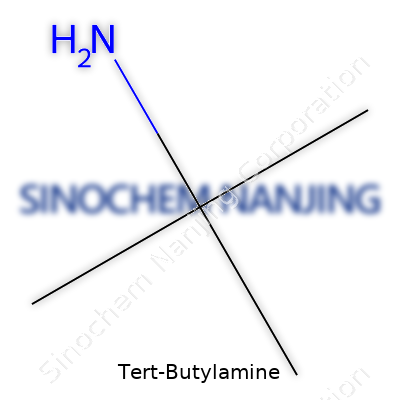
| Names | |
| Preferred IUPAC name | 2-Methylpropan-2-amine |
| Other names |
2-Methyl-2-propanamine tert-Butanamine t-Butylamine tBA tert-Butylamin |
| Pronunciation | /ˌtɜːrtˈbjuːtɪl.əˌmiːn/ |
| Identifiers | |
| CAS Number | 75-64-9 |
| Beilstein Reference | 1209242 |
| ChEBI | CHEBI:41449 |
| ChEMBL | CHEMBL25411 |
| ChemSpider | 6959 |
| DrugBank | DB01955 |
| ECHA InfoCard | String: 100.007.284 |
| EC Number | 200-888-1 |
| Gmelin Reference | 6139 |
| KEGG | C01724 |
| MeSH | D01819 |
| PubChem CID | 6410 |
| RTECS number | EL5425000 |
| UNII | 9V5C7L6WFG |
| UN number | UN2079 |
| CompTox Dashboard (EPA) | DTXSID0021051 |
| Properties | |
| Chemical formula | C4H11N |
| Molar mass | 73.14 g/mol |
| Appearance | Colorless liquid |
| Odor | Ammonia-like |
| Density | 0.740 g/mL at 25 °C |
| Solubility in water | miscible |
| log P | 0.92 |
| Vapor pressure | 10.8 kPa (20 °C) |
| Acidity (pKa) | 10.7 |
| Basicity (pKb) | 3.38 |
| Magnetic susceptibility (χ) | -6.57×10⁻⁶ cm³/mol |
| Refractive index (nD) | 1.376 |
| Viscosity | 0.392 cP (20 °C) |
| Dipole moment | 1.348 D |
| Thermochemistry | |
| Std molar entropy (S⦵298) | 216.0 J⋅mol⁻¹⋅K⁻¹ |
| Std enthalpy of formation (ΔfH⦵298) | -56.8 kJ/mol |
| Std enthalpy of combustion (ΔcH⦵298) | -3333 kJ·mol⁻¹ |
| Pharmacology | |
| ATC code | C01CA10 |
| Hazards | |
| GHS labelling | GHS02, GHS05, GHS07 |
| Pictograms | GHS02,GHS07 |
| Signal word | Danger |
| Hazard statements | H225, H302, H311, H314, H331 |
| Precautionary statements | P210, P233, P240, P241, P242, P243, P260, P264, P271, P302+P352, P303+P361+P353, P304+P340, P305+P351+P338, P312, P332+P313, P337+P313, P362, P370+P378, P403+P235, P501 |
| NFPA 704 (fire diamond) | 1-3-0 |
| Flash point | -18 °C |
| Autoignition temperature | 285 °C |
| Explosive limits | Explosive limits: 1.7–9.6% |
| Lethal dose or concentration | LD50 oral rat 2060 mg/kg |
| LD50 (median dose) | LD50 (median dose): Oral-rat LD50: 2060 mg/kg |
| NIOSH | # 85Y35 |
| PEL (Permissible) | PEL (Permissible Exposure Limit) of Tert-Butylamine: 5 ppm (18 mg/m³) |
| REL (Recommended) | 35 mg/m3 |
| IDLH (Immediate danger) | 1000 ppm |
| Related compounds | |
| Related compounds |
Amylamine Diethylamine Ethylamine Isobutylamine Methylamine |



