Sulfuric Acid: A Pillar of Modern Chemistry and Industry
Historical Development
Sulfuric acid, one of chemistry's most enduring heavyweights, tracks back centuries. Arabic alchemists in the eighth century first discovered methods to isolate this potent acid through burning mineral sulfates, a process further refined by European scientists in the 1700s. Industrial demand in the Industrial Revolution, especially for fertilizers and explosives, required smarter methods. The lead chamber process stepped up in the late 18th century, ramping up volumes like never before. Later, the contact process upended everything, cranking out purer, more concentrated acid using platinum, then vanadium oxide as a catalyst. Every advancement in sulfuric acid reflected humanity’s hunger for progress—connecting chemistry labs and factory floors through cleaner, more efficient ways of harnessing the stuff.
Product Overview
People often lump sulfuric acid under "dangerous chemicals" and move on, missing its role beyond threats and warnings. Without it, our cities would run out of phosphate fertilizers, batteries would lose their punch, and basic manufacturing lines would jam. This acid touches nearly every corner of our built environment—refining crude petroleum, treating wastewater, bleaching paper, etching semiconductors, and making everyday cleaners more effective. Demand doesn't wane, either. Any blip in supply can send prices soaring across entire industries, underlining why countries track sulfuric acid production as a sign of economic health.
Physical & Chemical Properties
Sulfuric acid stands out with a brute physical presence—thick, oily, colorless to faintly yellow, and nearly twice as heavy as water. Its boiling point sits stubbornly high, above 300°C, showing remarkable stability for industrial operations. Pour some water into concentrated sulfuric acid and things turn dangerous fast. The acid loves water, generating sky-high heat and threatening severe burns with just a splash. Its affinity for water, chemists call "hygroscopic," keeps labs and factories respectful of every drop. Besides being a super-strong acid, it pulls double duty as a dehydrating agent. That property gives sulfuric acid the power to char organic material, turning sugar black and flecked with the eerie whiff of burnt carbon, a vivid chemistry class spectacle with a real molecular punchline.
Technical Specifications & Labeling
Bottles and tanks of sulfuric acid tell a story before you even open them. Commercial grades range from the concentrated, above 98% pure, to "dilute" formulations used for specific industrial tweaks. Transport regulations from bodies like OSHA and the EPA require clear hazard diamonds and strict language. Labels shout out “Corrosive,” “Danger—Causes Severe Burns,” and sometimes “Oxidizer” for cleaner blending. Proper specifics—molarity, gravity, and presence of contaminants—matter just as much for safety in the warehouse as for quality assurance on a production line.
Preparation Method
The journey from sulfur ore to sulfuric acid is a masterclass in chemical engineering. Smelting or burning elemental sulfur forms sulfur dioxide gas, which, after cooling and cleaning, reacts with atmospheric oxygen, driven by a vanadium(V) oxide catalyst at high temperature, to yield sulfur trioxide. The reaction unfolds in massive contact towers—aerated, high-pressure, and braced for heat—before absorbing the trioxide in water or, more precisely, in pre-formed sulfuric acid to prevent runaway exothermic splashes. Managing so much heat, gas flow, and moisture in live stacks keeps engineers on alert around the clock.
Chemical Reactions & Modifications
Ask any chemist about sulfuric acid and the first thing that comes to mind is its ability to protonate almost anything. It turns sugar to carbon and water in seconds, scrambles organic molecules, and strips away metals’ oxide coatings. Sulfuric acid doesn’t stop at being an acid—it oxidizes, dehydrates, and catalyzes a long list of reactions. Nitration, alkylation, and sulfonation in organic chemistry owe much of their success to sulfuric acid’s relentless potency. Diluting changes the story; even in low concentrations, it keeps acting as a forceful acid, etching away at metals, breaking down minerals, and opening doors for reactions impossible otherwise.
Synonyms & Product Names
This chemical answers to many names depending on the context—oil of vitriol, battery acid, hydrogen sulfate—and crosses language barriers in trade and science. On labels, sulfuric acid goes by H2SO4, one of the simplest formulas with some of the widest implications in modern chemistry. Familiarity breeds shorthand, so nobody in a lab or plant stays confused about what’s in the bottle.
Safety & Operational Standards
Working with sulfuric acid means taking every known precaution seriously. Damaged skin, respiratory harm, or permanent eye injury rank high on safety lists. Gloves, goggles, and splash shields go from optional to mandatory. Neutralizing acid spills with sodium bicarbonate or lime is basic protocol. Exhaust fans, acid-resistant piping, and emergency showers don’t just decorate industrial spaces—they save lives. Training drills in workplaces drill the importance of swift dilution of splashes with water and proper containment of leaks. Large scale storage calls for tanks lined with special rubber or alloyed steel, not off-the-shelf containers.
Application Area
The reach of sulfuric acid outpaces expectations. Phosphate fertilizer plants swallow up about half the world’s produced acid. Lead-acid batteries, found in nearly every car or backup generator, depend on it for their electrochemical heartbeat. Metal fabrication, from pickling steel before galvanizing to copper refining, chugs through millions of tons every year. Wastewater treatment leverages acid’s neutralizing properties to manage unwanted bases. Even mundane products—soaps, paints, and dyes—trace their origins to sulfuric acid-driven processes buried deep in factory pipelines. In the laboratory, it unlocks critical analysis and helps synthesize thousands of compounds essential in pharmaceuticals and materials science.
Research & Development
Chemists and chemical engineers never sit still with sulfuric acid. Across the globe, research pushes for cleaner sources—scrubbing more sulfur compounds from natural gas, capturing SO2 from emissions, and rethinking how spent acid gets recycled. Growth in electric vehicles stirs new questions around battery chemistry and sustainable acid use. Academic research looks for less corrosive ways to achieve sulfuric acid’s magic, aiming to minimize risks while retaining function. Innovations around catalysts and heat recovery tweaked the contact process itself, making new plants greener and more efficient than ever forty years ago.
Toxicity Research
Sulfuric acid leaves no question about its danger—direct exposure burns tissue in seconds, and inhaling its mist scars lung tissue. Toxicologists treat it as a double-edged sword, essential in industry but hazardous across the environment and workforce. Ongoing studies investigate the subtle long-term effects on workers in acid-heavy industries, strengthening the case for strict workplace controls. Environmental engineers model spill impacts in waterways, emphasizing rapid intervention and robust containment. The science leans towards prevention, not just remediation, mapping out every risk point from transport to disposal.
Future Prospects
Sulfuric acid isn’t fading from the modern world. Rising populations and global push for cleaner energy technologies—especially batteries and new fertilizer blends—keep demand on an upward slope. Green manufacturing draws scrutiny to every emission in the supply chain, scaling up the need for scrubbing sulfur dioxide, recycling spent acid, and reducing leaks to near zero. Digital monitoring, AI-driven controls, and smarter hardware signal ongoing evolution and heavier reliance on expertise and rigorous protocols. Forward-thinking companies pilot projects with closed-loop systems and low-energy catalysts, betting on efficiency to meet expanding needs while slashing environmental footprints.
What are the main uses of sulfuric acid?
A Chemical That Turns Raw Materials Into Useful Goods
People probably don't spend much time thinking about sulfuric acid, but it plays a bigger role in modern life than most realize. My memories of chemistry lab in school include its strong, biting smell and the careful way instructors taught us to handle even a small beaker. Safety matters for a reason—this is a substance with serious bite. Yet outside the lab, it works quietly behind the scenes to transform minerals from the earth into the everyday products we count on.
Farming Starts With Fertilizer
The biggest demand for sulfuric acid comes from agriculture. Farmers use mineral fertilizers to help crops grow, and most of the phosphorus in those fertilizers starts out as phosphate rock. Sulfuric acid breaks down that rock and unlocks the nutrient. Without it, phosphorus would stay locked in the ground. Food harvests wouldn’t reach the levels needed to feed cities and rural communities alike, and global populations would face slimmer grain bins and fewer vegetables on the table.
Cleans Industry—And Water—Behind The Scenes
Factories that make steel, copper wire, or aluminum use sulfuric acid to remove rust and oxides from metal surfaces—a step called “pickling.” That rusty layer acts like a stubborn skin. I’ve seen yards of metal go into a bath and emerge braced for the next stage of making cars, appliances, or buildings. Cities and towns also rely on sulfuric acid at wastewater plants, where it helps adjust pH levels before water flows back into rivers. Without careful pH control, pipes and pumps corrode faster, and water protection stumbles.
Cleaner Cars, Clearer Views
Car batteries depend on lead and sulfuric acid. The two team up inside every battery to kick off the electrical reaction that starts engines and keeps lights on. Anyone who’s ever replaced a sluggish battery knows how vital that spark can be. Beyond vehicles, sulfuric acid finds its way into glassmaking. Makers use it to clean raw ingredients and give glass its clear, streak-free finish. Looking out a clean window owes something to the acid’s invisible handiwork.
Turning Oil And Making Medicine
Refineries mean fuel. Gasoline, diesel, and other fuels depend on clean chemistry, and sulfuric acid helps strip impurities from crude oil. I once toured a plant and saw how much work goes on just to turn black, sticky oil into something that runs a truck or powers a plane. In pharmaceuticals, sulfuric acid helps build the chemicals that turn into pain relievers and antibiotics. Its role can be small, but skipping that step would mean longer waits at the pharmacy and gaps on hospital shelves.
Challenges, Risks, and Choosing Safety
Handling sulfuric acid means working with a substance that burns skin and damages lungs. Its hazards led to strict rules and protective gear, not just for scientists in a lab coat, but for workers in factories and truck drivers moving it from one place to another. Spills can harm local water or soil, and the acid’s reaction with metals makes explosions a serious threat. Over the years, more companies have switched to closed handling systems, airtight storage, and automated sensors that sound alarms early.
Looking Forward With Care
Sulfuric acid won’t disappear anytime soon. As green technology grows, industries could find new ways to use it for smaller batteries and cleaner water. Steps like recycling more acid after industrial use and training workers on up-to-date safety practices keep people and the environment out of harm’s way. Every large-scale technology—from food crops to solar panels—relies on this strong acid, making careful stewardship all the more important.
What safety precautions should be taken when handling sulfuric acid?
Working With a Potent Chemical
Sulfuric acid carries a fierce reputation and for good reason. As someone who’s spent time around both laboratory benches and the occasional industrial site, it’s impossible to ignore its impact. That sharp, biting smell, the strong reaction with organic material—one wrong step can spell real trouble. Burns come quickly and can turn severe in minutes. Mixing it with water the wrong way leads to explosive splatter. For these reasons, respecting sulfuric acid and practicing strong safety habits feels more than just good sense; it’s the kind of thing that keeps you coming home with all your fingers attached.
The Basics Start With Personal Protection
Nobody gets extra points for “toughing it out.” Always start by gearing up. Acid-resistant gloves, goggles that wrap right around the eyes, a sturdy face shield, and a full lab coat or acid-resistant apron turn a dangerous job into one that feels a bit more routine. Clothing should cover arms and legs, and shoes or boots should block spills from soaking through. I remember my first lab manager telling horror stories about students who wore shorts—those stories tend to stick with you long after school.
Ventilation and Space: Breathing Easy
Strong acids do more than burn the skin. Fumes can damage delicate parts of the throat and lungs. Decent airflow saves a lot of misery. A chemical fume hood pulls vapors away before they become a problem. Some older buildings cut corners, leaving folks with musty rooms and little air. Cracking a window does little against a heavy vapor, which clings close to the floor. Investing in proper ventilation means the whole team’s safer.
Handling and Dosing Without Surprises
Pouring always brings a risk. Adding water directly into sulfuric acid creates heat fast and may cause violent splattering. Seasoned chemists drill the rule: always pour acid into water, slow and steady. That keeps exothermic reactions under control. If splashes or spills happen—and they do—a sturdy acid spill kit should be close at hand. Bottles that once held acid need thorough cleaning and clear labeling before any reuse. Better yet, treat empties like hazardous waste right from the jump.
Storage: Keeping Hazards at Bay
Storing sulfuric acid safely keeps small mistakes from turning into bigger disasters. Bottles sit best on low, dedicated shelves behind physical barriers, locked and labeled. Acids never sit next to bases or organic chemicals. Storing them together sets the stage for violent reactions if things go wrong. Dense plastic or glass containers hold up better than most metals. Shelving needs to support the heavy bottles, and floors should absorb shock if something slips. Light, air, and moisture speed up leaks and bottle decay, so keeping everything sealed and away from sunlight makes a difference.
Emergency Prep Isn’t Optional
Even experts have bad days. Quick access to eyewash stations and emergency showers saves sight and skin. Neutralizing materials, like sodium bicarbonate, help mop up small spills. Fire extinguishers need to stay nearby, especially if sulfuric acid gets used around flammable materials. In training, nothing teaches faster than a good drill—practicing chemical spill responses and first aid until it feels automatic.
Safety as Shared Responsibility
Trust runs high in places where everyone takes precautions seriously. Real-world safety comes down to strong habits, solid gear, and constant communication. Overconfidence gets folks hurt, so no one works with dangerous acids alone. If something feels off—a loose cap, an unlabeled bottle—flag it. Lives get protected by those little choices, day after day.
How should sulfuric acid be stored?
Understanding Sulfuric Acid’s Risks
Sulfuric acid never takes it easy on anyone who doesn’t respect its power. If you’ve ever handled it, you know even a small splash burns right through clothing, flesh, and nearly anything organic. Burns from sulfuric acid run deep and don’t stop until you flush for several minutes or use a neutralizer. Treating this compound carelessly ends up on the nightly news, not just in science class accidents.
Container Choices Matter
Old timers in the chemical business have learned the hard way: never trust just any tank or drum with sulfuric acid. Polyethylene, specifically high-density versions, holds up better than metal in most circumstances. Stainless steel tanks work at higher concentrations because sulfuric acid can passivate their surfaces. Still, ferrous metals like iron rust out fast and fail dangerously. Even concrete gets eaten away if acid spills are ignored. I once saw a storage area where an unnoticed seeping leak caused the rebar in the floor to corrode into powder.
Location Says Everything
Tucking a bulk tank behind the loading dock, without thought to the environment or emergency planning, invites disaster. Sulfuric acid reacts with water to create heat and splattering—rainwater should never reach storage areas. I tell everyone involved to keep tanks away from flood-prone zones and storm drains. Secondary containment, basically a tough, sealed curb or basin, promises to capture leaks or spills before they travel. Some folks might see that as overkill, but their views shift fast after a single containment failure.
Temperature and Ventilation Control
Sulfuric acid’s reaction with water isn’t just about liquid spills—it includes humid air, too. Warm weather ramps up corrosive vapors, adding to the risks. Storage rooms depend on good ventilation, directed right outdoors, to handle any vapors that sneak out. Insulation on tanks slows down serious temperature swings, especially in climates where hot days follow cold nights. Leaving a drum under the summer sun turns it into a pressurized bomb.
Material Handling, PPE, and Team Training
I’ve seen too many overconfident loading crews figure gloves and goggles are enough—until one has an accident. Every person managing sulfuric acid should wear full chemical suits, face shields, and acid-resistant boots. Easy access to emergency showers and eyewash stations reduces the damage from inevitable spills. Supply chains run smoother once every worker understands the acid, not just the logistics. Regular drills and refreshers help keep everyone aware of the routines in place if a leak does occur.
Safety Beyond Storage
Accidents don’t just start at the tank—they happen during transfers and deliveries. Suction hoses and connections should come made for acid service, checked for wear before each use. Crossing up fill lines with incompatible chemicals creates a toxic mix fast. Labels on every container, and double-checks before each transfer, build trust in safe operations. Only trained staff should load or unload acid trucks, especially given the scale of some industrial operations.
Learning from Experience
Most chemical plants fine-tune their sulfuric acid storage plans after an incident or close call. Community input matters, too, especially since off-site releases carry health and legal consequences for companies. The best setups grow from hard-won experience and shared expertise—people who have made mistakes and changed their ways protect everyone down the line. Manufacturers and distributors have learned to work with regulators, insurance companies, and their own teams to create safety routines that save lives. For as long as sulfuric acid powers industry, vigilance and proper planning will remain the way forward.
What is the concentration of sulfuric acid in this product?
What’s Going On Inside That Bottle?
Sulfuric acid shows up in more places than people often realize—car batteries, cleaning solutions, drain openers, and all sorts of industrial products. Most of the time, someone’s not picking up a jug and thinking about acid strength, but concentration changes everything about how a product works and what risks come with it. If you’ve ever looked at a bottle of drain cleaner and felt nervous about the warnings, you’re picking up on the concentration question.
How Strong Is Sulfuric Acid in Everyday Products?
Household drain cleaners sometimes have sulfuric acid content upwards of 90%. That’s not a typo. This level can dissolve hair, soap, grease, and plenty else in a clog, but it’ll burn skin and destroy fabric on contact. A quick glance at any safety data sheet will show more than just chemical strength—it’ll carry stories of real injuries and property damage from improper use.
In a car battery, things calm down. Battery acid usually falls around 30–35% concentration. Enough to pass ions between plates, not enough to eat straight through plastic. Go up the chain to industrial uses—metal pickling or fertilizer production. These facilities keep tanks of acid above 98% pure. People manage these with face shields, gloves, and training for a reason.
Why the Exact Number Matters
If a product doesn’t list a specific sulfuric acid percentage, it raises questions. Consumers need to know if they’re buying something safe for home use, or if they’ve got an industrial-strength hazard. The European Union and United States both regulate disclosure for high-risk chemicals—so if someone can’t find the concentration, that’s a red flag. Stores have recalled products without clear acid content before, especially where bottles have looked too much like regular cleaners.
My own experience at a community makerspace taught a tough lesson. A workshop project called for sulfuric acid to clean copper tubing. The wrong bottle got picked up from a supply shelf; nobody saw the small print noting a concentration well over 90%. The project leader, thinking it matched the mild acid they’d used back in college lab days, handled it without full goggles and gloves. Even with good ventilation, the acid fumed up, stinging eyes and leaving everyone coughing. Scared faces, ruined tools, and suddenly everyone questions every label twice. Nobody wants a repeat.
Better Labels, Safer Work
Manufacturers and retailers can do better. Clear labeling saves lives and limits liability. If a label just says “contains sulfuric acid” without numbers, customers are left guessing. Even tiny differences in concentration mean big changes in how caustic the product becomes. Putting concentration front-and-center on the main label—maybe even in large print—helps both buyers and emergency responders.
Information alone won’t solve every problem, but access to real concentration data helps people make better decisions. With acid, the stakes run high. Whether it’s a plumber using drain opener or a student working with batteries, knowing what’s inside the bottle is the first step to safe and smart use.
Sources: U.S. Occupational Safety and Health Administration (OSHA); European Chemicals Agency; personal safety workshop notes; commonly referenced product safety data sheets.What should I do in case of a sulfuric acid spill or exposure?
Why Sulfuric Acid Demands Respect
Sulfuric acid isn’t the kind of thing most people keep in their garage. It shows up in battery manufacturing, laboratories, even in car batteries. You touch it and it hurts right away—no slow burn, no gentle warning. Even a tiny splash stings skin and attacks anything organic. My hands have known lab acids. The sharp, instant pain makes you pay close attention next time you handle the bottle. It eats through cotton clothes, shoes, concrete floors if you’re unlucky.
If You Spill Sulfuric Acid: Real Steps
Forget any ideas about toughing it out or washing with soap alone. Think clear-headed first. Stay calm, grab someone’s attention, and act—don’t wait.
Every workbench with sulfuric acid needs an eye wash and a safety shower close enough to reach fast. The label on the acid container is not just for decoration. It spells out the hazard—chemical burns that can leave scars if you’re slow to react. Wash any exposed skin right away with running water, for at least 15 minutes. Don’t rub. The running water dilutes and carries away the chemical, so it doesn’t keep burning deeper.
Contaminated clothing has to come off immediately. No one feels comfortable stripping in a lab, but acid under fabric works like a sponge, holding the problem longer against the skin.
Getting Help Fast
Any exposure to the eyes is an emergency, straight to the shower, hold lids apart under clean water, and someone calls emergency services. I once saw a coworker ignore a small splash, thinking it wouldn’t matter. An hour later, a few blisters formed and the pain was obvious. That memory sticks, and it convinced everyone around to take acid spills seriously.
Dealing with Large Spills and Preventing Harm
Small drips on a bench or floor can usually be managed by neutralizing with sodium bicarbonate powder, then cleaning up with plenty of water. Big spills, on the other hand, call for evacuation. You don’t want untrained hands in that mess. Call hazmat response. Gases from concentrated acid irritate lungs and eyes fast, especially in closed spaces. Having proper ventilation or fume extraction helps. Keep evacuation routes clear and know who to call—fire department, emergency spill response—so you don’t waste precious time looking for a number.
To Avoid Spills: Real Habits Matter
I learned respect for acid and chemicals from my first instructor: label everything, double-check tightness of lids, wear goggles and gloves every time. You want strong plastic containers, not glass that chips easily. Store in a secure, ventilated spot on a low shelf. Accidents usually happen when people get comfortable, forget gloves, forget to check for leaks, or mix up bottles.
The Facts and the Fix
Reports from the U.S. Centers for Disease Control and Prevention highlight that most chemical injuries involving sulfuric acid happen in workplaces that skip training, skip safety gear, or let old containers leak. Good procedures and real practice stop most disasters before they get a chance to start. Well-prepared staff and fresh emergency gear save both skin and lives.
Every person who works with sulfuric acid should know the emergency drill by heart. The urgency is not a drill or a rule for the binder—it can save sight, skin, or a life. In the end, a few seconds of fast thinking matter more than any label ever could.
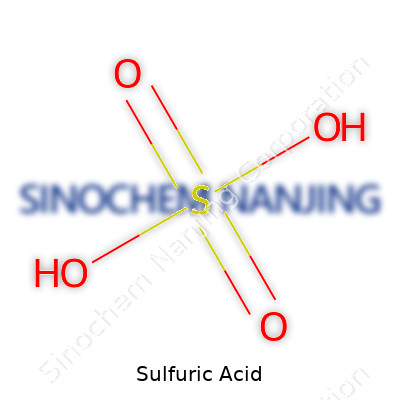
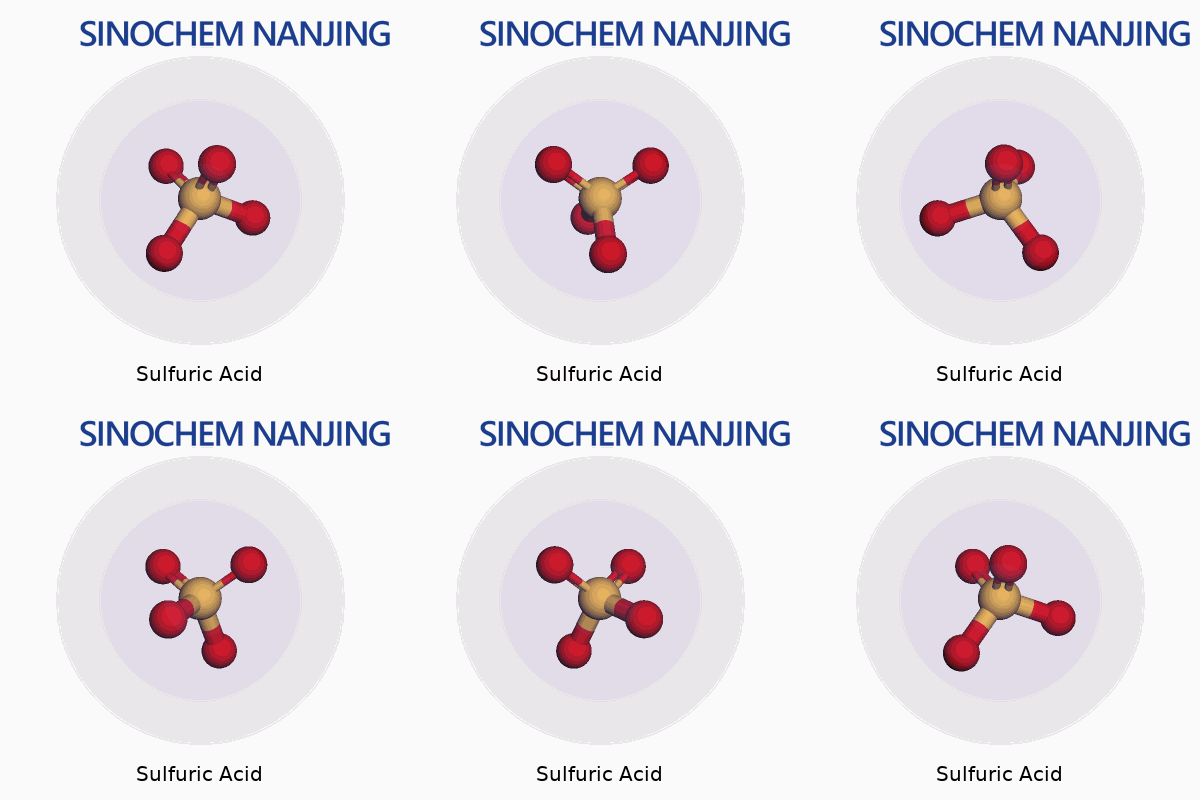
| Names | |
| Preferred IUPAC name | dihydroxidooxidosulfuric acid |
| Other names |
Oil of vitriol Hydrogen sulfate Battery acid Dihydrogen sulfate |
| Pronunciation | /ˌsʌlˈfjʊrɪk ˈæsɪd/ |
| Identifiers | |
| CAS Number | 7664-93-9 |
| Beilstein Reference | 1204400 |
| ChEBI | CHEBI:26836 |
| ChEMBL | CHEMBL726 |
| ChemSpider | 1073 |
| DrugBank | DB09357 |
| ECHA InfoCard | 100.028.763 |
| EC Number | 231-639-5 |
| Gmelin Reference | Gmelin Reference: 199 |
| KEGG | C00059 |
| MeSH | D013502 |
| PubChem CID | 1118 |
| RTECS number | WS5600000 |
| UNII | O40UQP6WCF |
| UN number | UN1830 |
| CompTox Dashboard (EPA) | DTXSID4024252 |
| Properties | |
| Chemical formula | H2SO4 |
| Molar mass | 98.08 g/mol |
| Appearance | Colorless to slightly yellow, oily, odorless liquid |
| Odor | Odorless |
| Density | 1.84 g/cm³ |
| Solubility in water | Miscible |
| log P | -2.2 |
| Vapor pressure | 0.001 mmHg (20°C) |
| Acidity (pKa) | -3.0 |
| Basicity (pKb) | -3.0 |
| Magnetic susceptibility (χ) | −21.0×10⁻⁶ |
| Refractive index (nD) | 1.428 |
| Viscosity | 26 cP (at 25°C) |
| Dipole moment | 2.99 D |
| Thermochemistry | |
| Std molar entropy (S⦵298) | 157 J·mol⁻¹·K⁻¹ |
| Std enthalpy of formation (ΔfH⦵298) | -814 kJ/mol |
| Std enthalpy of combustion (ΔcH⦵298) | -814 kJ·mol⁻¹ |
| Pharmacology | |
| ATC code | V07AB04 |
| Hazards | |
| Main hazards | Causes severe skin burns and eye damage; may be corrosive to metals; harmful if inhaled. |
| GHS labelling | GHS02, GHS05, GHS06 |
| Pictograms | GHS05,GHS07 |
| Signal word | Danger |
| Hazard statements | H290, H314, H318, H335 |
| Precautionary statements | P260, P264, P280, P301+P330+P331, P303+P361+P353, P304+P340, P305+P351+P338, P310, P321, P363, P405, P501 |
| NFPA 704 (fire diamond) | 3-0-2-W |
| Autoignition temperature | 450 °C (842 °F; 723 K) |
| Explosive limits | Non-explosive |
| Lethal dose or concentration | LD50 oral rat 2140 mg/kg |
| LD50 (median dose) | LD50 (median dose): 2140 mg/kg (oral, rat) |
| NIOSH | WS5600000 |
| PEL (Permissible) | PEL = 1 mg/m³ |
| REL (Recommended) | “50 mg/m3” |
| IDLH (Immediate danger) | 15 mg/m³ |
| Related compounds | |
| Related compounds |
Disulfuric acid Chlorosulfuric acid Peroxymonosulfuric acid Selenic acid Telluric acid |



