Sulfolane: Peering Into the Many Sides of a Common Industrial Solvent
Historical Development
Sulfolane, known in some circles as tetrahydrothiophene 1,1-dioxide, first broke into the chemical scene in the 1960s, around the time industrial processes began ramping up their requirements for solvents that could stand up to rough operating conditions. DuPont chemists brought sulfolane to light while searching for compounds that could support gas treatment and extraction tasks. Before this, industries leaned on less efficient or more hazardous solvents, creating trouble both in product yields and workplace safety. Looking back, the introduction of sulfolane marked a clear shift; refineries started pulling greater value out of sour gas streams, while environmental safeguards slowly started inching forward. The timing tied into the wider push for cleaner fuels and more responsible chemical handling, as regulatory pressure kept rising.
Product Overview
You see sulfolane turning up across oil and gas refining, electronics manufacture, and even the creation of pharmaceuticals. Its molecular structure, featuring a sulfone group surrounded by a saturated five-membered ring, delivers a powerful combination: it dissolves both polar and non-polar compounds with ease, outpacing many other candidates in separating complex mixtures. Its resilience not only gives value during tough extraction scenarios like aromatics recovery but also stretches its shelf life and usability, cutting down on waste. Some processes that once depended on heavy or flammable solvents moved over to sulfolane because of its steady performance and relatively gentler safety profile.
Physical & Chemical Properties
Sulfolane comes as a colorless, nearly odorless liquid at room temperature, feeling almost oily to the touch. With a boiling point reaching over 280°C, technicians can push many extractions and reactions hotter without losing the solvent to evaporation. You also get low vapor pressure, which slashes the risk of pressure buildup in closed systems or worker exposure through inhalation. Chemists appreciate its broad solubility window, stemming from the polar sulfone group and the ring’s balance. It stays stable in the presence of acids, bases, and many oxidizers, although strong reducing agents or persistent contamination will erode its performance eventually. Because water can dissolve in sulfolane at notable levels, operators watch for moisture, which can dilute effectiveness or spark corrosion in certain setups.
Technical Specifications & Labeling
Industry shipments of sulfolane focus on high purity, usually above 99%. Many batches will specify moisture content, color (indicating breakdown or contamination), and organic impurities. These measurements guide refiners and chemical manufacturers who rely on clean solvent cycles. Packaging varies from drums to bulk tanks, with clear labeling on physical hazards, handling guidance, and storage advice. Labels list known synonyms like tetramethylene sulfone and dihydrothiophene dioxide because trade and technical literature don’t always speak the same dialect. Regulations in some regions require hazard symbols as sulfolane can irritate eyes or skin on direct contact.
Preparation Method
Commercially, sulfolane emerges from a reaction between butadiene and sulfur dioxide, usually followed by catalytic hydrogenation. This approach pairs a common petrochemical feedstock with an oxidant to form the signature sulfone ring. Over the years, chemists have tuned reaction conditions to boost yields and clamp down on by-products, making large-scale synthesis both fast and trustworthy. Producers watch out for trace impurities, since contaminants carry over through the process and impact the solvent’s suitability in sensitive applications, like electronics or drug synthesis. Environmental concerns target any vented gases or side reactions during production, which explains why batch controls and emissions management now get more focus than in decades past.
Chemical Reactions & Modifications
Sulfolane stands up to most reagents, but not all. Strong bases kick off ring opening under certain temperatures, while aggressive reducing agents like lithium aluminum hydride break down the sulfone group. In specialty labs, researchers sometimes tweak sulfolane to anchor it onto polymers, scavenging its solvency for use in membranes or selective extraction devices. Its oxidative breakdown doesn’t happen easily; across common industrial cycles, most sulfolane ends up recovered, cleaned, and reused. Still, after enough cycles or in the presence of impurities, degradation brings in sulfones, sulfoxides, and other fragments, forcing operators to feed in fresh solvent for reliable runs.
Synonyms & Product Names
Chemists reach for several variations: sulfolane, tetramethylene sulfone, thiolane-1,1-dioxide, and even dihydrothiophene dioxide in some specialty catalogs. In patents or older research texts, names drift, but the core structure doesn’t wander. Different industries latch onto their preferred terms, which can trip up new researchers or cross-discipline consultants who don’t watch the fine print. Skimming product data sheets or technical reference books, one quickly learns that knowing all aliases helps cut through jargon and locate the right safety data and regulatory notes.
Safety & Operational Standards
Direct skin or eye contact leaves behind stinging or burns—nobody in the lab lets a splash go unchecked. Chronic inhalation exposure, while rare because of the low vapor pressure, still raises concerns, so ventilation and personal protective gear never fall off the checklist. Storage prefers tightly sealed containers, often in cool, dry warehouses with strict separation from strong acids or reducing agents. Many companies now train techs not only on emergency handling but also on early spill management, since cleanup is easier when responded to on the spot. Waste handling rules keep evolving as toxicology data grows, shifting disposal guidance from simple landfill to more thorough chemical treatment or incineration.
Application Area
Most sulfolane flows into solvent extraction, especially separating aromatic hydrocarbons from less valuable components in petroleum refineries. For companies squeezing every dollar out of crude, this efficiency translates to higher profits and tighter environmental controls. It pops up in gas sweetening—scrubbing out acid gases like hydrogen sulfide or carbon dioxide—where other solvents either can’t take the heat or corrode equipment too fast. Electronics outfits extract rare metals using sulfolane, and pharmaceutical chemists sometimes count on its solvency in creating challenging active ingredients. Lately, people spot sulfolane in research on advanced batteries and next-generation polymers, hinting at a broader future beyond just extraction.
Research & Development
Current research channels energy into recycling methods for sulfolane, as plants search for loops that shave down operating costs and shrink waste. Some labs look at greener synthesis methods, hoping to swap out high-energy or hazardous steps for cleaner routes. Others get granular, mapping how trace impurities upend sensitive chemical synthesis or pointing out which process tweaks pull the most value from used solvent streams. Regulatory shifts push researchers to probe chronic toxicity, environmental persistence, and breakdown products, as government agencies keep rolling out stricter safety demands. There’s real momentum for finding drop-in alternatives in less forgiving applications, where every efficiency gain counts.
Toxicity Research
Toxicologists haven’t closed the book on sulfolane. There’s evidence it causes acute irritation, but more data keeps spilling in about what happens with long-term, low-level exposure. Animal studies suggest some effects on liver function, but translating findings to real-world worker or community risks means ongoing monitoring. Researchers track how much sulfolane hangs around in water or soil, since leaks or poor disposal have already made headlines near a few chemical plants. Regulators toggle exposure limits in the workplace, and drinking water standards now come under review as toxicology evidence grows. This makes regular environmental testing and tighter site controls a growing part of everyday handling.
Future Prospects
Sulfolane’s utility wins it a seat in plenty of industrial applications, but scrutiny pushes both producers and users to improve safety and environmental stewardship. Better purification and recovery systems could turn waste back into profit while helping keep the globe a little cleaner. The rise of biotech, electronics, and clean energy means new demand could surface, especially for tasks where high performance trumps low cost. Yet ongoing toxicity and environmental debates are bound to push chemists to explore either safer cousins or greener process tweaks—no industrial chemistry mainstay escapes review forever. As sustainable chemical management grows less negotiable, the future for sulfolane will rest both on its strengths and the willingness of the industry to address its lingering risks with openness and technology upgrades.
What is sulfolane used for?
Inside Industrial Doors: Sulfolane’s Role
Sulfolane often pops up on lists of chemicals in oil and gas processing, but the story runs deeper than just another solvent. Years back, during a visit to a petrochemical plant, a process engineer pointed out a set of columns where sulfolane made possible the clean separation of complex mixtures. That stuck with me. The compound finds purpose mostly in extracting aromatics from hydrocarbons. Gasoline refiners want high-octane mixtures without the gunk. Sulfolane steps in to help them pull out benzene, toluene, and xylene, turning them into building blocks for plastics, synthetic fibers, and resins.
The chemical’s reputation, earned since its invention in the late 1940s, leans on its selectivity and stability. It doesn’t break down easily under harsh conditions — a quality that refineries value, since downtime burns money. When I sat down with a friend working in industrial chemistry, she mentioned sulfolane’s knack for dissolving polar and nonpolar compounds. Many solvents can’t pull this off. Engineers call this a big win for process efficiency, so less waste builds up and less energy slips away.
Beyond Petroleum: Sulfolane in Other Fields
Oil and gas operations led the charge, but the uses of sulfolane stretch wider. The chemical checks boxes for purifying organic compounds in laboratories. Researchers sometimes use it during reactions that need stable, transparent environments. Even pharmaceuticals and electronics manufacturers look to sulfolane when formulating processes where keeping things clean and uncontaminated matters.
In environmental labs, I remember pulling up data showing sulfolane helping with liquid-liquid extractions. Basically, it’s used to isolate trace contaminants from water or soil samples. This detail gets lost in mainstream news but matters to communities dealing with remnants of industrial contamination. Historically, a few unfortunate spills led to groundwater troubles in places like Alaska and Canada. These incidents raised questions about how tightly facilities handle their chemicals and dispose of them.
What Makes Sulfolane Special — and What It Raises
Sulfolane stands out for balancing strong industrial performance with relative safety. It’s less flammable than many other organic solvents, lowering risks for workers when handled correctly. That doesn’t erase health concerns, though. High doses sometimes led to changes in studies involving rodents, nudging regulators and local agencies to keep a close eye on plant operations and accidental releases. California and other states set tough guidelines for how much gets into drinking water.
Public trust relies on companies not cutting corners. Plants with strong training and leak detection systems avoid most trouble, yet aging infrastructure elsewhere can still let hazardous stuff slip through. In my own conversations with safety coordinators, they stressed regular checks and community transparency. Often, investing in preventative maintenance comes down to foresight, not just budgets.
Sulfolane sits in a grey area: indispensable for cleaner fuel and manufacturing, but with enough baggage that watchdogs and the public pay close attention. Smart policymaking does not always chase technology with regulation but calls for companies to design spill-proof systems and keep communities in the loop about risks. Open reporting on incidents and clear labeling of sulfolane shipments are two steps that industry could take to shore up confidence.
Looking Forward
Demand for purer fuels and chemicals will probably keep sulfolane in play for years, though advances in green chemistry might slowly offer safer alternatives. Until then, clear-headed handling and honest communication with the public set the best course for balancing progress and health.
Is sulfolane hazardous to health?
Sulfolane in Our Environment
Sulfolane shows up most often in industrial settings, especially in oil refineries. Its main job involves cleaning up gasoline and other petroleum products. After years of use, sulfolane sometimes leaks out through spills, broken pipes, or old storage tanks. Contaminated groundwater around refineries in Alaska and Canada got folks asking: What does this chemical do to people’s health?
What Scientists Know Right Now
Government and university researchers have looked into sulfolane. The EPA lists it as a “contaminant of concern.” The American Agency for Toxic Substances and Disease Registry sums up sulfolane as a water-soluble, human-made chemical. It gets into your body mainly through drinking water or possibly by breathing it at work in high concentrations.
Much of the research comes from animal studies. Rats and mice exposed to moderate-to-high levels sometimes showed liver and kidney effects. One study uncovered nervous system impacts, but the doses used were much higher than what’s found in tap water outside of disaster sites. These results don’t guarantee humans will see the same health issues. Science often uses animals first since you can’t test potentially harmful chemicals on people. Still, animal effects should not get ignored. The Centers for Disease Control and Prevention say more information is needed to clarify long-term risks.
What Exposure Really Means for People
Most people rarely come across sulfolane, but some neighborhoods near oil plants do have contaminated wells. My home state, Alaska, saw community meetings pop up over this exact question. People wanted to know if washing dishes or bathing in sulfolane-tainted water posed a risk. The data so far offers more questions than answers. No clear links to cancer or reproductive problems exist right now, though gaps in knowledge remain.
In situations where well water contains sulfolane, public health guidelines nearly always urge switching to bottled water or installing treatment systems. Good scientists call for caution, not panic. The Alaska Department of Environmental Conservation, for example, set a “guidance level” of 14 parts per billion in drinking water just to be on the safe side. By comparison, water isn’t supposed to have any measurable benzene—a well-known carcinogen—so that 14 parts per billion figure reflects the fact that a lot less is understood about sulfolane.
What’s Needed to Protect Health
Industry could tighten up storage practices, just like it did for other refinery chemicals. Double-walled tanks and better leak monitoring cut down on future pollution. Regulators and communities must keep an eye on old refinery sites, where groundwater still carries sulfolane from spills decades ago. Medical science needs more studies, tracking the long-term health of folks who’ve lived with contaminated wells. Local governments can push for water testing and make results public, so people know if action is called for.
People have a right to clean drinking water—and the facts about what’s in it. Most of us would find a way to protect our families if refineries or chemical plants changed how they operated. Science doesn’t know everything about sulfolane. Turning a blind eye to possible harm doesn’t help anyone. Fast tracking more research, building public trust in water safety, and honestly talking about risks all help keep communities healthy now and down the road.
What are the physical and chemical properties of sulfolane?
Clear and Odorless for a Reason
Sulfolane turns up as a clear, colorless liquid, something you could easily mistake for water in a beaker. Pick up a bottle and you’ll notice the lack of odor, which comes as a bit of a surprise for an industrial solvent. It doesn’t hit your nose like acetone or benzene, and for anyone spending long hours in a lab, that’s definitely a plus—less sensory overload means less fatigue. The absence of scent might not seem like a big deal, but it reduces workplace discomfort.
High Boiling Point, Low Freezing Point
Sulfolane stands up to heat. Its boiling point lands at around 285°C, much higher than water or most common organic solvents. So you won’t worry about it evaporating or catching fire under typical reaction conditions. If you’ve worked with flammable liquids, you’ll know how much stress that reduces. Cold labs and winter storage don’t bother sulfolane either; it stays liquid down to about -24°C. This broad temperature range means a facility manager doesn’t have to keep monitoring fancy climate controls. Pipelines won’t jam up in cold snaps and nobody needs to spend extra on insulation.
Mixes Like a Champ
One of the standout features is full miscibility with water and a ton of other organic solvents: acetone, benzene, toluene, acetonitrile—you name it. That kind of versatility makes life easier for chemical engineers tweaking extraction processes or blending complex chemical mixtures. You aren’t stuck with limited partner chemicals; sulfolane adapts, which helps reduce waste since processes can run with whatever compatible solvent’s on hand. This kind of practicality can impact both cost and timeline on major projects.
Polarity and Solvency Power
Pulling sulfur and oxygen into its molecular backbone creates a polar liquid that can dissolve all sorts of polar and nonpolar compounds. Refineries jump at this, using sulfolane to scrub aromatic hydrocarbons out of crude oil. Some solvents chase after specific compounds and ignore the rest—sulfolane’s solvation range saves on steps that other chemicals can’t handle alone. If you’re processing something gnarly like spent oil, that flexibility can translate into serious operational efficiency.
Stability and Safety Concerns
Sulfolane’s chemical backbone resists acids, bases, and oxidizing agents better than most organic solvents. That non-reactivity gives peace of mind when storing it in drums or running it through complex process piping. Safety isn’t just about immediate hazards. There have been reports in recent years about sulfolane leaking into groundwater from refinery sites and pipelines. Its persistence in water supplies raises real human health concerns, especially for places that depend on groundwater for drinking. The compound isn’t the worst offender for toxicity, but even moderate toxicity scales up if contamination is widespread.
Paths Toward Better Handling
People concerned about sulfolane’s safety look for solutions in engineering controls and more frequent monitoring near refineries. Installing secondary containment around storage tanks and running better leak-detection systems can help prevent the sort of environmental releases that have made headlines over the last decade. On a regulatory level, tighter guidelines and clear reporting from companies mean affected communities can be notified before contamination gets out of hand. Process engineers at facilities already experiment with recovery and recycling strategies, which cut down on losses and minimize accidental releases.
Factoring in the Full Picture
Having spent years in the lab, I’ve learned chemical properties like boiling point and polarity only tell part of the story. A solvent’s impact stretches well beyond its specifications sheet. Sulfolane sticks around because it balances strength as a solvent with enough stability to be manageable—yet it also reminds us how important it is to keep tabs on chemicals as they travel from barrel to factory to the environment. Every decision to use a solvent comes with tradeoffs, and those choices leave their mark on workers, communities, and ecosystems alike.
How is sulfolane produced or manufactured?
How Industry Makes Sulfolane
Factories make sulfolane through a pretty straightforward reaction using sulfur dioxide, olefins, and hydrogen peroxide. In most places, chemists use butadiene and sulfur dioxide as their main ingredients. When these two come together, they form a compound called sulfolene. That intermediate then gets hydrogenated—basically, hydrogen gets added with a metal catalyst under controlled temperature and pressure. The outcome is sulfolane, a clear liquid that plays a big role in purifying natural gas and refining oil.
This method allows for huge-scale production. Companies don’t just whip up a few barrels—they produce thousands of tons every year. With few byproducts generated, the process stays lean, but risks still exist at this scale. Leaks or spills could cause trouble if factory safety cuts corners or if waste ends up outside containment.
Why Sulfolane Matters Beyond Chemistry
People rarely think much about solvents like this. Still, sulfolane ends up affecting a lot of what keeps the modern world running. Oil refineries often use it to remove unwanted aromatic compounds from fuels. Natural gas needs cleaning before it reaches homes and power plants, and sulfolane is part of that job. Companies use it because it dissolves both polar and non-polar compounds, something not many other solvents do so well.
From a public health perspective, its wide use sparks debate. While sulfolane isn’t considered acutely toxic at typical exposure levels, groundwater contamination has surfaced in places with refineries and chemical plants. Scientists have found traces in drinking water in Alaska, Alberta, and pockets of Texas. While studies so far show limited health impacts at low doses, animal tests hint at harm at high concentrations. Regulators and citizens push for more data and safer handling, uneasy with chemicals sliding into water supplies without much notice.
What the Industry Could Do Better
Sulfolane doesn’t need to end up in water tables. Common-sense steps make a real difference. Regular equipment checks, better emergency response to leaks, thorough training for plant workers, and upgrades to aging infrastructure catch small failures before they escalate. In places with a history of contamination, groundwater monitoring helps sniff out problems early. Investing in up-to-date waste treatment on-site strengthens defense against accidental releases.
Beyond prevention, companies ought to tackle the cleanup side, too. Cleaning sulfolane from water runs into hurdles because it dissolves so easily, slipping past basic filtration. Researchers are hunting for new materials and filters—like specialized activated charcoal or advanced membranes—to soak it up. Municipal water authorities can’t just ignore it until clearer health guidelines land. Some communities already blend water supplies or rely on costly bottled options until contamination clears, which isn’t a solution anyone should have to accept long-term.
Looking to the Future
Every solvent used at scale brings potential costs alongside its benefits. My own experience working near refinery towns in Texas showed local residents aren’t just numbers in a chemical equation. They want transparency and real accountability from the companies profiting off powerful, hard-to-pronounce molecules. Industry can continue to deliver key products for energy and manufacturing, but shouldn’t sidestep responsibility or bury problems beneath paperwork. Clear communication, honest oversight, and investment in safety can shrink risks without shutting down progress. The science shows solutions exist; it takes sustained effort, not just a one-time fix, to build public trust and protect health wherever sulfolane finds its way into the world.
What are the safe handling and storage guidelines for sulfolane?
Staying Safe with Sulfolane at Work
Anyone who has spent time in a chemical plant or refinery knows the importance of treating materials with respect—sulfolane is no exception. This solvent pops up often in refineries for purifying natural gas and extracting aromatics. It brings useful properties to industrial processes, but that usefulness comes with a few strings attached. I’ve seen neighbors in the business run into trouble, and it almost always boils down to taking shortcuts or missing key safety checks.
Why Sulfolane Demands Caution
Sulfolane carries a reputation for being stable, but not harmless. If it spills on the skin, it can cause irritation. Breathing in its vapors for a while or working with it in a hot, stuffy space makes headaches and dizziness much more likely. Studies show high enough doses hurt the liver and nervous system in animals. Folks in health and safety circles point out that it doesn’t take a lab accident for sulfolane to travel in groundwater and affect communities. That point sticks with me. Years back, a plant near our area uncovered sulfolane migration in the groundwater, putting the town’s drinking water at risk. Handling and storing sulfolane well isn’t just about those inside the facility—it stretches much further.
How the Pros Store Sulfolane Right
Sulfolane has a low flash point and melts easily, so it flows at room temperature. Tanks holding this stuff always use sturdy, corrosion-resistant materials. Stainless steel or certain coated carbon steels hold up without breaking down. I toured a site where the tanks showed weathering, inspectors flagged them during routine checks, and a replacement was ordered before leaks could pop up. Constant inspection cannot be skipped. I also noticed that smaller containers lock tight, with no leftover residue on drums or valves. Good labeling stood out too—no guessing what was inside, even after a few months in the warehouse.
Engineering and Environmental Controls
Good ventilation matters in workspace handling sulfolane. In stronger concentrations, vapors become a real hazard. Plants use exhaust hoods, sealed transfer systems, and double-check fittings for leaks. Walk through any up-to-date facility, you’ll spot sensors and alarms that kick in if too much vapor sneaks into the air or if a tank gets too full. Water runoff controls help make sure that in the rare case of a spill, nothing escapes the barrier or containment zone. From personal experience, cleanup is a nightmare once sulfolane hits the soil. It’s easier to invest in good containment up front than fix contamination after the fact.
Providing Personal Protection
Workers need gear that stands up to sulfolane—nitrile or neoprene gloves, safety goggles, and splash-resistant aprons become the norm. I’ve often seen training fall short. Reading instructions on a wall poster doesn’t always click. Folks learn best with hands-on demonstrations or practicing emergencies. Keeping a safety shower and eye wash station nearby can mean the difference in an accident. American Conference of Governmental Industrial Hygienists and OSHA both set standards for exposure. I advise always aiming for levels well below those limits. Set up air monitors, review logs, and never downplay a headache or sudden illness after exposure.
Preventing Problems Before They Start
Many headaches vanish with basic routines: clean up spills right away, never mix sulfolane with strong oxidizers, and always keep it at stable room temperature. Keep records of every transfer or disposal. Stay in touch with local emergency response teams, so if a bigger spill happens, everyone is on the same page about what sulfolane can do. Looking at both the short-term worker safety and long-term environmental risks makes everyone better off. My own take is that those who take shortcuts end up paying for it later, sometimes in ways that linger for years.
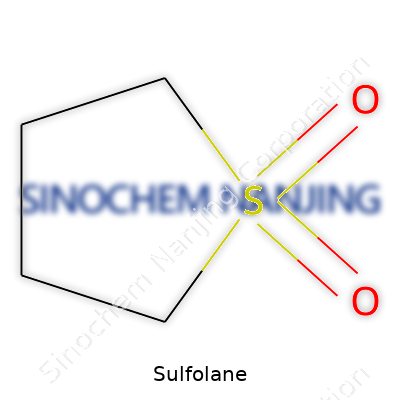
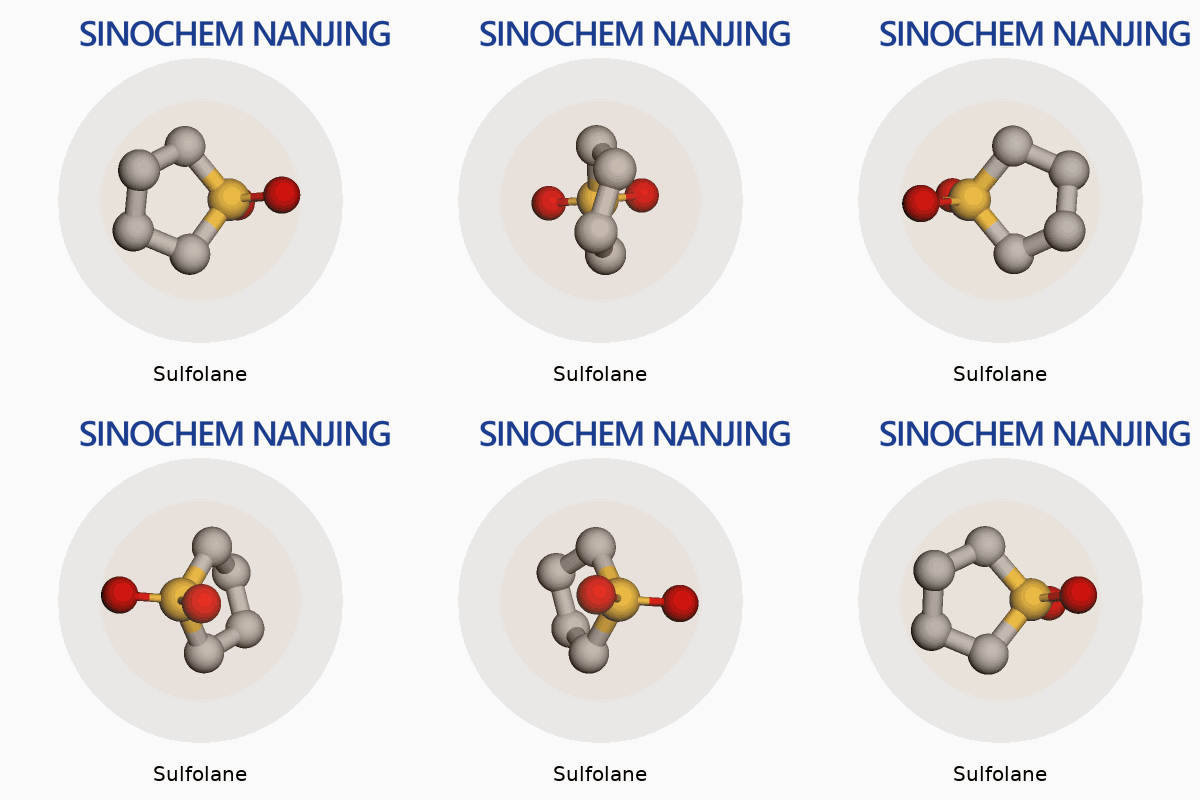
| Names | |
| Preferred IUPAC name | 1λ⁶-thiolane-1,1-dione |
| Other names |
Tetramethylenesulphone Sulpholane 2,3,4,5-Tetrahydrothiophene-1,1-dioxide Thiolan-1,1-dioxide |
| Pronunciation | /ˈsʌl.foʊ.leɪn/ |
| Identifiers | |
| CAS Number | 126-33-0 |
| Beilstein Reference | 1720292 |
| ChEBI | CHEBI:35587 |
| ChEMBL | CHEMBL1542 |
| ChemSpider | 5798 |
| DrugBank | DB11367 |
| ECHA InfoCard | ECHA InfoCard: 100.004.098 |
| EC Number | 01-2119456620-43-0000 |
| Gmelin Reference | 7896 |
| KEGG | C07087 |
| MeSH | D013438 |
| PubChem CID | 11135 |
| RTECS number | WS8580000 |
| UNII | 39Z08YB77Z |
| UN number | UN3334 |
| Properties | |
| Chemical formula | C4H8O2S |
| Molar mass | 120.17 g/mol |
| Appearance | Colorless liquid |
| Odor | Odorless |
| Density | 1.26 g/cm³ |
| Solubility in water | miscible |
| log P | -0.59 |
| Vapor pressure | 0.6 mmHg (at 25 °C) |
| Acidity (pKa) | pKa ≈ 30 |
| Basicity (pKb) | pKb ≈ 19.2 |
| Magnetic susceptibility (χ) | -9.6×10⁻⁶ |
| Refractive index (nD) | 1.433 |
| Viscosity | 1.74 mPa·s (25 °C) |
| Dipole moment | 4.35 D |
| Thermochemistry | |
| Std molar entropy (S⦵298) | 197.8 J·mol⁻¹·K⁻¹ |
| Std enthalpy of formation (ΔfH⦵298) | -589.6 kJ/mol |
| Std enthalpy of combustion (ΔcH⦵298) | -3228.7 kJ/mol |
| Hazards | |
| Main hazards | Harmful if swallowed or inhaled, causes serious eye irritation, may cause respiratory irritation, may cause damage to organs through prolonged or repeated exposure. |
| GHS labelling | GHS02, GHS07 |
| Pictograms | GHS05,GHS07 |
| Signal word | Warning |
| Hazard statements | H302, H319 |
| Precautionary statements | P261, P264, P271, P272, P280, P302+P352, P305+P351+P338, P321, P332+P313, P337+P313, P362+P364, P501 |
| NFPA 704 (fire diamond) | 1-0-0 |
| Flash point | **165°C (329°F)** |
| Autoignition temperature | 554°C |
| Explosive limits | Explosive limits: 1.3–7.6% |
| Lethal dose or concentration | LD50 Oral Rat 1780 mg/kg |
| LD50 (median dose) | LD50 (median dose): 1960 mg/kg (oral, rat) |
| NIOSH | SFK |
| PEL (Permissible) | PEL (Permissible Exposure Limit) for sulfolane: 10 ppm (skin) |
| REL (Recommended) | 250 mg/m³ |
| IDLH (Immediate danger) | 400 ppm |
| Related compounds | |
| Related compounds |
Tetrahydrothiophene Sulfoxide Sulfone |



