The Journey, Science, and Realities of Sodium Hypochlorite
History Woven into Public Health
Sodium hypochlorite has a backstory tied closely to the public's access to clean water and safer food. The early 19th century saw its emergence as a bleach, but the story shifted dramatically once health officials worked out that this chemical could kill off diseases hiding in our water. Much of modern sanitation got its start thanks to sodium hypochlorite. Old World hospitals leaned heavily on it to control disease outbreaks. Fast-forward, communities whole and small drive trucks filled with industrial-grade sodium hypochlorite to treat drinking water and disinfect city streets. Generations of public workers trust its bite against cholera, typhoid, and endless less famous bugs.
Product in Action—From Bleach Bottles to Water Tanks
Walk down a grocery aisle and household bleach stares back, usually carrying a sodium hypochlorite concentration of about 5–8 percent. That familiar bottle shows how the chemical steps neatly between home and industry. In food plants, operators pump tanks of this stuff to clean conveyor belts and wash produce. Hospitals depend on it for floors, bed rails, IV stands, and more. Water treatment folks use higher-strength mixtures, often fluctuating around 10–15 percent depending on storage time and demand. Whether tackling mold in your basement or scaling up to disinfect an entire municipal water supply, sodium hypochlorite flexes to fit countless jobs.
Physical and Chemical Profile—Simple Yet Unforgiving
Sodium hypochlorite as most folks see it is a clear, slightly greenish liquid with a pungent, nose-grabbing odor. Chemically, NaOCl doesn’t bother with complexity. It dissolves smoothly in water, and you can catch its basic nature with a pH meter—it lands somewhere between 11 and 13. Trouble begins quickly, though, since the solution degrades over time, especially once heat, light, or trace metals join the party. What that means in practice is even the strongest bleach loses punch if it sits too long, exposed to sunlight or stored hot. Shelf life drops off fast, which complicates large-scale storage and shipping. With its strong oxidizing power, every spilled drop promises corrosion, faded fabrics, and irritated skin.
Numbers Behind Labels—Reading Between the Lines
Technical specs listed on sodium hypochlorite drums rarely tell the full story. Beyond the concentration—a figure demanding regular lab checks—manufacturers spell out density, pH, and stabilizing additives. Labels stress strict storage temperature ranges, not just for performance but for safety. Chlorine gas can sneak out of neglected tanks, and reactivity with acids or some organic materials is listed plain as day. Not all buyers understand that legal requirements for labeling shift by country or sometimes by region. Still, any legitimate product comes with enough detail for the field workers, plant managers, and first responders who handle it.
Making Sodium Hypochlorite—An Industrial Routine with Caveats
Preparation almost always starts at the intersection of chlorine gas and sodium hydroxide. Anyone who’s done even a simple demo in a high school lab knows the principle: pipe chlorine into caustic soda, keep conditions cool, and sodium hypochlorite forms. That sounds easy on paper. Industrial scale, the process needs containment, cooling, rigorous monitoring, and constant lab checks to track byproducts like chlorate. Early producers discovered the hard way that temperature rises steal away the active ingredient and ramp up the risks. Small, local plants tend to synthesize bleach as needed, since the solution degrades over days or weeks even at the best of times.
Chemical Reactions—Rough Edges and Versatile Reactions
Sodium hypochlorite interacts fast and often messily. Mixed with acids, it generates elemental chlorine gas—dangerous even in small inhaled amounts. Blend it with ammonia and you can get chloramines, notorious for irritating lungs and eyes. Organic matter throws things off, too; reactions can yield hazardous byproducts such as trihalomethanes, an issue that researchers keep debating after decades of study. Even a simple spill on floors can kick up fumes or attack metallic surfaces. Cleaning experts work through detailed protocols to time and control these reactions safely.
What’s in a Name—Beyond Household Bleach
Beyond the standard chemical name, sodium hypochlorite travels under a stack of pseudonyms. Laundry rooms call it “household bleach.” Chemical supply catalogs might list it as “liquid chlorine,” though purists might grumble. In labs or on waterworks blueprints, NaOCl marks the spot. This chemical collected alternate names throughout its history, driven mostly by the context of its use and the jargon of specific industries. No matter the label, the core risks and benefits never really change.
Safety and Handling—Respect Needed, Mistakes Remembered
Anyone who’s ignored a label on a bleach bottle and tried some impromptu cleaning discovers quickly why safety warnings deserve attention. Splashing onto skin can cause burns or irritate for hours. Fumes sneak up in closed bathrooms or laundry rooms, with headaches or eye pain as tell-tale signs. On major job sites and in industrial plants, standard procedure involves gloves, goggles, ventilation, and meticulous dilution routines. Accidental mixing with acids or ammonia makes headlines when workers end up in emergency rooms. Public awareness campaigns, accident logs, and training sessions offer reminders—sodium hypochlorite packs punch, both as a routine cleaner and a chemical hazard.
Everyday Uses—A Modern-Day Backbone
Sodium hypochlorite stands behind many daily routines. Disinfecting water, scrubbing kitchens, processing vegetables, and fighting mold in flooded basements—each use draws on that mix of accessibility, affordability, and proven track record. In pandemics and outbreaks, healthcare teams lean on it for cleaning rooms between patients. Public pools look blue and inviting thanks to measured doses. Restaurants stay open and farms meet export standards partly thanks to the paths sodium hypochlorite cleared for safer cleaning. While competitors exist, few match its range and availability.
Science and Progress—Where Research Pushes Boundaries
Researchers keep studying how sodium hypochlorite works under novel conditions. Chemical engineers scout for stabilizing additives to boost shelf life, cut down corrosion, and handle trace metal contamination. Teams in environmental science keep a close eye on reaction byproducts, wary of persistent compounds like chlorate and chlorinated organics that trickle into ecosystems. Innovations in process control help limit excess chlorine gas escape and optimize efficiency. Public health scientists drill deeper into best-use guidelines, especially in places hit hard by infectious diseases. In every direction, fresh studies fuel new technical manuals, better gear, and new cleaning protocols.
How Toxic is “Just Bleach”?—Balancing Danger and Benefit
Sodium hypochlorite doesn’t rank among the world’s most toxic compounds, but it plays rough with humans and the environment. Low concentrations on skin tend to burn, cause blisters, and, if swallowed, trigger stomach pain, vomiting, or worse. Chlorine gas, a breakdown product in the wrong conditions, causes respiratory distress even at levels too low to smell. Long-term environmental research keeps circling back to aquatic toxicity. Bleach runoff harms aquatic life, pushing regulators to tighten rules for both household and industrial users. This chemical handles so much public sanitation because its risks are known and, with the right precautions, controllable. I’ve seen lessons lost when people mix with acids or pour waste into storm drains without thinking. Newer best practices keep driving accidents lower, though incidents still grab headlines each year.
Looking Ahead—New Challenges, Old Standby
Sodium hypochlorite shows no signs of retreating from the chemical toolbox. Researchers test alternatives—hydrogen peroxide blends, UV-C light, even electrochemical water treatments—but none yet check the boxes for cost, scale, and reliability all at once. Prudent use and better formulation show a path forward. Smarter packaging, improved stabilizers, and stronger training build safety nets. Environmental challenges remain—new regulations shape wastewater disposal and restrict dangerous byproducts. More sustainable production processes, from green chemistry innovations to on-site generation systems, carry promise. In many ways, sodium hypochlorite’s future depends on the care, caution, and creativity of both researchers and end users. That balance of risk and reward keeps the story moving, year after year.
What is sodium hypochlorite used for?
Everyday Cleaning to Public Health
Walk down any store’s cleaning aisle and you’ll spot bottles of sodium hypochlorite under the bleach label. Most folks know it as a strong disinfectant, but its role goes far beyond scrubbing sinks at home. Hospitals, food processors, and city water plants rely on it to keep diseases in check. During my time volunteering at a local animal shelter, we used diluted bleach solutions to disinfect everything from floors to cages. The goal wasn’t just shiny surfaces—it was stopping viruses like parvovirus dead in their tracks. Bleach broke down the microbes that threatened the health of the animals and the humans caring for them.
Keeping Drinking Water Safe
It’s easy to forget how crucial clean water is. Municipal water suppliers often turn to sodium hypochlorite to kill bacteria and viruses that lurk in untreated water. Chlorine in the bleach neutralizes pathogens, making tap water safer to drink. In the U.S., waterborne diseases plunged after disinfection practices became routine over a century ago, according to CDC data. Without it, outbreaks like cholera could return. When I lived in a small town that had to boil water during an equipment failure, it drove home how quickly daily life breaks down without reliable water disinfection.
Healthcare’s Workhorse Disinfectant
Inside clinics and hospitals, infection control teams reach for sodium hypochlorite to wipe down surfaces between patients and sterilize some instruments. Studies show the chemical knocks out many stubborn bugs, including norovirus and C. difficile. During COVID-19, cleaning crews wiped down high-touch areas with bleach solutions multiple times each shift, cutting the chances of the virus spreading. Patients depend on every layer of defense possible in a place already full of sick people.
Industrial Use and Environmental Challenges
Factories that make food, paper, and textiles need powerful cleaning agents, and bleach answers that call. In food plants, it cleans equipment to stop salmonella and listeria outbreaks. At wastewater treatment plants, sodium hypochlorite breaks down odor-causing compounds and organic solids. These uses matter because clean food and less stinky neighborhoods both rely on dependable sanitation. On the downside, the chemical isn’t problem-free. Spills and overuse have led to fish kills in rivers, and chlorine byproducts sometimes raise health concerns. The Environmental Protection Agency keeps a close eye on how much ends up in waterways.
Focusing on Safer and Smarter Use
Used carefully, sodium hypochlorite does more good than harm, but training and oversight make the difference. At home, most people mix it with water for basic cleaning, but using stronger-than-needed solutions can lead to dangers like fumes or skin burns. I learned the hard way that combining it with acids like vinegar gets you toxic chlorine gas—one sniff is enough to remind you to read labels. At industrial and municipal levels, monitoring dosage and keeping up with evolving standards help avoid pollution. Some cities now invest in alternative disinfectants, but few match bleach for speed and reliability.
Solutions Rooted in Awareness and Regulation
People can use sodium hypochlorite more safely by following simple habits like wearing gloves, keeping spaces ventilated, and sticking to recommended dilutions for home or work. Public agencies should keep updating rules to require better reporting and spill response at industrial sites. Food companies and hospitals that lead with rigorous training and routine checks reduce risks to everyone. Sharing knowledge—simple things like not mixing cleaners—protects whole communities from avoidable accidents. Sodium hypochlorite isn’t flashy, but it’s a backbone of cleanliness that deserves both respect and regular review.
Is sodium hypochlorite safe for disinfecting surfaces?
Getting Down to What’s in the Bottle
Walk through your local supermarket’s cleaning aisle, and you’ll find sodium hypochlorite slapped across the labels of everyday bleach bottles. This chemical has played a leading role in cleaning routines across hospitals, schools, restaurants, and family kitchens. Some folks trust it to wipe away germs after grocery runs. Others lean on it during cold and flu season. So, where does trust end and blind use begin?
What Actually Makes Sodium Hypochlorite a Disinfectant?
Imagine fighting an endless parade of bacteria and viruses with nothing but hot water. Doesn’t cut it. Sodium hypochlorite—often at about 5–6% strength in household bleach—brings a punch. It acts fast and breaks apart cell walls, stopping bacteria and viruses right in their tracks. The U.S. Centers for Disease Control and Prevention (CDC) backs its use. They point out that sodium hypochlorite works well against flu viruses, norovirus, and even bacteria like Salmonella and E. coli.
Using It Right: No Shortcuts Here
I remember scrubbing down counters at a community kitchen during a norovirus scare. Instructions mattered. The bleach-to-water ratio in every spray bottle followed public health advice: about ⅓ cup bleach per gallon of water for heavy-duty jobs. Let the solution sit on surfaces for several minutes, because germs don’t vanish instantly. Wiping the surface too soon or skipping gloves turns a good idea into a health risk.
The Dangers Lurking in the Jug
Anyone who has splashed undiluted bleach on their skin knows the nasty burn. Breathe in strong fumes while mopping a closed bathroom, and the stinging sensation in your lungs will serve as a quick warning. Used in excess, sodium hypochlorite releases chlorine gas, which can hurt lungs and eyes. Never mix it with ammonia-based products; that combo produces dangerous fumes, something the American Association of Poison Control Centers warns against every flu season.
Why Surface Prep and Rinse Matters
Food and residue muck up the job if they stay on the countertop. The CDC and FDA both tell us to clean visible dirt first with soap and water. Dirt shields bugs from the chemical punch of the disinfectant, making it pointless. Some moms in my neighborhood soap up every handle before pulling out the bleach—they have the right idea. On surfaces used for preparing food, rinse with clean water after disinfecting to keep chemical traces from sticking around.
Better Habits, Safer Results
Bleach brings peace of mind, but not when it’s used carelessly. Clear labeling at home and in public spaces keeps everyone safer. Store sodium hypochlorite out of children’s reach—too many emergency room visits begin with a curious toddler and an unlabeled container under the sink.
If you worry about harsh chemicals, search for disinfectants with safer labels or consult local public health agencies. Hospitals update cleaning protocols to keep staff and patients safer. Home users can do the same by reading instructions, cleaning up spills, letting surfaces dry, and never mixing chemicals that don’t belong together.
Facing Disinfection with Common Sense
Using sodium hypochlorite safely helps stop germs from spreading while protecting your own health. It’s a partnership between smart habits and honest information, not just a splash-and-go solution. Those who follow the facts, not just the labels, are the ones who stay safer and healthier in the long run.
What is the recommended dilution ratio for sodium hypochlorite?
Cleaning Needs Demand Accuracy
Keeping a space clean and safe boils down to lots of basic decisions, but how much sodium hypochlorite to use probably ranks near the top for anyone working in healthcare, food service, or custodial services. Pour too much from the jug and you risk irritating skin, eyes, and lungs. Pour too little and germs linger. Public health agencies around the world have tested for years and recommend pretty clear guidelines for different cleaning tasks.
The Numbers That Work
For disinfecting surfaces—countertops, bathroom fixtures, floors—household bleach (about 5–6% sodium hypochlorite) works best at a ratio of 1 part bleach to 9 parts water. This gives you about a 0.5% final concentration, strong enough to kill bacteria and viruses, including norovirus and seasonal flu. Tackling tougher jobs, like spills of blood or other bodily fluids, public health experts recommend bumping it up to a 1:4 ratio with water, producing a 1% solution. Food prep surfaces benefit from a lower dose—one tablespoon per gallon of water makes a 200 ppm solution, which sanitizes without leaving harmful residue you wouldn’t want near a meal.
Listening to Real-World Experience
It’s easy to forget how harsh bleach can be until you’ve splashed some full strength on your skin or ruined a patch of favorite clothes. At one of my first jobs mopping gym floors, we had color-coded bottles with the right blend marked out. No measuring, no second guessing. It kept everyone safe and cut down on wasted chemicals. Overdiluting led to complaints about lingering odors, mold spots, and (sometimes) actual outbreaks that cost money. Overconcentrating meant headaches and phone calls about rashes. Fact is, people talk about “bleach” as if it’s a universal cure, but strength and context really matter.
The Science Behind Safe Cleaning
The Centers for Disease Control and Prevention, along with the World Health Organization, offer step-by-step instructions because proper dilution isn’t intuitive for everyone. They’ve backed these recipes with decades of studies using everything from E. coli to coronaviruses. A 1:9 mix achieves the right kill-rate for common pathogens, but only if mixed up fresh every day and stored out of sunlight. Otherwise, chlorine breaks down, and what looks clean on the surface might just be water doing nothing to germs. Precision here isn’t just about following rules; it’s about protecting real people—kids crawling on floors, cooks prepping fresh lettuce, nurses tackling a shift in a busy hospital.
Fixing Everyday Problems
Many front-line workers end up mixing chemicals by eye, especially in busy facilities. Providing pre-measured bottles, laminated dilution charts, or wall-mounted dispensers changes the game. Markings on mop buckets or spray bottles help employees hit safe ratios fast, even during a rush. Posting clear, simple instructions (with pictures works best) can cut down on mistakes. Leaders owe it to their teams to audit supplies and training once in a while—often a faded label or broken dispenser causes more trouble than anyone realizes. If a job calls for stronger solutions due to a specific outbreak, the instructions should say so in bold print and get everyone trained on updated safety steps.
Protecting Workers and Communities
Unnecessary exposure to concentrated bleach has sent more custodians and home cleaners to the doctor than you might expect. Good gloves, training, and access to fresh water for rinsing go a long way toward keeping everyone healthy. Making it simple to follow the right dilution helps protect people and saves money from wasted chemicals and damaged equipment. Nobody gets it right every single time, but clear rules and everyday reminders get you most of the way there. Safe communities often start with the little things, like using the right recipe for a solution that really does its job.
How should sodium hypochlorite be stored?
Why Storage Matters
Sodium hypochlorite offers a powerful punch for cleaning and disinfection, but it has a volatile side that shows up if it gets mishandled. Those creeping yellow stains or the sudden whiff of chlorine in a storage room say a lot about storage habits. People I’ve worked with who deal with pool maintenance or water treatment have stories about corroded shelves or leaking drums because this stuff reacts to just about anything careless. Safety and longevity come down to how sodium hypochlorite gets stored from the start.
Picking the Right Container
Sodium hypochlorite isn’t friendly with most metals. Steel and aluminum corrode quickly, so plastic tanks made from high-density polyethylene or fiberglass reinforced plastic have become the go-to for many. That’s not just a preference—it’s because these containers hold up against strong oxidizers and don’t leave you with pitted surfaces or odd leaks after a few months. I’ve seen warehouses with stained concrete floors where metal drums finally gave in. Using the right tank material shields not only the product but also the floors, walls, and workers nearby.
Environmental Controls
Heat wrecks sodium hypochlorite faster than anything else. Sitting in a sunlit shed or near steam lines, the solution starts to break down, releasing chlorine gas. The worst I’ve seen is a batch go ‘bad’ in a single summer week because someone ignored temperature exposure. Shade and cool storage, away from direct heat sources, go a long way. Ventilation isn’t just a box to tick on a checklist—it really helps keep fumes out of reach. More than once, someone has opened a container only to get a faceful of sharp, choking gas. A simple vented area prevents those emergencies.
Keep It Isolated
Mixing sodium hypochlorite with acids or ammonia isn’t just a risky move; it can send people to the emergency room. In water plant environments or janitorial closets, I’ve seen labels and physical barriers save the day. Keeping it away from acids, organics, and reducing agents avoids those dangerous chemical reactions that spark fires or gas release. Store it with strong labeling and clear boundaries—no improvising or cramming it next to incompatible products just because shelf space feels tight.
Regular Checks—Don’t Let Problems Fester
Corrosion and leaks start small. Regular inspections catch failures before they become full-scale hazards. In my own experience working on facility audits, the places that set a routine for checking seals, gaskets, and the color of the hypochlorite solution (fresh sodium hypochlorite looks clear yellowish-green; old or poorly stored product darkens like bad iced tea) have far fewer incidents. Catch leaks fast, and clean the area with plenty of water.
Never Underestimate Dilution
Concentrated sodium hypochlorite poses greater risks than diluted stock, so whenever possible, use the solution at lower concentrations. People sometimes think stronger equals better cleaning, but higher strength ramps up the hazard for storage, transport, and spills. The Centers for Disease Control and Prevention notes that both household bleach and industrial stocks tend to lose potency if not protected from heat and light, so lower strength stored properly still gets the job done with fewer risks.
Smart Storage Saves Lives
Controlling exposure to sodium hypochlorite isn’t just about following some regulation—it protects people, buildings, and the planet. Simple practices, like better labeling, keeping things cool, and using tough plastic tanks, come from generations of trial and error, and sticking to these basics pays off for everyone.
What precautions should be taken when handling sodium hypochlorite?
Understanding Why Caution Matters
Sodium hypochlorite shows up everywhere—from pool disinfectants to industrial cleaners, from laundry bleach to wastewater treatment plants. You’ll probably recognize the smell if you’ve ever opened a bottle of household bleach. Despite its usefulness, few realize just how important safe handling is. I once splashed some on my clothes during a cleaning job in college, and after tossing the shirt, I understood why so much fuss goes into training around this chemical.
The Dangers Hidden in Plain Sight
This chemical is not mild. A splash can damage your eyes or skin. Vapors can make you cough or leave your lungs burning. Even a small spill bleaches clothing within seconds. In stronger concentrations, it can corrode metals and harm sewage systems. Mixed carelessly with other cleaners, sodium hypochlorite releases chlorine gas—a toxic cloud capable of sending you to the hospital.
Practices for Safer Handling
You won’t hear anyone in industry say “just wing it” with sodium hypochlorite. The single best tool is knowledge—knowing what you’re working with and respecting its bite. Proper labeling goes a long way, even at home. I’ve watched coworkers pour concentrate into spray bottles and walk away. Without a clear label, someone might think it’s just water. That habit invites accidents.
Personal protective gear deserves equal attention. Gloves crafted to resist chemicals, goggles with side protection, sturdy shoes, and long sleeves all form a barrier between you and a painful mistake. I keep nitrile gloves handy for this sort of work, and after watching a friend end up with burned hands from skipped gloves, I never rush the process.
Ventilation can’t be ignored. Open windows, run exhausts, or use fans. In crowded or poorly ventilated rooms, fumes hang in the air and make breathing hard. In industrial settings where I’ve helped with disinfection, ventilation checks stand as a fixed part of the safety checklist.
Diluting sodium hypochlorite calls for cool water, poured slowly and with constant stirring. Pouring concentrate straight into hot water can trigger a reaction that splashes caustic liquid. Never pour water into the chemical—always add it to water. Quick actions carried out carelessly can turn a simple cleaning task into a trip to the emergency room.
Training and Preparation
Many skip reading the safety data sheet (SDS), but it holds real world information about what happens in a spill or if someone gets exposed. I’ve learned that emergency showers and eyewash stations should never be blocked or out of reach where this chemical is used.
Spills call for calm steps. If sodium hypochlorite spills onto your skin, rinse right away with water—not just for a few seconds, but for several minutes. If you get any in the eyes, use an eyewash fountain and reach out for help. At work or at home, it pays to keep emergency contact numbers close and everyone trained on what to do.
Finding Smarter Alternatives
These days, some facilities are swapping sodium hypochlorite for less hazardous alternatives. For those who can’t switch, automation helps limit direct contact. In my experience, investing a little more in such equipment quickly pays itself back if it prevents a single accident or injury.
Taking sodium hypochlorite lightly never ends well. Learning what safe handling looks like, making the right gear routine, and caring about everyone who works nearby shapes both health and peace of mind.
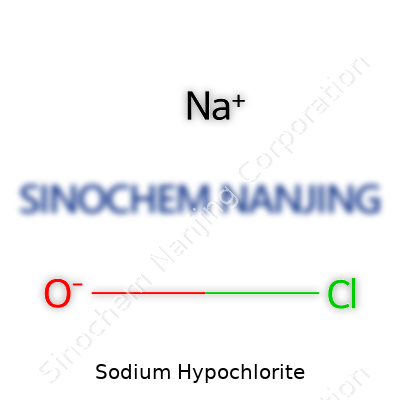
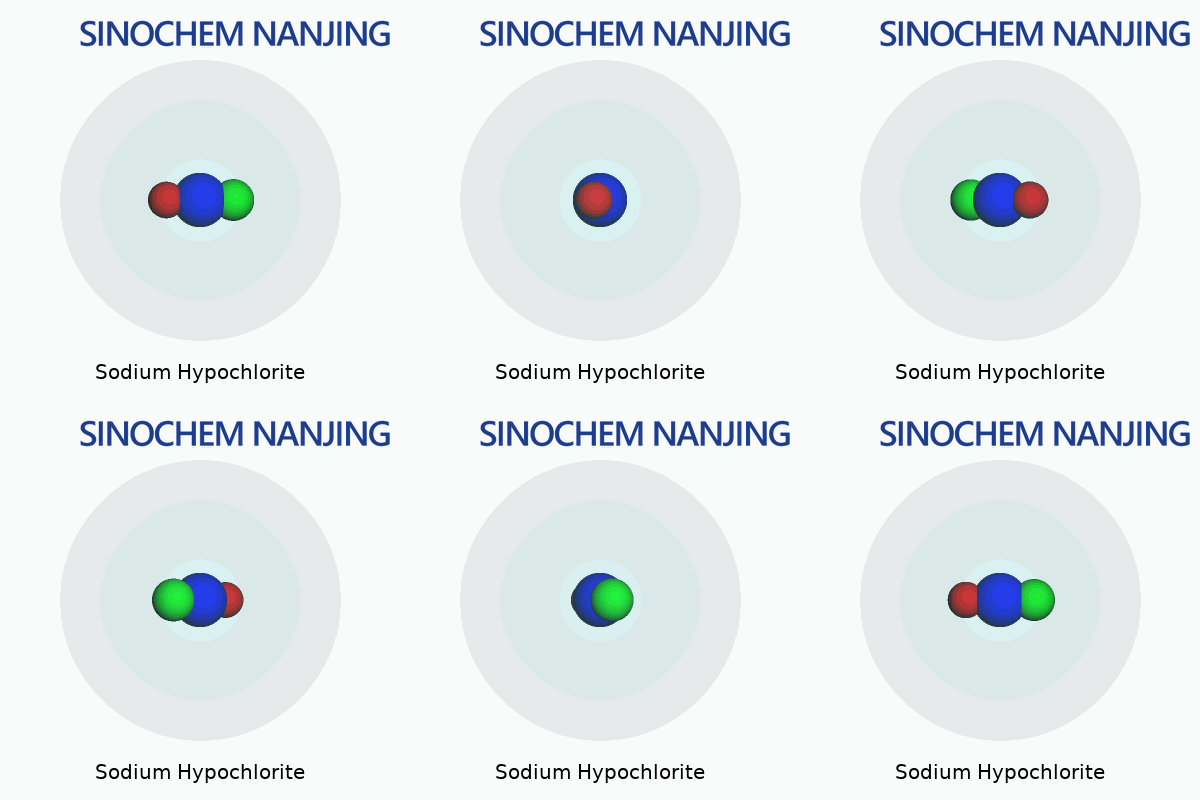
| Names | |
| Preferred IUPAC name | Sodium hypochlorite |
| Other names |
Bleach Liquid bleach Javel water Antiformin Sodium oxychloride |
| Pronunciation | /ˌsəʊdiəm ˌhaɪpəˈklɔːraɪt/ |
| Identifiers | |
| CAS Number | 7681-52-9 |
| Beilstein Reference | 3587152 |
| ChEBI | CHEBI:33141 |
| ChEMBL | CHEMBL15829 |
| ChemSpider | 14112 |
| DrugBank | DB09412 |
| ECHA InfoCard | 100.028.760 |
| EC Number | 231-668-3 |
| Gmelin Reference | 778 |
| KEGG | C02390 |
| MeSH | D017094 |
| PubChem CID | 23665760 |
| RTECS number | NH3486307 |
| UNII | 9MVY8VEJ8O |
| UN number | UN1791 |
| Properties | |
| Chemical formula | NaOCl |
| Molar mass | 74.44 g/mol |
| Appearance | Appearance: Yellowish-green liquid |
| Odor | Chlorine-like |
| Density | 1.11 g/cm³ |
| Solubility in water | soluble |
| log P | -3.32 |
| Vapor pressure | <30 mmHg (25°C) |
| Acidity (pKa) | 7.5 |
| Basicity (pKb) | 12.6 |
| Magnetic susceptibility (χ) | Diamagnetic |
| Refractive index (nD) | 1.347 |
| Viscosity | 10 - 12 cP (at 25°C) |
| Dipole moment | 2.07 D |
| Thermochemistry | |
| Std molar entropy (S⦵298) | 107.5 J·mol⁻¹·K⁻¹ |
| Std enthalpy of formation (ΔfH⦵298) | -391.0 kJ/mol |
| Pharmacology | |
| ATC code | D08AX09 |
| Hazards | |
| Main hazards | Causes severe skin burns and eye damage; may cause respiratory irritation; very toxic to aquatic life. |
| GHS labelling | GHS05, GHS09, GHS07 |
| Pictograms | GHS05,GHS09 |
| Signal word | Danger |
| Hazard statements | H290, H314, H400 |
| Precautionary statements | P234, P260, P264, P271, P273, P280, P301+P330+P331, P303+P361+P353, P304+P340, P305+P351+P338, P312, P321, P363, P405, P501 |
| NFPA 704 (fire diamond) | 3-0-1-OX |
| Lethal dose or concentration | LD50 (oral, rat): 8.91 g/kg |
| LD50 (median dose) | LD50 (median dose): 8,910 mg/kg (oral, rat) |
| NIOSH | WW5250000 |
| PEL (Permissible) | PEL: 2 mg/m³ |
| REL (Recommended) | 10-30% |
| IDLH (Immediate danger) | IDLH: 10 mg/m³ |
| Related compounds | |
| Related compounds |
Hypochlorous acid Sodium chloride Sodium chlorate Sodium hydroxide Calcium hypochlorite |



