Sodium Dodecylbenzenesulfonate: Legacy, Risks, and Where It Leads Us
Walking Through Its Story: Historical Development
Sodium dodecylbenzenesulfonate hasn't always lived in the shadow of detergents. Its story began to pick up steam in the 1940s, right around the time industries needed strong, cost-effective surfactants to help people keep clothes, floors, and pretty much everything else clean. War and shifting economies created a wake for something more reliable than soap, and so this synthetic molecule moved up in the world. Chemists at the time were eager to break soap’s weaknesses—mainly its issues with hard water—and sodium dodecylbenzenesulfonate delivered. By the late twentieth century, it had become a fixture in households and manufacturing, standing as a symbol of human ambition, both for clean cities and, ironically, mounting environmental questions.
Product Overview: Where It Ends Up
It’s not a stretch to say most homes and laundromats owe part of their function to sodium dodecylbenzenesulfonate. You see its fingerprints on laundry detergents, dishwashing liquids, and, less obviously, in industrial cleaners and firefighting foams. Its power comes from the ability to break up greasy, oily messes—transforming them into something water can move along. The molecule’s tail, derived from the dodecyl group, grabs on to grime, while its sulfonate head stays cozy with the water, which is exactly what lets soap bubbles happen, and grime gets lifted away. This is the kind of chemistry that sits empty on a supermarket label but plays out every time someone scrubs a greasy plate or tackles an engine block.
Physical and Chemical Properties: What Sets It Apart
Sodium dodecylbenzenesulfonate looks like most surfactants: white, powdery or sometimes in flake or granular form, but behind that plain exterior is significant performance. It dissolves readily in water, produces copious foam, and packs a powerful punch against oil and dirt. Its surfactant nature comes from the dodecyl chain attached to a sulfonate group, a design that lets it wedge itself right at the water-oil interface. This gives it the muscle to cut through greasy stains that older generations would spend hours trying to scrub out. Chemically, it’s stable enough for most cleaning uses, resists breakdown in mildly acidic or alkaline conditions, and holds its own across the temperature spectrum common in household and industrial cleaning.
Technical Specs & Labeling: Decoding What’s Inside
Manufacturers face a different world than they did in the early years. People want to know what’s in their products and what risks might tag along. On detergent labels, sodium dodecylbenzenesulfonate tends to show up as a ‘primary surfactant’ or under various synonyms. Technical grades put out by chemical suppliers often include purity information, moisture content, pH when dissolved in water, and sometimes analysis of related byproducts. Regulatory bodies in different countries set limits on allowable impurities and require safety data, pushing producers to publish clear labels and offer transparent test results. The rise of online product databases means no one really hides their cards anymore; expectations for transparency have never been higher.
How It’s Made: Preparation Methods
In chemical plants, sodium dodecylbenzenesulfonate is the outcome of deliberate and tightly controlled reactions. It starts with petrochemical raw materials: dodecylbenzene reacts with sulfur trioxide to create the sulfonic acid, which then reacts with sodium hydroxide to yield the final product. The process is robust and scalable—a point factories care about because demand moves in waves driven by everything from summer laundry trends to pandemic cleaning rushes. Over time, refinements have focused on better control of impurities and improved environmental management. While decades ago production standards focused on yield and cost, industry pressure now puts pollution controls, recovery of unreacted materials, and recycling of wash water front and center. This evolution adds just as much to the story as any tweaks in the chemical formula.
Chemical Reactions & Modifications
Sodium dodecylbenzenesulfonate isn’t just a static slice of chemistry. Its sulfonate group offers a handle for further reactions, opening the door to modifications that tailor performance, reduce environmental persistence, or create blends tuned for specific stains. Industrial researchers adjust chain lengths, swap out counterions, or introduce substitutions along the aromatic ring to adjust foaming behavior or biodegradability. These changes don’t always make headlines, but they profoundly shape market offerings and environmental impact. Through the years, tweaking these side reactions has helped products work better in cold water, rinse more easily, or break down faster in wastewater systems.
Synonyms & Product Names
No one likes to trip over a long chemical name at the store, so sodium dodecylbenzenesulfonate shows up under many aliases. Commonly called SDBS, LAS (short for linear alkylbenzene sulfonate), or by various trade names, it often lurks on ingredient labels under “anionic surfactants” or “alkylbenzenesulfonate.” Cleaning industry insiders recognize it instantly, but for everyday shoppers, these names matter less than the results they get—bright laundry, shiny dishes, or grease-free surfaces.
Safety & Operational Standards
Safety conversations around sodium dodecylbenzenesulfonate cover skin and eye irritation, accidental spills, workplace exposure, and questions about what happens after it heads down the drain. Skin contact can cause redness and irritation, particularly at high concentrations seen in industrial settings. People working with the pure chemical learn to use gloves, goggles, and sometimes full protective gear. Regulations such as those from the European Union’s REACH framework, the US Environmental Protection Agency, and comparable agencies elsewhere set allowable limits in consumer products, workplace air, and wastewater. Manufacturing and use guidelines now demand spill controls, proper disposal, and close tracking of waste. Worker safety data sheets and environmental disclosures are no longer a bureaucratic sideline; they are seen as basic business practice and social responsibility. This is a long walk from the old world where accidents, emissions, and health effects went unreported.
Application Area: Where It Shows Up
Wade through any list of cleaning agents and sodium dodecylbenzenesulfonate rises near the top. Detergents eat up the greatest share, closely followed by industrial degreasers, shampoos, textile processing aids, leather softeners, and in some regions, firefighting foams and emulsifiers for pesticides. As a result, traces of this chemical reach countless corners of daily life, from home sinks to factory floors, and from urban wastewater to rural streams. Its popularity hangs on the simple fact that nothing has replaced its cleaning power at the same cost and with the expected reliability. While the search for green alternatives picks up steam, this molecule hasn’t budged much from its stronghold yet.
Research & Development
Scientific attention has shifted from making more sodium dodecylbenzenesulfonate to managing its footprint. Researchers now look at ways to increase biodegradability, reduce aquatic toxicity, or engineer drop-in replacements from renewable sources. Some teams turn to enzymatic breakdown, harnessing microbial communities to speed up post-use decomposition in treatment plants. Others dive deep into functional modifications—adjusting the aromatic system, building in branching, or switching to new counterions to deliver similar cleaning with less residue. Every improvement hinges on real-world validation. Products must perform in cold washes, deal with hard water, stay shelf-stable for months, and not drain budgets. The pursuit for a surfactant that cleans as well but lives lighter on the planet drives much of the innovation, even if the market, used to cheap and cheerful results, remains slow to change.
Toxicity Research
Sodium dodecylbenzenesulfonate rarely jumps straight to the center of chemical safety debates, but it sits among the big players for environmental persistence and aquatic toxicity. Research finds it disrupts aquatic life at higher concentrations, damaging fish gills and altering microbe populations in rivers and lakes. Regulators responded by tracking effluent levels and urging formulators to use less. As water treatment plants improved, levels in most developed country waterways trended downward, but the conversation isn’t over. Low-level, persistent contamination still crops up downstream, especially near cities and industrial clusters. There’s limited evidence linking typical home exposure to serious health risks, though sensitive or allergic skin may still react. This all highlights a central tension: the tradeoff between what people demand in cleaning results and what the environment can tolerate. In a world that prizes both hygiene and sustainability, hard questions remain about how much is too much and what corners to cut next.
Looking Ahead: Future Prospects
Laundry and cleaning routines may look much the same year after year, but change builds slowly. Pressure from environmental groups, stricter government guidelines, and shifting consumer expectations all shape where sodium dodecylbenzenesulfonate goes from here. Alternatives based on natural oils, sophorolipids, or sugar-derived alkyl polyglucosides push for a share of the market, but few match the price and performance across all conditions. Future prospects depend on an honest reckoning—how do we cut chemical residues in water, cut harm to aquatic life, and meet regulations, all while staying affordable? Advances in greener chemistry—think tailored biodegradability, microbe-friendly surfactants, and more robust waste treatment—promise hope, but only if industries and consumers accept some tradeoffs. Public awareness continues rising, and as data on environmental and health effects grow more accessible, policy and practice will edge toward greater accountability. Sodium dodecylbenzenesulfonate has carried a heavy load for a long time, but the next act might see its role narrowed, shared, or fundamentally changed by the weight of facts, research, and an insistence on cleaning up its own mess.
What is Sodium Dodecylbenzenesulfonate used for?
Unpacking the Ingredient Behind Everyday Cleanliness
Walk down a supermarket aisle, grab a bottle of dish soap, a box of laundry powder, or even some household cleaner, and you’ll likely find sodium dodecylbenzenesulfonate somewhere on the ingredient list. This mouthful of a compound pops up in all sorts of cleaning products, thanks to its knack for breaking up grease and lifting dirt off surfaces. It works like a magnet for grime, pulling it away from dishes, clothes, and anything else in need of a good scrub.
I’ve had my fair share of battles against stubborn stains from life’s little messes—spilled spaghetti sauce, oily handprints, even the tough collar stains that only show themselves in the harsh light of laundry day. That’s where this ingredient really proves its worth. Its unique structure grabs onto both oil and water, making it a bridge that lets water rinse away the dirt. It doesn’t just float in the background, either. Without sodium dodecylbenzenesulfonate, soapy water would struggle to deal with greasy buildup, leaving behind dull glassware and clothes that never feel truly clean.
Beyond the Sink and Laundry Basket
Its role stretches past the typical chores. Industries rely on sodium dodecylbenzenesulfonate for heavy-duty cleaning, from washing machinery to preparing surfaces for painting. The food industry uses it in some cleaning processes. Even labs take advantage of it to separate proteins and analyze samples, since it helps break down cell membranes and mix substances that usually resist blending. It’s a behind-the-scenes workhorse that keeps operations smooth.
Households and companies keep reaching for products with this ingredient because it delivers. According to the Environmental Working Group, it’s one of the most widely used surfactants globally and sees millions of tons produced each year. Its production supports countless jobs, from chemical manufacturing to product formulation to retail.
Concerns and New Directions
Still, the widespread use of sodium dodecylbenzenesulfonate comes with questions about its impact on health and the environment. Direct skin contact can sometimes cause irritation, especially for people with sensitivities. Municipal water treatment handles this compound well, but high concentrations in waterways can harm aquatic life. That leaves us at a crossroads: stick with what works or seek out alternatives that reduce environmental burdens?
Research into greener surfactants is underway. Scientists are looking at plant-based, biodegradable options that promise similar cleaning power without the same risks for toxicity or buildup in natural habitats. Down the line, manufacturers might swap out some sodium dodecylbenzenesulfonate for these new solutions, although cost, availability, and effectiveness all play a part in how quickly change happens.
Until that balance is struck, making conscious choices can help. I look for products with full ingredient lists and companies working toward more sustainable practices. Even small choices add up over time—less frequent washing, responsible disposal, and supporting businesses that invest in research. Awareness around ingredients like sodium dodecylbenzenesulfonate gives us a clearer lens on how science, industry, and daily life connect.
Is Sodium Dodecylbenzenesulfonate safe for skin contact?
What Sodium Dodecylbenzenesulfonate Does in Daily Life
Sodium dodecylbenzenesulfonate pops up in laundry detergents, dish soaps, and a surprising number of household cleaners. It works as a surfactant, breaking apart oil and dirt, making them easier to wash away. Many of us come into contact with it without realizing, whether washing dishes, mopping a floor, or scrubbing a dirty pan. This chemical plays a major role in the cleaning power people rely on.
Understanding its Risks and Limits
Over years of research, experts have found that most surfactants can cause irritation. Sodium dodecylbenzenesulfonate is no exception. According to the Cosmetic Ingredient Review Expert Panel and reports from the European Chemicals Agency, this compound doesn’t kick up health alarms at the concentrations found in over-the-counter products. Regular use of diluted formulas, like dish soap in a sinkful of water, doesn’t usually trigger serious problems for healthy skin.
Trouble arises with higher concentrations. Cleaning industry workers—folks who handle industrial cleaning agents all day—sometimes notice skin drying, redness, or cracking. That’s what dermatologists expect with powerful degreasers. The outer layer of skin acts like a shield, but strong surfactants strip away natural oils. People already prone to eczema or allergic reactions run a bigger risk. Even for most healthy adults, soaking in undiluted products shortens that safe window.
What Science and Experience Suggest
Testing with real volunteers and animal studies back up the idea that sodium dodecylbenzenesulfonate can irritate or dry out the skin, especially after long exposures. Unlike more aggressive chemicals, it doesn’t show up on lists of known carcinogens or systemic toxins, but nobody wants to see red, itchy patches from cleaning up after dinner.
Having spent hours cleaning in restaurants and at home, dry and sore hands became a fact of life if gloves were out of reach. Repeated handwashing with these types of soaps left skin flaky, even raw. Many people pick up hand creams to counteract these effects, but prevention usually works better than treating irritated skin after the fact.
Safer Ways to Clean Up
Since there’s no getting rid of sodium dodecylbenzenesulfonate from daily products anytime soon, small changes help a lot. Gloves create a barrier, especially in restaurant kitchens or during long cleaning sessions. Rinsing hands well after handling soaps and cleaners reduces how much chemical stays behind. Many people find unscented or “gentle” formulas cause less irritation—they often have less surfactant or add soothing ingredients like glycerin.
Product makers respond to customer feedback. The biggest detergent companies carry out ingredient safety reviews, as demanded by regulations like REACH in Europe or by the U.S. FDA's rules for over-the-counter cleansers. Professional organizations, like the American Contact Dermatitis Society, regularly remind people to patch test new soaps and avoid harsh cleansers if they already battle dry skin or allergies.
Making Choices and Moving Forward
Personal experience and the growing stack of scientific studies both point the same direction. Sodium dodecylbenzenesulfonate in household products generally stays safe for unbroken, healthy skin during brief exposure. Issues pop up when products stay on too long, make repeated contact, or come into play with sensitive or damaged skin. Taking simple precautions makes a big difference—use gloves, rinse well, and reach for creams before dryness takes hold.
What are the main applications of Sodium Dodecylbenzenesulfonate?
Cleaning Up the Mess—Literally and Figuratively
Some chemicals quietly keep our homes and industries ticking, rarely grabbing headlines. Sodium dodecylbenzenesulfonate (SDBS) is one of those behind-the-scenes players. If you’ve ever poured out liquid detergent or splashed water with soap, you’ve met this compound without even knowing its name. Once you dig into where SDBS turns up, it becomes clear how much the modern cleaning world leans on its properties.
Detergents: The Unseen Workhorse
SDBS shows up in almost every bottle marked “laundry detergent.” Its structure helps it grab onto grease and grime, lifting stains from fabric and trapping them, so water whisks them away. From my experience in dealing with stubborn kid messes and muddy laundry, detergents with SDBS work notably better than their “green”—and often less effective—counterparts. This isn’t just anecdotal: a study from the American Cleaning Institute shows that surfactants based on dodecylbenzenesulfonate outperform many older soap blends, especially in hard water.
Dishwashing liquids also can’t do without SDBS. The formula cuts through cooked-on food, fat, and oil with less elbow grease than soap alone. It gives that satisfying pile of suds, which makes washing up feel more productive. For restaurants and cafeterias, using SDBS-based cleaners cuts both water and energy bills, since high-efficiency results show up even at lower temperatures.
Industrial and Institutional Cleaning
Factories and big institutions use gallons of specialized cleaners, and SDBS pops up in many of those. It doesn’t just help in kitchens or bathrooms; maintenance teams reach for products with SDBS to wash oil stains from garage floors, degrease machinery, or even remove graffiti. Working in an auto-shop during college, I learned that solvents with SDBS cut through engine grease quicker, letting the crew move onto real repairs—not just endless scrubbing.
Personal Care and Cosmetics
SDBS can be found across shampoos, liquid soaps, and even some facial cleansers. It helps these products foam and spread, making sure a tiny dollop goes a long way. My own experience with travel-size shampoos backs this up: the smaller bottle still produces rich lather because of SDBS’s chemical ability to disperse dirt and natural oils. Dermatology journals point out that while SDBS isn’t gentle enough for every skin type, companies often pair it with milder agents to balance cleaning power with skin compatibility.
Risks and Steps Toward Safer Use
No chemical becomes so widespread without racking up some concerns. Wastewater treatment systems sometimes struggle to break down SDBS completely, so traces occasionally slip into rivers and lakes. That’s not ideal, as research published in environmental science journals associates high concentrations with fish and plant harm. I’ve volunteered at community river cleanups and seen foam floating downstream after rainstorms—a reminder that all those suds from home don’t always vanish, even after the tap turns off.
Some companies work to lower those impacts. Innovations focus on faster-degrading surfactants or new enzyme blends that accomplish the same cleaning goals with fewer long-term side effects. It’s a work in progress. Responsible use—sticking to the recommended amounts, picking products with eco-certifications—offers one way individual choices can help.
Looking Ahead
From washing jeans to keeping the local restaurant spotless, SDBS holds its ground in daily living and heavy-duty industry. Science and real-world use help point toward smarter, safer formulas as awareness grows. In the meantime, that impressive pile of suds in the sink owes a quiet thanks to one very busy molecule.
Is Sodium Dodecylbenzenesulfonate biodegradable?
Digging Deeper Into an Everyday Chemical
Sodium dodecylbenzenesulfonate, or SDBS, shows up in household detergents, industrial cleaners, and even in foam firefighting agents. Most people rely on its cleaning power without thinking twice about where it ends up. Because SDBS moves from sink to drain, the question always pops up: does it break down in nature, or does it hang around in rivers and soil?
The Science Behind SDBS’s Breakdown
Chemists and environmental scientists have tracked SDBS for decades. Around the 1960s, older sulfonates started raising red flags—foaming rivers caught public attention in Europe. SDBS replaced those earlier versions because it showed better breakdown in sewage plants. These improvements didn’t happen by luck; research pushed companies to use structures that bacteria like to chew on. Modern sewage facilities break SDBS down under aerobic (oxygen-using) conditions. Studies from the US Environmental Protection Agency confirm this: about 80% to 90% of SDBS disappears within two to three weeks in active treatment systems.
Real-World Footprints
Reality rarely matches lab conditions. Not all regions treat wastewater with up-to-date equipment. In cities, SDBS breaks down fast because microbes do their job. In places where treatment lags or where detergent use is heavy, SDBS finds its way into lakes or streams almost unchanged. People have seen foam lining riverbanks near overloaded outlets or after storms. This isn’t just ugly—it signals a disruption in the balance marine life needs.
Impact on Life Beyond the Drain
SDBS ties up with organic matter in water. It sticks to fish gills and insects, raising toxicity at high concentrations. Some rivers in Asia and Latin America report levels above the 0.01 mg/L limit considered safe by the World Health Organization. Scientists have seen temporary die-offs and lower insect populations where SDBS levels spike. These effects don’t just end up in scientific articles; they land right in fishermen’s baskets, cutting into people’s livelihoods.
Is Biodegradable Enough?
Just because SDBS breaks down in the right conditions doesn’t mean the story ends there. Old habits die hard—too many folks flush cleaners thinking sewers or septic tanks will handle it. Without oxygen, SDBS degrades much slower. Sludge from these systems can hang onto residue for months. I’ve spoken with farmers who use treated sludge as fertilizer, only to notice sluggish crop growth later in the season. Their experience matches what the data says: incomplete breakdown brings chemicals back to land, closing a loop that shouldn’t exist.
Greener Choices, Smarter Habits
Solutions always seem simple in theory: swap SDBS for greener options like enzymes or soapnuts, invest in proper sewage treatment, and set stronger standards. Real change takes more than shelf talk. Consumers push brands when they demand cleaner labels. Households lose nothing by using concentrated detergents, which cut the total volume of chemicals flushed out. Local governments nudge industry forward through stricter run-off monitoring. None of this changes the fact that SDBS made life cleaner and easier. We can still keep those gains without letting pollution build up downstream.
How should Sodium Dodecylbenzenesulfonate be stored?
Looking at This Compound’s Real Risks
Sodium dodecylbenzenesulfonate shows up in many cleaning products and industrial solutions. People recognize it for its ability to break down grease and dirt, but once you receive a drum of this powdered or granular chemical, the focus quickly shifts from how useful it is to how safe it is. Let’s face it. This substance irritates skin and eyes, and if someone inhales too much dust, that brings its own set of problems. No one wants to spend hours cleaning up spilled chemical powder or treating unnecessary exposures. Smart storage keeps things simple and safe, which protects both health and wallets down the road.
Taking Temperature and Humidity Seriously
Storing sodium dodecylbenzenesulfonate in a dry and cool area makes a difference. High humidity encourages clumping and caking, which turns a free-flowing powder into a lumpy, hard-to-use block. This not only ruins the chemical itself, but creates headaches for dosing and mixing. Experience shows that packaging sealed tightly after every scoop can fend off extra moisture. Keeping the temperature stable and away from direct sunlight also matters. Excessive heat can degrade the quality and may increase the risk of a small fire, especially if dust starts building up in the air. A temperature-controlled room stays more reliable than a metal shipping container parked out back.
Separation Prevents Problems
I’ve seen too many supply rooms where incompatible chemicals crowd together. Sodium dodecylbenzenesulfonate should stay far from oxidizing agents or strong acids. If things go wrong, you don’t want a shelf collapse causing an unwanted reaction right at eye level. Putting the surfactant on a dedicated shelf—preferably below eye height and away from walkways—reduces the chance of accidental spills or contamination. Some workplaces use spill trays or bins that can catch granules and powder, saving cleanup time and preventing the compound from spreading outside its intended area. A little foresight here makes emergency response less frantic.
Labels and Containers Make a Difference
Clear labeling on every container stops confusion before it starts. Too often, someone stores surfactants in old paint buckets or soda bottles. Original packaging tends to have a tight seal and proper hazard warnings, so swapping containers creates unnecessary risk. Heavy-duty plastic drums with a tamper-evident seal stand up to drops and rough handling. Every person in the storage area will know exactly what they’re working with—no mystery substances lurking on back shelves.
No Substitute for Training
Storing sodium dodecylbenzenesulfonate safely only works when people know the rules. Training new employees on these basics prevents shortcut-taking. Review the safety data sheet and make its recommendations part of daily routine, not just something left on a forgotten clipboard. Emergency showers, eyewash stations, and personal protective equipment stay close by, and they get checked as often as the chemical inventory itself. This way, if something ever goes wrong, people have a plan—and the confidence to act fast.
Room for Improvement
Shifting habits usually starts with listening to the workers who actually handle the compound every day. Buy better bins. Fix storage racks. Add more warning signs. Take storage seriously, and sodium dodecylbenzenesulfonate won’t turn from an asset into a liability.
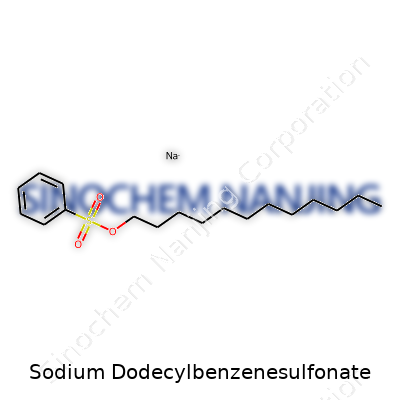
| Names | |
| Preferred IUPAC name | sodium 4-dodecylbenzenesulfonate |
| Other names |
Linear alkylbenzenesulfonate SDBS Sulfonic acids, C10-16-alkylbenzenes Dodecylbenzenesulfonic acid sodium salt Benzenesulfonic acid, dodecyl-, sodium salt |
| Pronunciation | /ˈsəʊdiəm dəˈdɛsɪlˌbɛnˈziːnˌsʌl.fəˌneɪt/ |
| Identifiers | |
| CAS Number | 25155-30-0 |
| Beilstein Reference | 1903286 |
| ChEBI | CHEBI:87390 |
| ChEMBL | CHEMBL135630 |
| ChemSpider | 8673 |
| DrugBank | DB11309 |
| ECHA InfoCard | 100.027.282 |
| EC Number | 246-680-4 |
| Gmelin Reference | 113877 |
| KEGG | C14344 |
| MeSH | Dodecylbenzenesulfonates |
| PubChem CID | 23665486 |
| RTECS number | DB8975000 |
| UNII | WF9X3771JX |
| UN number | “UN 2586” |
| CompTox Dashboard (EPA) | DTXSID0023542 |
| Properties | |
| Chemical formula | C18H29NaO3S |
| Molar mass | 348.48 g/mol |
| Appearance | White to light yellow powder |
| Odor | odorless |
| Density | D: 0.18 g/cm³ |
| Solubility in water | soluble in water |
| log P | -1.3 |
| Vapor pressure | Negligible |
| Acidity (pKa) | ~1 |
| Basicity (pKb) | pKb ≈ 5.8 |
| Magnetic susceptibility (χ) | -62.0e-6 cm³/mol |
| Refractive index (nD) | 1.485 |
| Viscosity | Viscous liquid |
| Dipole moment | 7.1 D |
| Thermochemistry | |
| Std molar entropy (S⦵298) | 362.6 J·mol⁻¹·K⁻¹ |
| Std enthalpy of formation (ΔfH⦵298) | -558.0 kJ/mol |
| Std enthalpy of combustion (ΔcH⦵298) | -7487 kJ/mol |
| Pharmacology | |
| ATC code | A05QA04 |
| Hazards | |
| Main hazards | Causes skin and eye irritation; may be harmful if swallowed |
| GHS labelling | GHS02, GHS05, GHS07 |
| Pictograms | GHS05,GHS07 |
| Signal word | Danger |
| Hazard statements | Harmful if swallowed. Causes skin irritation. Causes serious eye damage. |
| Precautionary statements | P280, P261, P264, P271, P301+P312, P305+P351+P338, P304+P340, P330, P337+P313, P501 |
| NFPA 704 (fire diamond) | Health: 2, Flammability: 1, Instability: 0, Special: - |
| Flash point | > 140°C |
| Autoignition temperature | 400 °C |
| Lethal dose or concentration | LD50 Oral Rat 438 mg/kg |
| LD50 (median dose) | 438 mg/kg (rat, oral) |
| NIOSH | SN2100000 |
| PEL (Permissible) | PEL (Permissible Exposure Limit) for Sodium Dodecylbenzenesulfonate: Not established |
| REL (Recommended) | REL: 3 mg/m³ |
| IDLH (Immediate danger) | Not listed |
| Related compounds | |
| Related compounds |
Dodecylbenzenesulfonic acid Linear alkylbenzenesulfonate Sodium laureth sulfate Sodium lauryl sulfate Alkylbenzene sulfonate |



