Sodium Dodecyl Sulfate: Science, Impact, and Future Paths
Historical Development
Sodium dodecyl sulfate started popping up in chemical circles in the early 20th century, showing its hand as a potent surfactant right from the get-go. Before it made a name for itself, soap and saponified fats took care of most cleaning work. Chemists needed something tougher for industrial settings—a compound that could lower surface tension to pull oils and grime off almost anything. In the 1930s and 1940s, sodium dodecyl sulfate emerged from research labs, initially as a byproduct in the quest to build better detergents. By the postwar years, mass production made it accessible for personal care products, laboratory work, and even food processing. Its rise echoed the shift toward synthetic chemistry shaping daily life.
Product Overview
Few ingredients show up on so many shelves as sodium dodecyl sulfate. Toothpaste, shampoo, laundry powder, and lab reagents list it for its foaming, wetting, and cleaning power. It's a white, crystalline powder when pure, often sold as flakes or granules. Higher concentrations kick up irritation, so care shapes its use in consumer goods. Most manufacturers rely on well-established supply chains to ensure consistent quality, with pharmaceutical and food industries demanding extra purity compared to home cleaning labels. It gets called SDS, SLS, or sodium lauryl sulfate, depending on the product and the country, but the core chemical stays the same.
Physical & Chemical Properties
A twelve-carbon tail hangs off the sulfate head, making this molecule both oily and charged. Water pulls in the sodium and sulfate ends, while oils mingle with the long hydrocarbon chain. This split personality drives it to form micelles in water—little clusters that wrap up grease and dirt for easy rinsing. SDS dissolves easily, foams impressively, and stands up to hard water, which matters a lot for laundry and shower gels. At room temperature, it clumps as a fine white powder, melting at about 204°C. The pH of a 1% solution usually hovers near 7, but acidic or basic conditions won’t break its structure unless extremes hit.
Technical Specifications & Labeling
Producers define their SDS by purity—above 99% for high-end lab supplies—and check for tiny traces of contaminants. Bulk shipments usually land in sealed drums with hazard warnings and handling directions printed clear as day. Pharmacopeias and regulatory agencies have set the standard through years of testing, so labels must show not just chemical name but common synonyms, CAS numbers, and concentration. In laboratory settings, the powder often arrives with material safety data sheets, breaking down hazard symbols, first-aid measures, and clean-up guidelines if something spills. Standards such as USP and Ph. Eur. maintain strict benchmarks to protect health and guarantee results.
Preparation Method
The backbone of SDS production centers around dodecanol, which comes from fatty alcohols—sometimes coconut or palm kernel oil, sometimes petroleum sources. Industrial chemists feed dodecanol into a reactor with sulfur trioxide gas or chlorosulfonic acid, bringing the sulfonation reaction to life under controlled temperatures and stirring. The intermediate product reacts with sodium hydroxide to yield the final, crystalline structure. Filtration and purification scrub away side products, leaving behind the high-purity surfactant. This multi-step process has been refined over decades, cutting waste and side reactions through better catalysts and process control.
Chemical Reactions & Modifications
On the bench top, SDS acts predictably: mixed into water, it self-assembles into micelles above a certain concentration. Strong acids can hydrolyze it, but day-to-day exposure keeps it stable in most home and lab conditions. Reactivity ramps up under heat or with oxidizing agents. Tweaking its structure by shortening the alkyl chain or swapping the sulfate for a sulfonate changes how it behaves—affecting foaming, wetting, and biodegradation. Researchers use SDS as a tool in protein separation because it unfolds proteins and blankets them with negative charge, giving them uniform mobility in gel electrophoresis. This knack for uniform denaturing sparked entire branches of molecular biology.
Synonyms & Product Names
Different industries speak different languages, so sodium dodecyl sulfate ends up branded under many aliases. In cleaning supplies and cosmetics, the name sodium lauryl sulfate sticks most often. Chemists write SDS in protocols, and the full IUPAC falls to sodium dodecane-1-sulfonate. International shipping sometimes labels it as dodecyl hydrogen sulfate, depending on the regulatory climate. Trade names like Texapon, Stepanol, and Lauryl plus code numbers float around on bulk invoices. Signal words such as “irritant” show up on the packaging, a nod to its potential to annoy skin or eyes in raw form.
Safety & Operational Standards
Handling SDS needs reliable ventilation, gloves, and goggles, both in factory settings and research labs. Powdered forms bring the risk of inhalation or dust explosions in enclosed spaces, so bulk areas typically use dust extraction, grounded metal drums, and proper storage. Regulatory guides—OSHA in the United States, REACH in Europe—publish long lists of limits for workplace air concentration and exposure times. Consumer products knead in much lower concentrations, but spot checks, lot validation, and clear signal words set a baseline for safety. Proper training keeps accidental spills rare, but emergency showers and eye washes stay close at hand just in case.
Application Area
Detergents and cleaning agents take up the largest share of annual SDS output, with giants like Procter & Gamble buying in bulk for laundry and dishwashing formulas. Toothpastes and mouthwashes lean on its foaming and dispersing strength, while shampoos and shower gels rely on it for that signature lather most folks expect alongside a clean scent. Scientists reach for SDS every day for protein separation, cell lysis, and nucleic acid extraction in biomedical research. Textile mills and paper plants value its role as a wetting agent to keep fibers moving through the wash. Food processors occasionally use it as an emulsifier (within set limits), and even firefighting foams take advantage of its ability to reduce surface tension.
Research & Development
Much of the ongoing work circles around two fronts: boosting performance and reducing ecological footprint. Green chemistry efforts keep searching for plant-based feedstocks and catalysts that shave energy off large-scale manufacture. Analysts test replacement candidates that mimic the surfactant power but biodegrade faster or irritate less. The surge in “sulfate-free” labels on personal care products comes straight out of this research, as makers respond to consumer worries about skin sensitivity without losing foaming performance. Laboratories push the boundaries of SDS’s analytical use—fine-tuning concentrations and buffer systems for more accurate protein gels or speeding up DNA isolation protocols. New research tries to shed light on interactions between SDS and various biomolecules in living organisms, aiming for advances in both medicine and environmental protection.
Toxicity Research
SDS ranks as a skin and eye irritant at higher concentrations—a fact underlined by thousands of patch tests and animal studies over the years. Concentration, exposure duration, and the presence of other chemicals heavily influence outcomes. Short-term contact with dilute solutions—like those in shampoos or toothpaste—spurs little more than mild irritation in most users, though people with eczema or dermatitis may experience flare ups. High-dose animal studies pinpointed a threshold for chronic effects, leading agencies worldwide to cap allowable daily exposure. Biodegradation studies show SDS breaks down fairly well in wastewater treatment, but traces sometimes persist in rivers or streams, nudging aquatic researchers to keep an eye on impacts to fish and invertebrates. The consensus blends caution with practical controls—minimal exposure, rinsing after use, and ongoing surveys for long-term effects.
Future Prospects
SDS faces both opportunity and challenge over the coming decades. Less irritating, plant-derived variants under development could push old-school formulations toward greener labels. Startups and multinational corporations alike hunt for enzymes or biosurfactants that serve the same functions with reduced environmental impact, hoping for regulatory approval and broad consumer acceptance. Industrial scientists see room for SDS to remain a powerful analytical tool, provided production tightens up waste and tracks sources more transparently. The synthesis, handling, and disposal of surfactants stand poised for change, as global supply chains adjust to consumer demand, regulatory scrutiny, and shifts in feedstock sourcing linked to changing climate. Chemical literacy and public awareness will shape which ingredients end up in laundry rooms, lab benches, and rivers, making responsible innovation the lasting legacy of SDS’s long run.
What is Sodium Dodecyl Sulfate used for?
Inside Personal Care Products
Walk into any supermarket and you’ll see shelves lined with shampoos, body washes, toothpastes, and face cleansers. There’s a good chance sodium dodecyl sulfate (SDS), sometimes labeled as sodium lauryl sulfate, sits quietly on the ingredient list. This chemical works hard to break up grease and dirt, giving soaps and cleansers that thick, satisfying foam.
People often take for granted how easily soaps rinse away grime. In reality, without ingredients like SDS, those products wouldn’t cut through oils as effectively. SDS helps separate oil from water, trapping dirt so a good rinse takes it all away. Brands keep SDS in their formulas because it gets the job done, delivers the bubbles customers expect, and works consistently.
Role in Laboratories and Medicine
I still remember my college biology lab—the distinct smell of chemicals, and gloves sticking just a bit to my hands. Each week we’d run protein gels, learning how scientists separate and understand the tiny building blocks of life. SDS played its part there too. It pulls proteins apart and lines them up, making sure even the smallest changes show up clearly on a gel.
This type of research shapes medical progress. For example, tracking proteins in blood samples can help doctors spot diseases, from simple infections to more serious conditions like cancer. That work relies on tools like SDS to expose the details hidden inside human cells. It’s easy to overlook these backstage players in medicine, but they make modern diagnostics much more reliable.
Industrial and Household Helpers
Washing your favorite t-shirt or scrubbing grease off a kitchen counter often relies on more than elbow grease. Commercial detergents and industrial cleaners use SDS as a backbone for their power. It’s cheap to make, mixes well with water, and keeps cleaning costs down for big companies and families alike.
SDS even finds a place on the farm. It helps wash produce and clean equipment, keeping bacteria away so food stays safer from field to table. Without surfactants cleaning up behind the scenes, both personal hygiene and food safety would be much harder to maintain.
Sensitive Skin and Environmental Concerns
Good cleaning power comes with trade-offs. Some folks, myself included, notice that frequent use of SDS-heavy products makes skin dry or irritated. Several consumer advocacy groups highlight that a chunk of the population finds this ingredient harsh, especially in toothpaste and face wash. I’ve learned to peek at the label, searching for gentler alternatives, but budget options rarely leave SDS behind.
As cities and farms use more cleaning supplies, more SDS rinses down drains. While it breaks down better than many older chemicals, concerns about aquatic life persist. Even trace amounts disrupt organisms in rivers and lakes. Manufacturers keep tweaking their formulas looking for a better balance between cost, performance, and safety.
Moving Forward: Cleaner Choices
Big shifts often start small. Each time someone buys a sulfate-free shampoo, it sends a message to product makers. Researchers work on surfactants made from renewable plant oils or proteins. Companies try to strike a balance that cleans well but irritates less and harms the planet less. Governments and watchdog groups keep tabs on ingredient safety and environmental impact, pushing for more transparent labeling.
In daily life, most of us want products that work, don’t break the bank, and don’t cause unnecessary harm. For now, spotting sodium dodecyl sulfate on a label means a product cleans efficiently and foams well, but it also signals areas where science and industry can do better. From lab bench to kitchen sink, looking out for smarter, safer alternatives turns everyday shopping into a way to nudge the world forward.
Is Sodium Dodecyl Sulfate safe for skin contact?
Getting To Know What’s Actually In Your Soap
Look at the ingredient list on almost any bottle of shampoo or face wash, and there’s a good chance you’ll spot sodium dodecyl sulfate. Some might know it as sodium lauryl sulfate, and it’s the stuff that kicks up all that rich lather we expect from a cleanser. Consumers ask plenty of questions about it, especially after seeing warnings about it online. Many of us want to know if it’s safe to have this chemical on our skin every day.
What Sodium Dodecyl Sulfate Really Does
This compound acts as a surfactant, which means it helps water mix with oil and dirt so they rinse away easily. That’s pretty important because oily grime doesn’t lift off easily with just a splash from the tap. Surfactants pull it all off your skin. The FDA lets companies use sodium dodecyl sulfate in personal care products, and dermatologists see nothing unusual about it in basic cleansers.
Experiences Anyone With Sensitive Skin Knows
I’ve seen the effects up close—sometimes in my own bathroom mirror after trying cheaper shampoos or face washes. Sodium dodecyl sulfate can strip away skin’s natural oils, especially if you scrub hard or use it too often. Dryness, itching, or even redness sometimes show up for people with sensitive skin or conditions like eczema. Plenty of my friends have mentioned steering clear of this ingredient once they found gentler cleansers kept their cheeks more comfortable through the winter.
The American Academy of Dermatology sums it up: most people won’t experience major problems from it, but anyone with known sensitivities will likely notice some irritation sooner or later. There’s a big difference between healthy skin that gets washed once or twice a day, and fragile skin that needs extra care.
What The Science Says About Long-Term Use
Years of research on sodium dodecyl sulfate show little risk of serious harm when used as directed. Scientists have tested it in concentrations common to store-bought products, and the results point mostly to short-term dryness or irritation at worst. It’s not a carcinogen, nor does it build up inside the body.
That said, professional guidelines stress keeping the stuff away from your eyes or broken skin. Nobody wants to splash soap in their eyes, anyway, but this ingredient stings pretty quickly. Lab testing backs this up: it can trigger redness or discomfort with prolonged exposure at high strength, which isn’t so different from saltwater on a scrape.
Looking Out For Yourself When Choosing Soap or Shampoo
If your skin doesn’t throw a fit after you rinse off, there’s little reason for stress. Sensitive types—children, the elderly, and those with chronic skin problems—benefit from switching to products labeled as “sulfate-free.” Plenty of companies market gentler cleansers now, picking coconut-derived ingredients or milder surfactants that don’t strip as much oil.
Easy fixes don’t require tossing out everything in the shower caddy. Moisturizing after cleansing helps seal in hydration, and taking shorter showers with lukewarm water avoids peeling away natural barriers. For shoppers, scanning the label for “sodium lauryl sulfate” or “sodium dodecyl sulfate” gives a good roadmap. For anyone dealing with repeated irritation, dermatologists are happy to help sort out which ingredient is likely to blame and can suggest affordable alternatives.
Everyday Choices Make The Difference
Plenty of habits affect skin comfort, not just the chemicals in our soap. Choosing the right mix of products, combined with a little awareness, keeps skin and scalp happy over the long haul. If a cleanser keeps skin feeling balanced and not tight, then it fits just fine in most daily routines.
What are the storage requirements for Sodium Dodecyl Sulfate?
Sodium dodecyl sulfate shows up in more labs and factories than folks realize. Most know it from the foam that pops up when they shake a shampoo bottle. In industrial or research settings, though, safety gets all the attention. After handling it in university research, the first lesson stays with me: storing this powder isn’t just about following a checklist—it’s about keeping people and property safe every day. Let’s get into what really matters with SDS, based on that daily, hands-on experience.
Keep Moisture Out, Always
SDS sucks up water from the air fast. If left exposed, it clumps into a hard lump or even starts dissolving on its own. That doesn’t just waste material—it can throw off your measurements and spoil a whole batch. Labs that treat their SDS right always keep it in tightly sealed containers as soon as it’s measured out. Plastic works better than uncoated metal, as corrosive salts and some metals don’t mix well. If humidity creeps in, SDS gets sticky and hard to pour, making spills more likely. Every gram wasted or spilled costs money and adds risk. Keeping this chemical dry isn’t theory; it keeps the workflow on track.
Store in a Cool, Well-Ventilated Spot
Nothing is worse than grabbing a container that’s hot to the touch. At higher temperatures, SDS can start to break down, especially if it’s not pure or mixed with other substances. Most manufacturers suggest temperatures in the 15–25°C range. Room temperature works, provided the storage area doesn’t bake under a sunny window or sit near a radiator. Poor ventilation lets fine SDS dust linger—easy to inhale, not something anyone should be breathing. Every lab I’ve known that stores surfactants does best by keeping them off direct sunlight, in a shady, ventilated storage cupboard. The staff don’t just avoid chemical degradation—they dodge the cough and skin irritation that airborne dust brings.
Prepping for the Accidental Spill
Nearly everyone working with SDS has seen spills; they’re part of lab life. Closed containers minimize these accidents. Still, accidents find their way in. Having a big, heavy scoop of SDS powder hitting a wet bench foams up quickly. Lab benches with dry towels and easy access to waste bins make cleaning easier. Even better is clear labeling that reminds users what’s inside and highlights the irritant warning. I’ve watched new lab members try to handle SDS with bare hands. They always regret it—red, itchy skin isn’t pleasant. Gloves, lab coats, and goggles make a big difference. Telling newcomers this isn’t just bureaucratic safety talk; it keeps them in the lab instead of in the campus health center.
Keep Away from Acids and Oxidizers
SDS doesn’t mix well with acids or oxidizers, and this isn’t just chemical trivia. Placing it near bottles of concentrated acids or bleach creates the potential for nasty reactions. One misplaced bottle in a tight storeroom has sparked more than one minor incident in facilities over the years—strong smells, hissing sounds, or worse. Even in the busiest space, separation matters. Put SDS on dedicated shelves, away from acids, to keep accidents small and prevent bigger disasters.
Final Thoughts on Organization
Keeping a tidy, labeled, dry storage area is what separates headache-filled workdays from smooth ones. All the textbook rules around SDS mean something only if they show up in daily habits, not paperwork. You take care of the storage, and SDS works for you, not against you.
How should Sodium Dodecyl Sulfate be handled in case of a spill?
Practical Steps Rooted in Real-World Labs
If you spend any time at a lab bench, odds favor you've worked with Sodium Dodecyl Sulfate (SDS). Its detergent powers get things clean and help break apart proteins—handy stuff for folks in biotech, chemistry, or even some high school demonstrations. As common as SDS is, it's still a chemical with an attitude. Spilling some doesn’t mean hitting the panic button, but treating it like table salt would miss the mark.
Why Spills Deserve Respect
A few years back, during a late-night clean-up, I watched a rookie splash some SDS solution on the tile. He found out fast that this stuff gets slippery. Not only that, but the fumes gave him a solid lesson on why those “use in a well-ventilated area” rules aren’t just nagging. Inhaling aerosolized powder makes for an uncomfortable day—nose and throat let you know about it.
Serious exposure can dry out skin or even cause irritation. Worse, if you track damp powder on your shoes, you might carry the mess to other parts of the building. Suds don’t magically disappear, and this fact alone should have anyone reaching for the right tools, not a handful of dry paper towels.
Facts to Guide Your Response
National research organizations and occupational safety groups like OSHA have logged enough SDS close calls to build strong guidance. Here’s what stands out from their experience—and matches my own testing lab days.
- Keep your hands safe first: Nitrile or latex gloves make a difference. Bare skin meets SDS more than once and starts to protest quickly.
- Contain before you clean: For solids, grab a dustpan and a damp cloth—avoid sweeping dry powder into the air or splashing water recklessly. For liquids, ring the spill with spill pillows or absorbent pads. This tactic stops the spread and keeps the stuff manageable.
- Work with ventilation: Open fume hoods or get windows cracked when cleaning. If local exhaust isn’t an option, patience helps—give vapors and dust a chance to leave the scene instead of piling up in your lungs.
- Decontaminate, don’t just disappear it: Mopping up SDS with plain water does the trick, but stick to small amounts and change your cleaning cloth or mop head before streaking the residue all over the building. I learned it the hard way that dried SDS looks clean until your shoes squeak for hours.
- Chuck what you use into the right waste stream: Dirty rags, gloves, PPE, they all need their own “hazardous waste” bin. It might mean more paperwork, but the campus safety officer gives fewer lectures that way.
No Magic—Just Being Ready
Accidents happen everywhere—even the tidiest teams wrestle with spills. What matters: folks stay present, know the hazards, and take sensible steps, every time. Labeling bottles and having a spill kit that doesn’t have expired glue makes life easier. I once saw a group spend twenty minutes hunting the right gloves while the spill dried—preparation isn’t busywork, it’s peace of mind.
Sodium Dodecyl Sulfate doesn’t have to turn the day upside down. The right habits, a splash of caution, and respect for chemistry all add up. Cleanups become less about firefighting and more about working smart, so everyone goes home with their skin and pride intact. Keeping that mindset is what keeps labs—and the folks in them—healthy for the long haul.
What are the potential health hazards of Sodium Dodecyl Sulfate?
What Is Sodium Dodecyl Sulfate?
Sodium dodecyl sulfate (SDS), also known as sodium lauryl sulfate, shows up in countless household products. You’ll spot it on ingredient lists for toothpaste, shampoo, detergents, and even some processed foods. Its foaming action makes it a go-to for cleaning, letting soaps and shampoos bubble and spread. But flip that bottle, see SDS, and it’s worth understanding what that means for your health.
Why Health Experts Watch SDS
Scientists have studied SDS for decades because our daily routines put us in close contact—washing hands, brushing teeth, taking a shower. Dermatologists, including those at the American Academy of Dermatology, report that SDS can irritate skin, especially for people with sensitivities or eczema. The surfactant strips oils away fast. Skin dries up, gets itchy, sometimes even cracks. For me, wintertime hand washing with regular SDS-based soap leads to rough, chapped knuckles and redness unless I moisturize right after.
Oral care poses another risk. Anyone who’s brushed and felt their mouth dry out, or noticed sores pop up, might have SDS to thank. The ingredient dries the soft tissues in the mouth, raising the risk of mouth ulcers. Research featured in scientific journals supports this, drawing connections between recurrent canker sores and the frequent use of SDS toothpaste.
Eyes, Lungs, and Long-Term Effects
The eyes react quickly. SDS in shampoos or cleansers stings if it drips in. Eye care professionals warn that chronic exposure could increase sensitivity or pose risks with pre-existing conditions. Inhaling the aerosolized mist from certain cleaners or accidental spills also irritates airways, especially for people with asthma.
Debate flares around the long-term effects. Cancer gets mentioned online, but studies from respected sources like the National Institutes of Health say current evidence doesn’t link SDS at the levels in most consumer goods to cancer in humans. Still, overexposure leads to organ toxicity in animal tests. Workers handling concentrated SDS use gloves and masks for a reason.
Heavy Use in Industry and Environmental Concerns
Cleaning companies, food processors, and cosmetics makers prize SDS for its cost and performance. That widespread use sends a lot of SDS down household drains. Sewage treatment plants catch most, but researchers have called out its persistence in waterways. Aquatic life does not handle SDS well; high levels stop fish eggs from developing and disrupt delicate gill tissues.
Practical Steps and Solutions
People who notice irritation from their personal care products can switch to milder surfactants, such as sodium lauroyl sarcosinate or decyl glucoside, both listed by the Environmental Working Group as lower-hazard options. Patch test new soaps or shampoos before making them regular fixtures. Parents looking out for children with sensitive skin can hunt for “SLS-free” or “SDS-free” on product labels, a move recommended by pediatric dermatologists.
Manufacturers need to keep exploring safer alternatives, especially since people trust these products to do essential jobs at home and work. Industry pressure helps: major brands now offer sulfate-free lines due to growing consumer demand for gentler care. In my house, swapping out one harsh product at a time added up, and skin flare-ups dropped off. SDS isn’t lurking in every bottle for no reason, but health and comfort still deserve a second look at those labels.
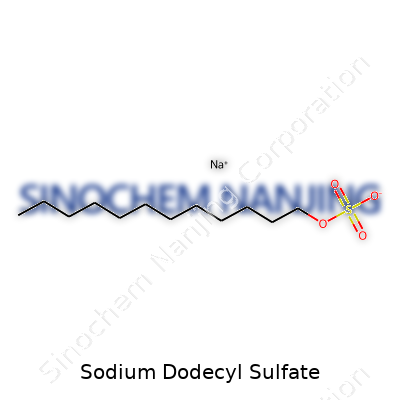
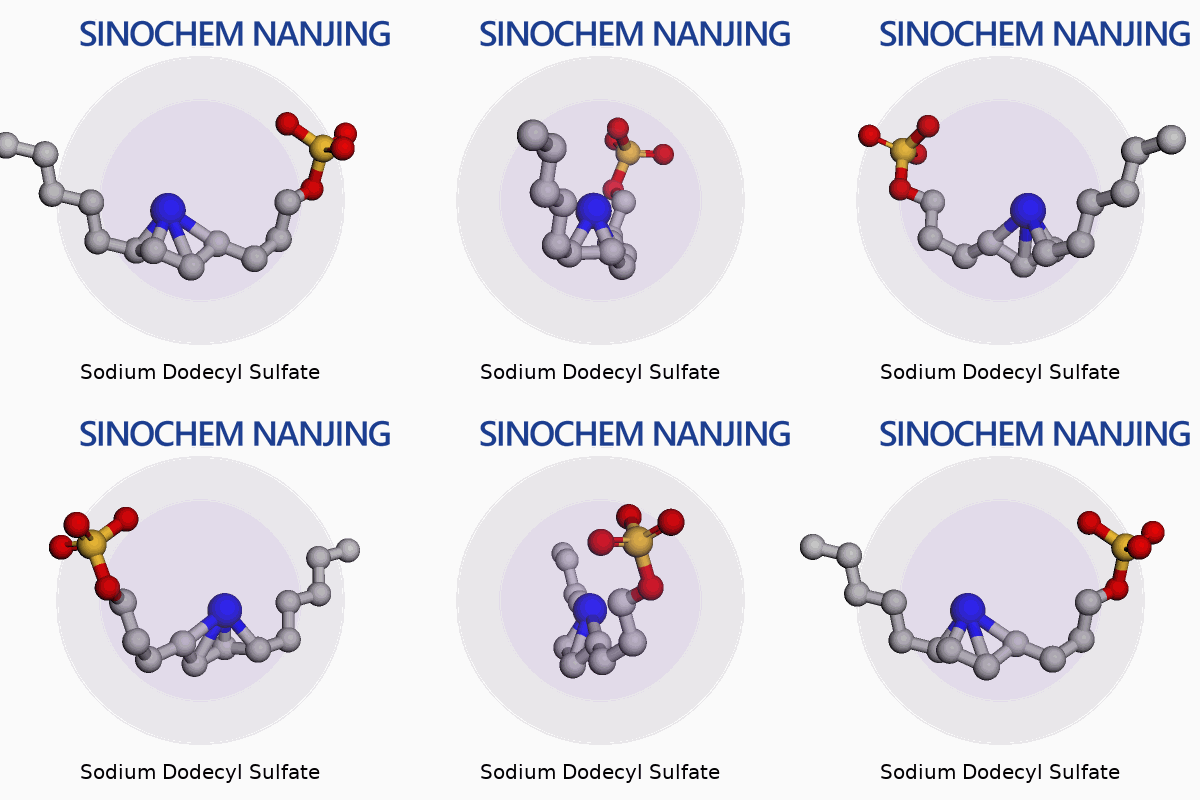
| Names | |
| Preferred IUPAC name | Sodium dodecyl sulfate |
| Other names |
Sodium Lauryl Sulfate SDS Lauryl sulfate sodium salt Dodecyl sodium sulfate Sodium n-dodecyl sulfate SLS |
| Pronunciation | /ˈsəʊdiəm doʊˈdɛsɪl ˈsʌlfeɪt/ |
| Identifiers | |
| CAS Number | 151-21-3 |
| Beilstein Reference | 1108733 |
| ChEBI | CHEBI:9148 |
| ChEMBL | CHEMBL1357 |
| ChemSpider | 22938 |
| DrugBank | DB04530 |
| ECHA InfoCard | 01-2119489461-32-XXXX |
| EC Number | 203-820-9 |
| Gmelin Reference | 8788 |
| KEGG | C11267 |
| MeSH | D002600 |
| PubChem CID | 3423265 |
| RTECS number | WT1050000 |
| UNII | F5TD010360 |
| UN number | UN2924 |
| CompTox Dashboard (EPA) | DTXSID2026809 |
| Properties | |
| Chemical formula | C12H25NaO4S |
| Molar mass | 288.38 g/mol |
| Appearance | White or almost white powder or crystals |
| Odor | Odorless |
| Density | 1.01 g/cm³ |
| Solubility in water | Easily soluble in water |
| log P | -1.6 |
| Vapor pressure | Negligible |
| Acidity (pKa) | pKa ~2.0 |
| Magnetic susceptibility (χ) | χ = -51 × 10⁻⁶ cm³/mol |
| Refractive index (nD) | 1.358 (20 °C) |
| Viscosity | 60 mPa·s (25°C, 15% aq. sol.) |
| Dipole moment | 4.62 D |
| Thermochemistry | |
| Std molar entropy (S⦵298) | 347.0 J·mol⁻¹·K⁻¹ |
| Std enthalpy of formation (ΔfH⦵298) | -1200.6 kJ/mol |
| Std enthalpy of combustion (ΔcH⦵298) | -3563.8 kJ/mol |
| Pharmacology | |
| ATC code | D11AX18 |
| Hazards | |
| Main hazards | Harmful if swallowed or inhaled; causes skin and serious eye irritation. |
| GHS labelling | GHS02, GHS07, GHS08 |
| Pictograms | GHS05,GHS07 |
| Signal word | Danger |
| Hazard statements | Hazard statements: H315, H319, H335 |
| Precautionary statements | P261, P264, P271, P273, P280, P301+P312, P302+P352, P305+P351+P338, P330, P332+P313, P362+P364, P337+P313 |
| NFPA 704 (fire diamond) | 2-3-0-ALK |
| Autoignition temperature | 310 °C |
| Lethal dose or concentration | LD50 Oral Rat 1,200 mg/kg |
| LD50 (median dose) | 1,288 mg/kg (Rat, oral) |
| NIOSH | WN3100000 |
| PEL (Permissible) | Not established |
| REL (Recommended) | REL: 10 mg/m³ |
| IDLH (Immediate danger) | CMC: 1,000 mg/m³ |
| Related compounds | |
| Related compounds |
Ammonium lauryl sulfate Sodium laureth sulfate Sodium lauroyl sarcosinate |



