Sodium Caprate: A Commentary on Science, Safety, and Possibility
Historical Development
People working with fatty acids in the early 20th century probably didn't expect their lab discoveries to play a role in pharmaceuticals and nutrition decades later. Sodium caprate, a sodium salt of decanoic acid, started as a niche compound for researchers poking at the limits of fat chemistry. Innovation often builds on plain curiosity, and as food and drug industries grew more dependent on safe functional additives, scientists began to notice sodium caprate's surfactant and permeability boosting properties. Early adopters in the chemical industry welcomed it for cleaning and emulsifying, but the real breakthrough arrived when pharmacologists saw its ability to enhance drug absorption through biological barriers. Today, many recognize sodium caprate as a specialty ingredient shaping both medicine and food processing – a leap from its humble beginnings.
Product Overview
Most consumers never hear about sodium caprate, even though it might influence how foods feel or how medicines work. In plain terms, this compound helps other substances move more freely across barriers or mix into solutions they usually resist. You'll find it listed behind scientific names, quietly doing work in formulations designed for better nutrient uptake, improved texture, or drug delivery. People handling sodium caprate need to think about it as both an enabler and a partner to other ingredients. It rarely acts alone; the magic comes from how it interacts with fellow components, smoothing physical mixtures and physiological passages that would otherwise stay shut.
Physical & Chemical Properties
Sodium caprate shows up as a white powder or crystalline substance. Unassuming on the outside, it packs a punch where molecular structure counts. It's soluble enough in water to let chemists blend it into solutions and tough enough chemically to survive basic processing steps without fuss. Its surface-active nature makes it excellent for breaking down oils or improving the blend of hydrophilic and lipophilic ingredients. Unlike many similar fatty acid salts, sodium caprate resists caking under normal conditions, meaning it handles well for bulk manufacturing. Its ten-carbon chain doesn’t just give it its name; that structure shapes nearly every behavior in food science and pharmacology.
Technical Specifications & Labeling
Manufacturers and regulators care about purity and clarity. For sodium caprate destined for food or pills, clear specification sheets outline pH, loss on drying, and heavy metal content. Standardization safeguards end-users, ensuring every batch delivers reliable performance. Labels must show its presence if a product targets consumers with allergies or sensitivities—nobody wants a surprise, even from something this simple. Consistent labeling practices also build trust with partners and regulators, anchoring sodium caprate in responsible manufacturing practice instead of back-room alchemy.
Preparation Method
The path from decanoic acid found in coconut oil or palm kernel oil to a pure sodium caprate batch takes skill and attention. Saponification sits at the core, converting the fatty acid to a salt using sodium hydroxide. After neutralization and purification, the resulting compound reaches its affinity for water without sacrificing stability. Some labs refine their methods using fractional distillation or crystallization to chase higher purity; others focus more on batch reliability and scale to supply bigger operations. The preparation itself isn’t particularly exotic, but consistent quality requires diligence and careful process control.
Chemical Reactions & Modifications
Most chemical reactions involving sodium caprate aim to tweak solubility or interaction with other functional molecules. Adding different metal ions or pairing it with co-solvents generates custom blends for food and pharmaceutical use. Some research teams test how modifying the chain length or branching pattern might fine-tune permeability or emulsification. While sodium caprate itself isn’t wildly reactive, its ability to carry and boost other actives keeps researchers tinkering with combinations. Innovations in this space often direct product development in the supplement or medical field without any need for dazzling chemistry—sometimes, the simplest tweaks drive the biggest change in absorption or texture.
Synonyms & Product Names
Whether listed as sodium decanoate, decanoic acid sodium salt, or C10 sodium salt, sodium caprate’s nomenclature makes tracking its presence a bit tricky for non-chemists. Certain suppliers might use their own trade names or blend it into proprietary complexes, masking its identity behind formulas. Regulatory harmonization and smarter ingredient databases can help cut through the fog, making it easier for scientists and health professionals to trace the source and properties of active ingredients. Transparency helps responsible manufacturers stand apart in a crowded marketplace, providing clarity for buyers and safety officials alike.
Safety & Operational Standards
Handling sodium caprate comes with safety needs that range from eye protection to skin coverage, as with most powdered chemicals. Inhalation of fine particles could cause irritation, and ingestion in unregulated quantities brings risk. For food and pharma applications, regulations demand clean facilities, solid documentation, and batch tracking to prevent contamination. Industry standards like GMP (Good Manufacturing Practice) and third-party audits offer some insurance that what’s inside matches the label. Safety isn’t just about rules—it’s about adopting a culture that treats every batch and every worker with respect, balancing operational efficiency with protection for both employees and end-users.
Application Area
Sodium caprate serves up real benefits in several sectors. In pharmaceuticals, it acts as a permeability enhancer, letting drugs cross gut barriers that would typically hold them back. For oral insulin and peptide drugs, sodium caprate remains a starring player, helping scientists dodge expensive and invasive delivery systems. Food scientists use it to stabilize emulsions, improve texture, and sometimes fortify nutrition by assisting nutrient uptake. It also acts as a processing aid in some cosmetics and cleansers, harnessing its surface-active nature to cut through grease or support foam stability. Each use depends on how precisely sodium caprate’s unique combination of molecular structure and physical form fits a given challenge.
Research & Development
Researchers interested in making drugs more bioavailable keep circling back to sodium caprate. Decades of studies point to clear improvements in the absorption of molecules that otherwise struggle to cross cell barriers. Trials on oral insulin and small peptide drugs show promise, raising hope for people managing chronic illnesses and shifting dependency away from injections. On the food front, newer studies explore how sodium caprate might help with better nutrient uptake from plant-based diets, potentially lending a hand in addressing malnutrition or enhancing specialized diets. As research deepens, collaborative efforts across universities and private labs aim to map out subtle effects and possible interactions, acknowledging that even established tools like sodium caprate have room to surprise.
Toxicity Research
Extensive animal studies and in-vitro tests have sketched a fairly clear toxicity profile for sodium caprate. Short-term use appears low risk at standard doses, but long-term exposure generates more debate. Some published work notes reversible irritation in gastrointestinal linings at high concentrations, raising flags about chronic use or unintentional overexposure. Regulatory agencies keep a close eye on the dosage, especially in products designed for vulnerable groups. Knowledge gaps still exist, mostly tied to the ways sodium caprate interacts with unusual drug combinations or unique dietary supplements. Transparency among manufacturers and honest risk assessment from researchers will matter more as the compound appears in more industries and consumer products.
Future Prospects
The road ahead looks interesting for sodium caprate. As science keeps breaking ground on oral peptide therapeutics and functional foods, demand for safe, effective absorption enhancers grows. More attention lands on personalizing medicine and nutrition, and sodium caprate’s utility in allowing hard-to-absorb nutrients a better shot at entering the bloodstream will remain valuable. Upscaling production without sacrificing quality takes investment and strong oversight. With consumers caring more about transparency and clean labeling, communicating both the benefits and boundaries of this ingredient will earn trust and cement its reputation. Strategic partnerships between research, regulation, and industry leaders could pave the way, unlocking fresh applications without losing sight of long-term safety. For those balancing innovation with caution, sodium caprate offers both a tool and a test of how industries handle new science built on old ideas.
What is Sodium Caprate and what is it used for?
What Is Sodium Caprate?
Sodium caprate often shows up in discussions about food and medicine, but its name rarely calls attention. It comes from capric acid, a natural fatty acid found in coconut oil and palm kernel oil. Chemically speaking, it lands in the family of medium-chain fatty acids, which brings its own set of practical uses. I first came across it reading the ingredients on a box of fortified cereals, which led me down a path of discovery into food science and drug formulation.
Sodium Caprate’s Jobs in Food and Pharma
In food processing, sodium caprate acts as an emulsifier. Blending fats with water in sauces and baked goods can get tricky, but sodium caprate helps keep things from separating. Some nutrition bars and energy drinks use it to bring a silky mouthfeel. I appreciate a product holding together, especially after finding a protein shake in my fridge had split into odd layers. Sodium caprate avoids that disaster by patching up the borders between water and fat.
Pharmaceutical manufacturers look to sodium caprate for reasons beyond just texture. Its biggest role appears in the way it helps nutrients and drugs cross through the gut. Our intestines don’t always give up their defenses easily. Sodium caprate opens up tight junctions between intestinal cells, making room for large particles to slip through. This trick has led doctors and researchers to explore its value in boosting the absorption of hard-to-deliver medications, like some peptides and vitamins. Oral insulin, long a goal for diabetes care, needs compounds like sodium caprate to even have a chance at working.
Safety and Evidence
Safety remains a real question for anything added to foods or medicines. Existing studies point to sodium caprate having a strong safety profile at levels approved in foods. Regulatory bodies such as the US Food and Drug Administration have reviewed its use and offer clear guidelines. Still, ongoing research checks for hidden downsides, especially when larger doses show up in drug studies. Some investigations find that short-term exposure causes no harm, but the long-term effects—especially with pharmaceutical doses—aren’t fully charted yet. Transparency about this research matters so that trust doesn’t suffer.
Why Knowing Ingredients Matters
Sodium caprate shows how small chemical tweaks can change the appeal and performance of everyday products. I’ve watched people grab foods off the shelf without glancing at ingredients, assuming anything on display is fine by default. For those with sensitivities, allergies, or medical conditions, details like this can matter a lot. Beyond individual health, knowing what’s inside our foods and medicines builds a foundation for stronger decision-making and advocacy.
Paths Forward
More clear labeling would help consumers understand what they’re eating or taking. For drugs, open access to research findings—whether they show benefit or risk—builds public confidence. Food producers and medical companies can earn trust by providing more context for why ingredients like sodium caprate end up in formulations.
On the science side, studies with diverse groups and longer timelines would help fill current gaps. The story of sodium caprate reflects a wider need for careful communication, responsible testing, and a willingness to adapt as new information comes in. Simple chemical names often carry real impacts, and learning their roles connects directly to bigger questions about health and well-being.
Is Sodium Caprate safe for human consumption?
What Is Sodium Caprate?
Sodium caprate also goes by sodium decanoate. This ingredient shows up on labels for processed foods, supplements, and even medications. It comes from capric acid, a fatty acid found in coconut oil and cow’s milk. Food scientists often use it to help certain products blend better, last longer, or dissolve more easily.
Why Do Companies Use Sodium Caprate?
Some medicines wouldn't work as well without it. In pharmaceuticals, sodium caprate helps make drugs more absorbable in the gut. In foods, it plays a role as an emulsifier and flavor booster. The reason it keeps popping up is simple: many formulations need something that balances fat and water, and sodium caprate fills this gap.
Looking at the Research
Safety stands as the big question. The U.S. Food and Drug Administration (FDA) lists sodium caprate as "generally recognized as safe" (GRAS) for specific uses in food. Most studies on animals and humans suggest low toxicity, especially at the small doses used in food. At higher doses, researchers have observed some gut irritation and changes in the permeability of intestinal walls. The effects usually don't cause problems unless the exposure far exceeds the typical amounts in food products.
The European Food Safety Authority (EFSA) reviewed sodium caprate in 2016 and agreed that it doesn’t build up in the body and gets broken down into molecules we see in normal digestion. Capric acid—its building block—shows up in everyday foods like cheese, milk, and coconut, all staples for many people around the world.
Why Should You Care?
Many people worry about mysterious-sounding food ingredients. With sodium caprate, the biggest concern comes from its ability to change the way the body absorbs other substances. In tablets and capsules, it may help intended drugs get into the bloodstream. In food, though, the doses used don’t seem to have that same impact. Some scientists keep watch for subtle health effects for those with sensitive guts, like people with inflammatory bowel disease.
I’ve seen friends with sensitive digestion read every label in the grocery store, anxious about every ingredient. For them, peace of mind can come from knowing sodium caprate doesn’t trigger allergies or toxicity in normal amounts. Medical authorities have not found evidence that it can build up or cause long-term harm. If one has a chronic condition that affects the digestive system, or if a doctor prescribes medications using sodium caprate as an additive, asking a professional for advice makes sense.
Seeking Facts—Not Fears
Rumors about additives move fast online. Many stories aren't grounded in fact. Sodium caprate hasn't earned a bad reputation from studies involving real-life human diets. Anyone feeling uneasy about any food ingredient can keep an open dialogue with their doctor or registered dietitian. Look for doses, context of use, and what scientific groups say before jumping to conclusions.
If someone does want to avoid it, sticking with whole foods like fruits, vegetables, and plain dairy products works. For the vast majority, eating processed foods in moderation—with or without sodium caprate—doesn’t give researchers much to worry about. Long-term health still depends more on overall patterns than a single stabilizer or enhancer.
What are the side effects of using Sodium Caprate?
What Happens When You Use Sodium Caprate
Sodium caprate often pops up on ingredient lists for medications and supplements that need to get absorbed better by the body. It’s a fatty acid salt, coming from coconut oil and palm oil. Pharmaceutical companies use it because it helps make certain drugs work more efficiently by loosening up tight spaces in the gut. This means more medicine gets where it needs to go, so the dose doesn’t just pass through untouched.
People see a situation like this and wonder—at what cost? Sometimes quicker absorption isn’t the only effect. I’ve done some digging into the science, and the side effects don’t always get as much attention as they deserve.
Common Side Effects People Experience
Some people run into digestive problems. Scientists have reported mild stomach cramps, diarrhea, a bit of bloating, or a feeling of queasiness after taking medications containing sodium caprate. These symptoms usually show up soon after use and tend to go away on their own. At first glance, it sounds like a mild trade-off, but anyone who’s pushed through stomach troubles in pursuit of better absorption knows it can make daily life uncomfortable.
One serious area is the impact sodium caprate can have on the lining of the gut. By making the intestinal walls more “open,” sodium caprate helps medicine sneak through, but it also means other things can slip in. This increases the risk that toxins or pathogens might get through as well. Some researchers have raised the alarm here, especially for people who already have gut health problems. The idea that something designed to help can also leave you a little less protected feels like an important warning.
Less Common Risks and Who Should Watch Out
It isn’t just the gut that takes a hit. There are concerns about allergic reactions. Like any additive, sodium caprate can spark immune responses in sensitive folks. The symptoms run from a rash to swelling or itching. Anyone who’s had trouble with additives in the past needs to tread carefully.
Longer-term effects haven’t been studied as closely as they should. Most clinical trials look at sodium caprate’s immediate impact in a controlled setting. Very few follow up to see what happens over months or years. People with chronic gut conditions like Crohn’s or ulcerative colitis might face greater risks, since their intestinal linings already struggle with inflammation and permeability. What seems like a minor side effect for one person could become a tipping point for another.
Actions for Safer Use
Drug developers owe it to their patients to keep safety front and center, and sodium caprate highlights why transparency matters. Product labels need clear warnings about digestive side effects. Doctors should give a heads-up to anyone with a history of gut issues.
Looking ahead, research teams across the world are trying to find compounds that boost absorption without opening the door to unintended guests. Until someone cracks that code, the smart move for consumers comes down to asking good questions. If a medication relies on sodium caprate, talk with your doctor about gut health, allergies, and what to expect. Look for third-party research rather than relying on marketing alone. With honest conversations and solid information, you get safer choices—and fewer unwanted surprises.
How does Sodium Caprate enhance drug absorption?
Why Getting Medicine Inside Matters
Most pills depend on the gut to do their work. Swallow a tablet, and the hope is the active ingredient travels through the digestive system, gets absorbed, then reaches the bloodstream. Yet bodies throw up all kinds of roadblocks. Digestive enzymes break things down, strong acids chew up sensitive compounds, and the intestine’s tightly packed lining barely lets anything across. Many therapies—insulin for diabetes, certain cancer medicines, even some crucial antibiotics—get destroyed or barely sneak through. Injectables fill the gap, but needles turn basic health care into a chore, especially for folks needing long-term treatment.
What Sodium Caprate Brings to the Table
Sodium caprate, a fatty acid derivative found in coconut oil and milk, shows a knack for changing the way drugs move through the intestine. Scientists first noticed its powers because it belongs to a group called absorption enhancers—chemicals that tell tight cellular junctions to loosen up for a short period. Instead of squeezing together like bricks in a wall, the gut cells relax a little, and more molecules slip through. It’s the pharmaceutical equivalent of unlocking a security gate so an important delivery truck gets inside.
In the lab, researchers saw sodium caprate increase absorption for drugs that usually get blocked by the intestine. Peptides and proteins (large, easily broken compounds) especially benefit. Oral insulin, for example, barely works on its own. With sodium caprate added, animal studies recorded up to ten times the amount entering the bloodstream. That jump could mean oral delivery for medications that once relied on syringes.
How Does It Do the Job?
Small amounts of sodium caprate change the electrical charge and structure of cell membranes lining the gut. This opens temporary gaps between the cells—think of it as widening the cracks between fence posts. Drugs hitch a ride through these openings into deeper tissue, then continue toward their targets. The effect only lasts a short while, and the intestine repairs itself quickly.
Pharmaceutical development teams test each use case for safety. Researchers measure how long the barrier stays open and how much gets in. So far, clinical trials point to good control as long as sodium caprate is dosed correctly. The gut gets extra permeable just long enough for the medicine to pass, then tightens up again.
Weighing Safety and Effectiveness
Nothing comes for free. The gut’s barrier keeps out germs and toxins—open that door too wide or too often, and there’s a risk of letting in the bad along with the good. Most studies to date show sodium caprate at low doses doesn’t trigger significant inflammation or long-term harm. Big peaks in absorption only show up during a tight time window after ingestion.
To improve trust, trustworthy labs keep running safety tests. Pharmacists and drug manufacturers work with university scientists to tweak formulas and keep doses as precise as possible. Patients with inflammatory bowel diseases or allergies may need extra caution. Still, the green light from early and mid-stage trials suggests that, if common-sense guidelines are followed, sodium caprate opens real doors for oral delivery.
The Road Ahead
Delivering big-molecule drugs by mouth could become routine, thanks to tools like sodium caprate. If more late-phase clinical trials match what’s already been seen, expect a wave of new pills for diseases that once relied on endless injections. For millions living with chronic conditions, that shift could mean less pain, more convenience, and better lives.
Is Sodium Caprate approved by regulatory authorities like the FDA?
Understanding Sodium Caprate in Food and Pharma
Sodium caprate pops up in discussions about food additives and pharmaceutical excipients. It’s the sodium salt of capric acid—a naturally occurring fatty acid found in coconut oil and palm kernel oil. In the kitchen, this ingredient really doesn’t grab much attention. It’s behind the scenes, mostly working as an emulsifier or a penetration enhancer. In the pharmaceutical world, sodium caprate gets some spotlight for its ability to help certain drugs get absorbed in the gut. The technical talk fades when you start thinking about actual products and health concerns. People just want to know: is this stuff safe? Has the FDA signed off?
FDA Approval and What That Really Means
The truth is, “FDA approval” isn’t as black and white as a stamp on every ingredient. For some uses, the FDA has specific rules and decisions. For others, agencies depend on data, published studies, and history of use. Sodium caprate doesn’t show up with its own green light for general food use in the U.S. Food Additive Database. It hasn’t landed on the GRAS (Generally Recognized As Safe) list for foods, and there’s no standing allowance for dumping it into everything edible.
That said, sodium caprate isn’t a total stranger to regulatory review. In pharmaceuticals, researchers use it as a permeation enhancer—something that helps drugs move through the body better. But the FDA takes a close look at every ingredient in a new drug application. When sodium caprate plays a role, it requires full documentation and safety data. It doesn’t get blanket permission. Instead, every time a drug company wants to use sodium caprate in a tablet or capsule, they face the same cross-examination: is it safe at these doses, for this purpose, in this product?
Why the Cautious Approach Matters
Mixing chemistry with health demands responsibility. Just because a compound occurs in nature doesn’t mean you can take it plainly, or sprinkle it everywhere. Too much of anything—even something as familiar as table salt—throws systems in the body out of balance. Sodium caprate’s main safety questions revolve around its effect on the gut barrier and possible irritation at higher concentrations. When regulators take their time or say “only with proof for this specific use,” they aren’t just slow-walking progress. They’re protecting people—especially the most vulnerable, like kids and folks with health complications.
Europe chose a similar careful path. The European Food Safety Authority has only evaluated it for certain food and supplement categories. Even in countries with less restrictive oversight, sodium caprate gets measured attention from scientists, not a free ride.
What’s the Path Forward?
When looking at any new additive or ingredient, full transparency builds public trust. The FDA has shown that even common food chemicals can lose favor if new research says they harm people, as seen by changing rules on various artificial sweeteners or colorants. Manufacturers pushing for new uses of sodium caprate should share studies not just with regulators, but with the public. Cleaner labeling helps, too. Shoppers deserve to know what’s in their food, supplements, or meds, and why a certain ingredient made the cut.
As new science unfolds, safe usage guidelines will change. Advancing research shouldn’t skip over consumer education. Building confidence means more than passing paperwork; it means proving, again and again, that safety wins over shortcuts.
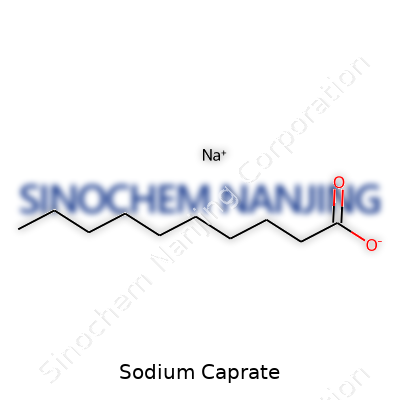
| Names | |
| Preferred IUPAC name | Sodium decanoate |
| Other names |
Decanoic acid sodium salt Sodium decanoate Capric acid sodium salt Sodium caprinat |
| Pronunciation | /ˈsəʊdiəm ˈkæpreɪt/ |
| Identifiers | |
| CAS Number | 1002-62-6 |
| Beilstein Reference | 1908737 |
| ChEBI | CHEBI:39868 |
| ChEMBL | CHEMBL1621533 |
| ChemSpider | 8310 |
| DrugBank | DB11160 |
| ECHA InfoCard | ECHA InfoCard: 03a3b8ed-62a1-4e7a-8192-b2043614d895 |
| EC Number | 204-002-4 |
| Gmelin Reference | 19394 |
| KEGG | C12080 |
| MeSH | D020136 |
| PubChem CID | 24757 |
| RTECS number | AH1050000 |
| UNII | 6O4824W639 |
| UN number | UN 3265 |
| Properties | |
| Chemical formula | C10H19NaO2 |
| Molar mass | 306.48 g/mol |
| Appearance | White to off-white powder |
| Odor | odorless |
| Density | 0.9 g/cm³ |
| Solubility in water | Soluble in water |
| log P | -2.06 |
| Vapor pressure | <0.01 hPa (20°C) |
| Acidity (pKa) | pKa ~4.9 |
| Basicity (pKb) | 2.66 |
| Magnetic susceptibility (χ) | -44.0e-6 cm³/mol |
| Refractive index (nD) | 1.452 |
| Viscosity | 100 cP (25°C) |
| Dipole moment | 1.847 D |
| Thermochemistry | |
| Std molar entropy (S⦵298) | 527.6 J·mol⁻¹·K⁻¹ |
| Std enthalpy of formation (ΔfH⦵298) | -661.2 kJ/mol |
| Std enthalpy of combustion (ΔcH⦵298) | -6.48 MJ/mol |
| Pharmacology | |
| ATC code | A06AA56 |
| Hazards | |
| Main hazards | May cause eye, skin, and respiratory irritation. |
| GHS labelling | GHS07, GHS08 |
| Pictograms | GHS05, GHS07 |
| Signal word | Warning |
| Hazard statements | H315: Causes skin irritation. H319: Causes serious eye irritation. |
| Precautionary statements | P264, P270, P280, P301+P312, P330, P501 |
| NFPA 704 (fire diamond) | Health: 2, Flammability: 1, Instability: 0, Special: – |
| Flash point | > 196 °C |
| Autoignition temperature | > 355 °C |
| Lethal dose or concentration | LD50 (Oral, Rat): 10,000 mg/kg |
| LD50 (median dose) | LD50 (median dose): Rat oral 4,820 mg/kg |
| NIOSH | WAJ9579TUR |
| PEL (Permissible) | Not established |
| REL (Recommended) | 0.5–1.0% |
| Related compounds | |
| Related compounds |
Capric acid Caprylic acid Sodium laurate Sodium caprylate |



