Pyrrolidine: A Close Look at an Unassuming Yet Impactful Chemical
Historical Development of Pyrrolidine
Pyrrolidine didn’t start in modern chemistry labs; its roots dig deep into the early discoveries about nitrogen-containing rings. Back in the mid-19th century, chemists began to recognize the importance of cyclic amines, particularly in natural products like alkaloids. Pyrrolidine actually shows up in nature—nicotine from tobacco and the complex molecules embedded in marine life both tell this story. Aldrich and Strecker worked with amines, but it took decades before pyrrolidine gained a distinct identity among researchers. Its presence in many bioactive compounds slowly transformed it from an oddity to something researchers deliberately targeted, not just stumbled across. With improvements in extraction and purification, pure pyrrolidine became more widely available as the century turned.
Product Overview
Pyrrolidine sits among the fundamental building blocks for more elaborate chemicals. It’s a five-membered ring with four carbons and a nitrogen—compact, unpretentious, but with plenty of chemical attitude. Chemists aren’t choosing it for flavor or glamour. They reach for pyrrolidine because it opens doors. Its shape forms the core of several drugs, agrochemicals, and performance materials. Even though it doesn’t grab headlines, this compound helps with things like making certain pharmaceuticals work better or acting as a starting point in the development of new polymers. Its status as a chemical workhorse has done more to push modern chemistry than most people realize when glancing at a bottle on the lab shelf.
Physical & Chemical Properties
Pyrrolidine comes as a colorless, flammable liquid with a smell you probably won’t forget—sharp, ammoniacal, and kind of fishy. It boils at around 87 degrees Celsius, evaporates quickly, and mixes easily with water and organic solvents. The basicity of the nitrogen atom makes pyrrolidine react readily with acids to form its corresponding salts, and it doesn’t shy away from strong bases or oxidizers either. Its ring structure offers stability, but the lone pair on nitrogen really lets it dig into a surprising range of reactions. In the open air, it grabs onto carbon dioxide and water vapor, so running careful reactions often means managing exposure, whether through a tightly sealed bottle or a glovebox.
Technical Specifications & Labeling
Chemists value details—they want to know what’s in the bottle. High-purity pyrrolidine must meet specifications concerning water content, color, and residue after evaporation. Labels plainly warn of flammability, volatility, and various potential health impacts. Manufacturers stamp hazard codes and provide handling information in line with regulatory standards. Technicians rely on clear, direct labeling because confusion here leads to waste or, worse, accidents.
Preparation Method
Big factories and small research labs follow different approaches to make pyrrolidine, but the core idea stays the same. Many routes start with the hydrogenation of pyrrole, a reaction that saturates the ring and produces pyrrolidine. Another method, less common but still used, involves reacting 1,4-dihalobutanes with ammonia or amines—they form the ring in one step. These aren’t chores for the untrained; both paths involve strong reagents, hydrogen gas under pressure, and a need for solid process safety. The desire for greener, cleaner methods is pushing research towards milder synthesis with recyclable catalysts.
Chemical Reactions & Modifications
Pyrrolidine’s most popular party trick involves acting as a nucleophile, adding to carbonyl compounds or opening up new carbon-nitrogen bonds. Chemists frequently use it as a base in the enamine formation with ketones or aldehydes, setting the stage for more elaborate reactions. Its structure makes it surprisingly versatile. Adding different groups to the ring can increase its hydrophilicity or alter its reactivity entirely. Chemists tinker with substitutions at the nitrogen or on the carbon ring to generate building blocks for advanced targets, especially in medicinal chemistry. This adaptability explains why laboratories worldwide keep it stocked.
Synonyms & Product Names
Depending on the context, pyrrolidine goes by various names—azacyclopentane, tetrahydropyrrole, and its straightforward title, pyrrolidine. Each name reflects its ring structure, molecular saturation, or function. In research papers, patents, and product catalogs, one might notice multiple names, making a seasoned chemist’s recognition skills valuable in avoiding miscommunication.
Safety & Operational Standards
Anyone handling pyrrolidine comes to respect it quickly. The liquid triggers eye and skin irritation, causes breathing difficulty in poorly ventilated rooms, and the fumes tend to be especially rough on the respiratory system. Spills ignite easily around open flames or static discharge. Labs using pyrrolidine enforce strict rules: certified fume hoods, flame arrestors, safety goggles, and chemical-resistant gloves are standard fare. Workers handling larger quantities have deeper training. Proper storage calls for cool, dry places, locked access, and chemical inventory management to check for leaks or expired stock. Waste gets treated according to hazardous chemical rules, not washed down any drain.
Application Area
Pharmaceutical researchers chase new therapies, and pyrrolidine derivatives help them get there. The heterocyclic ring forms the backbone of plenty of drugs, including antipsychotics, antivirals, and muscle relaxants. Agrochemical companies make subtle changes to the ring to improve pesticide performance or reduce toxicity. In advanced polymer science, pyrrolidine units boost flexibility in specialty plastics and resins. Industrial settings use it as a curing agent or even as a corrosion inhibitor. Its ability to jump into many reaction types gives it legs outside one narrow field.
Research & Development
Scientists keep digging into pyrrolidine’s potential. Chemists aiming for new catalysts and green synthesis methods find its structure particularly inviting. Molecular modelers use computer simulations to map out how new pyrrolidine-based drugs might behave. Recent research highlights metal-catalyzed cyclizations, asymmetric synthesis, and cutting-edge pharmaceutical targets all tied back to this seemingly simple five-membered ring. Universities and corporate labs push the limits of what this molecule can do by creating libraries packed with modified pyrrolidines.
Toxicity Research
Folks in toxicology don’t ignore pyrrolidine. Animal studies point to acute toxicity when inhaled or swallowed in large doses, triggering convulsions or worse outcomes without prompt intervention. Chronic exposure leads to liver and kidney trouble over time. These hazards have led to tight workplace limits and user training. Researchers explore how metabolism in living systems breaks down pyrrolidine, as well as safer derivatives for sensitive applications. Risk management never takes a back seat to convenience in labs using pyrrolidine.
Future Prospects
Pyrrolidine’s story looks far from finished. As green chemistry picks up speed, researchers pursue milder routes for making and using this molecule, with renewable feedstocks and smarter catalysts at the top of the list. Drug hunters examine new bioactive frameworks built on the five-membered ring, sometimes adding fluorine or other elements to tweak activity. Its role as a template for new molecular tools in research gives it staying power, not just as a reagent but as a structural powerhouse in discovery science. As more industries cut hazardous waste and demand safer processes, pyrrolidine’s resurgence in bio-based and cleaner syntheses highlights its continued relevance in an ever-evolving chemical world.
What is Pyrrolidine used for?
A Look at Pyrrolidine’s Many Roles
Pyrrolidine isn’t a household name, but anyone with a background in chemistry or pharmaceuticals will recognize its structure at a glance. This small, nitrogen-based ring shows up in many types of lab work and manufacturing. The reason? It’s extremely useful for building more complicated molecules, whether for medicines, pesticides, or specialty chemicals.
Real-Life Uses in Pharmaceuticals
Drug companies keep pyrrolidine close at hand because it appears in the backbones of a lot of medicines. Pfizer’s blockbuster drug Lyrica, for example, contains the pyrrolidine ring. Chemists appreciate how this structure can improve stability and help drugs interact better in the body. In antidepressants, antipsychotics, and other neurological treatments, you’ll see it playing a quiet but crucial role.
More than just a building block, pyrrolidine actually helps chemists steer reactions in the right direction. It speeds up certain steps in drug manufacturing, so companies can get from raw ingredients to finished products faster, with fewer wasteful by-products.
Applications Beyond Medicine
Big agriculture relies on chemicals built up from pyrrolidine. Insecticides, herbicides, and plant growth regulators tap into its chemistry to stay effective out in the field. This keeps food production moving, but also creates pressure to handle storage, shipping, and environmental run-off with care.
You’ll also find pyrrolidine showing up in rubber chemicals, dyes, and corrosion inhibitors for pipelines. This range of uses pushes demand for high-quality supply chains and careful oversight at every step, from factory to finished product.
Safety Concerns and Oversight
Pyrrolidine isn’t something to play around with. Exposure, especially at work, can irritate skin, eyes, and lungs. There’s also potential for longer-term harm if safety rules lapse. I’ve talked to workers who grew careless with basic gloves, only to land in the ER. This kind of direct experience sticks with you and reminds you that protocols exist for a reason.
Regulators across the globe keep a close eye on how chemical makers handle pyrrolidine. The U.S. Occupational Safety and Health Administration and its counterparts in Europe have strict guidelines for air quality, waste handling, and emergency response. Even small-scale labs need regular audits and training updates. Shops that ignore these basics risk heavy penalties—and much worse for their staff.
Looking Ahead: Responsible Use and Alternatives
Demand for new medicines and advanced materials keeps rising, which means more production of base chemicals like pyrrolidine. Industry leaders face questions about greener alternatives and cleaner processes. Some research explores using plant-based feedstocks or recycling waste streams, but with any shift, consistency and product safety get tested.
Catching up with these changes means keeping the dialogue open between chemists, regulators, and workers on the ground. Proper training, well-maintained protective gear, and clear emergency plans make a big difference. With all eyes on safe production, pyrrolidine can keep powering discovery in science and industry—without sidelining basic health and safety.
If we’re going to keep making progress, everyone from lab techs to managers has to take ownership. Pyrrolidine is a valuable tool. Using it responsibly, with eyes wide open, sustains both innovation and the well-being of the people who drive it forward.
Is Pyrrolidine hazardous or toxic?
What Is Pyrrolidine?
Pyrrolidine sits high on the list of chemicals chemists use in labs or production facilities. The clear liquid has a fishy odor and gives plenty of headaches if not handled right. Small companies making pharmaceuticals, agrochemicals, or specialty chemicals lean on it for its ability to speed up reactions or build more complex molecules.
Pyrrolidine in the Lab: Handling with Care
On my first day in a college organic chemistry lab, a senior graduate student warned that pyrrolidine “burns your nose before you spill it on your shirt.” I laughed, but after one whiff, I started respecting the substance. A little on the gloves, and the stink follows you home. Skin contact causes irritation, and eyes react even faster—redness, stinging, sometimes more. Based on my experience, even fume hoods struggle to catch every vapor if the bottle sits open too long.
What Science Says about Pyrrolidine’s Hazards
Pyrrolidine’s biggest problem comes from volatility and reactivity. It evaporates quickly at room temperature. Vapors build up in a closed space and risk hurting lungs or eyes. According to the National Institute for Occupational Safety and Health (NIOSH), inhaling pyrrolidine can produce dizziness and nausea. Longer exposure damages the respiratory system.Animal studies highlight that high doses disrupt the central nervous system. Workers in factories mixing or packaging this stuff usually run the risk of developing chronic respiratory issues if regular safety measures get ignored. The European Chemicals Agency classifies pyrrolidine as flammable and harmful if swallowed, inhaled, or absorbed through skin.
Environmental Issues from Pyrrolidine
Accidental spills or bad waste-management habits threaten the environment too. Pyrrolidine’s solubility in water lets it break out of labs and seep into groundwater if handled carelessly. Once in streams or lakes, fish and water plants absorb the chemical, possibly building up levels that stunt growth or mess with metabolism.
Keeping Workers and Neighbors Safe
I once watched a facility manager walk a new crew through chemical storage. She did not focus only on big-ticket dangers—she explained that tiny exposures, day after day, can add up. That lesson stuck with me. Working with pyrrolidine calls for more than gloves and goggles. Full-face respirators, well-ventilated spaces, and spill containment save skin and lungs.The Occupational Safety and Health Administration (OSHA) sets regulations for storing and handling dangerous chemicals. Proper labeling, emergency eyewash stations, and regular staff training keep accidents rare but manageable. Good companies run drills and check equipment, replacing old seals and valves to prevent leaks.
Building Safer Practices
Workplaces can lower risk by locking away pyrrolidine when not in use and separating it from acids and oxidizers to cut the chance of an unwanted reaction. Local communities benefit from emergency response plans. Chemical plants in my hometown would keep sirens and notification systems to warn nearby residents. Sharing hazard information with neighbors, and not just OSHA, builds trust and keeps panic low.
Looking Toward Safer Substitutes
Some laboratories and manufacturers shift toward alternatives with lower toxicity, but pyrrolidine sometimes has no real replacement. Where this chemical remains necessary, training, transparency, and modern safety equipment protect both workers and the wider community. For all its utility, pyrrolidine works best in hands that respect its risks—a lesson learned both in the lab and on the shop floor.
What is the chemical formula of Pyrrolidine?
Chemical Identity of Pyrrolidine
Pyrrolidine carries the chemical formula C4H9N. This formula might look simple on the surface, but those numbers and letters hold a powerful key to understanding both a broad field of organic chemistry and day-to-day uses that reach laboratories and industry. The molecule forms a five-membered ring, four carbons and one nitrogen, making it a classic example of a saturated heterocycle. Structure shapes function, and in this case, the ring system gives pyrrolidine a special flexibility and reactivity.
Why Pyrrolidine Deserves Attention
Years of work in a research environment have shown me that not every small molecule punches above its weight. Pyrrolidine does. Scientists turn to this compound in both academic research and industrial manufacturing for its utility in synthesis. The nitrogen in the ring enables a wide range of chemical reactions—creating bonds where there weren’t any before, breaking molecules apart, and helping move other atoms around. It's an engine in many pharmaceutical processes, sitting right at the crossroad of organic building blocks.
I remember troubleshooting a synthesis that just wouldn’t deliver the yield numbers I needed. Swapping in pyrrolidine as a base cracked the code. It's nothing short of reassuring to know that the molecular skeleton of pyrrolidine matches the needs of so many drugs and agrochemicals. Piperidine and morpholine get talked about a lot, but pyrrolidine sits in a unique niche due to its reactivity and its gentle touch as a weak base.
Real-World Impact
Pharmaceutical chemists often use pyrrolidine as a stepping stone toward more complicated structures, including life-saving medicines for neurological diseases, HIV, and even hypertension. When making penicillin analogues, certain alkaloids, or enzyme inhibitors, the C4H9N formula keeps showing up in the planning stages. Statistical data backs this up: according to various research publications, derivatives of this molecule appear in more than one-fifth of all drugs containing a saturated nitrogen heterocycle.
Lab supply chains also rely on its stability and shelf-life. It doesn’t decompose easily under typical storage conditions, which means less waste and lower cost over the long haul. These details go unmentioned in textbooks, but anyone running a lab budget knows how quickly unusable reagents can pile up.
Safety and Handling
Pyrrolidine’s small size and volatility present classic challenges—fumes and skin exposure can irritate, so always handle with care. Research shows that long-term exposure to similar cyclic amines calls for gloves and ventilation. Safety data sheets from reputable suppliers lay out the facts with recommended concentrations and exposures. First-year chemistry students might roll their eyes at the “wear your gloves” mantra, but you don’t want to breathe in this compound.
Future Prospects and Solutions
Attention now turns to greener manufacturing. Traditional synthesis routes tend to use high temperatures and organic solvents, leading to environmental questions. Research teams worldwide are raising the stakes on catalytic and biocatalytic tricks to make pyrrolidine and its derivatives cleaner and safer, both for the environment and for lab workers.
From its chemical backbone to its practical reach across pharmaceuticals, research, and manufacturing, pyrrolidine (C4H9N) stands as a solid example of how structure gives rise to opportunity and challenge. My own experience says there’s rarely just one right molecule for a job, but this one, more often than not, makes the short list.
How should Pyrrolidine be stored?
Understanding Pyrrolidine’s Nature
Pyrrolidine carries a sharp, fish-like smell that grabs attention right out of the bottle. Anyone who’s worked with this chemical knows how quickly that odor creeps out if the cap is left loose. Its volatility isn’t just a nuisance; it makes storage a task that calls for thoughtful habits and attention. The compound reacts easily, both with air and many common materials. Ask around in any lab that handles it: stories of unhappy mix-ups usually start with poor storage decisions.
Health and Safety First
Breathing in vapors is no joke. Pyrrolidine can irritate the throat and eyes. Spills on skin cause redness or worse. The Centers for Disease Control and Prevention notes that it’s important to keep pyrrolidine in well-ventilated areas, away from living spaces. NIOSH lists it as hazardous. Any time spent shuffling containers means time that personal protective equipment—gloves and goggles—should be on. Fume hoods aren’t overkill; they keep exposure risks low. Good training means fewer accidents and less unexpected clean-up, which anyone who’s mopped up after a spill can appreciate.
Compatible Containers and Secure Seals
Pyrrolidine doesn’t play nicely with every material. Glass works, as does high-grade polyethylene. Soft plastics warp or degrade. Metal lids can corrode. I learned early on that cheap bottles or reused containers spell trouble—fumy leaks, gnawed stoppers, failed seals. Twist on a fresh, chemical-resistant cap and check for cracks or stains each time. Labels fade too, so scratch-resistant tape with clear dates and warnings stays on hand in the supply drawer. People think labeling is a chore until the day they almost reach for the wrong jar.
Cool, Dark, and Dry Storage Spots
Temperature swings cause pressure changes inside bottles. Storing pyrrolidine away from heat means fewer blown seals. Light spoils chemicals over time; a dark cabinet reduces that risk. Humidity works its way in and accelerates unwanted reactions. Desiccants help, but only if replaced before they clump up. Refrigerators in shared labs often get crowded, so a separate flammables cabinet out of direct sunlight does the trick. Chemical inventories make a difference; it stops forgotten vials from hiding at the back and degrading into a surprise hazard six months later.
Ignition and Incompatibility Risks
There’s a real fire risk here. Pyrrolidine catches fire with moderate effort and burns with an invisible flame. Keep all sources of ignition away—no open flames, no hot plates nearby. Don’t store it with acids, oxidizers, or anything that forms peroxides. Incompatible neighbors have turned minor leaks into major emergencies. Safety Data Sheets break down which chemicals can be near each other, and a quick consult before new chemicals enter a space makes everyone safer.
Accountability and Long-Term Safety
Recordkeeping helps, but so does a quick routine check. I’ve seen small teams keep simple notebooks by the cabinet for quick jot-downs of inventory and inspection dates. Peer review—having one more set of eyes—spots issues missed in a rush. Waste disposal follows local hazardous material guidelines, never down the drain. Proper care pays off in less time, fewer headaches, and real, measurable safety for everyone working nearby. If a process for chemical storage works, share it with newcomers—the best habits spread that way. Real experience shared means fewer regrets and more time spent advancing good research instead of chasing preventable mistakes.
What safety precautions are needed when handling Pyrrolidine?
Why Pyrrolidine Matters in Industry
Pyrrolidine gets plenty of use in chemical labs and drug research. It works as a building block to create medicines and other valuable products. With all its applications comes a risk, mostly because this chemical acts aggressively with water, skin, and the air. The very things that make a chemical useful can turn it into a hazard if handled the wrong way.
The Risks No One Should Ignore
Coming into contact with pyrrolidine will hit you with a strong, unpleasant smell. A splash on the skin or into your eyes can burn fast. Breathing it in leads to coughing, trouble speaking, and throat pain. Sometimes a single mistake, like spilling a bit on a workbench without gloves, can bring hours of discomfort. Years ago, I watched a colleague skip goggles once in a hurry. He spent the next week nursing burned eyelids. No deadline or supposed shortcut can excuse carelessness with this chemical.
Safe Storage Isn’t Optional
Pyrrolidine can eat through common plastics and certain metals, so storing it in the right container means everything. Manufacturers use glass bottles with airtight seals or specific high-quality metal drums. We keep these out of sunlight, away from acids and anything that sparks. Accidents happen most often when the basics get skipped—like shutting the lid tightly or letting containers get too warm. Once, a storage room I worked in lost fifteen liters due to a single leaky gasket. Fixes cost more than what safety gear would have cost upfront.
The Gear You Owe Yourself
Labs that handle pyrrolidine don’t take chances with basic supplies. Goggles and chemical-resistant gloves stand at the front line. Long sleeves, proper aprons, and fume hoods go next. Respirators come out if spills or high concentrations threaten. I always remind new team members: gloves only give you minutes, not hours, of protection. It pays to know exactly when fresh gloves must replace worn-out ones. Ventilation never gets skipped. I’ve seen places try to get by with open windows. That does nothing when vapor clouds form overnight; only a powerful hood clears the air.
Responding to Mistakes—Fast
Pyrrolidine burns on contact, so rinsing right away matters. At my lab, we posted emergency shower instructions and eyewash fountains front and center. After every exposure, we log what happened and check for bigger leaks. Building that habit saves time in an actual emergency and helps build trust on the team. Cleaning up small spills means using absorbent pads, not cheap towels. Any big spill, the protocol says to clear the area and call trained responders. Too many people have learned about fumes the hard way, thinking they could “just mop up” a couple of drops. That’s not how you keep people safe.
Why Policy Backing Matters
Standards from groups like OSHA or the European Chemical Agency give strong backing here. They set clear limits for exposure and require training. No one gets to walk into a room with pyrrolidine unless they know what they’re doing. Repeated drills and spot-checks push safety beyond mere words on a poster. Regulations hold companies accountable and keep facilities honest. No shortcuts hold up when people’s health is on the line. I’ve seen policies catch oversights before they get deadly more than once.
What It Takes to Avoid Trouble
Solid safety depends on vigilance, training, and the right gear. Everyone in a lab has a part to play — from locking up bottles to calling out blocked eyewash stations. Reading safety reports can be tedious, but I’ve learned over the years that ignoring the uncomfortable stories comes with a real cost. If you deal with pyrrolidine often, building habits and supporting a safety culture pays off every single day.
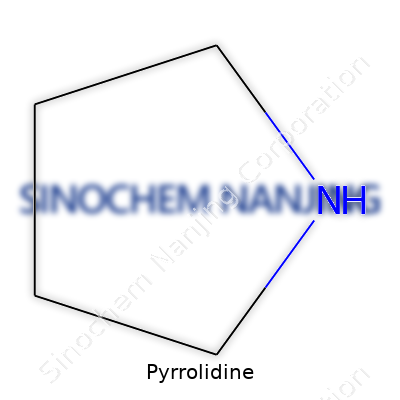
| Names | |
| Preferred IUPAC name | Pyrrolidine |
| Other names |
Azolidine Tetrahydropyrrole |
| Pronunciation | /paɪˈrɒlɪˌdiːn/ |
| Identifiers | |
| CAS Number | 123-75-1 |
| Beilstein Reference | 68326 |
| ChEBI | CHEBI:35521 |
| ChEMBL | CHEMBL1231 |
| ChemSpider | 5790 |
| DrugBank | DB02135 |
| ECHA InfoCard | 100.005.313 |
| EC Number | 200-871-9 |
| Gmelin Reference | 6076 |
| KEGG | C06116 |
| MeSH | D011693 |
| PubChem CID | 31260 |
| RTECS number | UQ4200000 |
| UNII | 9M934S42TH |
| UN number | UN2406 |
| Properties | |
| Chemical formula | C4H9N |
| Molar mass | 71.12 g/mol |
| Appearance | Colorless to pale yellow liquid |
| Odor | Amine-like |
| Density | 0.866 g/mL at 25 °C |
| Solubility in water | Miscible |
| log P | -0.94 |
| Vapor pressure | 5.3 kPa (at 20 °C) |
| Acidity (pKa) | 11.3 |
| Basicity (pKb) | 2.75 |
| Magnetic susceptibility (χ) | -20.6 × 10⁻⁶ cm³/mol |
| Refractive index (nD) | 1.458 |
| Viscosity | 8.59 mPa·s at 25 °C |
| Dipole moment | 1.30 D |
| Thermochemistry | |
| Std molar entropy (S⦵298) | 103.0 J·mol⁻¹·K⁻¹ |
| Std enthalpy of formation (ΔfH⦵298) | −77.2 kJ mol⁻¹ |
| Std enthalpy of combustion (ΔcH⦵298) | -3571 kJ·mol⁻¹ |
| Pharmacology | |
| ATC code | N07AX02 |
| Hazards | |
| GHS labelling | GHS02,GHS05,GHS07 |
| Pictograms | GHS02,GHS07 |
| Signal word | Danger |
| Hazard statements | H225, H302, H314, H332 |
| Precautionary statements | H226, H302, H314, P210, P260, P264, P270, P301+P312, P303+P361+P353, P305+P351+P338, P310, P330, P405, P501 |
| NFPA 704 (fire diamond) | 2-3-0 |
| Flash point | -17 °C |
| Autoignition temperature | 333 °C |
| Explosive limits | 1.8% - 14% (in air) |
| Lethal dose or concentration | LD50 oral rat 350 mg/kg |
| LD50 (median dose) | LD50 (median dose): Oral-rat LD50: 350 mg/kg |
| NIOSH | NIOSH Pocket Guide to Chemical Hazards: "R084 |
| PEL (Permissible) | Not established |
| REL (Recommended) | 5 ppm |
| IDLH (Immediate danger) | 150 ppm |
| Related compounds | |
| Related compounds |
Pyrrole Pyrrolidinecarboxylic acid Proline N-Methylpyrrolidone 2-Pyrrolidone |



