Potassium Metabisulfite: Looking Beyond the Label
Historical Development
Potassium metabisulfite shows up in the story of food preservation because people needed a reliable way to protect food and wine from spoilage. Sulfite compounds have a long track record—ancient winemakers noticed sulfur candles kept their barrels fresher. The shift toward purer, stable chemicals came in the late 19th and early 20th century, as advances in chemistry allowed for consistent, bulk production. By the twentieth century, potassium metabisulfite, with its clear advantage in stability and solubility, became a favorite for brewers, vintners, and the food industry. I remember walking through a winery in Spain, seeing workers sprinkle this white powder over freshly crushed grapes—no fancy automation, just a quiet trust in chemistry that’s been earned through generations.
Product Overview
Today, potassium metabisulfite lands on pallets as a granular white powder. Its practical value comes from keeping wine, juice, or even some dried fruits safe from undesirable microbes and enzymatic browning. Unlike its cousin, sodium metabisulfite, this salt is a little less harsh on flavor and people look at it as a better option in beverages. The food and beverage industries lean on it for its dual role: killing unwanted microbes and blocking oxidation. The fermentation world, in particular, wouldn't trust any harvest to storage or processing without having a bag or two at hand.
Physical & Chemical Properties
Potassium metabisulfite has a distinct scent that hits the nose as soon as you open the container—sharp, sulfurous, unmistakable. Its chemical formula, K2S2O5, points to its simplicity. One of the first things you notice after sprinkling it in water is how quickly it dissolves and starts to break down into sulfur dioxide, which does the heavy lifting in preservation. The powder draws moisture from air, so anyone working the cellar learns fast to seal it up tight. It's dense, compact, and pretty easy to handle in gloved hands.
Technical Specifications & Labeling
Most potassium metabisulfite on the market lists purity above 97%. Labels usually include warnings about skin and respiratory irritation, and legal requirements in places like the EU and US force manufacturers to list its presence on any food or drink package, since some people react quite strongly to sulfites. Anything above 10 ppm of sulfites in food or wine triggers specific labeling. There’s little room for errors here, particularly for producers exporting to regions with tough regulations or selling to allergy-prone consumers. Food and safety grades differ in the amount and type of trace contaminants allowed, which can impact suitability depending on the intended use—be it wine, photography chemicals, or industrial water treatment.
Preparation Method
Industrial production brings together potassium carbonate and sulfur dioxide gas in a reaction vessel under controlled pressure and temperature. My chemistry professor once shared a story about early confusion in small wineries trying to make their own mixes—too much sulfur gas, and the whole batch left the room coughing and with burning eyes. Producers learned to dial it down for safety. Once the reaction finishes, the solid is cooled, crystallized, and milled to the right particle size for easy mixing. Each batch is tested to verify sulfur dioxide content, which acts as the main preservative.
Chemical Reactions & Modifications
After dissolving in water, potassium metabisulfite gives off sulfur dioxide gas. In the presence of acids—think of grape juice, apple juice, or wine—it shifts the balance toward more soluble bisulfite ions, which helps with gentle and targeted antimicrobial activity. In my experience, winemakers and cideries often tinker with acid levels to maximize the “free” SO2—the stuff that really blocks microbes—without pushing overall sulfite too high. Modifications do happen, with some researchers trying to encapsulate or blend the powder for slower release, to suit newer applications or high-end beverages where controlling taste is critical.
Synonyms & Product Names
The chemical shows up under various names. You may see it on a wine kit’s label as E224, or hear old-timers chime in with “PMB” or “potassium pyrosulfite.” It’s also sometimes called “sulfite powder” in brewing or “wine stabilizer” depending on the supplier. Everyday use blurs those lines, but the function stays the same—a reliable protector for food and drink.
Safety & Operational Standards
Potassium metabisulfite demands respect. It irritates eyes and lungs, and in big enough doses, causes allergic reactions. I’ve seen a few volunteers at local cider presses get overwhelmed from handling the powder without a mask, coughing and with red, watery eyes. The standard advice in cellars—use gloves, wear a mask, never add it in a confined space—should never be ignored. Regulations pushed manufacturers to put clear allergen warnings on bottles, and in commercial settings, training in safe handling is mandatory. The FDA, European Food Safety Authority, and similar groups set maximum allowable levels in different foods and drinks, enforced through routine inspections.
Application Area
The wine industry uses potassium metabisulfite constantly, from the arrival of the grapes to bottling. Its purpose spreads into beer, cider, and mead making, but there’s more—packaged fruit salads, some dried fruits, seafood, and even some pharmaceutical and cosmetic products find value in its preservative effect. Water treatment facilities sometimes rely on it for dechlorination, too. Each setting needs its own methods, but the thread running through is straight-forward: stopping spoilage and keeping product flavor and appearance as close to the source as possible.
Research & Development
Current research looks at alternatives for those sensitive to sulfites, while also improving the control of SO2 release for better food safety outcomes. University food science labs, especially in regions where wine is a local pride, run experiment after experiment to fine-tune usage—to push down overall sulfite levels while keeping products safe. Some teams look into micro-encapsulation, and others try to pair it with plant extracts or enzymes to limit the need for classic preservatives. Better sensors are being reviewed in labs to give winemakers a quicker, more accurate readout of SO2 in real time.
Toxicity Research
The science community tracks the toxic effects diligently. While potassium metabisulfite breaks down quickly, sulfite-sensitive people face real risks. Asthmatic reactions can happen at exposure to vapors, not just from ingestion. Toxicology studies back up regulatory limits based on evidence, not guesswork. Researchers also consider cumulative effects—drinking a sulfite-heavy glass of wine at dinner, eating dried fruit afterwards, and the total body load. Globally, health authorities continue reviewing data to make sure public health remains protected, with some places like Australia and the EU maintaining tighter rules than others.
Future Prospects
Looking ahead, potassium metabisulfite will keep its place in food safety, but people demand cleaner labels and fewer chemical-sounding names on their foods. Innovation can mean better application methods to reduce total sulfur dioxide content, and new blends that give the same preservation with less of the headline chemical. Interest in natural antimicrobials and more transparent food systems won’t simply replace chemical preservatives overnight, so the industry’s best bet focuses on smarter use, better detection, and clear communication about what’s inside our food and drink.
What is potassium metabisulfite used for?
The Workhorse in Winemaking
Potassium metabisulfite shows up on almost every list of ingredients for home winemakers. No surprise there – winemakers count on it to keep the wine fresh and tasting the same way it did the day it was bottled. I remember standing in a dusty basement as a neighbor—an old-school Italian winemaker—brought out his secret powder. He told me it keeps his barrels pure, chasing away spoilage and unwanted funky flavors. That stuff packs a punch against wild yeast and bacteria. It stops oxidation dead in its tracks, giving red and white wines a longer, smoother shelf life.
Saving Harvests, Small and Large
Every fall, as vineyards in California or Europe gather their grapes, potassium metabisulfite shows up in buckets and shakers. Grapes rot quickly, and no one wants a whole year’s work ruined by a sudden burst of mold. A dusting of this salt stops most of the common spoilage bacteria right as the grapes get pressed. It’s one of the few chemicals both backyard hobbyists and industrial estates trust. The FDA says it’s safe at low concentrations, so you see this in organic wines as well, just with much stricter limits.
Making Beer and Cider Taste Right
Craft brewers rely on many of the same tricks as winemakers. Potassium metabisulfite shows up to tame wild yeasts and keep bottles safe from off-flavors. It doesn’t substitute for proper cleaning, but it does buy time and keeps things fresh. My first batch of hard cider went sour after two weeks; I remember gathering advice from brewing forums, and the old hands all agreed: add a pinch of this stuff before bottling. That batch actually got finished.
Food Preservation: Beyond the Bottle
Home cooks and food factories both count on potassium metabisulfite for more than just drinks. Apples and dried apricots at the local grocery store often owe their color and shelf life to it. Without this salt, those snacks turn brown and lose their punchy sweetness. I always figured sulfur compounds belonged in science labs, but most trail mixes I’ve opened had that faint hint of it. The FDA marks it as safe in moderation, though people sensitive to sulfites still steer clear.
Balance and Risk
Every tool comes with its risks. Potassium metabisulfite–like any preservative—draws heat for its effect on people with asthma or sulfite allergies. I have a cousin who can’t eat standard dried fruit for this reason; family gatherings mean looking for unsulfured cranberries and apricots. It’s one of those issues that sits quietly in so many foods. The food industry, in response, has ramped up labeling. Some European winegrowers now experiment with making preservative-free and “natural” wines, but that introduces other risks with shelf stability and taste.
Solutions Worth Considering
Finding the sweet spot means using just enough potassium metabisulfite to prevent spoilage, not so much that it triggers allergies or overwhelms the product. More folks in the wine trade now test small batches and tailor sulphite additions, instead of dumping in a standard dose. Food processors can follow suit by exploring alternatives: vacuum packaging, natural acids, or improved refrigeration. In my own kitchen, I try to read labels carefully and choose unsulfured fruits when buying for friends with sensitivities. Understanding more about what's behind the label, and why these substances show up, helps everyone make better, safer choices at the store and at home.
Is potassium metabisulfite safe for consumption?
Understanding the Additive
Potassium metabisulfite pops up on wine labels, dried fruit packets, and sometimes even in beer. It’s not just there as a fancy chemical for scientists to study; food makers use it because it stops spoilage, holds back mold, and keeps colors vivid. It sounds technical, but at its core, it's a preservative with real world jobs—keeping food from turning sour and wine from turning to vinegar too soon.
The Science Side: How It Works in Food
This chemical releases sulfur dioxide, a gas that acts like a shield against unwanted bacteria and yeast. In my kitchen experience, you can really taste the difference in homebrew wine or cider that goes bad because you skipped the preservative. On a bigger scale, the food industry leans into potassium metabisulfite for shelf life and food safety. When used the right way, it’s approved by the FDA, European Food Safety Authority, and other health groups.
Safety Limits and Real Risks
Despite scary-sounding names, potassium metabisulfite isn’t all that exotic. Both regulators and researchers have set clear boundaries. In the US, the FDA allows it up to certain low levels in foods and drinks. Wine, for example, rarely has more than 150 parts per million, which traces back to ancient winemakers adding sulfur to amphoras.
People with asthma might feel sensitive to sulfites, the main byproduct of potassium metabisulfite. That’s not just a warning stuck on product labels for fun – it’s based on real reactions. In rare cases, sensitive people can feel tightness in their chest or have trouble breathing. The World Health Organization puts the acceptable daily intake at 0.7 milligrams per kilogram of body weight. Eating dried fruits or drinking a glass of wine a few times a week won’t push most people anywhere near that limit.
Building Trust by Knowing What’s in Your Food
Real peace of mind starts with turning products around and reading what goes into them. It’s easy to trust whole foods – apples or potatoes don’t need complex labels. Preserved foods need ingredients that can sound scary, but once you know their purpose, things get less mysterious. Food companies have to declare if their products contain sulfites above 10 mg per kilogram. Labels call out this additive, so folks sensitive to it can steer clear or factor it into their diet choices.
Are There Alternatives?
Lots of people look for “sulfite-free” or natural options, and companies have started reaching for alternatives like ascorbic acid (vitamin C) or high-pressure processing to control spoilage. These work but don’t always match the cost or shelf life that potassium metabisulfite delivers. In my efforts to make homemade preserves, I’ve seen that sulfur dioxide-based preservatives give more predictable results than natural methods at the home scale.
Smart Choices and Food Decisions
The best bet is to keep an eye out for how much processed food ends up in the cart. Potassium metabisulfite doesn’t show up in fresh, whole foods. Folks dealing with asthma or sulfite sensitivity should talk with their doctor if they feel unsure. For the rest of us, ordinary levels in wine, dried fruit, and packaged foods land well within scientific safety margins. Smart shopping, label reading, and sticking to a balanced diet go a long way. Facts and laws built around real experiences keep the risks low and let most people enjoy their favorites without worry.
How do you use potassium metabisulfite in wine making?
Understanding the Role
Anyone who’s tried making wine at home has bumped into potassium metabisulfite sooner or later. This white crystalline powder shows up on ingredient lists far more often than any grape, and for a simple reason—it can make or break a batch. Potassium metabisulfite protects the juice and, later, the wine from something every winemaker dreads: spoilage and off-flavors caused by bacteria, wild yeasts, and oxygen.
How It Works in Practice
The science behind this compound feels less like choosing a chemical and more like managing a neighborhood party. Without some control, things get noisy fast—fruit flies, random microbes, and the ever-present threat of oxidation. A small dose, measured anywhere from ¼ to ½ teaspoon per five gallons, stops chaos before it starts. Sulfur dioxide, released by potassium metabisulfite, shields fresh juice or crushed grapes from invisible threats, allowing the chosen yeast to take the lead when it’s added.
If you’ve ever lost a batch to vinegar-smell or a strange film on top, odds are there wasn’t enough metabisulfite in play. With healthy grapes, clean gear, and careful measurements, those outcomes fade into the background. In my cellar, I’ve come to trust that subtle addition—never dumping it in but respecting what it brings to fermentation and aging.
Measurement and Timing
People get nervous about using too much. The stories are out there—wine that smells sharp, burns the nose, or leaves a bitter aftertaste if the winemaker gets overzealous. Precision counts. Digital scales and online calculators have become everyday tools. Around 50 parts per million of free SO2 at crush seems the sweet spot for most home winemakers. Many factors, like fruit ripeness and pH, shift the dosage a bit, so testing, not guessing, wins every time.
Potassium metabisulfite doesn’t just protect at the start. Each time wine gets transferred—racked from one container to another—it brushes up against air and needs a little more protection. Typical schedules call for a dose at crush, another after fermentation, and occasional additions while aging, especially before bottling if the wine will sit in a cellar for a while.
Protection Without Overdoing It
There’s a side to this whole process that depends on taste and responsibility. Consumers worry about sulfites because labels raise the question and some people get headaches. The FDA highlights that only a small percentage of people show real sensitivity, mostly among those with severe asthma. Reading up on best practices can put fears to rest. The real trick is to use only enough to protect freshness and let fruit character shine. Fining, filtering, and careful winemaking often bring sulfite needs down, so there’s less risk of heavy-handed additions.
Solutions and Smarter Winemaking
Better education offers a clear path forward. Workshops, university extension programs, and even simple at-home test kits help new and experienced makers find the right dose every time. Cleaner equipment, careful sorting of grapes, and temperature control during fermentation can cut the need for protective chemicals. Winemaking rewards curiosity and discipline, two things that prevent shortcuts or sloppy habits from getting in the way of quality. It’s not the powdered preservative, but the decisions you make with it, that pull a wine through to a happy, stable finish.
What is the recommended dosage of potassium metabisulfite?
Why Dosage Matters
Finding the right amount of potassium metabisulfite for winemaking, cider, or home-brewing does more than just keep spoilage at bay. Small details play a big part—using too little lets bacteria crash the party, but too much, and you end up with harsh smells or over-sulfited drinks nobody wants to share. Besides, potassium metabisulfite isn’t only about stopping wild yeast; it also protects flavors and color from oxygen. For those who have spent months fermenting the perfect batch, nothing stings like watching all that work spoil overnight because the right dose was ignored.
The Go-To Amounts: Facts from the Field
Experience shows that winemakers usually count on 50 to 75 parts per million (ppm) at crush, and that tends to work for most wine styles. If you’re measuring by gallon, use about 0.44 grams per gallon of potassium metabisulfite to hit roughly 50 ppm in juice or must. If you’re working with five gallons, that’s a smidge over two grams. A “Campden tablet,” popular with hobby brewers, drops in about 67 mg per tablet per gallon, keeping things simple even for rookies.
Numbers get more serious during storage, since oxygen and microbes creep in at different rates depending on the vessel. Oak barrels might call for 20 to 30 ppm after each racking. Stainless tanks, less so, as they keep out more air. Wines don’t ask for the same dose all the time either—sweet wines or ones with more exposed surface area need extra attention. White wines get a bit more sulfite to protect delicate colors. People who measure—using simple test kits or titration—tend to make better-tasting drinks and worry less about guesswork.
Human Health: What Science Says
Potassium metabisulfite is considered safe in the low amounts used for food and drinks. Regulatory bodies like the FDA or European Food Safety Authority list an acceptable daily intake around 0.7 mg per kg of body weight. Most batches of homebrew come nowhere close to that limit. Still, a small slice of folks—those sensitive to sulfites, often people with asthma—may get headaches or worse from even a trace. Good labeling keeps these people out of harm’s way, but there’s no magic workaround if someone’s allergic except leaving sulfites out entirely.
Better Practice, Less Panic
Tossing in the right amount isn’t a wild guess. Measure your ingredients, factor in the final volume, and understand how wine chemistry can push sulfite to bind with other compounds—sometimes tying up a chunk of what you add. Test kits help track just how much “free” sulfite is floating around to keep things safe.
If working without lab tools, err on the side of caution. Use less for low-alcohol or low-acid drinks since they spoil faster. Combine potassium metabisulfite with clean handling, sanitized equipment, and airtight storage to ease up on chemical protection. People who keep a notebook—logging every dose, every reaction—learn from each batch, avoid overdoing it, and pass down tips nobody finds in dusty textbooks.
Does potassium metabisulfite have any side effects?
Potassium Metabisulfite at a Glance
Potassium metabisulfite pops up a lot in foods and drinks, especially in wine and dried fruits. It acts as a preservative, helping to keep things from going bad too quickly. Winemakers often use it to ward off unwanted bacteria and prevent spoilage. You might spot its name on ingredient lists or see it called E224 on food labels. Many don't think twice about it at the dinner table, but there’s growing chatter about whether it causes side effects.
How Side Effects Show Up
Most people enjoy foods and beverages with potassium metabisulfite and never feel a thing. Still, some people get reactions. The biggest concern circles around those with asthma or sulfite sensitivity. A 2013 study in the Journal of Asthma showed that bronchial reactions pop up more easily in sensitive folks after eating foods with sulfites like potassium metabisulfite. Symptoms can range from coughing, sneezing, or even trouble breathing. In rare cases, severe allergy-like reactions can happen, but these aren't common in the general public.
Reactions don’t look the same for everyone. Some might feel a headache after sipping certain wines. Others could get rashes or hives, especially if they already have allergies or asthma. Doctors see more reports from people with pre-existing respiratory conditions.
Setting the Limits
Health authorities like the FDA and EFSA (European Food Safety Authority) do set upper limits for how much potassium metabisulfite should end up in food and drink. They look at research, talk to experts, and try to err on the safe side. Wines, for example, can only have up to 350 parts per million of sulfites in the United States. If a product has more than 10 parts per million, the label must mention it. This rule helps people with sensitivities make safer choices.
Who Should Pay Attention?
If you have asthma, allergies, or a family history of reactions to sulfites or preservatives, it makes sense to read labels extra carefully. For myself, after seeing friends with asthma have bad reactions to certain dried fruits, I started checking ingredient lists before sharing snacks. It doesn't take a medical degree to notice that even foods seeming healthy can carry preservatives like potassium metabisulfite.
Practical Ways to Avoid Problems
Cutting down on processed foods goes a long way. Fresh options rarely contain potassium metabisulfite. If you enjoy wine but notice you get headaches or breathing problems, try switching brands or checking for “low sulfite” labels — some winemakers produce alternatives for sensitive folks. Sharing your experiences with your doctor also helps. Some people only learn they have a sulfite issue after a tough night or trip to the hospital. Allergy testing can give clearer answers if you notice bad reactions regularly.
Looking Deeper Into Solutions
It helps when companies stay transparent about their ingredients. As calls for clean labeling grow, more producers highlight what’s in their foods. Better education for food workers, healthcare staff, and consumers keeps everyone safer. Research into alternatives to chemical preservatives pushes progress forward too. Potassium metabisulfite serves its purpose in food technology, but balancing that with health means keeping information clear and choices wide open.
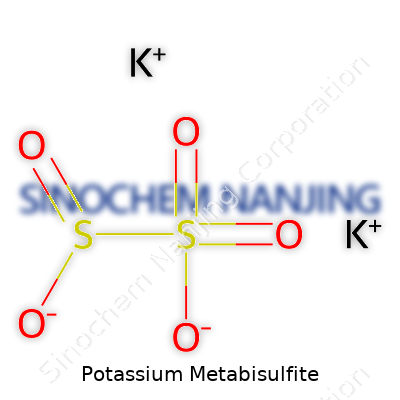
| Names | |
| Preferred IUPAC name | potassium oxidooxidosulfate(1−) |
| Other names |
Pyrosulphite of potash Potassium pyrosulfite KMS E224 Potassium disulfite |
| Pronunciation | /poʊˌtæsiəm ˌmɛt.əˈbaɪ.sʌl.faɪt/ |
| Identifiers | |
| CAS Number | 16731-55-8 |
| Beilstein Reference | 1203460 |
| ChEBI | CHEBI:7753 |
| ChEMBL | CHEMBL1351 |
| ChemSpider | 6826 |
| DrugBank | DB14526 |
| ECHA InfoCard | 100.028.259 |
| EC Number | 231-915-5 |
| Gmelin Reference | 14214 |
| KEGG | C07068 |
| MeSH | D010938 |
| PubChem CID | 24411 |
| RTECS number | SE8300000 |
| UNII | 45W8D6S21H |
| UN number | UN 1497 |
| Properties | |
| Chemical formula | K2S2O5 |
| Molar mass | 222.32 g/mol |
| Appearance | White crystalline powder |
| Odor | Pungent sulfur dioxide |
| Density | 2.34 g/cm³ |
| Solubility in water | 65 g/100 mL (20 °C) |
| log P | -3.0 |
| Vapor pressure | Negligible |
| Acidity (pKa) | pKa 1.96 (H2SO3) |
| Basicity (pKb) | pKb = 5.3 |
| Magnetic susceptibility (χ) | Diamagnetic |
| Refractive index (nD) | 1.000 |
| Dipole moment | 0 D |
| Thermochemistry | |
| Std molar entropy (S⦵298) | 165.8 J·mol⁻¹·K⁻¹ |
| Std enthalpy of formation (ΔfH⦵298) | -1047.1 kJ/mol |
| Std enthalpy of combustion (ΔcH⦵298) | -1264 kJ/mol |
| Pharmacology | |
| ATC code | A12CQ02 |
| Hazards | |
| Main hazards | Harmful if swallowed, causes serious eye damage, may cause respiratory irritation |
| GHS labelling | GHS02, GHS07 |
| Pictograms | GHS07,GHS05 |
| Signal word | Danger |
| Hazard statements | Hazard statements: "H302: Harmful if swallowed. H318: Causes serious eye damage. |
| Precautionary statements | P264, P270, P273, P280, P301+P312, P304+P340, P305+P351+P338, P306+P360, P330, P332+P313, P342+P311, P370+P378, P403+P233, P501 |
| NFPA 704 (fire diamond) | 2-0-1 |
| Autoignition temperature | > 190°C |
| Lethal dose or concentration | LD50 (oral, rat): 2,500 mg/kg |
| LD50 (median dose) | 2,330 mg/kg (rat, oral) |
| NIOSH | RN822. |
| PEL (Permissible) | PEL: 5 mg/m³ |
| REL (Recommended) | 5 mg/m³ |
| Related compounds | |
| Related compounds |
Potassium bisulfite Sodium metabisulfite Potassium sulfite Sulfur dioxide |



