Living With Polyethylene Terephthalate: A Deep Dive Beyond the Bottle
History Shaped by Demand: The Making of PET
Growing up in a world filled with bright plastic bottles, I never wondered much about what they were made of. But as recycling debates heated up in my city, curiosity got the better of me. Polyethylene Terephthalate, better known as PET, didn't just appear by accident. Its beginning goes back to the 1940s, when scientists sought lighter options for textiles and packaging. After World War II, the world wanted safer, more flexible products. Chemists responded by spinning ethylene glycol with terephthalic acid, making a polyester strong enough for fabrics but also clear enough for bottles. By the 1970s, drinking from clear, unbreakable plastic suddenly felt modern, showing how a single invention could touch lives worldwide.
PET at Home: Taking a Closer Look at the Product
Whenever I read a food or drink label, chances are good the packaging started life as PET pellets. From soda bottles to peanut butter jars, PET’s main draw lies in its see-through nature and food safety. It resists shattering, keeps out moisture, and never leaks odd flavors, making it a go-to for both shoppers and brands. Even clothing blends, textile fibers, and medical supplies carry traces of PET’s influence. Its flexibility lets manufacturers make products both rigid and lightweight, which not only cuts shipping costs but also feeds our appetite for convenience.
Tough, Transparent, and Trustworthy: Physical and Chemical Traits
The push for better packaging relies on certain promises. PET rises to the occasion with a glass-like clarity, paired with a toughness that shrugs off drops and rough handling. Its molecules stack in neat lines, helping it stand up to force without breaking. When heated, PET keeps its shape yet can be molded into nearly any form. On the chemical side, PET stands up well to acids and oils found in food, which means fewer worries about leaching or contamination. Still, heating it past safe limits can trigger the release of unwanted chemicals, telling us why correct recycling and use matter so much.
Labels and Standards: Trust Hinges on Technical Details
Every time a consumer spots the little “1” inside the chasing arrows symbol on a container's bottom, that’s PET. This resin code signals the container’s recyclability and chemical composition. Across continents, regulatory standards set the bar for what’s considered safe, covering everything from melting points to acceptable migration limits for chemicals. For food contact, nations like the United States and those in the European Union require strict testing and certification. Certificates count for little if companies cut corners, so the system depends on transparency, repeat testing, and meaningful penalties for shortcuts. In real life, folks running their own sorting lines or recycling depots spot differences in bottle feel and clarity—these differences don't just affect recycling profits; they shape community trust in the system.
How to Make PET: Recipes Matter
Behind every water bottle sits a controlled chemical dance. Factories react purified terephthalic acid with ethylene glycol at raised temperatures. This produces long chains of polyester that harden into granules. Factories dry these granules, load them into injection molders, blast them with heat, and press them into shapes, whether bottles, trays, or film. Choices made here—purity of raw materials, drying conditions, mold cleanliness—show up in the finished product’s strength and clarity. Shortcuts risk cloudy bottles or off-flavors, so reliable manufacturers invest in quality control at every stage.
Tweaking the Molecule: Chemical Reactions and Modifications
To meet special needs, chemists tinker with PET’s basic structure. Sometimes, they add extra chemicals to make bottles more heat-resistant for hot-fill drinks. Other modifications help cut oxygen transmission, preventing spoilage in juices or sauces. Recycling operations often depolymerize PET, breaking down the long plastic chains into building blocks that can be re-made into new bottles. Scientists keep searching for ways to make PET break down faster in landfills or turn it into even more useful things—proof that innovation rarely stands still.
Synonyms and Real-World Names
PET goes by many names on the street and in industry. To a chemist, it’s Polyethylene Terephthalate. To manufacturers, it’s PETE. Shoppers see it as “polyester” in clothing tags or “resin code 1” on packaging. The lack of a single label sometimes leads to confusion, especially when recycling signs differ or brands push “plant-based” versions that look identical but behave slightly differently.
Safety and Worker Practices: Lessons From the Plant Floor
The question of PET’s safety creeps into health discussions every few months. Decades of research back up PET as non-toxic and suitable for food contact, as long as manufacturers follow the rules. Overheating or using the wrong chemicals during production can introduce unwanted byproducts, making strict process controls crucial. On production lines, workers wear gloves, goggles, and ensure good ventilation, helping prevent injuries from dust and heat. Employers who slack off on training or equipment often face higher injury rates, which trickles out into lost shifts, higher insurance costs, and community complaints.
Where PET Touches Daily Life
Think outside the kitchen or closet for a moment: PET winds up in surprising corners of life. Medical devices, automotive parts, credit cards, and even 3D printer filaments take advantage of PET’s resilience. Global demand keeps growing, tying PET's fate to trends in retail, medicine, and tech. Still, all this use brings up the question of waste—how much PET really gets recycled versus dumped in landfills or oceans.
Room for Growth: Current Research and the Road to Change
With more scientists worried about microplastics and landfill crowding, research heads in two major directions. One group tracks new catalysts or enzymes that could break PET down faster, offering a lifeline for recycling programs struggling with contamination. Another group tweaks the formula to turn PET into plastics that degrade in compost or natural environments. My own experience with school recycling drives taught me that getting clean PET bottles from bottles stuffed with food scraps or labels takes serious effort. The technology must match real-life habits, or else recycling rates stay low. Funding matters too—local recycling programs, universities, and companies need incentives to keep testing better ways to manage PET waste over the long haul.
Hard Truths: What Toxicity Studies Teach Us
Academic journals fill up fast with studies looking at PET’s safety. Thankfully, unlike polycarbonate plastics, PET doesn’t contain BPA, so worries over hormone disruption focus on trace compounds released at extreme conditions. Modern studies check both the original polymer and recycling byproducts to watch for leaching, and watchdog groups push for regular updates to keep the public informed. While most health agencies agree PET poses little risk with normal use, the devil lies in details. Mishandled bottles left in hot cars for weeks, or improper use of industrial cleaning agents, have led to rare reports of chemical migration. These stories fuel public debate and highlight the need for ongoing research and transparent communication between industry, regulators, and everyday shoppers.
The Road Ahead: Recycling, Innovation, and Responsibility
Looking decades down the line, growing pressure for true circular economies puts PET at a crossroads. Recycling infrastructure works best when communities buy in, sort their recycling carefully, and trust their efforts matter. New technologies like chemical recycling offer hope, turning old PET into raw materials for clothing or new packaging, but they require big investments. Education plays just as big a role as innovation; school programs, labeling reforms, and easy-to-access drop-off points shape public behavior. If local governments and industry step up to improve these systems, the PET of tomorrow could keep providing convenience without the baggage of landfill and ocean waste. Ongoing research, clear safety standards, and honest communication between all parts of the supply chain remain key to keeping this common polymer both a staple of daily life and a responsible choice for the planet.
What is Polyethylene Terephthalate (PET) used for?
The Story Behind the Plastic Bottle
Walk into any kitchen, scan the fridge at the grocery store, or take a seat at a sporting event, and you spot them: clear plastic bottles, food trays, sometimes even bright synthetic fibers on your jacket. Most of these products share a common material—Polyethylene Terephthalate, known as PET. People might not know its full name, but they meet PET just about every day.
From Soda Bottles to Salad Containers
PET gained early fame for its lightweight, clear, and tough qualities. These traits made it the go-to plastic for soft drink and water bottles. Before PET, glass dominated, but glass breaks, it weighs more, and for busy factories and trucks, that means higher costs and more accidents. Once bottlers switched to PET, they could move more product safely and use less fuel.
Food companies also turned to PET to help keep salads, deli meats, fresh fruit, and even take-out leftovers safe from leaks and bacteria. These containers can handle some heat from the dishwasher or microwave, and they last much longer than similar items made with older plastics. The clarity of PET helps stores show off a fresh product, which speaks to customers more than blurry, cloudy packaging.
PET Threaded Into Everyday Life
Beyond packaging, PET shows up in the clothes people wear everyday. Factories spin PET into a fiber called polyester. The world’s favorite sports jerseys, hiking shirts, and even many carpets start as PET granules melted into thread. Polyester has changed wardrobes since the late 1970s, letting people wear lighter, quicker-drying, and more stain-resistant clothes than grandma ever saw. Many companies blend recycled PET bottles into their fibers, meaning the shirt or backpack you buy this year could have helped deliver a soda last year.
Recycling and the Next Life of PET
One reason PET keeps gaining ground? Recycling. PET bottles and containers get collected, washed, then melted down and shaped into new products, from shopping bags to sneakers. Around the world, almost 60% of PET bottles get picked up for recycling each year. The recycled stuff rarely makes new water bottles, but it ends up in jackets, food trays, and even furniture. Making products this way saves raw materials and cuts down on landfill space.
The environmental story stays complicated. There’s no magic bullet for the world’s plastic problems. Plastic escaping into the ocean, chemical leaching, and weak recycling systems undercut PET’s strengths. Better design and stronger recycling programs give hope. In some places, cities run bottle deposit systems or reuse programs that help keep PET in circulation, out of landfills or waterways.
Looking Ahead
More companies invest in “closed-loop” recycling—where bottles turn back into bottles—rather than always downshifting into fibers or trays. Brands work on lighter packaging, use more recycled content, and experiment with plant-based PET that doesn’t need oil to start. But people still face the same question: Can we balance PET’s benefits—freshness, strength, low weight—with the need to reduce waste?
The future of PET depends on companies, communities, and regular folks. Choosing where to buy, whether to recycle, and asking local stores to use better packaging matters. PET can do a lot, but so can each person who buys or recycles it.
Is PET plastic safe for food and beverage storage?
PET in Our Daily Routine
Grocery store shelves line up with clear, light bottles—the familiar shape of PET, or polyethylene terephthalate. For many people, grabbing a drink or snack packed in PET containers is a part of everyday life. Most folks don’t think much about the material touching their food, at least until stories float around about possible chemical leaching or the big problem of plastic waste choking rivers and oceans.
What Science Says About PET and Health
Research supports that PET doesn’t contain bisphenol A (BPA) or phthalates, both chemicals that spark health concerns in other types of plastics. Food safety authorities trust PET for bottles and food packs because it doesn’t break down easily or leach hazardous compounds under regular storage conditions. The U.S. Food and Drug Administration and the European Food Safety Authority reviewed evidence and concluded that PET is a safe choice for single-use food and drink packaging.
Plenty of independent studies tried to measure harmful substances migrating from PET bottles into water or food. Scientists subjected PET to realistic storage temperatures and sunlight exposure, looking for antimony or acetaldehyde moving into drinks. These studies found that levels stay way below health safety thresholds, even when bottles parked in a hot car or left in the sun for days.
Concerns That Stick Around
Even with strong scientific backing, some people stay wary. The big worry usually centers on chemical leaching in extreme conditions—heating up PET containers in a microwave or reusing old bottles for weeks. While evidence shows PET remains stable, rough treatment or subjecting bottles to high heat can wear down plastics in ways that haven’t been studied as thoroughly. If bottles look scratched or cloudy, it makes sense to err on the side of caution and swap them out.
Environmental scientists push a different point. Most PET bottles don’t get recycled, even though PET stands as one of the easiest plastics to recycle. Plastic bottles littering parks or breaking down into microplastics in waterways eventually enter animal and human food chains. Here, the safety discussion goes beyond chemistry and spills over into the choices made by individuals, companies, and communities.
Personal Choices and Better Solutions
Based on my experience living in cities where tap water is safe, and recycling bins always fill up, it becomes clear how habits shape outcomes. Swapping single-use bottles for reusable glass or stainless steel bottles has made a difference in how much waste my family creates. At the same time, I still reach for bottled drinks, especially during travel, because convenience matters.
It’s not just about single choices. Cities that expand recycling programs and teach people which bottles to recycle see less PET waste piling up. Investment in advanced recycling—like chemical processes that break PET back down to raw ingredients—shows real promise too. Food producers can do their share by shifting to packaging that balances safety and sustainability and by labeling bottles with recycling tips that anyone can understand.
The Path Forward
Living with PET means choosing convenience without ignoring the bigger picture. The material earned its spot through strong evidence of food safety, but the real test comes with responsible use and better recycling habits. Science can back up safety claims, but the health of communities and the world’s waterways depends on habits, clean-up efforts, and the push for better systems that support both people and the planet.
Can PET products be recycled?
Understanding PET and Everyday Products
Walk down any grocery store aisle and most soft drink bottles will have a number 1 in a triangle somewhere near the bottom. That marks polyethylene terephthalate, or PET, a type of plastic praised for being tough, lightweight, and see-through. Soda bottles, peanut butter jars, salad dressing containers—PET shows up everywhere. People toss these in blue bins with the belief they will start a new life. That’s the promise. But what really happens?
The Journey From Bin to Bottle
After curbside pickup, recyclables meet big sorting machines. Staff separate clear PET from colored PET and different plastics. Not every facility gets this right. Sometimes bottles slip past and end up in landfill. The cleanest stream works best: leftover soda, food, or labels make recycling tougher and add costs.
Clean PET travels to processors who grind it into flakes. They wash these pieces, melt them down, and filter impurities. Next, they shape the clean plastic into pellets. Factories use these pellets to form new bottles, textiles, or food packaging. The process works—but it only runs as well as the system around it.
Problems Standing in the Way
Markets in the US only recycle about 30% of PET bottles. Reasons pile up. Cities cut back recycling programs for budget reasons. Some companies use PET blended with other plastics, making separation next to impossible. Colored PET, popular in sports drinks, falls off the recycling chain because it limits the types of new products possible. PET trays for food, even though they look the same as bottles, almost never get recycled because their structure behaves differently under heat.
Labels and bottle caps trip up recyclers. Most caps come from a different plastic type, called polyolefin, which floats in water, while PET sinks. Advanced sorters try to separate these, but loose caps and full bottles lead to contaminated batches.
The Economics and Consumer Power
Big brands set public goals—but high-quality recycled PET still sells for more than new plastic. Oil prices drop, and suddenly using recycled material doesn’t save money. Until buyers demand recycled content and pay a premium, recycling interest flickers. People feel good dropping bottles in bins, but recycled content hovers below expectations for most everyday items.
Some countries require that every PET bottle sold must be made from a set percent of recycled plastic. The European Union calls for 25% by 2025. In my experience, real progress comes when rules push companies and government back these targets with strong laws. Sightings of bottles made from nearly 100% recycled PET show the science exists—scaling up depends on business will and policy muscle.
How to Keep PET in the Loop
Rinsing containers, tossing caps separately, and sticking to simple, clear PET bottles gives each bottle a fair shot at another life. Spreading fiber-based PET into jackets and carpets keeps pressure off landfills. In my city, the most workable idea so far is bottle deposit systems. Slow change frustrates, but creating a culture where every bottle counts beats giving up. PET recycling will always need community effort and a little push for business and government to stay honest.
What are the advantages of using PET over other plastics?
Understanding What Sets PET Apart
Walking down any supermarket aisle, it’s impossible to miss products packaged in PET. From clear drink bottles to food trays, PET shows up everywhere. There’s a reason brands put their trust in this plastic. For people buying everyday items, seeing that “1” recycling code brings a bit of reassurance that PET has a life even after it’s tossed in the recycling bin.
Clarity and Strength in Everyday Life
People like to see what they’re buying, especially with food and drinks. PET doesn’t fog up or hide the product behind a cloudy shell. The clarity comes from the way PET molecules line up, not from chemical tricks that could crack or yellow over time. I’ve cut open old PET containers years after use, and they still looked just as clear. For businesses, this helps sell more, because folks buy with their eyes.
It’s not just about looks; PET can take a beating. Toss a soda bottle in the car, or forget leftovers in the fridge for a week, and the container won’t collapse or shatter. PET’s strength keeps products fresh, protects from leaks, and travels well on trucks or bikes. It manages all this without adding much weight, so shipping doesn’t drive prices up.
Bottle-to-Bottle Recycling That Actually Works
There’s a lot of talk about circular economies, but people want to know if what they recycle actually gets reused. With PET, bottle-to-bottle recycling works better than for most plastics. You’ll see a range of milk and water bottles made with recycled PET (often marked “rPET”). According to the National Association for PET Container Resources, about 1.8 billion pounds of used PET bottles get recycled in the U.S. each year. Compared to other plastics, where recycling rates hover below 10%, PET stands out.
More cities and towns collect PET because the recycling plants have a solid way to clean, melt, and remake PET into fresh containers or fiber for clothes and carpets. Real results show up in the products on the shelves — from t-shirts to new soda bottles. So, people can feel some confidence their recycled PET has a chance for a new life.
Food Safety Starts With Trustworthy Packaging
PET earned approval from food safety authorities in Europe, the U.S., and beyond. People may not read every technical report, but it matters that this kind of plastic doesn’t leach weird flavors or chemicals into drinks or foods. Single-use or reused a few times, PET stays stable and safe. That reliability draws companies to use it for everything from salad containers to ketchup bottles.
Chasing Solutions for a Greener Tomorrow
No plastic is perfect. The planet needs less waste, and every bottle not collected can end up in places it shouldn’t. There’s solid work from advocates and researchers looking for ways to make PET even easier to reuse and recycle. Labels and caps have started to use materials that don’t mess up recycling systems. Some places now run pilot programs turning old PET into raw material for new uses, shrinking the need for raw oil.
People have real power in choosing and recycling PET. Awareness and steady pressure help drive companies and policymakers to keep building on what works. Sticking with PET over other plastics keeps more options on the table for anyone who cares about both quality products and the future of our planet.
How should PET products be disposed of properly?
Looking Past the Trash Bin
Picture this: you finish a bottle of water on a hot day, and out of habit, it goes straight into the trash. Simple, right? But let’s dig deeper. Polyethylene terephthalate—better known as PET—shows up everywhere: bottles, clamshell food containers, even textile fibers. Once you use it, tossing it away seems easy, but the story doesn’t end at the garbage can.
The Impact of Lazy Tossing
PET doesn’t vanish quickly. Tossed carelessly, it lingers in landfills for centuries. Left in natural spaces, animals can mistake it for food, or it breaks into microplastics that slip into rivers and oceans—eventually making their way into our food and water. This isn’t just background chatter. Scientists have found those tiny plastic bits in sea salt, tap water, and even human blood. Studies from the United Nations Environment Programme estimate that roughly 8 million tons of plastic (lots of it PET) reach the oceans every year. This filters down, bit by bit, into our daily lives.
What Works: Making Recycling a Habit
Recycling PET works better than simple disposal—no secret there. In many communities, you can drop bottles and containers in a blue or green bin. Once sorted and processed, PET becomes new bottles, packaging, and even synthetic fibers for clothes. The Association of Plastic Recyclers shows recycling just one ton of PET saves nearly 2,400 pounds of CO2. Quality recycling depends on us rinsing out bottles and containers before tossing them in the bin. Residual food or drink, especially, gums up the works in recycling facilities.
The Role of Returning and Reusing
Some places offer bottle deposit programs, giving a little cash back for each returned container. People see direct value, and return rates go up—Germany and Norway hit over 90%. Deposit systems give PET a second and third round before losing quality. For anyone who gets groceries at chains offering “bring your own container,” reusing PET for dry foods, snacks, or car trips saves money and waste. Every refill means fewer new bottles made, shipped, and discarded.
The Tricky Side: Things to Avoid
PET doesn’t belong in the compost or yard waste bins. It doesn’t break down like apple cores or paper napkins. Burning PET at home creates harmful fumes, and sneaking it into plastic bags can tangle machinery at collection centers. Black PET (used in some take-out trays) can’t be sorted automatically and ends up in the landfill anyway. Municipal recycling guides spell out local rules—worth a glance before dumping everything in together.
Big Picture: What’s On the Horizon?
Research presses for better recycling tech. Chemical recycling can break PET down to its roots, allowing endless reuses. But these breakthroughs matter little if day-to-day habits remain stuck at “just toss it.” Industry data shows recycled PET demand still falls behind production of new, “virgin” plastic. Until policy shifts happen and businesses switch to more recycled content, every person can chip in. Rinse. Sort. Return bottles where there’s a deposit. Show kids what bins to use. Share a reminder with neighbors. Small choices pile up—we see the difference in cleaner parks, lower landfill piles, and fewer plastic threads floating through food.
Practical Steps for Every Home
Keep a dedicated recycling bin handy. Check the number in the triangle—1 marks PET plastics, good to go. Rinse before recycling. Don’t stack unrelated items in the same bag. Ask local grocers about drop-off spots, or join a community clean-up. Every piece handled properly skips a centuries-long layover in the landfill and enters the loop again, right where it can do real good.
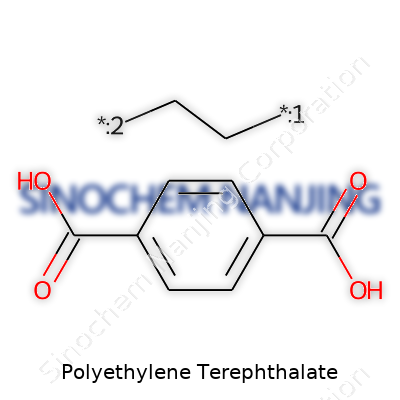
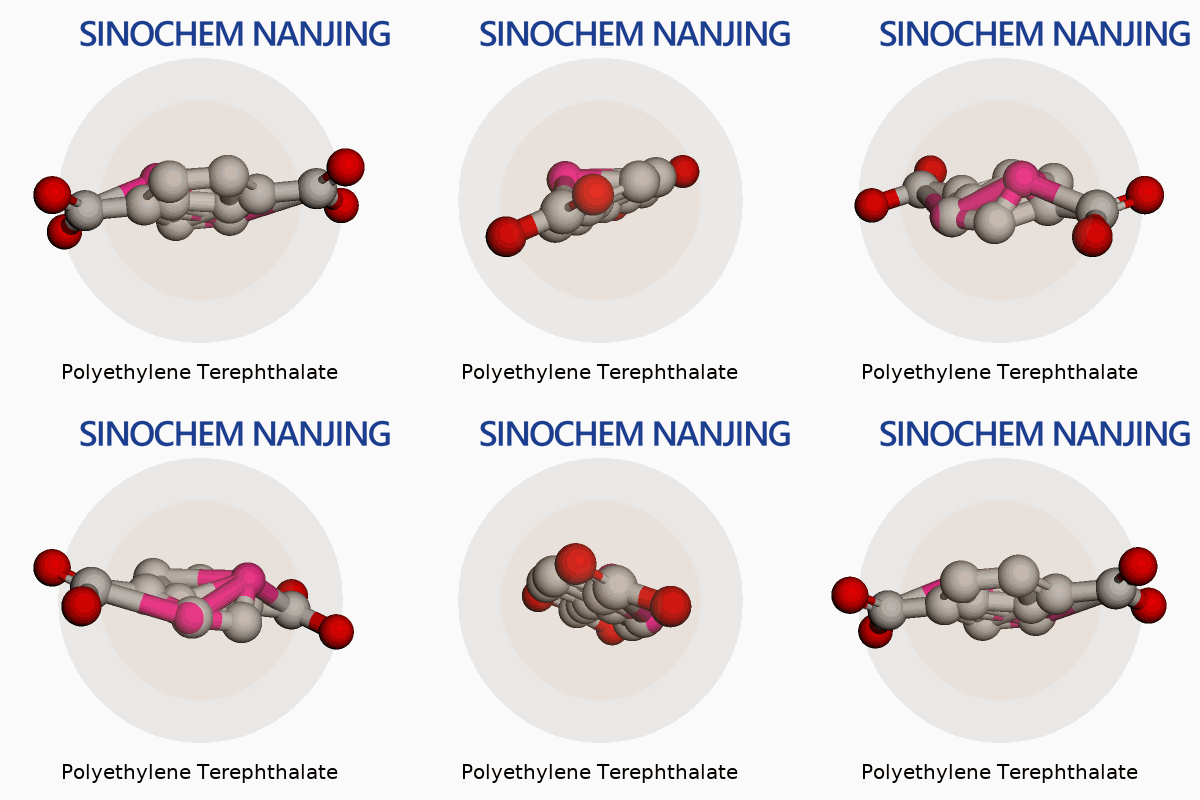
| Names | |
| Preferred IUPAC name | poly(oxyethyleneoxytere-1,4-diyl) |
| Other names |
PET PETE Polyester Mylar Terylene Dacron |
| Pronunciation | /ˌpɒliˈɛθɪliːn təˈrɛfθəleɪt/ |
| Identifiers | |
| CAS Number | 25038-59-9 |
| 3D model (JSmol) | `3D model (JSmol) string for Polyethylene Terephthalate:` `C1=CC=C(C=C1)C(=O)OCCOC(=O)C2=CC=CC=C2` |
| Beilstein Reference | 1906227 |
| ChEBI | CHEBI:53251 |
| ChEMBL | CHEMBL2108758 |
| ChemSpider | 11808 |
| DrugBank | DB09533 |
| ECHA InfoCard | 03-2119880870-58-0000 |
| EC Number | 608-577-1 |
| Gmelin Reference | 67728 |
| KEGG | C16278 |
| MeSH | D010905 |
| PubChem CID | 6456 |
| RTECS number | SL7200000 |
| UNII | ZI14Z6U4IK |
| UN number | UN3175 |
| CompTox Dashboard (EPA) | DTXSID4017516 |
| Properties | |
| Chemical formula | (C10H8O4)n |
| Molar mass | 192.13 g/mol |
| Appearance | White or pale yellow solid |
| Odor | Odorless |
| Density | 1.38 g/cm³ |
| Solubility in water | Insoluble |
| log P | 2.43 |
| Vapor pressure | Negligible |
| Acidity (pKa) | 8.14 |
| Magnetic susceptibility (χ) | −7.3 × 10⁻⁷ |
| Refractive index (nD) | 1.575 |
| Viscosity | 15-40 Pa·s |
| Dipole moment | 0.15 D |
| Thermochemistry | |
| Std molar entropy (S⦵298) | 229.0 J·mol⁻¹·K⁻¹ |
| Std enthalpy of formation (ΔfH⦵298) | −510.0 kJ/mol |
| Std enthalpy of combustion (ΔcH⦵298) | –22.6 MJ/kg |
| Pharmacology | |
| ATC code | D04AX |
| Hazards | |
| GHS labelling | Not a hazardous substance or mixture according to the Globally Harmonized System (GHS) |
| Pictograms | health hazard, exclamation mark |
| Hazard statements | H315, H319, H335 |
| Precautionary statements | P261, P281 |
| NFPA 704 (fire diamond) | 1-0-0-~ |
| Flash point | > 440°C (824°F) |
| Autoignition temperature | 400°C |
| LD50 (median dose) | LD50 (median dose): >8,000 mg/kg (rat, oral) |
| NIOSH | TT7 |
| PEL (Permissible) | PEL (Permissible Exposure Limit) for Polyethylene Terephthalate: "Not established |
| REL (Recommended) | 10 hr TWA 5 mg/m3 |
| Related compounds | |
| Related compounds |
Polytrimethylene terephthalate Polybutylene terephthalate Polyethylene naphthalate Polycarbonate Polyvinyl chloride |



