Phenetole: Tracing Its Past, Current Value, and the Road Ahead
Phenetole’s Path Through History
Phenetole, sometimes called ethoxybenzene or ethyl phenyl ether, didn’t ride the same wave of attention as its cousin, anisole. Still, back in the late 19th century, researchers got curious about ethers and how little tweaks in their makeup could change how they act in chemical reactions. Early chemists spotted phenetole while testing out different ways to turn up the dial on aromatic compounds. If you flip through old chemistry texts, you see phenetole listed as a byproduct more often than a star in its own right. Over the years, it grew a reputation as a handy intermediate and a decent solvent for specialty reactions, showing up quietly in the margins of more glamorous chemical stories. But its simple structure—a benzene ring hooked to an ethoxy group—makes it much more than a lab curiosity.
Looking at Phenetole Itself
Phenetole falls among those practical organic liquids with a clear appearance and a distinct ether smell that clings to your gloves for hours. Commercial samples tend to be colorless, though poor storage can give them a yellow tint. Unlike heavier ethers, it flows easily and blends well with organic solvents. In hands-on work, it behaves a lot like anisole, but its ethoxy group changes how it interacts with acids and other chemicals. Chemists respect how resilient it can be under moderate conditions.
Digging into Its Properties
A bottle of phenetole sitting on the bench barely hints at its reactive side. It boils at around 172 °C, considerably above many similar molecules, which brings a bit of safety compared to highly volatile ethers. It doesn’t dissolve in water, but other organics—like benzene or chloroform—absorb it readily. The molecule puts up with most mild bases and acids but won’t tolerate strong oxidizers. Its chemical backbone keeps it stable at room temperature, so you don’t get those nasty surprises some other ethers bring. As for its flammability, it’s best not to get careless—its flash point hovers just above common room temperatures, and its vapors can ignite in poorly ventilated spots.
Technical Specs and Proper Labeling
Most commercial phenetole carries a label with purity listed above 99 percent, contamination with moisture held down below 0.1 percent if handled correctly. Labels tend to use the synonym ethoxybenzene and flag it as a flammable liquid, with the warning symbols required for organic solvents. For technical use in research or niche industries, specs prioritize purity over fancy packaging. If a sample smells off or looks cloudy, something has gone wrong. Labs that take trace analysis seriously toss out any bottle that picks up suspicious color or haze. The right labeling ensures crews treat it with respect, not like a generic lab solvent.
Making Phenetole in the Lab
One classic prep method spins out phenetole from benzene and diethyl sulfate under basic conditions. The Williamson ether synthesis backbone runs through this reaction, with the base pulling a proton off the alcohol, letting the ether form as side chains snap together. Industrial setups chase efficiency, using sodium ethoxide in anhydrous ethanol, with distillation straight after reaction wraps up. Glassware clear of moisture keeps side reactions at bay and helps make sure the yield matches what you’d expect from the books. Storage in tightly closed containers limits peroxide formation, which is a nagging headache with many ethers kept for too long.
How Phenetole Reacts and Gets Built Into Things
Even though it looks mild, phenetole’s structure invites certain transformations. Friedel–Crafts reactions use it as a substrate, bringing alkyl or acyl groups onto the aromatic ring thanks to the electron-donating kick that the ethoxy group adds. Nitration sparks interest because the ethoxy pushes substitution to the ortho- and para-positions, making selectivity easier to manage. Chemists have tested out oxidizing phenetole, though strong agents split the molecule and ruin yields. Its resistance to hydrolysis means you can throw it into some fairly harsh setups without wrecking it. If you want to swap out the ethoxy group later, stepwise modifications after activation have proven effective for making specialized intermediates.
Other Names in Use
On chemical receipts or labels, you might spot names like ethyl phenyl ether, O-phenetole, or even phenoxyethane. Trade catalogs keep it tidy, sticking to phenetole, but research papers can slip into older, less precise terminology depending on the region and decade. Anybody who’s ordered chemicals overseas can recall how confusion over these synonyms can throw a wrench in schedules if suppliers miss the details.
Safety, Handling, and Operational Needs
Nobody who’s worked with phenetole forgets the way its fumes hang in the air. Proper ventilation matters—a room with moving air and good hoods avoids headaches and accidental exposure. The safety data points to symptoms after sizeable doses: dizziness, nausea, eye or skin irritation. Gloves and safety goggles aren’t optional. Spills need prompt cleanup, with care paid to how easily its vapors can light. Old bottles sometimes build up peroxides, which turn frustratingly explosive if ignored, especially when the container gets too much sunlight or air. Regular peroxide checks and storage in amber glass or steel containers cut down these risks. Disposal follows solvent recycling or hazardous waste policies to keep it out of groundwater and municipal drains.
Where Phenetole Shows Up in Practice
Phenetole doesn’t parade through factories in the same way as major solvents, but it finds respected use in specialty synthesis. Producers of fine chemicals or custom intermediates rely on it when they need a solvent or a building block that stays stable under reaction conditions. It sometimes acts as a model substrate in research when testing out novel catalysts or environmental remediation methods. In drug development, research labs pick phenetole for evaluating how aromatic ethers influence metabolic pathways. The perfume and flavor industry only flirts with it—its odor lacks the warmth that anisole brings, and its taste pushes on the sharp side. Rarely does it land in direct consumer products.
Progress in Laboratory and Industrial Research
Researchers like phenetole because it’s easy to modify, especially for making custom-made compounds that need tight control over their electronic structure. Studies exploring reactive intermediates feature it in reaction calibration tests. Advances in catalysis, especially green chemistry with metal-free catalysts, often turn to phenetole as a benchmark. Some big screening programs in pharmaceutical and agrochemical houses use it as a model system for aromatic ether chemistry. Publications from the past decade showcase new oxidation techniques using phenetole, aiming to nudge out the need for heavy metals or harsh reagents. Its simplicity offers a clear track to test hypotheses, so the molecule holds a quiet but steady spot in chemical literature.
Toxicity and Health: What the Data Says
Most toxicity trials on phenetole show low acute toxicity, but researchers won’t call it harmless. It shies away from breaking down in water, which means spills linger without cleanup. Animal tests turn up mild effects at moderate doses—just enough to keep regulatory agencies watching. Long-term exposure studies are thinner, yet nobody in the lab wants to handle it carelessly, given how some ethers can sneak through latex gloves or off-gas with the cap even slightly loose. Data on its breakdown products show a limited risk of forming persistent toxins, though more studies could firm up those findings. Workers and researchers use common sense—avoid skin exposure, mask up if working for a long stretch, and review material safety sheets before opening a bottle.
What the Road Ahead Looks Like for Phenetole
Phenetole won’t knock out the big names in the chemical industry, but it holds its ground in research and niche applications. As the push for greener chemistry gains steam, its resistance to breakdown under milder conditions puts it on the list for study. The drive to design specialty intermediates with tighter specifications could strengthen demand in select markets. Labs looking to replace more hazardous solvents may circle back to phenetole for certain reactions, assuming they manage the risks around storage and decomposition. Ongoing work in catalyst development keeps it in regular use for reaction benchmarking. The story of phenetole reflects how even quieter chemicals build the backbone of innovation when reliable, predictable behavior is needed. A compound like this won’t ever headline blockbuster products, yet it keeps showing up wherever the subtleties of aromatic ether chemistry need to be unraveled.
What is Phenetole used for?
Background on Phenetole
Phenetole may not appear in many household cabinets, but it has earned its place in the background of several industries. Chemically, it’s known as ethoxybenzene, and people working in labs recognize its distinct, sweet aroma. Produced as a colorless liquid, it combines a phenyl group and an ethoxy group. The compound fits neatly in the category of aromatic ethers.
Talking Real Work: Industrial and Laboratory Uses
In chemical research and industry, phenetole isn’t seen as just another chemical sitting on a shelf. People use it mostly as a building block or solvent. In the world of organic synthesis, it serves as a starting material for producing dyes, fragrances, and even pharmaceuticals. I’ve worked in university labs where phenetole helped dissolve other substances, thanks to its ability to break down a range of organic materials.
Large chemical companies make use of phenetole as an intermediate—a sort of stepping stone for more complex substances. Life-saving drugs and industrial dyes often trace some part of their history to a simple solution involving phenetole. Its structure holds up even with aggressive reagents, so this compound often stands up where weaker solvents don’t.
In Flavors and Fragrances
You probably haven’t sniffed a bottle of pure phenetole, but scents reminiscent of almonds and wildflowers often have it in the formula. Perfumers and flavor chemists rely on compounds like phenetole for that bright, sweet note in synthetic flavors and scents. Even if you never see phenetole at the grocery store, it often plays a behind-the-scenes role in manufacturing fragrance oils or artificial flavorings.
Being able to produce consistent aromas in large quantities counts for a lot in global manufacturing. Synthetic scents and flavors help companies sidestep the unpredictable cost of natural extracts. Phenetole remains a small but useful piece of that bigger machine.
Potential Hazards and Safety
Safety matters in any chemical context, and phenetole demands respect. Breathing in its vapors or getting it on your skin can lead to irritation. People working with it wear gloves, goggles, and lab coats to stay protected. In my lab experience, we kept it under a fume hood so nobody ended up with headaches or irritated eyes. Regulatory agencies, such as OSHA, supply guidelines for handling and storing chemicals like phenetole.
Despite these precautions, risks stay manageable with proper education and protective equipment. Chemical spills and improper disposal raise larger concerns. Waste phenetole can’t go down the drain. Specialized disposal keeps it out of the water supply, since even small amounts hurt aquatic life. This shows an ongoing need for training in safe chemical handling and better waste management systems in labs and factories alike.
Looking Forward: Greener Solutions?
Although phenetole gets the job done, some of its downsides—like environmental hazards—push researchers to look for greener substitutes. I’ve seen teams search for plant-based solvents and intermediates that break down more easily in nature. By switching to environmentally friendlier chemicals where possible, manufacturers can lower the risks tied to substances like phenetole, both to workers and to the planet.
The story of phenetole shows how a relatively obscure chemical can influence major products in medicine, fragrance, and research. As scientists and companies keep pushing for safer and greener alternatives, the role of phenetole may shift, but for now, it keeps showing up wherever chemistry calls for reliability and performance.
Is Phenetole safe for human consumption?
Understanding Phenetole’s Use
Phenetole shows up in lab environments and chemical manufacturing, but not on grocery store shelves or ingredient lists. This pale, oily liquid gives off a strong, sweet, ether-like smell, making it attractive for use in perfumes or sometimes as a solvent. Walk into any high school chemistry lab, and you’ll usually find strictly controlled chemicals like Phenetole locked away, not stored with anything edible. Over the years, researchers and safety agencies have asked good questions about whether this compound fits anywhere near food or supplements. The short answer: it doesn’t, and for good reasons that come directly from toxicology data and regulatory guidelines.
Phenetole’s Chemical Profile and Health Impacts
Scientists break down Phenetole as an ether derivative—phenetole means “ethoxybenzene”, a molecule built from ethyl and phenol. That structure gives it certain properties scientists find useful for chemical reactions, but not for cooking or medicine. Phenetole absorbs through skin, and inhalation during experiments can cause headaches and dizziness. Repeated exposure in workplaces has raised concerns about irritation of eyes, nose, and even impact on the central nervous system. The available animal research shows liver and kidney changes at high doses. I’ve seen colleagues in university chemistry labs suit up with gloves and masks, fully aware of these risks. These aren’t the safety steps you’d take if a substance belonged in your sandwich.
Regulatory Views: No Approval for Food Use
The U.S. Food and Drug Administration hasn’t given Phenetole a green light for human consumption. Food additives and flavoring agents must cross a high bar, backed by strong evidence from repeated-dose studies, peer-reviewed research, and clear understanding of how the body breaks them down. Phenetole hasn’t passed this bar. The European Food Safety Authority echoes similar caution. Look through any international code of food chemicals, Phenetole remains absent. For those who check GRAS (Generally Recognized As Safe) lists, you won’t find phenetole in there, either.
Public Health Lessons and Responsible Handling
Most health professionals weigh chemical exposure history, animal studies, and case reports before even discussing risk. With Phenetole, data points toward danger without any evidence of safe exposure levels in people. You don’t see nutritionists, doctors, or pharmacists recommending it. My own experience in lab management taught me that unfamiliar, industrial chemicals require strict respect: label everything, secure storage, and keep records of any spill or exposure. One slip may cost more than chemical supplies—it could mean real health problems.
Alternative Choices in Flavors and Solvents
People looking for safe flavor enhancers have endless choices. Natural extracts, oils, and aroma compounds with a long record of safe use fit much better. For scientific and manufacturing purposes, researchers stick with solvents and reagents confirmed by safety reviews and backed by decades of occupational data. If questions linger, organizations like the National Institutes of Health, the Environmental Protection Agency, and international toxicology federations share updated hazard assessments—much more reliable sources than rumor, blogs, or casual forums.
A Practical Path Forward
No shortcut exists for confirming safety. Compounds like Phenetole remind us of an important principle: not every chemical has a place in human diets or products meant for direct contact. Best practice means checking trusted databases, reading labels, and asking experts if there’s uncertainty. Public health comes from knowledge, responsible regulation, and a commitment to keep dangerous substances away from the kitchen table.
What are the potential side effects of Phenetole?
The Basics of Phenetole
Phenetole, a clear liquid with a sweet smell, pops up in some labs and chemical processes. Most people don't bump into it outside an industrial setting. Exposure can still happen—sometimes during manufacturing, sometimes on the job in places that work with chemicals and solvents. It's helpful to look at potential side effects before brushing off any risks tied to phenetole.
Short-Term Problems After Exposure
Contact with phenetole usually happens through breathing fumes, touching it with bare skin, or sometimes by accident. People working around phenetole without solid protection, like gloves or a respirator, face the highest risk.
Breathing in fumes often brings headaches, dizziness, or a scratchy nose and throat. These sound like little things, but they can slow you down fast at work. Anyone who’s spent time in a chemistry lab knows that eye or skin contact can cause burning, redness, and irritation. Wash-ups are common and sometimes those mild burns stick with you.
Longer-Term Effects Matter Too
Most facts about phenetole come from animal studies and firsthand accounts from people who work in chemical industries. Repeated exposure ramps up risks. Over time, workers told stories about feeling tired, a bit foggy, or dealing with asthma-like symptoms.
Ethoxybenzene, phenetole’s other name, can hang around indoors. Lungs and skin don’t forget direct hits. Irritation might start mild but build over days. Research points to the risk of organ toxicity, especially liver and kidneys, after chronic exposure. The EPA lists phenetole as a hazardous air pollutant—meaning regulators watch it closely.
Potential for Bigger Health Troubles
Some chemicals, including aromatic ethers, carry mutagenic risks or might change how the body breaks down toxins. So far, there’s no strong link between phenetole and cancer in people. Still, you don’t want to take chances with your health when possible poison is part of your workday. Protective gear and proper ventilation drop the risk, but workplace oversight varies from site to site. I’ve seen corners cut to keep production moving, and that’s never worth a hospital visit.
Keeping Workers Safe
Most problems can be headed off by wearing gloves, goggles, and using chemical hoods. I used to think paperwork about chemical hygiene wasted time. After seeing a colleague struggle with allergic reactions and long-term coughs, the lesson stuck. OSHA sets rules for chemical exposure, but enforcement needs buy-in from everyone, from the top down.
It helps when workers know more, not less, about what they’re handling. Labels should be clear and up to date. People learn best from other people, not binders in a locked closet. Training needs faces, stories, a little mess, and real talk about what can go wrong.
Building a Smarter Chemical Workplace
Smart employers set up regular training, quick-spill response kits, and easy reporting for health problems. Following up on reports, not hiding them, solves more issues over time. Fume hoods, eye wash stations, and proper waste disposal cut risk considerably.
Phenetole stays mostly out of the public eye. Still, the story boils down to this: knowing what it can do, staying geared up, and owning up to mistakes keeps everyone safer. I’ve seen folks bounce back just by swapping in the right gloves or moving a project next to an open window. Small habits pay off—these support healthier teams and better days on the job.
How should Phenetole be stored?
Why Storage Matters for Phenetole
Phenetole plays a role in both chemical labs and certain industries, but it brings health and environmental risks if handled the wrong way. Missteps in storage can lead to safety incidents, degraded product quality, or regulatory trouble. The chemical’s moderate volatility and combustibility ask for a little more effort than just putting it on a shelf.
Understanding the Risks
Phenetole gives off vapors that catch fire easily and irritate the eyes, skin, and respiratory tract. Open flames or electrical sparks turn a common lab into a hazard zone. Improper storage means not only ruined phenetole but higher risk for anyone nearby. OSHA and local fire codes don’t leave much room for short cuts. From my own days prepping chemicals in university labs, I learned early that labeling and proper planning stop a heap of headaches.
Temperature and Ventilation
Store phenetole away from heat sources. Direct sunlight or running equipment nearby can warm up a bottle just enough for vapors to build up. When I worked in a small chemical plant, even a space heater across the aisle nudged up ambient temperatures a few degrees, making a real difference in vapor pressure. Aim for a dry, well-ventilated, climate-controlled spot — 15 to 25°C keeps things stable. Poor ventilation lets vapors accumulate, raising both flammability and exposure risks. In a tight storeroom, one minor spill stings the eyes and nostrils in no time.
Containment and Compatibility
Use tightly sealed glass or metal containers with chemical-resistant liners. The container matters almost as much as the storage environment. Phenetole reacts with strong oxidizers and acids. Once in an old lab, I saw a storage cabinet where oxidizers and organics lived together. Only luck stopped a disaster. Keep phenetole far from bleach, peroxides, or nitric acid. Separate cabinets with clear labels and lockouts make sure chemicals stay put.
Labeling and Access Control
Label all bottles with both the chemical name and hazard information. Avoid hand-scribbled tape; print labels that stand up to splashes and glove friction. Keep a spill kit nearby, not buried in a back closet. Restrict access to people trained in handling organics—students and guests rarely know safe volumes or proper cleanup. Logs for inventory and use reduce waste and flag missing stock early.
Fire Safety and Emergency Planning
Storing phenetole means keeping a working fire extinguisher within reach—specifically one rated for flammable liquids (Class B). Know the evacuation procedure if there’s a release or fire. During an internship, I met a crew with an outdated extinguisher from the 1980s; nobody remembered the last drill. That’s not unusual in smaller operations, but it shouldn’t be.
Simple Changes, Big Results
Smart storage of phenetole comes down to a few basics: controlled temps, segregation from incompatible chemicals, tight containers, proper labels, routine checks, and access only for trained workers. Regulatory compliance wins out, but so does the safety of everyone in the building. Those small steps add up, and for phenetole or any volatile compound, neglect never pays off.
Is Phenetole available for purchase online?
Thinking About Buying Chemicals Online
Curiosity drives a lot of internet shopping, but shopping for chemicals like phenetole brings up a whole different set of questions. Anyone with a chemistry background remembers their old lab cabinet where bottles sat labeled with neat handwriting and warning stickers. For researchers and tinkering hobbyists, tracking down something like phenetole used to mean calling up a chemical supplier. Now, many ask if a compound like phenetole can just be purchased online.
Legality and Safety Take Center Stage
Sourcing chemicals online isn’t just about finding a website and clicking “buy.” In the United States and most developed countries, chemicals fall under strict regulation. Phenetole doesn’t show up on as many restricted lists as substances with more notoriety, but that doesn’t make it fair game. The Environmental Protection Agency, the Drug Enforcement Administration, and OSHA weigh in on what can get shipped to which type of customer. Some chemicals cross into the realm of controlled substances. Others, like phenetole, raise fewer eyebrows but still require paperwork and often a legitimate business or academic reason.
Online suppliers like Sigma-Aldrich, Fisher Scientific, and VWR sell to properly credentialed customers. Their platforms put up roadblocks—business licenses, signed end-user agreements, even records of prior purchases—before anyone gets a shipping quote. Hobbyists scrolling through e-commerce sites hit a wall fast. Without a business-worthy reason, the answer is usually no shipment outside a regulated lab.
Risks Involved in Chemical Purchases
A simple search might turn up listings from overseas vendors claiming to ship phenetole worldwide. Some claim no restrictions, low prices, and quick delivery. Here buyers step onto risky ground. Customs catches non-compliant shipments. Products sometimes show up mislabeled, diluted, or contaminated. Even among professionals, chemical purity cannot be taken for granted. People in my local science group once bought what looked like high-grade phenol from a fly-by-night internet shop. Testing proved they’d mostly bought a mixture of noxious solvents. That bottle went into the hazardous waste container.
Another layer involves personal and community safety. The chemicals I’ve handled come with clear safety data sheets for good reason. Volatile ethers like phenetole can catch fire, release hazardous fumes, or irritate the skin. Proper storage, ventilation, gloves, and goggles matter. Most home garages just don’t stack up to even the simplest professional lab facilities.
Why Access Matters and Possible Solutions
A lack of legitimate access sometimes drives people to search for loopholes. Enthusiasts want to run backyard science experiments. Innovators want to develop new processes or products. Others just want to learn. There’s real value in safe, responsible hands-on experimentation. Keeping doors locked tight may slow down learning and discovery, but the alternative means exposing people to unnecessary risk.
Trusted suppliers and regulatory bodies could offer clearer guidance for small-scale educational or research purchases. Partnerships with schools and established community labs already help channel access in a supervised, informed space. Crowdfunding tools and public science spaces support shared equipment, safety oversight, and real learning—with far less risk than unsupervised mail-order chemistry.
Final Take
The reality stands: Phenetole isn’t available for hassle-free online purchase by the general public. Most platforms do guardrails right. People serious about research work with credentialed suppliers, navigate paperwork, and put safety first. The rest hit the familiar message: “This item cannot be shipped to your address.” It’s better this way. As easy as online shopping has become, chemistry asks for care and respect.
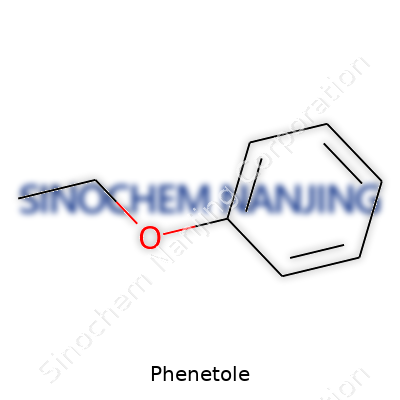
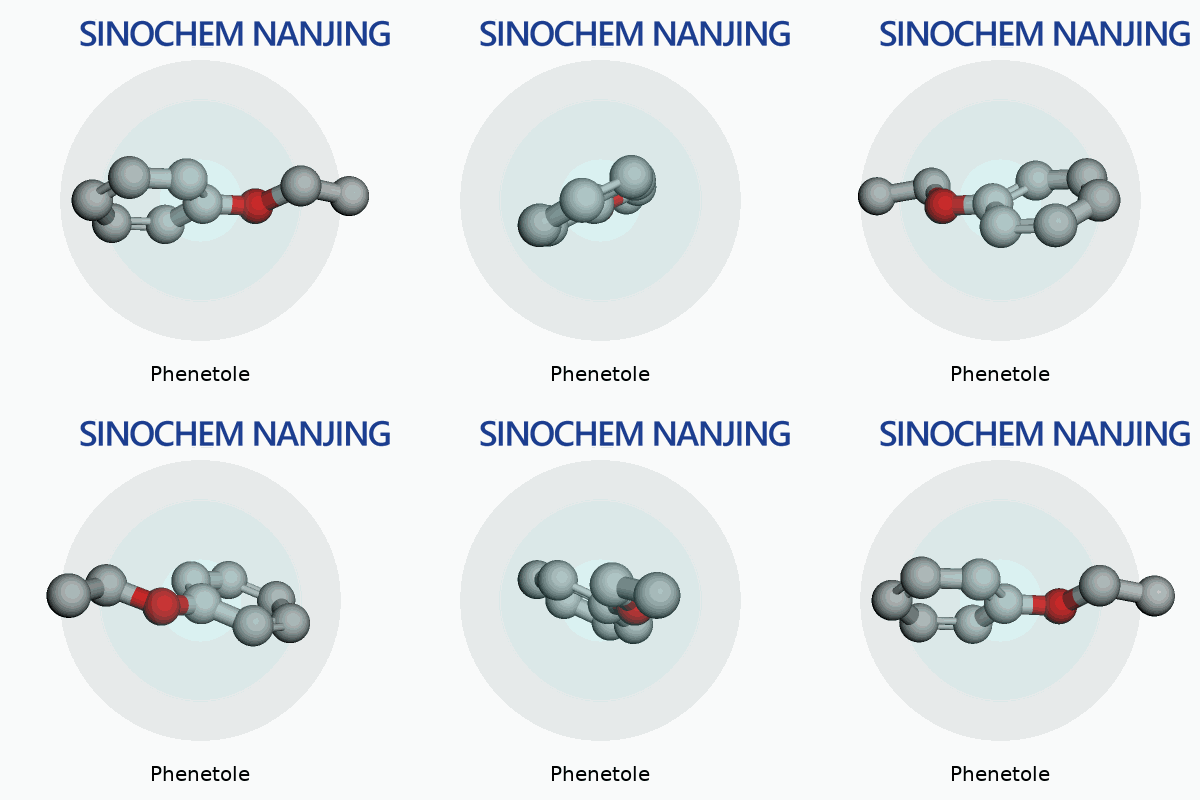
| Names | |
| Preferred IUPAC name | ethoxybenzene |
| Other names |
Ethoxybenzene Ethyl phenyl ether |
| Pronunciation | /fəˈniːtəʊl/ |
| Identifiers | |
| CAS Number | 100-66-3 |
| Beilstein Reference | 631098 |
| ChEBI | CHEBI:5170 |
| ChEMBL | CHEMBL31812 |
| ChemSpider | 12377 |
| DrugBank | DB14166 |
| ECHA InfoCard | String: 100.003.388 |
| EC Number | 202-849-4 |
| Gmelin Reference | 9671 |
| KEGG | C07086 |
| MeSH | D010617 |
| PubChem CID | 7416 |
| RTECS number | BZ8400000 |
| UNII | LG0Y2T570A |
| UN number | UN2662 |
| CompTox Dashboard (EPA) | DQ7J2FSA77 |
| Properties | |
| Chemical formula | C8H10O |
| Molar mass | 138.18 g/mol |
| Appearance | Colorless liquid |
| Odor | pleasant |
| Density | 0.969 g/mL at 25 °C (lit.) |
| Solubility in water | Insoluble |
| log P | 2.5 |
| Vapor pressure | 0.5 mmHg (20 °C) |
| Acidity (pKa) | 15.2 |
| Basicity (pKb) | 10.71 |
| Magnetic susceptibility (χ) | -58.5×10⁻⁶ cm³/mol |
| Refractive index (nD) | 1.503 |
| Viscosity | 0.716 mPa·s (20 °C) |
| Dipole moment | 1.55 D |
| Thermochemistry | |
| Std molar entropy (S⦵298) | 163.2 J·mol⁻¹·K⁻¹ |
| Std enthalpy of formation (ΔfH⦵298) | -73.0 kJ/mol |
| Std enthalpy of combustion (ΔcH⦵298) | -3224 kJ/mol |
| Hazards | |
| GHS labelling | GHS02, GHS07 |
| Pictograms | GHS02,GHS07 |
| Signal word | Warning |
| Hazard statements | H302, H315, H319, H335 |
| Precautionary statements | P261, P264, P271, P280, P301+P312, P305+P351+P338, P337+P313 |
| NFPA 704 (fire diamond) | 1-2-0 |
| Flash point | 69 °C |
| Autoignition temperature | 505 °C |
| Explosive limits | 1.1–7.5% |
| Lethal dose or concentration | Rat oral LD50 1770 mg/kg |
| LD50 (median dose) | LD50 (median dose): Rat oral 1770 mg/kg |
| NIOSH | KJ3325000 |
| PEL (Permissible) | Not established |
| REL (Recommended) | 5 ppm |
| IDLH (Immediate danger) | 900 ppm |
| Related compounds | |
| Related compounds |
Anisole Acetanilide Phenol Ethoxybenzene |



