Cyclopentane: From Chemistry Curiosity to Essential Modern Material
Historical Development
In the late 1800s, researchers tinkered with hydrocarbons to untangle the nature of ring structures. Cyclopentane popped up as one of the many steppingstones in the journey that led us to a deeper understanding of organic chemistry. Chemists used crude methods, like distilling coal tar or naphtha, hunting for new molecules. Cyclopentane became part of this mix, capturing the interest of scientists trying to unlock patterns in carbon ring behavior. Over time, the molecule shifted from a simple laboratory specimen to a commercial product, especially with the rise of environmental policies clamping down on old refrigerants and blowing agents like CFCs. Plenty of people searching for eco-friendlier options have come across cyclopentane, and it's now a key player for anyone working in insulation, refrigeration, and other sectors trying to dodge ozone-depleting substances.
Product Overview
Anyone who has walked past a new refrigerator or handled foam panels should know cyclopentane's quiet role. The substance falls in the class of cycloalkanes, with a tightly-wound five-carbon ring at its core. At room temperature, cyclopentane acts as a colorless, highly flammable liquid with a slight petrol-like odor. Simple in formula but with a host of uses, it earns attention not for showy features, but for the way it stands up in applications where old-school chemicals have fallen out of favor. Cyclopentane also bridges the gap between effective technical performance and greater safety for workers, the public, and the planet.
Physical & Chemical Properties
Cyclopentane brings together volatility, low boiling point (around 49°C), and chemical stability under storage conditions most facilities can handle. Compared to straight-chain alkanes, its ringed structure nudges some physical properties higher — like density and boiling point. The molecule doesn’t dissolve well in water but gets along fine with many organic solvents. Anyone working with it quickly learns to respect its flash point, its eager evaporation, and its ability to travel as a vapor in poorly ventilated spaces. Cyclopentane’s simple, saturated framework means it doesn’t react easily under mild conditions, but it will burn fiercely and potentially add to photochemical smog if emissions slip through controls.
Technical Specifications & Labeling
Cyclopentane producers publish purity grades to meet application standards, particularly for insulation and blowing agents in foams. Labs check for residual unsaturates, sulfur content, moisture, and distillation range. Material typically ships in drums or tankers and attracts the flammable signal word under the Global Harmonized System, along with transport codes for hazardous goods. Industrial hygiene protocols demand real attention: leak prevention, spark-free storage, and clear labeling matter as much as any property chart.
Preparation Method
Industrial-scale production relies on clever tweaks to decades-old methods. Most cyclopentane today comes from naphtha reforming or catalytic cracking, where mixtures of hydrocarbons are sent through reactors and separation units. Selective hydrogenation and isomerization select for the five-membered ring without much fuss. Experienced chemists avoid steps that could lead to ring opening or heavy byproducts. Extraction and purification follow familiar distillation principles, with yield improvements rooted in steady tweaks to catalysts and temperature controls, not silver-bullet breakthroughs.
Chemical Reactions & Modifications
In everyday handling, cyclopentane doesn’t pick fights and rarely reacts unless provoked by strong acids, halogens, or intense heat. Its structure shields it from a lot of attack, though under lab conditions, halogenation, nitration, and substitution can unlock new derivatives. Oxidation can crank out cyclopentanone or glutaric acid, both useful in further synthesis. In industrial reactors, careful process design keeps side-reactions in check — a stray spark or unexpected catalyst pose more risk for fire than for runaway chemical change.
Synonyms & Product Names
In trade journals and bulk shipping logs, cyclopentane might go by diethyl methane, pentamethylene, or simply C5H10. You’ll sometimes spot references to “normal” or “n-“cyclopentane in catalogs, though the molecule’s ring structure rarely raises ambiguity. Blending companies market it by standardized numbers or under generic solvent blends, but for environmental filings and safety sheets, cyclopentane wins out as the default term.
Safety & Operational Standards
As flammable as gasoline, cyclopentane commands sharp attention from operators and facilities managers. The potential for vapor accumulation, flash fires, and explosive mixes hangs over every transfer, blending, or application job. Access controls, explosion-proof electrics, and continuous ventilation work better than any act of faith. Regulatory bodies like OSHA and EPA in the US, or similar agencies worldwide, lay out limit values for workplace exposure and strict guidelines for spill response, air emissions, and fire suppression. Certified staff seldom take shortcuts: they ground and bond lines, double-check all transfer gear, and prefer remote monitoring if volumes step into the thousands of liters.
Application Area
Today, cyclopentane’s main stage lies in the world of foam insulation for appliances and construction. Manufacturers pick it for its ability to help create tight, uniform bubbles in polyurethane and polyisocyanurate foams, which ramp up thermal efficiency and can outperform older CFC-based solutions. Beyond insulation boards and refrigerator walls, cyclopentane works in specialty solvent blends and as a calibration standard in petroleum testing. Old uses, like as a motor fuel additive, have faded with regulation and new fuel chemistry, but the substance still anchors new product development across several material sciences.
Research & Development
R&D teams weigh up cyclopentane’s environmental record and ongoing technical gains before jumping into scale-up. Anyone aiming for “greener” foam has to show the product doesn’t trade energy savings for higher toxicity or fire risk. Giant steps over the past decade saw cyclopentane replacing more damaging agents, particularly as pressure built to dump ozone-eaters and climate-wreckers. Universities and manufacturers run tests around the clock, tweaking catalyst efficiency or hunting alternative ring-forming chemistries that squeeze out byproducts, raise yields, and cut energy demand. Some research teams target foam structure and shrinkage over time, recognizing the way cyclopentane’s volatility can cause tiny losses in insulation performance as years pass.
Toxicity Research
Toxicologists and safety specialists haven’t flagged cyclopentane as a bioaccumulation risk or a trickster molecule sneaking through cell membranes. Still, inhalation can cause headaches, dizziness, narcosis, and, in high concentrations, serious risk to health. Unlike propane or butane, cyclopentane draws less concern for acute toxicity, but fire and explosion hazards stay front and center. Long-term studies point to low chronic toxicity if proper ventilation and PPE are used religiously in production and application. Some gaps in human data remain, especially with foam manufacturing workers or people living alongside production plants, which drives demand for continued cohort studies and community health reviews.
Future Prospects
Momentum for cyclopentane continues as manufacturers face even tighter climate targets and demand greater energy performance from buildings and appliances. Cyclopentane’s GWP (Global Warming Potential) is much lower than legacy blowing agents, which locks it in as a frontrunner. Ongoing tweaks in foam chemistry aim to lock the gas inside the foam longer, chase after lost R-value, and limit fugitive emissions. The hunt for even lower-impact substitutes – including bio-based alternatives and advanced molecular tweaks – keeps research departments busy. In the short run, practical improvements in workplace safety, emission reduction, and life-cycle assessment will shape the future of cyclopentane. Companies, regulators, and researchers share the task of keeping performance gains without repeating past mistakes of ignoring the bigger environmental puzzle.
What is cyclopentane used for?
Why Cyclopentane Matters in Daily Life
Cyclopentane doesn’t sound like the sort of thing most people keep in their garages or under the kitchen sink, but it plays a bigger role in our lives than we often realize. I’ve worked in both construction and a bit of small-batch carpentry, and even there, the stuff pops up in insulation materials that keep homes comfortable. In home appliances shops, fridges promise lower energy bills and safer insulation—and the story often links back to cyclopentane. For many manufacturers, cyclopentane came as a solution that helped them walk away from older chemicals that punched holes in the ozone layer.
Refrigerators and Foam Insulation: The Big Leagues
One of the biggest uses for cyclopentane sits inside the walls of refrigerators and freezers, packed into the insulating foam. Factories used to rely on CFCs (chlorofluorocarbons) and HCFCs, which damaged the ozone, but governments started pushing for ozone-friendly options after the Montreal Protocol in the late 1980s. Cyclopentane stepped up—its global warming potential lands far below those old chemicals, and it doesn’t break down the ozone layer. These facts matter when thinking about the sheer number of fridges produced every year: billions of units, with each one needing reliable, safe insulation.
Smaller companies get hit with the technical headaches of swapping out their old blowing agents for something different. The switch to cyclopentane involves different handling protocols because the stuff is flammable. Training costs go up, and so does the need for better storage and tighter safety plans. This isn’t a story of churning out a simple replacement; it’s about everyday workers learning new tricks to keep families cool and safe.
The Flip Side: Handling and Safety Realities
Cyclopentane isn’t all sunshine—its flammability puts extra strain on plant safety. One story from an experienced plant manager sticks with me: “We changed over the lines, rewired the spark-proof panels, and ran fire drills every quarter. At first, the old-timers worried a spark would wipe us out. We haven’t had issues, but it takes real respect for the rules.” That respect comes from straightforward facts — cyclopentane vapors can ignite. Regulators set tough standards for leak detection and fire suppression. Having watched colleagues navigate these changes, I’ve seen how important it is for a company to take safety culture seriously, not just hang a set of instructions on the wall.
Environmental Value and Economic Questions
Global warming remains at the center of so many energy debates. Cyclopentane offers a safer alternative not just for the ozone but for the broader climate. Chemical analysis shows its global warming potential is about eleven times that of carbon dioxide, compared to thousands for old refrigerants. While not perfect, it counts as a major improvement. Companies like Dow and BASF invest in cyclopentane-based foams because customer demand and government rules both demand cleaner products.
In regions where environmental law presses companies to act, cyclopentane shows how targeted changes in supply chains can mean progress—if the risks stay managed. Companies can also support safety by sharing best practices, offering on-site training, and keeping lines of communication open. To my mind, industry should aim higher than just “compliance”—workers and communities deserve forward-thinking investments that cut risks even further. It’s possible, and the demand for sustainable choices only keeps growing.
What are the safety precautions when handling cyclopentane?
Understanding Why Cyclopentane Demands Respect
Cyclopentane pops up in foam insulation plants, labs, and workshops more than most people realize. Its popularity comes from serving as a blowing agent that releases far fewer greenhouse gases than many older options. Still, just because a chemical meets new environmental targets doesn’t mean it plays nice once a drum gets cracked open. Anyone who’s spent time in an industrial plant knows how fast a routine morning can take a bad turn with just a little carelessness and the wrong material.
Fire Risk Isn’t Just a Distant Worry
Cyclopentane catches fire with scary ease. The flashpoint sits around -37°C, putting it in the same risk class as gasoline. A tiny spark from a phone, a static charge, or one faulty light switch in the wrong place spells disaster. The stuff vaporizes fast, and since heavy vapors crawl along floors, an open container far away from a flame might still feed a flashback. Over twenty years, I’ve seen fire marshals walk through sites and eyeball every possible spark source, and with good reason. No foam slab is worth risking an explosion.
Personal Protection Is Non-Negotiable
Ventilation plays a major role. Fans and exhaust hoods that keep the air moving matter just as much as gloves or goggles. Colleagues often step into spaces that look clean, but without good airflow and reliable sensors, cyclopentane vapor can sneak up fast. Respirators rated for organic vapors fill in the gaps when things get dicey or if the room doesn’t clear out right away.
Skin contact also deserves attention. Years ago, I watched a coworker try to skip gloves for a “quick pour.” Pooled cyclopentane splashed, soaked into his sleeves, and the irritation kicked in hours later. Chemical-resistant gloves and full sleeves cut down on these risks, and quick hand-washing is a habit I’d rank up there with locking the lab door at closing time.
Storage: Not Just About Space
People sometimes try to tuck containers in the nearest corner or buy oversized drums to save money on shipping. Cyclopentane belongs in purpose-built, well-marked flammable storage. The containers need tight lids, clear labeling, and some distance from oxidizers and acids. I’ve watched what happens when chemicals mix or a leaking drum gets moved with a forklift — those are the stories that stick around the longest. Fire-resistant cabinets, spill trays, and regular visual checks should become muscle memory for anyone on the team.
Training Is Everyone’s Job
I remember my first job out of school, sweeping up around process tanks while veterans talked about those who’d learned lessons the hard way. No sense boasting about years on the job unless you’re willing to pass along practical safety habits. Refresher courses, safety drills, and easy-to-read placards make it easier for new hires and old pros alike. Good habits form from plenty of reminders, honest stories about near-misses, and bosses who back up rules with real resources.
Early Detection Stops Disasters
Leaks rarely announce themselves. Modern gas detectors, alarms, and ventilation controls help, especially when set up for constant monitoring. Walk-throughs every shift reveal small problems that paperwork alone can't catch. Whenever a funny smell or a strange reading comes up, it makes sense to double-check and call in others before anyone presses forward.
Cyclopentane can help companies reach regulations and cut emissions, but only if job sites build a culture where safety steps get baked into daily routines. Regular checks, proper gear, smart storage, and shared know-how give everyone a better shot at heading home safe at the end of a shift.
Is cyclopentane environmentally friendly?
Talking About Eco-Friendliness
People keep searching for greener ways to build things, store food, and keep our homes comfortable. One chemical that’s cropped up a lot lately is cyclopentane. It's found a spot in refrigerators, freezers, and insulation panels, mostly as a replacement for older blowing agents that punched holes in the ozone layer. Manufacturers like cyclopentane because it works well and doesn’t come with some of the same baggage linked to CFCs or HCFCs.
Ozone Layer and Global Warming: Cyclopentane’s Profile
Turns out, cyclopentane doesn’t destroy the ozone layer. That’s a huge deal for the air we breathe. In the old days, common blowing agents broke down ozone and left us with higher skin cancer risks and lower crop yields. Cyclopentane skips that damage altogether. Scientists measure these chemicals with something called “ozone depletion potential”; cyclopentane clocks in at zero. The story looks decent on the greenhouse gas side too. Its global warming potential is lower than old-school agents like HFC-134a. Some studies put its GWP value around 25—compare that to HFC-134a at 1,430 and you see the difference fast.
Real-World Risks and Trade-Offs
Not everything about cyclopentane is rosy. It's pretty flammable — even more so than other alternatives. Factory workers and people who work with refrigeration gear have to watch out. There have been explosions in plants that got careless about leaks, especially in hot weather with poor ventilation. Extra safety gear, proper storage, and smart handling cut these risks, but that’s not always enforced. For companies in places where safety rules are loose or hard to follow, accidents do happen.
There’s another challenge: cyclopentane doesn’t just vanish when it leaks. It can irritate lungs and eyes and, in high doses, harm some animals. Cities that already struggle with bad air don’t need more volatile chemicals thrown into the mix. Once released, though, the compound breaks down fairly quickly compared to other pollutants. That means it doesn’t hang around in the environment for years — but spills and misuse still matter on the ground.
Better Than Before, But Not Perfect
Switching to cyclopentane counts as progress. Swapping out substances that damaged the ozone and amped up global warming made a real difference. Many companies around the world, including those in Asia, Europe, and South America, now rely on it to meet both climate rules and customer demand for greener options. Some studies have shown a sharp drop in potent greenhouse emissions since this change began.
Costs can be a sticking point for companies switching to cyclopentane. Fire safety upgrades, new training sessions, and improved leak detection run up the bill. For some small businesses, that investment feels steep up front. Still, many governments offer tax breaks, grants, or low-interest loans to push this transition.
What’s Next: Thinking Ahead
A real solution calls for more than just swapping one chemical for another. Long-term, we need materials that are both safe and clean — blowing agents that can't catch fire and don’t tweak the planet’s thermostat. Factories and labs need stronger incentives and tougher rules so shortcuts aren't worth the risk. New research into low-impact alternatives, like hydrofluoroolefins, continues, but there’s always a balance between performance, price, and safety. Each improvement puts us a step closer to products that protect the environment without cutting corners on people’s well-being at work.
What is the chemical formula and physical properties of cyclopentane?
Understanding the Core: C5H10
Chemistry can get lost behind scary symbols, so let’s start simple. Cyclopentane holds the formula C5H10. Five carbon atoms, ten hydrogens, joined to form a ring. That small closed loop packs a punch. Cyclopentane stands as a classic among hydrocarbons. It's not some rare scientific curiosity, either. The stuff pops up in everything from refrigerators to spray paints. No one pays much attention to the label on a can of foam, but the chemistry forces us to care once we look closer.
Physical Properties Seen in Daily Life
Pop the lid on a bottle of cyclopentane and its volatility stands out. It boils at around 49°C (120°F), a temperature easily reached on a hot stovetop. Pour a little in a shallow dish and the sharp, sweet odor lingers. The liquid moves easily, showing off its low viscosity. At room temperature, cyclopentane looks clear and colorless, almost like water. Stick it in the freezer and it hardens below −94°C (−137°F). At standard conditions, it vaporizes quickly. One careless spill and vapors fill the room fast—anyone who’s ever worked in a poorly ventilated lab with this stuff has learned to respect its low flash point. Light a match nearby and flames flare up instantly.
Why People Actually Use Cyclopentane
Some substances get forgotten because nobody knows what to do with them. Cyclopentane avoids that fate. Industries chase its low boiling point and chemical stability. Manufacturers lean on it as a foaming agent in polyurethane insulation—better energy savings, less reliance on older, climate-harming compounds. Unlike older blowing agents like CFCs, cyclopentane doesn’t chew away the ozone layer. This change matters to anyone worried about summer sunburn and long-term skin cancer risk, or kids with asthma from smog and heat.
Everyday Risks and Responsible Use
Safety matters more than any EPA rulebook admits. Most folks don’t realize how flammable cyclopentane stays, even at what feels like normal room temperature. Inhalation risks are real for warehouse workers. Spills require more than a bucket—ventilation and spill response plans prevent headaches and phone calls to poison control. OSHA guidelines push for airtight handling, but too many workplaces ignore the reality until a small spark causes a fire scare. I’ve seen, in person, crews scramble for extinguishers in a storage area when a careless cigarette sparked vaporized cyclopentane fumes.
Improving Safety and Sustainability
Solving these challenges calls for better information and practical changes, not just technical jargon or warning labels. Equipment design needs to factor in exhaust and leak detection, not just meeting minimum standards. Training workers in simple, direct terms—recognize the smell, keep lighters away, know what to do in case of a spill—makes a bigger difference than any abstract lecture. Producers owe it to us to keep emissions in check during transport and manufacture. Innovation lies in tighter seals, safer packaging, and real monitoring in workspaces, not just paperwork. Consumers who read labels and demand safer foams nudge companies in the right direction. These changes protect people and, at the end of the day, keep homes energy efficient without harming health or the planet.
How should cyclopentane be stored and transported?
Trading Convenience for Caution
Cyclopentane shows up in manufacturing plants as a go-to blowing agent for polyurethane foams. It flows as a liquid at room temperature, but the real story comes from how flammable it is. A single spark or static discharge could quickly turn a storage drum into a fire source, and it takes a disciplined approach to keep workers safe. My first introduction to chemical storage felt like learning to drive—there’s a checklist you follow, and there’s no room for “close enough.”
For cyclopentane, avoid plastic containers. Steel drums with tight sealing, kept away from sunlight and heat sources, lower the risk. I remember walking through a warehouse, and noticing even the smallest sources of static had been grounded by copper strips taped to the floor. You don’t see a lot of shortcuts in places storing liquids like this, and that discipline keeps small accidents from turning into disasters.
No Substitute for Good Ventilation
If you can smell cyclopentane, someone skipped a step. A sound storage area uses fans and vented hoods to keep fumes below workplace exposure limits—the US Occupational Safety and Health Administration sets that at 600 parts per million over eight hours. Exposure at higher concentrations can lead to headaches or dizziness, and longer contact sometimes means even worse. Over the years, I’ve seen careless storage of volatile liquids lead to stories in the news about workplace hospital visits. Good airflow and constant monitoring with detection equipment save people from joining those headlines.
Labeling counts. Tanks and drums need large, clear hazard warnings, not just for the regular staff, but for emergency crews who might never have set foot in the building before. In case something goes wrong, quick recognition saves lives.
Transport Needs Discipline, Not Luck
Moving cyclopentane by truck or rail calls for trained drivers who understand both the rules and the risks. Shipments need to match UN 1146 regulations, which lay out strict paperwork, container design, and route planning. A few years back, a minor spill on a poorly packed delivery shut down a busy cross-town street. Local news chased the story to a bottling error and a lack of secondary spill containment on the truck. My takeaway from that mess—don’t trust shipping companies unless they show you their safety drills and logs.
Single-walled containers won’t provide enough protection—the smart play uses double-walled tanks with overfill alarms. Emergency spill kits ride with the shipment. Drivers check in by radio throughout the route. These steps feel routine if you work in logistics, but they make the difference between a delivery and a headline.
Solutions Run on Training and Trust
All the steel drums and sensors in the world can’t replace training. Every new hire in facilities that handle cyclopentane runs through risk scenarios, fire drills, and chemical hygiene instruction before taking on even the smallest task. Senior workers repeat that training on a yearly schedule, because forgetfulness costs dearly with chemicals this reactive.
Trusted safety programs show up in insurance savings and industry reputation. Companies that cut corners lose contracts and run a greater risk of accidents. Reliable procedures, responsible staff, and honest communication with local emergency services turn cyclopentane from a ticking hazard into a manageable tool for modern manufacturing.
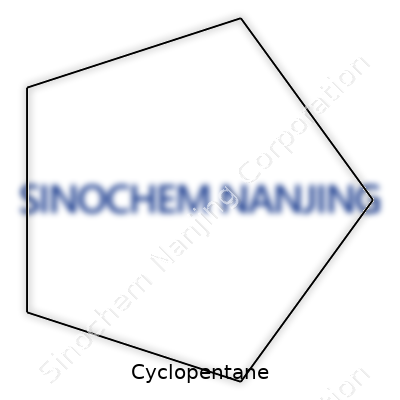
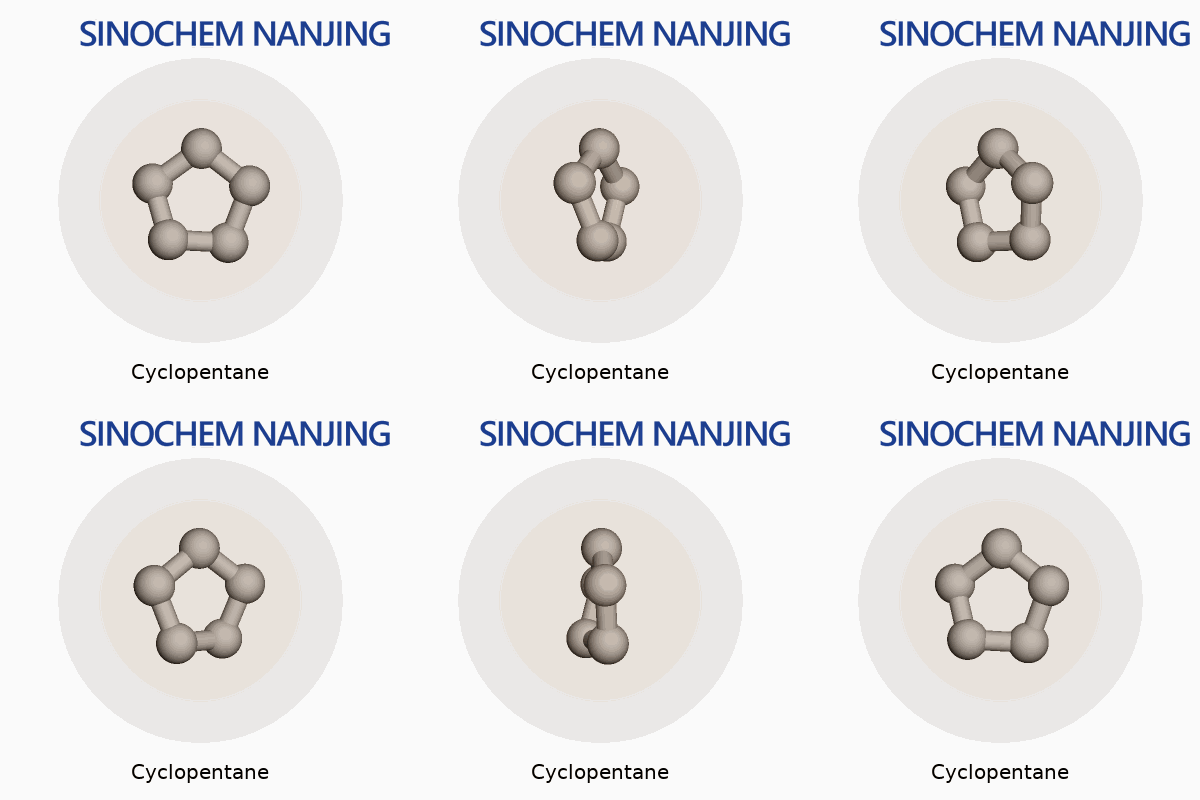
| Names | |
| Preferred IUPAC name | cyclopentane |
| Other names |
Pentamethylene Pentanaphthene Hexahydrocyclopentadiene |
| Pronunciation | /saɪ.kloʊˈpɛn.teɪn/ |
| Identifiers | |
| CAS Number | 287-92-3 |
| Beilstein Reference | 1718734 |
| ChEBI | CHEBI:23494 |
| ChEMBL | CHEMBL14007 |
| ChemSpider | 8509 |
| DrugBank | DB03258 |
| ECHA InfoCard | 100.030.828 |
| EC Number | 206-016-6 |
| Gmelin Reference | 20341 |
| KEGG | C06531 |
| MeSH | D003456 |
| PubChem CID | 9253 |
| RTECS number | GF0300000 |
| UNII | 8KHP30VY8E |
| UN number | UN1146 |
| Properties | |
| Chemical formula | C5H10 |
| Molar mass | 70.13 g/mol |
| Appearance | Colorless liquid |
| Odor | Mild petrol-like odor |
| Density | 0.751 g/cm³ |
| Solubility in water | 0.17 g/L |
| log P | 1.81 |
| Vapor pressure | 74.0 kPa (at 20 °C) |
| Acidity (pKa) | ~45 |
| Basicity (pKb) | 15.79 |
| Magnetic susceptibility (χ) | -8.6×10⁻⁶ |
| Refractive index (nD) | 1.406 |
| Viscosity | 0.24 mPa·s (25 °C) |
| Dipole moment | 0.00 D |
| Thermochemistry | |
| Std molar entropy (S⦵298) | 171.0 J·K⁻¹·mol⁻¹ |
| Std enthalpy of formation (ΔfH⦵298) | -77.4 kJ/mol |
| Std enthalpy of combustion (ΔcH⦵298) | -3301.5 kJ·mol⁻¹ |
| Pharmacology | |
| ATC code | J01XX10 |
| Hazards | |
| Pictograms | GHS02, GHS07 |
| Signal word | Danger |
| Hazard statements | H225, H304, H336, H411 |
| Precautionary statements | P210, P240, P241, P261, P273, P301+P310, P304+P340, P331, P403+P235, P370+P378 |
| NFPA 704 (fire diamond) | 1-4-0-F |
| Flash point | “-37 °C” |
| Autoignition temperature | 361 °C |
| Explosive limits | 1.4–8.7% |
| Lethal dose or concentration | LD50 (oral, rat): 5,000 mg/kg |
| LD50 (median dose) | LD50 (median dose): 5000 mg/kg (oral, rat) |
| NIOSH | NIOSH: GZ1400000 |
| PEL (Permissible) | 600 ppm |
| REL (Recommended) | 20 ppm |
| IDLH (Immediate danger) | 1200 ppm |
| Related compounds | |
| Related compounds |
Cyclopentene Cyclopentadiene Methylcyclopentane Cyclohexane Pentane |



