Oleic Acid: More Than Just a Fat
Historical Roots and How Oleic Acid Shapes Change
Oleic acid sits at the center of more stories than many folks realize. Since the time when people first pressed olives for lamp oil or rubbed animal fat on wood to prevent cracking, oleic acid played an unsung role in daily life. Its Latin root, oleum, hints at its main historical source—olive oil. Chemists in the 19th century finally isolated this fatty acid, discovering a molecule that wasn’t just useful but transformative. By the time the industrial revolution chewed its way through every rural corner and every urban street, factories wanted raw materials that behaved predictably and safely. Oleic acid checked a lot of those boxes. The fact that people recognized its mild chemistry and compatibility with natural systems made it impossible to ignore. Today, the world produces hundreds of thousands of tons yearly, coming not only from olives, but also tallow, canola, sunflower, and even algae grown in closed bioreactors.
Where Science Meets the Senses
You can’t write off oleic acid as just another chemical with a shiny name. It appears in liquid form, usually colorless to pale yellow, soft and slippery to the touch. At room temperature, it stays liquid thanks to a double bond between carbons 9 and 10—making this a monounsaturated fatty acid. At the molecular level, C18H34O2 almost feels elegant in its simplicity. That lone double bond makes it less rigid compared to saturated fatty acids, a quality that both kitchen chemists and industrial manufacturers appreciate. Technically, you see labels describing purity above 99% for food and pharmaceutical use. The melting point sits a little under 14°C, with a boiling point hovering around 360°C (if you keep air away to avoid decomposition). Saponification value, iodine number, acid number—these classic chemical fingerprints show up on every batch record, shaping how the market moves and who buys what for which industry.
Setting the Standard: Labels, Regulations, Technical Nuances
Food authorities, chemical trade bureaus, and health regulators weigh in on oleic acid with hefty rulebooks. Labels tell you more than just CAS number or INCI name. In food, ‘high oleic’ means oils where this acid makes up the bulk of fatty acids, often above 70%. Pharmaceutical companies keep an even tighter leash—residual solvents, peroxide value, color, and odor get measured in batches that won’t accept surprises. Cosmetic regulations in Europe and North America ask for documentation that goes far beyond purity or appearance. This sort of attention to detail helps keep products out of courtrooms and recalls off magazine covers. These standards also make sure nobody cuts corners that put consumers at risk, since the stuff ends up everywhere from baby lotion to heart medication.
How Oleic Acid Gets Made
Most large-scale production starts with pressed vegetable oils—typically olives, sunflowers, or rapeseed. After extraction, soapstock from those plants—byproducts of alkali soap-making—gets acidified. This step releases ‘free fatty acids’ from their sodium partners, allowing distillation to pull off the fractions rich in oleic acid. Next, purification takes off-color bodies and any oddball flavors. Small-batch, ultra-refined grades for research or pharmaceuticals might see extra vacuum distillation, trace metal scrubbing, or adsorbent filtration. Think about the work involved: huge companies chase every last impurity, while artisanal producers still do things with wooden presses. Both approaches pull on the same chemistry.
Not Just Stable—Oleic Acid Interacts and Adapts
It’s easy to think of fatty acids as ‘inert,’ but oleic acid’s double bond opens the door to chemical adventure. Hydrogenation knocks out that bond, turning liquid oleic acid into solid stearic acid. Epoxidation flips that double bond into a reactive ring—suddenly you get a chemical handle needed for making plasticizers and coatings. Simple esterification with ethanol crafts ethyl oleate, a favorite for drug delivery. These are classic functional transformations, not wild alchemy. In each case, the aim involves modulating how the acid performs in real world conditions—heat resistance, solubility, ability to blend with other fats, or modify the feel of cosmetics.
So Many Names, So Many Faces
Pick up a label and you might see ‘cis-9-octadecenoic acid’, ‘adipostatin A’, or ‘Red Oil’. In beauty products, it hides under ‘oleic acid’ or sometimes ‘Omega-9’. In technical literature, clean shorthand rules: C18:1, since the chain sports 18 carbons and a single double bond. Whether you’re translating between the food, chemical, or health desk, it’s all the same molecule—a shape that repeats in every bottle of salad oil, jar of moisturizer, or drum of industrial surfactant.
Balancing Safety, Practical Risk, and Consumer Confidence
Nobody wants to read warning labels unless they matter. Oleic acid escapes the more severe hazards of other chemicals, but that doesn’t mean it gets a free pass. Eye and skin contact might cause mild irritation, though that risk compares to handling cooking oils rather than truly toxic substances. Inhalation at high levels—mostly an occupational risk in factories—brings respiratory discomfort. Spills, since the acid is slippery, create real hazards in warehouses and bottling plants. Regulations call for gloves, eye protection, and—if you work with industrial fumes—decent ventilation. The good safety record comes from what workers understand on the ground level, not what regulators craft in distant offices. Environmental scientists note oleic acid degrades quickly in soil and water; bacteria find it an easy meal, so trouble doesn’t pile up downstream.
Oleic Acid at Work: Across Food, Pharma, and Industry
Most people taste oleic acid every single day, but they won’t find the label. Olive oil? Rich in it, and that explains both the flavor and the cholesterol-lowering claims in heart health research. Food companies choose high oleic sunflower and canola oils for deep fryers, since this acid stands up to heat, keeps potato chips crisp, and doesn’t go rancid easily. The pharmaceutical world uses it to dissolve tricky drugs, create stable emulsions for injectables, and even help certain medicines cross membranes in the body. Cosmetic brands blend it into creams, balms, and hair treatments where it softens, spreads, and moisturizes far more gracefully than cheaper substitutes. Turning to paints and lubricants, oleic acid finds life as both a processing aid and a performance enhancer. Each sector learns to ask different questions, because what matters to one user barely registers for another.
Cutting Edge Research and Innovation
Researchers treat oleic acid as an old friend that still surprises. A big push explores how this fatty acid modifies cell membranes and influences inflammation in people who eat ‘Mediterranean’ diets. Clinical trials chase links between high oleic oils and lower LDL cholesterol, insulin sensitivity, and even brain health in neurodegenerative diseases. Beyond nutrition, chemical engineers modify oleic acid for bio-based lubricants and surfactants—building blocks for greener plastics and smarter fuels. Biologists look at anti-microbial coating on medical devices, shaped in part by blending oleic with silver or zinc. On the industrial side, work on metabolic engineering now tweaks algae and yeast so they pump out pure oleic acid on demand, challenging age-old dependence on agricultural land. The spirit of research now dances between food, fuel, medicine, and material science.
Weighing Risks: What Toxicity Means in Today’s Context
Most toxicology reports shine a gentle light on oleic acid. At dietary levels, it poses little risk, which stands in contrast to saturated fats that fill headlines with talk of heart attacks. High, unregulated doses injected in animal studies can mess with lung tissue or heart muscle, but these scenarios lack real-world relevance for typical human exposure. Regulators still demand thorough studies, though. Both acute and chronic toxicity look manageable, but work isn’t finished. Ongoing research tries to unpick whether and how long-term use in certain medicines or high-dose foods alter health outcomes. Those who shape policy keep asking for new studies as chemistry and consumption patterns keep shifting.
Where Oleic Acid Could Go Next
Looking ahead, oleic acid offers both stability and promise. Climate change, supply chain instability, and growing demand for biodegradable materials push researchers and companies to redeploy this molecule. Sustainable sourcing seems more achievable than for some competitors: new strains of plants, microbes, and algae come online, producing oleic acid with smaller environmental footprints. In medicine, encapsulation technologies target drug delivery, promising better therapies for diabetes and cancer. In packaging, oleic acid-derived bioplastics might shift us away from oil-based polymers. For food, the pressure to replace trans fats keeps updating how we breed crops and refine oils. Oleic acid won’t fix every problem, but its history and flexibility mark it as a cornerstone for anyone seeking durable solutions in food, health, or sustainability. People sometimes overlook molecules with simple names, yet it’s these very compounds—anchored in tradition and open to innovation—that quietly shape our future.
What is oleic acid used for?
A Fat with Many Jobs
Take a look at your kitchen. Olive oil on the shelf contains mostly oleic acid, an unsaturated fat found in everything from avocados to almonds. I remember seeing my grandmother drizzle olive oil onto salads and bread, long before anyone called it “healthy.” Back then, folks weren’t counting monounsaturated fats, but her cooking made sense. Foods rich in oleic acid support heart health, lowering bad cholesterol and possibly reducing cardiovascular problems according to the American Heart Association.
Beyond the Dinner Table
I’ll always see olive oil as food first, but oleic acid stretches far beyond the plate. This fat lands in soap, lotion, ointments, plastics, and even textile processing. Think of it like a versatile neighbor who helps out wherever needed. Soap and skincare makers like it because it softens, cleanses, and stabilizes. From my experience with DIY soap projects, adding a splash of olive oil always gave a creamier lather—thanks to the oleic acid content.
Companies making pharmaceuticals often use it as a carrier for drugs, especially where gentle absorption matters. Research published in the Journal of Controlled Release highlights its role in helping medications dissolve and enter the body. So, what you rub on your skin or swallow in a soft gel might owe a debt to this humble fat.
Oleic Acid in Industry
Factories rely on it as a slip agent, making rubber or plastics easier to shape and process. Food manufacturers use it to create margarines and spreads that stay spreadable at fridge temps. As someone who’s worked in a bakery, I saw firsthand how ingredient choices shape the final texture. Fats high in oleic acid often gave cookies a longer shelf life and that tender bite people crave in pastries.
Lubricants, detergents, and even industrial cleaners call on oleic acid’s slippery qualities. It’s plant-based and biodegradable to a good degree—something that matters as more businesses shift away from harsh petroleum products. Reports from the Environmental Protection Agency underline the lower hazard profile of biodegradable surfactants, which includes oleic-acid-based ones, compared to typical petroleum-derived surfactants.
Health, Sustainability, and the Path Forward
Nutrition experts agree: swapping saturated animal fats for fats rich in oleic acid (like olive or canola oil) supports general wellness. The Mediterranean Diet, loaded with oleic acid, draws nods from the Harvard T.H. Chan School of Public Health for protective effects against heart disease and inflammation.
Scientists are experimenting with breeding crops like canola and sunflower to up their oleic acid yield. Bigger yields mean less land and resource use for more product. That’s an answer to rising environmental pressures, aiming to keep food and industry needs in balance. I’ve seen farmers talk about these crops—improved disease resistance and drought tolerance crop up in their stories, sometimes providing more stable incomes.
Oleic acid won’t headline the news, but its reach touches daily life in ways most people never notice. With habits shifting toward greener chemistry, smarter snacking, and cleaner products, this simple molecule keeps finding new places to fit in—often right under our noses.
Is oleic acid safe for skin application?
Understanding Oleic Acid in Skincare
Oleic acid shows up in so many skincare formulas these days. Found naturally in olive oil, avocado, and even our skin’s own sebum, it stands as one of those big-name fatty acids people spot on product labels. The big question is whether it helps the skin or causes more harm than good, especially since it pops up everywhere—from serums and moisturizers to cleansing oils.
What Oleic Acid Does On Skin
The buzz about oleic acid usually comes from its ability to penetrate and soften skin. Brands talk about improving skin texture and strengthening the barrier. In fact, dermatologists point out that oleic acid helps other active ingredients reach deeper layers. That’s why some formulas designed for very dry or mature skin lean heavily on this ingredient. Dry patches, rough elbows, even chapped lips might feel smoother after something rich in oleic acid.
Who Benefits—And Who Doesn’t
Skin type really changes the game. People with naturally dry skin often soak up the benefits. Their protective barrier runs thin on oils, so a big dose of oleic acid feels soothing and even reduces itchiness. For folks with sensitive or eczema-prone skin, there’s sometimes real relief, and certain studies back this up. One review in the International Journal of Cosmetic Science highlighted that oleic acid can restore barrier function in people battling irritated or atopic skin.
Things start to shift for those with acne-prone or oily skin. Oleic acid runs thick and heavy, and that texture can clog pores. Some researchers found links between high concentrations of oleic acid and increased risk of breakouts. For anyone who’s spent their teens dodging new pimples, seeing “olea europaea” or “oleic acid” high on a label might raise an eyebrow. My own experiments with oil cleansers taught me fast: too much of a good thing leads to extra shine and sometimes little bumps that just won’t quit.
Safety and Irritation Issues
People worry about allergies, which makes sense. Like with any ingredient, reactions happen. Most of the time, problems come from pure oleic acid or high concentrations. Studies from cosmetic toxicology show that diluted, plant-derived versions in creams or lotions rarely spark true allergies. Still, pure versions can irritate especially sensitive skin or disrupt the barrier in large amounts. Babies and those with compromised skin need extra caution.
Personal experience lines up with this research. A facial oil rich in oleic acid left my cheeks red and flaky, while my friend with dry, tough skin swore it took her tightness away overnight. Patch testing always helps when adding new actives, and sticking with low concentrations helps reduce any risk.
Smart Ways To Use Oleic Acid
Choosing skincare isn’t always straightforward, but reading ingredient lists does help. Dry skin types seeking something rich can look for blends where oleic acid shows up halfway down the label. Those with oily or breakout-prone skin should stick to linoleic acid-rich oils (like sunflower or grape seed) instead. Sensitive skin users might start with a patch behind the ear and watch closely for any sign of redness or bumps.
Consulting a board-certified dermatologist before introducing new actives pays off. Science supports the role of oleic acid for barrier repair in dry skin—but like anything in skincare, it really depends on your unique needs and personal sensitivity.
What are the health benefits of oleic acid?
Where Oleic Acid Shows Up in Daily Life
Oleic acid turns up in foods that most people already keep in the kitchen. Olive oil carries a hefty dose. Avocados and a handful of nuts, like almonds and cashews, also have it. Even animal fat contains some, though plant-based options tend to draw more attention from folks aiming to eat better.
Why It Matters: Fat Isn’t Always Bad
Society spent decades building a fear of fat. People swap butter for margarine, bacon for turkey sausage, and reach for “fat-free” labels. Real science says the type of fat affects health far more than the amount. Oleic acid falls under the monounsaturated fat category, which often gets linked to heart benefits.
The Mediterranean diet draws respect, in part, because it features foods loaded with this fatty acid. Olive oil, a centerpiece in that diet, gets much of its “healthy fat” reputation from its high oleic acid content.
Supporting Heart Health
Researchers with the American Heart Association published work showing that diets rich in monounsaturated fats can help lower LDL cholesterol, often called the “bad” kind. LDL particles clog arteries, and too many can lead to heart attacks or strokes. Oleic acid nudges those numbers down, while HDL cholesterol, which moves unwanted cholesterol out of blood vessels, stays steady or even goes up.
A clinical trial in Spain, known as the PREDIMED study, followed thousands of adults with high heart risk. The group eating extra olive oil (rich in oleic acid) saw fewer heart attacks than those on a low-fat diet. Those results helped olive oil win a stamp of approval from many cardiologists.
Inflammation and Cell Health
Daily aches, stiff joints—many folks brush off inflammation as aging. Yet chronic inflammation puts stress not just on joints but on most of the body. Oleic acid may help lower inflammation markers. Lab tests comparing diets high and low in monounsaturated fat found lower levels of C-reactive protein, a common inflammation sign, when people increased their oleic acid intake.
Beyond inflammation, oleic acid seems to protect cells against certain types of damage. Researchers at Washington University have shown that it can change how some genes react inside our cells. That means DNA stays more stable, and damaged cells have a lower chance of turning cancerous or malfunctioning.
Everyday Ways to Add Oleic Acid
No need for expensive supplements or exotic products—using olive oil for cooking or salad dressings works just fine. Swapping butter, shortening, or lard with extra virgin olive oil can make recipes just as tasty and lends that familiar Mediterranean flavor. Roasting potatoes or vegetables, drizzling oil over whole-grain bread, or topping oatmeal with nuts all give the body more of these good fats.
It helps to remember that all fats are calorie-dense, so portion size matters. Two tablespoons of olive oil each day gives plenty of oleic acid without tipping daily calories too high. Those looking to improve cholesterol or fight inflammation may want to try this swap for a few weeks and see how they feel.
Better Health, Simple Steps
Years of following food fads made people forget that real food—what grows from the ground or falls from a tree—usually brings plenty of nutrition along with fat. The story of oleic acid reminds us that some fats do the body a lot of good, as long as people choose wisely and keep it simple.
Is oleic acid natural or synthetic?
What Oleic Acid Really Is
Oleic acid shows up all over our lives, sometimes almost hidden. It’s in olive oil, sunflower oil, even in animal fats. People use it in soap, foods, skincare — and it’s the thing that makes olive oil "heart healthy." My experience working around natural ingredients has hammered home how often we overlook the chemistry behind everyday substances, especially something as common as oleic acid.
Natural Roots of Oleic Acid
This fatty acid pops up in a natural way. Olives owe their popularity to the high amount of oleic acid in their oil, which gives the oil that smooth texture and stability when you heat it. Canola, safflower, and even avocado oils have plenty of it too. Our bodies can also make oleic acid as part of regular fat processing. Nature handles oleic acid production all the time, from plants to animals. That’s why it’s so easy to find in food and personal care labels.
People started extracting it from natural sources far before lab science came around. Crushing olives, rendering animal fat — these methods go back thousands of years. The stuff in that bottle of olive oil? That’s about as naturally occurring as it gets.
The Rise of Synthetic Versions
Big industry loves consistency and scale. Extracting oleic acid from crops is great, but weather and crop yields change each year. So chemists figured out how to manufacture oleic acid in a lab. Using catalysts and clever tricks, synthetic versions get churned out with strict purity and predictable quality. This version ends up in a lot of the bulk soaps, lubricants, and industrial applications where natural supply chains can get in the way. Synthetic oleic acid may carry the same basic chemical structure, but its route to store shelves is very different.
Is There a Real Difference?
The body can’t tell the difference between natural and lab-made oleic acid. Both look and act the same at a molecular level. For food, label rules in many countries specify whether something comes from a natural source, so consumers know what they’re buying. I look for these details myself, since there’s long-standing trust for plant-based oils — especially when eating or using on skin.
The debate heats up mostly around sustainability and purity. Crops use up land, water, and energy. Large-scale chemical processing has its own environmental issues, not to mention costs for raw materials. It comes down to how each source fits into the wider web of health and environment. For example, olive farming supports biodiversity in certain regions, but industrial chemical processes often pump out more waste, even if the end product feels the same to the user.
Smart Choices for Health and Industry
People who care about straightforward, low-processed ingredients naturally lean toward oleic acid from olives, avocados, and other traditional crops. Food lovers want taste and authenticity. Skin-care fans prefer plant-based sources, especially with allergies or sensitivities on the rise. Folks in industrial settings — think lubrication, plastics, and surfactants — often accept synthetic sources, where price and consistency matter more than the feel-good story.
Sustainable farming and improved extraction methods could shore up natural sources of oleic acid, making them more available without a big environmental price tag. On the other hand, greener chemical processes are starting to take root in the industry lab, reducing the impact of synthetic production. Both routes will shape how businesses and consumers experience this versatile fatty acid in the years to come.
How should oleic acid be stored?
Why Proper Storage Matters
Oleic acid draws interest in labs, factories, and even small workshop shelves. It pops up in cosmetics, food, pharmaceuticals, soaps, and chemical production. Leaving it on a bench or sticking it on a crowded shelf without a second thought brings trouble pretty quickly. I’ve watched colleagues run into spoilage, fire hazards, and ruined formulas just for skipping good habits.
Understanding What You’re Dealing With
Anyone working with oily chemicals quickly learns how they react to air, light, and heat. Oleic acid belongs to the unsaturated fat family. Exposing it to air for too long kicks off oxidation. That turns its once-clear, slightly yellowish tone cloudy, then dark, often leaving behind a sharp, rancid smell. Not only does this affect results in cosmetic and food formulations, but old or degraded material triggers reactions and off-tastes that never show up in the textbooks.
Basic Storage Steps: Less Fuss, Fewer Problems
The first thing I check for in my supply room is the presence of tight-sealing glass bottles or high-density polyethylene containers. Oleic acid reacts with oxygen and absorbs water from the air, so leaky tops or cheap plastics make things worse. Screw tops with liners score high marks every time. Leaving it close to sunlight on a windowsill may sound harmless, but I’ve seen amber bottles turn sludgy if sunlight sneaks in for weeks on end. Stores keep it in dim places for a reason.
Temperature matters too. Sticking the container next to hot equipment or anywhere the sun streams in will push oleic acid to degrade much faster. Keeping it cool and away from heat—controlled room temperature works well—helps preserve its quality. Labs and companies that rely on stable samples reach for fridges meant for chemicals when possible.
Label, Monitor, and Rotate Stock
Mislabeling bites harder than many expect. The time someone grabbed a container marked “oleic acid” only to notice odd smells in their product proved awkward and cost us hours of work. Permanent labels with clear batch numbers and receipt dates give a baseline. No guessing how long it's been sitting around. Whenever new product arrives, older stock gets used first—a practice borrowed straight from food prep—the “first-in-first-out” routine keeps things fresh and sharp.
Looking Beyond Just the Basics
Accidents and spills scare anyone who has spent time in a busy lab. Oleic acid, like many chemicals, isn’t flammable in small amounts, but larger spills—left on rags, near ignition sources, or in poorly ventilated rooms—turn risky. I’ve kept a simple clean-up kit nearby: absorbent pads, gloves, and a spot for safe disposal. Safety data sheets from trusted chemical suppliers offer reliable advice. They’re not just formalities. Every person in the room ought to read these.
Supporting Smarter Handling with Science
Decades of research into unsaturated fatty acids shine a light on these best handling practices. Studies show oxygen and heat speed up breakdown, while UV light plays its part in raising peroxide values and changing compositions. European and U.S. standards reinforce these habits, agreeing on airtight containers and darkness as best allies. Regular quality checks—simple smell or color inspections, or for big labs, sending samples for peroxide analysis—catch problems before they spread.
Making Responsibility Routine
Safe and effective storage of oleic acid protects product quality, people, and profit. These habits grow with every batch used and every mistake caught early. Whether in a lab, factory, or small shop, a little know-how goes a long way in keeping work safe and reliable.
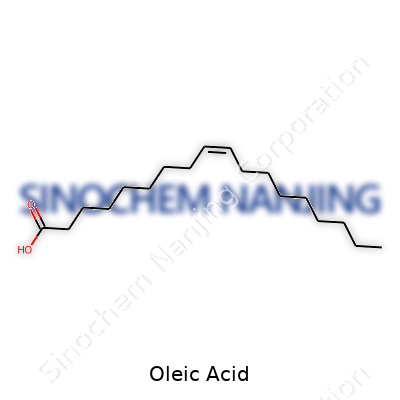
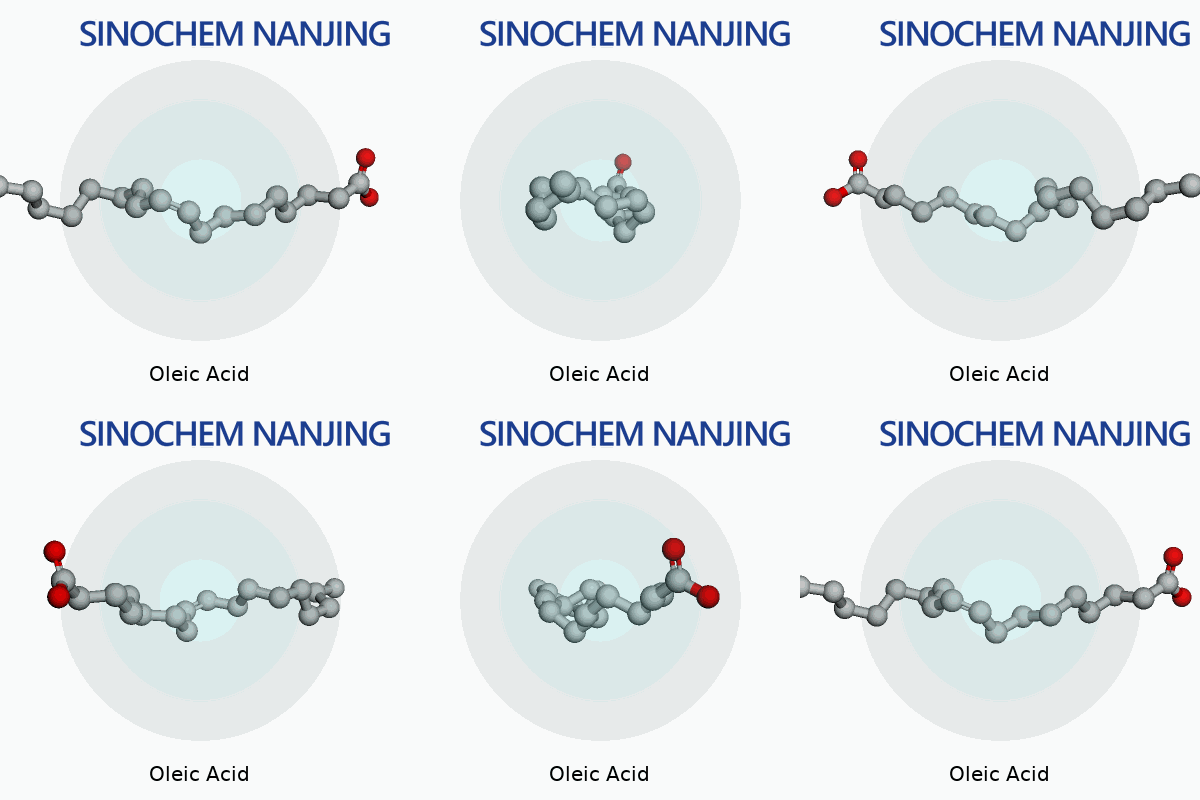
| Names | |
| Preferred IUPAC name | (9Z)-octadec-9-enoic acid |
| Other names |
cis-9-Octadecenoic acid 9-Octadecenoic acid (Z)- Red oil Elaidic acid (trans isomer) Octadec-9-enoic acid |
| Pronunciation | /ˌoʊˈliːɪk ˈæsɪd/ |
| Identifiers | |
| CAS Number | 112-80-1 |
| Beilstein Reference | 1908733 |
| ChEBI | CHEBI:30823 |
| ChEMBL | CHEMBL1426 |
| ChemSpider | 9697 |
| DrugBank | DB03157 |
| ECHA InfoCard | 05b2d16e-dc53-4bc2-b0e5-3b3b064ef281 |
| EC Number | 200-368-9 |
| Gmelin Reference | 474 |
| KEGG | C00712 |
| MeSH | D010970 |
| PubChem CID | 445639 |
| RTECS number | RGWA000000 |
| UNII | 4L1S216O9U |
| UN number | UN3265 |
| Properties | |
| Chemical formula | C18H34O2 |
| Molar mass | 282.47 g/mol |
| Appearance | Yellowish oily liquid |
| Odor | oily; rancid; unpleasant |
| Density | 0.895 g/cm³ |
| Solubility in water | Insoluble |
| log P | 7.64 |
| Vapor pressure | 0.05 mmHg (25°C) |
| Acidity (pKa) | 15.60 |
| Basicity (pKb) | 7.6 |
| Magnetic susceptibility (χ) | -72.0×10⁻⁶ cm³/mol |
| Refractive index (nD) | 1.461 |
| Viscosity | 30.346 mPa·s |
| Dipole moment | 1.327 D |
| Thermochemistry | |
| Std molar entropy (S⦵298) | 206.0 J·mol⁻¹·K⁻¹ |
| Std enthalpy of formation (ΔfH⦵298) | -365.0 kJ/mol |
| Std enthalpy of combustion (ΔcH⦵298) | −2828.0 kJ·mol⁻¹ |
| Pharmacology | |
| ATC code | A16AX10 |
| Hazards | |
| GHS labelling | GHS07, GHS08 |
| Pictograms | GHS07,GHS08 |
| Signal word | Warning |
| Hazard statements | H315: Causes skin irritation. |
| Precautionary statements | P264, P280, P301+P312, P305+P351+P338, P330, P337+P313, P501 |
| NFPA 704 (fire diamond) | 2-1-0 |
| Flash point | Flash point: 189 °C (372 °F) |
| Autoignition temperature | 335 °C |
| Explosive limits | Explosive limits: 0.9–7% |
| Lethal dose or concentration | LD50 (oral, rat) 74,000 mg/kg |
| LD50 (median dose) | LD50 (median dose): Oral-rat LD50: 74000 mg/kg |
| NIOSH | UNS7600000 |
| PEL (Permissible) | PEL = 15 mg/m³ |
| REL (Recommended) | 10 mg/m³ |
| IDLH (Immediate danger) | Unknown |
| Related compounds | |
| Related compounds |
Elaidic acid Stearic acid Linoleic acid Palmitic acid Palmitoleic acid Vaccenic acid Arachidic acid |



