Nonylphenol: Untangling a Complex Chemical Legacy
Historical Development
Thinking back on chemical history, Nonylphenol has traveled a long road since its early synthesis. Chemists started tinkering with phenolic molecules in the early 20th century, drawn by the versatility of aromatic rings and alkyl chains. By adding a nine-carbon nonyl group to the phenol structure, they shaped a substance with both greasy and water-attracting sides. Nonylphenol soon became a key building block for making nonylphenol ethoxylates. This jump, spurred mostly by a post-war consumer boom, echoed the faith in chemistry’s promise—faster cleaning, better wetting, more reliable processes in factories. As technology moved faster, so did the ways that Nonylphenol ended up in everyday life: detergents, pesticide formulations, plastics manufacturing, and even in some textile treatments. This growth didn't stop to ask many questions about its fate or fallout after use, a pattern common in industrial revolutions. We can still see the stamp of these choices as environmental regulations today keep playing catch-up with chemical advances of the past.
Product Overview
Walk through any chemical warehouse, and you might find drums or tanks marked for Nonylphenol—sometimes labeled with cryptic product codes or trade names, sometimes just as “NP.” Nonylphenol isn’t a single crystal-pure ingredient. It’s really a mix of molecules united by the nonyl group branching off that familiar phenol ring. That branching isn’t orderly; the nonyl piece can attach in several patterns, and factories blend multiple isomers rather than isolate just one. Manufacturers usually care about this mixture for its performance, not its consistency as a single chemical entity. The stuff itself is sticky and oily-looking, with a faint chemical smell. It’s not something to splash around mindlessly—all the more so because, beneath its unassuming appearance, Nonylphenol packs a powerful punch in chemical processes.
Physical & Chemical Properties
Nonylphenol, at room temperature, shows up as a pale yellow liquid or a waxy solid, depending on which blend of isomers you’re handling. It melts at fairly low temperatures and, unlike pure phenol, feels slippery, not sharp. Dipping a strip of pH paper won’t show a strong acid or base, but the stuff still irritates skin and mucous membranes. The liquid version doesn’t dissolve much in water and prefers to hang out in oils or fats. This quirk matters: Nonylphenol's stubborn persistence outside water helps it build up in soil and the fatty tissues of animals. Chemically, that phenol ring shows a knack for interacting with other aromatic or organic molecules, making Nonylphenol a good candidate for modifications and reactions in labs.
Technical Specifications & Labeling
Label reading with Nonylphenol feels like a slow unraveling of small print. Many packages still list a mix of technical jargon: “branched alkylphenol,” “mixture of nonyl-substituted phenols,” or “para-nonylphenol.” Sometimes the label includes average chain length, purity percentages, or an isomer breakdown. Safety labels stand out more sharply: strong warnings about skin and eye contact, advice on proper respiratory protection, instructions steering clear of drains or natural water sources. Years of evolving regulations and research shape these technical tags. They show just how much authorities have learned about the stuff after decades of industrial optimism.
Preparation Method
Most Nonylphenol on the market springs from the alkylation of phenol with nonenes—a series of nine-carbon alkenes. The process usually runs with acid catalysts and controlled temperatures. Industrial reactors churn out the crude product, which then goes through distillation or other separations to weed out unwanted leftovers. Because the nonene feedstock itself contains multiple isomers, the end product ends up as a cocktail of differently branched nonylphenols. Those differences in structure pop up later as scientists study environmental effects and reactivity.
Chemical Reactions & Modifications
The major claim to fame for Nonylphenol lies in its ability to transform into nonylphenol ethoxylates—a process where many units of ethylene oxide hook onto the phenol, forming long, chain-like molecules. These become surfactants, helping oil and water mix, which fuels their use in detergents, cleaners, and emulsifiers for everything from farm sprays to metal degreasers. Side reactions can tweak the Nonylphenol backbone, making things like resins or antioxidants. Its structure lets chemists graft on other groups, but with every new derivative, the window opens for unknown byproducts and environmental guests.
Synonyms & Product Names
Over the years, Nonylphenol picked up a laundry list of names. Chemists refer to it as para-nonylphenol, 4-nonylphenol, branched nonylphenol, or simply NP. Commercial shipments often bear cryptic trade labels, especially in countries that export chemical blends under loose international rules. For anyone tracking what actually enters a plant, this tangled naming history makes it tough to surveil true usage, adding another layer of challenge to regulatory enforcement.
Safety & Operational Standards
Regulatory trigger fingers have gotten twitchy about Nonylphenol for good reason. Research several decades ago flagged its ability to disrupt hormone systems in fish, with side effects showing up at shockingly low concentrations. Factory workers handling the raw material wear gloves, goggles, and make sure spill control stations stand ready. In the workplace, proper air venting and washing after handling matter just as much as in lab settings. Governments responded at varying speeds—some moved rapidly to restrict Nonylphenol’s use in consumer washing powders and household goods, others advanced more slowly, with exceptions for industrial pipelines and specialty products.
Application Area
Industry still leans on Nonylphenol heavily, even as backlash builds. In plastic manufacture, it acts as both a precursor and a plasticizer, helping soften resins. Paper mills draw on its surfactant powers to strip out inks and oils. Textile dyeing operations need Nonylphenol-based agents to get bold, uniform colors on synthetic threads. On the farm, pesticide makers once valued its ability to help toxic ingredients cling better to leaves, resisting wash-off from rain. Each application tells a story about why industry keeps circling back: Nonylphenol works better, often more cheaply, than many replacements. Yet as regulations squeeze these pathways, companies scramble to re-engineer old formulas, switching over to less persistent or less hormonally active alternatives whenever costs and performance allow.
Research & Development
Behind the scenes, scientists study Nonylphenol intensely—both for what it unlocks in chemistry and for the headaches it brings in the wild. Academics and corporate labs keep pushing for greener alternatives, reinforcing a trend that began in the mid-1990s as environmental awareness surged. By screening new surfactant molecules and adapting the ethoxylation process, researchers hope to find drop-in replacements that neither linger in the environment nor threaten aquatic life. A small branch of research even explores how microbes might chew up Nonylphenol, offering a possible fix for contaminated soils and rivers. Many environmental chemists also dig deeper into how different Nonylphenol isomers behave—a sign that understanding the molecule’s subtle details holds big keys to managing risks.
Toxicity Research
Toxicologists have peeled away layer after layer on Nonylphenol’s impact. Decades of laboratory studies show that even trace amounts can scramble hormone signals, most notably in aquatic creatures. Effects pop up at concentrations measured in parts per billion, leading to the feminization of fish and population disruptions in rivers near chemical plants. The mechanism looks tied to Nonylphenol’s naughty ability to mimic estrogen, confusing the bodies of both wildlife and, at very, very high exposures, potentially people. Beyond hormones, data suggest accumulations in the fatty tissues of animals, raising flags for bioaccumulation up the food chain. These findings pushed some governments to list Nonylphenol as a substance of high concern and drove down its use in Europe and North America, though patchier oversight persists in parts of Asia and developing economies.
Future Prospects
Nonylphenol’s future stirs debate. Big regulatory forces in Europe and North America largely ban it from consumer goods and pressure industries toward greener substances. Countries with looser standards remain major users, with chemical trade often flowing there as stricter nations phase out stocks. The industry faces a tricky dilemma: alternatives exist, but not all rival Nonylphenol’s raw performance without major cost jumps or compatibility headaches. Ongoing breakthroughs may swing the market away from Nonylphenol in the long run, especially with advances in ‘green chemistry’ surfactants and sustained public pressure. For now, responsible handling, regional restrictions, and robust monitoring offer the best ways to keep harm in check—along with serious investment in alternative molecules that promise the same industrial value without the persistent baggage left behind.
What is Nonylphenol used for?
The Everyday Uses Hiding in Plain Sight
Nonylphenol creeps into more parts of our daily life than most people realize. It acts as a building block in a type of chemical called nonylphenol ethoxylates. These show up in all sorts of things—from household cleaners to paints and even some clothes. Look around the garage or under the kitchen sink: you’ll probably spot a cleaning product with ingredients linked to nonylphenol. Factories add it to laundry detergents for its surfactant power, helping water stick to dirt and stains so they come out easier.
In my own home, I remember years ago watching my dad pour concentrated degreaser on tools after a long day fixing up cars. The solution foamed up, cut through grime, and made everything spotless. I never thought twice about what gave it that strength. It turns out, nonylphenol has played a part in products like those—doing the heavy work invisible to most of us.
Beyond Cleaners: Nonylphenol’s Industrial Reach
Nonylphenol crops up along the chain that brings us plastics, rubbers, and adhesives. Manufacturers use it as an intermediate chemical, shaping the properties of materials that make up tires or insulation. Textile factories use it to wash raw fibers or as an aid in dyeing fabric, which keeps colors sharp and garments soft. Agriculture uses it too, blending it into some pesticides and herbicides. Even the electronics industry taps into its properties for circuit board manufacturing.
These uses create a web of exposure, touching workers, communities, and the natural world. It isn’t just about what’s in a single bottle of floor cleaner—nonylphenol moves through entire industries, making sure things last longer, wash better, and resist breaking down.
The Price We All Pay
Science uncovered some troubling facts about nonylphenol. It acts as an endocrine disruptor, meaning it can interfere with how hormones work in people and animals. Even tiny traces make a difference, especially for aquatic life. Rivers downstream from factories or wastewater plants have turned up fish with reproductive problems linked to this chemical. The numbers can’t be brushed aside: the European Union restricted nonylphenol years ago, while the U.S. Environmental Protection Agency ranks it as a substance of concern.
Anyone who’s spent time fishing or canoeing on a river knows how small chemical traces add up over time. Once, on a family trip, we saw a stream winding past a textile plant and wondered why no frogs or minnows hopped around the shallows. It didn’t occur to us the sudsy water might carry stuff that lingers long after people forget.
Moving Toward Safer Alternatives
Many companies now search for replacements that break down easily and leave less risk behind. It’s not as simple as just swapping chemicals and calling it done. Finding substitutes that match nonylphenol’s cleaning power and cost means trials, regulatory testing, and long conversations between businesses and policy makers. The pressure rises from all corners—shoppers, environmental groups, and anyone paying attention to what ends up in waterways.
People can play their part. Look for labels that say “nonylphenol-free” or dig deeper into company pledges about safer ingredients. Share what you learn with friends and neighbors. Each choice adds up, and as producers realize demand shifts toward safer, cleaner products, the tide can turn faster.
Facts to Keep in Mind
Nonylphenol’s reach stretches much further than a list of uses on a factory sheet. It links our morning chores to the wider environment, reminding us every choice comes with a price. By keeping an eye on science and taking small steps at home, people can help push for change that protects both health and the places we play, fish, and swim.
Is Nonylphenol hazardous to health?
Nonylphenol in Our Surroundings
Walk into most grocery stores and you’ll find shelves lined with detergents, cleaners, plastics, and even personal care items. Nonylphenol often turns up in the ingredient lists for those products. It helps break up grease and dirt and shows up in industrial settings too. Spending years working in landscaping, I noticed the runoff from commercial cleaning and the chemical residue in water supplies. You might not see or smell nonylphenol, but it finds its way into rivers and streams, sticking around long after the cleaning’s finished.
How It Gets Into Our Bodies
Scientists have measured nonylphenol in fish, water, and even household dust. Its structure lets it mimic estrogen, which means it can disrupt hormones in humans and wildlife. A 2019 study in Environmental Science & Technology recorded nonylphenol levels in the blood of people living near industrial centers. I’ve heard from friends living close to manufacturing plants that they worry about the water they drink and the food they eat. Once this chemical enters the body, it doesn’t break down quickly. Contamination builds up, creating bigger risks the longer it lingers in the system.
What the Evidence Tells Us
Research since the 1990s ties nonylphenol exposure to changes in reproductive health. In frogs, even low concentrations interfered with normal development. The United States Environmental Protection Agency flagged nonylphenol as a concern due to its toxicity and ability to stay in the environment. The European Union banned its use in certain products because they saw the risks far outweighed the benefits.
Among adults, studies point to possible links between nonylphenol and fertility effects. In animal experiments, scientists observed lower sperm counts and hormone changes after exposure. No one needs another worry about hormone health, especially with the rise in mysterious illnesses people face today.
Who Faces the Greatest Danger?
People working in industrial cleaning or textiles likely come in contact with higher amounts. My uncle spent years in a factory, and his skin would break out after handling some detergents. Families living near waste sites or downstream from factories bear more of the chemical burden. Women and children face extra risks too, as hormone disruption can throw off growth, puberty, and even pregnancy.
Reducing the Threat
Good solutions start with awareness. Reading labels and choosing products labeled “nonylphenol-free” helps at home. I switched dish soap after learning more about chemical additives, and many stores now carry safer, eco-friendly brands. Pressure from shoppers pushes companies to find better alternatives, and some governments have started restricting nonylphenol’s use.
Industries can use different surfactants that break down faster in the environment. Upgrading treatment at water plants removes more contaminants before the water cycles back to homes and farms. Community action—public pressure, lobbying, smarter purchasing—gets results. People can shape what manufacturers put on shelves and what gets dumped in rivers.
On the personal side, rinsing produce, using less plastic, and frequent hand-washing limit risks. No one alone can stop the spread of persistent chemicals, but each choice counts. The conversation about nonylphenol shines a light on the hidden costs of everyday convenience and the power people share to protect future health.
How should Nonylphenol be stored and handled?
Real-World Risks on the Shop Floor
Nonylphenol isn’t just another bottle on a warehouse shelf. Folks working around it know the smell, a bit sweet and strong, and they know to pay attention to the labels. This chemical gets used in detergents, paints, and certain plastics, but what feels routine shouldn't become careless. Spills or open drums can bring headaches—literally and in a regulatory sense, because it comes with health and environmental risks. Inhaling vapors can irritate your nose and throat, and skin contact can cause rashes. You don’t want to breathe in mist, and persistent exposure can build up problems over time.
Getting Storage Right
A good rule at any workplace: keep nonylphenol in a cool, well-ventilated area, away from sparks or open flames. This stuff isn’t explosive, but it’s flammable enough to warrant respect, especially in large quantities. Metal drums or high-density plastic containers with tight-fitting lids survive the test of time. I’ve seen what happens when a drum in poor shape leaks—floor gets sticky, and the room fills up with a nasty odor. That’s a clean-up headache nobody needs.
Windows don’t cut it for venting fumes—use a system that pulls air from low areas, since heavy vapors settle near the ground. Temperature swings push up vapor levels inside a sealed room, which raises exposure for anyone opening the door after hours. Store nonylphenol away from food and personal items. Mixing chemicals, even by accident, can leave you on the phone with emergency response because you never quite know what reaction could start bubbling up.
Personal Experience with Handling
Talk to anyone who’s worked with nonylphenol, they’ll mention good gloves—nitrile, not the cheap latex—which keep it off your skin for real. Eye protection means more than reading a checklist; it’s about not risking your sight for an easy shortcut. I’ve been there when someone tried to pour a gallon into a smaller container without a funnel. Splash landed on his shirt, and he learned fast what “chemical resistant apron” really means.
Good teams train each other, not just with binders or online modules but by watching out for bad habits. If somebody walks out of the storage area with oily hands, every doorknob and shared tool turns into a potential exposure point. Soap and running water, right near the exit, helps everyone wash up before heading to lunch. It seems picky, but years of experience shape these routines. Mistakes travel with you, sometimes far outside the walls of the storage building.
Protecting People and the Planet
Waterways take a real hit if nonylphenol leaks outside or goes down the wrong drain. This stuff acts as an endocrine disruptor, messing with fish and other creatures even at low levels. Smart companies keep spill kits close, ready for small leaks and direct every drop of waste to chemical disposal, not public drains. That one choice—setting up a disposal drum versus a sink—shows long-term thinking.
What Works, and What Needs to Change
Folks working in supply or maintenance departments shape the safety culture, often more than supervisors ever realize. Regular equipment checks, working alarms, and honest conversations about symptoms go a lot further than occasional audits. Regulations exist for a reason, but people listen to stories and advice much more than memos. Respect for nonylphenol isn’t about paranoia—it’s about doing right by your crew, keeping air and water cleaner, and building habits that last past inspection day.
What are the environmental impacts of Nonylphenol?
Everyday Use, Widespread Consequences
Not many folks realize how common nonylphenol appears in daily life. This chemical shows up in everything from laundry detergents to industrial cleaners. It slips through sewage treatment plants and pours into rivers, sticking around much longer than most people imagine. I started paying attention to nonylphenol a few years back, after seeing a local river warning about strange fish behavior and hearing scientists sound the alarm about female fish outnumbering males by a wide margin.
Polluting Waterways and Wildlife
Researchers have tracked nonylphenol in nearly every major waterway on the globe. Its stubbornness comes from its chemical structure: it resists breaking down in the environment, especially in colder climates. You can find it in the sediment at the bottom of rivers, lakes, and sometimes even in the drinking water supply.
One big problem with nonylphenol relates to how it acts like estrogen. Fish and amphibians exposed to high levels show changes in their reproductive organs. In some streams, most of the fish turn up as females — an imbalance that’s impossible to miss. Studies from the US Geological Survey and European universities nail down the link between nonylphenol exposure and reduced fertility, stunted growth, and hormone disruption in aquatic species.
Ecosystem Disruption Hits Home
Fish and amphibians do more than swim around, they keep rivers and lakes healthy. As nonylphenol alters reproduction, entire populations start to tip out of balance. Other animals feed on these fish, so the ripple effect runs up the food chain. Birds and mammals that rely on aquatic life also take a hit, making small pollution sources a bigger threat than most would guess.
Once in the soil, nonylphenol can cling to crops, moving from field to plate. European Food Safety Authority reports trace residues in grains and vegetables grown near contaminated water. Nobody expects their salad to bring hormone-mimicking chemicals to the table, but it happens more often than many suspect.
Human Health Isn’t Immune
Most people only think about pollution after dramatic spills, but nonylphenol’s slow, steady trickle affects people quietly. It enters the food chain through fish and crops, then shows up in blood and breast milk samples from several countries. Some medical papers connect long-term, low-dose exposure to developmental and reproductive concerns in humans. Children and pregnant women face greater risks.
Solutions Rooted in Real Change
Europe restricted nonylphenol’s use in many products, setting a strong example for others. Phasing out this chemical doesn’t need rocket science — safer alternatives exist. Large detergent makers in Japan and Scandinavia swapped out nonylphenol and saw water quality improve, fish populations rebound, and chemical loads shrink.
Investing in better wastewater treatment pays off too. Technologies like advanced oxidation and biofilters capture more pollutants before they leave treatment plants. I saw some smaller towns switch to these systems after pushback from environmental groups. The upfront costs sting a bit, but clean water and healthy fish populations boost tourism, fishing, and community pride years down the line.
Personal action helps as well. Choosing products free from nonylphenol, supporting brands committed to transparency, and asking local leaders about water quality steps all move the needle. No single solution fixes everything. Real change comes from repeated choices by households, businesses, and lawmakers who care about rivers that run clear and wildlife that thrives.
Is Nonylphenol regulated or banned in certain countries?
What Draws Attention to Nonylphenol?
Nonylphenol grabs headlines not due to a catchy name, but because of the problem it poses for health and the environment. This chemical finds use in cleaning detergents, paints, and some plastics. It doesn’t just wash down the drain and disappear. Water treatment plants simply can’t filter out all traces, so it flows into rivers, lakes, and sometimes comes full circle into drinking water. Scientists have linked it to hormone disruption, making it risky for both humans and fish.
Laws Around the World: A Mixed Bag
Europe doesn’t take chances with nonylphenol. The European Union’s REACH regulation sets a high bar, basically banning most uses of this chemical across member states. I remember speaking to a Dutch textile importer wrestling with compliance paperwork—he simply decided it was safer to avoid anything linked to nonylphenol altogether. This tough stance didn’t just pop up overnight. Decades of research about pollution and damage to aquatic life fueled these policies. If a river contains traces of nonylphenol, it can mean fewer fish breeding that season. Small amounts cause big trouble.
The story shifts outside the EU. China, after seeing contamination wreak havoc on local fish farms, imposed controls. Manufacturers face penalties if products contain too much. Canada also limits its use in products that contact water directly, such as cleaning agents and personal care items. The United States takes a different, slower approach. The Environmental Protection Agency listed nonylphenol as a “priority pollutant,” but there’s no outright nationwide ban. Some states push for restrictions, but rules differ wildly from one state to the next.
Continued Use: Why Does It Linger?
Many factories stick with nonylphenol because it works and isn’t expensive. Some small companies, especially in countries with lax enforcement, don’t see enough pressure to switch. Shifting away means paying more for safer alternatives. Big brands have the resources to pay for safer formulations, but local factories sometimes cut corners to keep prices low.
Alternatives do exist. I’ve visited packaging plants that switched to plant-based surfactants after a local ban. The new solutions worked well and drew interest from buyers who want “green” on their labels. The catch is always the extra cost, and someone, somewhere, has to eat the difference if the market won’t reward it.
Time for a Global Push?
Progress feels slow outside places with strong enforcement. That’s not just a legal problem but also a knowledge gap. Plenty of small businesses don’t realize how far one chemical can travel or the ripple effects. Countries and companies tackling nonylphenol often do so after dealing with contaminated water or loss of fishing livelihoods. Raising awareness helps, but it needs back-up from smart laws and clear incentives.
I’ve learned that legal bans alone don’t guarantee real-world results—the follow-through matters. Inspections, stiff penalties, and help for factories exploring new materials all play a role. School programs in countries like Sweden teach kids about water pollution using real local case studies, building understanding from the ground up.
It’s not easy to tighten enforcement everywhere, but the damage from letting things slide proves costly. Open rivers, healthy fisheries, and safe water supplies benefit everyone in the end—those who make the products and those who use them.
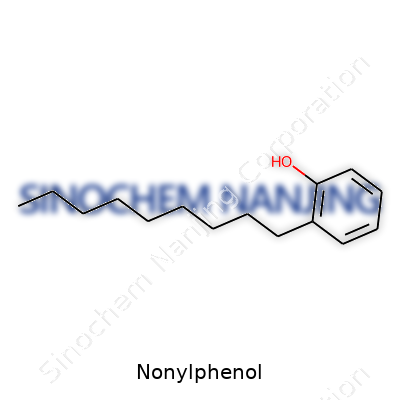
| Names | |
| Preferred IUPAC name | 4-nonylphenol |
| Other names |
4-Nonylphenol p-Nonylphenol NP Isononylphenol Nonylphenol-4 Para-Nonylphenol Phenol, nonyl- Nonyl phenol |
| Pronunciation | /ˌnɒnɪlˈfiːnɒl/ |
| Identifiers | |
| CAS Number | 25154-52-3 |
| Beilstein Reference | 1871320 |
| ChEBI | CHEBI:28545 |
| ChEMBL | CHEMBL15341 |
| ChemSpider | 16228 |
| DrugBank | DB13807 |
| ECHA InfoCard | 01-2119515907-38-XXXX |
| EC Number | 203-984-1 |
| Gmelin Reference | 67197 |
| KEGG | C06538 |
| MeSH | D009739 |
| PubChem CID | 7258 |
| RTECS number | RB9625000 |
| UNII | 7O4W67YK1N |
| UN number | UN3082 |
| Properties | |
| Chemical formula | C15H24O |
| Molar mass | 220.35 g/mol |
| Appearance | Colorless to pale yellow liquid |
| Odor | Phenolic |
| Density | 0.953 g/cm³ |
| Solubility in water | 1.6 mg/L (25 °C) |
| log P | 4.48 |
| Vapor pressure | 0.3 mmHg (25°C) |
| Acidity (pKa) | 10.7 |
| Basicity (pKb) | 7.58 |
| Magnetic susceptibility (χ) | -7.8e-6 |
| Refractive index (nD) | 1.545 |
| Viscosity | 6-12 mPa·s (25°C) |
| Dipole moment | 4.63 D |
| Thermochemistry | |
| Std molar entropy (S⦵298) | Nonylphenol: 489.06 J·mol⁻¹·K⁻¹ |
| Std enthalpy of formation (ΔfH⦵298) | -435.9 kJ/mol |
| Std enthalpy of combustion (ΔcH⦵298) | -6077 kJ/mol |
| Pharmacology | |
| ATC code | D08AX10 |
| Hazards | |
| Main hazards | Harmful if swallowed, causes skin and eye irritation, toxic to aquatic life with long lasting effects |
| GHS labelling | GHS07, GHS08, GHS09 |
| Pictograms | GHS05,GHS07,GHS08,GHS09 |
| Signal word | Danger |
| Hazard statements | H302, H314, H410 |
| Precautionary statements | P260, P273, P280, P301+P312, P305+P351+P338, P308+P313, P310 |
| NFPA 704 (fire diamond) | 3-2-0 Reactivity: 0, Health: 3, Flammability: 2 |
| Flash point | 170°C |
| Autoignition temperature | 330°C |
| Explosive limits | 0.9–6.4% |
| Lethal dose or concentration | LD50 (rat, oral): 1620 mg/kg |
| LD50 (median dose) | > 580 mg/kg (rat, oral) |
| NIOSH | RT8750000 |
| PEL (Permissible) | 5 mg/m3 |
| REL (Recommended) | 10 mg/m³ |
| IDLH (Immediate danger) | 50 ppm |
| Related compounds | |
| Related compounds |
Octylphenol Decylphenol Nonoxynol Alkylphenol ethoxylates Bisphenol A |



