Nonanol: Journey of a Versatile Chemical
Historical Development
Chemicals like nonanol didn’t just pop up in the mainstream overnight; their stories stretch back through centuries of curiosity and experimentation. Nonanol, a nine-carbon fatty alcohol, came into sharp focus in organic chemistry labs while researchers branched out from simpler alcohols, looking for longer-chain compounds with broader potential. Early chemists learned to draw out such compounds from natural oils and fats, often through tedious extraction and distillation. Over time, industrial advances made it possible to synthesize nonanol more efficiently, which opened doors for commercial use. Interest surged as its structural siblings—octanol and decanol—also found niches in emerging industries, signaling that the longer chain length brought its own set of unique behaviors and possibilities. A once obscure laboratory specimen slowly wormed its way into perfumes, flavors, and specialized functions across sectors.
Product Overview
Nonanol doesn’t scream for attention on store shelves; its role often stays tucked behind the labels of consumer fragrances, cleaning agents, or even as a precursor to more complex chemicals. With an oily consistency and a faint, pleasant scent when pure, nonanol provides building blocks for products where subtlety yet effectiveness matter. Large-scale operations rely on its flexibility, blending it into various chemical concoctions. Nonanol’s character—neither too volatile nor too stubborn—makes it an unsung helper in industries ranging from cosmetics to lubricants. Its consistent performance builds trust among manufacturers aiming for reliable outcomes without the fuss of more temperamental substances.
Physical & Chemical Properties
You won’t spot nonanol fizzing, glowing, or exploding under normal conditions. It settles in as a clear, slightly viscous liquid at room temperature, with a boiling point around 214°C and a melting point on the chilly side, about 24°C. Solubility gives another layer to its usefulness: nonanol won’t blend with water but pairs well with most organic solvents. The alcohol functional group on its end points to a familiar reactivity shared by other straight-chain alkanols, granting it some flexibility in chemical synthesis. At the same time, its nine-carbon skeleton brings bulk and weight—attributes that affect how it behaves in mixtures and products. Unlike lighter alcohols, nonanol does not evaporate quickly, so its scent lingers and resists breakdown, adding staying power to perfumes and cleaners.
Technical Specifications & Labeling
Labelling for nonanol doesn’t ask for much, but clear communication still matters. CAS number 143-08-8 leads the way in chemical catalogs, and typical labeling details the compound’s purity, molecular structure, and handling advice. Chemists and plant workers rely on these facts so they can avoid surprises. Small slip-ups—like mistaking it for a similar alcohol or ignoring storage guidelines—can cause headaches down the line. Stockrooms usually keep nonanol stored in well-sealed containers, away from strong acids or oxidizers. Experienced workers stick to tried-and-true standards for labeling and documentation, following requirements set by chemical registries and safety guidelines.
Preparation Method
Extracting nonanol used to mean getting one’s hands dirty with natural fats and oils, which sometimes left a mix of alcohols bundled together. As science marched forward, synthetic routes took over. A common approach draws on the industrial hydroformylation of 1-octene, where the addition of formyl groups followed by hydrogenation yields nonanol. Skilled technicians control temperature and pressure to coax out the desired yield and purity, mindful of byproducts that can sneak through if things get sloppy. More precise routes, like reduction of nonanoic acid, offer extra tools for specialized applications. Sourcing and cost both depend on the chosen method, but advances in catalysis and purification keep prices reasonable for commercial buyers.
Chemical Reactions & Modifications
Living in the wider family of fatty alcohols, nonanol can stretch its legs with several characteristic reactions. Its alcohol group reacts with acids to produce esters—a pathway prized in fragrance and flavor industries. Oxidation leads to nonanoic acid, and with the right tweaks in the lab, chemists can produce ethers, halides, or even embark on classic dehydrations to create alkenes. Nonanol’s nine-bone backbone allows researchers to explore chain modifications without losing functionality. Nobody denies its adaptability in reaction schemes; industrial and academic chemists often use it to test catalysts or optimize reaction protocols, banking on its moderate activity and unmistakable identity.
Synonyms & Product Names
On paper or in the field, nonanol might also answer to “nonyl alcohol,” “n-nonanol,” or sometimes “Pelargonic alcohol.” The synonyms can throw off newcomers, especially as chemistry stocks force buyers to cross-check labels and supplier catalogs. Some trade names—often designed to sound catchy or proprietary—also crop up. Labs and suppliers stick to IUPAC naming conventions where possible, making global sourcing a little easier for seasoned buyers but sometimes confusing for the less initiated. Veteran chemists keep reference charts handy, knowing that a missing prefix or suffix might mean a completely different compound.
Safety & Operational Standards
Anyone handling nonanol ought to treat it with healthy respect. Though this alcohol isn’t as volatile or immediately hazardous as some smaller cousins, repeated or prolonged skin exposure can irritate, and inhalation of vapor in unventilated environments poses risks. Storage demands a cool, dry setting far from ignition sources or oxidizing chemicals—ignoring these commonsense precautions can set up dangerous conditions nobody wants to deal with. PPE—like gloves and goggles—remains standard, and seasoned workers keep spill kits within reach. Regulatory groups have laid out exposure limits and handling guidelines, aiming for safety in both large facilities and teaching labs. These measures don’t overburden day-to-day operations but aim to keep mistakes from turning into emergencies.
Application Area
Nonanol finds its way into products where its subtle characteristics provide tangible benefits. Perfumers blend it for a hint of floral and citrus, where it extends heart notes and keeps lighter scents from vanishing. Food scientists experiment with its esters for fresh flavors and aromas in confections and drinks, chasing the right balance without going overboard. Lubricant and plasticizer makers value its long chain for adding slip and flexibility to industrial products, which helps reduce wear and noise in moving machine parts. Surfactant production draws on nonanol for cleaning agents designed to cut grease and dirt without smelling too clinical. Occasionally, agricultural chemists explore it as a component in plant protection formulations or controlled-release substances. Rarely does a single chemical cross so many boundaries, but nonanol earns its keep in a surprising array of niches.
Research & Development
R&D teams across chemicals, pharma, and materials science keep pushing nonanol into new territory. Synthetic chemists use it as a testbed for studying selective oxidation or catalytic hydrogenation. Biotechnologists look for ways to source nonanol sustainably, swapping petroleum-based routes for plant-derived or even microbial fermentation methods. Academic groups dig into the fine details of its molecular behavior—probing how it interacts with other long-chain molecules, or how its shape affects surface tension in emulsions and solutions. These investigations don’t grab headlines, but each experiment brings a shot at better yields, greener processes, or more efficient uses. Grad students and postdocs might spend months puzzling over reaction conditions or tweaking purification steps, all part of the slow, incremental gains driving chemistry forward.
Toxicity Research
No matter how useful a chemical looks on paper, people want straight answers about risk. Toxicity research on nonanol shows it can cause irritation with enough contact, especially for skin and eyes or if someone breathes in a high concentration of vapors. Data from animal studies helps regulatory bodies gauge safe handling thresholds, often drawing lines between nuisance-level symptoms and more serious outcomes. So far, nonanol doesn’t show alarming levels of chronic toxicity, mutagenicity, or bioaccumulation at typical exposure doses. The safety profile sounds reassuring, but prudent users still lock up containers and limit unnecessary exposure. Mainstream toxicological reviews, backed by laboratory observations, keep the conversation going on nonanol’s safe integration into products people handle regularly.
Future Prospects
Interest in nonanol keeps rising as industries hunt for greener, safer, and more effective chemicals. Sustainability tops the list of concerns, nudging companies to tap into bio-based production methods and look for alternatives to fossil fuel inputs. Regulations around volatile organic compounds and hazardous substances drive chemists to experiment with nonanol blends for adhesives, coatings, and cleaners with friendlier safety profiles. Biotechnology may unlock routes to nonanol through engineered microbes or waste-sourced feedstocks, linking established performance to breakthrough environmental benefits. Demand for specialty fragrances, tailored lubricants, and advanced surfactants promises a long runway for research. Chemistry may not make the evening news, but nonanol’s ability to adapt and stand out in crowded markets shows that even the most unassuming molecules have rich stories to tell and room to grow.
What is Nonanol used for?
What You Smell in Fragrances Might Be Nonanol
Nonanol carries a faint, almost floral scent, and many perfume makers know it for this exact reason. Think about popular perfumes or the delicate aroma of certain lotions and shampoos. Chances are, nonanol has played a part in their development. Many fragrance developers look for ingredients that add body to floral or citrus notes that last. Nonanol does just that, creating pleasant undertones and extending the scent through a whole day.
The Food Industry Gets a Boost from Nonanol
Fruity flavors catch people’s attention. Nonanol helps bring out realistic fruit notes in processed foods or flavored beverages. Most food scientists search for substances that don’t overpower but still enhance the intended taste. Nonanol’s mellow, sweet flavor shows up in things like baked goods, candies, and even some ice creams. Regulatory bodies have looked at nonanol’s safety profile closely, and in tiny amounts, it is generally accepted in food products by organizations such as the FDA and the European Food Safety Authority.
Household Products Rely on Chemistry Like This
Anyone who’s mopped a kitchen or wiped down a counter with a fresh-smelling cleaner probably encountered a product that used nonanol. It helps dissolve stubborn grease and grime. Manufacturers add nonanol to help mix together oil and water, providing the cleaning power that helps kitchens and bathrooms sparkle. Nonanol serves as a surfactant in liquid soaps and detergents. People don’t always notice what cleans their home, but without ingredients like nonanol, many everyday tasks would get a lot tougher.
Looking Beyond Everyday Uses—Industrial and Scientific Applications
The chemical industry finds plenty to do with nonanol. It works as a starting point to produce other substances, such as plasticizers or lubricants. In the lab, scientists use it to synthesize esters, which turn up in paints, coatings, and other materials that need durability alongside flexibility. Nonanol’s long carbon chain gives it a balance between being oily and being able to mix with alcohol, making it practical for industrial jobs that need both.
Safety, Sustainability, and What’s Next
People often ask about exposure, so here’s what matters: high levels might cause irritation, just like many other alcohol-based chemicals. Most products that include nonanol do so in amounts far below any harmful threshold. Companies are paying closer attention to how raw materials are sourced. Some nonanol now comes from plant-derived fats and oils instead of petroleum, reflecting a broader move toward renewable resources in the chemical industry.
I’ve seen workers handle raw nonanol and can say that basic protective gear—gloves, goggles, good ventilation—goes a long way to reducing risk. On the regulatory side, the chemical industry faces steady pressure to phase out substances carrying long-term health or environmental dangers, but nonanol stays in use because of its safety track record and the straightforward controls in place.
Moving Forward
Nonanol isn’t the star ingredient everyone talks about, but its role is essential across flavors, fragrances, cleaning, and industrial chemistry. Staying curious about ingredients like this helps all of us make better choices—whether it’s grabbing a box of cookies, buying hand soap, or choosing safer, smarter cleaning solutions.
Is Nonanol safe to handle?
Understanding the Basics
Nonanol serves as a staple ingredient in fragrance chemistry and cleaning products. Its oil-like texture and strong smell grab attention right away. I remember the first time I dealt with nonanol in a teaching lab. A professor told me, “Never underestimate these long alcohols, even if they sound safe compared to acids or solvents.” That warning has stuck with me, and for good reason.
Health and Skin Contact Risks
Touching nonanol with bare skin can bring risks. It can irritate the skin, dry it out, or cause redness if left too long. In cases where gloves ran short, classmates and I saw the difference after even a simple spill. Some felt itching; others noticed rough patches that lasted several days. Regular exposure brings out these harmful effects much faster.
Nonanol fumes can also irritate eyes and affect breathing, especially after long use in closed spaces. I once spent an afternoon helping students clean glassware with nonanol-based cleaners in a room with poor ventilation. The strong, fatty smell hung in the air, and by evening some of us were rubbing sore eyes.
Compliance With Science-Based Safety
Reliable sources, like the Centers for Disease Control and Prevention, explain that nonanol falls under Irritant classification. This means it won’t corrode skin, but it can still do damage through repeated or careless exposure. Most manufacturers provide clear safety guidelines on their Safety Data Sheets, listing the need for gloves, goggles, and working in spaces with good airflow.
Industry accidents drive home the value of these warnings. A publication in the journal of Applied Occupational and Environmental Hygiene documented mild chemical burns in people who worked with nonanol for several hours per shift and skipped gloves for comfort. Their doctors recommended physical barriers instead of just washing hands, since soapy water didn’t help prevent the rash.
Why Personal Experience Matters
In my direct experience, following these safety steps made a clear difference. One summer, I worked in a flavor lab that used nonanol in test batches. We were required to keep nitrile gloves on, swap them if torn, and open a window or run fans whenever possible. Without these steps, even a short project would have meant skin trouble for many of us.
Our safety improvements didn’t just protect hands and eyes. They kept the whole process smooth, since we didn’t lose time sending anyone to the nurse or filing incident reports.
Solutions for Handling Nonanol Safely
The answer sits in everyday habits, not exotic gear. Put on chemical-resistant gloves before opening a bottle. Splash-proof goggles go a long way, especially for those mixing solutions or pouring larger quantities. Open a window or use a fume hood, even if the liquid doesn’t smell as sharp as ammonia. Simple, consistent safety habits work better than relying on luck or tough skin.
Safety training helps, but reminders at the sink or glove box help even more. Grab a fresh pair instead of hoping nothing spills. Wash hands with gentle soap after use. Keep nonanol away from coffee mugs and snacks, because cross-contamination happens fast, especially in shared spaces.
Good practice brings peace of mind. Based on what the science and lived experience show, nonanol isn’t a chemical to ignore, but with respect and basic safety tools, risk stays low and work gets done right.
What is the chemical formula of Nonanol?
Understanding Nonanol’s Structure
Nonanol carries the chemical formula C9H19OH. It belongs to a group of compounds called alcohols, more specifically the straight-chain, saturated kind. Nine carbons sit in a row, with plenty of hydrogens attached, and an OH group hanging off the end like a handle. This setup gives nonanol a unique profile—some people say it smells a bit like citrus or roses at low concentrations, which explains its spot in perfumes and flavors.
Nonanol in Daily Life
For most folks, chemistry lessons and chemical names might seem a world apart from what happens after pouring coffee in the morning. The truth is, nonanol pulls its weight across different industries. It helps flavors last longer, supports fragrance blends, and even finds a place in lubricants or cosmetics. I’ve come across nonanol listed on ingredient panels of shampoos—and a little reading told me it didn’t just land there by accident. This compound delivers texture, subtle scent, and in some cases, acts as a building block for other useful chemicals.
Safety Rests on Knowing the Formula
Plenty of household products reach us after considerable chemical wizardry. Knowing the formula matters because it marks out what that molecule will do—how it reacts, how it can be handled safely, and any risks it brings. Nonanol isn’t as flammable as shorter-chain alcohols, but it still demands respect; skin contact in concentrated form might stir up irritation, and inhaling too much could spell trouble. Reading safety sheets makes a difference, for hobbyists in home labs and workers on production lines alike.
Sustainability and Nonanol Production
Most nonanol comes from petroleum-based processes. That approach keeps the world running but leaves big questions about fossil fuel reliance and pollution. Researchers are making progress with greener options. For example, fermentation using certain bacteria can build nonanol from plant-based feedstocks. I met a chemical engineer at a conference who spoke about their trial runs with yeast. They churn out nonanol in bioreactors—lowering the carbon footprint and using plant scraps instead of drilling new wells. Early days, but promising signs.
Handling the Challenges Ahead
The world could use more curiosity about what goes into everyday products. Chemicals like nonanol show up away from the lab bench—on farms as part of crop sprays or in factories making plasticizers. Tracing the journey back to the formula highlights where improvements fit in. Stronger safety practices help shield workers and consumers. Green chemistry keeps getting smarter, finding ways to produce ingredients with less waste and using renewable feedstocks.
Nonanol’s formula might look simple, just C9H19OH, but the story hidden behind those letters shapes industries, safety plans, and conversations on sustainability. All it takes is peeking beneath the label to see how much rides on understanding a single molecule.
What are the storage requirements for Nonanol?
Getting Real About Safety with Nonanol
Nonanol sits on the shelf in more places than most people realize. It shows up in fragrances, cleaning solvents, and even as an ingredient in industrial processes. Most people probably haven’t thought twice about it, but storing this chemical safely means a lot for workers, businesses, and the community.
Physical Risks Aren’t Just for the Textbook
Nonanol catches fire more easily than water, and the vapors can irritate your skin, eyes, and lungs. We’re not talking about gasoline-level hazards, but ignoring those risks has led to headaches for plenty of warehouse managers. I remember talking to an old friend who runs a cleaning supply operation—once, a drum leaked in his warehouse, and suddenly it felt like everyone was breathing through sandpaper. That taught him quickly about tight seals and proper labeling.
Practical Storage Solutions
Let’s not overcomplicate things: nonanol needs a cool, dry place with lots of air circulation. If the temperature goes up, pressure can build up in containers, and that’s never a welcome surprise. Sunlight can break down the chemical or heat it up to unsafe levels. So you keep it away from windows and heating ducts.
Forget shoving drums into dark corners. Get them off the floor, away from moisture. Corroded containers leak and create hazards for workers who move them. I know a local distributor who uses sturdy metal shelving with spill trays underneath – not fancy, just smart. Every drum sits upright, labeled clearly, and access stays controlled. If things go sideways, their team knows exactly where the problem started.
Protecting Workers and Communities
Safety isn’t all about rules on the wall. In my own shop days, old timers drilled home the basics: always ventilate, use goggles and gloves, and never trust a mystery spill. Nonanol vapors spread faster than you’d expect, especially if you leave the lid loose. Storing it in a clearly marked, ventilated area gives everyone a fighting chance. Fire extinguishers aren’t decorations either—you’ll need foam or dry chemical types near the storage room.
In communities near factories, spills or fires have real consequences. Air monitors and emergency training make a difference. After reading about an incident across town, I saw a push for local businesses to run drills and review their chemical storage every year. You can see the difference in peace of mind among neighbors who know companies care enough to do things right.
Getting Compliant—Not Just Checking the Box
OSHA and local agencies set out basic requirements, and honestly, they’ve picked up a thing or two from past accidents. You see the difference between companies that go through the motions and those who get serious about regular inspections, up-to-date emergency plans, and training that makes sense for real people. It’s not about red tape—it’s about trust.
Spending a little more on safety saves a lot over time. Business owners tell me they sleep better knowing nonanol is handled with care, not because it’s a legal demand but because they’ve seen the harm that can come from shortcuts. For those working in the trenches or living nearby, that’s peace of mind you can’t buy on a shelf.
Is Nonanol soluble in water?
The Truth About Nonanol's Solubility
Curiosity about where nonanol fits in the world of chemistry often leads to questions about its behavior in water. Nonanol, sitting quietly as a nine-carbon alcohol, brings a real challenge to the simple picture of mixing chemicals in a beaker and expecting a neat solution. Many folks picture alcohols, like ethanol, mixing easily with water — the home bar test proves that every time you make a cocktail. Nonanol changes the game.
Science tells us that solubility comes down to how molecules relate. Water loves others like itself: small, polar, very friendly. Nonanol, with its long hydrocarbon tail, looks less like water and more like something you’d find in gasoline. Only its small “alcohol” head bothers to reach out for water. If you try to dissolve a decent amount of nonanol in water, frustration comes quickly. Nonanol barely mixes, giving you a tiny amount dissolved and most of it floating awkwardly on top.
Why Low Solubility Is Useful Knowledge
Years spent in laboratory settings prove that ignoring nonanol's stubbornness slows things down. I remember handling nonanol in synthesis labs — planning for extra agitation, barely getting any in solution, finding the water layer clouded with undissolved drops. Researchers working with flavors or fragrances know this struggle well. Nonanol finds use adding subtle notes to perfumes and foods, never because it plays nice with water. Industry and academics both watch solubility lists closely to dodge unnecessary mistakes.
If you’re someone in the wastewater field or working with spills, low mixing with water costs real time and money. Once, an environmental technician I spoke to described treating contaminated streams; oils and long-chain alcohols refused to budge from surfaces without special detergents. Without smart planning, a cleanup crew faces floating, pungent nonanol long after the water underneath clears up.
Science Behind the Numbers
It helps to look at facts. Nonanol’s solubility in water sits around 0.16 grams per liter at room temperature. To put it bluntly, you need over a thousand liters of water to dissolve just a cup of nonanol — not a good ratio for anyone hoping to make a homogenous mixture. The long, non-polar carbon chain keeps most nonanol molecules from feeling at home in water. The tiny “OH” group can only do so much.
Better Ways to Handle Nonanol
Trained chemists and product developers turn to emulsifiers and surfactants when working with nonanol in water-based projects. These helpers force stubborn molecules into suspension, creating milky mixtures that behave much better in real-world use. Cleaners, polishes, and even insect pheromones depend on those added chemicals to bring nonanol’s benefits to water-heavy products. The trade-off? Extra cost, added formulation complexity, a longer list of ingredients.
Looking Forward
If the job needs nonanol to mix with water, don’t expect magic from simple stirring or shaking. Go in knowing the limits. Check references from trusted chemical handbooks or reliable online databases. Years of trial and error say: respect the quirks of each compound. Scientific training and careful reading make a difference. The facts don’t bend for convenience, but smart solutions exist for most sticky problems.
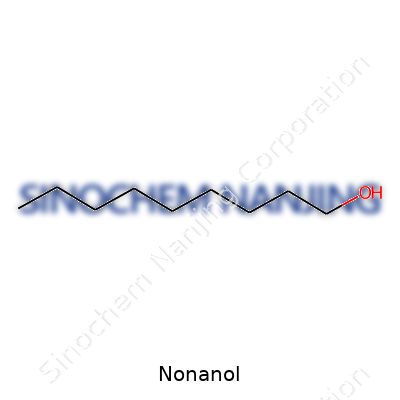
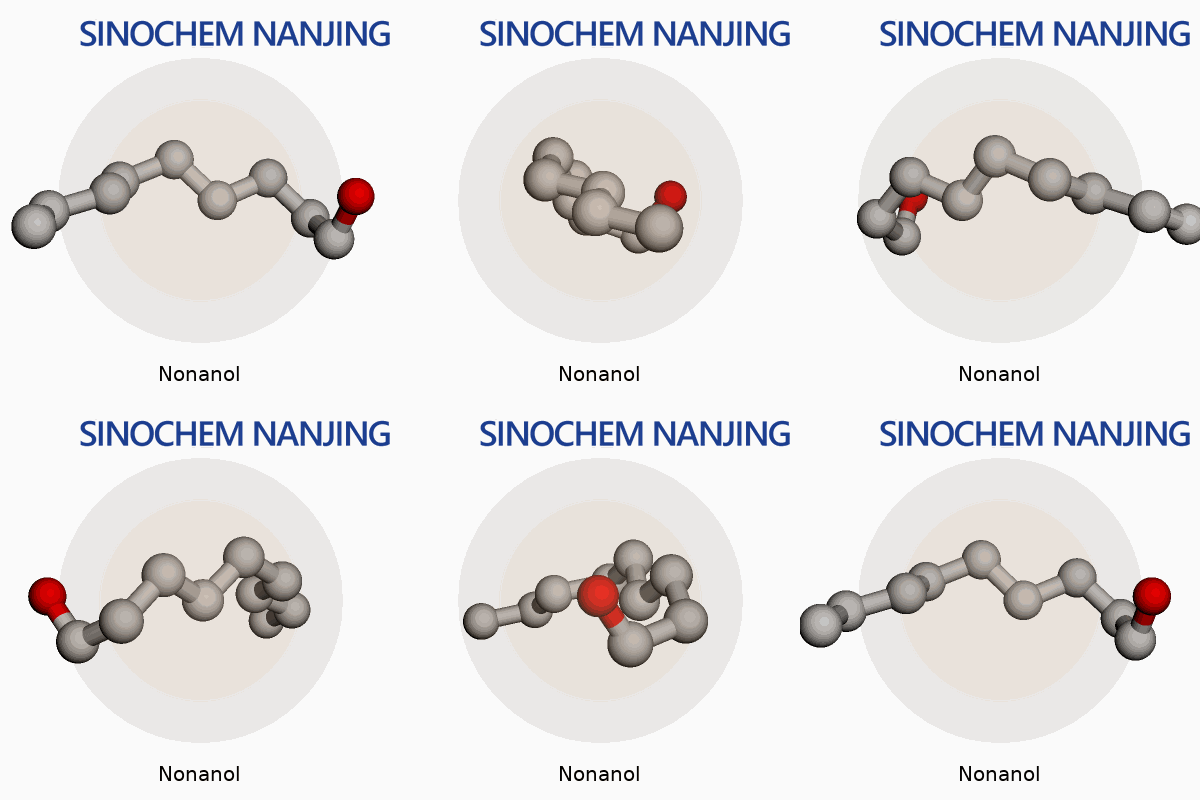
| Names | |
| Preferred IUPAC name | nonan-1-ol |
| Other names |
Pelargonic alcohol 1-Nonanol n-Nonanol |
| Pronunciation | /ˈnəʊ.nə.nɒl/ |
| Identifiers | |
| CAS Number | 143-08-8 |
| Beilstein Reference | 1840807 |
| ChEBI | CHEBI:28661 |
| ChEMBL | CHEMBL14305 |
| ChemSpider | 7026 |
| DrugBank | DB03061 |
| ECHA InfoCard | EC Number: 203-913-4 |
| EC Number | 203-913-4 |
| Gmelin Reference | 5310 |
| KEGG | C06519 |
| MeSH | D009642 |
| PubChem CID | 8121 |
| RTECS number | RA0175000 |
| UNII | 8A9H1N6M1O |
| UN number | UN1993 |
| Properties | |
| Chemical formula | C9H20O |
| Molar mass | 144.25 g/mol |
| Appearance | Colorless oily liquid |
| Odor | rose-orange |
| Density | 0.829 g/cm³ |
| Solubility in water | 0.021 g/100 mL (20 °C) |
| log P | 3.61 |
| Vapor pressure | 0.053 mmHg (25°C) |
| Acidity (pKa) | 16 |
| Basicity (pKb) | 4.50 |
| Magnetic susceptibility (χ) | -59.0e-6 cm³/mol |
| Refractive index (nD) | 1.460 |
| Viscosity | 5.29 mPa·s (25 °C) |
| Dipole moment | 1.85 D |
| Thermochemistry | |
| Std molar entropy (S⦵298) | 322.2 J·mol⁻¹·K⁻¹ |
| Std enthalpy of formation (ΔfH⦵298) | -328.8 kJ/mol |
| Std enthalpy of combustion (ΔcH⦵298) | -6130.7 kJ/mol |
| Pharmacology | |
| ATC code | D04AA05 |
| Hazards | |
| GHS labelling | GHS02, GHS07 |
| Pictograms | GHS07,GHS09 |
| Signal word | Warning |
| Hazard statements | H315, H319, H411 |
| Precautionary statements | P210, P280, P301+P312, P305+P351+P338, P370+P378 |
| Flash point | 96 °C |
| Autoignition temperature | 220 °C |
| Explosive limits | Lower: 0.7%, Upper: 5.3% |
| Lethal dose or concentration | LD50 oral rat 3200 mg/kg |
| LD50 (median dose) | LD50 (median dose): 3200 mg/kg (oral, rat) |
| NIOSH | RN:112-05-0 |
| PEL (Permissible) | PEL (Permissible Exposure Limit) of Nonanol: "5 ppm (skin) |
| REL (Recommended) | 10 ppm |
| IDLH (Immediate danger) | 350 ppm |
| Related compounds | |
| Related compounds |
Octanol Decanol |



