The Expanding Story of N-Pentylamine: From Origins to Opportunity
Looking Back: N-Pentylamine and Its Place in Chemistry’s Timeline
N-Pentylamine didn’t turn up out of the blue. Chemists started paying attention to this straight-chain amine long ago after broader research into alkylamines revealed just how useful these molecules could be. Early on, most of the focus fell on shorter chains like methylamine and ethylamine because they found quick use in dyes, pharmaceuticals, and cleaning agents. As the knowledge base grew, labs realized the mid-length chains offered properties that straddled the volatile lightweights and the heavier, more inert big chains. Eventually, N-Pentylamine, also known as 1-aminopentane, earned attention both for its potential in organic synthesis and as an ingredient that could act as a bridge between high solubility and manageable reactivity. The way N-Pentylamine has made its way into countless research papers hints at its adaptability; its pathway parallels the rise of synthetic intermediates that shaped twentieth-century chemical industries.
What N-Pentylamine Looks and Acts Like
The compound comes as a colorless to slightly yellowish liquid, with a distinct, almost fishy odor that’s hard to forget after one close whiff. It carries the basic traits of other primary amines, with the amine group at one end of a five-carbon straight chain. You see its boiling point climbing to about 104°C, and it mixes quite well with water and most common organic solvents. The chemical's volatility and low viscosity mean it pours easily but also evaporates if left uncapped. I once opened a modest sample bottle in a cramped storeroom, and the scent hung in the air for hours; that’s a clear sign not to underestimate its vapor pressure. Anyone who’s handled volatile amines knows their aggressive nature – you ignore the sharp scent and liquidity at your own risk. N-Pentylamine stands as a perfect reminder that even less dramatic-looking chemicals need respect in a lab setting.
How Product Specs Matter on the Bench
Down in the nitty-gritty, labeling details on N-Pentylamine bottles tell you plenty: purity above 98 percent proves key if you plan on using it in pharma or advanced organic synthesis. Any reputable bottle spells out water content and the level of secondary amines, since these impurities skew reaction outcomes. If you’re working on reactions where every decimal matters, off-spec batches frustrate more than they help. I found out once, after using a cheaper, off-brand batch for reductive amination; the yield dropped and byproducts crept in. Technical sheets list the typical density, refractive index, and flash point, signaling the need for both accurate measurement and fire-safe handling.
Shaping N-Pentylamine: Manufacturing and Its Evolution
Big chem producers started manufacturing N-Pentylamine through methods that staple together selective reduction and nucleophilic substitution. Most industrial outfits start with 1-bromopentane or similar five-carbon alcohols, then drive nucleophilic amination using ammonia or other amines under controlled temperatures and pressures. Hydrogenation of pentanenitrile shows up in the literature as another pathway, leveraging strong catalysts to add the final hydrogen atoms. Years ago, I shadowed a plant manager who ran continuous-flow reactors for nitrile hydrogenations; the key lay in balancing catalyst quality and temperature, since overheating encouraged unwanted side reactions and wasted feedstock. Small errors can create a mess, but good technique pushes yields up and lets downstream users trust what they’re getting.
Reactivity: More Than Just an Amine
In hands-on synthesis, N-Pentylamine showcases open-ended chemistry. Chemists often use it for amide coupling or as a nucleophile for alkylation, pushing it into areas from surfactant manufacture to corrosion inhibitors. Pair it with strong acids, and you get N-pentylammonium salts with possible uses in ionic liquids or functional materials. I’ve used it when crafting substituted anilines, thanks to its ability to undergo reductive amination and various condensations. But the spectrum doesn’t stop there: Schiff base formation, acylation, and even polymeric applications have featured N-Pentylamine as a foundation. The chemistry rarely feels boring. You find older papers that dig into modifications like oxidation to pentanal or reactions with isocyanates, creating urethanes directly off the amine backbone. These possibilities keep the compound firmly embedded in applied organic labs.
The Names Game: Synonyms and Aliases in the Chemical World
Depending on what journal or bottle label you read, N-Pentylamine changes names like a seasoned traveler. 1-Aminopentane shows up frequently, along with n-Amylamine and API-5, each variant pointing to its five-carbon structure and amine group location. For anyone thumbing through legacy files or searching supply databases, these alternate names turn up due to different naming conventions used before International Union of Pure and Applied Chemistry (IUPAC) standardization took hold. I’ve had orders delayed after procurement confused “n-Amylamine” with secondary or branched forms—not a quick fix when you’re running a time-sensitive procedure. Aware staff know synonym searches can prevent costly mistakes.
Why Safety Protocols Can’t Slip
N-Pentylamine’s straightforward chemistry hides a stubborn risk profile. You’ll read on safety data sheets just how it irritates skin, eyes, and lungs, much like its shorter cousins. Spills or missteps can sting on contact, and in poorly ventilated spaces, the vapors create headaches and further complications. Flammability adds another layer; open flames and amine vapors make a dangerous mix. Older fume hoods and mismatched gloves let through more fumes and residues than you’d expect – and a sniff of the air or a rash after careless handling speaks louder than recommendations on paper. A culture of double-checking PPE, constant airflow, and careful storage reduces risk. Nobody wants to see a minor slip-up become a major health issue, and skipping glove changes or fume hood checks isn’t a shortcut anyone should take.
Application Fields: More Uses Than You’d Guess
If you look at who uses N-Pentylamine now, there’s no single industry that takes the stage. Pharmaceuticals use it as a starting block for more complex molecules, leaning on its manageable chain length for solubility and reactivity. Agrochemical research taps into it for making herbicide and pesticide intermediates, where the difference between useful product and dead-end is often dictated by which alkyl group gets attached. Surfactant makers use its amine backbone as a way to tailor solvent or emulsifier properties. Polyurethane researchers find its primary amine group provides just the right reactivity for slow-curing formulations, balancing flexibility with backbone strength. Even corrosion scientists check its properties, using it as an additive or stabilizer in metalworking fluids and lubricants. I’ve seen start-ups pivoting to use N-Pentylamine in ionic liquid blends, banking on its ability to tune miscibility and charge density for battery or extraction projects. The range is wide because its chemistry slots into so many design spaces.
What Research Tells Us—And What Remains a Mystery
Academic labs and industry R&D centers continue to tinker with N-Pentylamine’s abilities, pushing synthesis methodologies, material compatibilities, and novel functionalization routes. Reactions using green chemistry—like biocatalysts or flow-based microreactors—hold appeal since they can cut waste and raise safety margins. Computational chemists model amine reactivity to predict how chain length impacts reaction kinetics. In a brainstorming session with postdocs last year, discussions circled around the idea of customizing N-Pentylamine for niche pharmaceuticals or as an anchor for site-directed modifications. Yet, with every question researchers solve, more open up: environmental persistence, byproduct toxicity, and unknown downstream interactions keep ambitious teams on their toes.
Toxicity: Data Points and Open Questions
Researchers and safety officers spend real effort understanding how N-Pentylamine impacts health. Inhalation brings the typical burning sensation in airways, and skin contact creates rashes or uncomfortable burning. Studies using cell cultures report impacts at moderate concentrations, and animal toxicity studies identify dose thresholds where repetitive exposure begins to challenge liver and kidney function. Wastewater analysis exposes its presence downstream of pharmaceutical or chemical plants, prompting community calls for better detection and containment. Professional experience says: err on the side of minimal exposure. Responsible storage, prompt clean-up, and full respect for local regulations cut exposure risk. More data on chronic exposure, environmental breakdown, and metabolites would put minds at ease and let regulators fine-tune limits without overreach or gaps.
Tomorrow’s Opportunities—and the Watchlist
The future for N-Pentylamine feels as wide open as its synthesis chemistry. Market watchers predict that green synthesis routes and improved safety protocols will let it settle into new production niches, possibly for advanced energy storage, specialty polymers, or sustainable agricultural aids. Digital chemistry speeds up candidate screening, promising new derivatives and reaction families. That said, regulatory scrutiny will only grow since downstream effects keep coming into sharper focus. Chemical firms can invest more in closed-system handling, on-site treatment for residues, and transparency with communities. With so many compounds competing for attention, N-Pentylamine’s versatility and history give it a head start, but clear-eyed risk management and inventive process design will decide how it carves out its next chapter.
What is N-Pentylamine used for?
What Makes N-Pentylamine Practical Across Industries
Walk into any chemical supply catalog, and N-Pentylamine usually doesn’t steal the spotlight. It’s not a household name. Still, once you start asking specialists or glancing at patents, the picture changes. For chemists, N-Pentylamine sits on the shelf as a five-carbon primary amine, bringing a flexible backbone for all kinds of reactions.
It stands out in pharmaceutical labs. Drug makers rely on building blocks that won’t throw a wrench in synthesis, and N-Pentylamine fits this job. With its straightforward structure, it often goes into the early stage of drug design as a raw ingredient. Chemists attach it to different molecules, testing new candidates for everything from blood pressure pills to cancer drugs. Its role matters not because it brings some magic on its own, but due to how easily it joins larger, complex molecules. Years of experience in a research lab show that simple amines speed up the design cycle. That’s a precious advantage when cost and timelines can decide if a medicine even gets developed.
N-Pentylamine in Agriculture and Industry
There’s a world beyond medicine, though. Crop protection companies lean on N-Pentylamine as an intermediate when making herbicides and fungicides. Plenty of students in my college classes aimed for work at agrochemical companies, and I saw first-hand how modern food production depends on reliable supply of chemicals like this one. Its structure allows fine-tuning of pesticide molecules. Small tweaks improve how long a product lasts or how well it breaks down, reducing harm to the environment.
Manufacturers also find it useful for surfactant creation. Surfactants change how water interacts with surfaces, so they matter in cleaning products and paints. N-Pentylamine helps build these, lending flexibility to end formulas. Electronics makers preparing specialty coatings use it for similar reasons—fine control over surface properties without blowing up costs or dealing with toxic byproducts.
Safety and Handling Concerns
Most amines bring strong odors and can cause irritation. N-Pentylamine is no exception. Time spent in a process lab teaches respect for these traits. Proper ventilation becomes non-negotiable. Repeated exposure can sensitize the skin or respiratory system, so gloves and fume hoods become part of daily routine. And, because the chemical can catch fire, facilities enforce strict storage—away from open flames or oxidizing agents.
Fire safety officers remind us that N-Pentylamine boils at a relatively low temperature, producing vapors that can ignite at room temperature if not managed carefully. Sharing these lessons reminds producers and end-users that smart handling rules protect both workers and the public.
Toward Responsible Chemistry
Responsible sourcing and stewardship come up a lot these days, and for good reason. While N-Pentylamine is hardly unique in its risks, large-scale usage brings scrutiny. Chemical companies committing to greener processes keep looking for ways to replace hazardous solvents, recycle amine offcuts, and tighten emissions from their operations. Some invest in bio-based amines, reducing dependency on petrochemicals.
Transparency can go further. Disclosing safety data, tracking product through supply chains, and engaging with local communities make a difference. Anyone in the business of chemical production relies on trust—from farmers seeking better yields to patients hoping for reliable medicine. Handling foundational chemicals like N-Pentylamine with respect and openness fosters that trust long-term.
What is the chemical formula of N-Pentylamine?
Taking a Closer Look at N-Pentylamine
N-Pentylamine sounds a bit mysterious at first, but strip down the name and you get a clear picture. This compound belongs to a family called alkylamines. It comes together when you link a straight chain of five carbon atoms—known as n-pentyl—with an amine group. In simpler terms, N-Pentylamine forms when scientists swap a hydrogen atom on the end of pentane for an amino group (NH2). This change gives you a chemical formula of C5H13N.
Why This Matters Beyond the Lab
Anyone who remembers the smell of a high school chemistry classroom has probably met amines before. N-Pentylamine stands out in the lineup because of its structure. That straight chain of five carbons can change how it dissolves or mixes with other chemicals. People in pharmaceuticals, agrochemicals, and even specialty surfactants rely on the properties of this molecule. C5H13N doesn’t just sit in a flask—it can turn up in the supply chain and eventually in products that tackle pests, clean surfaces, or help drugs cross barriers in the body.
The Building Blocks Behind the Formula
The formula C5H13N isn’t just trivia for chemists. It points to a precise shape, one nitrogen atom attached at the tip of five linked carbons, with the rest padded out by hydrogen. This chain structure changes how the molecule behaves in the real world. Pentylamine holds onto its shape with simple bonds, but its amine group grabs attention because it likes to react. That makes it a useful starting point for producing new molecules.
Everyday Examples and Personal Insights
Years ago, I worked with similar amines during an internship in a research lab. Bottles with labels like C5H13N always demanded respect—decent ventilation was crucial, as amines pack a punch to your nose. It’s a reminder that handling these chemicals safely matters just as much as their structure. Today, n-pentylamine often works as a tool for researchers. Thanks to its manageable size and reactivity, it can be altered into a variety of other compounds. In medicine, that could mean attaching other molecular pieces to craft a drug with new effects. On the farm, it plays a role in building up agents that protect crops.
Importance of Chemical Literacy
Recognizing the formula C5H13N helps more people understand what’s in motion behind the scenes in different industries. Clear labeling and understanding promote safety across labs, factories, and even transport trucks. Chemical literacy lowers the risk of mistakes—something as small as wrongly storing an amine can spell trouble. Training workers well and keeping safety sheets updated pays off, especially as industries keep evolving.
Paths Forward for Education and Safety
Promoting hands-on chemical safety education makes a tangible difference for future lab techs and scientists. Easy-to-follow reference sheets, real-life simulations, and mentorship show how simple formulas connect to big consequences. Regulations about training and labeling already exist, but they can always improve through feedback from people working directly with these compounds. As technology progresses, better sensors and tracking systems can give real-time warnings to limit exposure and accidents.
Is N-Pentylamine hazardous or toxic?
Everyday Use and Why It Matters
N-Pentylamine shows up quietly in the background of various chemical and pharmaceutical operations. Most people have never handled it, but for anyone working in a lab or a facility that deals with industrial chemicals, understanding its risks is not just book learning—it’s about safety at work and at home. Having handled a lot of chemicals in research, I know that ignoring hazards, even with substances that don't seem terribly dangerous at first glance, sets people up for accidents.
Toxicity: What Science Says
N-Pentylamine has a distinct, fishy smell—hard to miss if you’ve ever come near it. Inhaling the vapor can irritate your respiratory system. Skin or eye contact causes painful burns, and swallowing even a small amount leads to nausea, abdominal cramps, or worse. According to the European Chemicals Agency (ECHA), the toxicity profile puts N-Pentylamine into the “harmful” category for both acute oral and inhalation exposure. Animal studies reveal that high exposure messes with the central nervous system, causing tremors and seizures at very high doses.
Hazard statements from chemical safety databases warn users to avoid breathing in the vapors, and wear the right protective gear—goggles, gloves, lab coats. Chemical Safety Data Sheets from suppliers emphasize the acute short-term effects. Memories from grad school, standing in the fume hood and double-checking glove integrity, don’t fade fast, especially after seeing what even a splash of a similar amine can do to unprotected skin.
Fire Risk and Reactivity
This chemical is also flammable. Mix its vapors with air in the right ratio, and you get an explosive situation. I remember seeing a demonstration where even a small flask of an amine caught fire after being left uncapped near a heat source. The lesson stuck: always store chemicals like N-Pentylamine away from flames or hot surfaces. Sprinkler systems and good air circulation aren’t luxury—they’re necessary for safety.
Environmental Presence
N-Pentylamine can break down in the environment, but not instantly. Spills in waterways threaten fish and aquatic invertebrates. Safety protocols at work involve quick containment and cleanup because even trace levels affect wildlife. In one incident I dealt with, a worker accidentally knocked over a beaker, and cleanup needed speed and precision—anything left behind risked entering the wastewater system, possibly harming more than just the lab crew.
Better Safe Than Sorry
Companies have found ways to lower risk by relying on good ventilation, routine air quality checks, and investing in spill response materials. I’ve worked in labs where a safety-minded culture meant nobody skipped hazard training, and people reported leaks or spills right away. Years spent teaching students about chemical hazards taught me to favor the “treat it as toxic until proven otherwise” mindset—that approach saved skin, eyes, and probably health down the line.
Steps to Stay Safe
Storing N-Pentylamine in tightly closed containers, using chemical fume hoods, keeping fire extinguishers handy, and wearing proper PPE (personal protective equipment) build in layers of protection. Employers can set up proper training and prepare for worst-case scenarios, like large spills or accidental exposure. These steps don’t just look good on a compliance checklist; I have seen firsthand how they protect people and the environment where rules get treated as habits, not as afterthoughts.
How should N-Pentylamine be stored?
Why Storing N-Pentylamine Safely Matters
N-Pentylamine doesn’t look threatening at first glance. It’s a clear liquid with a strong odor and no color. You’ll find it in research, pharmaceuticals, and specialty chemical labs. But under the surface, this amine brings a few headaches. People who handle N-Pentylamine know it’s flammable, has a low flash point, and reacts with acids and strong oxidizers. Improper storage invites fire and chemical accidents, so letting careless habits slip in can cost more than just stock—serious injuries and environmental damage have followed spills or fires.
Safe Storage Practices Built from Experience
In my years working alongside chemical storage techs, I’ve seen good setups and disaster zones. The best labs keep their N-Pentylamine inside tightly sealed containers—usually amber glass or HDPE bottles with strong screw caps. Glass cuts down on vapor escape, and the right plastic stands up to short aliphatic amines like this one. No one trusts a battered, mismatched solvent bottle; tiny cracks or wrong closures let out fumes or allow air to sneak in. The strong, fishy smell from a bad seal gives you a warning, but sometimes the first person to notice is the one who gets a headache or skin irritation.
These bottles belong in locked, flame-proof cabinets set apart from acids, oxidizers, and food areas. Checking chemical compatibility charts is not just busywork—it stops dangerous violent reactions. Putting N-Pentylamine near its chemical enemies can quickly go from a lazy shortcut to an emergency call. Storage areas that get hot—from summer sun or running equipment—only increase risk since its flash point sits low, around 40°C (104°F). Flammable storage cabinets with automatic closing doors turn a risky pile of bottles into an organized, safer zone.
The Role of Monitoring and Labeling
Teams should always flag N-Pentylamine with clear hazard labels: flammable, harmful, corrosive to skin and eyes. Labels matter for seasoned pros and new interns alike. I recall one warehouse mess where unlabeled bottles confused staff, and a mix-up with acids triggered a small fire. No one got hurt, but it raised stress and ruined the day’s work. Now, those teams double-check every label, and that habit spreads fast.
Routine checks help catch swelling bottles, loose caps, or sticky drips indicating leaks. Many places use digital inventory logs or QR codes to track chemical lifespans and recall expiry data. This traceability builds trust—managers and safety officers can track every container’s journey from shipment to disposal. Routine self-audits with checklists uncover problems before they turn hazardous.
Good Ventilation Lowers the Risk
A stale, cramped cabinet raises the risk fast. Proper storage goes beyond choosing the right bottle. Fireproof cabinets need built-in vents and often spark-proof fans to reduce vapor buildup. Chemical odors should never pool where people work. A robust air exchange system—tested and cleaned on a schedule—makes all the difference on busy days, when open containers and accidental splashes become more likely.
Training for Safe Handling
Books and online guides draw from accident reports, but nothing beats hands-on training. Walking staff through maintenance routines, chemical emergencies, and near-miss stories brings these rules to life. Nobody forgets cleaning up a surprise spill or donning a respirator for a stubborn vapor. Annual refreshers cement those skills. PPE—gloves, goggles, fitted masks—waits nearby, because even seasoned techs make mistakes after a long shift.
Chemical safety demands more than printed protocols. People earn trust by putting safety first with each shift. It’s about respect for the substance—and for everyone else in the building.
What are the safety precautions when handling N-Pentylamine?
Getting to Know N-Pentylamine
N-Pentylamine shows up in a surprising number of research projects and chemical syntheses. Its distinctive odor alerts you to its presence before the label on the bottle does. This stuff may look innocent in a glass bottle, but experience teaches respect for both its flammability and toxicity.
Personal Protective Gear Isn’t Optional
No matter how many times you work with N-Pentylamine, gloves, goggles, and a lab coat always come on before opening the container. The liquid vaporizes quickly and feels aggressive if you catch even a little whiff—respiratory masks make more sense than most people admit. Direct skin contact leads to redness, sometimes chemical burns if you don’t rinse quickly. Safety data from experiment and incident reports repeatedly point out increased risk of eye damage, so chemical splash goggles beat regular safety glasses every time.
Ventilation Keeps You Clear-Headed
Anyone handling volatile amines knows the cloud of fumes creeps out faster than you think. Always work inside a certified fume hood. Lingering odors in open air signal poor exhaust, and headaches plus sore throats tend to follow. People sometimes think cracking a window is enough. It isn’t. Years spent in shared research labs taught me to check air flow every day—the discomfort from a single misstep stays memorable.
Fire Risks: Don’t Underestimate the Flash Point
N-Pentylamine flashes up at low heats, so ignition sources have to stay far away. Forgetting to unplug a nearby hot plate turns experiments into emergencies. I’ve seen even experienced chemists reach for a lighter, not realizing an open beaker sits nearby—the spark and resulting flame jump aren’t easy to forget. Storing the chemical in flame-proof cabinets remains the safest habit, and keeping clear emergency exits never seems redundant, just smart.
Spill Stories Matter—Practice Fast Response
Spills happen. Early in my career, a jar tipped and announced its presence with a nosy amine smell throughout the room. Knowing where the eyewash and safety shower sit matters. Neutralizing agents like sodium bicarbonate sound technical, but grabbing them quickly makes a difference. Once the area’s clean, used towels and debris go in hazardous waste bins, never the regular trash.
Long-Term Exposure: Health Habits for the Future
Studies warn about repeated exposure—not just big accidents, but those everyday small splashes and vapor contact. Over time, they add up to chronic issues: headaches, breathing problems, even nerve symptoms. Regular medical checkups for anyone spending time with N-Pentylamine win over self-monitoring every time. Friends and colleagues have ignored early symptoms, brushing them aside, only to pay for it later.
Better Training, Fewer Surprises
Working with N-Pentylamine safely has little to do with how long you’ve handled chemicals and more with how solid your procedures are. Every new team member needs to review proper storage, disposal practices, and emergency steps. Written protocols matter, but open conversation in the lab about “what went wrong” builds experience before real trouble has a chance. If you see a shortcut being taken, speak up. Accountability beats regret.
Takeaways from Experience and Science
Every chemical demands caution, but N-Pentylamine comes with a personality you can’t ignore. Combine the lessons of clear safety data, firsthand spills, and the stories of those who’ve made mistakes. That’s how you work smarter, protect your health, and get home safe.
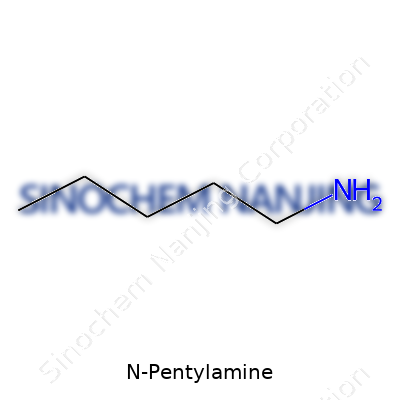
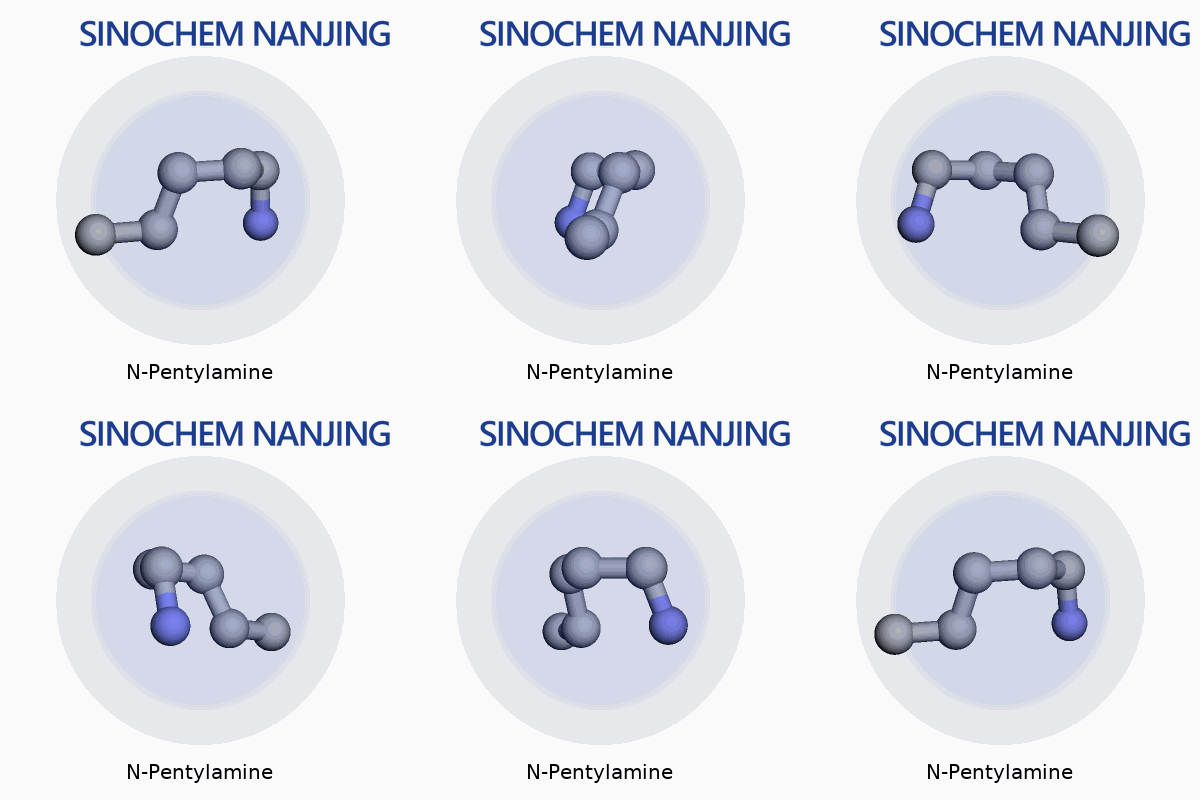
| Names | |
| Preferred IUPAC name | pentan-1-amine |
| Other names |
1-Aminopentane Pentylamine n-Amylamine |
| Pronunciation | /ɛnˈpɛntɪl.əˌmiːn/ |
| Identifiers | |
| CAS Number | 110-58-7 |
| 3D model (JSmol) | `"CCCCC[NH2]"` |
| Beilstein Reference | 1718739 |
| ChEBI | CHEBI:33141 |
| ChEMBL | CHEMBL15924 |
| ChemSpider | 11123 |
| DrugBank | DB03277 |
| ECHA InfoCard | 100.083.724 |
| EC Number | 203-683-8 |
| Gmelin Reference | 62297 |
| KEGG | C01781 |
| MeSH | D010410 |
| PubChem CID | 8056 |
| RTECS number | SK9625000 |
| UNII | 19N43J8X2R |
| UN number | UN1108 |
| CompTox Dashboard (EPA) | DTXSID6045884 |
| Properties | |
| Chemical formula | C5H13N |
| Molar mass | 87.16 g/mol |
| Appearance | Colorless to yellow liquid |
| Odor | fishy |
| Density | 0.759 g/mL at 25 °C |
| Solubility in water | soluble |
| log P | 0.99 |
| Vapor pressure | 3.12 kPa (at 20 °C) |
| Acidity (pKa) | 10.7 |
| Basicity (pKb) | 3.37 |
| Magnetic susceptibility (χ) | -6.2 × 10⁻⁶ |
| Refractive index (nD) | 1.406 |
| Viscosity | 0.423 mPa·s (20 °C) |
| Dipole moment | 1.35 D |
| Thermochemistry | |
| Std molar entropy (S⦵298) | 247.6 J·mol⁻¹·K⁻¹ |
| Std enthalpy of formation (ΔfH⦵298) | -78.6 kJ/mol |
| Std enthalpy of combustion (ΔcH⦵298) | -3587 kJ/mol |
| Hazards | |
| GHS labelling | GHS02, GHS05, GHS07 |
| Pictograms | GHS02, GHS07 |
| Signal word | Danger |
| Hazard statements | H226, H302, H311, H314, H331 |
| Precautionary statements | P210, P233, P240, P241, P242, P243, P261, P264, P271, P280, P303+P361+P353, P305+P351+P338, P311, P337+P313, P362+P364, P370+P378, P403+P235, P405, P501 |
| NFPA 704 (fire diamond) | 1-3-0 |
| Flash point | -9 °C |
| Autoignition temperature | 215 °C |
| Explosive limits | 1.1% - 8.9% |
| Lethal dose or concentration | LD₅₀ (oral, rat): 1,870 mg/kg |
| LD50 (median dose) | LD50 (median dose): Oral rat LD50 = 339 mg/kg |
| NIOSH | RN 110-58-7 |
| PEL (Permissible) | PEL (Permissible Exposure Limit) for N-Pentylamine: 5 ppm (18 mg/m³) |
| REL (Recommended) | 18 °C |
| IDLH (Immediate danger) | 100 ppm |
| Related compounds | |
| Related compounds |
n-Butylamine n-Hexylamine Aniline n-Propylamine |



