Taking a Close Look at N-Pentane: Beyond the Basics
Historical Development
The road to widespread use of n-pentane stretches back to the late nineteenth century, when chemists first separated hydrocarbon fractions from crude oil. N-pentane’s pure form drew interest almost right away, mostly due to its volatility and clear, colorless appearance. It earned a mention in early organic chemistry literature, as scientists such as Hermann Sachse explored its structure and potential. Refineries started isolating n-pentane more routinely with the rise of petroleum processing. My years in research have shown that chemists rely on stable suppliers, yet the historical curiosity around this molecule still shapes today’s demand.
Product Overview
N-pentane appears unassuming: a clear, mobile liquid at room temperature, throwing off a mild, gasoline-like odor. Industry workers know it as a convenient solvent and an agent for expanding foams, especially in the plastics sector. Its straight-chain molecular structure—with five carbons—makes it one of the simpler alkanes, yet its flammability and low boiling point set it apart from siblings like isopentane. Many users forget its roots are humble, sourced straight from natural gas or liquid petroleum via straightforward distillation.
Physical & Chemical Properties
Experience shows n-pentane doesn’t just stand out for its lightness—its physical and chemical traits have a real-world impact. The boiling point hovers just above room temperature, making storage and transport a logistical headache if safety steps fall short. Its low density (about 0.63 g/cm³) and high vapor pressure can cause rapid evaporation and accidental losses in open systems. Chemically, n-pentane belongs to the saturated hydrocarbon family, so it avoids the instability of unsaturated alkenes or alkynes, but this also limits its direct reactivity in some applications. In confined spaces, its volatility boosts risk, which shapes the rules workers must follow.
Technical Specifications & Labeling
Label accuracy makes more than just good business sense—it keeps facilities safe. Standard-grade n-pentane typically aims for purity north of 95%, though some processes demand higher. Any labeling should warn users about chemical class and critical hazards. Over the years, labeling practices matured from hand-written tags to standardized hazard pictograms and detailed material safety data sheets. In manufacturing, even tiny shifts in composition can change how n-pentane behaves in sensitive chemical syntheses or as a blowing agent. As a trained lab tech, I view rigorous product verification as a non-negotiable feature.
Preparation Method
Most modern producers pull n-pentane out of light petroleum fractions by distillation. The process leans heavily on careful temperature management since n-pentane boils at just below 36°C. Crude sources contain it alongside similar molecules, so separation requires both skill and automation. In some advanced settings, extractive distillation or molecular sieves help bump up purity, but cost and throughput always shape those decisions. My own experience suggests small labs sometimes rely on off-the-shelf refineries, since in-house isolation rarely beats commercial efficiency.
Chemical Reactions & Modifications
Even though n-pentane rarely sits at the center of flashy organic syntheses, its structure lets it serve as both target and tool in chemical work. Halogenation produces useful intermediates, but caution is key since reactions with chlorine or bromine can run hot and fast. Nitration opens another path for turning n-pentane into specialized chemicals. Real-world modifications in production settings focus less on step-by-step functionalization and more on blending n-pentane with other hydrocarbons to tune solvent power or evaporation rates. Skimping on quality here risks surprising reactivity or mixture instability.
Synonyms & Product Names
Shoppers for n-pentane might stumble across a handful of alternate monikers: Pentan, n-amyl hydride, or simply normal pentane. The “n-” prefix signals the straight-chain nature of the molecule, separating it from isopentane’s branched cousin. These distinctions matter in order placement or technical settings; mistaking one for the other in a production recipe sometimes triggers unexpected behavior in polymers, extraction processes, or lab analysis. In my circles, this has prompted more than a few late-night troubleshooting sessions that traced back to misunderstood naming on shipment manifests.
Safety & Operational Standards
Simple hydrocarbons lure workers into underestimating risk. N-pentane’s low flash point spells trouble in warm labs, storerooms without venting, or workplaces handling open flames or static discharge sources. I’ve seen small spills “flash” unexpectedly when workers ignored ground rules. Standard storage calls for cool, dry, well-ventilated conditions—simple precautions, but crucial. Workers should don flame-retardant gear and monitor for leaks since n-pentane vapors hug the floor, sneak into cracks, and build up fast. Keeping detailed incident logs, running routine fire drills, and reviewing container integrity form the backbone of operational safety.
Application Area
N-pentane’s reach spreads across industries—from plastics and adhesives to laboratory analysis and fuel blending. The plastics industry, especially producers of expanded polystyrene and polyurethane foams, relies on n-pentane to create lightweight, energy-absorbing materials for insulation or packaging. In labs, its low boiling point makes it a handy solvent for chromatography, sometimes for extraction of plant oils or test compound purification. Refinery engineers mix n-pentane into gasoline blends to meet volatility specs. While each industry faces pressure to cut emissions and tighten waste controls, n-pentane’s performance often outweighs the push for tighter restrictions due to few practical alternatives in certain uses.
Research & Development
The chemistry world never sits still. Researchers keep hunting for cleaner, safer replacements with similar properties and low environmental footprints. At the same time, tech teams look for ways to capture, recycle, or better contain n-pentane emissions, whether by upgrading holding tanks, rethinking foam production, or dialing in distillation to reduce waste. Some labs dig into surface chemistry, hoping to design catalysts that use n-pentane not just as a feedstock, but as a pathway to valuable specialty chemicals. Cutting-edge projects push to reuse pentane-rich gas streams from natural resources to minimize flaring and boost yield.
Toxicity Research
Treading the line between utility and safety, n-pentane ranks low on direct acute toxicity, but the wider health picture proves more complicated. Extended inhalation can depress the central nervous system. Headaches, dizziness, and, in rare cases, unconsciousness can result from poor ventilation or lax handling. N-pentane’s low solubility in water doesn’t eliminate risk since spills still threaten aquatic life by forming surface films. Studies led regulators to classify it as a substance of concern, especially as an air pollutant in workplace settings. Ongoing monitoring by occupational health experts and public agencies keeps the safety spotlight shining bright.
Future Prospects
Scrutiny on volatile organic compounds nudges manufacturers and users to invest in greener practices. Ventless foam production, improved solvent recovery, and biobased pentane analogues hold promise, but big changes move slowly when infrastructure and economics drive the timetable. Demand for lighter, high-performance insulation links directly to building codes and energy mandates, so n-pentane stands poised to stick around for years. The challenge centers on pushing for tighter handling protocols, improved recycling, and a shift toward circular material streams. Trust in n-pentane’s future relies not just on its chemistry, but on our willingness to innovate beyond comfort zones, weaving technical know-how with a deep commitment to health, safety, and environmental care.
What is N-Pentane used for?
The Hidden Star in Everyday Products
Pop open a cooler made of hard white foam, and N-pentane played a part in creating it. This clear, highly flammable liquid steps into action as a blowing agent for expanded polystyrene and polyurethane foams. Insulation companies seek out N-pentane because it shapes those lightweight, rigid panels that keep our food cold and our buildings energy efficient. I remember watching roofers fit thick foam board beneath shingles last summer, sweating under the hot sun, relying on N-pentane’s properties for both performance and cost savings. The role it plays doesn’t stop at construction; it finds its way into those inexpensive cups and takeout containers, the ones my kids fill with soda after soccer practice.
The Quest for Greener Blowing Agents
Health and safety top the list of concerns with N-pentane. Unlike older chlorofluorocarbons, N-pentane doesn’t eat away at the ozone layer. That improvement matters: people set out to phase out ozone-harming chemicals after scientists tied them to thinning above the Antarctic. Governments, manufacturers, and consumers all demanded safer options in the 1990s. N-pentane became the answer for many companies pivoting away from the worst offenders. Even so, fire marshals and safety experts keep a close eye, since N-pentane’s low flash point means the smallest spark can set off a blaze. The pungent fumes hang heavy in my mind—walking past a loading bay once, I caught a whiff as workers filled up tanks for foam production, and it reminded me of gasoline spilled at a station.
High-Octane Dreams and Lab Realities
Refineries use N-pentane to help grade fuels. It’s essential in measuring octane numbers, the standard for fuel quality. I spoke to a chemical engineer friend in Texas who explained they needed N-pentane for separation steps to get clean gasoline streams that meet strict specifications. If you fill up at any gas station, N-pentane ran through the refinery pipes behind the scenes. In school chemistry labs, N-pentane shows up in lessons about volatility and hydrocarbon separation. University students run it through glass tubes to watch liquid boil rapidly, demonstrating just how easily this molecule slips from liquid to gas. No fancy tricks—just the basics of chemistry at work.
Weighing the Risks and Moving Forward
Concerns about air pollution hang over industrial sites that use N-pentane in bulk. On windless days near factories, you can sometimes catch the sharp scent floating across neighborhoods. Workers face exposure risks, so regulations push for proper ventilation and leak detection. If a spill happens, the local fire department can be stretched thin fighting fast-moving flames. Even for those not living close to an industrial zone, N-pentane’s journey from production to final use ties into climate change discussions. Compared to its older chemical cousins, it stands out for not trapping heat in the atmosphere. Still, the drive grows for solvents and agents that won’t risk fire or health.
New startups and big companies experiment with alternative blowing agents. They invest in closed systems, capture technology, and materials that skip flammable solvents altogether. The real challenge: keeping consumer prices low while meeting ever-tougher safety rules. My personal hope leans toward breakthroughs that cut reliance on hydrocarbons for everyday goods, lessening harm and opening new paths for innovation. For now, N-pentane stands as a practical tool but not the final answer in safe, sustainable manufacturing.
What is the chemical formula of N-Pentane?
Understanding N-Pentane
People often ask about the formula for n-pentane, especially those working in labs, involved in fuel research, or even curious about daily products like lighter fluid. The chemical formula is C5H12. This single formula holds more weight in real life than many folks realize. N-pentane belongs to the alkane family, sharing its group with methane, ethane, propane, and butane. Each jump in carbon atoms brings new uses and risks.
Where Everyday Life Meets N-Pentane
Seeing n-pentane as just C5H12 sort of misses the bigger picture. This compound pops up in situations far from chemistry class. I’ve seen it as part of insulation foam production, where it helps expand polystyrene. That’s in walls, coffee cups, and packaging that protects electronics. N-pentane gives foam its puffiness, but also brings flammability concerns. Labs across the country use n-pentane for chromatography and solvent extraction. It evaporates quickly, making it a favorite for separating chemicals.
Risks Go Hand-in-Hand With Chemistry
C5H12 looks harmless as a formula, but the risks are real. Industry accidents involving n-pentane have made me respect the rules. It lights up easily and burns with an invisible flame, so trained hands handle it away from sparks or static. Inhalation brings headaches and dizziness. Anybody storing or using this solvent indoors must think about ventilation. Safety Data Sheets always stress eye protection and gloves, reminders every chemist grows up with. Fire departments invest in proper training for hydrocarbons exactly like this because mistakes mean sirens and unhappy next-door neighbors.
N-Pentane Shapes the Energy Sector
Oil refineries pull out n-pentane during crude distillation. Its five carbon chain puts it in regular gasoline at the pump. Engine knock resistance falls with higher amounts, which limits how much refineries can blend in for cars. I once toured a plant where operators told stories about slight shifts in pentane levels throwing off product quality. Balancing these hydrocarbons takes vigilance, computers, and a dose of old-fashioned expertise.
Better Solutions and Smarter Use
Following strict rules protects workers and the public. Better fume hoods, workplace sensors, and fire detectors make labs and factories safer than they used to be. Some chemical plants have looked to less-flammable blowing agents for insulation, thinking about both climate and explosions. N-pentane still serves a purpose—but green chemistry keeps pushing the field forward. Training sessions and clear labeling reduce confusion.
What the Formula Teaches
At a glance, C5H12 gives structure to n-pentane. In practice, it connects to daily convenience, energy supply, and plain old safety. Knowing the chemical formula gets you only part of the way. The rest comes from using that knowledge with common sense, science, and a little respect for what five carbons and twelve hydrogens can do.
Is N-Pentane flammable or hazardous?
What People Need to Know About N-Pentane
Most folks don’t bump into n-pentane while shopping for groceries, but it pops up in quite a few industries. This clear, colorless liquid finds its way into products like insulation panels, aerosol propellants, and some lab settings. Ask around at any foam manufacturing plant, and someone’s probably got a story about handling n-pentane. If you ever caught a whiff of gasoline, you’ve smelled something pretty close—n-pentane belongs to the same family of hydrocarbons.
Flammability: Not Just a Technicality
N-pentane’s biggest headline is its flammability. It catches fire at temperatures lower than a summer sidewalk, about 36°C (just under 97°F). That means a spark, a cigarette, or even a hot piece of machinery nearby creates a serious risk. Old habits like using a phone in the work area or skipping the proper grounding for equipment set the stage for a flash fire.
According to the U.S. National Institute for Occupational Safety and Health (NIOSH), just a small leak into the air can produce vapor concentrations that exceed the lower explosive limit—the point where an errant flame can turn routine work into disaster. Serious employers hammer this lesson home during safety training: treating n-pentane like it’s safe to splash or breathe is asking for trouble.
Health and Environmental Hazards
Inhaling n-pentane won’t just leave you with a headache. Workers exposed to enough vapor can experience dizziness, nausea, and even pass out. Extended exposure, even at levels below what you’d notice right away, can slowly wear down your nervous system. I’ve heard stories from folks who spent time around open vats during their early careers—none of them want to repeat the experience.
Spills spread fast, racing across concrete floors and into drains. With n-pentane floating on water, a puddle can speed towards ignition or slip out into the environment. Some states flag this stuff for hazardous waste handling, so dumping it in the trash or down the sink doesn’t cut it.
Managing the Risks: Practical Strategies
Folks getting their hands dirty with n-pentane need the right gear and a good sense of caution. Fire-resistant clothing, goggles, and gloves offer a layer of protection, but ventilation matters even more. Fume hoods, explosion-proof fans, and strict no-smoking policies provide a strong defense against fires.
Spill kits designed for chemical hazards, regular safety drills, and clear labeling of storage areas help keep accidents from turning ugly. Some plants swap n-pentane for less volatile chemicals when possible, but performance and price often drive decisions. At the bare minimum, chemical-resistant storage containers, separate from ignition sources, become a must. A sign reminding everyone of the dangers can’t hurt, either.
Real-World Responsibility
N-pentane does its job in modern manufacturing, but letting safety slide creates too much risk for everyone nearby. Whether it’s in a research lab or a bustling factory, respect for its fire hazards and health risks comes down to knowledge, preparation, and teamwork. A focus on training, careful storage, and fast response to spills or leaks puts safety first.
What are the storage and handling requirements for N-Pentane?
The Hazards N-Pentane Brings
N-Pentane has a simple formula, but anyone who’s worked around chemicals knows that simplicity on paper doesn’t always mean safety in practice. This clear liquid evaporates quickly at room temperature. Breathing in those vapors for a few hours? Headaches, dizziness, or even worse—loss of coordination—start to kick in. Fires love pentane’s low flashpoint. Once it creeps into the air above 9°C (about 48°F), a static spark or stray flame becomes a real threat. You have to respect its volatility because a simple mistake—like opening a drum near a heater—can set off an explosion.
Avoiding Trouble Starts with Smart Storage
So, where do you keep something with these risks? Store pentane in a spot built for flammable goods. Metal drums and containers with tight, secure lids matter a lot more than someone might think. The storage area shouldn’t roast in the sun; shade and solid ventilation stand between you and disaster. Watch out for static build-up. Static discharges carry enough juice to set vapors off, so use bonded and grounded storage containers. No open flames, no powered tools throwing sparks, no mobile phones in the vicinity. Signs and doors reminding everyone about the flammability aren’t just red tape—they save lives.
Good Handling Habits Save More Than Inventory
Pouring pentane isn’t like topping off your lawnmower. Start with eye protection, gloves, and flame-retardant clothing. Every time I’ve seen corners cut, it’s usually during transfer. People rush through a drum swap or hose connection, thinking they’re fine because “it only takes a second.” But a spill or splash can burn skin or leave behind enough vapor to cause real problems. Fume hoods matter for a reason. If pentane spills outside or inside, the fumes spread faster than most expect. Forced-air ventilation clears things out quickly, but it’s the habits—shutting containers right away, cleaning up minor leaks, warning the next shift—that make the real difference.
Hazardous Waste, Hazards for the Long Run
Pentane isn’t something you wash down the drain. Its vapors, if left unchecked, pollute the air and create health risks. Proper disposal means working with chemical waste professionals who collect and transport flammable materials in line with local laws. Label drums, seal them tight, and keep the fire department’s number posted by the exit. More than once, I’ve seen places fined for treating pentane like regular trash. Penalties sting, but environmental damage and dangerous work conditions have far worse consequences.
Mitigating the Risks
Training isn’t a one-time thing. Refreshing safety drills on handling spills, fire response, and first aid needs to stay part of regular operations. Anyone handling drums or pumps gets clear instructions on what to do in a leak or fire. Emergency showers and eyewash stations save minutes nobody has in a crisis. Inspections do more than check boxes; they catch corrosion, faulty seals, or blocked ventilation before trouble erupts.
For places using pentane, the science is clear. Respect the hazards, follow good storage guidelines, and enforce strict personal safety measures. It doesn’t take much to prevent an accident—just the steady pressure of doing things right, every shift, every day.
What are the typical purity levels available for N-Pentane?
Understanding Practical Purity Grades
In labs and manufacturing plants, N-Pentane shows up in drums with simple numbers stamped on the side—96%, 98%, sometimes even 99.5% purity. These numbers mean more than just chemical compliance. Years spent troubleshooting projects taught me most users check the purity level first before deciding if the material makes the cut.
Right at the base, you’ll see N-Pentane offered at “technical grade”—usually between 85% and 95%. At this level, the product works for cleaning or certain extractions where trace impurities don’t cause problems. Paint removers and industrial solvent blends sometimes use this quality. Price stays lower because the extra costs of fine purification steps aren’t baked in.
Why 97%-98% Keeps Showing Up
Stepping up just a notch, the 97% or 98% purity option appears almost everywhere. This combination of cost and quality draws in foam manufacturers and firms making polystyrene or polyurethane panels. Slightly higher in pentane content and lower in cyclopentane or hexane, this grade lets engineers hit tight blowing agent specs without driving up production costs. A well-known insulation producer shared that every fraction of lost purity starts eating into foam quality. They lock into this range because it’s the line between affordable production and reliable material output.
Ultra-High Purity: Where Labs Refuse to Compromise
Then there’s the rarefied air of 99%, 99.5%, and even 99.9%. In chromatography labs, GC/MS machines need every drop as pure as possible since even small leftovers can throw results. Fine chemical synthesis work depends on this grade because trace contamination changes reactions and messes with repeatability. My own work in sample prep made this crystal clear—sloppy solvents mean wasted time tracking ghost peaks in data files. That’s why specialty wholesalers charge a premium dollar for these grades.
Purity Levels Affect More Than Just the Finished Product
Relying solely on the label leaves some manufacturers open to problems. Some suppliers state an “assay” value, but if you dig deeper into the certificate of analysis, certain unknowns may slip through if the test ranges don’t cover every impurity. For some customers, knowing what types of contaminants—such as benzene, sulfur, or water—ride along with the pentane matters as much as the raw purity number. I’ve seen water traces shut down a polymerization reaction, costing days in lost work.
How the Industry Addresses Impurities
Quality-focused buyers request detailed batch reports and work closely with reputable vendors who track every step of purification and packing. Some undertake in-house testing to double-check batch-to-batch consistency. A large facility might even reserve several grades to match process stages: 98% for bulk production, higher grades reserved for high-sensitivity work. Safety teams also weigh impurity risks when planning fire mitigation or environmental protections, especially if co-solvents increase volatility.
Making Informed Choices
Choosing purity level isn’t just about strict technical specs, but about matching the numbers to the real risk profile and costs of the operation. Overbuying leads to wasted money, underbuying turns into downtime or failed quality checks. Staying in touch with reputable suppliers, reading the fine print on every drum, and never hesitating to order a validation sample—all these steps keep supply chain mishaps at bay. In competitive manufacturing or research, attention to these details keeps the workflow smooth and avoids surprises that echo all the way to the end user.
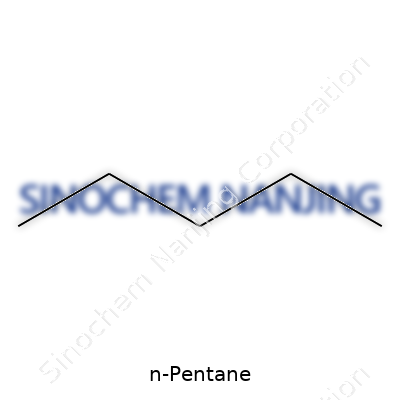
| Names | |
| Preferred IUPAC name | pentane |
| Other names |
amyl hydride n-amyl hydride pentane normal pentane |
| Pronunciation | /ɛn-ˈpɛn.teɪn/ |
| Identifiers | |
| CAS Number | 109-66-0 |
| Beilstein Reference | 605926 |
| ChEBI | CHEBI:15535 |
| ChEMBL | CHEMBL1358 |
| ChemSpider | 7437 |
| DrugBank | DB13855 |
| ECHA InfoCard | 100.003.274 |
| EC Number | 601-006-00-1 |
| Gmelin Reference | 80537 |
| KEGG | C08353 |
| MeSH | D010406 |
| PubChem CID | 8058 |
| RTECS number | RH9625000 |
| UNII | 8AOW792CNS |
| UN number | UN1265 |
| CompTox Dashboard (EPA) | P092647 |
| Properties | |
| Chemical formula | C5H12 |
| Molar mass | 72.15 g/mol |
| Appearance | Clear, colorless liquid |
| Odor | Gasoline-like |
| Density | 0.626 g/cm³ |
| Solubility in water | 0.04 g/100 mL (20 °C) |
| log P | 3.39 |
| Vapor pressure | 514 mmHg (20°C) |
| Acidity (pKa) | ~50 |
| Basicity (pKb) | > 10.26 |
| Magnetic susceptibility (χ) | -8.0×10⁻⁹ |
| Refractive index (nD) | 1.357 |
| Viscosity | 0.24 mPa·s (at 25°C) |
| Dipole moment | 0.00 D |
| Thermochemistry | |
| Std molar entropy (S⦵298) | 229.2 J·mol⁻¹·K⁻¹ |
| Std enthalpy of formation (ΔfH⦵298) | -146.4 kJ/mol |
| Std enthalpy of combustion (ΔcH⦵298) | -3509.6 kJ/mol |
| Pharmacology | |
| ATC code | V04CX13 |
| Hazards | |
| GHS labelling | GHS02, GHS07 |
| Pictograms | GHS02,GHS07 |
| Signal word | Warning |
| Hazard statements | H225, H304, H336, H410 |
| Precautionary statements | P210, P240, P241, P242, P243, P261, P271, P301+P310, P303+P361+P353, P304+P340, P331, P370+P378, P403+P235, P501 |
| NFPA 704 (fire diamond) | 2-4-0 |
| Flash point | -49 °C |
| Autoignition temperature | 260 °C (500 °F) |
| Explosive limits | 1.4 - 8.3 % |
| Lethal dose or concentration | LD50 oral rat 44600 mg/kg |
| LD50 (median dose) | LD50 (median dose): Oral rat LD50: 44600 mg/kg |
| NIOSH | NIOSH: RZ2100000 |
| PEL (Permissible) | PEL (Permissible Exposure Limit) of N-Pentane: 600 ppm |
| REL (Recommended) | 50 ppm |
| IDLH (Immediate danger) | 1500 ppm |
| Related compounds | |
| Related compounds |
Isopentane Neopentane Cyclopentane |



