N,N-Dimethylethanolamine: Behind the Science and Future Questions
Historical Development
Decades ago, chemical researchers searching for efficient intermediates stumbled upon N,N-Dimethylethanolamine (DMEA). It followed hard on the heels of other alkanolamines, but stood out for its dual-purpose structure. Early industrial chemists saw DMAE’s two methyl groups and a hydroxyl moiety as an opportunity—the molecule offered both a basic nitrogen and an alcohol functionality, which opened doors for its use in synthesis and material modification. As the chemical industry matured through the middle of the last century, DMEA grew popular within sectors dealing with resin production for coatings and water treatment. I remember old journals raving about its efficiency and the yield improvements it brought to phenolic resin catalysts. Its early growth tells a familiar story: a simple molecule finding its way not through hype, but utility.
Product Overview
Scan through warehouse shelves at any supplier, and DMEA appears in drums or intermediate bulk containers, labeled for industrial use. It works behind the scenes in far more applications than headlines ever mention. Formulators in adhesives, coatings, and high-performance foams have long favored DMEA for its functional versatility. In textile finishing and as a pH buffer in water-based systems, it smooths out process variables that can otherwise derail batch consistency. It lacks flash, but few chemicals serve such a broad range without demanding elaborate handling procedures.
Physical & Chemical Properties
DMEA comes as a colorless, slightly viscous liquid at room temperature, packing that distinct amine odor—sharp enough to catch unwary noses in the lab. Its boiling point floats around 134°C under atmospheric pressure, which is a practical range for industrial processing and keeps most transport straightforward. Water solubility and miscibility with a range of solvents add to its value, particularly where product blends require homogeneity. Its molecular weight hovers just over a hundred, and its moderate basicity—rooted in the tertiary amine—drives a lot of its performance in pH control and catalysis.
Technical Specifications & Labeling
On spec sheets, DMEA tends to clock in at purity levels above 98%, with water as the main impurity. Detailed technical documentation outlines not just methyl and ethanol group content, but also limits for color and amine value. Labeling, driven by global harmonized standards, warns of its irritant qualities—eye and respiratory exposure can spark discomfort—and flags it as a combustible liquid. Anyone handling the product at scale wears PPE, lab coats, and face shields as a matter of routine, and procedure manuals hammer home the points on ventilation and spill management. Having worked with small-batch blending myself, I’ve seen how a casual attitude can nudge workplace safety from respectable to risky in a hurry.
Preparation Method
Production usually involves the reaction of dimethylamine with ethylene oxide, under careful control to prevent ethylene oxide’s notorious hazards from running out of hand. The reaction generates significant heat, so plant operators rely on extensive cooling and precise metering to keep everything within safe operating ranges. Avoiding runaway reactions isn’t just practice—it’s policy in every plant with a good record. Once the reaction finishes, purification by distillation or fractionation removes most by-products. Efficiency matters, not only for cost but for minimizing waste streams that pose their own downstream disposal challenges.
Chemical Reactions & Modifications
DMEA’s reactive nitrogen and alcohol groups mean it performs as a useful nucleophile in organic synthesis. It undergoes quaternization to form quaternary ammonium salts, valuable in surfactant chemistry. Its hydroxyl group reacts with acids to form esters, which can further tailor properties in specialty chemicals. Modifying the core molecule often leads to improved compatibility or solubility in target formulations. Many research groups still explore new combinations, looking for twists in performance that could push coatings or water treatment further. DMEA’s flexibility ensures it rarely gets pigeonholed into just one application.
Synonyms & Product Names
Industry professionals know DMEA by several names, including Dimethylethanolamine, N,N-Dimethylethanolamine, and 2-Dimethylaminoethanol. Sometimes product labels just use “DMAE,” especially in documents out of North America, though that also stands for a supplement ingredient, which can get confusing. Cheminformatics databases link DMEA to a handful of structural isomers, but practical documentation almost always points back to its standard form.
Safety & Operational Standards
Over the years, industry oversight and agency guidelines have sharpened practices around DMEA use. The biggest risks revolve around inhalation and skin contact; short-term exposure leads to irritation, but chronic or high-level exposure remains less well-documented outside animal studies. Facilities handling drum or tank quantities follow strict ventilation guidelines and require chemical gloves rated for amine exposure. Emergency eyewash stations sit nearby blending areas, not as an afterthought, but as a standard measure. Some operations use process enclosures—simple, but effective—because no engineer wants to face an incident investigation. If I could stress anything for plant managers, it’s to keep training current. An accident here comes from shortcuts, not from the chemical itself misbehaving.
Application Areas
DMEA fills an odd role in multiple industries because it boosts performance in subtle, behind-the-scenes ways. Coating manufacturers rely on it as a resin crosslinking catalyst, making sure films cure evenly and with better end-properties. Water treatment engineers use it to balance pH, extend equipment life, and keep water quality above regulatory thresholds. Polyurethane foam production depends on amine catalysts—DMEA being high on the list—because without it, foam doesn’t rise or set predictably. Textile processing leverages DMEA as a finishing aid. I’ve seen firsthand how a tweak in DMEA dosage shifts batch outcomes in both resins and textiles, giving companies fine-tuned control over their products.
Research & Development
Ongoing research explores both new applications and safer manufacturing. Recent work in biomedical science hopes to adapt DMEA derivatives for use in drug delivery and imaging. Academics and industry collaborative labs run projects on better catalysts and lower-toxicity analogues, hoping to keep up with tightening international chemical regulations. Some universities explore greener routes of synthesis, seeking renewable feedstocks or less hazardous reagents. There’s a slow but steady migration toward products that match DMEA’s performance but reduce exposure risks. Funding and regulatory focus continue to shape the direction, and academic-industry partnerships play an outsized role in pushing beyond basic amine chemistry.
Toxicity Research
Toxicologists have spent years filling data gaps for DMEA. Acute exposure can lead to coughing, headaches, or eye pain, while high oral doses in animal testing can trigger central nervous system effects. Long-term exposure data in humans trails that available for simpler amines, making workplace monitoring especially important. Regulatory agencies in the US and EU set occupational exposure limits for DMEA, and product safety teams regularly reassess supplier data as new toxicity profiles emerge. As always, transparent communication with workers matters as much as PPE or ventilation. Having seen confusion flare over ambiguous safety data, I know that plain language and clear reporting serve teams far better than technical jargon or wishful thinking.
Future Prospects
DMEA’s future looks anything but static. Even as regulatory landscapes tighten and new green chemistry pushes take shape, manufacturers still see DMEA as a critical building block. The demand for advanced coatings, improved water treatment, and next-generation polyurethane foams all point to steady use. At the same time, the pressure mounts for safer, more sustainable options. Investments in process technology—including continuous reaction systems—promise safer, lower-waste DMEA production. New applications, such as energy storage materials and bio-based product development, could expand its reach. For chemists and engineers, the key lies in never settling for yesterday’s best practice. I expect the years ahead will see DMEA’s core utility complemented by smarter, safer, and more responsible approaches, with research bridging the gap between established needs and emerging challenges.
What is N,N-Dimethylethanolamine used for?
What N,N-Dimethylethanolamine Does in Industry and Daily Life
Chemistry runs behind the scenes in most things we count on. N,N-Dimethylethanolamine—often called DMEA—ranks among those compounds the average person rarely hears about. Yet, its fingerprints touch products and processes we all encounter. Whether you work in manufacturing or just want to understand your surroundings a little better, it helps to know what goes on behind the label.
Packed in Paints and Coatings
Walk into any hardware store, you’ll find rows of paint cans. The paint has to flow well, cover smoothly, and last through seasons of wear. DMEA helps with this by acting as a neutralizing agent for water-based paints and coatings. Its job is to stabilize the pH so paint doesn’t curdle, clump, or dry too quickly. Thanks to DMEA, coating runs smoother and holds color longer. In commercial production, the tiniest tweaks in a formula using DMEA can change how a paint feels under your brush or on your walls.
Helping Out in Water Treatment
In water treatment plants, people talk a lot about removing nasties from water or keeping scale from building up inside pipes. DMEA proves valuable as a corrosion inhibitor and pH adjuster in boiler systems. The compound makes sure pipes last longer and water stays safe. Old pipes can spring leaks or send rust into drinking water, but with the right chemicals—including DMEA—plants keep things flowing reliably. Clean water might not feel like a daily miracle, but it’s built on details like this.
Role in Pharmaceuticals and Personal Care
You might not spot N,N-Dimethylethanolamine on your shampoo label, but it could be there. DMEA often works as a pH buffer in cleaning products and skin-care formulas. Keeping the acidity or alkalinity in check protects both the product and your skin. DMEA also appears in certain creams aiming to smooth the appearance of skin, although there’s debate about how much it actually does for looks or firmness. More studies could nail down its effects, but it’s already clear that DMEA stands as a workhorse behind many bottles on bathroom shelves.
Common in Manufacturing and Rubber Goods
Manufacturers use DMEA to help create resins and polymers. These are materials found in everything from athletic gear to flooring tiles. During fabrication, DMEA adjusts the curing process, giving finished goods better resilience and flexibility. That means tires that grip the road a little better or shoe soles that bounce back just right. Getting this consistency means less waste, better products, and lower costs for buyers.
Looking Ahead: Safety and Solutions
Handling DMEA asks for respect like any industrial chemical. Workers wear gloves and goggles because contact may irritate the skin or eyes, and too much in the air isn’t good news for lungs. Regulations push companies to track chemical use and provide real safety data. Open conversations between chemists, health experts, and communities keep risks manageable. Safer alternatives sometimes make sense, but replacing a workhorse like DMEA depends on the job at hand and cost. The right balance comes from research, practical testing, and honest reporting—areas where collaboration between industry and science matters most.
Final Thoughts on Value
N,N-Dimethylethanolamine stands as a real backbone for multiple industries. Its impacts show in the durability of paint, the reliability of water systems, and even the creams on people’s shelves. Chemistry shapes products large and small, but understanding those ingredients helps everyone—whether managing a factory or just reading a label at home—to make decisions that benefit health, safety, and the bottom line.
Is N,N-Dimethylethanolamine safe to handle?
Why Handle N,N-Dimethylethanolamine with Care?
N,N-Dimethylethanolamine, often shortened to DMEA, turns up in plenty of chemical shops and industrial supply catalogs. Some use it for water treatment, others might mix it into coatings, resins, or even certain pharmaceuticals. I’ve spent years working with chemicals in a research setting, and a key lesson stuck with me from day one: never trust a chemical just because it doesn’t smell dangerous or look alarming.
Safety isn’t just a label or a checklist item. Every chemical, including DMEA, brings certain risks—ranging from irritating skin to causing breathing problems. DMEA gives off a strong amine smell, which most folks find harsh right away. This sharp odor isn’t just unpleasant; it signals the presence of vapor. If vapor can reach your nose, it’s likely reaching your eyes and lungs too. I recall one lab shift where someone spilled a few milliliters on the bench. Even after a rapid cleanup, my eyes watered, and my throat felt raw. That experience made me double-check the material safety data sheet (MSDS) before touching anything unfamiliar again.
Health Risks from DMEA Exposure
This chemical irritates skin, eyes, and airways. Extended or repeated skin contact can cause redness or even burns. Breathing in vapors brings on headaches and dizziness, sometimes even nausea. On rare occasions, folks who get exposed over many hours develop symptoms that hang around long after leaving the work area. These aren’t just horror stories from chemistry labs. Workers out in factories or plants, who move and mix this compound every day, run into such hazards a lot more frequently than most people realize.
Industry data and safety bulletins point out that this substance may also be absorbed through the skin in small amounts—something gloves are supposed to help prevent, but only if folks use the right kind. Ordinary latex gloves won’t cut it with DMEA; nitrile or neoprene offer more reliable protection.
Practical Protective Steps
Trying to avoid all contact hinges on laying out steady routines and clear responsibilities. I put goggles on the second a bottle or drum cap gets shifted. Proper gloves and an apron follow—spills don’t wait for you to get ready. A fume hood or well-ventilated workspace offers the best shield against vapor. Keeping a jug tightly sealed and kept far from open flames makes too much sense to ignore, since DMEA can catch fire above 85°C. In my experience, running through a mock spill drill once or twice a year helps everyone stay sharp and know where the safety showers and eyewash stations stand.
It’s tempting to treat routine chemicals with less respect than exotically named powders, but short-term lapses build up risk. Tinkering with procedures or reusing disposable protective gear invites trouble. When mistakes happen, they tend to find the person taking shortcuts.
Company Policy and Personal Vigilance
Organizations that put safety first train people thoroughly. They check material safety sheets, mark up storage cabinets, and keep incident logs. Personal vigilance matters just as much. Those working with DMEA should pay attention to how they feel during a shift. Any burning, stinging, or odd taste in the air points to too much exposure, and stepping outside or reporting it isn’t an overreaction.
DMEA isn’t the most dangerous solvent in the storeroom, but treating it lightly never pays off. I trust experience over labels—getting comfortable can lead to costly slips. The right gear, solid habits, and a respect for the facts stand between a normal shift and a miserable trip to the clinic.
What is the chemical formula of N,N-Dimethylethanolamine?
What’s Behind the Formula?
N,N-Dimethylethanolamine grabs attention because of its chemical formula: C4H11NO. Each piece of this formula tells a story about how the molecule behaves and interacts in real-world scenarios. Four carbons, eleven hydrogens, one nitrogen, and one oxygen—this lineup shapes its use in science and industry. The two methyl groups attached to the ethanolamine backbone change both the physical and chemical traits of the molecule. This subtle tweak gives it functions far beyond a simple amine or alcohol.
Where Real Life Meets Chemistry
My earliest dive into chemical research labs introduced me to odd-smelling bottles labeled with complicated names like N,N-Dimethylethanolamine. During syntheses, we leaned on the compound for its versatility. Its formula and structure make it both a weak base and a building block for chemical reactions. That dual nature supports its widespread use across sectors, like water treatment and pharmaceutical manufacturing. The nitrogen’s lone pair offers basicity, while the hydroxyl end opens up options for further chemistry. In industrial terms, this molecule doesn’t just sit on the shelf—it earns its keep.
Health and Safety Lessons from Hands-On Work
Safe handling deserves respect. Exposure to the compound can cause irritation in the eyes, skin, or respiratory tract, especially if lab workers skip proper precautions. Back in grad school, a forgotten pair of safety goggles once led to a couple of rough hours. The experience hammered home the message: chemical formulas mark more than theoretical puzzles—they tell stories about safety and real human health.
Why Precise Naming and Formula Matter
Knowing the exact chemical formula helps professionals avoid costly, even dangerous, mix-ups. My team once saw a junior co-worker reach for the wrong reagent thanks to a similar-sounding name. Double-checking details like C4H11NO doesn’t just save time—it safeguards entire projects. Regulatory guidelines lean heavily on formulas, not just casual labels, so strict attention to these identifiers keeps businesses compliant and workers protected.
Environmental Responsibility
Environmental regulations now play a bigger role in chemical storage and disposal than ever before. Waste treatment protocols for N,N-Dimethylethanolamine acknowledge both its reactive properties and its potential aquatic toxicity. It doesn’t take a PhD to realize that taking shortcuts with chemical waste invites larger problems down the road. Many companies now implement closed-loop systems or solvent recycling, which cuts down on waste and pollution. Clear labeling using the formula helps teams quickly identify and separate chemicals that need special handling.
Making Chemistry Inclusive and Accessible
There’s still work ahead for making plain-language education about chemicals the norm. I’ve seen too many talented folks shy away from chemistry because the jargon seems daunting. Spelling out what each part of a formula means, and showing real-world applications, lowers those barriers. Bridging knowledge gaps doesn’t require watering things down; it’s about connecting formulas like C4H11NO with everyday realities and safety-minded habits. That way, more people feel invited to the table, from students to seasoned engineers.
How should N,N-Dimethylethanolamine be stored?
The Reality of Storing Chemicals Like N,N-Dimethylethanolamine
Anyone who works with chemical supplies eventually learns to treat storage as seriously as any lab procedure. N,N-Dimethylethanolamine stands out as one of those substances that never lets you cut corners. As a liquid with a strong odor and plenty of industrial use (think corrosion inhibitors, water treatment, resins), it packs a punch. The safety data sheets aren’t printed just to fill a binder—you risk more than a ruined batch if you treat them as background noise.
Biggest Storage Risks Are Real—And Preventable
Talking to colleagues over the years, I hear the same horror stories: leaky barrels, vapor seeping into workspaces, headaches, evacuation alarms. With N,N-Dimethylethanolamine, the real headache comes from its reactivity. This liquid has a sharp smell and will pull water out of the air whenever it gets the chance. I learned early on to watch for rust rings or any container corrosion, because those are warning signs that the air’s too damp or the drums aren’t sealed tight.
Another lesson from experience—never store this material near acids or oxidizers. Once in my first warehouse role, a mistake in storing casks too close to peroxides set off a chain of phone calls, audit write-ups, and a tense health and safety review. Years later, that memory sticks with me any time someone suggests “temporary” chemical storage without clear separation by hazard class.
Simple Rules Make All the Difference
After enough years in materials handling, keeping it simple works best. Use containers designed for amines—steel with solid linings or clean polyethylene. Remember that this chemical can chew through poor seals and even metal if water gets into the mix. Reseal every drum after opening, and avoid using containers already exposed to acidic or oxidizing chemicals.
Cool, dry rooms—preferably with real ventilation—mean less chance of vapor build-up or dangerous condensation. Once, a poorly ventilated storage area forced an evacuation. Adding a ventilation system didn’t just meet compliance, it earned relief from everyone pulling shifts in that space. Scanning storage sites for temperature spikes or leaks matters as much as checking your instruments before a test batch.
People Make Storage Safe—Not Just Technology
It’s easy to believe technology solves everything, but vigilance and experience prevent accidents. I always train new hires to read labels every single time. No shortcuts. If a drum looks wrong or if anything doesn’t smell the way it should, it gets taken out of storage and checked. Rushed mistakes lead to big problems. Chemical burns and respiratory injuries remind everyone that you can’t undo a moment of carelessness.
Solutions That Stick—Not Just on Paper
Strict signage, clear chemical segregation, and a consistent labeling system have always worked. I recommend periodic walk-throughs, not just for compliance, but to reinforce a culture where everyone speaks up about small changes. Even simple moisture detectors near storage points give early warnings before problems grow into emergencies.
N,N-Dimethylethanolamine demands attention, not just rules. Listening to workers and responding fast makes safe storage more than a checklist—it becomes a habit that protects people and property every single day.
What are the potential health hazards of N,N-Dimethylethanolamine?
A Chemical Many Miss, but It’s Worth Attention
Walking through any hardware store, a lot of folks don’t realize how many chemicals play a part in making products last longer or work more efficiently. N,N-Dimethylethanolamine, or DMAE, fits this story. It shows up in everything from paint additives to personal care items and even some dietary supplements. That kind of versatility makes DMAE hard to ignore, but it is worth asking about the health price of using and being around it.
Contact and Exposure: Risks in Everyday Life
Spending time in manufacturing or working with cleaning agents often brings people close to chemicals like DMAE. Direct skin contact can quickly cause irritation, itching or redness. I’ve had co-workers complain about headaches and dizzy spells after a long afternoon in poorly ventilated workshops where these solvents are present. Eye irritation can start fast, before you notice any strange smells or stinging.
People breathing vapors might experience more than a simple runny nose. DMAE fumes can set off coughing and sometimes even cause throat irritation. I’ve come across warehouse reports where workers developed a persistent cough that only faded after better ventilation came into play. Handling concentrated liquids without gloves or goggles raises the odds of injury. Accidental splashes are more common than people think. If left unchecked, this kind of routine exposure can leave skin sensitized or more prone to breaking down protective barriers over time.
Long-Term Possibilities: Nervous System and More
DMAE shares a basic structure with choline, and inside the body, choline helps build cell membranes and supports the nervous system. Because of this similarity, some supplement makers market DMAE for “brain health” or focus support. The science behind that is shaky. High oral doses might bring nausea, insomnia, muscle tension and high blood pressure. Animal studies raise concerns about possible impacts on the liver and kidney. Those results have not been fully explained in humans, but the pattern suggests caution.
In one published survey, those exposed to DMAE at work showed an uptick in complaints about memory difficulties, sleep issues, and short attention spans. While the evidence linking DMAE with severe neurological harm isn’t airtight, the rise in cognitive complaints demands more research. No ordinary shampoo or lotion sitting on a drugstore shelf uses DMAE at concentrations posing these risks, but it becomes a different story in factories and laboratories.
Protecting Workers and Consumers
Shops and plants keeping DMAE in regular rotation need to prioritize training. Gloves and goggles reduce accidents, but workers deserve clean air and regular health checks. Routine air monitoring serves as an early warning, not an afterthought. I’ve seen companies cut sick days after basic fume extraction systems got installed. Consumer products, on the other hand, need clear and up-to-date labeling. Everyone should have a say in what goes onto their skin or into their bodies. Regulators need to keep manufacturers honest by demanding transparency and holding them accountable for proper safety data.
Choosing Caution Over Convenience
Chemicals like DMAE make modern life possible, but that convenience comes with a cost. People gain the most protection from a culture that values clean information and solid workplace habits more than shortcuts. Reliable facts help people judge if the benefits match up with their own tolerance for risk. DMAE shouldn’t create fear, but it does deserve respect. Staying alert, informed and equipped will always beat treating chemical safety as a box to check off.
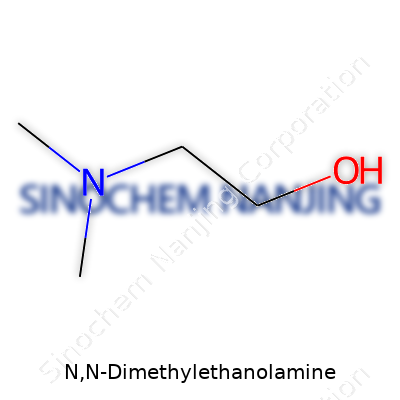
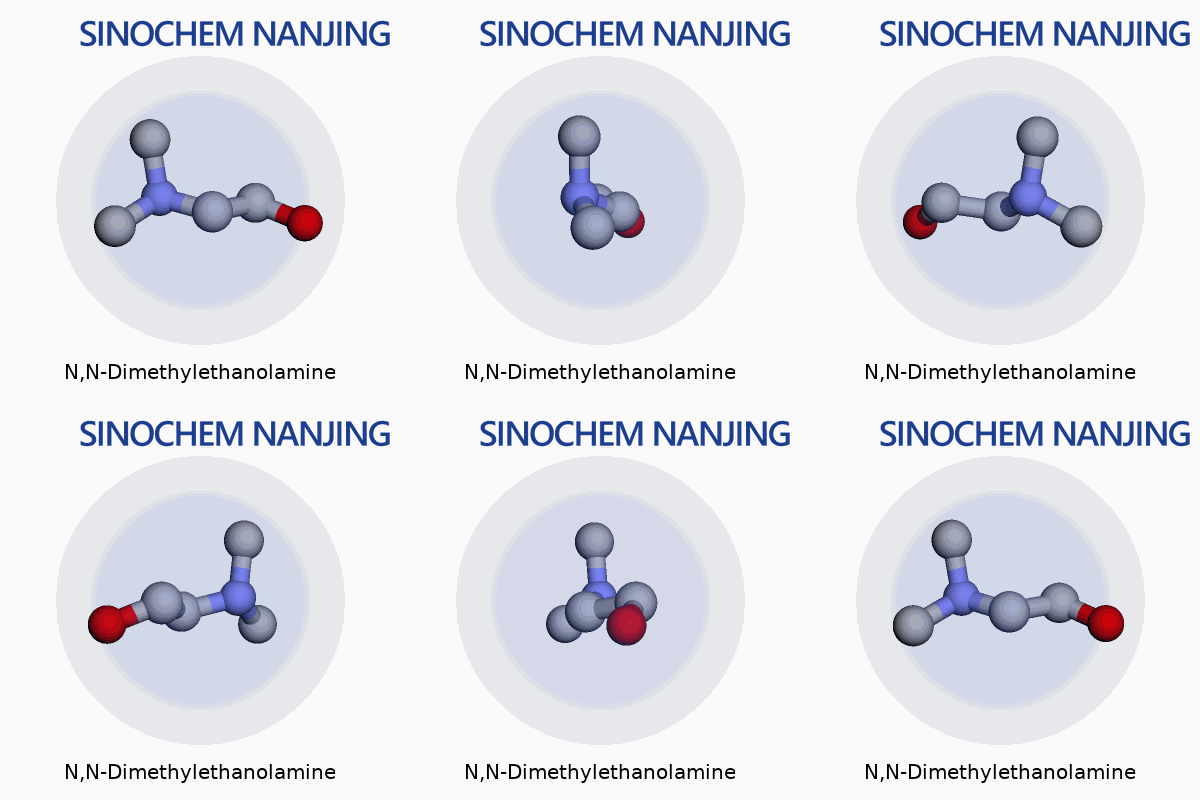
| Names | |
| Preferred IUPAC name | 2-(Dimethylamino)ethan-1-ol |
| Other names |
2-(Dimethylamino)ethanol Dimethylethanolamine DMAE N,N-Dimethyl-2-hydroxyethylamine Dimethylaminoethanol |
| Pronunciation | /ˌdiːˈɛmˈiːˈeθ.əˌnɒl.əˌmiːn/ |
| Identifiers | |
| CAS Number | 108-01-0 |
| Beilstein Reference | 604110 |
| ChEBI | CHEBI:18109 |
| ChEMBL | CHEMBL1401 |
| ChemSpider | 8413 |
| DrugBank | DB01859 |
| ECHA InfoCard | 100.003.241 |
| EC Number | 205-486-5 |
| Gmelin Reference | 7664 |
| KEGG | C00316 |
| MeSH | D017094 |
| PubChem CID | 8113 |
| RTECS number | KL8575000 |
| UNII | UJQJFYF192 |
| UN number | UN2504 |
| CompTox Dashboard (EPA) | DTXSID5020669 |
| Properties | |
| Chemical formula | C4H11NO |
| Molar mass | 89.14 g/mol |
| Appearance | Colorless to pale yellow transparent liquid |
| Odor | Ammonia-like |
| Density | 0.89 g/cm³ |
| Solubility in water | miscible |
| log P | 0.09 |
| Vapor pressure | 0.5 mmHg (20°C) |
| Acidity (pKa) | 9.23 |
| Basicity (pKb) | 4.20 |
| Magnetic susceptibility (χ) | -9.08×10⁻⁶ cm³/mol |
| Refractive index (nD) | 1.438 |
| Viscosity | 2.9 mPa·s (at 20 °C) |
| Dipole moment | 1.53 D |
| Thermochemistry | |
| Std molar entropy (S⦵298) | 218.1 J⋅mol⁻¹⋅K⁻¹ |
| Std enthalpy of formation (ΔfH⦵298) | -210.5 kJ/mol |
| Std enthalpy of combustion (ΔcH⦵298) | -3222 kJ/mol |
| Pharmacology | |
| ATC code | N06BX10 |
| Hazards | |
| Main hazards | Harmful if swallowed. Causes skin irritation. Causes serious eye irritation. May cause respiratory irritation. |
| GHS labelling | GHS02, GHS05, GHS07 |
| Pictograms | GHS02,GHS07 |
| Signal word | Warning |
| Hazard statements | H302, H312, H314 |
| Precautionary statements | P261, P264, P271, P272, P280, P301+P310, P303+P361+P353, P304+P340, P305+P351+P338, P308+P311, P321, P330, P362+P364, P405, P501 |
| NFPA 704 (fire diamond) | 2-3-1-Acidity |
| Flash point | 49 °C (120 °F; 322 K) |
| Autoignition temperature | 410°C (770°F) |
| Explosive limits | 2.1-10.2% |
| Lethal dose or concentration | LD50 (oral, rat): 2,398 mg/kg |
| LD50 (median dose) | LD50 (oral, rat): 2,480 mg/kg |
| NIOSH | DH2450000 |
| PEL (Permissible) | PEL: 10 ppm (42 mg/m3) (skin) |
| REL (Recommended) | 10 ppm (TWA) |
| IDLH (Immediate danger) | IDLH: 100 ppm |
| Related compounds | |
| Related compounds |
Dimethylethanolamine chloride Dimethylaminoethanol p-toluenesulfonate Diethylaminoethanol Trimethylamine Ethanolamine Choline Methylethanolamine |



