N-Methylpyrrolidone: A Closer Look at a Modern Workhorse and Its Footprints
Historical Development
People in the chemical industry used to get by with solvents that seemed universal but usually brought more headaches than answers. Back in the 1950s and 60s, the push for better-performing, safer, and more versatile chemicals gave rise to N-Methylpyrrolidone, often called NMP. Developed through industrial chemistry that aimed to tackle emerging challenges in polymer processing, NMP quickly claimed a spot in the toolkits of chemists and engineers. Its flexibility set it apart from the limited and sometimes dangerous options folks used beforehand, like chlorinated solvents. Over time, demand for NMP surged as more industries caught on to its potential for improving efficiency and product quality, especially within electronics and pharmaceuticals.
Product Overview: What NMP Really Brings to the Table
NMP is what many call a high-boiling, dipolar aprotic solvent, which means it’s good at dissolving a wide set of chemicals that most ordinary solvents leave behind. The liquid stays clear, smells faintly "chemical," and flows easily. Its value lies not just in what it can dissolve, but in its knack for compatibility with many types of chemical systems, especially those involving polymers and resins. Having worked with NMP in several research and manufacturing projects, I’ve seen crews appreciate how it handles unlike more temperamental alternatives. Battery makers count on it for carrying a consistent charge through electrode formulations, and paint and coating specialists rely on it for smoothing out stubborn pigments. It’s a workhorse, not prone to sudden breakdown or quirky results—provided it’s respected for its power.
Physical & Chemical Properties
Looking at its properties, NMP boils at around 202°C, which means it doesn’t vanish in thin air during heavy processing. It absorbs water from air, so storage needs to ward off humidity. I’ve handled NMP during routine lab work, and its low viscosity makes it easy to transfer and mix, yet it won’t catch fire at room temperature. Chemists respect its stability against acids, bases, and many oxidizers, where most cheap solvents would just decompose. It mixes well with water and many organic substances, giving it an edge in blending operations, ink making, and pharma extraction. But the very things that make NMP so useful—staying power, deep penetrating ability—also invite trouble when safe handling standards get ignored.
Technical Specifications & Labeling Realities
Suppliers grade NMP by purity, water content, and the level of trace amines or metals, with specs often tightened by applications in electronics or pharmaceuticals. Quality labeling should describe percent purity, presence of water, and other contaminants, but the burden falls on the end user to verify batch consistency with their process—especially when minute impure elements can mar entire production runs. Anyone using NMP in a regulated setting learns quickly to request certificates of analysis, cross-check batch numbers, and keep tight records to meet compliance rules. In my experience, skipping these steps always leads to more headaches than anyone wants to handle.
Preparation Method—From Feedstock to Drum
Production of NMP starts with gamma-butyrolactone reacting with methylamine under controlled heat and pressure. The result: a chemical ring opens and reshapes, giving us liquid NMP. Large companies refine the process for maximum yield and minimum trace contaminants, but the overall method has changed little since the early days. Facility managers install special reactors and distillation columns to recover nearly all the starting materials, keeping costs down and reducing environmental impact. NMP’s synthesis, while straightforward, demands meticulous process control, which is why it’s usually found in operations with serious infrastructure and experienced chemical engineers.
Chemical Reactions & Modifications
NMP on its own stands fairly inert, but its structure allows it to act as a crucial solvent or carrier for many organic reactions—especially where water or alcohols would spoil a process. In lab and industrial-scale syntheses, NMP helps polymers form by stabilizing reaction intermediates. It can be chemically modified through reactions involving its nitrogen atom, or serve as a precursor for pharmaceuticals when further substituted. In my work, using NMP as a solvent for tough actives in drug development often saved weeks of troubleshooting. The chemical plays especially well with lithium salts, explaining why battery makers count on it for dissolving obscure ingredients critical to next-generation energy tech.
Synonyms & Product Names
In labs and factories, NMP goes by more than one name. Chemists often call it 1-methyl-2-pyrrolidone or just M-Pyrol. Sometimes labels use names like Pharmasolve or butyrolactam N-methyl derivative, depending on supplier origin and targeted market, though the core chemistry stays constant. Ones working across global supply systems learn to double-check material safety data and aliases before combining shipments—misreading a barrel label leads to expensive mix-ups.
Safety & Operational Standards: Hard-Learned Lessons
Handling NMP safely ranks as a top priority, especially since health agencies have flagged risks for reproductive toxicity and skin absorption. I’ve seen assembly teams told to trade in splash goggles for full-face shields, and even simple cleaning work calls for gloves that actually stand up to NMP’s sneaky penetration. Anyone using NMP in closed systems must keep air monitoring tight, since long-term exposure brings health challenges many initially ignored. Factories use local exhausts, sealed reactors, and emergency showers. Workers receive practical education, not just lectures, on spill dynamics and fast cleanup. Wastewater and air releases land under strict scrutiny from environmental regulators, driving producers to install treatment units so NMP doesn’t reach rivers or landfills unchecked. These additional protections come with real costs, affecting where and how companies choose to use NMP worldwide.
Application Areas: Industry Leans In
NMP shows up most in batteries, electronics, coatings, paint removers, and certain pharmaceutical extractions. Engineers in lithium-ion battery plants tell stories of NMP’s solvent action squeezing more energy out of each cell, helping to extend phone and electric vehicle range. People mixing paint formulations remark on how NMP keeps stubborn solids suspended, preventing clogs and uneven finishes. In electronics, NMP dissolves photoresists as circuit boards shape up, giving manufacturers fine control over production steps. Drug chemists lean on NMP when trying to coax vital actives out of stubborn raw materials, grateful for its effectiveness in one-pot synthesis. Despite NMP’s reach, industries are moving to phase it out for consumer-facing goods—driven by growing regulation and demand for gentler alternatives.
Research & Development
Over the past decade, research teams have explored better process routes, safer derivatives, and less persistent alternatives. In my own fieldwork, I’ve seen pilot plants trial new catalysts to reduce energy costs during NMP manufacture. Some groups explore recycling NMP streams, using advanced purification modules that pull spent solvent from waste and reload it for fresh cycles. Product chemists and toxicologists push for “greener” NMP variants with shorter life spans in the environment or lower toxicity, but few have duplicated NMP’s full suite of abilities. The debate continues: improve the chemistry of NMP or replace it altogether? It’s clear that more collaborative projects—pairing industrial needs with academic innovation—hold the best chance of breakthrough.
Toxicity Research and Real-World Impacts
Plenty of toxicity reviews highlight challenges that come from overexposure to NMP, especially among production or heavy-use environments. Reproductive risks surfaced after long-term studies in industrial workers, pushing lawmakers to restrict consumer NMP use in some regions. This led to new guidelines on everything from air change rates in factories to gloves and coveralls in small labs. Environmental persistence adds another layer: NMP breaks down fairly quickly in the open world, but its fast movement and ease of absorption by living organisms means careful oversight still matters. In my view, the most responsible approach is fostering transparency: real-time exposure data, honest risk assessment, and worker health monitoring should never be optional.
Future Prospects for NMP and Its Alternatives
NMP delivered years of value and solved problems few other chemicals could touch. Looking ahead, its place in tightly controlled industrial processes seems secure, since few substitutes match its combination of solvency, low volatility, and thermal stability. Yet the push for alternatives gathers pace. Startups and big industry names hunt for drop-in replacements less prone to regulatory attention and health risks. Efforts now focus on biosourced solvents and safer synthetic analogs, but consistently replicating NMP’s unique balance brings fresh technical puzzles. More sectors edge away from NMP for end-consumer products as stricter laws and reputation risks loom larger. Still, as industries invest in containment, recovery, and innovation, those who engage with NMP responsibly carry forward lessons that shape the future of industrial chemistry: chemistry meets safety, and neither lives long without the other.
What is N-Methylpyrrolidone (NMP) used for?
Understanding the Workhorse: NMP
Walk into any electronics plant, or step inside a paint factory, and chances are you’ll find N-Methylpyrrolidone (NMP) somewhere in the building. This chemical has become a staple thanks to its unique ability to dissolve a wide range of materials. Chemists like me look at its impressive solvency and essential role every time batteries, electronics, or coatings show up in conversation. Without NMP, certain processes would become far more complicated or expensive.
Batteries, Chips, and Why NMP Matters
Think of the many rechargeable batteries powering phones and electric cars. Manufacturers use NMP to turn polymers into smooth, even films that carry energy back and forth in lithium-ion batteries. The solvent helps blend the materials needed for the battery’s electrodes, which boosts battery life and reliability. Semiconductor plants also count on NMP for stripping photoresists from delicate silicon wafers. Quality cleaning with NMP means fewer defects and higher-performing chips. Over the years, the tech industry’s growth has only increased demand for NMP.
NMP in Coatings and Paints
Painters probably never talk about NMP by name, but its impact shows up on painted walls, cars, and furniture. Its solvency helps paints spread more evenly, enhancing what chemists call “flow” and “leveling.” With NMP, the finish looks smooth instead of streaky. Factories that make automotive coatings rely on NMP for both blending and cleaning equipment. This versatility keeps coating and paint production running with limited downtime.
Pharmaceuticals and Beyond
Drug makers often turn to NMP in the early stages of research. The solvent can dissolve many pharmaceutical compounds, making it valuable for testing and formulating new medications. Laboratories need options like NMP to run experiments and confirm drug stability. Outside of pharma, companies use NMP to make synthetic fibers, plastics, and even some adhesives. Its use stretches from everyday items to cutting-edge research.
Concerns and Solutions
Scientific studies have flagged health risks linked to NMP, especially for workers handling large quantities. Without the right glove or mask, NMP can irritate skin and lungs. Regulatory agencies in Europe and the United States have pushed for tighter rules and improved safety standards. Factories now monitor air quality and switch to closed systems wherever possible, protecting employees and local communities.
Some companies explore alternatives to NMP, like safer solvents or water-based chemicals. These substitutes do not always match NMP’s efficiency, which can slow production or lower product quality. Finding a replacement that keeps costs down, supports innovation, and reduces harm isn’t easy. Research keeps moving, with new green chemistry options on the horizon.
The Path Forward
Industries face a crossroads: stick with NMP for its tried-and-true results or commit to alternative solutions that bring fewer health and environmental risks. Proper training, updated equipment, and ongoing research will shape how NMP fits into the future of manufacturing, technology, and science. My experience reminds me that real change demands effort from everyone, from the line worker mixing paint to the chemist in the lab searching for something safer.
Is N-Methylpyrrolidone hazardous to health?
What We Know About the Chemical
N-Methylpyrrolidone, or NMP as most people in chemical labs call it, shows up in all sorts of work settings. Paint removers, electronic cleaners, pharmaceuticals, and plastics all rely on it. Walking into a print shop or a plant that builds circuit boards, NMP's no stranger there. Even some beauty products list it as an ingredient for blending and dissolving harsh stuff. But coming face to face with NMP, especially during cleanup shifts or maintenance runs, tells you a lot more about its risks than a product label ever can.
Exposure and Health Risks
After years of interviews and conversations with folks on industrial jobs, a pattern stands out. People who inhale vapors or get the chemical on their skin often complain about headaches, dizziness, and skin irritation. Medical studies back that up. The U.S. Environmental Protection Agency (EPA) found that workers breathing NMP fumes or absorbing it through bare hands can experience liver toxicity, reproductive issues, and even harm to unborn babies. Simply handling a rag soaked with NMP without gloves can set off red and cracked skin that stings days later.
The science here matters. Researchers published findings in reputable journals like the International Journal of Occupational Medicine and Environmental Health. In those studies, high NMP exposure linked to birth defects in lab animals. Occupational Safety and Health Administration (OSHA) guidelines warn workplaces to keep the air clean and provide protective gear to anyone touching or using NMP. Lots of companies already responded by switching to safer chemicals where possible, but sometimes NMP remains hard to replace because of specific technical needs.
Everyday Impact
I remember a friend who spent years stripping varnish off old floors in commercial buildings. They wore only basic masks and sometimes forgot to change gloves. Three times that year, the team ended up at the on-site nurse suffering from nausea, confusion, and burning eyes. After some months, word spread that their company started offering more advanced respirators and stricter checklists. The crew’s complaints dropped off. It was clear: direct contact and low ventilation ramped up the health risks.
Regulations and Real-World Practice
Regulation now keeps a close eye on NMP. The EPA has been considering stricter bans and labeling. California lists it under Proposition 65, flagging the risk of birth defects and reproductive harm. Europe’s REACH regulation classifies it as a substance of very high concern. In the U.S., paint stripper products containing NMP face restrictions at many stores. These rules don’t just sit on paper. Workers have claimed fewer headaches and skin flare-ups where management invested in better ventilation systems and limited exposures per shift. Walking through hardware aisles, fewer home-use chemicals list NMP these days.
What Makes a Difference
Protecting people starts on the ground. Gloves and airtight goggles might seem like overkill on an ordinary Tuesday morning. Still, they spell the difference between a routine workday and weeks of uncomfortable rashes or worse. Training teams about why to care makes rules stick. For companies that want to tackle exposure, investing in alternatives and smarter manufacturing goes a long way to keeping employees healthy. Sharing experiences, flagging symptoms early, and speaking up about conditions changes the story for everyone on the shop floor.
How should N-Methylpyrrolidone be stored?
Understanding Why Proper Storage Matters
I’ve spent some time in labs and workshops where chemicals like N-Methylpyrrolidone get handled daily. From lab benches to factory floors, I’ve seen how taking shortcuts with storage can leave folks cleaning up messes—or worse, dealing with health scares. N-Methylpyrrolidone, or NMP, draws a lot of concern because its vapor can irritate skin, eyes, and lungs, and long-term exposure has links to more serious health issues. The Centers for Disease Control and Prevention notes skin absorption and inhalation as top risks, so the place where this solvent sits between uses deserves real attention.
What Can Go Wrong With NMP?
Many solvents have a habit of sneaking out of cracked bottles or loosely capped barrels. NMP is no exception. It picks up water vapor from the air, which may change how it behaves in a process and cause equipment to corrode over time. In my experience, someone inevitably grabs a container with a damaged label or leaves a drum near a sunlit window, and suddenly you’ve got fumes or unknown liquids on your hands.
How to Keep NMP Safe and Stable
Keeping NMP out of trouble isn’t hard, but it does take some routine and discipline. Containers built from HDPE plastic or stainless steel hold up well and won’t react with the solvent. I always check for corrosion or bulging, because even the best container breaks down with age. Every bottle or drum needs a cap screwed on tightly. If you skip the lid, NMP will draw moisture in and start evaporating, and local air gets stuffy fast. Avoid using glass containers if you can—many harsh solvents, including NMP, cause micro-fractures over time and the breakage risks are real.
Finding the Right Storage Spot
I’ve worked in shops where space runs out, but crowding NMP containers near heat sources, windows, or direct sunlight turns a quiet storeroom into a hazard. Heat increases pressure inside closed vessels and sunlight can degrade both labels and packaging. Tuck NMP into a dry, cool cupboard or flammables cabinet, away from oxidizers and acids. Those cabinets not only resist fire, their locking doors keep curious hands out.
Labeling and Record Keeping
Misidentification opens doors to misuse and mixing disasters. I always use the manufacturer’s original labels and add clear tags if decanting for lab use. Strong labeling reduces confusion, especially during a busy shift change. Inventory logs keep track of expiry dates, batch numbers, and let you spot when a bottle’s been left open too long.
Personal Protection and Spill Planning
Storing NMP right doesn’t mean you ignore what happens if a bottle tips over. Gloves rated for solvents and splash goggles or a full face shield serve as basic defenses. Good ventilation, with fans venting outside or a chemical fume hood, stops vapors from building up. I’ve learned the hard way that having spill kits, absorbent materials, and neutralizing agents nearby makes cleanup much less stressful. Review and practice emergency procedures regularly—staff who know where spill kits live react faster and safer.
Following Rules and Learning from Practical Use
Most workplaces stick to Occupational Safety and Health Administration (OSHA) rules for hazardous chemical storage. States add their own layers of regulation, especially in industries like semiconductor manufacturing or paint mixing. Training new staff early on gives everyone a baseline for safe storage, and nothing beats clear checklists. Taking lessons from chemical incidents—no matter how small—keeps everyone safer next time NMP storage comes up in conversation.
What are the handling precautions for N-Methylpyrrolidone?
Getting to Know What You’re Working With
N-Methylpyrrolidone, often called NMP, shows up a lot in the chemical world. I have spent time around manufacturing sites, where workers use NMP as a solvent in electronics, paint stripping, and plastics. On the surface, it looks like just another clear liquid. The problem is, that attitude gets people in trouble. NMP doesn’t just slip quietly into a process. It is a powerful solvent with real health risks, and folks working with it every day can forget about that if they aren’t reminded.
Health Risks That Always Need Respect
I’ve seen firsthand how easy it is to skip gloves or ignore fumes for a quick project. NMP can sneak into your system through the skin or lungs. People often end up with skin irritation, headaches, or nausea, thinking it’ll pass. The bigger issue: chronic exposure links to reproductive harm and developmental issues, especially troubling for those of childbearing age. The European Chemicals Agency didn’t restrict its use for nothing. The U.S. Environmental Protection Agency (EPA) recognized its dangers and outlined risk management rules too.
Simple Steps Keep Everyone Safer
Wearing the right gear makes a night-and-day difference. Folks sometimes see goggles and chemical-resistant gloves as a hassle, but I’ve watched burns and rashes clear up fast once workplaces cracked down on basic personal protective equipment. Face shields help in situations with splashing. Full-length aprons and chemical suits fit into bigger or riskier setups. Ventilation usually needs more attention. Just opening a window does not cut it. Local exhaust hoods and proper air filtration should run whenever NMP comes out.
Storage and Spills: No Room for Sloppiness
Anyone who’s dealt with a leaking drum knows NMP can eat right through some plastics. Only store it in containers made of high-density polyethylene or stainless steel. Always keep containers tightly closed and away from heat or spark sources, since NMP combusts above 90°C. Housekeeping has a huge impact: even small puddles can quickly turn into slip hazards and exposure points. Absorbent materials work best for clean-up—never just mop and wring out for reuse.
Emergency Prep Isn’t Optional
Buildings using NMP must have easy access to eyewash stations and safety showers. Fast response limits injuries if something goes wrong. I remember a spill where someone wasn’t close to running water, and the delay led to lasting skin damage. Employees who actually train using these stations respond much faster. Labels, signs, and clearly communicated instructions serve as reminders, not decorations.
Why Change Really Starts from the Top
Supervisors and management often set the tone. Companies where management takes chemical safety seriously have fewer incidents—plain and simple. Regular training, clear written procedures, and an environment where workers feel safe reporting issues actually keeps people healthy. It’s not bureaucracy; it’s responsibility. Big data from workplace injury reports shows that proper policies cut risk more than any single gadget or fix.
Can N-Methylpyrrolidone be disposed of safely and how?
Digging into What Makes NMP Tricky
N-Methylpyrrolidone, or NMP, gets used in jobs ranging from paint stripping to making lithium batteries. It’s a clear liquid, but that doesn’t mean it goes unnoticed after the work is done. This stuff can hang around in water and soil for a long time, with the EPA flagging it for potential reproductive risks. Tossing NMP down the drain or into a landfill isn’t just careless; it brings real harm if the local ecosystem gets a hit of it. Wastewater plants can’t break it down well, and animals don’t get a say in the matter, so people have to make the right call on where it ends up.
Small Steps with Big Impact in the Lab and Garage
Back in chemistry labs, bottles of waste sit in the corner, waiting for pickup. Most universities and companies keep NMP in special containers, clearly marked, and far from other chemicals. Workers roll their eyes at the paperwork sometimes, but about twice a year, a hazardous waste team rolls through, hauls it off, and the stuff goes to an incinerator built for its kind of risk. Burning it at high heat, with proper filtering, keeps harmful byproducts from reaching the air or water. It costs more than knocking out a standard trash bag, but it means people outside that lab don’t end up with a problem they never signed up for.
How Factories Handle NMP’s Mess
Factories see NMP as a double-edged sword. On one hand, it gets jobs done. On the other, accidents and sloppy spills force managers to rethink how much they really need. Instead of pouring leftovers or residues away, many big operations build in closed-loop recovery systems. The plant collects used NMP, runs it through a distillation tower, and reuses what comes out clean. It means they buy less and send less waste out the door. This not only saves money but keeps regulators off their backs and the community breathing easier.
Facing the Public Safety Question
People might think only experts deal with NMP, but anyone using certain paint removers or auto cleaners can bring it into their house. Leftover NMP bottles shouldn’t join household trash. Local hazardous waste collection events accept chemicals like this. It’s tempting to shortcut, but a trip to a collection center means that NMP stands a better chance of being incinerated or treated with the right technology. Call or check a city’s sanitation site; there’s almost always a drop-off day at least once or twice a year.
Room for Change and Safer Choices
Switching to safer solvents helps dodge problems before they show up at the curb. Green chemistry researchers have made progress with substitutes, like dimethyl sulfoxide or other less risky options, although performance and cost sometimes fall short. Still, some shops have found ways to reduce or quit using NMP entirely. Public demand and strong regulations nudge industries to review recipes and practices, pushing for fewer toxic leftovers in all corners of society.
People, Policy, and Paying Attention
Disposing of tricky chemicals turns into a test of responsibility. Whether it’s a backyard paint project or an industrial-scale production line, the same truth holds: cutting corners puts health and nature at risk, and once NMP escapes into the world, it’s not easy to pull back. With a combination of technology, habit changes, and local waste programs, people can keep chemicals like NMP out of places where they’re not wanted—and don’t belong.
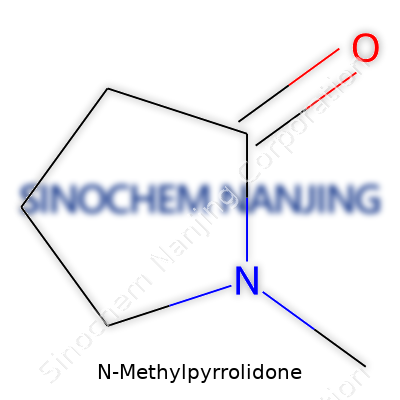
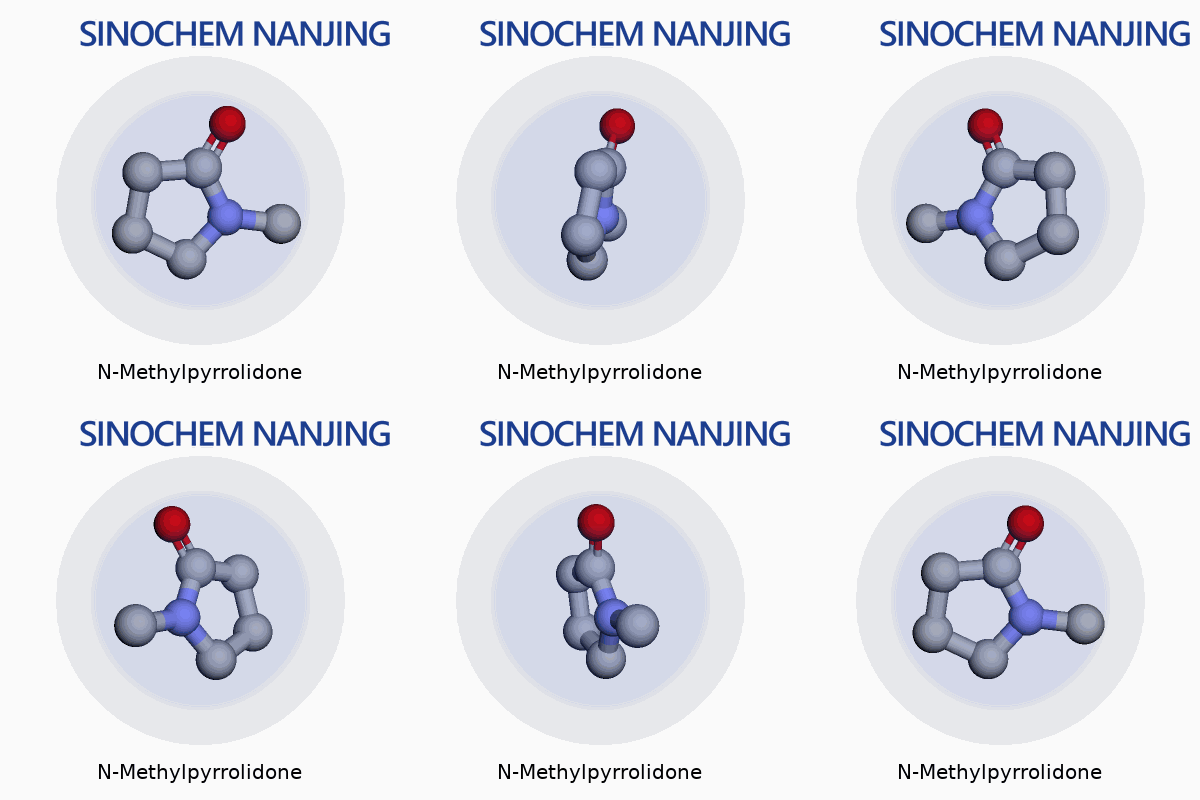
| Names | |
| Preferred IUPAC name | 1-Methylpyrrolidin-2-one |
| Other names |
1-Methyl-2-pyrrolidone NMP Methylpyrrolidone N-Methyl-2-pyrrolidone 1-Methylpyrrolidin-2-one |
| Pronunciation | /ɛn-ˈmɛθɪl-pɪˈrɒlɪˌdoʊn/ |
| Identifiers | |
| CAS Number | 872-50-4 |
| Beilstein Reference | 636073 |
| ChEBI | CHEBI:44485 |
| ChEMBL | CHEMBL1239 |
| ChemSpider | 7074 |
| DrugBank | DB01747 |
| EC Number | 212-828-1 |
| Gmelin Reference | 62238 |
| KEGG | C01744 |
| MeSH | D016032 |
| PubChem CID | 7105 |
| RTECS number | QV0750000 |
| UNII | M8FUI8V4KV |
| UN number | UN2810 |
| CompTox Dashboard (EPA) | DTXSID4020152 |
| Properties | |
| Chemical formula | C5H9NO |
| Molar mass | 99.13 g/mol |
| Appearance | Colorless transparent liquid |
| Odor | slight amine odor |
| Density | 1.03 g/mL at 25 °C |
| Solubility in water | miscible |
| log P | -0.54 |
| Vapor pressure | 0.32 mmHg (25°C) |
| Acidity (pKa) | 24.3 |
| Basicity (pKb) | pKb = 11.1 |
| Magnetic susceptibility (χ) | -54.5·10⁻⁶ cm³/mol |
| Refractive index (nD) | 1.470 |
| Viscosity | 1.666 mPa·s (25 °C) |
| Dipole moment | 4.09 D |
| Thermochemistry | |
| Std molar entropy (S⦵298) | 160.2 J·mol⁻¹·K⁻¹ |
| Std enthalpy of formation (ΔfH⦵298) | -146.7 kJ/mol |
| Std enthalpy of combustion (ΔcH⦵298) | -2787 kJ/mol |
| Pharmacology | |
| ATC code | D08AX13 |
| Hazards | |
| GHS labelling | GHS07, GHS08 |
| Pictograms | GHS07,GHS08 |
| Signal word | Warning |
| Hazard statements | Harmful if swallowed. Causes serious eye irritation. Causes skin irritation. May damage fertility or the unborn child. |
| Precautionary statements | P280, P261, P264, P271, P304+P340, P312, P302+P352, P305+P351+P338, P332+P313, P337+P313, P362+P364, P501 |
| NFPA 704 (fire diamond) | Health: 2, Flammability: 2, Instability: 0, Special: - |
| Flash point | 91°C |
| Autoignition temperature | 245 °C |
| Explosive limits | 1.3–9.5% |
| Lethal dose or concentration | LD50 oral rat 3914 mg/kg |
| LD50 (median dose) | LD50 (median dose): 3914 mg/kg (rat, oral) |
| NIOSH | MNK35000 |
| PEL (Permissible) | PEL (Permissible Exposure Limit) of N-Methylpyrrolidone: "No OSHA PEL established |
| REL (Recommended) | 100 mg/m³ |
| IDLH (Immediate danger) | IDLH: 900 ppm |
| Related compounds | |
| Related compounds |
2-Pyrrolidone Pyrrolidine Gamma-Butyrolactone |



