N-Methylaniline: A Closer Look at Its Journey, Properties, and Place in Modern Science
Historical Development
N-Methylaniline has a backstory that reflects the evolution of organic chemistry through the late nineteenth and twentieth centuries. Chemists hunting for new dyes and drug ingredients in the early days of the chemical industry often stumbled across amines like this one. The methylation of aniline, first mapped out in German and British labs fueled by the textile and pharmaceuticals boom, helped anchor N-Methylaniline as an important intermediate for both researchers and manufacturers. Over the decades, people have refined how they approach its preparation, going from rudimentary set-ups to modern, high-yielding synthesis. Innovation in benzene derivatives kept this molecule in the limelight, not just for its direct uses, but because it turned out to be a missing link in the chain connecting old-school chemical know-how with today’s specialty chemicals sector.
Product Overview
Mention N-Methylaniline to anyone working in fuels, dyes, or polymer additives, and it tends to ring a bell. It's a straightforward-looking compound, but its uses are far from simple. Carved out from the aniline family, it brings a structural twist, pairing a methyl group with the classic amino fragment. This switch brings out different reactivity and behavior. For fuel designers, it becomes attractive because it can boost octane ratings in gasoline, so it ends up shaping performance in engines. Makers of organic pigments value it as a weight-bearing member of pigment and dye synthesis, since it helps drive color stability and brightness. Its reach also extends to specialty resins and select pharmaceuticals, making it a core building block in modern industry.
Physical & Chemical Properties
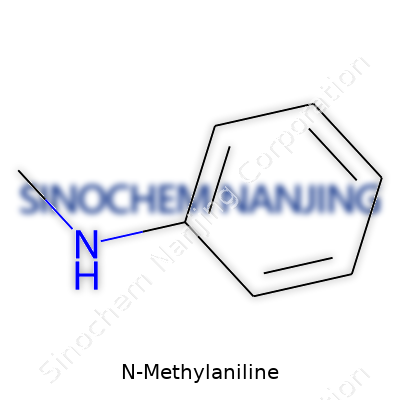
N-Methylaniline turns up as a colorless to pale yellow oily liquid that brings its own odd odor. It blends well with many organic solvents, yet resists mixing with water. Its chemical formula, C7H9N, reflects the presence of both a benzene ring and a methylated amino group. With a boiling point hovering around 196–198°C, it can hang in there under standard processing demands, which makes it comfortable to handle in high-temperature setups. The chemical structure sets it apart from plain aniline: this methyl tweak influences both reactivity and toxicity. People using N-Methylaniline in technical work have to respect its flammability and take precautions around open flames, as the vapor can form explosive mixtures with air.
Technical Specifications & Labeling
Regulators and chemists give N-Methylaniline several aliases, such as NMA, N-methylbenzenamine, or monomethylaniline. On most safety data sheets, it shows up with its CAS number, 100-61-8, a kind of universal ID for the chemical world. Typical samples are marked for purity—over 99 percent for demanding work—to keep side-reactions to a minimum. Labels must warn about flammability, and possible toxicity, since careless handling brings obvious risks. The need for sharp storage practices—sealed containers, cool rooms, attention to ventilation—follows from both its fire risk and low but genuine vapor toxicity. Workers stay safe by sticking to the basics: goggles, gloves, and a good fume hood.
Preparation Method
Making N-Methylaniline in the lab or factory typically starts with aniline itself. The standard route adds a methyl group via alkylation, often using methyl iodide or dimethyl sulfate in the presence of a base. Industrial chemistry favors approaches that minimize dangerous by-products and maximize yield—so batch or continuous flow systems are tuned to get more product, less waste. Researchers still explore safer methods because traditional methylating agents can cause health and ecological troubles. Catalysts play a central role, and greener alternatives continue getting attention as part of the drive to cut down on hazardous residues.
Chemical Reactions & Modifications
What makes N-Methylaniline interesting isn't just what it is, but what it does in a reaction flask. Its lone pair of electrons on the nitrogen, combined with the aromatic ring, opens it up to both electrophilic and nucleophilic attack. N-substitution, acetylation, and diazotization reactions happen smoothly, giving access to more complex amines, azo dyes, and key intermediates for pharmaceuticals. Adding functional groups to the ring or further tweaking the nitrogen atom changes how it slots into other molecules. Its role in cross-coupling or condensation reactions underlines its importance in medicinal chemistry and advanced materials science.
Synonyms & Product Names
Step into a laboratory supply catalog, and N-Methylaniline wears several hats: N-methyl-1-phenylamine, methylaniline (not to be confused with isomeric forms), or sometimes just Methyl Aniline. Trade and regulatory standards have pushed the community to use clear labels—so errors and mix-ups are less common than they used to be. Knowing these names helps those involved find the right substance, especially as some applications demand higher purity or tighter identification standards.
Safety & Operational Standards
Direct contact with N-Methylaniline brings a set of concerns. Skin exposure can irritate or even sensitize some people. Inhaling vapor over time could cause symptoms ranging from dizziness to more serious central nervous system effects. Every responsible operation dealing with this compound falls back on essentials like good ventilation, fire-proof storage cabinets, spill kits, and regular worker training. Local regulations in the US, EU, and across Asia have carved out exposure limits, so anyone handling larger amounts tracks air monitoring, safe disposal, and emergency procedures. Most research and plant spaces treat it with the respect they would give any amine: keep your eyes and hands protected, know where the nearest eyewash is, and make sure nobody ignores the warning signs.
Application Area
Fuels, dyes, and colorants have counted on N-Methylaniline for decades. Gasoline design drew huge attention in the twentieth century, pushing chemists to find new blending agents. N-Methylaniline turned up as a way to get more octane without shifting over to lead compounds, which have since been banned or phased out. Making vivid synthetic dyes, especially for fabrics and plastics, depends on amines like this for their strong, stable hues. In some niche segments, the pharmaceutical world taps it as an intermediate, feeding further modifications that create active drug molecules or imaging agents. Plastics formulation sometimes benefits from its ability to add flexibility or UV resistance. The bottom line: wherever tailored reactivity or modified color behavior is needed, this chemical earns a spot.
Research & Development
University groups, corporate labs, and startups keep asking what else can be done with N-Methylaniline. Green synthesis draws special interest, pressing for methods that cut down on hazardous materials and energy use. Catalysis research looks for transition metal systems that make methylation less harsh and more selective. Advances in analytical chemistry have uncovered subtle reaction pathways, allowing better control in multi-step syntheses. New computational tools model its behavior in everything from reaction mixtures to biological systems, opening the door for novel uses in drug discovery and materials science. Both patent filings and academic papers show the molecule hasn’t run out of tricks yet.
Toxicity Research
Toxicologists highlight its ability to cause methemoglobinemia if misused, meaning the blood loses its power to carry oxygen efficiently. Animal studies and cell experiments build a picture of how N-Methylaniline moves through living systems, changes shape in the body, and potentially affects gene activity. Regulators watch for emerging data to reset workplace exposure limits. Wastewater and environmental monitoring remind everyone that keeping this and similar amines out of waterways matters, as residues can linger and affect aquatic life. Low-level, repeated exposure in occupational settings stays under the microscope, since some studies have linked it to chronic issues. Improved detection methods and spill response training at facilities add to the growing safety net.
Future Prospects
Markets keep shifting, and so does the role of chemicals like N-Methylaniline. Cleaner gasoline blends and stricter environmental rules in many countries are squeezing its use as a traditional fuel additive, yet specialty applications stay strong. Researchers in advanced materials see promise in tailoring amine compounds for next-generation electronics, sensors, and light-harvesting films. Synthetic biology has started eying amine fragments for biocatalysis, aiming for renewable routes to produce molecules once made purely in reactors. As regulations tighten, and as analytical tools get sharper, anyone handling N-Methylaniline faces a more complex landscape. Yet—history shows chemicals that adapt, or help form the backbone of bigger innovations, rarely fade away. Staying informed, investing in greener methods, and asking what comes next sets the path forward.
What is N-Methylaniline used for?
Understanding N-Methylaniline in Real Applications
N-Methylaniline shows up in more places than most folks realize. Auto enthusiasts who care about what goes into the tank may have stumbled upon it when reading about octane boosters. Fuel companies add this chemical to gasoline to help prevent engine knock and improve the way engines run, especially in older cars or places where fuel quality swings a lot. Regulatory bodies like the US Environmental Protection Agency and the European Chemicals Agency keep tabs on its use because burning it can produce emissions with environmental concerns. Some governments have put limits on how much can show up in retail fuels. In my view, keeping track of what’s in fuel can keep us safer and protect our engines at the same time.
Beyond cars, N-Methylaniline matters to folks in the chemical manufacturing business. Anyone who has worked in a chemical plant knows that chemicals like this one show up as building blocks for making dyes, foam boosters, pesticides, and even some types of drugs. These “chemical intermediates” pop up throughout the supply chain. I’ve seen first-hand how a small tweak—like using a little N-Methylaniline at a certain step—can shift both output and bottom line for a company.
Risks and Real-World Concerns
Anyone who’s spent time in a laboratory or refinery understands the risks that come with handling N-Methylaniline. Exposure can irritate the skin and eyes, and breathing in the fumes irritates the lungs. Agencies including the National Institute for Occupational Safety and Health stress using proper protective gear and plenty of ventilation. My own experience tells me that accidents usually happen when folks rush, skip gloves, or think that because it’s “just an intermediate,” it won’t hurt them. Rules, regular safety drills, and easy access to clean-up supplies can keep workplaces safer for everyone.
N-Methylaniline’s environmental footprint can’t get ignored. If spills reach water, fish and other wildlife feel the effects. Responsible chemical plants have measures to keep leaks from getting into the soil or waterways. Over years of working near refinery operations, I noticed that regular checks and quick repairs help keep those risks down. In places where regulations feel loose or inspectors seldom show up, problems tend to pile up. That makes stricter oversight and clear reporting all the more important—and it’s something communities have every right to demand.
Pushing Solutions Forward
Knowledge goes further when folks use it in practical ways. Producers can switch to safer materials or keep improving ventilation and spill prevention systems. Engineers and researchers keep working on greener fuel additives that do the job without harming people or the planet. From my time on project teams, gathering workers’ feedback on process changes often turns up solutions no one saw coming. Ramping up public awareness helps too. When consumers know what’s in products or fuel, they can vote with their wallets and nudge companies to step up.
N-Methylaniline may not grab the headlines like bigger petrochemical stories, but it matters for both industry and public health. Keeping it in check calls for smart choices—on the shop floor, at the supply dock, and in the safety office. That's how risks shrink and benefits reach further.
What are the safety precautions when handling N-Methylaniline?
What Makes N-Methylaniline a Risky Chemical
N-Methylaniline shows up in plenty of manufacturing settings, especially where dyes, resins, or certain fuel additives enter the mix. You catch its distinctive fishy smell right away, but that doesn’t mean you know just how hazardous it actually gets. Breathing in fumes or letting the stuff touch your skin gives you nausea, headaches, trouble breathing, and skin rashes. If a big enough amount gets on you, it can harm your nervous system. When I worked in a warehouse, a single spill brought home how dangerous skipping proper protection can be.
Decent Ventilation Comes First
I remember loading barrels in a warehouse with windows locked shut. That mistake filled the room with strong chemical odors so quick, my eyes started watering in minutes. Chemical fume build-up happens fast, and stale air only turns a minor problem into a major health scare. Workers, especially in closed spaces, need exhaust fans or well-placed vents. Open-air workstations and regular checks on air-handling systems make a real difference. Air quality monitors give a heads-up before anyone starts feeling sick.
Personal Protection Isn’t Just a Rule—It’s a Lifesaver
Goggles, rubber gloves, lab coats, and chemical-proof aprons never look stylish, but they sure beat irritation or chemical burns. I’ve seen plenty of folks skip gloves for “just one quick pour,” and those are the hands you find soaking in cold water later. N-Methylaniline’s toxic effects show up through skin, nose, or mouth, so covering up every inch matters. Boots with chemical resistance beat regular footwear, and splash-resistant face shields catch what goggles miss. A sturdy routine—putting on gear before starting and removing it before touching anything else—spares a lot of trouble. Regular training turns safety rules into second nature.
Handling Spills and Storage Like a Pro
At my previous job, cleanup kits stood next to every bench. These kits make it easy to soak up spills and keep chemicals from spreading. Sealed drums labeled with clear words—not faded stickers—keep confusion low even in a rush. The storage area needs to stay cool, dry, and far away from heat sources, since high temps or sparks risk starting a fire. Water and N-Methylaniline don’t play well together, so dry surroundings help cut back on corrosion and leaks. Weekly walkthroughs catch leaky seals or busted containers before disaster hits.
Health Checks and Quick Response Matter
Not everyone realizes symptoms can sneak up hours after exposure. Trained coworkers learn to spot dizziness, blue lips, and shortness of breath. Quick access to emergency showers and eyewash stations isn’t a luxury—it’s a must-have. Emergency numbers on the wall—right next to cleanup instructions—save precious minutes. Hospitals able to handle chemical exposure save lives, especially when it comes to blood or respiratory issues linked to N-Methylaniline.
What Companies Owe Their Crews
Firms carrying N-Methylaniline owe their teams more than the bare minimum. Training once a year doesn’t cut it; people need reminders every time a new shipment arrives. Continuous improvement—fixing ventilation, adding new protective barriers, swapping out broken gear—keeps workplaces safer each month. Regular risk reviews beat relying on what worked last decade. This is about building a culture where everyone has each other’s backs, not just ticking checklists. Proper disposal—never down the drain, but with real hazardous waste services—protects more than just workers. It shields the community from contamination, too.
What is the chemical formula of N-Methylaniline?
Understanding N-Methylaniline
N-Methylaniline holds a chemical formula of C7H9N. A single glance at its structure reveals how a methyl group attaches directly to the nitrogen atom in an aniline ring. This small tweak transforms plain aniline into something with a world of practical impact. It catches the eye in discussions about industrial chemistry, environmental safety, and personal health — not because of flash, but due to the way subtle changes in structure can change behavior and risk.
Everyday Relevance
N-Methylaniline shows up in fuel additives, dyes, and research labs. Its base structure, aniline, draws plenty of interest in organic chemistry thanks to the amino group connected to a benzene ring. Swapping one hydrogen for a methyl group might sound minor, but this shift influences volatility, reactivity, and toxicity. These properties matter far beyond the high school lab, reaching into the realities of groundwater pollution or air emissions at fuel blending sites.
Safety in Handling
I’ve worked summers in a test lab, and I remember the strict guidelines set for storing and handling aromatic amines like N-methylaniline. Skin absorption risk loomed as much as vapor inhalation. Quick reactions happen — and people nearby easily underestimate the strength of such chemicals, confusing them for tamer relatives.
It’s not just the formula that brings the risk; it’s what the molecule does in contact with water systems or within the human body. C7H9N, for instance, doesn’t break down easily in nature. Reports from the World Health Organization and EU regulatory agencies highlight the carcinogenic and mutagenic risks tied to aromatic amines. They push for more stringent safety data on cancer links, especially with long-term exposure in industrial settings.
Solutions and Responsibility
Community health sits at the heart of chemical stewardship. If someone puts C7H9N to work in manufacturing or research, they shoulder a responsibility. Fume hoods, gloves, and chemical-specific disposal protocols don’t just tick compliance boxes — they keep local groundwater clean and lab workers safe. Many facilities install real-time sensors, so spills or leaks don’t slip by unnoticed. Stricter labeling, better employee training, and spill-control plans have helped reduce exposure incidents.
Environmental groups keep counting on more research and transparency. Peer-reviewed studies like those appearing in journals such as Environmental Toxicology and Chemistry flag persistent organic pollutants, including methylated anilines, among chemicals of concern in water and soil. Community voices join scientists in asking for more robust tracking of chemical movement from plant to environment — it makes a difference on a real, measurable level.
Choosing Alternatives
Some companies now lean into “green chemistry” approaches, seeking alternatives where possible. By tweaking formulas or shifting to materials with a proven lower risk, they cut ties with the lingering environmental footprint of older aromatic amines. Researchers keep searching for new catalysts, solvents, and fuel additives that sidestep the health risks tied to methylated anilines. Each successful switch chips away at chemical incidents and long-term problems for people and places nearby.
In short, knowing the formula C7H9N goes well beyond textbook trivia — anyone working with it carries a real obligation to balance usefulness and safety. That balance doesn’t just sit in theory; it shapes health and quality of life right now.
How should N-Methylaniline be stored?
Why Pay Attention to N-Methylaniline?
N-Methylaniline doesn’t show up in daily household shopping or backyard shed projects. In the world of chemicals, though, it pops up as an additive in fuels and dyes, so mistakes can hit big. Anyone around labs or factories knows the mess that can happen where flammable, toxic materials like this get loose. N-Methylaniline is clear, oily, and invisible until you start to notice a strong odor or feel it on your skin. Stories float among old hands who didn’t take it seriously, ending up with headaches or worse after breathing it in. People have learned, sometimes the hard way, that transparency here isn’t the same as harmlessness.
Storage: What Works in Real Life
Nobody wants a chemical leak, especially with something that ignites with a single spark and brings health concerns. Metal shelves, plastic bins, and haphazard cardboard don’t cut it. Real safety starts with a clean, dry, cool spot, well-ventilated, and away from heat, sparks, or open flames. That means concrete floors, glass bottles with tight caps, and secondary containment like spill trays under every container. If you walk in and smell anything strong or see a puddle, storage has failed. Leaking caps or stuck valves cost people hours of cleanup and paperwork, and supervisors tend to hand out warnings, not sympathy.
People Before Product
Protective gear earns its keep with N-Methylaniline. Splash goggles, gloves made for chemicals, and thicker aprons or lab coats stay on before cracking a seal. The experts pushed decades ago for safe labeling: hazard pictograms, bold lettering, and everything readable even in dim light. These days, labels make mistakes harder. Every bottle gets a date and initials, so any expired or tampered container gets separated right away. That accountability means fewer close calls.
Ventilation and Fire Risk
In tighter spaces, those strong smells turn into headaches and irritate throats. Surface fans and fume hoods keep air moving, pushing any stray vapors outside, never back into the workspace. Insurance investigators and seasoned employees share stories where a missing fan meant a quick fire or someone rushed to the nurse with burns. People trust a chemical storage area more if they hear the hum of ventilation and see fire extinguishers mounted on every wall. A spark from static or a dropped wrench threatens an entire room, so workers store N-Methylaniline only beside chemicals it won’t react with—far from acids, oxidizers, or food items.
How to Make Sure the System Holds Up
Every chemical storage plan looks good until something fails. Checks once a month keep workers honest—are the lids tight, labels neat, shelves not too crowded? Teams run a drill on spill response, from alerting coworkers to using absorbent pads. Everyone learns the nearest eyewash station and shower, and hears about local disposal rules. Safety Data Sheets hang right nearby, not locked in some faraway office.
Solutions for Better Storage
I’ve seen improvements every year. Double-walled safety cabinets, color-coded racks, and sensors that beep if vapors build up have replaced the old cluttered closets. Some places run electronic logs to track who touched what, and bottles have QR codes. Workers stop and think twice before storing or moving anything—nobody wants their reputation hit by a spill report. Employers run regular safety classes, convinced that fresh eyes and new questions catch mistakes.
What are the potential health hazards of N-Methylaniline exposure?
Looking At a Risk That's Easy to Miss
Most people don’t spend much time thinking about industrial chemicals unless they work with them. N-Methylaniline slips under the radar for many, but it’s used in fuel additives, dyes, and pharmaceuticals, so it pops up in more places than you'd expect. Working near it, you can’t count on your senses to warn you about exposure. It doesn’t give off a strong odor or color. By the time you notice symptoms, the chemical may already have started to do harm.
What Actually Happens if You Get Exposed?
N-Methylaniline gets picked up by your body through breathing, through skin contact, or by swallowing. Here’s the thing: headaches, dizziness, and light-headed feelings all kick in before you even realize what’s going on. If you’re working in manufacturing or refineries, the effects can sneak up during a normal shift. In higher doses, that harmless-sounding feeling of fatigue can tip over into worse symptoms, like blue lips or blue-tinted fingers because oxygen in your blood isn’t getting carried the right way. That happens because N-Methylaniline gets converted in the liver and causes a blood condition called methemoglobinemia.
Facts That People Tend to Overlook
OSHA and the EPA both list N-Methylaniline as a hazardous compound. A 2020 government workplace safety report shows that skin contact with even small amounts can irritate or burn. Inhaling vapors leads not only to acute problems, but people exposed over the long haul may also face lung trouble, anemia, and possible liver or nervous system effects. It’s not scaremongering—it’s a risk confirmed by lab studies and real workplace injury logs. Exposure isn’t just about big factory spills either; mechanics, truckers who handle diesel additives, and workers at paint shops all face the risk just by not wearing proper gloves or failing to check for leaks in storage drums.
Why This Risk Matters for Workers and Communities
This comes down to health outcomes you can see and measure. A friend of mine worked in auto body repair for ten years; nobody warned him about solvent fumes. He developed unexplained fatigue, then he started having nosebleeds and a blue tint on his nail beds. Doctors traced it back to chemicals like N-Methylaniline. This isn’t a one-off—NIOSH has a track record of cases like his.
Poor ventilation at workplaces lets vapors hang in the air, and cheap gloves let the chemical seep through. Protective gear and regular air quality checks take serious commitment, not just signs on the wall. Running exhaust fans, using sealed chemical containers, requiring real chemical-resistant gloves (not just latex), and training workers on exposure symptoms have all slashed accident rates where they’re actually enforced. It pays off in fewer emergency room visits, lower sick days, and healthier working years. Supervisors picking cheaper options for personal protection end up with higher medical bills and lower productivity.
What Can Make a Real Difference?
Workers should have a right to know exactly what’s in their work environment. Management won’t always put health and safety above the bottom line—so it helps when laws demand regular monitoring, not just during annual safety audits. Union shops and worker advocates often push for better air flow and spill cleanup routines. Community activists can get local governments to keep watch on storage sites so that leaky drums don’t spike rates of illness for neighbors or kids playing nearby.
N-Methylaniline isn’t a household name. Still, for those exposed, what you can’t see can absolutely hurt you. Being aware and demanding better safety is the first step to staying healthy on the job and at home.
| Names | |
| Preferred IUPAC name | N-methylaniline |
| Other names |
Monomethylaniline N-Methylbenzenamine N-Methylphenylamine N-Phenylmethylamine |
| Pronunciation | /ɛnˌmɛθ.əl.əˈnɪl.iːn/ |
| Identifiers | |
| CAS Number | 100-61-8 |
| Beilstein Reference | 1209242 |
| ChEBI | CHEBI:35773 |
| ChEMBL | CHEMBL1401 |
| ChemSpider | 6825 |
| DrugBank | DB01832 |
| ECHA InfoCard | 100.006.652 |
| EC Number | 202-870-9 |
| Gmelin Reference | 6045 |
| KEGG | C01889 |
| MeSH | D000557 |
| PubChem CID | 7679 |
| RTECS number | BY4300000 |
| UNII | 9D1D64C9UW |
| UN number | UN2757 |
| CompTox Dashboard (EPA) | DTXSID7020703 |
| Properties | |
| Chemical formula | C7H9N |
| Molar mass | 121.18 g/mol |
| Appearance | Colorless to pale yellow liquid |
| Odor | ammonia-like |
| Density | 0.987 g/mL at 25 °C |
| Solubility in water | slightly soluble |
| log P | 1.94 |
| Vapor pressure | 0.133 hPa (20 °C) |
| Acidity (pKa) | 4.84 |
| Basicity (pKb) | 9.39 |
| Magnetic susceptibility (χ) | -63.5·10⁻⁶ cm³/mol |
| Refractive index (nD) | 1.618 |
| Viscosity | 3.03 cP (20°C) |
| Dipole moment | 1.80 D |
| Thermochemistry | |
| Std molar entropy (S⦵298) | 228.0 J·mol⁻¹·K⁻¹ |
| Std enthalpy of formation (ΔfH⦵298) | +35.2 kJ/mol |
| Std enthalpy of combustion (ΔcH⦵298) | -3385 kJ/mol |
| Hazards | |
| Main hazards | Harmful if swallowed, in contact with skin or if inhaled. Causes damage to organs. Toxic to aquatic life with long lasting effects. |
| GHS labelling | GHS02, GHS06, GHS08 |
| Pictograms | GHS02,GHS06 |
| Signal word | Warning |
| Hazard statements | H302, H312, H332, H315, H319, H351, H411 |
| Precautionary statements | P273, P280, P301+P312, P302+P352, P305+P351+P338, P337+P313, P501 |
| NFPA 704 (fire diamond) | 3-2-2-A |
| Flash point | 87 °C |
| Autoignition temperature | 630°C |
| Explosive limits | 1.2–7% |
| Lethal dose or concentration | LD50 oral rat 1130 mg/kg |
| LD50 (median dose) | LD50 (median dose): 930 mg/kg (oral, rat) |
| NIOSH | B0181 |
| PEL (Permissible) | N-Methylaniline: 2 ppm |
| REL (Recommended) | N-Methylaniline: 0.5 ppm |
| IDLH (Immediate danger) | 100 ppm |
| Related compounds | |
| Related compounds |
Aniline N,N-Dimethylaniline Acetanilide Diphenylamine p-Toluidine |



