N-Heptane: More than Just a Laboratory Solvent
Historical Roots and Industrial Momentum
N-Heptane has a story that runs alongside the rise of oil and chemical science. Discovered as part of the rich tapestry of hydrocarbon distillation experiments, it got its name from the ancient Greek “hepta,” meaning seven—a nod to its seven carbon atoms. In the early days of engine testing, chemists needed a simple hydrocarbon that could serve as a benchmark. N-Heptane fit this bill, acting as the “zero” point of the octane rating scale alongside iso-octane. Over decades, as refineries expanded and research pushed forward, n-heptane found itself no longer a mere laboratory oddity but a component extracted, separated, and used in gauges, tests, and manufacturing plants across the world.
What N-Heptane Brings to the Table
Looking at n-heptane, you find a clear, colorless liquid that doesn’t mind keeping a low profile—odor faint, flames quick to catch if mishandled, evaporates without fuss. Its boiling point lands high enough to separate it from lighter fractions, and its straight-chain format helps engineers treat it as a reference in fuel testing. For those of us who’ve spent time in the lab, this means it’s predictable. N-Heptane doesn’t turn acidic or toss off weird byproducts out of the blue, and its immiscibility with water comes in handy more often than the catalogs let on. In chemistry, products like this form the backbone, not the headline, allowing other reactions to take the spotlight while they quietly enable the process.
Understanding the Numbers
On the technical front, measurements do matter. N-Heptane holds a molecular weight just shy of 100 g/mol—makeup: seven carbons, sixteen hydrogens—which shapes its behavior in heat, evaporation, and reactivity. Pour it and it feels lighter than water. Its density tells you this right away. Flammability, always a concern, centers around a flash point well below room temperature, turning n-heptane into a hazard if open flames or hot equipment go unmonitored. Labels on drums will normally warn of this, flagging risks that demand respect and preparation.
From Crude Oil to Pure Product
Every bottle of laboratory n-heptane began its journey in a barrel of crude. Separation starts in refineries with distillation—heat sorts the lighter from the heavier. Early cuts capture naphtha, then cracking, hydroprocessing, and fractionation hone in on the straight-chain molecules. To get n-heptane pure, further distillation peels away undesired isomers and boiling-point neighbors. Over time, methods grew more sophisticated, but the process remains grounded in turning a mess of hydrocarbons into a line of colorless clarity.
How N-Heptane Reacts and Gets Modified
Put pure n-heptane in a reaction vessel and the possibilities run deep if you know what to look for. Straight-chain alkanes do not react easily, and this makes n-heptane stable enough to serve as a solvent or control sample. Introduce strong acids or oxidizers, and things change. In research, it’s used in controlled combustion studies, helping models predict soot formation and pollutant output. Catalytic cracking, an industrial mainstay, breaks n-heptane into smaller or branched molecules, feeding into streams that support everything from plastics to aviation fuel. With halogenation, n-heptane can form derivatives that find their own niches.
What’s in a Name: Synonyms and Common Terms
Most chemists know n-heptane by its main name, but trade and tradition give it plenty of aliases. Heptan, normal heptane, or sometimes just “heptane” if no confusion threatens with its branched siblings. Slight differences in labeling show up depending on application: “analytical grade” in testing, “refined alkane” in industrial use. Reading a label carefully pays off, since a shortcut in naming can mask meaningful chemical distinctions.
Staying Safe and Getting the Job Done
Anyone who has handled n-heptane knows it demands a level of care that you can’t cut corners with. Its hazard profile means eye protection, gloves, and good airflow can’t be optional. Regulatory bodies flag it as a flammable liquid—one spark, one careless transfer near static, and you invite trouble. Proper storage in ventilated locations, clear labeling, and spill containment plans keep messy surprises in check. Standards drafted by global agencies like OSHA, along with many local safety protocols, guide both shipping and daily use, making life easier for those tasked with oversight.
Places N-Heptane Makes a Difference
N-Heptane doesn’t bask in the limelight, but its fingerprints cover whole industries. Its use in octane rating tests alone carved a legacy in automotive engineering that still shapes how carmakers formulate fuel. Laboratories across the world reach for n-heptane when developing extraction techniques for natural products, enabling separation of compounds that break down in more aggressive solvents. Pharma facilities lean on it in some synthesis steps thanks to its low complexity and high purity. In cleaning and electronics, its volatility and gentle solvency let it lift residues without damaging sensitive materials. The paint and adhesives sectors rely on it to tune drying rates and performance.
On the Research Horizon
Ongoing research has a way of stretching the possibilities of even the most familiar chemicals. Academic studies focus on n-heptane in combustion—helping engine designers strike better balances between power and emissions. Material scientists test how it interacts with new polymers, uncovering uses that weren’t on the table a decade ago. The environmental field asks how it degrades, how bio-remediation can remove spills, and what happens if it finds its way into groundwater. Improvements in separation and purification—using new membranes or greener solvents—offer hope for reducing waste and energy costs.
Digging into Toxicity Concerns
Toxicity gets a lot of research since many hydrocarbons can pose health problems. For n-heptane, short-term exposure to high vapor concentrations can bring on dizziness and headaches, and contact with skin dries it out quickly. Chronic effects tend to be less severe than more complex aromatics, but ongoing studies track workers exposed over years. Environmental health researchers focus on spills, mapping out breakdown products, persistence, and how such exposures play out in ecosystems. Safety data sheets stress proper handling partly because experience teaches that even common solvents can surprise the unprepared.
Looking Ahead
The future for n-heptane sits at the intersection of tradition and innovation. With the world shifting toward greener chemicals, the pressure grows to find substitutes for fossil-derived solvents. Some labs test bio-based n-heptane, streamlining pathways from plant oils instead of petrochemicals. Cleaner synthesis, better containment, and recycling efforts aim to lower emissions tied to the production cycle. At the same time, n-heptane’s role in testing, manufacturing, and research remains hard to replace, so efforts also focus on safer handling, better labeling, and continuous health tracking. The story of n-heptane, stretching from early engine labs to modern cleanroom benches, shows how quiet contributors in the chemical world keep progress rolling without much fanfare.
What is N-Heptane used for?
What N-Heptane Actually Does
N-Heptane, a straight-chain hydrocarbon with seven carbon atoms, makes regular appearances in science labs, factories, and even the fuel you pump into your car. You won’t find it highlighted on supermarket shelves, but its fingerprints are all over industries that shape daily life.
Automotive Testing and Fuel Research
Gasoline doesn’t get designed by guesswork. Engineers use N-Heptane as a zero-point on the octane rating scale. The idea comes from needing a baseline to compare knocking tendencies in engines. If you’ve ever noticed your car running rough on low-grade gas, you’re seeing the real-world effect of octane ratings. N-Heptane alone knocks easily, while isooctane resists knocking. By having this clear standard, fuel companies tweak blends with a lot more confidence. Reliable testing means fewer engine problems, smoother rides, and better fuel economy for everyone.
Cleaning and Extraction
You run into N-Heptane in more places than you think. Dry cleaners and electronics makers often lean on it to remove sticky residues or grime. In my time working for an electronics repair shop, we kept a small bottle of heptane behind the counter for delicate circuit board cleaning. It doesn’t conduct electricity, so it gives you a safe and fast-evaporating solvent that leaves nothing behind. No surprise that medical labs use it for extracting certain compounds, too—chemists value a solvent that won’t react with their main ingredient.
Making Adhesives and Rubber
N-Heptane often acts as the unsung hero during the production of glues, cements, and rubber goods. If you’ve tried to patch a bike tire or glued plastic, you’ve indirectly touched the results of its work. It helps soften and blend polymers without breaking them apart, which gives manufacturers the control they like during production. Lower-flash-point solvents often turn simple mistakes into fire hazards, but heptane brings safety and effectiveness to the shop floor.
Challenges and Health Concerns
The stuff isn’t perfect. Inhalation can lead to dizziness and headaches, so folks handling it use respirators or work in well-ventilated spaces. Fire safety matters—heptane burns quickly once it hits a spark. Regulations from OSHA and the EPA encourage safer storage and training. Strong workplace safety rules point to an even bigger truth: tradeoffs between effective chemicals and human health never disappear, so they need constant attention.
Sustainability and Looking Ahead
Oil-based chemicals like N-Heptane face questions as we wrestle with climate change and resource depletion. Newer green solvents push for the same cleaning power without reliance on fossil fuels. This isn’t easy—switching chemicals often means rebuilding factories or retraining staff. Research keeps chipping away at the problem, looking for plant-based or recyclable alternatives. Until then, knowing how to handle N-Heptane safely keeps industry running while we work toward something better.
What are the safety precautions when handling N-Heptane?
Seeing N-Heptane for What It Is
Folks in labs and manufacturing shops come across liquid solvents every day, and N-Heptane turns up on more chemical labels than you might guess. It’s a clear, colorless liquid that smells a bit like gasoline, thanks to its roots as a straight-chain alkane—most people spot it in oil testing, paint thinning, adhesives, and cleaning formulas. It gets overlooked since it seems simple, but N-Heptane brings real risks that can’t be ignored just because it looks harmless in a flask or bottle. One bad spill or carelessly opened drum can turn a quiet shift into a health scare.
Fires and Fumes: Everyday Hazards
I grew up around auto shops where folks wiped parts down with solvents, thinking nothing of it. N-Heptane evaporates fast and the vapors hang around at nose height, waiting for any spark or flame to light them up. Too many garages have dark smudges on the walls from a stray match or static zap meeting flammable fumes. The flash point sits below room temperature; for anyone used to handling water-based products, it’s easy to forget that firing up a cigarette or even flipping a switch isn’t safe around it.
Even outside of fire risk, N-Heptane isn’t friendly to lungs or skin. Anyone splashing it on bare hands recognizes the burning dryness that spreads in a few minutes. Breathing the fumes can leave workers dizzy or nauseous, and long-term exposure can lead to headaches that don’t fade with a cup of coffee. The U.S. Occupational Safety and Health Administration (OSHA) sets firm limits on workplace air concentrations, and for good reason. Empty rooms are no defense; poor ventilation lets the vapor creep up fast and stick around for hours.
Practical Habits Make a Difference
Reading safety data sheets only gets you so far. I learned most from those small routines seasoned techs followed—simple things like cracking windows, swapping out torn gloves, and checking fire extinguishers at the start of each day. Gloves made from nitrile or neoprene shut out N-Heptane better than cheap latex, and goggles stop the accidental splash when pouring from heavy cans. A friend of mine spent weeks dealing with raw, peeling hands from swapping gloves too late on a busy production line.
No one wants to become a cautionary tale. Storing N-Heptane in tight-sealing, labeled containers, away from direct sunlight or heaters, keeps everyone from finding out what happens if pressure builds or labels fade. Workers get farther by keeping only what they'll use for the day on hand, sending the rest back to a proper flammable storage cabinet. Spill kits with absorbent pads—a staple in most labs—beat frantic mopping with old rags, especially if the spill runs near electrical outlets.
Culture Over Compliance
Legally, companies check boxes by providing the right gear and training. Trust gets built by what actually happens on the floor. I’ve seen new hires pick up the right habits by watching someone take the few seconds to close a cap or switch out gloves—it’s not about repeating a list, it’s setting a tone everyone recognizes. Leadership around chemical safety starts with direct action, not just paperwork. Nobody stays perfect, but talking about risks and learning from close calls keeps people honest and workplaces safe. A single bottle of N-Heptane won’t wreck a shop, but treating it with the respect it deserves ensures everyone finishes their shift healthy and unscathed.
What is the chemical formula and structure of N-Heptane?
The Straight Story Behind N-Heptane’s Formula
Ask most folks about n-heptane, and they might think it’s just another laboratory material. Dig deeper, though, and you see this compound shapes a lot of everyday products. N-heptane’s chemical formula, C7H16, looks simple on paper. It means each molecule has seven carbon atoms with sixteen hydrogens attached. The real interest comes from how those atoms connect.
The word “n-heptane” points to its unbranched, or straight-chain, layout. That’s seven carbons in a row, each carbon grabbing as many hydrogens as it needs to feel balanced. Chemists usually write out the structure as CH3–(CH2)5–CH3. If you’ve ever looked at a diagram with a zig-zag line, you’ve seen that shape. The two carbons on each end have three hydrogens, and the five in the middle each bring two hydrogens to the table. No fancy branches or loops—just a neat, predictable chain.
What Makes N-Heptane Unique
Every bottle of n-heptane represents more than just a chemical sitting on a lab shelf. It acts as a standard for fuel performance. Old-timers in engine design used n-heptane to help create the octane rating system. Gasoline’s ability to resist “knocking” or early ignition gets measured against n-heptane. On this scale, n-heptane ranks at zero because it ignites so quickly under compression. The more a fuel blend resists knock, the higher its rating.
The shape of n-heptane ensures it burns fast, with minimal resistance to compression. Compare this to branched molecules, like isooctane, that burn more slowly and deliver higher knocks resistance. This straightforward chemistry makes n-heptane handy for testing engines, running carefully controlled experiments, and even blending solvents.
Why Purity and Structure Matter
From working in a small chemical lab years ago, I learned how much the purity of n-heptane matters. Any odd branches or sneaky impurities and fuels just don’t behave as expected. I’ve watched custom-built motors run on n-heptane-rich mixtures. Every time, its quick ignition provided a perfect worst-case baseline for studying engine knock.
Even outside fuel testing, n-heptane’s structure comes in handy. In the paint industry, it dissolves oils and resins smoothly, prepping surfaces for high-quality results. Pharmaceutical labs rely on its predictable evaporation to help purify compounds. In all these cases, the clean, straight-chain structure of n-heptane gives it a reliability you can depend on.
The Path to Safer and Smarter Use
N-heptane packs a punch if you’re not careful. Just a small spill in a poorly ventilated room, and you can end up lightheaded or worse. Even at responsible companies, I’ve seen close calls when someone didn’t treat it with respect. Strict storage, ventilated workspaces, and reliable labeling stop most risks cold.
Training and strong safety culture serve everyone—from junior staff to seasoned chemists. Sharing stories of slips and lessons learned goes farther than dry manuals. N-heptane may look humble, but handling its volatility right keeps workplaces and products safe.
Looking Forward in Chemical Stewardship
People often ignore the molecules shaping industries. N-heptane has earned attention, both for its chemistry and real-world uses. With other greener options being researched, keeping a critical eye on solvent use makes sense. Encourage tighter controls and explore alternatives where possible, but never dismiss the lessons this simple hydrocarbon continues to teach about getting science right.
Is N-Heptane flammable or hazardous?
Understanding What N-Heptane Brings to the Table
N-Heptane takes its place in both chemistry classrooms and industrial spaces. Those who’ve used it know it by its strong gasoline-like smell, clear look, and quick evaporation. A lot of people first meet n-heptane in labs as a test fuel or a solvent for oils and greases. I saw its impact firsthand working summer shifts at a chemical supply company. Even with good ventilation, the odor lingered on my sleeves and skin for hours. It always felt like a clear signal to wash up and treat this liquid with respect.
The Fire Risk Everyone Should Know About
N-Heptane catches fire easily—no sugarcoating that. Its flash point, the lowest temperature at which it gives off enough vapor to ignite, sits around -4°C (25°F). Open containers, even at room temperature, spread plenty of vapor in the air. One drop or splash on a hot surface can spark a blaze. According to the National Fire Protection Association, chemicals like n-heptane belong in flammable liquid cabinets, away from heat or open flames.
One time, a co-worker accidentally left a beaker open on a bench, and the air in the room changed. You could sense trouble was brewing. It only takes a spark from static or a piece of machinery for things to turn ugly. These kinds of lapses happen in more places than people realize—not just big chemical factories, but also garages and home workshops.
Short-Term and Long-Term Health Effects
I still remember a headache that wouldn’t let go after spending part of a day around open n-heptane containers. The fumes affect the nervous system pretty fast—headaches, dizziness, and even nausea show up with enough exposure. If someone happens to spill some on their hands, the skin dries out fast and the irritation stings for hours. There’s not much mystery about why it’s flagged by safety regulators as an inhalation and contact hazard.
Longer exposure, breathing in even small amounts over time, carries more risk. It can affect coordination and concentration, and sometimes it can irritate the lungs. The Centers for Disease Control posts regular bulletins about solvents like this, urging workers to use gloves, goggles, and proper masks.
Real Steps for Staying Safe
Better storage makes all the difference. At my old job, we swapped open shelves for metal cabinets with spill trays. It cut down on accidental splashes and made everyone more alert to leaks. Clear labeling helped, and spill kits stayed close to every area where n-heptane got used. Ventilation does half the work, but nobody should forget that ordinary fans can sometimes send flammable vapors in the wrong direction.
Training can’t be casual or one-and-done. Refresher sessions—just thirty minutes—kept everyone sharp and made sure nobody treated n-heptane like water or glass cleaner. Spills happen, but routine drills lower the tempo and keep panic at bay.
A Call for Smarter Use
N-Heptane keeps getting used for good reason in science and manufacturing. It’s effective at dissolving some tricky substances and helps test engines for performance. But no one who’s handled it with clear eyes mistakes it for something harmless. Smart habits, plain labels, sound storage, and real ventilation keep accidents rare. If you handle n-heptane, respect starts with the first whiff. That’s the real difference between a safe workday and a headline.
How should N-Heptane be stored and transported?
Looking Beyond the Labels—Understanding the Risks
N-Heptane belongs on the list of chemicals that deserve respect. It’s a clear liquid, looks pretty harmless, but packs a punch. It catches fire at low temperatures, has vapors that can travel, and even a small leak creates big headaches. Over the years, I’ve seen cases where casual attitudes led to near-misses, mostly because folks underestimated just how flammable N-Heptane really is.
Keeping N-Heptane Safe—What Works
Using a well-sealed, metal drum kept away from open flames, static sources, and direct sunlight sets the right tone. N-Heptane boils at just over 98°C, so warm storage invites trouble. Even in wintertime, storing the liquid near a furnace or a vent can spark a disaster. Vapors don’t hang around the top of the container—they fall, creep, and look for any little escape route. A pump’s small leak or a rusting seam spells risk. Some folks trust their nose for warning signs, but N-Heptane’s presence becomes dangerous before you can smell much.
I learned early to read the material safety data sheets, not just skim them. Experts recommend grounded containers to prevent static build-up, and this shouldn't be a half-hearted practice. I once heard a warehouse manager joke about skipping grounding; weeks later, lightning hit a steel drum left out in the open. Nobody laughed after that. Fire codes demand approved storage lockers, and those bright red warning labels aren’t just for show—the fire department and insurance inspectors use them to judge whether a facility takes prevention seriously.
Transport Demands More Than a Tank and a Truck
Moving N-Heptane carries more risk than leaving it on a shelf. You can't just throw a drum in the back of a van. Regulations stay strict for a reason—one spill on a city street can ignite cars, send toxic fumes through neighborhoods, and prompt expensive cleanup. UN-approved packaging means robust drums with tight-fitting closures. Drivers hold hazardous materials licenses and know to check manifests. A friend in the shipping game told me about a driver who ignored a loose seal. A patch of bumpy road led to a leak—eventually, the cleanup crew handled that spot all night.
Transporters also watch for temperature swings. Summer heat or a long stop in direct sun causes vapor expansion; a drum can bulge or rupture. Good fleets train their staff in emergency procedures and communication drills. One small habit—carrying absorbent spill kits—saved a load from becoming a bigger story just last year. That simple step makes a huge difference.
Solutions That Go Beyond Compliance
Proper N-Heptane handling depends on culture, not just a checklist. I’ve noticed places where managers talk open about near-misses and encourage reporting small leaks, mistakes, or worries. People remain sharp. Good ventilation in storage areas lowers vapor buildup, while clear signage keeps visitors and part-timers on alert. Digital tracking helps flag aging stock, so expired or corroded containers don’t pile up.
Switching to smaller, single-use containers sometimes makes sense for labs or smaller shops. Larger plants install automated transfer gear, so humans don’t get exposed to fumes or spills. Emergency gear—showers, eyewash stations, fire extinguishers—should stay within reach, not locked behind clutter. That change alone speeds up response time during an accident.
Respect for N-Heptane grows out of real-life experiences. Talk with old-timers in the chemical trade and stories pour out—close calls, big fires barely contained, or lessons learned the hard way. Each step in safe storage and transport comes from those memories—and keeps the next crew from repeating their mistakes.
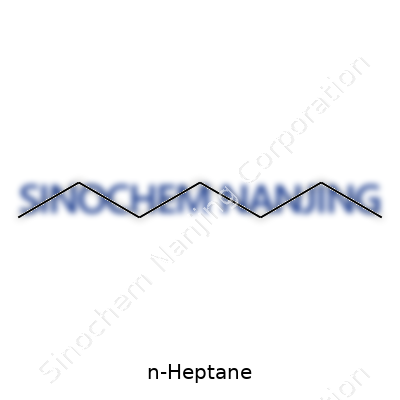
| Names | |
| Preferred IUPAC name | heptane |
| Other names |
Dipropylmethane Heptan Heptane n-Heptan n-Heptane |
| Pronunciation | /ɛn ˈhɛp.teɪn/ |
| Identifiers | |
| CAS Number | 142-82-5 |
| Beilstein Reference | 635757 |
| ChEBI | CHEBI:43098 |
| ChEMBL | CHEMBL1407 |
| ChemSpider | 8319 |
| DrugBank | DB01926 |
| ECHA InfoCard | ECHA InfoCard: 027-008-00-2 |
| EC Number | 203-889-2 |
| Gmelin Reference | 63538 |
| KEGG | C06584 |
| MeSH | D006511 |
| PubChem CID | 8900 |
| RTECS number | MI7700000 |
| UNII | 839A15RM3Z |
| UN number | UN1206 |
| Properties | |
| Chemical formula | C7H16 |
| Molar mass | 100.21 g/mol |
| Appearance | Colorless liquid |
| Odor | Gasoline-like |
| Density | 0.684 g/cm³ |
| Solubility in water | 0.0003 g/100 mL (20 °C) |
| log P | 4.66 |
| Vapor pressure | 45.0 kPa (at 20 °C) |
| Acidity (pKa) | ~50 |
| Magnetic susceptibility (χ) | -9.6×10⁻⁹ |
| Refractive index (nD) | 1.3876 |
| Viscosity | 0.386 cP (at 20°C) |
| Dipole moment | 0.00 D |
| Thermochemistry | |
| Std molar entropy (S⦵298) | 298.0 J·mol⁻¹·K⁻¹ |
| Std enthalpy of formation (ΔfH⦵298) | -167.0 kJ/mol |
| Std enthalpy of combustion (ΔcH⦵298) | -4817.0 kJ/mol |
| Pharmacology | |
| ATC code | V07AB10 |
| Hazards | |
| GHS labelling | GHS02, GHS07, GHS08 |
| Pictograms | GHS02,GHS07 |
| Signal word | Danger |
| Hazard statements | H225, H304, H315, H336, H411 |
| Precautionary statements | P210, P301+P310, P331, P303+P361+P353, P304+P340, P305+P351+P338, P403+P235, P501 |
| NFPA 704 (fire diamond) | 3-0-1-FLAM |
| Flash point | -4 °C |
| Autoignition temperature | 223 °C (433 °F; 496 K) |
| Explosive limits | Explosive limits of N-Heptane: "1.05% (LEL) - 6.7% (UEL) |
| Lethal dose or concentration | LD50 Oral Rat 5,000 mg/kg |
| LD50 (median dose) | LD50 (median dose): Oral rat LD50: > 5,000 mg/kg |
| NIOSH | RJ6300000 |
| PEL (Permissible) | 400 ppm |
| REL (Recommended) | 400 mg/m³ |
| IDLH (Immediate danger) | 750 ppm |
| Related compounds | |
| Related compounds |
Hexane Octane Nonane Decane |



