Monomethylamine Hydrochloride: More Than a Chemical, A Vital Force in Modern Industry
Tracing the Roots: Historical Development
Monomethylamine hydrochloride rarely makes headlines, but over the years it has carved a significant place for itself in the chemical industry. The history stretches back to the early experimentation with amines in the late 19th and early 20th century, when chemists first understood that small modifications to ammonia could produce a variety of substances with unique behaviors and uses. Early work showed methylation transformed ammonia into a reactive, versatile building block. Researchers soon produced monomethylamine hydrochloride by bubbling methylamine gas into hydrochloric acid, capturing both a manageable solid and the essence of a new era in chemical synthesis. This chemistry allowed pharmaceuticals and agricultural industries to innovate in ways that changed modern life, giving us some of the precision tools for controlling plant growth, manufacturing dyes, and making increasingly complex medicines.
Product Overview: Understanding the Real Stuff
In my own research days, a bottle labeled monomethylamine hydrochloride always sat on the lab shelf, a white-to-off-white crystalline powder that was easy to weigh out or dissolve in water. Monomethylamine hydrochloride plays a supporting role in countless chemical syntheses, forming bonds that otherwise resist easy manipulation. The reputation of this material comes from consistency and reliability; factories and labs lean on it as a dependable source of methyl groups and as an intermediary for substances where every atom counts. This reputation comes not from flash but from the kind of steady importance that builds over decades. In fields like pharmaceuticals, that means less risk, fewer recalls, and results that matter on practical terms.
Physical & Chemical Properties: What Matters in the Lab and on the Floor
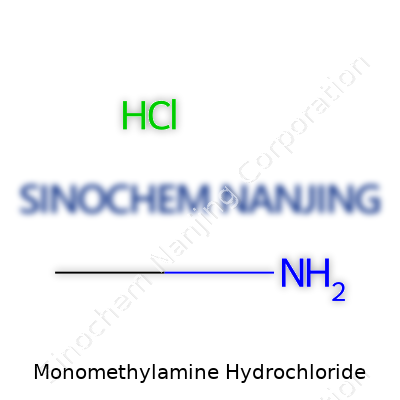
Anyone who’s handled it in person knows that physical form really guides how a material gets used and stored. Monomethylamine hydrochloride comes as a solid, not a gas or liquid, which means it can be handled, weighed, and dissolved without much drama. The substance dissolves easily in water but will not invite spontaneous combustion or melt under normal room conditions. It delivers a pungent, ammoniacal smell, and anyone uncapping a bottle recognizes it instantly. Chemical structure stands out for its simplicity: a methyl group connects to an amine, which then secures a hydrochloride counterion. This simplicity makes it versatile. It reacts as a source of methylamine without the challenge of handling volatile, hazardous gases. The melting point stays high enough for stable storage but low enough for various chemical reactions.
Technical Specifications & Labeling: Clarity for the User
Lab techs, industrial workers, and shipping staff all care about clear and precise labeling—and for good reason. Incorrectly labeled or impure materials cause failures or even dangers. Purity standards for monomethylamine hydrochloride in research and manufacturing contexts often reach above 98%, sometimes higher for pharmaceutical work. The labels warn about inhalation, skin contact, and proper storage, because even one slip in handling can mean exposure to an irritant. Containers demand labels that state “monomethylamine hydrochloride,” CAS number, and hazard icons—not just words, but real signals about what’s inside. Having spent time dealing with regulatory audits, I can say that transparency in labeling slices through uncertainty and reassures both workers and supervisors.
Preparation Method: From Laboratory Synthesis to Industrial Scale
On small or large scales, producing monomethylamine hydrochloride follows a straightforward route. Chemists introduce methylamine gas into a solution of hydrochloric acid, which results in the immediate formation of the hydrochloride salt. Later, evaporative techniques bring the purified crystalline material to the fore. On the factory floor, engineers scale up this procedure with careful controls on pressure and temperature, reinforcing safety for workers and stabilizing output for consistent supply. Any shift from lab to commercial plant brings up questions around waste streams, gas scrubbing, and solvent recovery. I’ve come to respect the careful balance between achieving high purity and working within environmental guidelines, especially as more attention lands on “green” chemistry and sustainable practices.
Chemical Reactions & Modifications: The Workhorse of Synthetic Chemistry
Monomethylamine hydrochloride stands out for the range of reactions it enables. It serves as a methylating agent in the manufacture of dyes, pharmaceuticals, pesticides, and surfactants. In the hands of a skilled organic chemist, it creates specific linkages or helps build more elaborate amines. The hydrochloride portion stabilizes the amine, making it much less volatile and more manageable. This chemistry matters most in the details: adding a methyl group can change a drug’s bioavailability, tweak a pesticide’s effectiveness, or shift the way a dye absorbs light. Having seen the diversity of chemical innovations that trace back to this compound, from antibiotics to herbicides, I can vouch for its behind-the-scenes importance. The product’s flexibility in both classical batch and continuous-flow settings highlights how far foundational chemistry still carries the world’s industries.
Synonyms & Product Names: Cutting Through Confusion
Names in chemistry can start arguments or rescue the day, depending on context. Monomethylamine hydrochloride often appears under other names, including methylamine hydrochloride or methylammonium chloride. This isn’t just an academic point. Mislabeling or mistaken identity in a lab inventory can spell disaster for synthesis planning or even push regulatory paperwork into a snarl. More obscure synonyms sometimes filter through from older literature, but most chemists trust CAS numbers and standardized IUPAC naming to avoid confusion. In my experience, clarity in chemical naming supports both safety and efficient research.
Safety & Operational Standards: Rules Built from Hard Lessons
Strict rules emerge after real incidents. Inhalation of dust or contact with skin or eyes produces immediate irritation, sometimes severe, and every new tech learns respect for basic safety equipment: goggles, gloves, and adequate ventilation. Storage rules reflect both chemical and regulatory needs, with dry, cool storage well away from oxidizers or incompatible reactants. I’ve sat through enough safety briefings and written enough incident reports to know these measures protect in real, concrete ways. Safety data sheets advise prompt washing after exposure, no eating or drinking around open containers, and proper disposal in line with local norms. Emergencies from monomethylamine hydrochloride remain rare, but only because generations of scientists and operators have taken safety lessons seriously.
Application Area: Breadth from Basic Science to Industry Giants
The reach of monomethylamine hydrochloride spreads far beyond the chemistry classroom. In agriculture, it forms key ingredients in herbicides and plant growth regulators, helping farmers control crops and weeds. Pharmaceutical makers depend on it for making antihistamines, antibiotics, and a host of other medicines, where tiny changes at the atomic level transform safety and effectiveness. Paints and coatings benefit from derived amines that improve quality or durability. In water treatment, formulations use monomethylamine salts to remove heavy metals or control pH. My work in consumer products showed me that few people realize how much these upstream chemicals shape cleaner water, better food safety, and shelf-stable medicines.
Research & Development: Pushing the Boundary
Researchers constantly search for new uses or safer processes. Modern work explores eco-friendly synthesis routes that cut down hazardous waste and energy use. Pharmaceutical R&D refines old routes, boosting yields or slashing costs. Some groups engineer catalysts to speed up or shrink the reaction footprint. In my collaboration with process engineers, I saw firsthand how small process tweaks squeezed costs and reduced emissions, a win for profitability and environmental health. Data keeps piling up on new applications, including advanced battery electrolytes or even new categories of polymers. Each advance proves that familiar chemicals like monomethylamine hydrochloride never lose their core relevance.
Toxicity Research: Addressing the Dark Side of Useful Chemistry
Any substance that powers large portions of industry deserves careful scrutiny for toxic effects. Lab findings point out that direct exposure risks matter, with eye, skin, or lung irritation topping the list for short-term contact. Even so, long-term studies continue on chronic low-level exposure, environmental fate, and metabolite formation in soils and water. I’ve sat across from toxicologists debating new data on agricultural runoff and potential links to water contamination. Regulatory bodies keep a watchful eye, and ongoing work strives to identify population risks and protective thresholds. The bottom line is that every gain in understanding supports smarter handling, smarter regulation, and reduced risk for workers and communities.
Future Prospects: A Pillar for New Chemistry
Monomethylamine hydrochloride’s story does not end; it keeps evolving along with technology. Green chemistry trends push for manufacturing methods that limit energy use and waste. New drug discovery requires even purer intermediates and tighter controls on by-products. Battery innovation and advanced materials design draw on the foundational amine chemistry shaped by compounds like this one. Watching scientific literature, it’s clear that classic chemicals form the backbone for breakthrough science, and their ongoing refinement parallels shifts in environmental goals and industrial efficiency. From my own work, I expect that as regulations sharpen and new needs emerge, the development and application of monomethylamine hydrochloride will pivot right alongside to keep meeting the real-world demands that only chemistry, with its backbone of experience and adaptability, can answer.
What is Monomethylamine Hydrochloride used for?
Why Monomethylamine Hydrochloride Matters
In many labs and factories, chemicals with complicated names like monomethylamine hydrochloride do not get much attention outside their regular crowd. That changes pretty quickly if you work anywhere near pharmaceutical manufacturing, chemistry research, or some stretches of the agrochemical industry. People sometimes don’t realize how key certain raw materials are in making things we use daily—medicines, crop treatments, water treatments. Monomethylamine hydrochloride carves out its quiet, persistent place in all of those processes.
Pharmaceuticals: The Core Role
Pharma companies depend on this compound at a surprising scale. Monomethylamine hydrochloride acts as a building block for antihistamines, antidepressants, and several drugs used in cancer treatment. I spent a summer interning in a regional pharmaceutical plant, and saw how these "intermediate" materials stack up. If a batch misses specs—purity, moisture content—you don’t just lose a day. You scrap entire productions. For chemists, that means careful sourcing and continual quality checks.
Some studies published in peer-reviewed journals point out that small mistakes early in synthesis lead to long-term side effects or lowered drug potency. So, strict handling pays off twice over—better safety, better outcomes for patients.
Agricultural and Chemical Applications
Moving over to agriculture, monomethylamine hydrochloride finds a place in making pesticides and herbicides. These chemicals help improve crop yields and control invasive plants. As a person with family in farming, I’ve watched entire seasons get rescued by timely chemical interventions—often involving ingredients most have never heard of. The safety conversation comes up a lot whenever new pesticides hit the market, so companies and regulators lean on reliable records and history. There’s less tolerance today for any step in the process lacking transparency or oversight.
Industrial Chemistry and Water Treatment
Industrial chemists use this compound as a raw material for making solvents, surfactants, and rubber-processing chemicals. Some municipal water treatment plants also rely on methylamine derivatives for removing impurities. The impact gets underestimated—clean, safe water is still something too many people go without globally. Recognizing reliable chemical inputs means safer treatment processes.
The importance goes beyond the lab. In places where old equipment meets restricted budgets, reliable access to such chemicals can mean the difference between a functioning plant or a public health scare.
Challenges and Pathways Forward
Monomethylamine hydrochloride has drawbacks. Headlines about chemical plant accidents often trace back to bad storage or mishandling. The U.S. Occupational Safety and Health Administration (OSHA) and similar agencies worldwide issue updated guidelines for handling and training for it. I’ve met process engineers who say investing in updated storage—right down to labeling and climate control—cut near-misses and costly shutdowns.
Sustainable chemistry plays into the discussion more every year. Researchers look for options that create less hazardous waste or don’t travel as far between factory and field. In the future, more companies will likely share data on supply chain transparency and batch tracing. People want to know how things are made, and that doesn’t stop with food labeling.
Looking at the Future
Monomethylamine hydrochloride may sound obscure, but its supply chain touches millions. Whether you’re picking up a prescription or driving past fields spared from weeds, there’s a good chance this unassuming compound plays a silent role. More conscious handling, better transparency, and smarter sourcing help keep it in its proper place—serving people, safely and reliably.
What is the chemical formula of Monomethylamine Hydrochloride?
Understanding Monomethylamine Hydrochloride
Monomethylamine hydrochloride is something I first encountered during a lab session back in college. My professor dropped a small white sample into a beaker, and I remember the sharp, fishy smell that followed. The substance is more than just a chemical name from a dusty textbook; it plays a real role in pharmaceuticals, agriculture, and the lab work driving everyday products.
Its Chemical Formula: Simple, Yet Significant
Breaking it down, monomethylamine hydrochloride combines a methylamine molecule with hydrochloric acid. The result is a simple compound: CH5N·HCl, or more clearly, CH3NH2·HCl. The methylamine (CH3NH2) part links up with the hydrogen chloride (HCl), making a crystalline salt that dissolves easily in water. Every time someone at the pharmacy grabs an allergy pill or a farmer prepares a special fertilizer, there’s a good chance this compound is along for the ride, sitting in the supply chain behind the scenes.
Why the Formula Matters
Knowing the chemical formula matters because, in chemistry, small changes mean big differences. Missing a single hydrogen atom can mean the difference between a helpful compound and something much more harmful. The formula for monomethylamine hydrochloride acts as a guarantee. It guides quality control in the warehouse and in the lab. Factories use it to set up reactor conditions. Hospitals use it to vet suppliers. Chemists rely on precise formulas to keep experiments reproducible. Getting a formula wrong isn’t a minor typo; in regulated industries, it might even land someone in legal trouble or put lives at risk.
Risks and Responsible Handling
From my own lab experiences, one thing stood out: even common chemicals carry real risk if not treated with common sense. Monomethylamine hydrochloride, being a simple salt, can still be an irritant. Respiratory masks and fume hoods turn from “nice-to-haves” into mandatory safety features once you’ve had a mild exposure incident. Regulations exist for a reason. Improper storage leads to leaks or dangerous reactions, especially if strong oxidizers or incompatible materials are hanging around. Anyone dealing with this substance on a regular basis should check not just the label but read the full data sheet. Regulators don’t write those rules to fill out paperwork; they’re responding to accidents that have happened before.
Solutions and Improvements in Handling
Setting up proper storage protocols—like keeping monomethylamine hydrochloride in airtight containers and away from moisture—makes a huge difference. Institutions with regular chemical use benefit from training sessions that cover not just the “how,” but the “why.” Even labeling protocols at the most basic level help workers react faster in an emergency. It helps to encourage a workplace culture where people talk about near misses and share tips on better handling. I remember a time when a colleague flagged a leaky container; that small warning stopped a bigger problem before it started. Investing in safer storage, practicing clear communication, and giving everyone access to the right protective gear can keep both products and people safe.
Is Monomethylamine Hydrochloride hazardous or toxic?
Looking at Monomethylamine Hydrochloride Up Close
Anyone who works in a lab or even walks through a facility with rows of tightly sealed chemical drums learns pretty quickly that not every tough-looking label means instant danger. Monomethylamine hydrochloride, a white crystalline powder, sits in that gray space. Its official Material Safety Data Sheet doesn’t exactly shout “extreme hazard,” yet it also doesn’t come with a free pass for carefree handling.
Potential Hazards: What Science Shows
Monomethylamine hydrochloride’s main risk hinges on inhalation and direct contact. Breathing in the dust or letting the substance touch your skin isn’t a smart move. The U.S. National Library of Medicine and several reputable chemical suppliers point out that inhalation causes irritation of the nose, throat, or lungs, and skin contact can result in redness and discomfort. That’s the stuff most industrial workers have experienced the first time they got a bit too close without gloves or forgot to flip their lab coat cuffs. Anyone with respiratory conditions needs to show extra caution because irritation tends to hit harder.
Toxicity data doesn’t place this compound near the top of the charts, but quantity always matters. Low to moderate-sized exposures create symptoms like headache, dizziness, or mild gastrointestinal upset. Big doses, or long-term exposure by inhalation, could push toward more severe symptoms including possible damage to internal organs. But these cases appear in the literature as outliers, the exception rather than the rule, generally coming from accidental, unprotected handling or industrial-scale mishaps.
Weighing Environmental and Workplace Impact
Labs and factories use this compound for organic synthesis and specialty chemicals, which means it’s mostly out of reach for the general public. Where things go wrong is in workplaces cutting corners on ventilation, eye protection, or safe chemical storage. A 2021 report from the European Chemicals Agency cited incidents of improper waste disposal and poor protective gear leading to minor outbreaks of rash and sore throats among chemical technicians. No hospitalizations, but enough trouble to trigger a quick round of safety trainings.
Unlike some chemicals, this salt version doesn’t turn into a gas easily at room temperature. That reduces the risk of broad-based airborne exposure. Spills happen, though. If monomethylamine hydrochloride finds its way into local water, fish and plants might face more danger than people. Hence, waste disposal protocols matter. The EPA looks for facilities to neutralize and contain spills fast to prevent those slow-moving risks from escalating.
Solutions Grounded in Real Use
Putting a stop to accidents doesn’t need a Nobel Prize innovation. Decent gloves, solid goggles, and decent ventilation handle 95% of the problem. Managers keeping up with annual safety audits and surprise spot checks finish the job. For smaller labs or schools, it makes sense to scale these habits down rather than cut corners altogether. Early education helps too. People get cautious around chemicals like monomethylamine hydrochloride once they understand how a rash can become a real distraction for a few days—or a bigger hazard down the road.
The bottom line hinges on respect for the substance. Not fear, not recklessness, but practical steps that come from knowing what’s actually in the bottle. Monomethylamine hydrochloride can keep doing its job in manufacturing and research if folks remember to keep their gloves on and the room well aired out.
How should Monomethylamine Hydrochloride be stored?
Looking at Risks and Daily Realities
Storing chemicals safely isn’t just a matter of rules and standards. Lives and reputations sit on the line every day. Monomethylamine hydrochloride, a material often used in laboratories and manufacturing, falls right under this banner. It’s a white crystalline solid, quick to absorb moisture from the air and, once it picks up water, it can cause equipment corrosion and even compromise the results in a lab or factory. This isn’t just a theoretical risk — I’ve seen entire shipments clump together because someone left the lid loose over a humid weekend. That kind of mistake wastes material and drives up costs.
Keys to Safe Storage
Monomethylamine hydrochloride stores best in a cool, dry space, far from direct sunlight and sources of heat. I remember a facility that stored this chemical next to an east-facing window, and morning sunlight heated the jars enough to create condensation inside. Water got in, the chemical caked, and the expense doubled as a result. A dry, room-temperature storeroom with some air flow keeps those losses to a minimum, and shelving chemicals above the floor avoids the worst of spills and leaks if floods or cleaning water seep in.
Chemical reactions can ruin more than your material — they put workers in danger. I’ve learned this from long days in labs where people assumed plastic was safe for all chemicals. Monomethylamine hydrochloride can attack steel and some alloys when moisture is present, so storing it in tightly sealed, labeled containers made from HDPE or glass makes sense. Avoid using cheap jars or metal lids that could corrode and contaminate the supply over time.
Separation and Labeling
Stashing every powder together in one locked cabinet sets you up for disaster. Monomethylamine hydrochloride doesn’t get along with strong oxidizers or acids. Keep these groups far apart. It’s easy to lose sight of this if you’re rushing or space is tight, but organization is cheaper than recovering from a fire or inhalation emergency. Thick, clear labels with the chemical name, concentration, and hazard icons save everyone downstream time and guesswork, especially if a new technician or emergency crew needs to find something fast.
Access, Training, and Emergency Plans
Storing dangerous materials never stops with the shelf. Only trained staff with up-to-date safety instruction should access areas where monomethylamine hydrochloride is stored. I worked in one lab where management handed out storeroom keys to anyone; small mistakes stacked up quickly. Now, protocols call for sign-in sheets, dedicated keys, and documented training — and we haven’t had a storage mishap since. This helps everyone feel safer and keeps liabilities way down.
Every storage plan deserves an emergency routine. Spills do happen, and preparation makes a difference. Spilled monomethylamine hydrochloride releases vapors, so a proper spill kit with nitrile gloves, safety goggles, and dedicated absorbent pads belongs nearby. Ventilating the area and keeping an emergency shower close by builds real trust with staff and shows inspectors that shortcuts never rule the day.
Respect for Rules Means Business Runs Smooth
Businesses pick up a reputation based on how they store and use chemicals. Inspectors walk in looking for slip-ups. Small investments in climate control, locked cabinets, clear labels, and robust training pay off every year by keeping accidents rare and downtime nearly unheard-of. Suppliers appreciate careful customers, insurance stays lower, and workers go home safe. Using common sense, discipline, and a bit of respect for the materials keeps monomethylamine hydrochloride safely where it belongs — on the shelf and out of harm’s way.
What purity levels are available for Monomethylamine Hydrochloride?
Why Purity Counts in Chemicals
Reliable results rely on starting with chemicals that meet required purity levels. Monomethylamine hydrochloride, used in research, medicines, and various industries, offers a good look at why purity isn’t just a piece of technical jargon—it shapes outcomes, safety, and trust in results. Anyone in the lab can tell stories about batches that ruined a day’s work just because a compound was a few percent off from spec. Even a small impurity can spark unwanted side reactions or lead to regulatory headaches.
Purity Grades You’ll Find on the Market
If you sift through catalogs or talk with suppliers, the most common purity levels for monomethylamine hydrochloride are above 98%. Many stock a grade labeled 98%, meeting the standards for basic research and industry. Sometimes, 99% or higher finds its way into high-stakes or tightly regulated processes, like pharmaceuticals or advanced materials. That extra percent might sound minor, but it can mean less background "noise" in analytical tests, fewer side-products in synthesis, and less stress about failing audits.
Food and drug applications almost always demand higher purity, since even trace contaminants can throw off safety or effectiveness. In schools or smaller labs, where budgets get stretched, the 98% grade often covers most basic needs, as long as the application won’t risk safety or accuracy.
Purity in Practice: What Do the Numbers Mean?
Purity numbers reflect more than just “cleanliness”—they mark how much of the product is exactly what’s listed on the label. Purity gets checked using lab tools like HPLC, GC-MS, or titration, and the numbers run as high as 99.5% in some pharmaceutical and electronic settings. Anything less than 98% usually means a batch carries more contaminants and isn’t worth the risk for applications that need strict control.
Companies rarely offer “technical grade” monomethylamine hydrochloride below 97% because most buyers need a higher standard. The impurities not only lower the reproducibility of results, but also add extra work in cleaning or calibrating equipment after use. Each percentage point cut from purity forces more quality control checkpoints, and those extra checks cost both time and money.
Concerns That Come with Lower Purity
Lower purity compounds can sneak in substances you weren’t planning to deal with, making experiments or processes unpredictable. For folks making bulk chemicals, some leeway might exist, but anyone synthesizing a molecule for a clinical trial or building an electronic component wants assurance from proven high-purity supply. This points back to safety, because even a trace impurity sometimes carries toxic or unstable material that can harm users or equipment.
Regulators keep a close eye on documentation for each finished batch that tests above 98%. If a process drifts out of spec, the entire batch might face a recall or be quarantined, leading to expense and lost time. This kind of scrutiny keeps manufacturers honest and pushes many to invest in better purification tech or to source from suppliers who can back up their claims with certificates of analysis and established history.
Raising the Bar: Keeping Purity High
Investing in good manufacturing and analytical practices remains the clearest way to keep purity up and surprises down. Looking for suppliers trusted by peers and tracked by regulatory bodies goes a long way. For lab-scale users, always check for proper documentation showing batch analysis and ask about possible contaminants—they might save more than just money. In fields where safety and reliability count most, paying a small premium for higher purity holds up as a sound decision that protects research, people, and investments.
| Names | |
| Preferred IUPAC name | methanamine hydrochloride |
| Other names |
Methanamine hydrochloride Methylamine hydrochloride Monomethylammonium chloride |
| Pronunciation | /ˌmɒn.oʊˌmiːθ.əl.əˈmiːn ˌhaɪ.drəˈklɔː.raɪd/ |
| Identifiers | |
| CAS Number | 593-51-1 |
| Beilstein Reference | 2939618 |
| ChEBI | CHEBI:62891 |
| ChEMBL | CHEMBL14268 |
| ChemSpider | 16042 |
| DrugBank | DB14271 |
| ECHA InfoCard | 100.006.683 |
| EC Number | 214-697-4 |
| Gmelin Reference | 8178 |
| KEGG | C06384 |
| MeSH | D004644 |
| PubChem CID | 13773 |
| RTECS number | BQ9625000 |
| UNII | 5DVB1L2JJ3 |
| UN number | UN1233 |
| Properties | |
| Chemical formula | CH5N·HCl |
| Molar mass | 81.54 g/mol |
| Appearance | white crystalline powder |
| Odor | Ammonia-like |
| Density | 0.954 g/cm³ |
| Solubility in water | Very soluble |
| log P | -2.2 |
| Vapor pressure | Negligible |
| Acidity (pKa) | 10.64 |
| Basicity (pKb) | 10.64 |
| Magnetic susceptibility (χ) | -48.0e-6 cm³/mol |
| Dipole moment | 1.47 D |
| Thermochemistry | |
| Std molar entropy (S⦵298) | 97.6 J·mol⁻¹·K⁻¹ |
| Std enthalpy of formation (ΔfH⦵298) | –91.6 kJ·mol⁻¹ |
| Std enthalpy of combustion (ΔcH⦵298) | -274.2 kJ/mol |
| Hazards | |
| Main hazards | Harmful if swallowed, causes skin and eye irritation, may cause respiratory irritation. |
| GHS labelling | GHS07, GHS05 |
| Pictograms | GHS06,GHS05 |
| Signal word | Warning |
| Hazard statements | H302: Harmful if swallowed. H315: Causes skin irritation. H319: Causes serious eye irritation. H335: May cause respiratory irritation. |
| Precautionary statements | P264, P280, P302+P352, P305+P351+P338, P332+P313, P337+P313, P362+P364 |
| NFPA 704 (fire diamond) | 1-3-0 |
| Lethal dose or concentration | LD50 (oral, rat): 4100 mg/kg |
| LD50 (median dose) | LD50 (median dose): Oral rat LD50: 698 mg/kg |
| NIOSH | NIOSH: KQ2450000 |
| PEL (Permissible) | PEL (Permissible Exposure Limit) for Monomethylamine Hydrochloride: 10 ppm (parts per million) or 24 mg/m³ (OSHA, as methylamine) |
| REL (Recommended) | 200 mg/m³ |
| IDLH (Immediate danger) | Not established |
| Related compounds | |
| Related compounds |
Ammonium chloride Dimethylamine hydrochloride Trimethylamine hydrochloride Monoethylamine hydrochloride Methylamine Dimethylamine Ethylamine |



