Lauric Acid: A Deep Dive Into Its Role, Development, and Future
Tracing the Development of Lauric Acid
Lauric acid has a story intertwined with both natural resources and industrial progress. For centuries, people have depended on coconut oil and palm kernel oil for soap production and cooking, probably without knowing lauric acid was a main player. Chemists finally isolated it in the mid-19th century, calling attention to its clean-burning qualities and the way it could help harden soaps. Since then, lauric acid has made its way from old-fashioned soap recipes into medicine cabinets and manufacturing lines around the world. Its presence in diets and products tells a tale of changing technology, global agriculture, and shifts in consumer preference, especially as people chase after health-focused ingredients and “natural” labels on food products.
Understanding What Lauric Acid Offers
Most folks run into lauric acid through daily life without realizing it. It’s a medium-chain saturated fatty acid, which means it behaves differently in the body than longer-chain fats. Manufacturers appreciate its solid-yet-creamy texture at room temperature, making it show up not only in soaps but in skin care creams and sometimes even chocolate. The dairy industry knows lauric acid as one of the fatty acids giving milk its character; the food and supplement industries use it as a supplement, arguing it offers antimicrobial benefits. Anyone opening a jar of coconut oil or looking at the back of an energy bar might see lauric acid’s touch – though, more often, it hides under broader ingredient names.
Physical and Chemical Face of Lauric Acid
Lauric acid, or dodecanoic acid, shows up as a white, powdery or flaky solid with a gentle scent that could remind you of bay leaves or a walk near coconut groves. It melts at just above room temperature, so it softens between your fingers. Water doesn’t dissolve it, but alcohols and other non-polar solvents break it down easily. In chemistry, lauric acid sits right in the middle of the spectrum between short- and long-chain fatty acids, which gives it a unique edge in formulation and digestion. Chemically, it’s a twelve-carbon chain with a carboxylic acid group at one end, explaining why it holds up well in both high-heat cooking and industrial cleaning settings.
Chemists’ Approach: Preparation Methods
Industrial extraction of lauric acid looks nothing like the quiet, artisanal processes shown in health documentaries. Suppliers start with coconut or palm kernel oil, both loaded with the lauric acid-rich triglycerides. They separate out the fatty acids through hydrolysis, then distill lauric acid off using vacuum distillation. This approach gives a purer product without risking off-odors or degraded quality. At home, you might theoretically free lauric acid from coconut oil with a blend of heat, lye, and patience (just don’t expect high purity), and most people simply leave these steps to large-scale suppliers. Over the past century, process improvements have helped boost yield, lower costs, and ensure safer handling, especially important as lauric acid demand rises in emerging markets.
How Lauric Acid Changes Through Chemistry
Lauric acid doesn’t just settle for one role. Chemists turn it into a wide array of byproducts through simple reactions – making esters for flavors and fragrances, surfactants for cleaners, or mono- and diglycerides as food additives. Transesterification sends lauric acid down the path toward biodiesel, a rare but clever application. Hydrogenating lauric acid leads to lauryl alcohol and other derivatives found in detergents. Researchers continue to probe its potential: playing with its structure gives rise to new surfactants, emollients, and materials that withstand environmental stress or microbial attack. Altering lauric acid’s chemical base often ties back to making everyday goods gentler, safer, or more effective at their job.
The Web of Names and Uses
Chemistry circles like to call lauric acid by its systematic name, dodecanoic acid, a nod to its twelve-carbon chain. Sometimes it appears as "laurinic acid" or just “cocoic acid” on older product labels. The cosmetic and personal care world plugs it into formulas under these names, but also as part of multi-ingredient blends. On food and supplement labels, it’s often nestled under “medium-chain triglycerides (MCTs)” or as “coconut oil derivatives.” In the pharmaceutical space, lauric acid masquerades as an excipient or an active antimicrobial ingredient. The name might change, but the core benefits and functions keep it relevant in dozens of applications.
Safety and Operations on the Ground
Handling lauric acid rarely poses health risks in the concentrations consumers see. Industrial environments and laboratories treat it with basic caution because it can cause mild skin or eye irritation in high-strength or bulk form. Inhalation of powders or contact with concentrated acid isn’t common outside manufacturing, but industry workers still wear masks and gloves. Food-grade and cosmetic-grade lauric acid must pass regulatory checks, usually aligned with global food safety and cosmetic safety guidelines. In practice, responsible labeling and cleaning routines go a long way to keeping lauric acid a safe, unremarkable part of operations.
Where It Shows Up: Application Areas
Lauric acid pops up in more places than casual consumers expect. The soap and detergent sector counts on lauric acid for products that lather well and clean even in hard water. The cosmetic industry uses it in moisturizers, shampoos, and sunscreens for its skin-feel and gentle touch. In the world of food, energy bars, and supplements, lauric acid—packed in the form of MCT oil—attracts athletes and people on high-fat diets. Pharmaceutical manufacturers value its antimicrobial and antiviral behavior, building it into topical treatments and capsules. Agricultural and animal-feed industries also explore lauric acid’s ability to boost animal health by tweaking gut microbiota. Its versatility stems from a mix of chemical structure and historical trust.
Spotlight on Research and Development
Companies and public labs investigate lauric acid for everything from green chemistry to medical breakthroughs. Food scientists want to verify claims about immune-boosting effects and energy metabolism. Biofuels researchers look at its ability to produce greener, more efficient fuels. Medical researchers tackle lauric acid’s antimicrobial effects, especially as interest grows in alternatives to antibiotics. The challenge: separating hard data from marketing hype—especially since supplement claims often leap ahead of what clinical trials support. Technological improvements in extraction and purification yield purer lauric acid at lower ecological and financial costs, promising a broader set of applications down the road.
Digging Into Toxicity and Health Points
Toxicity studies, both old and recent, show lauric acid has a low acute toxicity profile. For most people, especially in dietary levels found in coconut or palm oils, it looks safe. Debates flare up over cardiovascular risks, since lauric acid is a saturated fatty acid, but researchers argue about whether lauric acid behaves like longer-chain saturated fats in the body. Studies indicate lauric acid may help raise “good” HDL cholesterol. The real complications emerge with possible allergies (rare, but worth noting) and poorly substantiated supplement claims. Regulatory agencies keep a close eye on research, and most recognize lauric acid as safe for the general population, provided intakes don’t spiral far above real-world levels.
Looking Forward: Lauric Acid’s Prospects
Future momentum around lauric acid likely grows out of both health awareness and moves toward sustainable manufacturing. The public looks for ingredients that can pull double duty: safe in the home, with roots in natural agriculture, and with credentials in cutting-edge science. Interest in bio-based personal care and food ingredients only drives the market further. Researchers hope to push lauric acid into more specific roles—whether in polymers, pharmaceuticals, or functional foods—as supporting data piles up. Shifting agricultural patterns and consumer sentiment around palm oil could also nudge producers to refine extraction, cut waste, and share best practices to protect ecological resources. In the end, lauric acid’s mix of old-world trust and modern chemical flexibility gives it a distinct path in the years ahead.
What are the health benefits of Lauric Acid?
Natural Fats Sometimes Get a Bad Rap
People hear “saturated fat” and think heart disease or clogged arteries. Coconut oil has caught its fair share of heat for this reason. But scientists haven’t painted all saturated fats with the same brush, and lauric acid—one of coconut oil’s prime ingredients—sets itself apart in interesting ways.
Lauric Acid and the Body’s Defenses
I grew up in a household where my mother used coconut oil for almost everything—cooking, baking, even rubbing it on our skin. Long before the health trends, she’d heard from her elders that it “kept you strong.” I wondered if there was any science behind that claim. Turns out, lauric acid forms nearly half the fats in coconut oil, and research supports some unique benefits.
Lauric acid transforms into monolaurin in the body, a compound known to fight bacteria, viruses, and fungi. One study published in the Journal of Medicinal Food showed monolaurin can disrupt the protective walls of bacteria species like Staphylococcus aureus. While no single food will substitute for medical care, it’s hard to ignore that monolaurin draws interest from infectious disease researchers, especially at a time when antibiotic resistance is a growing problem.
Cholesterol and the “Medium Chain” Twist
Most fats take a slow trip through the digestive system. Lauric acid, though, belongs to a group called “medium-chain triglycerides” (MCTs). The body uses MCTs faster for energy and stores less of them as fat. Studies out of universities like Harvard found lauric acid does increase both LDL (“bad”) and HDL (“good”) cholesterol, but the boost in HDL is usually bigger. A higher HDL:LDL ratio often relates to better heart health, according to the American Heart Association. So if you’ve feared coconut oil as a kitchen villain, the conversation deserves more nuance.
Supporting the Skin’s Barrier
Anyone who’s dealt with eczema or stubborn dry patches knows that the skin’s natural defense can use some help. Dermatologists recognize lauric acid’s role in keeping harmful microbes off the skin, which may help soothe conditions plagued by bacteria. Applying coconut oil to the skin has become common advice in clinics—and not just folk wisdom. Published work in Dermatitis points to lauric acid’s effect against Propionibacterium acnes, the bacteria that drive some acne types. The oil also locks moisture in, which gives relief from rough skin, especially in winter months.
Immune System Support Starts in the Gut
I learned firsthand during a stomach bug that plain food can be a lifesaver, but adding a little coconut milk to rice made a big difference for energy. Lauric acid helps protect the gut lining and keeps harmful bugs in check. Researchers in Southeast Asia, where coconut products are traditional, point to a lower rate of gut infections. They think lauric acid’s antimicrobial action may help explain this trend, although diet is complex and many other factors shape gut health.
What to Keep in Mind
Just because something is good for you, moderation still matters. Not every health claim about coconut oil stands up to rigorous testing. But using it in place of highly processed seed oils, especially in cooking, introduces lauric acid to the diet in a traditional way. People balancing their overall saturated fat intake should talk with a healthcare provider if they want to use coconut oil regularly. With more attention to the specific types of fats we eat, it becomes possible to make better choices that support strong immune function, healthy skin, and heart health.
Is Lauric Acid safe to consume daily?
Understanding Lauric Acid
Lauric acid shows up in plenty of discussions about nutrition and health. Found in coconut oil, palm kernel oil, and even human breast milk, this fatty acid played a role in traditional diets for centuries. At the store, you might spot coconut oil advertised for heart health, immunity, or hair care — all thanks to lauric acid. But questions keep coming: is it safe to eat regularly, or could it carry risks?
What Happens in the Body?
Digestion breaks lauric acid into energy or stores it as fat. Unlike longer-chain fats, lauric acid absorbs quicker through the gut. Some folks claim it helps fight bacteria and support metabolism. In the lab, lauric acid does seem to block some pathogens. But most research in people tracks cholesterol effects, not infections.
Lauric acid boosts both LDL (“bad”) and HDL (“good”) cholesterol numbers. Some see the rise in HDL as positive, but the full story is tricky. The American Heart Association points out that higher LDL from coconut oil, rich in lauric acid, probably outweighs any benefit from more HDL. Their review suggests those with heart disease or high cholesterol should choose unsaturated fats, like olive oil, instead.
Cultural Diets and Daily Use
In parts of the world like the South Pacific, coconut-based diets seem linked to low heart disease rates. Yet those diets skip processed food and sugary drinks, and daily activity runs high. Research funded by Harvard and others notes that shifting from traditional diets to Western eating often spikes heart disease risk, even when lauric acid stays in the mix.
Rural communities eating coconut daily don’t show the same heart issues as Americans eating lots of processed fats. Lifestyle factors, not just one type of fat, shape health. In my own experience traveling in Southeast Asia, folks cooking with coconut milk and oil seem healthy. But they walk miles a day, rarely eat processed snacks, and rely on fresh produce. Lifestyle cannot be ignored as a shield against risk.
Does Dose Make the Poison?
Small amounts of lauric acid in a diverse diet worry few nutrition experts. Problems arise with heavy coconut oil use, common in high-fat smoothie trends or bulletproof coffee. Studies show large doses — several tablespoons daily — often raise LDL cholesterol. The 2020-2025 Dietary Guidelines for Americans recommend keeping saturated fat below 10% of calories, which puts limits on daily coconut oil.
Safety for most healthy adults depends on amounts and what else appears on the plate. Eating whole coconut meat in dishes or using coconut milk occasionally lines up with many healthy eating patterns. Spoonfuls of refined coconut oil in everything look less wise, especially if someone deals with high cholesterol, diabetes, or heart risk.
Smart Choices Going Forward
Lauric acid pops up naturally in several foods. Most people can enjoy some, especially in the context of whole food diets. For those with heart disease history or risk factors, replacing coconut oil with olive or canola oil brings a safer choice. Food variety, limited processed items, and attention to overall saturated fat intake matter more than labeling any one ingredient as poison or cure.
Those with unique health needs benefit from talking with a registered dietitian or physician. Evidence points in one direction: moderation still works, and balance beats single-ingredient hype every time.
What are the main sources of Lauric Acid?
Lauric Acid in Nature’s Pantry
Plenty of folks have heard about lauric acid, but many don’t realize how often it turns up in daily diets and health conversations. Lauric acid, a medium-chain fatty acid, pulls a lot of attention for its health properties. I grew up hearing about coconut oil long before fancy health stores pushed it. Coconut oil delivers lauric acid in abundance—about 45 to 50% of its total fat content. You can see why coconut oil turns up in so many recipes, body products, and even wellness routines.
If you travel across tropical regions, coconut trees dot the landscape—and that’s where much of the world’s lauric acid starts its journey. People in Philippines, Indonesia, and parts of India rely on coconut for cooking, skin care, and Ayurveda. Cooking with coconut oil doesn’t just add flavor; it changes the nutrition profile thanks to the lauric acid content. Modern research highlights lauric acid’s antimicrobial effects, which adds scientific backing to what these communities have known for ages.
Palm Kernel Oil: An Industry Favorite
Palm kernel oil plays second fiddle to coconut, but it holds more lauric acid than most realize, with percentages hovering around 45%. It comes from the seed of the oil palm fruit. Lauric acid gives palm kernel oil its distinct properties. Food manufacturers often choose it for making non-dairy creamers, confectionery, and baked goods. Not every shopper checks the label, but palm kernel oil hides in plenty of processed foods, soaps, and shampoos.
The palm oil industry takes heat for its role in deforestation and habitat loss. Sustainability questions matter. Choosing certified sustainable sources allows consumers and businesses to support forest conservation efforts. Many countries work with groups like the Roundtable on Sustainable Palm Oil (RSPO) to ensure some accountability in the supply chain.
Animal Fats and Minor Players
Beyond plant oils, animal-derived fats serve up lauric acid, though not in massive amounts. Cow’s milk, goat’s milk, and their butters offer trace levels—usually less than 3% of their total fat. Specialty cheeses and full-fat dairy also slide some lauric acid into the mix. Unless someone eats a lot of dairy, these sources only add up to tiny contributions. Most Western diets rely more on plant oils for significant intake.
Babassu oil stands as another natural supplier. Harvested from a palm native to South America, babassu oil closely matches coconut in lauric acid content. Communities in Brazil turn to babassu for soap-making, cooking, and medicinal uses. It doesn’t show up as much on store shelves outside of South America, but as people search for alternatives to coconut and palm kernel oil, babassu offers potential.
Access, Choices, and Looking Ahead
Access to major sources of lauric acid depends on geography and economics. Families in tropical regions scoop up coconut oil for pennies, while supermarkets in colder climates sell it as a premium product. Palm kernel oil’s low price and easy extraction keep it popular in large-scale production. If more producers choose certified sustainable methods, consumers can enjoy these oils with a lighter conscience.
Paying attention to where lauric acid-rich oils come from helps the planet and communities tied to these crops. Supporting small producers, asking labels about sustainability, and balancing intake with other healthy fats can keep the benefits flowing without unwanted drawbacks.
Can Lauric Acid help with weight loss?
Understanding Lauric Acid
Lauric acid turns up in coconuts, coconut oil, and palm kernel oil. It’s a saturated fatty acid, and for years, fats like this carried blame for heart troubles and weight gain. Lately, lots of folks searching for a health edge have shifted gears, reaching for coconut oil for its so-called “healthy fat.” Researchers have dug into lauric acid to see what it brings to the table, beyond flavor.
What Science Says
Eat enough lauric acid and it behaves more like a medium-chain triglyceride (MCT) than a long-chain fat, and this makes a difference for energy and metabolism. Most fats need a longer process in the digestive system. Lauric acid goes to the liver and can get used for quick fuel, much like how athletes carb-load before a race. Reports in The Journal of Nutrition and Critical Reviews in Food Science and Nutrition point to this faster energy conversion.
The buzz about lauric acid's “fat-burning” power leans on this process. But here’s the catch: compared to other true MCTs like caprylic or capric acid, lauric acid sits at the edge. The body’s process for burning it for energy doesn’t always lead to more calories burned or fat lost.
Does It Actually Help Shed Pounds?
Plenty of people throw coconut oil in their smoothies, cook with it, or even add it to coffee, hoping for a trim waist. That said, direct human trials on lauric acid and weight loss come up light. Studies with coconut oil show some promise for helping reduce belly fat in folks eating a calorie-controlled diet. Brazilian research published in Lipid Research found a slight reduction in waist measurements compared to soybean oil.
These results don't point to miracle outcomes. Swapping in lauric acid-rich oils without cutting back anywhere else just adds more calories to the pile. For weight loss, calorie balance still calls the shots.
Real Risks and Real Benefits
Coconut oil raises HDL—the so-called “good” cholesterol—but also bumps up LDL cholesterol, which isn’t something heart doctors celebrate. People with cholesterol issues or heart disease risk often get warned off high intake of saturated fats, coconut oil included. The American Heart Association still reminds folks to go easy on tropically-sourced fats.
On the bright side, lauric acid does more than just fuel debate. It fights some viruses and bacteria, which helps explain why coconut oil pops up in traditional remedies. Researchers keep looking into its potential for helping prevent infections and supporting gut health.
Everyday Choices That Work
Adding lauric acid alone won’t melt pounds off. What actually works—year after year—comes down to simple changes. Focus on lean proteins, veggies, active routines, and watching portion sizes. If you enjoy coconut oil, sprinkle it in the rotation, but skip spoonfuls of it in hopes of shedding weight faster.
If you’re working on your health, talk with a registered dietitian. Spend time with real, whole foods and keep your heart in mind. Flashy headlines about “superfoods” come and go, but lasting health sticks with habits that you can live with day in and day out.
Are there any side effects of using Lauric Acid?
Understanding Lauric Acid
Lauric acid pops up in a lot of places—coconut oil, palm kernel oil, even some personal care items. Anyone who checks a product label for “natural ingredients” has probably seen it. Its main claim to fame? Acting as a saturated fat that brings both health benefits and risks to the table.
Health Claims and Scientific Backing
Doctors and nutritionists often mention lauric acid when talking about “good fats.” Study after study shows coconut oil’s lauric acid helps raise HDL cholesterol, the so-called “good” kind. Research from the American Journal of Clinical Nutrition points to improvements in the HDL/LDL cholesterol ratio when lauric acid is swapped for other saturated fats. That kind of science gets a lot of attention, especially in communities interested in heart health or weight management.
On the other hand, plenty of evidence says lauric acid isn't a miracle fix. Saturated fats, even from natural sources, have a long history of raising LDL cholesterol, connected to cardiovascular disease in the long run. Both sides of this coin matter for people who want to make solid choices about their food.
Possible Side Effects from Regular Use
Lauric acid can cause some side effects, especially for people who use coconut oil or lauric acid supplements every day. Eating large amounts of saturated fat brings digestive problems—think upset stomach, cramps, nausea, or diarrhea. Friends have complained about this after chasing trendy high-fat diets that focus on coconut oil. It's obvious the “more is better” approach doesn't work for every gut out there.
Heart health concerns don’t disappear just because a saturated fat comes from a plant. The World Health Organization and American Heart Association still recommend limiting saturated fat, and lauric acid counts. It’s easy to get caught up in health marketing and forget that fats, even from coconuts, affect every cholesterol number—good and bad.
Outside of food, lauric acid appears in skin creams and shampoos. For most people, it works as a gentle, effective ingredient. Sensitive skin types sometimes break out or develop redness after topical use. I’ve seen people with allergies react to “natural” products packed with coconut-derived compounds, reminding me that nature doesn’t always mean irritation-free.
Who Should Take Extra Care?
Some people react more strongly to lauric acid—especially those with allergies to coconut or palm oil. People with a history of heart disease or high cholesterol numbers need to pay close attention to the amount they eat. Doctors won’t recommend excessive saturated fat for anyone with these risk factors, even if the source sounds healthy.
Pregnant or breastfeeding mothers sometimes ask about using oils high in lauric acid. Research is limited, with most advice sticking close to traditional guidelines—use in moderation and skip heavy supplementation.
Practical Ways to Stay Safe
Moderation matters far more than clever labeling. Swapping coconut oil for other fats once in a while works for most healthy adults. For topical use, patch testing on a small spot of skin avoids larger reactions. People with sensitive stomachs or existing health issues should check with their doctor before using lauric acid supplements. Clear, evidence-based conversations with medical professionals always beat internet trends or anecdotal claims.
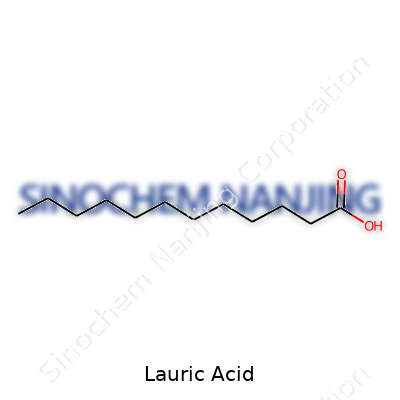
| Names | |
| Preferred IUPAC name | dodecanoic acid |
| Other names |
Dodecanoic acid Dodecylic acid Duodecylic acid Laurin |
| Pronunciation | /ˈlɔːrɪk ˈæsɪd/ |
| Identifiers | |
| CAS Number | 143-07-7 |
| Beilstein Reference | Beilstein Reference: 1720802 |
| ChEBI | CHEBI:28838 |
| ChEMBL | CHEMBL35838 |
| ChemSpider | 5289 |
| DrugBank | DB00832 |
| ECHA InfoCard | 03e0a8c2-7c47-49f5-9e02-accd29e03d6e |
| EC Number | EC 204-664-4 |
| Gmelin Reference | 6102 |
| KEGG | C00212 |
| MeSH | D007810 |
| PubChem CID | 3893 |
| RTECS number | OGJ5977000 |
| UNII | 7T85WYY3R1 |
| UN number | UN 2055 |
| CompTox Dashboard (EPA) | DTXSID3023307 |
| Properties | |
| Chemical formula | C12H24O2 |
| Molar mass | 200.32 g/mol |
| Appearance | White crystalline solid |
| Odor | Oily, soapy, fatty |
| Density | 0.88 g/cm³ |
| Solubility in water | Slightly soluble in water |
| log P | 3.9 |
| Vapor pressure | <0.01 mmHg (25°C) |
| Acidity (pKa) | ~5 |
| Basicity (pKb) | pKb ≈ 15 |
| Refractive index (nD) | 1.429 |
| Viscosity | 16 mPa·s (40°C) |
| Dipole moment | 2.82 D |
| Thermochemistry | |
| Std molar entropy (S⦵298) | 291.6 J·mol⁻¹·K⁻¹ |
| Std enthalpy of formation (ΔfH⦵298) | -726.9 kJ/mol |
| Std enthalpy of combustion (ΔcH⦵298) | -8377.8 kJ/mol |
| Pharmacology | |
| ATC code | A05AA03 |
| Hazards | |
| GHS labelling | GHS07, GHS08 |
| Pictograms | GHS07,GHS08 |
| Signal word | Warning |
| Hazard statements | H228, H315, H319 |
| Precautionary statements | P264, P270, P305+P351+P338, P337+P313 |
| NFPA 704 (fire diamond) | 2-1-0 |
| Flash point | 220 °C |
| Autoignition temperature | > 355 °C (671 °F; 628 K) |
| Lethal dose or concentration | LD50 Oral - rat - 19,300 mg/kg |
| LD50 (median dose) | LD50 (median dose): Rat oral 19,000 mg/kg |
| NIOSH | YN0800000 |
| PEL (Permissible) | 10 mg/m3 |
| REL (Recommended) | 100 mg |
| Related compounds | |
| Related compounds |
Caprylic acid Capric acid Myristic acid Oleic acid Palmitic acid Stearic acid Sodium laurate Glyceryl laurate |



