Isopropylbenzene: More Than Just a Chemical in a Drum
Historical Development
Think back to those early decades of the 20th century, when the foundation for modern chemistry kept getting poured, remixed, and set again. Isopropylbenzene, known to most in labs as cumene, became more than a curiosity when industrial demand for phenol and acetone started climbing fast. Scientists found a way to produce phenol—a backbone of everything from aspirin to plastics—by oxidizing cumene, and that single discovery pushed isopropylbenzene out of the shadows. The world saw expanding rubber, resin, and plastics industries, and this chemical helped fuel that growth. Looking at history, the rise of cumene almost always tracks big changes in manufacturing and consumer lifestyles. Every chemist who worked in those mid-century plants or studied organic synthesis in a university setting knows the comfort of classic reactions, and cumene sits right at the junction of technique and utility.
Product Overview
Isopropylbenzene rests comfortably in the class of aromatic hydrocarbons. Its structure, a benzene ring holding onto an isopropyl group, sounds simple but carries a lot of weight. You’ll find it looking clear and colorless, but don’t let that fool you—it's a key piece in the puzzle for phenol and acetone. The feedstock world runs smoother with molecules like cumene moving through it. Certain folks see cumene only as an intermediate, but that labels it too narrowly. It branches off into other chemical families, ends up in solvents, and shows up in specialty resins. Its market value fluctuates with petroleum prices and industrial demand for downstream products.
Physical and Chemical Properties
Anyone who has spent time weighing and tracking chemicals in a plant gets used to labeling: isopropylbenzene has a distinctive gasoline-like smell and remains liquid at room temperatures. Its boiling point hangs around 152 °C, which makes it manageable for distillation processes, and its low solubility in water keeps most of its action limited to organic phases. Reactivity, built around its aromatic ring and the attached isopropyl group, gives it value in substitution and oxidation reactions. You don’t need to look far to find safety concerns; it’s flammable, produces dense vapors, and demands attentive handling. Despite the risks, its behavior stays predictable enough for experienced operators and chemists to trust it in scaled-up settings, provided the workforce stays trained and alert.
Technical Specifications & Labeling
Bottles and drums of isopropylbenzene carry more than basic names. Labeling covers purity, major and trace contaminants, and storage recommendations set by regulatory bodies. Most industrial users want purity above 98%, and anyone trusting this chemical in sensitive processes looks for even higher grades. Specifications in procurement documents detail permissible limits on residual benzene, sulfur compounds, and water, showing how real-world performance comes down to tight preparation and consistent monitoring. Safety warnings, hazard pictograms, and shipping information let anyone in the supply chain know what they’re working with, which plays a huge part in preventing incidents before they start.
Preparation Method
Not just any process will do for isopropylbenzene. The classic route starts with alkylation of benzene using propylene, a reaction most chemists see early in their studies. Facilities prefer solid acid catalysts, like zeolites or phosphoric acid on a support, to drive up yield and reduce waste. Engineers working on these plants pay sharp attention to heat management and recycling streams, since raw materials don’t run cheap. Any operator or lab worker who has seen batch records knows the sheer volume of process control data coming in: pressure, temperature, feed ratios—every piece matters. Even with advanced automation, human oversight stands between a smooth process and a batch gone wrong.
Chemical Reactions and Modifications
Chemists keep pulling new reactions from the cumene backbone. Its hydrogen atoms on the aromatic ring give easy access to substitution chemistry. The big-ticket transformation, though, involves oxidation: moving cumene to cumene hydroperoxide, then splitting it to make phenol and acetone—a reaction running across hundreds of commercial plants worldwide. Side reactions, including polymerization and degradation, always threaten to spoil yield or introduce unwanted byproducts, so smart design and waste recovery systems get plugged right into the manufacturing line. Modifications can also tailor the molecule for other uses, proving that creativity doesn’t stop in the pilot plant.
Synonyms & Product Names
Language evolves along with industry, and isopropylbenzene wears many hats: you’ll hear it called cumene, isopropyl benzene, and sometimes, in trade and technical paperwork, as 2-phenylpropane. In trade journals and corporate circles, context often clarifies whether someone means a product blend, a high-purity grade, or even a cumene-derived resin. Those working in global supply chains pick up the code-words, product identifiers, and industry shorthand out of necessity, learning to translate between technical, regulatory, and commercial spheres as part of the daily grind.
Safety & Operational Standards
No one wants surprises when dealing with flammable, toxic chemicals. Standards, whether set by OSHA or international agencies, make sure companies limit worker exposure, vent vapors properly, and prevent catastrophic incidents. For isopropylbenzene, standard measures include effective ventilation, use of explosion-proof equipment, regular leak checks, and strict personal protective equipment for staff. Operators who grew up in the industry know about incidents from earlier decades, seeing firsthand what lapses in procedure mean for safety. Emergency response plans, regular drills, and ongoing hazard training remain as critical as ever, no matter how advanced engineering controls get.
Application Area
Any chemical plant operator, purchasing agent, or R&D chemist sees isopropylbenzene feeding into streams that eventually yield the phenol and acetone essential to polycarbonate plastics, resins, coatings, and pharmaceuticals. Some batches find use as solvents or come in handy in specialty adhesive manufacturing. New niche uses keep popping up as downstream industries shift: flame retardants, antioxidants, and custom syntheses stretch the reach of cumene chemistry. The economic footprint of isopropylbenzene extends to housing, electronics, autos, health care, and commodities, and its importance only grows as these markets expand.
Research & Development
Laboratories studying catalysis and process intensification tie their work to real-world chemical plants running on cumene. Novel catalysts keep entering academic papers—solid acid structures, greener process alternatives—and some end up improving output or cutting energy needs in big facilities. Research also covers new downstream applications for cumene derivatives, and industry-university partnerships have pushed more sustainable methods into large-scale practice. Whether in the state-of-the-art pilot plants or the small chemistry classrooms, the lessons drawn from cumene touch on everything from reaction engineering to material science. Anyone who has worked on process scale-up knows the value of ongoing development, because tweaks in the lab often spell more efficient, safer practices on the floor.
Toxicity Research
Nobody takes safety for granted, not after seeing the long-term effects chemicals can have on health. Toxicology studies on isopropylbenzene go back decades and have charted acute and chronic impacts after inhalation or skin exposure. The aromatic structure means potential risks, so regulatory bodies have set workplace limits based on inhalation studies with lab animals and humans. Studies chart impacts on tissues and organs, and testing results continue shaping handling guidelines and cleanup procedures. Any site manager or health and safety worker knows that mitigating exposure goes beyond compliance—it's personal, especially given what’s known about other aromatics like benzene.
Future Prospects
Sitting at the edge of petrochemical and green chemistry debates, isopropylbenzene finds itself in a crossroads. Transitioning to renewable feedstocks, improving catalytic efficiency, recycling more effectively—these aren’t just buzzwords, they’re guiding new research grants and commercial investments. Demand for plastics and phenol derivatives keeps rising globally, and process improvements are more about sustainability now than raw yield. Chemists, engineers, and business leaders all weigh legacy infrastructure against newer, cleaner technologies. From an industry perspective, future generations will likely work with evolved processes: less waste, safer conditions, smaller environmental footprints, and a continued need for sharp, skilled workers who don’t let familiarity breed complacency.
What is isopropylbenzene used for?
Everyday Chemical, Unexpected Roles
Isopropylbenzene, better known as cumene, slips quietly into many corners of modern life. Most folks wouldn’t recognize its name or smell, but almost every shelf in a cleaning closet, hardware store, or garage owes something to this clear, flammable liquid. The main job for isopropylbenzene centers around what it helps make—phenol and acetone. Both of those call for isopropylbenzene as their middle step, and they stretch into countless products, from disinfectants to construction adhesives.
Building Blocks in Everyday Products
Science and manufacturing both run on building blocks, and isopropylbenzene stands as a foundation for some big ones. Phenol, born from isopropylbenzene, shows up in goods from plywood to automobile parts. Walk down a hardware aisle, and a big share of the plastics, sealants, and insulation traces right back to phenol. A resorcinol-based adhesive, used to glue plywood layers or bind exterior furniture, owes its performance to the chemical steps that begin with isopropylbenzene.
Acetone, the other key product, brings even more people into the fold. Acetone soaks into nail polish remover, thinning paint, cleaning electronics, and prepping surgical tools. Demand for both phenol and acetone keeps isopropylbenzene flowing through chemical plants around the globe. According to numbers from the International Energy Agency, global acetone production hit roughly 7 million metric tons in 2023. All that acetone needs a steady upstream flow.
Industry Safety and Environmental Footprint
Behind every chemical’s useful side, there’s always a flip side of risk. Isopropylbenzene burns easily and can irritate skin and eyes. Workers in places where it’s made or used need excellent training and solid protective gear. Fires involving isopropylbenzene require special attention. Firefighters and plant staff need to know how to contain it and cut off the air around it, avoiding spread to nearby chemicals.
There’s also the question of what happens when isopropylbenzene drifts outside the factory or gets spilled. Once in the air, it can break down, but not before causing headaches or dizziness for folks nearby, especially at high concentrations. Handling spills on soil or near water means mobilizing trained hazmat crews quickly—local water systems don’t need this stuff in them.
Moving Toward Safer Chemistry
Science never stands still, and the pressure to work cleaner and safer keeps building. Chemical engineers look for new catalysts to wring more acetone and phenol out of every batch, slicing waste. Some companies focus on better containment—double-walled pipes, water sensors, tighter leak protocols. There’s also real money going toward research that finds greener alternatives to solvents and phenols made from fossil fuels.
Households can play a small part by choosing products that carry less environmental baggage, opting for greener cleaning fluids or low-toxicity nail polish. Workplace safety programs work best with fresh education and honest communication. Workers who understand the risks make fewer mistakes, and injuries drop.
Connecting the Dots
Isopropylbenzene usually keeps out of sight, but the links it builds between raw materials and finished products run deep. From my own experience working around small-scale labs, respect for the material never fell away—it commands careful storage, and every spill drill matters. The story of isopropylbenzene shows how one chemical shapes broad sectors, while pushing industries to keep learning how to do it cleaner and smarter.
Is isopropylbenzene hazardous to health?
The Hidden Risks Behind a Common Chemical
Isopropylbenzene, commonly called cumene, plays a big role in manufacturing. Factories use it to make products like acetone and phenol, both of which end up in things most people have at home—cleaners, paints, plastics. The problem often comes from how easily folks brush over its possible dangers simply because they don’t handle the raw chemical every day. But exposure risks still deserve attention.
What Happens During Exposure?
Short-term exposure can easily irritate the eyes, nose, and throat. Workers sometimes share stories of headaches and dizziness after breathing in fumes on the job. Skin doesn’t like contact, either—itching and rashes are common in poorly ventilated work areas. Back when I spent time in older industrial plants during summer breaks, even a whiff of the stuff made my sinuses burn and my head feel thick. There’s an edge to those odors that doesn’t promise anything good.
In higher amounts, the lungs take a hit. Breathing gets shallow or difficult. Some research ties large-scale exposure to central nervous system symptoms—think drowsiness, lack of coordination, slow reaction times. Extended or repeated exposure, though not common for average folks, can start weighing down the liver and kidneys, pushing the body’s filter systems past their comfort zones.
Cancer Research and Regulatory Action
The bigger question in health circles today is whether cumene can cause cancer. Animal studies, like those reviewed by the U.S. National Toxicology Program, raise concerns. Rats dosed over long periods showed increased tumor rates. The International Agency for Research on Cancer puts isopropylbenzene in Group 2B, calling it “possibly carcinogenic to humans.” That should make anyone pause before thinking about repeated exposure in the workplace.
Regulators do their part to keep the risks in check. The U.S. Occupational Safety and Health Administration, for example, sets limits on permissible airborne concentrations to help protect workers. Good practices—such as exhaust hoods, personal respirators, gloves, and eye protection—make a real difference. During my time around refineries, there was never any casual attitude about moving drums that contained it. Every safety barrier added was a lesson learned from someone’s bad day years before.
Addressing the Problem
Many industries have moved toward improved ventilation. Regular air monitoring catches leaks early. Training workers, not just managers, helps build a safety culture where people look out for each other. Even outside the factory, consumers can play their part by using products in well-ventilated areas, wearing gloves, and never mixing chemicals on a whim. Spills should be cleaned up right away, never left to linger and evaporate into the air.
The health risks from limited home-use exposures remain low compared to what plant workers or lab technicians face. But respect for chemicals, whether in a lab or under the kitchen sink, goes a long way. Knowing the potential for harm means making safer decisions day after day—not just hoping nothing goes wrong.
What are the safety precautions when handling isopropylbenzene?
Why This Stuff Matters
Isopropylbenzene, or cumene, finds its way into chemical plants and labs pretty often. As someone who’s spent years watching coworkers work with different chemicals, one thing stands out: It’s easy to get comfortable around something common, but a single mistake can do real damage. People use isopropylbenzene for various industrial purposes, like turning it into phenol or acetone, but its popularity doesn’t make it safe in daily use. Workers who skip basic steps often pay the price with accidents, and those lessons stick around for the rest of your career.
Flammability: Hard to Ignore
The most obvious thing to get straight about isopropylbenzene: it burns, and it burns fast. The flash point hits just above room temperature, which means even a lukewarm warehouse poses a risk if someone pops the lid off the wrong way. I’ve seen small chemical splashes go from a minor headache to a booth-evacuating nightmare after a stray spark at a bench. Wearing natural fiber clothes, using spark-proof tools, and storing the chemical away from heat sources—these are not overcautious habits; they’re what keeps everyone able to go home with all ten fingers.
Personal Protection Makes All the Difference
No one wants to gear up in a plastic suit just to pour a beaker. The truth is, a decent pair of gloves, goggles, and a snug-fit lab coat handle most of what isopropylbenzene can dish out in small doses. Years of working in shared spaces drove home how easy it is to get careless during busy shifts or emergencies. But eye protection isn’t just for show; if even a little bit splashes, the pain shows up fast. Skin contact stings, and breathing too much of the vapor gets you dizzy or short of breath in a hurry. The lesson comes down to making safety steps muscle memory, not a hassle you rush through.
Ventilation Cuts Down the Risk
Cracking a window won’t cut it when you’re working with volatile chemicals. Good airflow systems cost money, but those investments save lives and avoid costly fines. If your workspace doesn’t have a hood, it’s time to talk to the boss. Inhaling too much vapor can bring on coughing, headaches, or worse, and repeated exposure leads to bigger health problems over the years. Watching coworkers develop sensitivities over time convinced me not to take shortcuts. Even on small jobs, don’t fall for the “just this once” mentality.
Storage and Spills: Every Step Counts
Storing isopropylbenzene isn’t about locking it behind a door. Keep it in a metal container with a tight-fitting lid, stashed in a cool spot with good labels. Leaks and splashes might seem rare, but the floor tells the truth; stains mean cleanup got skipped or containers got dinged up in a rush. Workers should keep spill kits handy—absorbent pads and sand work better than paper towels, especially if you think the spill could spread. Nobody wants to work in a building that smells like solvents, and the cost of a full evacuation trumps a few minutes spent checking seals.
Training Backs Up Good Habits
It’s tempting to skip the annual meeting or “cheat” on online safety quizzes, but I’ve seen confusion about procedures play out in stressful moments. Clear instructions, posted signs, and no-nonsense supervisors help create a culture where people actually speak up if someone cuts corners. The most effective fix is hands-on training paired with a system that rewards good habits, not speed or shortcuts.
Real Safety Comes from Everyday Choices
No single wall chart or glove type solves every problem with isopropylbenzene. Safety means picking up small habits day in and day out, from fixing leaky storage bins to swapping out old gloves, and looking out for friends across the table. That simple commitment makes all the difference on tough days and keeps the whole team out of the ER.
How should isopropylbenzene be stored?
Strong Safety Habits Keep People Safe
My first job in a lab taught me about the kind of discipline needed to handle chemicals you can’t just leave lying around. Isopropylbenzene—often called cumene by chemists—belongs on the list of materials that demand respect. This hydrocarbon, widely used to make phenol and acetone, catches fire easily and emits fumes strong enough to sting the nose. Plenty of accidents trace back to careless storage, and any space storing such solvents needs clear rules everyone understands.
Storage Site: Well-Ventilated, Cool, and Dry
The best place for isopropylbenzene stays cool and out of the sun. Direct heat ramps up its volatility, shooting vapor levels into the danger zone. You don’t want this stuff near open flames, sparks, or even a warm lightbulb. A spot below 25°C (77°F) serves most workplaces. Humidity speeds up the breakdown of containers and can let water seep in, which leads to corrosion—so dry storage wins. Windows that bring in daylight shouldn’t shine directly on shelves with this chemical, and a storage area right by HVAC returns or vents keeps fumes from building up.
Use the Right Containers—And Label Everything
I saw what happens when a coworker poured a solvent into a random flask and left it overnight. The label had “WATER” scrawled on it. Good thing a supervisor caught that before anyone tried to dilute their acid bath with something flammable. Isopropylbenzene must sit inside tight-sealing metal or high-density polyethylene (HDPE) drums or bottles. Glass isn’t the best choice because it breaks too easily. Every single bottle or drum should have a legible, chemical-resistant label with the chemical name, date received, and hazard warnings. Don’t chop up big shipments into unlabeled, reused containers “for convenience.”
Keep Quantities Under Control
Bulk storage of flammable material ramps up the risks. Storing only the amount needed for immediate work keeps trouble to a minimum. Staying under local fire code limits matters more than squeezing every last ounce onto a shelf. Some labs toss in chemical inventory software to track expiration and storage amounts, helping avoid forgotten stashes of old solvent that quietly degrade.
Avoid Mixing Incompatible Chemicals
Mixing certain solvents with acids or oxidizers can spark up toxic fumes or spontaneous fires. Years ago, before I learned about chemical compatibility charts, I watched a new tech nearly store peroxides on the same shelf as isopropylbenzene. Flammable liquids get their own section, separated by physical barriers or substantial distance from acids, bases, and oxidizers—no crowded shelves. Floors and shelves should stay free of other combustibles too.
Spill Kits, PPE, and Quick Action Plans
No storage system beats human error every single day, so spill kits stand ready nearby. Chemical absorbents, goggles, gloves, and a sturdy scrub brush often turn a near-miss into a non-event. Emergency instructions should hang where everyone can see them. Regular drills beat confusion every time. Fire extinguishers rated for chemical fires belong close but never blocked.
Training Turns Policy Into Habit
Safe storage of isopropylbenzene takes more than a locked cabinet. Teams learn, review, and refresh safety routines together. I still remember my first hands-on spill drill: smelling that sharp hydrocarbon as the instructor explained why fume hoods and gloves matter. Ongoing reminders push home the message that sloppy habits invite accidents, and a safe space lets everyone get the job done without taking home a headache—literally or legally.
What are the physical and chemical properties of isopropylbenzene?
Why Isopropylbenzene Matters
Everyday products, from cleaning agents to plastics, trace their heritage back to basic chemicals like isopropylbenzene, or cumene. Years spent working in small-scale manufacturing and troubleshooting lab setups made it clear: a deep grasp of key properties often separates a safe, effective process from a risky or wasteful one. Isopropylbenzene proves this idea. Behind the unassuming name lies a chemical that shapes modern industry and daily life, sometimes in ways we don’t notice.
Physical Properties
Holding a bottle of isopropylbenzene for the first time, you notice the sharp, gasoline-like smell. It’s a clear, colorless liquid, and it evaporates quickly at room temperature. At 152 degrees Celsius, it boils, which means it’s easier to capture or separate using regular lab equipment. The density lands around 0.86 g/cm³, lighter compared to water, so spills float rather than sink.
After a small spill, the slick quickly rolls across any surface. Its vapor can catch fire easily, since the flash point is only about 31 degrees Celsius. Factory crews who handle drums or pallets of the liquid always need solid ventilation and spark-free tools. Skin contact brings a greasy feeling, and direct, prolonged exposure chaps skin fast.
Water never mixes well with isopropylbenzene—shake a jar and the layers snap apart after seconds. Pour it into non-polar solvents, like hexane or ether, and everything blends seamlessly. This behavior comes from its hydrocarbon-based backbone—there’s no strong polarity to force it into water.
Chemical Properties
Overtime in process plants opened my eyes to the picky chemistry behind simple molecules. Isopropylbenzene looks inert if it just sits on a shelf. Once you bring in air or strong acids, it reacts with surprising energy. Oxygen can start oxidation, producing dangerous peroxides if containers are left open too long. During large-scale synthesis, teams check and double-check seals, since trace peroxide formation risks accidental fire or explosion.
Mixing isopropylbenzene with sulfuric acid triggers a rearrangement, and, with the right tweaks, leads to phenol and acetone—the backbone for resins and plastics. It’s fascinating that so many products funnel through this single, simple reaction. Industrial sites use this to make polypropylene and other key plastics underpinning packaging, housing, and automotive industries.
As a stable hydrocarbon, isopropylbenzene holds up against gentle oxidizers and bases, but strong oxidizers or high heat break it down fast. Improper storage—like sunlight through a clear window or a rusty steel drum—turns safe material into a risk for leaks or fires. In lab and warehouse settings, proper containers and shaded storage corners keep everyone safe.
Challenges and Next Steps
Given the hazards—fire, skin irritation, and potential long-term health effects—handling isopropylbenzene demands respect. Training remains critical. Factories invest in chemical-resistant gloves, face shields, and top-notch vent hoods. Regular auditing of storage conditions, plus real-world emergency drills, keeps the risk of accidents low.
Researchers continue hunting for greener replacements. Shifting away from flammable solvents often takes years, but stricter workplace rules and public scrutiny push innovation forward. Real progress grows from workers on the ground, reporting what works and what needs change in storage, handling, and waste disposal.
Digging into the profile of isopropylbenzene highlights a simple lesson: recognizing the fingerprints of a chemical isn’t just theory. It’s about linking history, science, and workplace experience to build safer, smarter practices across the chain—from barrel to finished product.
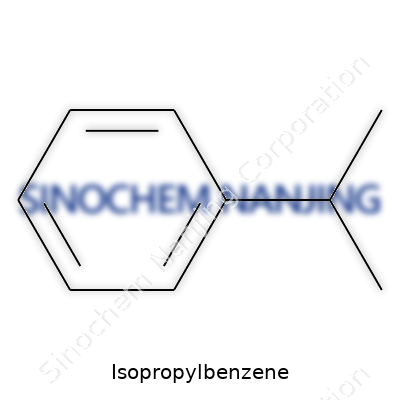
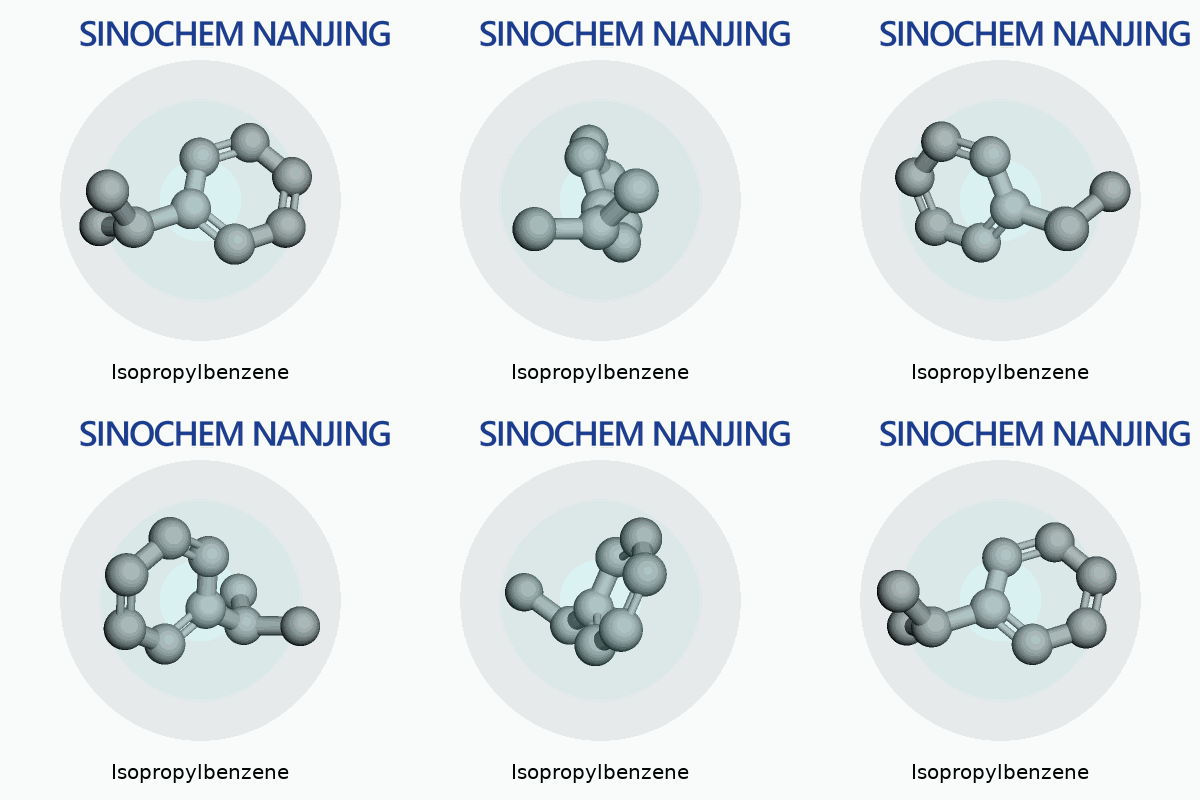
| Names | |
| Preferred IUPAC name | Cumene |
| Other names |
Cumene Isopropylbenzol 1-Methylethylbenzene Cumol |
| Pronunciation | /ˌaɪsəˌprəʊpɪlˈbɛnziːn/ |
| Identifiers | |
| CAS Number | 98-82-8 |
| 3D model (JSmol) | `isopropylbenzene` 3D model (JSmol) string: `CC(C)C1=CC=CC=C1` |
| Beilstein Reference | '1900808' |
| ChEBI | CHEBI:14187 |
| ChEMBL | CHEMBL951 |
| ChemSpider | 7077 |
| DrugBank | DB00852 |
| ECHA InfoCard | 100.616.196 |
| EC Number | 205-553-3 |
| Gmelin Reference | 635 |
| KEGG | C06581 |
| MeSH | D007177 |
| PubChem CID | 8253 |
| RTECS number | RB0700000 |
| UNII | YNE6M2093A |
| UN number | UN1912 |
| CompTox Dashboard (EPA) | DTXSID2020530 |
| Properties | |
| Chemical formula | C9H12 |
| Molar mass | 120.19 g/mol |
| Appearance | Colorless liquid with aromatic odor |
| Odor | Aromatic odor |
| Density | 0.861 g/cm3 |
| Solubility in water | 0.061 g/100 mL (20 °C) |
| log P | 3.7 |
| Vapor pressure | 0.56 kPa (at 25 °C) |
| Acidity (pKa) | 41 |
| Basicity (pKb) | 11.20 |
| Magnetic susceptibility (χ) | -70.0e-6 cm^3/mol |
| Refractive index (nD) | 1.488 |
| Viscosity | 1.24 cP (20°C) |
| Dipole moment | 1.47 D |
| Thermochemistry | |
| Std molar entropy (S⦵298) | 273.14 J·mol⁻¹·K⁻¹ |
| Std enthalpy of formation (ΔfH⦵298) | -12.2 kJ/mol |
| Std enthalpy of combustion (ΔcH⦵298) | -3360.8 kJ/mol |
| Pharmacology | |
| ATC code | C04AX22 |
| Hazards | |
| GHS labelling | GHS02, GHS07, GHS08 |
| Pictograms | GHS02,GHS07 |
| Signal word | Danger |
| Hazard statements | H226, H304, H315, H319, H332, H335, H340, H350, H372, H411 |
| Precautionary statements | P210, P233, P240, P241, P242, P243, P261, P264, P271, P273, P280, P301+P310, P303+P361+P353, P304+P340, P305+P351+P338, P312, P331, P370+P378, P403+P235, P405, P501 |
| NFPA 704 (fire diamond) | 2-3-0 |
| Flash point | 46 °C (Closed cup) |
| Autoignition temperature | 498 °C |
| Explosive limits | 1% - 6% |
| Lethal dose or concentration | Lethal dose or concentration (LD50, LC50) of Isopropylbenzene: "LD50 oral (rat): 1400 mg/kg |
| LD50 (median dose) | LD50 (median dose): 1400 mg/kg (rat, oral) |
| NIOSH | CJ0890000 |
| PEL (Permissible) | 100 ppm (time-weighted average) |
| REL (Recommended) | 50 ppm |
| IDLH (Immediate danger) | 900 ppm |
| Related compounds | |
| Related compounds |
Ethylbenzene Cumene hydroperoxide Phenol Acetone Styrene Toluene |



