The Story of Isopropyl Ether: From Laboratory Curiosity to Industry Workhorse
Tracing the Roots: Historical Development
Isopropyl ether doesn’t usually get the front-page treatment in chemistry texts, but its history says a lot about the way basic research opens up unexpected doors. Back in the 19th century, chemists pushed boundaries out of pure curiosity, tinkering to see how alcohols could become something more useful or interesting. A German chemist first made isopropyl ether by acid-catalyzed dehydration of isopropanol. At the time, few probably anticipated much use for this colorless liquid, which smells faintly sweet and has a tendency to evaporate almost as soon as it hits open air. Eventually, that same evaporation trait made it invaluable for stubborn separations in laboratories and industrial plants. Generations of chemists used simple glassware and strong sulfuric acid to produce batches for research, laying groundwork for today's large-scale syntheses.
What Isopropyl Ether Brings to the Table
It’s easy to overlook a substance with a low profile, but isopropyl ether’s value grows clearer with experience in the lab or field. The product comes as a clear, flammable liquid, packing a low boiling point and a relatively low density. Professionals often rely on it for its strong ability to dissolve greases and oils. The solvent’s chemistry suits industry—able to separate mixtures, recover chemicals, and clean up residues without leaving much behind. Its lightness makes it float over water in extraction operations, and it’s less dense than many competitors. Chemists recognize its ability to form azeotropes with some other compounds. To the uninitiated this sounds arcane, but anyone in distillation work will say it opens up shortcuts and cost savings, especially when pure products matter.
Physical and Chemical Properties
Living with isopropyl ether day to day, I’ve seen how its basic traits define its uses and safety constraints. The substance boils near 69°C, meaning even modest heat kicks substantial fumes out of a bottle. Its vapor spreads quickly, which demands careful handling since a single spark brings real risk. The low solubility in water—barely a trace dissolves—lets it play well as a separator in two-phase reactions. Flammability rivals some gasolines and warns users that fumes need to stay in well-ventilated spaces. Over years, chemists have also become wary of storing it too long, as oxygen can react with ethers to create peroxides, infamous for their explosive potential when concentrated. The upshot: producers and users have learned to stabilize, test, and rotate stock to keep that hazard in check.
Technical Specs and the Reality of Labeling
Most bottles carry straightforward warnings: flammable, volatile, may form explosive peroxides. Labels in professional environments call out the concentration and highlight impurity risks. Each supplier may promise slightly different quality grades—like reagent vs. industrial—but careful buyers dig into batch data or demand certificates detailing water content and peroxide levels. No one working in synthesis likes getting tripped up by trace contaminants, so those facts matter beyond basic regulatory compliance. Curious students sometimes ask why so many warning symbols crowd a tiny bottle. The truth is simple: experience and hard-won lessons about what happens when people rush or skip basic checks.
Preparation: Industrial Know-How vs. Old-Fashioned Chemistry
Every batch of isopropyl ether starts with the basics: dehydrating isopropanol in acid. The traditional method runs alcohol through concentrated sulfuric acid, stripping away water and linking two alcohol molecules, yielding the target ether and a predictable mix of by-products. Large producers favor this route but add modern controls to purge unwanted compounds and cut waste. Alternative processes pop up here and there, but none have overtaken the old acid-catalyzed path. From small flask to chemical plant columns, those methods scale well and deliver consistent output. The experience shows how slight tweaks in temperature, acid ratio, or agitation matter down the line, especially to keep unwanted isopropanol or water out of the finished ether.
Chemical Reactions and Routes for Modifications
Chemists see isopropyl ether as more than just a solvent. They’ve tapped it for its reactivity, sometimes chopping it back to alcohol with acids or trapping the unstable peroxides for study. Its ether bond resists many common reagents, giving stability in basic and mildly acidic reactions. That toughness lets it serve as inert diluent in many organic syntheses—sometimes helping drag out water or side products so that target molecules crystallize pure. Anyone keen on functionalizing the ether itself quickly finds its resistance to common attacks, so direct modifications are few outside strong acid or radical conditions. Peroxide formation still stands out as a dreadful risk for those who forget time or proper stabilizers.
Synonyms and Names on the Shelf
Spend some time around old chemistry stores, and you’ll see isopropyl ether under a handful of names—diisopropyl ether, isopropyl oxide, or sometimes simply DIPE. Lab veterans tend to call it DIPE, which saves breath and keeps confusing with the much more famous diethyl ether to a minimum. Whether under an IUPAC spell or an everyday nickname, the bottle’s contents stay the same—what matters is recognizing the safety needs and its quirks.
Safety Wisdom Gained Through Hard Lessons
It’s tempting to treat clear, sweet-smelling liquids as harmless, but isopropyl ether’s record demands respect. Lab workers and plant operators know the stories—flares from careless disposal, sudden bottle ruptures after peroxide buildup, and near-misses from undetected leaks. The right way to handle DIPE means grounding containers, keeping flames well away, and storing under nitrogen when possible. Regular testing for peroxides comes standard in reputable operations. Sometimes the true learning sinks in only after seeing what happens to glass when a peroxide-laden sample meets friction or heat. Workplace standards set firm storage timelines, require proper labeling, and suggest routine venting or peroxide wipes for old supplies. I’ve spoken to colleagues who still wince remembering small but frightening mishaps. Each reinforces the point: a little more diligence beats the aftermath of a preventable accident.
Fields That Rely on Isopropyl Ether
Step into an analytical chemistry lab and isopropyl ether usually turns up somewhere on the reagent rack. Those working in extraction chemistry swear by it for isolating fats, essential oils, or active ingredients from natural products. In the petrochemical industry, DIPE plays a role in isolating and recovering valuable compounds from hydrocarbon streams—sometimes in full-scale process columns stretching several stories high. Pharmaceutical research relies on its ability to dissolve and wash away impurities before critical crystallization steps. Even in laboratory glassware cleaning, chemists lean on it because it removes sticky, oily residues better than most alternatives. There’s a distinct satisfaction in seeing a cloudy flask gleam after one rinse—proof that getting the right tool matters.
Research & Development: A Broader Picture
Innovation doesn’t always mean a new molecule—sometimes rediscovering classic solvents yields unexpected benefits. Scientists testing greener chemistry search for alternatives with lower toxicity or safer degradation traits, but so far few replacements for isopropyl ether do everything as well. Process engineers continue to study better peroxide stabilizers or ways to monitor peroxide risk automatically, hoping to take some human error out of the loop. The drive for improved safety has prompted new packaging solutions, from dark glass bottles with vented caps to built-in peroxide testers. Industrial waste teams also pay attention to the breakdown products during disposal, exploring catalysts to safely neutralize residues before landfill or incineration. Each tweak in formulation or packaging emerges from real-world feedback and lessons learned under actual working conditions.
Toxicity and Health Impacts: What Experience Has Taught
Few workers look forward to learning about chemical risks through personal mishaps, but decades of accident data have shaped how DIPE gets handled. Inhalation of high vapor levels brings headaches and nausea—and in rare cases, loss of consciousness. Prolonged or repeated skin contact strips oils and dries the skin, opening the door to dermatitis. Accidental ingestion headlines injury databases—once was more than enough for those who’ve suffered it. Modern safety data sheets distill generations of research: avoid long exposure, ventilate heavily, shield skin and eyes, keep eating or smoking away from workbenches, and always treat containers as potentially hazardous—even when empty. Studies on chronic exposure show minimal cancer risk, but repeated misuse still brings respiratory troubles. Regulations now require monitoring in workplaces where vapor levels may spike or where large volumes get transferred. Witnessing a fume hood session interrupted because someone failed to replace a filter brings the toxic effects home, far more than any textbook table.
The Road Ahead: Future of Isopropyl Ether
Looking at trends across industries, isopropyl ether seems set for a bumpy road. Pressure mounts from regulators urging safer, less flammable alternatives in both labs and manufacturing. Biobased solvents attract research funding, but none match DIPE’s effectiveness for some extraction and purification steps. Advances in process automation, better leak detection, and real-time peroxide monitoring promise sharper safety. Environmental questions, from volatile organic compound emissions to waste handling, will shape whether its use grows or tapers off over the next decade. Whenever better, safer replacements emerge, transition will likely move slow in legacy chemical plants where reliability and cost matter most. Meanwhile, upcoming chemists and engineers will still find reason to master DIPE’s characteristics, balancing tradition and innovation as the field evolves. Those who forget the lessons written in past accidents risk writing their own chapters—so the story of isopropyl ether becomes a bridge between past experience and future progress.
What are the main uses of Isopropyl Ether?
Solvent Power in the Lab and Industry
Walk into any chemistry lab stocked with solvents, and bottles of isopropyl ether often line the shelves. Lab workers trust it for separating chemicals, especially during the production and purification of pharmaceuticals. Chemists appreciate its knack for dissolving a wide range of organic compounds without tugging water along for the ride. In one of my undergrad synthesis projects, we chose isopropyl ether to extract a product because it left water-soluble byproducts behind, making cleanup straightforward. Industrial outfits like it for this same reason: simple separations save time and headaches.
Grignard Reagent Workhorse
Not every solvent can handle the sensitive chemistry behind Grignard reagents, but isopropyl ether proves itself reliable here. Grignard reactions enable manufacturers to build more complex molecules by reacting organic magnesium compounds. Isopropyl ether manages to stabilize these reactive species, performing better in some cases than diethyl ether, which evaporates too easily and brings safety concerns. In pharmaceutical or fine chemical plants, production lines for many drugs or flavors count on Grignard reactions supported by isopropyl ether.
Starter for Gasoline Engines
While isopropyl ether spends much of its life among glassware and lab coats, older mechanics sometimes reach for it as a starter fluid reliever. It ignites at lower temperatures, so it can coax sluggish engines back into action on a cold morning. This use doesn’t pop up in every garage, but rural areas and classic car aficionados still keep a bottle around their toolkits. My uncle, always tinkering with lawnmowers and chainsaws, once swore by it for reviving tired engines that modern fluids just couldn’t wake.
Role in Extraction and Purification
Plants aren’t simple things, and getting pure ingredients from them requires several steps, often involving clever solvent choice. Isopropyl ether steps in for the extraction and purification of alkaloids and other valuable compounds. The food flavor industry and some supplement manufacturers rely on it to isolate pure constituents from mixtures. Its ability to separate out specific chemicals without dragging along extra impurities makes it a practical choice where precision and purity matter.
Some Cautions and the Path Toward Safety
Every chemical brings risks, and isopropyl ether isn’t an exception. It can form explosive peroxides if it sits too long—something most labs and factories know to watch closely. Safe handling means regular testing, limiting storage time, and following local disposal rules. Regulations have pushed companies and scientists to consider safer alternatives or choose isopropyl ether only when nothing else will do. In my time working with it, the rule was simple: test for peroxides before every use, and never cut corners. Training, labeling, and storage protocols protect workers and the surrounding community.
Why Its Role Matters
Reliable solvents speed up scientific discovery, keep large-scale manufacturing running, and help you get the right amount of active ingredient in your medicine. Isopropyl ether carves out a place through its chemical properties and the trust built over years of practical use. Ongoing health and safety monitoring, better awareness, and a willingness to swap in greener choices when possible keep this compound relevant without compromising safety or quality.
What are the safety precautions for handling Isopropyl Ether?
Getting Real about Risks
I’ve been around plenty of chemicals in the lab and on job sites. Isopropyl ether stands out because it brings some tough hazards. This stuff evaporates quickly. That means vapors can fill a small space in no time, making fire much more likely than a casual observer would guess. There’s something extra about its odor—it gives a warning, but that’s no guarantee everyone will notice before trouble begins.
Good Airflow Always Wins
Ventilation isn’t just a lab rule. Even for those working with isopropyl ether in warehouses or industrial settings, fresh air can make all the difference. Open windows won’t cut it; fume hoods and extraction fans do a much better job. People sometimes get comfortable, thinking a chemical with a sharp smell must keep them safe, but that’s not real protection. Proper ventilation helps keep levels low enough so headaches or worse effects don’t sneak up. Studies from workplace safety agencies have made it clear: regular exposure can irritate the nose and lungs, and long-term risks only stack up from there.
Reliable Protective Gear
On the days I forget my gloves, moving even common cleaning solvents burns my skin. Isopropyl ether goes further. It can dry out skin, leave painful cracks, or cause nasty reactions. Nitrile gloves work best. Safety goggles are a must, as even a splash near the eyes could mean a trip to urgent care. If there’s a chance for larger spills or lots of vapor, a fitted respirator beats a quick mask every time. Accidents move fast and personal gear slows things down enough to act safely.
Keep Sparks Far Away
Static can turn a simple pour into something much worse. Metal tools, cell phones, and machines should stay far from the working area. I remember a warehouse fire where a tiny spark from a phone charger near storage drums led to major damage. Isopropyl ether vapors catch fire easily at room temperature, so grounding containers and using sparkless tools matter more than most folks think. Storing it in tightly sealed, approved containers—usually metal or heavy-duty plastic—blocks vapor leaks. Never keep it near oxidizers or strong acids, which only add to the danger.
Staying Organized, Planning Ahead
Chemicals build up in storage. Clear labeling and strict inventory tracking prevent unwanted surprises. I’ve seen work crews run into problems just from mixing up clear liquids during busy shifts. Regular training does more than cross off a safety checklist—it helps people react without freezing. Eyewash stations and emergency showers need to stay clear and in working order. It’s easy to forget about this equipment until it’s too late. Weekly inspections make it easy to spot leaks or worn seals before trouble starts.
Dealing with Waste and Spills
Pouring leftovers down the drain feels tempting but damages pipes, water systems, and the local environment. Most cities provide hazardous waste disposal programs to help people handle chemical leftover the right way. Spill kits should sit within arm’s reach anytime isopropyl ether comes out. Absorbent pads, neutralizers, and step-by-step instructions stop a small mishap from turning into a major incident. Only trained hands should do the cleanup. Trying to sweep things up without the right tools or protection rarely ends well.
Looking Out for Each Other
At every job, someone new faces chemicals for the first time. Good habits multiply fast, especially when folks show each other what right looks like. I’ve learned the best safety steps come from people sharing their close calls—and building a work culture where speaking up always comes before cutting corners. Handling isopropyl ether safely isn’t about following rules just for paperwork—it’s about sending every person home the way they arrived.
Is Isopropyl Ether flammable or explosive?
Lives Depend On Knowing What’s In That Bottle
I’ve spent a good part of my life around chemicals—sometimes in labs, sometimes at worksites, and sometimes just fixing things at home. One bottle that always caught my eye was labeled “Isopropyl Ether.” The name sounds clinical, almost harmless, but the truth is a lot messier. Isopropyl ether doesn’t just burn—it tends to do so with unsettling enthusiasm. You wouldn’t want kids or pets anywhere near it, let alone a situation where people are unsure how volatile it can be.
Fire Risk You Can’t Ignore
Let’s get it clear: isopropyl ether is highly flammable and forms explosive peroxides if left sitting around, especially if the cap isn’t tight. It lights up at a flash point near -28°C, far lower than what most would expect in a garage or storage closet. If there’s any spark or even a slightly warm engine close by, you’re setting yourself up for disaster. Many fires linked to solvents start precisely because people underestimate how easily vapors can travel along a bench or floor before finding a flame.
Explosive Hazards Aren’t Just Urban Legends
I remember the day I heard about a lab accident just three towns over. Technicians had gotten used to storing isopropyl ether in a sunny spot, not realizing direct light and oxygen encourage those invisible peroxides to develop. Nobody noticed the crystals forming along the cap until it was too late. The jar exploded in someone’s hand. OSHA and the National Fire Protection Association both flag isopropyl ether with high hazard numbers. It’s not just a suggestion; people get hurt or killed because warnings sound theoretical until an accident proves otherwise.
Why People Still Take Risks
It’s easy to get casual about storage and cleanup. Sometimes it’s because workloads pile up. Other times, there’s an urgency to finish a job fast. Bad habits—like pouring chemicals down ordinary drains or labeling containers with worn-out tape—creep in. Isopropyl ether sits in a gray area; it’s not as infamous as gasoline or acetone, so its dangers occasionally fly under the radar. Chemical suppliers print hazard warnings on the label, but over time, those warnings fade or get ignored during a busy week.
Solutions That Actually Work
Clear education and honest conversations on the shop floor have always done more than a stack of safety posters. Supervisors who walk through storage areas regularly help keep everyone accountable. If people know how to spot peroxide crystals or smell something sharp and sweet, the odds of catching issues early go up. Proper ventilation and explosion-proof refrigerators play a huge part, but nothing works unless the basics stick—like closing caps tightly and discarding old stock by recommended disposal methods rather than stretching shelf life. Safe habits develop when workers stop seeing flammable solvents as a minor threat and start recognizing the risks firsthand.
Responsibility At Work and At Home
Anybody who’s ever handled volatile substances at work often brings those habits home. Tucked away in sheds or basements, leftover solvents from old science kits or cleaning supplies may sit unnoticed for years. It’s tempting to treat those bottles like any ordinary cleaner. Reading labels, searching up safety data, and locking away anything with a low flash point should feel automatic. Flammables don’t wait for a mistake—they just take advantage of one.
Real Awareness Saves Lives
Most hazards don’t announce themselves before tragedy strikes. Isopropyl ether belongs among those overlooked but genuinely dangerous chemicals. Treating it with respect, using facts, and never cutting corners—those choices matter. All it takes is one sloppy step for a quiet workspace or garage to become the site of a preventable explosion or fire.
How should Isopropyl Ether be stored?
A Chemical With a Temper
Anyone who’s had their hands on isopropyl ether knows it isn’t a trouble-free chemical. I’ve seen more than a few stories of fires starting in labs due to careless storage. This solvent likes to evaporate at room temperature, and its vapors mix easily with air—enough to catch a spark from a static charge. Just a reminder: one whiff of those vapors proves how flammable it is.
Keep Away From Ignition Sources
Every label screams “Keep away from heat and flames.” This isn’t simply a matter of obeying a checklist. In practice, this means getting isopropyl ether far from hot plate surfaces, exposed lightbulbs, pilot lights, and areas where equipment throws off sparks. Someone once told me, “It’s not paranoia if the danger is real.” Hard to argue with that, considering it forms explosive peroxides, especially after sitting around.
Ventilation Isn’t Optional
Good ventilation makes a world of difference. Sticking this solvent in a closed cabinet with no airflow means vapor concentration rises. Eventually, you can’t smell the difference, but a spark turns into a catastrophe. I’ve seen labs with fans that never shut off, and folks still crack a window nearby. Even in storage rooms, local fire safety codes often call for explosion-proof exhaust systems—those rules exist for a reason. There’s no shortcut; fresh air keeps people, and buildings, safer.
Container Choices Matter
Not all containers resist the damage that ethers bring. Thick glass works, but I usually see steel or tightly-sealed cans made to handle flammable liquids. Don’t try to use questionable bottles or repurpose an old plastic jug—ethers eat through cheap materials, leak out, or produce static electricity. In my time, I’ve watched folks slap hazard labels front and center, using large print. No label, no storage. It’s that simple.
The Enemy: Peroxide Buildup
Peroxides form when ethers spend time on the shelf, mixed with air and light. Old isopropyl ether grows more dangerous by the week. Peroxide test strips save lives here. Anyone serious about safety checks stored bottles every few months, especially after the expiration date passes. I have seen peroxide contamination shut down entire research blocks for a day until a hazardous waste team could handle it. Don’t let that become your problem—cycle out old stock and don’t store more than needed.
Segregation With Purpose
This solvent never sits next to oxidizers or acids. I keep it in a dedicated cabinet—one rated for flammable storage. Most labs assign shelves to different chemical families, but mistakes happen. Double check storage plans. The worst mess I came across involved isopropyl ether kept too close to nitric acid—one broken bottle, and everyone dove for the door. Color-coded shelves and laminated maps on cabinet doors help a lot with oversight.
Emergency Readiness
Even with every precaution, spills or fires sometimes break out. Anyone handling isopropyl ether should know the location of the nearest fire extinguisher (rated for flammable liquids), as well as emergency eyewash stations and showers. Everyday routines get disrupted fast by chemical accidents. Having transparent procedures and regular drills works better than hoping for luck. The real pros treat this solvent with the same respect they give gasoline—maybe more.
What are the potential health hazards of Isopropyl Ether exposure?
The Reality of Isopropyl Ether in Everyday Settings
Isopropyl ether shows up in labs and manufacturing spaces more than most people realize. This chemical, known for its ability to dissolve fats and oils, finds its way into extractions, cleaning products, and even some pharmaceuticals. Many people crossing paths with isopropyl ether never stop to think about the risks until a headache or dizzy spell hits. Speaking from personal experience on the shop floor, you can always spot a rookie from the way they wave away the sharp, sweet odor. It doesn’t just linger; it bites at the sinuses.
Breathing the Vapors: Short and Long-Term Risks
One of the most immediate problems comes from inhaling the vapors. Isopropyl ether evaporates fast, filling the air with fumes that can knock you sideways. Breathing it in just for a few minutes sometimes causes throat irritation, nausea, headaches, or dizziness. Workers not wearing proper protection may see the room spin or lose their lunch, which sounds dramatic until it happens. People start off thinking it’s harmless, but prolonged exposure can put a real burden on memory and focus. There’s research from the National Institute for Occupational Safety and Health showing the way ether vapors mess with short-term memory and slow reaction times. The trouble shows up subtly and builds up, dragging a person down week after week.
Skin and Eye Contact: More Than Just a Stinging Sensation
On the skin, isopropyl ether strips away natural oils. I still remember how my fingers cracked and burned after a spill during late-night lab work. Even short contact leaves skin dried out and prone to rashes. Eyes take an even harder hit. A splash can trigger redness, severe pain, and blurred vision. The chemical works fast, sinking into tissues with little warning. In some plant settings, goggles and gloves hang on hooks, but old habits die hard, and folks learn the hard way to respect strict personal protection rules.
Fire Hazards and Toxins on the Side
Flammability brings its own worries. Isopropyl ether catches fire easily. A stray spark turns a spilled puddle into a serious emergency. The fumes alone can ignite and travel across a room in certain circumstances. Even more worrying, the substance can form peroxides as it ages, which are shock-sensitive and nasty to handle. Workers trained in safe storage and regular testing can spot trouble before things go sideways, but accidents happen. The fires release toxic smoke—carbon monoxide and irritating aldehydes—that push emergency responders and bystanders into danger zones.
Protecting Your Health: Practical Solutions
The way forward starts with solid ventilation and good habits. Every workplace ought to use extraction fans and keep containers sealed tight. Wearing gloves, splash goggles, and proper masks stay non-negotiable, especially after seeing co-workers get sidelined by careless shortcuts. Regular air monitoring and skin checks catch small problems early. Spill kits and fire extinguishers must stay within arm’s reach. Clear training—reinforced by stories of close calls—teaches lessons that stick better than any safety poster. Rushed jobs and corner-cutting only raise risks. Going by real numbers from OSHA, workplaces sticking to established exposure limits cut down accidents and sick days measurably. Knowledge saves lives, but the commitment to safe handling practices keeps everyone walking out the door at the end of the day.
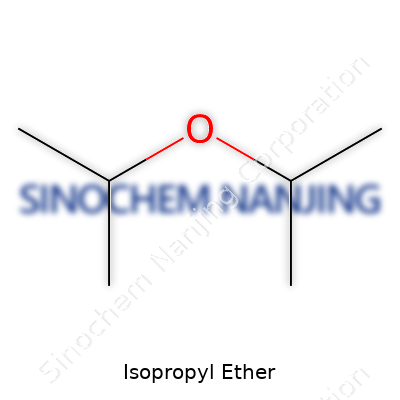
| Names | |
| Preferred IUPAC name | 1-methoxypropane |
| Other names |
Diisopropyl ether 2-Isopropoxypropane Isopropyl oxide DIPE |
| Pronunciation | /ˌaɪsəˈproʊpɪl ˈiːθər/ |
| Identifiers | |
| CAS Number | ''108-20-3'' |
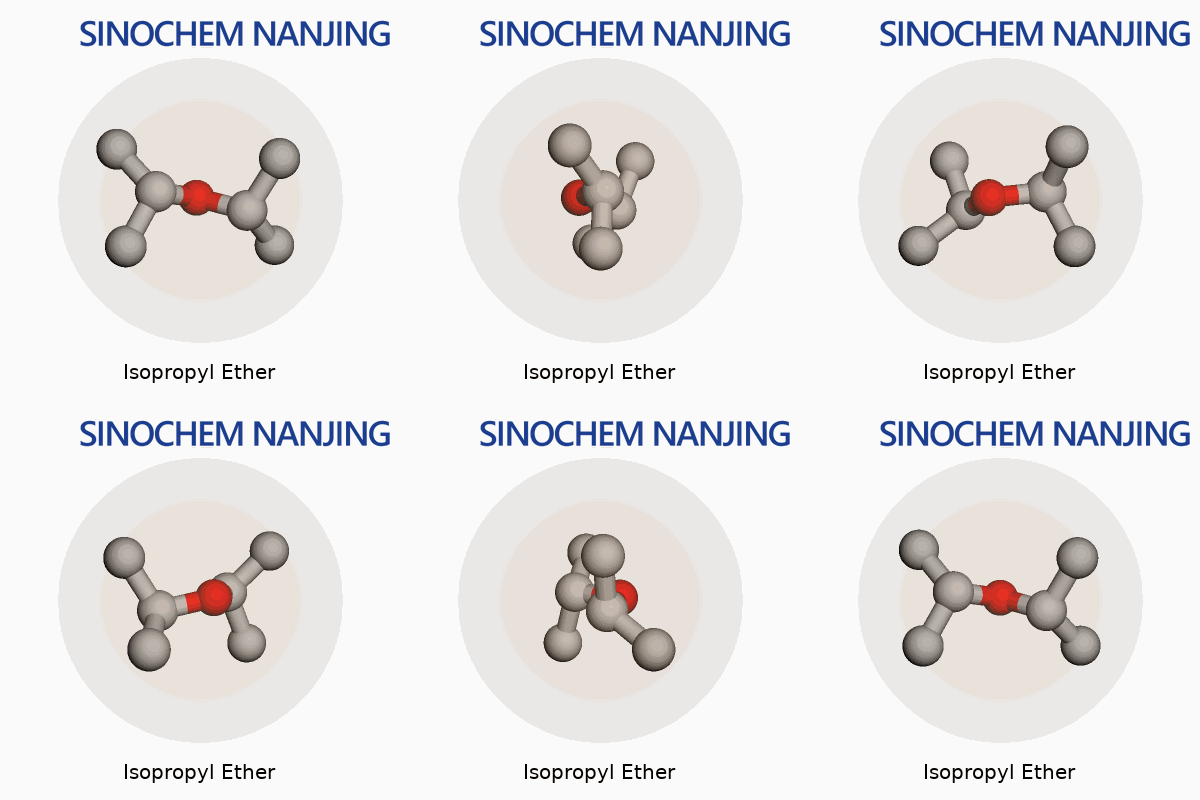
| 3D model (JSmol) | Isopropyl Ether JSmol 3D model string: ``` C(C)OC(C)C ``` |
| Beilstein Reference | 1310773 |
| ChEBI | CHEBI:48359 |
| ChEMBL | CHEMBL54444 |
| ChemSpider | 6489 |
| DrugBank | DB13915 |
| ECHA InfoCard | 14c93b5e-6e01-467f-84e2-b672859bfca1 |
| EC Number | 203-560-6 |
| Gmelin Reference | 8038 |
| KEGG | C00954 |
| MeSH | D007519 |
| PubChem CID | 8037 |
| RTECS number | NJ3325000 |
| UNII | T1E59G817K |
| UN number | UN1159 |
| CompTox Dashboard (EPA) | DTXSID9020846 |
| Properties | |
| Chemical formula | C6H14O |
| Molar mass | 102.18 g/mol |
| Appearance | Colorless liquid with an ether-like odor |
| Odor | ethereal |
| Density | 0.725 g/cm³ |
| Solubility in water | Slightly soluble |
| log P | 2.22 |
| Vapor pressure | 27.1 kPa (20 °C) |
| Acidity (pKa) | 18.1 |
| Basicity (pKb) | 3.4 |
| Magnetic susceptibility (χ) | -79.2e-6 cm³/mol |
| Refractive index (nD) | 1.353 |
| Viscosity | 0.36 mPa·s (at 20 °C) |
| Dipole moment | 1.15 D |
| Thermochemistry | |
| Std molar entropy (S⦵298) | 380.0 J·mol⁻¹·K⁻¹ |
| Std enthalpy of formation (ΔfH⦵298) | -295.7 kJ/mol |
| Std enthalpy of combustion (ΔcH⦵298) | -3422.7 kJ/mol |
| Pharmacology | |
| ATC code | V03AB17 |
| Hazards | |
| GHS labelling | Danger. H225, H302, H315, H319, H335, H336, H351, H372, H402, EUH019 |
| Pictograms | GHS02,GHS07 |
| Signal word | Danger |
| Hazard statements | H225, H302, H304, H315, H319, H335, H336, H351, H373, H411 |
| Precautionary statements | P210, P261, P280, P303+P361+P353, P305+P351+P338, P337+P313, P403+P235 |
| NFPA 704 (fire diamond) | 3-4-1 |
| Flash point | “-28 °C” |
| Autoignition temperature | 420 °C (788 °F; 693 K) |
| Explosive limits | 1.4% - 21% |
| Lethal dose or concentration | LD50 oral rat 7400 mg/kg |
| LD50 (median dose) | 2370 mg/kg (rat, oral) |
| NIOSH | JN6475000 |
| PEL (Permissible) | 400 ppm |
| REL (Recommended) | 300 ppm |
| IDLH (Immediate danger) | 800 ppm |
| Related compounds | |
| Related compounds |
Diisopropyl ether Dimethyl ether Diethyl ether Methyl tert-butyl ether Tetrahydrofuran |



