Isooctanoic Acid: More Than Just Another Chemical
Historical Development
Isooctanoic acid didn’t just pop up in labs overnight. Its roots run back to the days when chemists tried to track each carbon in organic acids, seeking new uses for every strand and branch. Often tied with the evolution of synthetic lubricants and specialty chemicals, isooctanoic acid started grabbing attention as industries learned that branching matters for performance. In the early 20th century, research on branched-chain carboxylic acids led to the recognition that molecular shape not only sets boiling and melting points but transforms how a compound acts under pressure, heat, and stress. The hunger for branched acids grew as lubrication needs changed in automotive and aviation engines. That journey laid the groundwork for isooctanoic acid being more than a niche compound, pushing it step-by-step from scientific curiosity to industrial staple.
Product Overview
Isooctanoic acid stands out from the crowd because its structure gives it practical edge—eight carbons, with a side branch that offers more than what you find in straight-chain relatives. This molecule crops up as a building block in manufacturing lubricants, plasticizers, corrosion inhibitors, and metalworking fluids. Chemists reach for isooctanoic acid when looking for a substance that won’t break down quickly, handles high temperatures well, and mixes efficiently in oil-rich environments. Practical uses range from ensuring the smooth running of car engines to keeping cosmetic products stable on store shelves. I’ve seen engineers pick it for metal-cleaning formulations, knowing its properties deliver exactly what industrial cleaning lines demand.
Physical & Chemical Properties
Isooctanoic acid, known for its faint odor and clear, oily appearance, has a boiling point that tops 200°C. Its molecular arrangement—versus the straight-chained caprylic acid—lets it resist oxidation longer, particularly in tough conditions. Its solubility in water is low, but it dissolves well in organic solvents and mineral oils, lending itself naturally to tough industrial settings. The acid’s branched shape helps it lower pour points in lubricants, crucial in the manufacturing sector. The molecule’s moderate acidity means it won’t corrode most metals in dilute concentrations, but it’s reactive enough to play nice in chemical syntheses. These characteristics mark it as a multi-purpose workhorse in chemical supply rooms and production floors.
Technical Specifications & Labeling
Labeling tells you a lot about isooctanoic acid: molecular formula C8H16O2, CAS number 25103-52-0, and a density hovering close to that of water. Manufacturers usually highlight acid number, purity, color, and water content in product specs. In practice, higher purity grades tend to land in pharmaceuticals and cosmetics, where minor impurities can disrupt functions or sensory qualities. Lower purities end up in technical applications. Tight labeling standards bring accountability. Users can compare acid numbers and water percentages before signing off on storage, handling, and upstream processing. For those who buy in bulk for industry, these numbers aren't just legal requirements—they help dial in process recipes, troubleshoot, and maintain consistent output.
Preparation Method
Isooctanoic acid’s industrial preparation focuses on branching out from simpler hydrocarbons. Chemical makers use processes like the oxo synthesis, where olefins get treated with carbon monoxide and hydrogen to build up longer, branched chains. It’s not an easy, single-step affair: the process demands careful control over conditions to maximize yield and suppress unwanted byproducts. Each batch starts with choosing the right feedstock, often derived from petroleum cracking. Subsequent purification steps ensure the desired acid lands in the storage tanks. I’ve seen chemists fuss over fractional distillation columns, tracking every tenth of a degree, because even a small misstep can bump up cost or cause off-spec batches.
Chemical Reactions & Modifications
Isooctanoic acid isn’t a wallflower in chemical reactions. The branched carboxylic group opens doors for crafting esters—add the right alcohol, a dash of catalyst, and you get plasticizers or lubricant additives suited for high-performance machinery. The acid can hook up with metal ions to produce metal soaps that prevent corrosion on pipelines or auto parts. Hydrogenation and halogenation step up the reactivity or change solubility profiles, letting the industry tweak its function for detergent additives or coating agents. On the lab bench, chemists look for new routes to functionalize the molecule, targeting more robust or environmentally forgiving options. If there’s a way to make a process faster or greener, research teams usually start by tinkering with the carboxyl end first.
Synonyms & Product Names
Search the literature or supplier catalogs, and isooctanoic acid might pop up as 4-methylheptanoic acid, isocaprylic acid, or even as a mixture of branched C8 acids. The way it’s named often depends on industry history or company marketing. These alternate names matter in procurement, regulatory filings, and scientific research—mislabeling leads to mix-ups or compliance problems. In daily work, this confusion brings headaches, especially when aligning international safety data sheets with local regulations. Precision in naming doesn’t just keep paperwork tidy—errors can result in fines or serious process mishaps. For folks keeping track, a clear cross-reference to these synonyms keeps things running smoothly.
Safety & Operational Standards
Working with isooctanoic acid means respect for safety protocols. Its moderate skin and eye irritancy urges staff to reach for gloves and eye shields, and handling in ventilated areas cuts inhalation risk. Storage usually happens in drums or containers rated for acids, kept cool and away from oxidizers. Firms committed to safe operations often train staff to manage small spills and label all vessels clearly—small oversights in labeling can trigger big headaches down the road. Waste streams need careful treatment before disposal. In regions with active chemical industry oversight, regulatory audits look for compliance with environmental protection standards and proper labeling of hazardous materials. Teams that cut corners on this front usually face product recalls, regulatory breaches, or worse.
Application Area
Isooctanoic acid finds its way into more places than most would guess. Its job in lubricant manufacturing stands out: it helps tailor viscosity and stability in both automotive and industrial lubricants. In metalworking fluids, it prevents rust and keeps machinery moving smoothly across plant floors. The cosmetics industry values the acid as an ingredient in emollients and esters, boosting skin feel without greasy residue. Some paints and coatings rely on its stability to stave off degradation from weathering. Pharma production lines sometimes make use of its derivatives. Across these areas, companies bet on isooctanoic acid for consistent performance at scale.
Research & Development
Research keeps pushing the boundaries for isooctanoic acid. New efforts focus on biobased synthesis routes, aiming to swap out petroleum feedstocks for more sustainable, renewable sources. Scientists track how tweaks to the acid’s structure lead to improved environmental profiles or novel functions in high-performance materials. University labs have been busy testing catalyst systems that cut down on waste or energy during production. At conferences, experts share findings on how even small changes in the acid’s side chain can unlock new application niches. In a world searching for green chemistry alternatives, R&D projects aim for drop-in improvements—same performance, smaller environmental cost.
Toxicity Research
Like many medium-chain carboxylic acids, isooctanoic acid sits in a gray zone for toxicity. Most studies peg it low in acute toxicity, though direct contact can irritate skin and eyes, and workers should avoid breathing in vapors. Chronic effects have been less documented, but animal models suggest it breaks down quickly in biological systems, reducing the risk of buildup. Still, regulators demand clear labeling and controlled exposure levels, especially since industrial settings can turn low-risk materials into large-scale hazards. Testing continues—not only for human health but for effects on wastewater systems and aquatic life. Firms in the supply chain invest in ongoing studies, knowing that tighter future regulations could disrupt global markets or force expensive formulation changes.
Future Prospects
Isooctanoic acid’s future rides on how well it adapts to changing demands in sustainability and performance. Synthetic chemists and engineers are doubling down on improving its manufacturing, aiming to boost yields from renewable feedstocks and cut greenhouse gas footprints. Downstream, the acid’s role in biolubricants and biodegradable plastics is gaining momentum as bans on less-friendly chemicals multiply around the world. As companies pursue longer-lasting cars, more robust industrial gear, and safer consumer goods, they look for building blocks that deliver without compromise. If ongoing research continues to pay off—lowering production costs, raising purity, and ensuring regulatory compliance—expect isooctanoic acid to grow in both volume and variety of uses. The story isn’t finished, but the road ahead looks full of practical opportunities for those balancing tradition with innovation.
What is Isooctanoic Acid used for?
Everyday Uses in Industry
Isooctanoic acid shows up in a lot more places than most people realize. If you’ve driven a car, used cosmetics, or even worn certain types of clothing, you’ve probably encountered products made with this acid. Most of the demand comes from the manufacturing of lubricants, plasticizers, and specialty esters. You’ll find these in high-performance synthetic oils and greases—the sort poured into engines or used to keep mechanical parts running smoothly. What makes isooctanoic acid stand out here? It adds a level of stability to the finished product, making the oil last longer under pressure and high temperatures. There’s real value in a product that extends the life of expensive equipment, especially for businesses that can’t afford downtime.
Stepping Into Cosmetics and Personal Care
Personal care products get a lot of attention these days, with consumers becoming choosier about what they put on their skin. Isooctanoic acid becomes a quiet workhorse here. It’s used to make emollient esters that provide a silky, light texture—the kind many folks want in lotions and creams. The acid contributes to the “spreadability” that sells a moisturizer, and it resists turning rancid over time. This stability matters both for shelf life and for preventing unpleasant odors or texture as months go by.
Resins, Coatings, and Making Things Last
Everyone wants paint that holds up to weather and wear. Isooctanoic acid helps chemists create resins for paints and coatings that resist moisture and abrasion. These properties improve both indoor and outdoor products—think of car finishes, industrial flooring, or even athletic gear. Strong coatings cut down on maintenance costs and give buildings and vehicles a cleaner look for longer. From my own experience in construction, using paints with these improved properties means fewer callbacks and happier clients.
Keeping Plastics Flexible and Useful
Plastic is everywhere, but without the right additives, most types become brittle and difficult to work with. Isooctanoic acid translates into plasticizers—chemicals blended into plastics to make them softer or more flexible. Medical tubing, sports equipment, electrical cables, waterproof clothing—all these products rely on flexible polymers. Safer alternatives are important, and isooctanoic acid-based plasticizers offer environmental and health advantages over many traditional options, especially those with harsh phthalates.
Potential Concerns and How to Move Forward
No industrial chemical comes without questions. Some worry about environmental impact if production or disposal isn’t carefully managed. Better monitoring from regulatory agencies helps, but more transparency from manufacturers would go further—labeling ingredients and developing greener processes should be a priority. Green chemistry is gaining traction, and research teams keep working on recycling and bio-based alternatives.
Isooctanoic acid isn’t on everyone’s radar, but its footprint runs through parts of daily life most people never see. It illustrates how behind simple conveniences—smooth lotions, quiet engines, durable coatings—there’s complex science quietly pushing things forward. By supporting safer production and clearer labeling, both industry and consumers can shape how these ingredients serve people and planet better.
What are the safety precautions for handling Isooctanoic Acid?
Why Isooctanoic Acid Demands Respect
Isooctanoic acid isn’t a common household chemical. Its name alone gives away its industrial roots. Most folks working with it deal with manufacturing coatings, lubricants, or specialty chemicals. I’ve spent time visiting facilities that use substances like this, and one thing gets drilled in: casual handling leads to trouble. Isooctanoic acid gives off an odor that catches the throat and can do more damage than some expect. Skin irritation, eye injury—these are tough lessons you don’t want to learn on the job.
Gear Up: Personal Protective Equipment
Chemical-resistant gloves matter here. Forget latex or regular shop gloves. Nitrile works better for keeping acid away from skin. Goggles are crucial, not just safety glasses, because splashes love to find the tiniest gap near your eyes. Lab coats or coveralls keep acid off your clothes and your skin. If there’s even a chance of vapors, workers use face shields or even chemical respirators. My own hands still remember a minor splash during an internship—it tingled for hours. That drives home the value of proper gear more than any sign on the wall.
Controlling Exposure and Ventilation
Good ventilation helps, whether in a lab or a plant. Fume hoods or local exhaust systems keep the air safer. Relying on open windows isn’t enough. The acid’s vapors irritate airways quickly, and headaches can kick in before you realize what's going on. Some shops use air monitors, but nothing beats planning ahead and keeping exposure brief. Standard industrial hygiene helps here, along with routine checks to keep systems working.
Storage and Handling
Anyone storing isooctanoic acid learns fast that it reacts with strong bases and oxidizers. Sturdy, sealed containers made from materials the acid doesn't eat through are essential. These containers stay in cool, dry rooms, away from sunlight and incompatible chemicals. Folks rotate stock to avoid holding on to old, questionable drums. Spill pallets catch runoff in case of a leak. It's easy to toss down absorbent granules and grab a neutralizer, but knowing where these supplies sit in the work area speeds up the clean-up.
Dealing With Spills and Accidents
Even the most careful worker sees spills over time. I once helped clean up a gallon poured by mistake, and quick action made all the difference. Evacuating the immediate area, blocking off drains, and using proper neutralizers or absorbents cut down risk. Always use tools—never your hands, even if gloves are on. Containing and labeling the waste for disposal prevents later confusion. Emergency eyewash stations and safety showers near work areas save precious seconds. Folks need to rehearse emergency plans until those steps become muscle memory.
Medical Response and Reporting
If isooctanoic acid gets on the skin or in the eyes, prompt rinsing with water helps reduce harm. I’ve seen a coworker rush to eyewash just in time, and avoiding permanent damage depends entirely on those first few moments. Regular training ensures every team member knows reporting procedures—nobody gets brushed off or shamed for speaking up. Documenting incidents tells safety managers where to tighten up protocols and buy better equipment.
Building a Safety Culture
Fostering a space where people look out for each other changes everything. In the best-run shops, nobody skips steps to save time, and everyone watches for worn-out gear or blocked escape routes. The difference lies in leadership making safety a real part of daily work. Open conversations about risks encourage honesty and early fixes, so small mistakes don’t snowball into big ones. Handling isooctanoic acid safely relies on this culture as much as the procedures written in any manual.
What is the chemical formula of Isooctanoic Acid?
The Simple Truth: Isooctanoic Acid’s Formula
Chemists have always chased after clear answers, and Isooctanoic Acid offers a straightforward one. Its chemical formula is C8H16O2. On the surface, those numbers seem dry—eight carbons, sixteen hydrogens, two oxygens. Out in the real world, what’s the impact of such a formula? The “iso” prefix reveals something about the chain branching, one carbon hanging off the main chain, which affects how it behaves in the lab and industry.
Why Does Chain Structure Matter?
Back in college, I spent too many nights wrangling with molecular models. Not all eight-carbon acids act the same. The "iso" branching ends up giving Isooctanoic Acid unique physical properties like lower melting points and higher volatility than straight-chain versions. So, the formula gains value only from understanding that structure changes everything—solubility, boiling point, even the smell. In a fragrance lab, that subtle shift might turn a formula from off-putting to pleasant.
Applications: Beyond Textbooks and Lab Benches
Across food science, Isooctanoic Acid shows up almost accidentally. Fermented products and certain cheeses produce the compound naturally. That sharp, tangy scent? Microbes churning out Isooctanoic Acid. In my time working with small home-craft breweries, I learned that controlling fermentation temperature directly affected the acid profile in the finished beer. Isooctanoic Acid's higher concentrations could tip a batch from “refreshing” to “spoiled.” In the perfume trade, its volatility adds brightness but requires a delicate hand. Too much, and the formula overwhelms everything else.
Safety and Environmental Impact
Not all acids treat people kindly. Isooctanoic Acid, like most carboxylic acids, can irritate skin and eyes, and its volatility means inhalation risks in concentrated industrial settings. The industry relies on proper ventilation—simple steps like using fume hoods and gloves keep risks low. Once spilled outside, soil bacteria usually break it down, halting any long-term buildup. Still, chemical companies often monitor effluent to ensure no runoff flows unchecked. Efforts like using less hazardous reagents in synthesis, choosing greener solvents, and recycling process waste push the industry toward cleaner production without sacrificing yield.
Supporting Innovation With Facts—Not Hype
Learning chemistry means learning the long history of getting facts right. Researchers performing any sort of reaction double-check not just the formula, but the actual molecular structure. Ignoring branching or functional groups leads scientists down the wrong path. In the competitive world of fragrances and flavors, getting the formula C8H16O2 correct safeguards against costly mistakes. That habit for double-checking, and for understanding the science behind every letter and number, has fueled every breakthrough I’ve seen firsthand.
Pushing Forward
Educators share practical knowledge by breaking down what formulas mean in real life. Focusing only on the number of atoms hides a world of consequences from branching and functional group placement. By prioritizing safety, monitoring environmental outcomes, and sticking to facts, labs and manufacturers build trust with communities and regulators. That’s been my own experience—transparency and accuracy in scientific work build real value, not just for chemists, but for everyone who depends on safe, consistent products.
How should Isooctanoic Acid be stored?
Getting Real About Isooctanoic Acid
Isooctanoic acid serves as a key player in many chemical processes, including the production of lubricants, plasticizers, and specialty fluids. Those who handle it day to day know it can easily slide under the radar because of its colorless nature and mild scent. It’s tough to appreciate the risks at first glance. I remember walking into my first chemical storage site and thinking these clear liquids posed less trouble than the jars marked with neon warning labels. Not so. It’s often the subtle substances that cause headaches when overlooked.
Safe Storage Starts With Containers
This acid acts as an irritant, especially for skin and eyes. Use containers made from stainless steel, high-density polyethylene (HDPE), or glass with tight-sealing lids. Avoiding metal like aluminum and many common plastics prevents reactions that could lead to leaks or container rupture. I’ve seen storage areas turn chaotic just due to unnoticed corrosion inside cheap drums.
If you’re pouring or transferring, always keep things tidy. Spills invite slippery floors and possible burns, and oily residues encourage accidents. It helps to set up secondary containment tubs or trays. They catch drips—it’s a simple trick, but it works and makes clean-ups manageable.
Temperature Control and Ventilation Matter
Don’t stash isooctanoic acid near sources of heat. High heat can cause pressure to build up, raising the risk of lids popping open and vapors leaking out. Storage in a cool, dry corner of the warehouse keeps things stable. A lot of folks don’t realize improper ventilation worsens indoor air quality. The vapor isn’t overpowering, but long exposure without fresh air strains your lungs and head. Set up exhaust fans or keep windows open where possible.
Keep It Away from Incompatible Materials
Mixing isooctanoic acid with strong oxidizers can spark dangerous reactions. Never store it near bleach, hydrogen peroxide, or acids like nitric or sulfuric. Mark shelves to separate reactive materials, as grabbing the wrong bottle in a hurry can mean disaster. Even in well-run supply rooms, it’s easy to cut corners—color-coded tape or clear signage helps staff keep everything in its place.
Labels and Documentation Provide Safety and Peace of Mind
Accurate labels give everyone a leg up: workers know what’s inside, how old it is, and if the stock needs rotating out. Add those little details, like hazard pictograms, and you build a habit of safety rather than just ticking boxes. Keep a log of received, opened, or used containers. That accountability makes it quicker to spot problems, such as containers that develop leaks or fade in clarity.
Personal Protection Always Counts
Safety goggles, nitrile gloves, and old-fashioned aprons prevent injuries. I’ve seen too many burns and rashes from taking shortcuts or skipping gear because “it’s just another clear liquid.” No one wants to waste hours at urgent care for a lesson that could be learned in five minutes.
Training and Habit Keep Things Running Smoothly
Casual storage invites trouble. Regular refreshers for staff protect against complacency. Real-life stories—photos of previous spills or close calls—hit home far more than any instruction manual. A culture of attention keeps people and product safe, and in the end, isooctanoic acid becomes one less thing to worry about on the warehouse floor.
Is Isooctanoic Acid hazardous to the environment?
Understanding Isooctanoic Acid
Isooctanoic acid is a chemical known for use in lubricants, metalworking fluids, and as an intermediate in the production of plasticizers. It pops up in industrial processes more than in household products. As someone who’s handled environmental safety cases for small manufacturing companies, I’ve watched interest in lesser-known chemicals like this rise as businesses look to boost efficiency while meeting regulations.
How Isooctanoic Acid Enters the Environment
Companies release isooctanoic acid mainly through wastewater discharge, spills, or leaks during storage and transport. Out in the field, workers told me that leaks often go unnoticed until the smell gets strong or the ground gets stained. Used oils and process water can carry trace amounts into sewage systems. Rain can dissolve spilled acid and push it into nearby soil or streams, where plants and aquatic species live.
What Science Says About the Risks
Research shows that isooctanoic acid does not easily dissolve in water, yet it stays stable for a long time once released. University labs found it clings to organic matter and fine particles in soil or sediment, making cleanup tough. With its low biodegradability, the acid tends to linger after a spill. This property troubles environmental monitors because persistence often means long-term risk to riverbanks and wetlands downstream from chemical plants.
Most lab studies suggest isooctanoic acid is mildly toxic to aquatic organisms. Researchers noted growth defects and trouble with egg hatching in fish exposed for several days. Water fleas, insects, and some amphibians showed slowed development or twitchy behavior at higher concentrations. Still, the levels that cause visible harm are generally above what monitoring agencies have measured in rivers and lakes near most industrial sites.
Why This Matters for People and Wildlife
If you farm or fish near a plant that uses isooctanoic acid, pollution can hit the bottom of the food chain first. Bacteria and algae break down waste and cycle nutrients. Harm here soon spreads to bigger creatures like ducks, frogs, and small mammals. Over time, residues in mud might build up, affecting animals that eat off the bottom. Rural communities often rely on the same streams for irrigation or watering livestock, so contamination worries seep into daily routines quickly.
Reducing Harm and Looking Ahead
A good first defense: strong spill prevention and fast cleanup. I worked with teams that set up secondary containment, regular tank inspections, and clear reporting lines so no one gets caught off guard. Using closed-loop systems, facilities can catch leaks early and reuse water instead of dumping. Proactive companies sometimes invite third-party scientists to run independent tests on local water and soil—that kind of transparency builds trust.
Switching to less persistent substitutes where chemistry allows offers a longer-term fix. EU regulators made producers phase out similar acids in some applications. Meanwhile, using advanced wastewater treatment cuts down traces that slip through. These plants use biofilters and special adsorbent media to catch organics that old-school methods miss.
Staying Vigilant
Isooctanoic acid won’t vanish from industry overnight. Until safer alternatives become more practical, steady monitoring, better engineering, and honest community dialogue offer the most realistic set of tools. Folks living and working near chemical hubs have a stake in pushing for safer practices and clear information about what goes into local air and water.
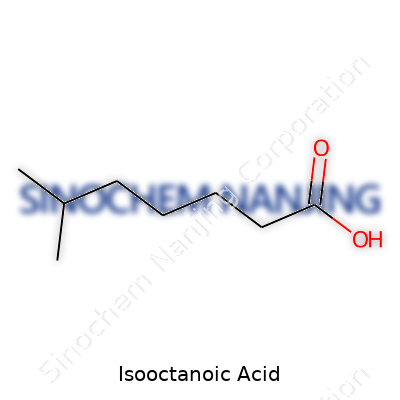
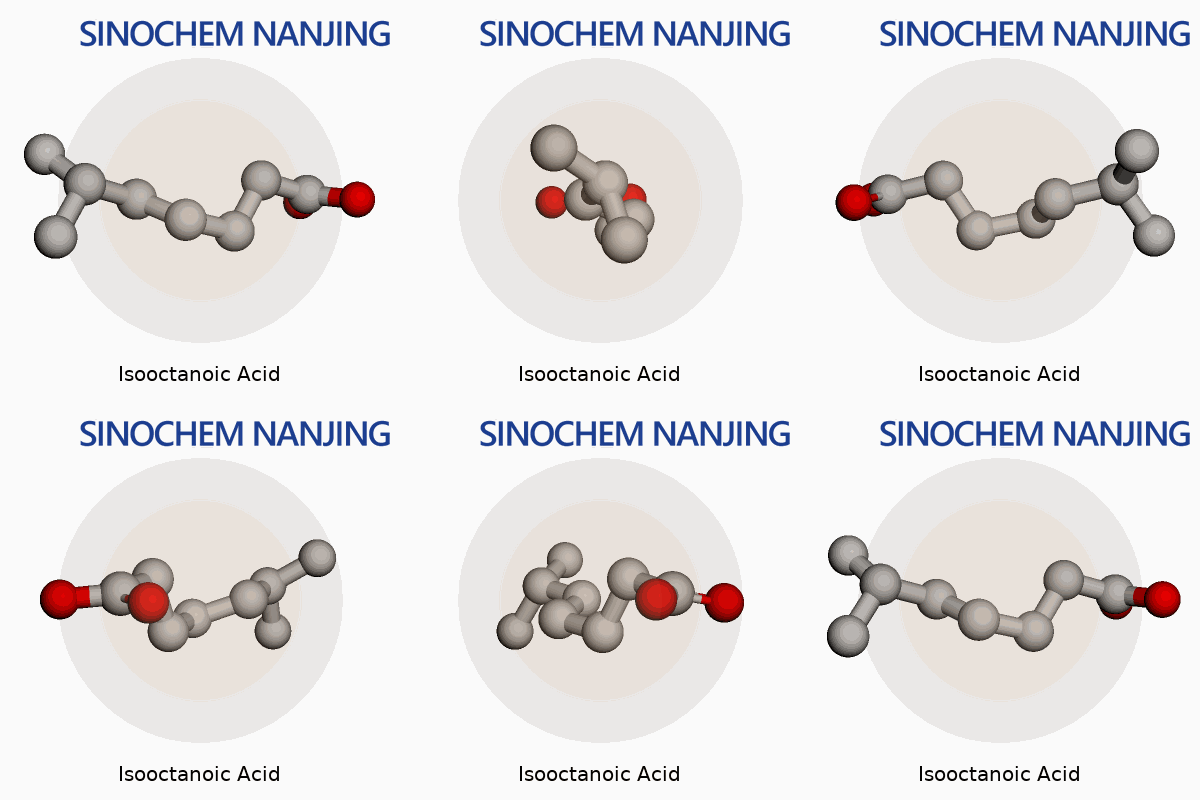
| Names | |
| Preferred IUPAC name | 2,2,4-Trimethylpentanoic acid |
| Other names |
Isooctanoic acid 4-Methylhexanoic acid 4-Methylcaproic acid Isooctylic acid 4-Methylhexanoate |
| Pronunciation | /ˌaɪsəʊˌɒkˈteɪ.nɪk ˈæs.ɪd/ |
| Identifiers | |
| CAS Number | “25103-52-0” |
| Beilstein Reference | 1844852 |
| ChEBI | CHEBI:30883 |
| ChEMBL | CHEMBL514476 |
| ChemSpider | 25520 |
| DrugBank | DB13857 |
| ECHA InfoCard | 08c377b9-9d34-446b-b419-33d36a5d1c99 |
| EC Number | 204-490-0 |
| Gmelin Reference | 3380 |
| KEGG | C08353 |
| MeSH | D010090 |
| PubChem CID | 10460 |
| RTECS number | NI0175000 |
| UNII | T38O2R1X8B |
| UN number | UN3265 |
| CompTox Dashboard (EPA) | DBLT000737 |
| Properties | |
| Chemical formula | C8H16O2 |
| Molar mass | 144.21 g/mol |
| Appearance | Colorless to pale yellow liquid |
| Odor | characteristic |
| Density | 0.895 g/mL at 25 °C (lit.) |
| Solubility in water | Slightly soluble |
| log P | 3.05 |
| Vapor pressure | 0.0133 hPa (20 °C) |
| Acidity (pKa) | 4.89 |
| Basicity (pKb) | pKb ≈ 15 |
| Refractive index (nD) | 1.415 |
| Viscosity | 2.58 mPa·s (25 °C) |
| Dipole moment | 2.56 D |
| Thermochemistry | |
| Std molar entropy (S⦵298) | 410.3 J·mol⁻¹·K⁻¹ |
| Std enthalpy of formation (ΔfH⦵298) | −600.6 kJ/mol |
| Std enthalpy of combustion (ΔcH⦵298) | -6158.8 kJ/mol |
| Pharmacology | |
| ATC code | A01AB13 |
| Hazards | |
| GHS labelling | GHS02, GHS07 |
| Pictograms | GHS02,GHS07 |
| Signal word | Warning |
| Hazard statements | H226, H315, H319, H335 |
| Precautionary statements | P280, P305+P351+P338, P310 |
| NFPA 704 (fire diamond) | 2-3-0 |
| Flash point | 110 °C |
| Autoignition temperature | 440 °C |
| Explosive limits | Explosive limits: 1.0–7.0% |
| Lethal dose or concentration | LD50 (oral, rat): 5080 mg/kg |
| LD50 (median dose) | 2500 mg/kg (rat, oral) |
| NIOSH | NA1287000 |
| PEL (Permissible) | PEL: Not established |
| REL (Recommended) | 200 mg/m³ |
| Related compounds | |
| Related compounds |
Hexanoic acid Octanoic acid 2-Ethylhexanoic acid Isovaleric acid Valeric acid 2-Methylbutyric acid |



