Isobutylamine: Insights and Commentary on a Versatile Chemical
Tracing the Roots: How Isobutylamine Emerged
Exploring the background of isobutylamine pulls you into the evolution of chemical manufacturing through the twentieth century. Chemists discovered this simple alkylamine during broader research into amines, which has provided foundational understanding for medicine, agriculture, and materials science. Isobutylamine drew attention for its straightforward structure and useful reactivity, leading to a surge in interest as the chemical industry expanded after World War II. Laboratories quickly found that working with short-chain amines like isobutylamine opened new doors for synthetic routes and product development. Looking at the past, industrial progress and research breakthroughs happened together, and isobutylamine's story showcases the spirit of inquiry that shaped the field.
Understanding the Product: What Isobutylamine Brings to the Table
Among amines, isobutylamine stands out because it neatly balances volatility and reactivity. The compound, with the formula C4H11N, appears as a clear, colorless liquid and gives off a strong odor reminiscent of ammonia and old cheese—anyone who’s worked with it knows the scent sticks. This odor can be a nuisance in the lab, but it also provides a quick cue for safety. Isobutylamine mixes easily with water and organic solvents, making it a flexible starting point for syntheses. When I first handled isobutylamine, its pungency reminded me how important ventilation and protective gear are during routine business in any chemistry workspace.
Diving into Physical and Chemical Properties
Isobutylamine boils at about 67°C and freezes near -85°C, which speaks to its low molecular weight and the structure that limits strong intermolecular forces. Its density is less than water, so spills tend to float and spread out. On the chemical side, isobutylamine reacts with acids to form stable salts—a trait common to aliphatic amines, underpinning separation and purification in chemical manufacturing. The basicity of isobutylamine plays a key role in organic synthesis, where it kicks off reactions from condensation to alkylation. This property also means eyes, skin, and lungs need special protection during handling, something every chemist who’s fumbled a flask of liquid amine can confirm.
Tech Specs and How Labs Package It
Technical standards are essential for batch reproducibility, especially for chemicals like isobutylamine. Common purity levels reach 99% or higher, driven by the needs of pharmaceutical, agrochemical, and specialty chemical industries. Containers used to ship and store isobutylamine should resist corrosion, prevent vapor leaks, and meet labeling requirements set by bodies like OSHA and the GHS. Labels must warn about irritant effects and flammability. Over time, we’ve seen stricter standards emerge, with batch certificates now tracking even trace impurities to help customers avoid costly surprises later in their workflow.
How Isobutylamine Comes About: Prep in the Lab and Industry
Several routes bring isobutylamine from raw feedstocks to your workbench. Reductive amination of isobutyraldehyde remains popular, where the aldehyde reacts with ammonia in the presence of a reducing agent like hydrogen over a nickel catalyst. Older methods use alkyl halides reacting with ammonia, but side products and lower yield push most modern manufacturers to better alternatives. The reductive alkylation method wins points for scalability and cost efficiency, essential factors for industrial synthesis. These methods also track with broader trends in fine chemicals, where efficiency and sustainability have become priorities.
Making Isobutylamine Dance: Chemical Reactions and Tweaks
Isobutylamine opens more doors than just serving as a starting point. Chemists turn to it in the hope of making amides, imines, and other functionalized products. Reacting isobutylamine with acyl chlorides delivers amides in good yield, which are handy building blocks. Strong oxidizers break down isobutylamine rather quickly, while gentle conditions preserve its structure for more targeted modifications. I remember running a reductive amination where isobutylamine gave a remarkably clean product, compared to other branched amines, making tough projects seem a little less intimidating.
Synonyms and Names You Might See
Look at chemical catalogs and you’ll see isobutylamine under several handles: 2-methyl-1-propanamine, isobutan-1-amine, and sometimes i-BuNH2. The mix of systematic IUPAC names with common and trade names can create confusion, especially when safety data gets referenced. Experience teaches you that checking CAS numbers (isobutylamine: 78-81-9) beats trusting labels, especially when importing from overseas suppliers where naming conventions get lost in translation.
Staying Safe: Handling and Operational Habits
In a busy lab, isobutylamine requires the same care as other volatile amines—goggles, gloves, fume hoods, and vapor detectors. It catches fire at relatively low temperatures and its vapors can irritate breathing passages in seconds. Proper storage calls for tightly sealed metal drums or approved bottles, placed away from ignition sources. Spill kits stocked with neutralizing agents and absorbents should always be within arm’s reach. I’ve seen how a misplaced bottle or complacency with PPE can bring work to a halt, reminding everyone that safety is never just a checklist. Following regulatory guidelines, from chemical hygiene plans to fire safety protocols, keeps the workplace running smoothly even when deadlines stack up.
Where Does Isobutylamine Show Up? Applications Big and Small
Isobutylamine’s value stretches across industries. Crop science finds it useful in making herbicides and pesticides, often as a building block that brings branching or improved biological activity to active molecules. Pharmaceutical chemists use it to modify drug candidates, hoping to shift biological properties or solubility. Polymers and resins rely on isobutylamine as an intermediate for specialty plastics or coatings. A few years back, I worked with a small research team on alternative fuel additives, and isobutylamine’s volatility made it an intriguing choice for initial prototypes. Its flexibility as a raw material, matched with predictable reactivity, opens practical options for engineers and researchers facing tight spec requirements and evolving regulations.
Keeping the Pipeline Moving: R&D Perspective
Research on isobutylamine focuses on both extending its utility and improving how it’s made. Synthetic chemists constantly look for routes with fewer steps, less waste, and better yields—pressured by both economic factors and the drive toward greener chemistry. Biotechnology has entered the scene, with engineered microbes explored for direct biosynthesis from renewable carbon sources. University and industry partnerships push to scale these methods in hopes of less reliance on petrochemical feedstocks. In the lab, new derivatives promise improved performance in everything from advanced materials to pharmaceuticals. This race toward efficient, sustainable production lines up with broader sustainability commitments, and it’s refreshing to watch chemical suppliers and end users sync up their goals.
Weighing the Risks: Toxicity and Public Health
Toxicity remains a sticking point for any chemical in active use. Isobutylamine can irritate the skin, eyes, and respiratory tract after brief contact or inhalation. Animal studies show adverse effects at moderate exposures but not the severe toxicity of many heavier amines or aromatic compounds. It’s a chemical you respect, not fear, and you learn that vigilance in labeling, handling, and spill response gets the job done. As regulatory agencies gather more health and environmental impact data, safety sheets get updated, and teams take note. Long-term studies focus on possible chronic effects and interactions with biological systems, aiming to close gaps that earlier research left open.
Looking Ahead: The Future for Isobutylamine
Isobutylamine’s prospects look stable, if not exciting, as industries chase both new uses and cleaner manufacturing. Chemists hope to lower reaction footprints, swapping harsh conditions for milder, less wasteful alternatives. Calls for green chemistry have nudged researchers toward bio-based production or cycling waste materials back as feedstocks, aiming for processes that hit both environmental targets and economic returns. Future breakthroughs may come from smart catalysis and engineered enzymes, unlocking new derivatives or application areas. Market growth depends on how well producers adapt to changing demands and regulatory landscapes, but isobutylamine’s proven reliability means it stands as a go-to tool as industries reinvent themselves year after year.
What is Isobutylamine used for?
Everyday Connections to Industry
Most people never hear about isobutylamine, yet it pops up in projects ranging from pharmaceutical labs to industrial plants. In simple terms, isobutylamine serves as a valuable building block for making products most of us use or benefit from every day.
Medicine Starts in the Lab
The story often begins in pharmaceutical research. Scientists rely on isobutylamine when testing new molecules. It often acts as a core ingredient for making drugs that target things like blood pressure or infections. You won’t spot it on a pill label; by the time medicine hits pharmacy shelves, isobutylamine has transformed or disappeared in the complex web of chemical reactions. Its main job lies in helping researchers create, test, and refine compounds before any medicine reaches a prescription pad.
Pesticides and Protecting Crops
Growers worldwide face a constant battle against insects and plant disease. Isobutylamine helps chemists craft the basic structure for several modern pesticides. These pesticides, when applied carefully, help increase harvest yields, which keeps food prices from skyrocketing. Chemical safety remains a topic of hot debate, but every food producer needs dependable tools to avoid crop failure.
Rubber, Plastics, and Everyday Goods
Walk into a home improvement store, and you’re surrounded by products that owe their existence to chemicals like isobutylamine. Manufacturers depend on it to make rubber and plastic. When you find shock-absorbing soles in shoes or the protective trim around car doors, that flexibility and toughness come from rubber blends, some of which use isobutylamine somewhere along the line. Even though consumers never encounter this compound directly, manufacturing these complex items hinges on having reliable sources of key chemicals.
From Solvents to Additives
While solvents clean factory equipment and dissolve stubborn grime, isobutylamine sometimes acts as a component in industrial cleaning solutions. Other times, it helps create additives that boost fuel performance or protect machinery from rust. No one expects a raw material like this to stand alone—its worth grows out of collaboration and reaction with countless other compounds.
Health, Environment, and Moving Forward
Every industrial chemical sparks discussion around health and environmental impacts. Isobutylamine doesn’t escape that scrutiny. It carries some risks: it releases fumes that can irritate noses, eyes, and lungs if handled carelessly. Chemical exposure standards set by agencies like OSHA guide how factories safely store and use it. Engineers invest in ventilation, personal protective equipment, and careful training. Environmental responsibility becomes more urgent each year, so safe disposal and spill prevention remain top priorities.
Looking Ahead: Smarter Solutions
Instead of just ramping up production, leaders in chemistry look for ways to minimize waste and find greener alternatives to harsh chemicals. Some researchers explore how plant-based feedstocks could replace petroleum ingredients. Others test recycling methods for industrial solvents. Community conversations between manufacturers, regulators, and public health experts spur process improvements, leading to safer workplaces and less pollution.
Final Thoughts
Many of the biggest advances in health, food, and technology rely on behind-the-scenes players like isobutylamine. Most people won’t ever buy a bottle of it or see its name in an ad. Still, as conversations around sustainability and health accelerate, understanding these raw materials can help anyone make informed decisions about the products and policies shaping our daily lives.
Is Isobutylamine hazardous to health?
Getting to Know Isobutylamine
Isobutylamine finds its place in everyday chemistry labs, factories, and even in the supply routes for specialized manufacturing. Looking at the clear liquid, nothing about it screams “hazard,” but just because it blends in doesn’t mean you shouldn’t look twice. Having handled various aliphatic amines over the past decade, I’ve learned respect for what these chemicals can do both for and against us.
The Hidden Risks Behind the Name
Anyone who’s caught the whiff of isobutylamine never forgets it: sharp, ammonia-like, heady enough to bring a sting to your nose. That strong smell is more than a warning sign—the vapors signal that this is not something you want to inhale or spill down your sleeve. Direct contact with the skin can quickly cause irritation, burning, or even blistering. A day spent cleaning up ampoules leaves a sharp reminder if you didn’t get your gloves right.
Breathing in the vapors brings headaches and dizziness. Crowded shops without proper ventilation set the stage for respiratory upset. Anyone working near the stuff should worry about more than faint nausea; repeated exposure can wear down your breathing and, in higher doses, lead to coughing, chest tightness, and throat pain. Reports from chemical workers point to longer-term troubles if safety isn’t kept front-of-mind.
The risks aren’t limited to breathing or touch. Swallowing even a small amount can trigger abdominal pain, serious vomiting, and a risk of chemical burns to the digestive system. You don’t often hear about these accidents, but emergency rooms see enough cases among lab staff and factory workers to take the hazard seriously.
Why Small Lapses Matter
Accidents with isobutylamine don’t just happen through big spills or carelessness. I remember a shift where a technician, juggling test tubes without goggles, took a sharp splash to the face. It doesn’t take more than a few seconds on the skin or in the eyes to leave real damage. The lesson lands fast—skimpy PPE or half-hearted air-handling turns the lab into a minefield.
Beyond the lab, waste handling raises red flags. Isobutylamine drips into drains or trash bins, mixing with acids or oxidizers, sparks steaming reactions that endanger both workers and the environment. Waterways that catch stray chemicals face damage to local wildlife and can carry the risk far from the original source.
Steps That Turn Hazard into Safety
Sometimes it takes a close call to convince people to treat isobutylamine with the seriousness it deserves. Getting the right gear—gloves, goggles, and tight seals on ventilated hoods—makes the work much safer. Frequent training burns good habits into muscle memory. Research from NIOSH and OSHA backs up these layers of protection, showing big drops in injury rates with proper PPE and air systems.
Safe storage changes everything. Separated from acids or oxidizers, kept in sturdy containers, and tagged clearly, the risk of mishap drops sharply. Spill kits and eyewash stations nearby let people respond quickly if something goes wrong. Simple steps—like regular risk drills and peer checks—catch small mistakes before they spiral into big trouble.
Why Open Eyes and Hard Facts Matter
Isobutylamine shows that routine work doesn’t mean risk-free work. People who work with chemicals face daily hazards, and the facts about toxicity back up the need for vigilance. The right attitude—a blend of respect for the hazards and practical, repeatable safety steps—turns a risky job into a manageable one. A little more care today means fewer problems and sick days later on; this is advice learned from rough experience and study, rather than from a manual.
What are the storage requirements for Isobutylamine?
Understanding the Risks Firsthand
Anyone who has unpacked a drum of isobutylamine knows the smell hits hard and fast. It’s sharp, it lingers, and it warns you to respect this chemical. On paper, isobutylamine falls into the flammable and corrosive categories. In practice, improper storage leads to real danger—fires, toxic fumes, equipment damage, and costly shutdowns. My time in a mid-sized chemical plant demonstrated that a sloppy storage setup doesn’t just cause inconvenience, it invites accidents that could be avoided with care and discipline.
Keeping Air and Heat Away
Fires sparked by volatile chemicals often start with small mistakes—a leaky seal, a stray cigarette, a forgotten heat source. Isobutylamine vapors catch fire around common sources like static electricity and ordinary switches. That’s why all storage locations stick to flameproof lighting, proper grounding, and electrical systems certified for chemical settings. Heating pipes and sunlight both make things riskier, since even moderate warmth can build up pressure inside storage drums and provoke leaks. The general wisdom holds true: keep all containers cool, dry, and well-shaded, with temperatures below 25°C.
Dry conditions rank just as high. Moisture doesn’t just corrode barrels, it sometimes triggers chemical changes or ruins entire shipments. I learned to check floors and ceilings for leaks right after a near-miss involving a burst steam line over a rack of isobutylamine containers. Simple daily routines kept storage dry year-round—no fancy gadgets required, just sharp eyes and good habits.
Seal It or Pay for Broken Seals
Every plant manager knows someone who tried to save a few dollars by reusing old, questionable containers. They soon get a nasty surprise—evaporation, leaks, or contamination. Isobutylamine in particular demands tight, chemical-resistant storage. Drums made of steel, lined with special epoxy, or high-density polyethylene stand up to its stubborn vapors. Lid gaskets wear out fast, so replacements need to be routine, not just “as needed.” A single careless day led to a chemical haze in our storage shed—the patch job failed, and the entire ventilation system needed an overhaul.
Ventilation Makes a Difference
The smell alone feels like a red flag for anyone entering a poorly ventilated warehouse. Good airflow does more than chase away those fumes—it prevents dangerous buildup that puts workers at risk. Systems don’t need to be fancy; even simple exhaust fans and open racks can make a difference if set up right. Before moving a stack of drums, our team always checked the airflow. Working for a shop that once ignored this step, I watched the entire crew pause with headaches and nausea after just ten minutes near a closed corner. Some lessons you learn the hard way.
Protection for People and the Environment
Leaks and spills never stay put. Isobutylamine seeps through cracks, runs down drains, and causes headaches on environmental inspections. Containment solutions—spill pallets, dikes, even simple absorbents—save more headaches than they cost. After the first time I scrambled to clean up a five-gallon spill with paper towels and the wrong gear, I found out why regulations stress proper containment and cleanup materials. Safety gear, proper labeling, and regular checks build a work culture that keeps everyone healthy and out of trouble with the law.
Improving Storage With Common Sense and Good Habits
Most plant mishaps don’t trace back to rare accidents or complex failures. The biggest problems start with simple oversights: an unlabeled drum, a blocked air vent, a missing checklist. Staff training, clear rules, and regular walkthroughs cut down on these problems more than high-tech solutions. Experienced workers know what to look for, and sharing that know-how makes a clear difference. Manufacturers post up-to-date Safety Data Sheets for a reason—ignoring them just isn’t worth the risk. The basics, done right: cool, dry, safe, clean, and always double-check the labels.
What is the chemical formula of Isobutylamine?
The Simple Facts About Isobutylamine
Chemistry isn’t just textbook diagrams. Many of us come across chemicals in daily life, most just pass by unnoticed unless someone points them out. Take isobutylamine, for example. Its chemical formula might look like this: C4H11N. This formula shows four carbon atoms, eleven hydrogen atoms, and a single nitrogen atom. At first glance, you might wonder where such a compound shows up. But isobutylamine has a place both in labs and outside of them.
Why Do Simple Formulas Matter?
In my years as a science educator, I’ve seen students glaze over at chemicals with strange names and odd-smelling bottles. Yet, behind every formula sits a real structure. Isobutylamine belongs to the alkylamines family. It looks similar to common chemicals in the body or in industrial use, like adrenaline precursors and even flavor compounds. On paper, its chemical formula seems dry. In practice, this formula points out a chain of three carbon atoms, one branch, and an amine group. This shape plays a big role in how it interacts with things around it.
Why Should Anyone Care?
Understanding the formula C4H11N goes beyond memorization for a test. Isobutylamine shows up in agricultural chemistry, pharmaceuticals, and even some specialty flavors. The nitrogen atom, embedded in its structure, transforms the simple carbon chain. A single atom swap draws a solid line between a sharp, fishy-smelling amine and the familiar flavors used in prepared foods. If my kitchen had a chemical shelf, isobutylamine would never be listed as a main ingredient, but it could show up in modified forms that influence flavor profiles or act as building blocks in drug chemistry.
Safety Still Counts
No matter how familiar a chemical formula may seem, safety remains the unspoken conversation. Isobutylamine might be needed in a lab, but spills can irritate skin and eyes, and inhaling its vapors creates discomfort. It demands respect, not fear. I remember mixing compounds as a student, only to find out one drop could make a room hard to breathe in. Proper ventilation, gloves, and a healthy respect for Material Safety Data Sheets matter more than fancy lab coats.
A Need for Responsible Use
Isobutylamine stands as a reminder that every chemical has both a purpose and potential risks. Workers making agricultural products have to watch for exposure, as handling errors could cause significant discomfort, or worse, long-term health issues. Training can address this, making sure people understand what that formula means in practice. Solutions revolve around transparency, access to reliable data, and a straightforward picture of how an amine functions outside of a textbook example.
Fact-Based, Not Fear-Based
People sometimes hear “amine” and worry about toxins or pollutants. It’s better to approach chemicals like isobutylamine with facts, not fear. Most health and safety guidelines stem from decades of research and real-life handling. The formula itself isn’t a mystery—C4H11N is a tool in many scientific and industrial jobs. Sharing accurate information, rooted in research, helps demystify compounds that seem scary at first glance but serve important roles across different fields.
How should Isobutylamine be handled safely?
Recognizing the Risks
Every time I pull a container of isobutylamine off the shelf, my nose catches the sharp smell, and I’m reminded how little stands between safe experiments and a trip to the nurse. Isobutylamine, used in chemical synthesis and pharma, brings along hazards that demand respect. This stuff evaporates quickly, sending strong fumes airborne. Eyes, lungs, and hands take the hit first—irritation shows up fast, and overexposure sneaks in before you realize.
Personal Protective Equipment: Not Optional Gear
Goggles shield eyes from accidental splashes. Gloves made of nitrile or neoprene keep the liquid away from skin; latex won’t cut it, as isobutylamine can seep through. A white lab coat might look classic, but it’s the gloves and goggles that do the real heavy lifting. Good practice means swapping out gloves often and sticking to gear that’s rated for organic solvents.
I’ve seen new hires treat PPE as a box-ticking exercise. Skipping out on goggles or half-zipping a lab coat isn’t a fashion statement—it’s an open invitation to chemical burns or much worse. Standard rules call for keeping long sleeves on and closed shoes. That way, no one’s learning about chemical exposures the hard way.
Ventilation and Storage: Removing Unwanted Surprises
Working with isobutylamine in a closed room quickly turns into a guessing game about air quality. Modern labs stick to a simple rule: use a chemical fume hood. Trying to cut corners—working on an open bench, for example—spreads vapors and raises exposure for everyone in the room. I’ve seen seasoned chemists stash bottles away in approved flammables cabinets. That’s basic sense, since isobutylamine ignites easily and throws out toxic smoke if it catches fire.
Tight lids and original containers win over makeshift bottles or cups every time. Keeping a good inventory helps. Containers need labels, and regular checks catch leaks or the cracked jars that seem to multiply out of sight.
Cleaning Up Spills and Waste
A spill, even the small ones, brings work to a halt. No one wants to breathe vapors or risk skin contact. A spill kit with absorbents, gloves, and goggles waits nearby. Grab that kit right away, contain the spill, and ventilate the area. I learned early to never use water for cleanup—water can spread the chemical instead of stopping it. Waste goes into special bins, never down the drain. Disposal companies handle the rest, hauling it off under strict rules.
Training and Emergency Action
Regular safety drills and hands-on training beat any online safety module. Walking through what to do in an emergency—rinsing eyes at the eyewash station, using a safety shower, or calling the fire department—helps everyone know their role. That sense of readiness takes fear out of accidents and replaces it with clear action steps.
Open conversations about near-misses and minor incidents turn into learning moments. Upskilling the team on chemical hazards means mistakes don’t have to repeat themselves. Respecting hazardous materials grows from this culture, not from a checklist alone.
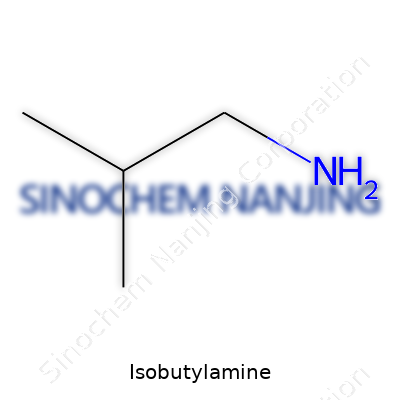
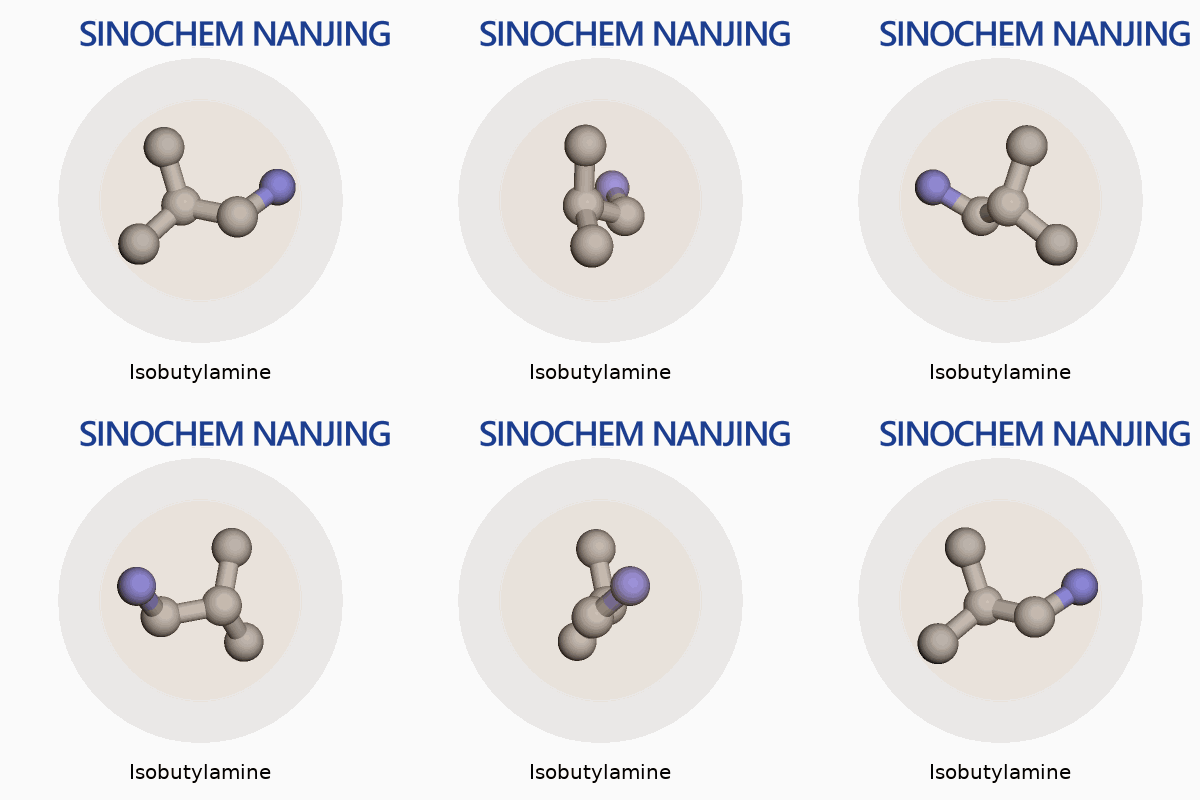
| Names | |
| Preferred IUPAC name | 2-Methylpropan-1-amine |
| Other names |
2-Aminobutane Isobutanamine Isobutylamin |
| Pronunciation | /ˌaɪ.səˈbjuː.tɪl.əˌmiːn/ |
| Identifiers | |
| CAS Number | 78-81-9 |
| 3D model (JSmol) | `Isobutylamine JSmol 3D model string`: ``` Isobutylamine CC(C)CN ``` |
| Beilstein Reference | 605125 |
| ChEBI | CHEBI:28757 |
| ChEMBL | CHEMBL15462 |
| ChemSpider | 68204 |
| DrugBank | DB01982 |
| ECHA InfoCard | ECHA InfoCard: 100.003.080 |
| EC Number | EC 203-514-8 |
| Gmelin Reference | 6359 |
| KEGG | C06197 |
| MeSH | D002209 |
| PubChem CID | 6568 |
| RTECS number | NX9625000 |
| UNII | 2E3029IT7A |
| UN number | UN2059 |
| Properties | |
| Chemical formula | C4H11N |
| Molar mass | 73.14 g/mol |
| Appearance | Colorless liquid |
| Odor | Ammonia-like |
| Density | 0.74 g/mL at 25 °C (lit.) |
| Solubility in water | Miscible |
| log P | 0.81 |
| Vapor pressure | 5.3 kPa (at 20 °C) |
| Acidity (pKa) | 10.6 |
| Basicity (pKb) | 3.26 |
| Magnetic susceptibility (χ) | -6.72×10⁻⁶ cm³/mol |
| Refractive index (nD) | 1.395 |
| Viscosity | 0.43 mPa·s (at 20 °C) |
| Dipole moment | 1.35 D |
| Thermochemistry | |
| Std molar entropy (S⦵298) | 204.6 J·mol⁻¹·K⁻¹ |
| Std enthalpy of formation (ΔfH⦵298) | -56.2 kJ/mol |
| Std enthalpy of combustion (ΔcH⦵298) | -3706 kJ/mol |
| Hazards | |
| GHS labelling | GHS02, GHS05, GHS06 |
| Pictograms | GHS02,GHS07 |
| Signal word | Danger |
| Hazard statements | H225, H302, H314, H331, H412 |
| Precautionary statements | P210, P233, P240, P241, P242, P243, P261, P264, P271, P280, P301+P310, P303+P361+P353, P304+P340, P305+P351+P338, P312, P321, P330, P370+P378, P403+P235, P405, P501 |
| NFPA 704 (fire diamond) | 3-3-2-A |
| Flash point | -18 °C (closed cup) |
| Autoignition temperature | > 385 °C |
| Explosive limits | 1.1% - 12.5% |
| Lethal dose or concentration | LD50 oral rat 206 mg/kg |
| LD50 (median dose) | LD50 (median dose): Oral rat LD50 = 256 mg/kg |
| NIOSH | KZ1050000 |
| PEL (Permissible) | PEL = 5 ppm (parts per million) |
| REL (Recommended) | 35 mg/m³ |
| IDLH (Immediate danger) | 800 ppm |
| Related compounds | |
| Related compounds |
1-Butanamine Isopropylamine tert-Butylamine n-Propylamine |



