Isoamylamine: More Than a Chemical Footnote in Modern Industry
Historical Development
Isoamylamine didn’t emerge from the shadows of chemistry overnight. Its story goes back over a century, with its footsteps marking the progress of organic chemistry in Europe. The original isolation techniques looked crude compared to modern standards—think glassware, crude heating sources, and the keen curiosity of early chemists pushing the boundaries of what could be built from carbon, hydrogen, and nitrogen. Over time, more efficient distillation and extraction methods replaced the old, labor-intensive routines. As chemical engineering scaled up to meet wartime and postwar demand, so did the availability of primary alkyl amines like isoamylamine. At first, it served as an oddity or as a route to more “popular” compounds; today, it stands as its own specialty, often overlooked until its versatility proves essential.
Product Overview
Isoamylamine, a simple organic amine, grabs the attention of both academics and manufacturers for reasons that are hard to ignore. In the chemical family tree, it sits with the low-molecular-weight alkyl amines, carrying a branching structure that sets it apart from straight-chain cousins. Its importance draws from a unique capacity to serve as a building block in the creation of specialty chemicals, pharmaceuticals, and even agrochemical agents. In an age when every industrial choice faces scrutiny for efficiency and environmental impact, isoamylamine gets the nod because it threads the needle between reactivity, manageability, and cost.
Physical & Chemical Properties
The colorless liquid form under normal conditions means you don’t need a specialized setup to handle it. But the strong, fishy odor of isoamylamine gives it away from across the lab—no need for test strips. Boiling at about 97 degrees Celsius, this compound stays manageable under most process conditions. It doesn’t hide its nature, either, showing basic properties that make it easy to react with acids and other electrophiles. In handling, the density and volatility remind anyone nearby that ventilation and PPE matter. It dissolves in water, alcohol, and ether, offering a wide substrate range for reactions—this matters for folks mixing up batches or looking for the right solvent to get work done.
Technical Specifications & Labeling
Every chemical package that comes labeled “isoamylamine” follows strict rules these days, especially across Europe, the US, and Asia-Pacific. I’ve seen labels that show the full name, formulas, and hazard information, all echoing compliance strategies demanded by global trade. This matters beyond the bureaucracy—there’s a real difference between a tech-grade drum and research-purity glass bottle, and improper labeling can cost both time and safety. Inconsistencies in specifications invite trouble, so following up-to-standard verification procedures such as thin-layer chromatography or gas chromatography actually saves time in the long run.
Preparation Method
The challenge with aminating isoamyl alcohol or other precursors lies not so much in the science, but in the process control. Older texts talk about reacting isoamyl chloride with ammonia, liberating the amine in a somewhat brute-force method. Chemical engineering advances made catalytic hydrogenation of isoamyl nitrile or direct amination of alcohols more practical. What does this mean on the ground? Slight tweaks—like catalyst composition or temperature—decide whether you’re scraping resin out of a vessel or drawing a clean distillate. Waste stream management also creeps higher on everyone’s list; I’ve seen plants adapt their processes just to keep waste nitrogen compounds out of water systems.
Chemical Reactions & Modifications
Isoamylamine brings versatility most people don’t spot right away. Its nucleophilicity lets it form amides, ureas, and even advanced intermediates used in medicinal chemistry. Reactions with carboxylic acids, acid chlorides, and isocyanates all come out smooth with the right know-how. The small steric hindrance from its branched chain offers a middle ground between primary straight-chain amines and bulkier tertiary versions, which sometimes leads to unexpected selectivity in synthesis. I’ve seen pharmaceutical labs tweak core molecules and, through a swap for isoamylamine, get solubility or metabolic profiles that push a candidate over the finish line. There’s a risk in generalizing, but anyone dismissing isoamylamine as “just another amine” misses out on a powerful lever in synthetic chemistry.
Synonyms & Product Names
Chemistry loves aliases, and isoamylamine wears more than a few. In lab speak, you’ll hear “3-methylbutan-1-amine” or even “isopentylamine.” These catch-all names sometimes confuse stockroom managers, especially if bottles contain translations or older nomenclature. Knowledge of these synonyms shields researchers and engineers from costly mix-ups, since minor name mismatches can spiral into procurement headaches or, worse, process errors. The push for standardization, led by IUPAC and regulatory bodies, helps, but don’t expect every old text or supplier to play by today’s rules.
Safety & Operational Standards
No chemical worth its salt travels unchecked, and isoamylamine deserves respect on the handling front. Its volatility means fumes show up quickly in poorly ventilated workspaces, and the strong odor isn’t just a nuisance—it’s a warning. Eye and skin contact lead to irritation, so gloves, goggles, and fume hoods remain routine, not optional. Local exhaust and protocol sheets keep incidents down in shared labs. I’ve worked in facilities where a minor spill triggered emergency airflow and safety reviews. The best practice stays simple: keep materials sealed, maintain proper PPE, and never shortcut storage or waste rules. Any operator who thinks an “acceptable risk” exists with basic amines hasn’t seen what a splash in the eye does.
Application Area
Isoamylamine finds real use in sectors that run the modern world. Its role as a synthone in pharmaceutical manufacture takes the spotlight, especially where drug candidates with custom side-chain modifications matter. Crop protection chemicals also tap into isoamylamine-based intermediates, where selectivity and breakdown matter for both yield and environmental impact. Flotation agents in mining operations, especially for precious metals, rely on its surface-active properties to separate ores from rock. And, as surprising as it sounds, researchers in materials science experiment with organic amines like isoamylamine as components in electronic applications and advanced polymers. Its diversity means new uses keep popping up, often spurred by regulatory pressures to find alternatives with less toxicity or environmental footprint.
Research & Development
Skeptics sometimes dismiss established chemicals like isoamylamine as low-tech. The evidence points the other way: teams worldwide still test new derivatives for drug discovery, new solvents for extraction and synthesis, and greener process routes using this core molecule. Major pharmaceutical companies evaluate alkylamine building blocks for secondary amide linkages—these can dictate a drug’s pharmacokinetics and patient outcomes. In manufacturing, R&D efforts look at process intensification, seeking steps that cut out solvent or energy needs, which lines up with growing corporate sustainability targets. This isn’t just lab-scale play; scalable, green methods that use isoamylamine improve the entire chain, and collaborative projects between universities and industry often lead the way.
Toxicity Research
The health effects of isoamylamine haven’t faded from attention. Acute exposure brings respiratory irritation, headaches, and eye discomfort. Studies on chronic exposure suggest caution, mainly due to the compound’s mode of action as a primary amine, which can form nitrosamines under certain conditions. These nitrosamines raise red flags for carcinogenic potential, and so regulatory frameworks—from Europe’s REACH to US EPA guidelines—keep a close eye on exposure limits. Animal studies guide much of the toxicity data, but the real-world picture always looks messier. Regular air monitoring, personal exposure tracking, and substitution for less hazardous amines in consumer products all serve as frontline tools to protect workers. Having spent time in chemical plants and university settings, I’ve seen safety cultures that adopt personal monitoring gear and education campaigns make a meaningful difference, even where exposure thresholds look conservative by design.
Future Prospects
Industry trends all point toward functional chemicals like isoamylamine gaining new relevance as supply chains tighten and demand for specialty molecules ramps up. Interest in renewable feedstocks makes its preparation from bio-derived alcohols a field of both academic and commercial excitement. Alternative synthesis methods, possibly incorporating enzyme catalysts or low-waste routes, could reshape how companies source and process alkylamines. Regulatory scrutiny only grows as society pushes for less toxic and more sustainable compounds, so the companies that already invest in cleaner manufacturing and product stewardship will see an edge. As pharmaceutical research turns toward complex molecular architectures, side-chain amines with tailored properties, like isoamylamine, fit the demand for targeted therapies. Laboratories and manufacturing teams that stay nimble, open to new reaction methodologies, and committed to thorough safety practices will find isoamylamine isn’t just a holdover from an older era—it’s a key player in chemistry’s next chapter.
What are the main uses of Isoamylamine?
A Closer Look at Where Isoamylamine Matters
Isoamylamine rarely makes front-page news, yet its fingerprints show up across different industries. Think of it as a behind-the-scenes worker in manufacturing and research. This chemical, often produced from isoamyl alcohol, seems simple on the surface but plays a deeper role in specialty chemistry, pharmaceuticals, and crop protection.
Playing Its Part in Pharmaceuticals
I spent years working in a pharmaceutical lab, and chemicals like isoamylamine don’t get much attention from the outside world. Chemists use isoamylamine to build more complex molecules. It acts as a building block when synthesizing active drug substances, helping create antihistamines, certain antidepressants, and local anesthetics. The amine group in isoamylamine makes it a useful participant in chemical reactions—acting like a connector that helps stick larger and more important pieces together.
Without reliable raw materials like this amine, drug innovation would slow down. It helps ensure that researchers can keep tweaking and improving medication safety or effectiveness. Having access to a steady supply of intermediates like isoamylamine supports the speed and quality of pharmaceutical pipelines. So, it’s not just a background player—it’s a part of what helps keep new medicines coming.
Isoamylamine in Crop Protection and Agriculture
Head out to agricultural research sites and you’ll spot another story. Agrochemical companies take isoamylamine and use it to help create herbicides, insecticides, and plant growth regulators. These products depend on forming strong chemical bonds, and isoamylamine brings the exact structure needed to build key ingredients. In plain terms, it underpins chemistry that gives farmers more resilient crops and helps reduce pest damage.
Anyone who’s worked on farmland or even in a home garden knows the difference effective crop protection can make. Fewer lost harvests keep food prices steadier, helping families bring fresh food to the table. Intermediates like isoamylamine keep this agricultural chemistry possible.
Materials Science and Chemical Research
Walk into any chemical research lab, and you’ll find isoamylamine on the shelf. Researchers like using it because it reacts predictably and enables the exploration of new compounds. This trait makes it important in discovering new dyes, surfactants, and resins. Many times, these products end up in things people use every day, such as plates, furniture, and cleaning items.
I recall working on a team that needed to replace a key ingredient in a dye formulation. Isoamylamine’s reactivity made the process smoother and sometimes cheaper—something budget-strapped labs value. By building fundamental parts and serving as a reactive “helper,” it opens up paths for safer, greener, or more effective products.
Understanding and Managing Risks
No talk about chemicals is complete without touching on safety. Isoamylamine can irritate the skin and eyes, and can harm you if handled carelessly. Trained professionals working in well-ventilated spaces, with gloves and goggles, easily minimize most risks. Strong regulations from both governments and trusted industry groups set out safe handling and storage measures. It’s up to each company to go beyond simple compliance, embedding a safety culture that puts people first.
The chemical industry faces pressure to adopt cleaner, safer, and more sustainable practices. Investing in better personal protective equipment, up-to-date training, and improved waste treatment helps keep workers and the environment safe as we use intermediates like isoamylamine.
Looking Ahead: Innovation and Responsibility
Isoamylamine has proven its value across different fields. Its continued role in pharma, agrochemicals, and specialty chemicals speaks to the need for sound science and responsible supply chains. For companies and governments, stronger oversight and transparent sourcing increase public trust. On the technical side, green chemistry efforts aim to reduce waste and lower emissions in production. Keeping isoamylamine’s benefits while investing in safety and sustainability improves not just products, but the world around us.
What is the chemical formula of Isoamylamine?
The Basics: What’s Behind the Name?
Isoamylamine sounds technical, but it shows up in some pretty practical places. The chemical formula is C5H13N. This formula shows five carbon atoms, thirteen hydrogen atoms, and one nitrogen atom bonded together. Building it out, you see how the core chain—called isoamyl—connects to an amine group. This isn’t just trivia. Knowing the actual structure lets you predict how it will act in real settings, like in manufacturing or drug development, because arrangement changes everything in chemistry.
Why Does This Chemical Matter?
Working in a lab that developed specialty chemicals, I saw how even slightly different formulas led to wildly different results. Isoamylamine, with its structure, plays a role as a building block for bigger molecules. In agriculture, you may find derivatives that help tweak the performance of pesticides or fertilizers. In medicine, it sometimes assists in developing new compounds. The presence of nitrogen in the formula means it can react with acids to create salts—useful for stabilizing other ingredients.
This compound never makes headlines the way flashy breakthroughs do, but professionals use it to shape materials that touch food safety, pharmaceuticals, and coatings. At the industrial scale, that means reliable supply chains, trained handlers, and data-backed assessments, not just recipes and guesswork.
Real Risks: Handling and Safety Concerns
No chemical discussion feels complete without a look at the risks. That nitrogen atom makes isoamylamine a base, which means skin or eye contact brings real discomfort. With its strong, fishy odor, inhalation isn’t pleasant either. In the past, my colleagues leaned on solid safety protocols: gloves, fume hoods, quick cleanups. The right chemical formula on the label tells you what to expect, prompting the right safety habits.
Transparency in Chemistry Builds Trust
There’s confusion out there about chemical names and formulas. Once, during a consultation for a food processing plant, someone mixed up isoamylamine with isoamyl alcohol—it nearly led to sourcing the wrong material. Small clerical errors in chemistry can ripple into real-world setbacks or hazards if handlers don’t double-check CAS numbers and formulas.
Sharing information about chemicals like isoamylamine relies on clear formulas, honest sourcing, and accessible safety info. The more teams understand what each chemical looks like (even just by its formula), the fewer mistakes they make.
Supporting Safety, Strengthening Systems
It helps when regulators and businesses support continuous education and keep updated databases available. Open-access chemical databases and easy-to-read safety sheets make all the difference. Even the best-run facility benefits when staff know exactly what a formula means for both the work being done and the way they protect themselves.
The bottom line: isoamylamine, with its formula C5H13N, does more than sit on the shelf. It’s a quiet workhorse, and paying close attention to the details helps everyone from research chemists to factory managers make better decisions day in and day out.
How should Isoamylamine be stored and handled safely?
Understanding Isoamylamine’s Risks
Isoamylamine, used often in labs and industry, shows up as a colorless liquid with a strong, fish-like odor. The smell alone can send anyone running to open a window. Having worked in a chemical storeroom for several years, I’ve learned to treat materials with this kind of punch in their aroma with respect. Fumes mean volatility, and that means risk. Over time, exposure might trigger headaches, respiratory irritation, or worse. Dermal contact gives your skin a burning itch, with lasting redness or even blisters. Breathing fumes can mess with your lungs and leave a nasty aftertaste you won’t soon forget.
Storage Best Practices
Nobody wants a shelf lined with leaking or pressurized bottles. Isoamylamine must stay in tightly sealed containers, made from materials known to resist amines—think thick-walled glass or certain plastics. Keep it in a cool, well-ventilated spot with low humidity. Sunlight and heat kick up vapors and increase the odds of spills. Shelving should support the weight and not perch bottles above eye level. One friend learned the hard way: a top shelf drop almost led to a chemical burn.
Different chemicals play poorly together. Isoamylamine reacts aggressively with strong acids and oxidizers, so it belongs far from storage areas for bleach, peroxides, and any acid solutions. Store it in isolation, labeled with a clear warning and hazard symbols. I’ve seen supervisors fined for not posting the right symbols—inspectors take labeling seriously.
Personal Protective Equipment—Non-Negotiable
PPE isn’t optional in chemical labs—I keep a full kit at hand, and anyone who skips gear rarely lasts long. Always wear splash-proof goggles, chemical-resistant gloves, and a sturdy lab coat when handling isoamylamine. Face shields come out when handling larger volumes or when pouring. Open bottles only in a fume hood. At my last site, one tech learned the fume hood’s purpose after a coughing fit forced the whole room to evacuate.
Handling Spills and Emergencies
Spills happen, but the response makes a difference. I’ve cleaned small isoamylamine leaks with absorbent pads, all while wearing gloves and a respirator. Ventilation must run full tilt during cleanup. Toss all contaminated cleanup material in airtight hazardous waste containers as soon as possible. If the spill covers more than a small puddle or begins to smoke, evacuate and call in a hazmat team.
Training and Documentation
Anyone working around isoamylamine should know the risks and procedures. Regular safety training keeps people vigilant. Safety Data Sheets should stay updated, with copies on hand near storage areas. I’ve seen incidents avoided simply because someone could grab the right SDS and follow the steps, not wasting minutes searching online.
A Safer Path Forward
Safer chemical work requires more than wishful thinking. Invest time in layout, signage, and PPE. Study incompatible substances and keep workspaces uncluttered. Review procedures regularly, and encourage open conversation about what works and what could go wrong. No shortcut compensates for solid habits and teamwork in a lab or warehouse charged with handling chemicals like isoamylamine.
What are the potential health hazards of Isoamylamine exposure?
Everyday Risks from an Under-the-Radar Chemical
Isoamylamine doesn’t get as much attention as some chemicals used in manufacturing or laboratories, but it plays a role in everything from pharmaceuticals to rubber production. I’ve worked around industrial parks where the odor of amines like isoamylamine hits you even before you walk through the gate. That strong, ammonia-like smell tells you something important—exposure isn’t just a possibility; it happens fast if you aren’t careful. Years of experience in regulatory and occupational health have taught me to never underestimate compounds just because they aren’t featured in nightly news headlines.
Short-Term Hazards: What It Feels Like to Get Exposed
If isoamylamine comes in contact with skin, burning and redness follow almost immediately. I recall a training session where a small drop landed on a technician’s forearm. Despite quick washing, irritation persisted for hours. Respiratory exposure really hits home. Nasal irritation, coughing, and that tightness in the chest can set in after a whiff or two, especially if ventilation is lacking. These early symptoms are the body’s way of saying, “This isn’t air you want to breathe.”
Eye contact? Nobody forgets it. Pain, tearing, and even blurred vision can send someone racing for the eyewash station. It’s impressive—and not in a good way—how quickly a small amount can ruin someone’s day. People who spend time in chemical plants know to respect the safety goggles rule for a reason.
Long-term Health: The Risks Keep Building
Chronic exposure matters. Studies from workplace environments show that regular inhalation may lead to long-term respiratory issues. There’s also concern about potential liver and kidney strain, as the body struggles to filter and break down amines over time. There’s no dramatic headline with cumulative exposure—just fatigue, headaches, and breathing trouble that creeps in over months or years. In some cases, sensitization develops, so a little bit triggers a big reaction after repeated contact.
I remember talking with plant workers who brushed off low-level symptoms, chalking them up to “bad air” or “just a cold.” These everyday experiences add up. Evidence from occupational monitoring highlights increased sick days and doctor visits from long-term isoamylamine contact, even at permitted air concentrations.
Taking Action: Better Control Prevents Trouble
Workplace habits matter as much as regulations on paper. Facilities where management invests in proper ventilation, monitors air quality, and enforces strict PPE rules see far fewer health complaints. Routine training, accessible spill kits, and real accountability protect people. False confidence has no place; I’ve seen the difference in workforce health between strict and lax sites. Promptly sealing containers, rotating workers, and pushing for closed-system systems keep exposure in check.
Outside the plant, the story changes. Transportation or accidental spills threaten surrounding neighborhoods. Community awareness programs and rigorous transport safety make a real difference. Fire and emergency responders also rely on clear labeling and rapid access to protective measures. Local clinics benefit from knowing symptoms, so they don’t brush off new-onset asthma or rashes as unrelated issues.
Solutions Grounded in Reality
Rather than waiting for problems to pile up, ongoing surveillance and regular health checkups for workers offer an early warning system. Investing in substitute chemicals with less pronounced health effects could bring long-term relief. Management and workers both need to maintain a culture that rewards speaking up about safety lapses—they notice the little problems before anyone else. Resources directed at training and safety pay back tenfold in avoided health risks and absenteeism. Seeing lives improved and health complaints drop proves that simple steps aren’t just regulation—they mean healthier, happier people.
Is Isoamylamine available in different purity grades?
Real-World Impact of Purity on Everyday Work
A lot of folks see chemical names, like isoamylamine, and tune out. For those who work in labs or supply chains, though, the question about purity grades isn’t just technical. It can shape everything from research outcomes to safety at work. I learned that lesson the hard way years ago during a long chemistry experiment. We kept hitting roadblocks with inconsistent results. The source? Undisclosed impurities in one bottle of solvent. That experience showed me how much a few points of purity can tilt the scales.
Different Grades, Different Jobs
Isoamylamine turns up in everything from pharmaceuticals to agrochemicals. Manufacturers usually offer it in two or more grades. A common split runs between “technical grade” and “high purity” or “analytical grade.” Technical grade means more impurities. That's good enough for some processes, like producing intermediates where a touch of byproduct won’t spoil the next steps. But for high-stakes applications—pharmaceutical development, for example—scientists lean on much purer forms, often reaching upwards of 99%.
Chemical buyers choose purity based on risk. A crop scientist working on a new pesticide formula might settle for lower purity. A drug manufacturer can't make that tradeoff. Laws and industry standards often set strict bars for drug precursors, and impurity profiles get studied as closely as the main ingredient.
Risks Lurking in the Gaps Between Grades
It’s tempting to think that purer always means better. Reality isn’t so tidy. Some buyers pay more for high-purity isoamylamine, even when the extra cost adds no value. Meanwhile, relying on a lower purity batch in a sensitive process can lead to wasted money and time. I remember hearing about a project where teams sank weeks into stubborn reactions—only to find the technical grade amine was reacting with something else, not the compound they were targeting. Chemical impurities won't always warn you before they wreak havoc.
Quality Control that Goes Beyond Labels
Labels help, but they don’t tell the whole story. Trustworthy suppliers publish detailed certificates of analysis for every lot. These reports list actual impurity levels—sometimes specific chemicals, sometimes just percentages. That information matters because even small amounts of leftover solvents or byproducts can set off side reactions or contaminate end products. The best labs don’t stop at supplier paperwork. They run their own checks. Chromatography and spectroscopy tools track down anything that doesn't belong. A little extra time at this stage saves headaches down the road.
Solutions: Honest Communication and Ongoing Training
This all circles back to the need for clear conversations between buyers and sellers. Labs do well to ask suppliers about exact impurity profiles, not just stated purity. Some companies require written guarantees. Professional organizations can help too, by setting recommended standards or training materials. In my own career, group workshops on chemical sourcing made a huge difference. Hands-on learning stuck with the team longer than a safety memo ever would. As chemistry gets more complex, good habits—like double-checking grades and staying picky about sources—mean safer work and stronger results.
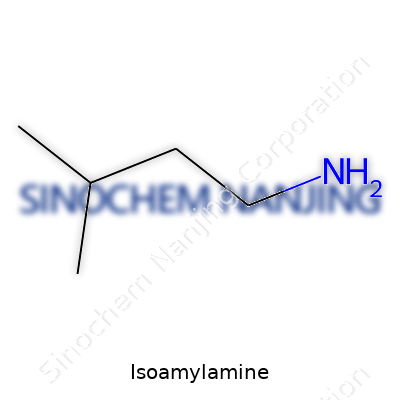
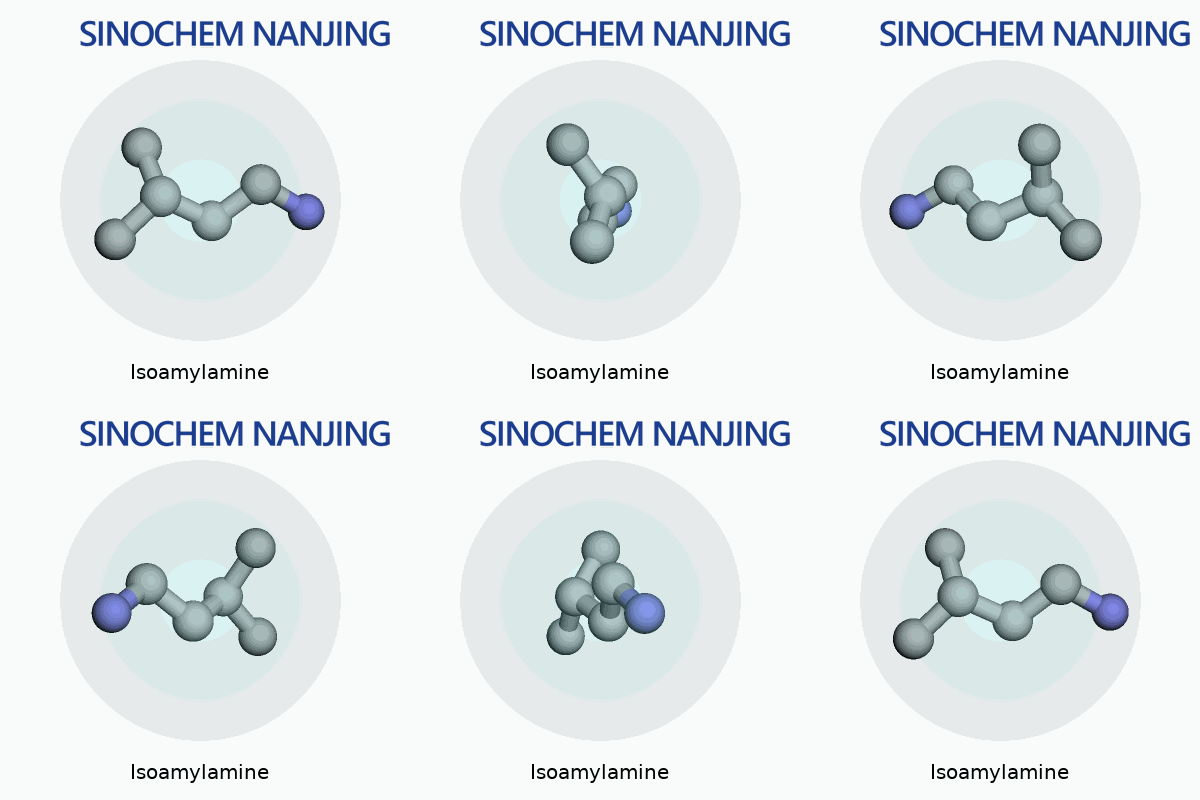
| Names | |
| Preferred IUPAC name | 3-methylbutan-1-amine |
| Other names |
3-Aminopentane Isoamylamine Isopentylamine |
| Pronunciation | /ˌaɪ.səʊˈæm.ɪl.əˌmiːn/ |
| Identifiers | |
| CAS Number | 110-58-7 |
| 3D model (JSmol) | isoamylamine.mol.jmol |
| Beilstein Reference | 1209247 |
| ChEBI | CHEBI:35715 |
| ChEMBL | CHEMBL15135 |
| ChemSpider | 7286 |
| DrugBank | DB02161 |
| ECHA InfoCard | 17f00eaf-927d-46f3-9889-ec12996ea0a3 |
| EC Number | 205-549-5 |
| Gmelin Reference | 8147 |
| KEGG | C06144 |
| MeSH | D007540 |
| PubChem CID | 8067 |
| RTECS number | YN9625000 |
| UNII | 2C93D3B6NA |
| UN number | UN2344 |
| Properties | |
| Chemical formula | C5H13N |
| Molar mass | 87.16 g/mol |
| Appearance | Colorless to yellow liquid |
| Odor | ammonia-like |
| Density | 0.769 g/mL at 25 °C |
| Solubility in water | miscible |
| log P | 0.62 |
| Vapor pressure | 3.2 mmHg (20 °C) |
| Acidity (pKa) | 10.6 |
| Basicity (pKb) | 3.27 |
| Magnetic susceptibility (χ) | -54.0e-6 cm³/mol |
| Refractive index (nD) | 1.415 |
| Viscosity | 2.13 mPa·s (at 25 °C) |
| Dipole moment | 1.41 D |
| Thermochemistry | |
| Std molar entropy (S⦵298) | 322.4 J·mol⁻¹·K⁻¹ |
| Std enthalpy of formation (ΔfH⦵298) | -105.0 kJ/mol |
| Std enthalpy of combustion (ΔcH⦵298) | –4322 kJ·mol⁻¹ |
| Hazards | |
| GHS labelling | GHS02, GHS05, GHS07 |
| Pictograms | GHS05,GHS07 |
| Signal word | Danger |
| Hazard statements | H226, H302, H314, H332 |
| Precautionary statements | P210, P233, P261, P271, P280, P301+P312, P303+P361+P353, P304+P340, P305+P351+P338, P311, P312, P330, P403+P235, P405, P501 |
| NFPA 704 (fire diamond) | 2-3-2 |
| Flash point | 44 °C |
| Autoignition temperature | 285 °C |
| Explosive limits | 1.1–10.2% |
| Lethal dose or concentration | LD50 oral rat 410 mg/kg |
| LD50 (median dose) | LD50 (median dose): Oral (rat) 193 mg/kg |
| NIOSH | IP00500 |
| PEL (Permissible) | PEL (Permissible Exposure Limit) for Isoamylamine: 10 ppm (parts per million) |
| REL (Recommended) | 50 ppm |
| IDLH (Immediate danger) | 100 ppm |
| Related compounds | |
| Related compounds |
Isoamyl alcohol Isoamyl acetate Cyclohexylamine n-Butylamine Isobutylamine |



