Iso Butyl Acetate: More Than Just a Chemical Label
Historical Development: Roots in Daily Life and Industry
Iso butyl acetate did not just drop onto the scene from nowhere. Back in the 19th century, chemists pushed boundaries looking to replace expensive or hard-to-extract natural flavors and solvents. Their pursuit uncovered a host of new esters, and among them, iso butyl acetate found a surprising number of uses. Factories in Europe and the US churned out solvents for paints and lacquers, with workers mixing batches by hand long before automated reactors entered the game. Over the decades, improvements in distillation and purification brought a purer, more reliable product. Today, it’s tough to walk through an industrial estate or even a big paint store and not cross paths with this ester. Its presence has grown right alongside modern chemistry itself, showing just how much the past shapes what we trust in production halls and labs now.
Product Overview: Strong Scent, Stronger Purpose
Most folks notice iso butyl acetate for its distinct fruity smell—think pears or raspberries, though never quite the real thing. This ester lends that signature snap to artificial flavors where reliability matters more than seasonal harvests. Solvent producers hunger for its ability to work well with nitrocellulose and resins, making coatings dry quicker and smoother. Farms and fragrance labs alike rely on its consistency, as conditions in manufacturing keep it coming out the same way every time. The world does not focus on this molecule, yet it backs so many products in daily living, from inks to synthetic fragrances.
Physical & Chemical Properties: Familiar, Yet Vital Details
Iso butyl acetate stands out in the lab by sporting a low boiling point and clear, colorless appearance. Its faintly sweet odor sets it apart from harsher solvents, making it a practical choice in many places. With a decent flash point and low viscosity, it flows where needed and evaporates without leaving heavy residue. Those properties give product engineers plenty of room to mix, matching this ester to different paints, glues, and cleaners. Besides, it resists mixing with water, so separating and recycling in factory settings becomes a straightforward job.
Technical Specs & Labeling: Frank Talk About Standards
Industry teams do not shy away from the specs. Regulations ask for easy-to-read labeling because improper storage can trigger fires or worker health issues. Labels shout out the main danger—flammability—so people do not store it near open flames. Chemists demand tight control over purity, since off-odors or cloudiness signal an issue that can throw off a whole production run. Many countries sync rules so that containers bear hazard pictograms and concise storage instructions, aiming to cut through confusion and keep workplaces safer for users who may only see the back room, not the lab.
Preparation Method: A Simple Reaction With Big Impact
Factories create iso butyl acetate by combining acetic acid with isobutanol. This reaction, known as Fischer esterification, looks simple on paper but needs careful conditions to deliver the right product without waste. The right acid catalyst, steady heating, and well-tuned distillation setup push the molecules to combine. Scale plays a role—small runs require delicate temperature control, while larger processes lean on big columns to strip out water and catch the ester before it slips away. By-product streams go through treatment to cut environmental impact, with spent catalysts managed instead of dumped in waterways. Challenges crop up as production scales, but process engineers chase efficiency to keep costs and emissions in check.
Chemical Reactions & Modifications: Adapting to Requirements
In the right hands, iso butyl acetate can shift its utility by undergoing hydrolysis or be used as a chemical building block for more complex molecules. Under strong acids or bases, it can break down into isobutanol and acetic acid—each with a market of their own. In research labs, chemists sometimes tweak the ester to test new flavors or scents, using structural modifications to nudge performance higher or manipulate volatility. This work brings benefits to industries counting on specific evaporation rates or unique aroma profiles, proving how one “ordinary” compound can be tweaked to fit new needs, year after year.
Synonyms & Product Names: Navigating the Chemical Maze
Many products carry alternative names or historical monikers as they move across borders or industries. Iso butyl acetate does not escape this—its alternatives include isobutyl ethanoate and 2-methylpropyl acetate. Paint shops or flavor companies sometimes call it pear oil, though it grows in no orchard. Scientists use proper nomenclature to dodge confusion, since close cousins like n-butyl acetate or sec-butyl acetate show up in similar products but bring slightly different properties, reactivity, or regulatory red tape.
Safety & Operational Standards: Frontline Protections
Working with potent solvents, I learned that chemical exposure can pile up fast in poorly ventilated spaces, even with something as “mild” as iso butyl acetate. Fume hoods and personal protective gear aren’t afterthoughts—they keep headaches, drowsiness, and more severe health problems in check. Flammability sits at the top of the worry list, so most plants enforce strict limits on open flames, static, and ignition sources. Companies invest in training so employees know what to do after a spill instead of learning the hard way. Regulations tie storage volumes and ventilation rates to building codes, and anyone ignoring those runs real risks to life and property.
Application Area: Going Beyond Paints and Polishes
Iso butyl acetate pops up in more places than many realize—manufacturers rely on its solvent power to bond tricky coatings and inks, while fragrance labs bottle its aroma as part of fake fruit scents. Pharmaceutical research values its purity when extracting active ingredients, and some pesticide makers use its volatility to control how their sprays spread. It even flavors candies and soft drinks, standing in for more fragile fruit flavors that can fade or spoil during long storage. Automotive and electronics firms rely on it in cleaning formulations, where speed and residue-free evaporation matter most. Despite debates about synthetic over natural, consumers encounter this ester every day, rarely noticing its presence.
Research & Development: Always Room to Improve
Research into iso butyl acetate does not rest. Green chemistry pushes hard to cut waste, shift to renewable feedstocks, and shrink the carbon footprint. Teams experiment with bio-derived isobutanol sourced from bacteria or algae, chasing a future where solvent factories run off plant sugars instead of petrochemical streams. Product developers look for tweaks that keep the ester working strong at lower concentrations, stretching supply while catering to new regulations. Environmental scientists probe for breakdown products in soil and water, aiming to curb contamination. Even small changes matter in large-scale production, so R&D does not stand still—driven by regulation, competition, and the never-ending march of innovation.
Toxicity Research: No Ignoring the Risks
Most lay people trust that ingredients in their workspace or products have been checked for hazards. But the tail end of the 20th century taught industry not to take safety claims for granted. Animal studies and industrial hygiene investigations show that high doses of iso butyl acetate cause central nervous system effects—dizziness, headache, and numbness—if inhaled too much. Chronic exposure research so far points to low long-term cancer risk, but that does not erase the need for precaution. Regulators in the US, EU, and Asia set workplace exposure limits by reviewing fresh data from labs and keeping track of accidental releases, showing there’s always more to learn about risk.
Future Prospects: Changing Along With the World
Iso butyl acetate faces a shifting landscape. Tougher rules on emissions and worker safety squeeze old practices out, nudging industries to find greener manufacturing routes and better controls. Synthetic biology labs now chase ways to design yeast that spit out esters with far less waste and lower energy demand, making petro-derived sources look old-fashioned. Fragmented global rules keep chemical producers on their toes, pushing for transparency in labeling, tighter tracking, and more consumer disclosures. Product managers look ahead to new applications, especially as electronics and coatings demand solvents that perform without harming air quality. Those in the specialty chemicals field know that solutions rarely come all at once—progress grows step by small step, balancing what customers need with what society demands.
What is Iso Butyl Acetate used for?
What People Actually Do With Iso Butyl Acetate
Many people pass by paint shops, car garages, or even a hardware store’s cleaning aisle without thinking about ingredients. Iso butyl acetate hides in plain sight all around us. Its main claim to fame shows up in paints and coatings. It helps thin down paint so it rolls on smooth and dries fast. Some weekend DIY projects owe their glossy finish to this chemical. Professional painters often trust it not just for how it spreads, but for how it prevents streaks and helps paint dry without trapping bubbles or dust.
The chemical also appears in the world of printing inks. Ink manufacturers often count on iso butyl acetate to keep colors bright and evenly distributed on posters, packaging, and product labels. Ink dries evenly across glossy magazine pages because of solvents like this one. By speeding up drying and improving flow, it makes large-scale printing more efficient and less wasteful.
From Nail Polish to Fruity Flavors
Cosmetic companies use iso butyl acetate to give nail polish its fluid, brushable consistency. Consumers rarely read the tiny labels, but chemists appreciate how it carries pigment and helps prevent clumping. Fast-drying nail polish that doesn't streak owes much to this solvent.
Oddly enough, this isn’t just an industrial workhorse. It carries a fruity, sweet smell, similar to pears and raspberries. Flavorists sometimes blend small amounts into food flavorings and fragrances. Candy, baked goods, and even perfumes can rely on this compound for that desired fruity note. The U.S. Food and Drug Administration lists iso butyl acetate as generally recognized as safe (GRAS) when used in flavorings, which allows such creative uses at low concentrations.
Protecting Workers and the Environment
High-volume use of any strong solvent raises some safety questions. Anyone who’s painted in an enclosed space without proper venting knows the sharp smell and the mild headache that can follow. Over time, frequent exposure to iso butyl acetate fumes may cause nausea or dizziness. Breathing in high concentrations—even once—sometimes irritates lungs and eyes.
Paint shops and factories use heavy-duty fans and protective gear to lower these risks. Training workers about air flow and the need for gloves and goggles remains a top priority. Businesses invested in long-term health need to watch indoor air carefully and provide regular safety updates. My experience volunteering at a community art space showed me how much difference simple ventilation makes. A basic box fan and open windows turned painting sessions from dizzying to comfortable.
Environmental regulators, including the EPA in the U.S., set guidelines on storage, disposal, and emissions. Product developers now search for less volatile solvents or try to capture vapors before they escape outdoors. As more companies lean toward safer, greener chemicals, usage shifts—but iso butyl acetate still holds a strong presence thanks to its specific performance in paints, inks, and even some flavors.
Balancing Function with Responsibility
Daily life often depends on invisible helpers like iso butyl acetate. It smooths out the rough edges in manufacturing and adds a sweet twist to some kitchen creations. Protecting workers, following safety guidelines, and searching for low-toxicity alternatives should remain priorities. With more people asking about ingredient lists and chemical safety, understanding where these solvents fit in makes for better choices at home and at work.
Is Iso Butyl Acetate hazardous or toxic?
Background and Use
Iso Butyl Acetate pops up often in places that make fragrances, coatings, printing inks, and even food flavors. It smells a bit like pears, so manufacturers like what it brings to the table in perfumes and candies. Yet, safety questions always come up for these chemical helpers, mainly because folks want to know what they’re bringing home or breathing in at work.
Direct Exposure: What Science Shows
People who spend time in environments where iso butyl acetate gets used see its effects firsthand. Breathing its vapors in a poorly ventilated space, you might notice nose and throat irritation. After working long shifts around it, some report headaches or lightheadedness. Data from NIOSH notes that higher concentrations irritate the eyes and skin. Cases of chemical sensitivity or rashes after direct contact, though not common, do show up in some occupational studies.
It’s not classified as carcinogenic by the International Agency for Research on Cancer or the EPA, which eases some concerns. Yet, long exposure isn’t advised. Even if there’s no proof of cancer risk, consistent irritation could lead to chronic problems if ignored.
Accidental Spills and Handling at Home
For people outside factories, the main encounter would be through consumer goods or accidental spills. In small amounts, it evaporates quickly and doesn’t linger on countertops or in the air. Swallowing it accidentally—especially by kids—brings greater concern. Symptoms can include stomach upset, vomiting, or drowsiness if enough gets ingested, so safe storage matters.
Your home cleaning products or nail polish might list iso butyl acetate on the ingredients. Keeping rooms aired out cuts down on vapor buildup. If a bottle spills, wiping it with gloves and opening a window takes away big risks. Doctors generally say mild exposure in household settings rarely needs medical treatment unless someone swallows a lot or has a pre-existing respiratory problem.
Environmental Concerns
After use, this solvent breaks down fairly fast in air through natural reactions. Fewer studies note serious risks to outdoor air or water quality because of its quick degradation. Local regulations still require safe storage and disposal to stop big spills, since animal tests with very high doses linked to nervous system effects. But nobody walking outside needs to worry about catching a whiff of this from nearby industry on an average day.
Reducing Hazards in the Workplace
People who manufacture, package, or spray products containing iso butyl acetate wear proper gear—like gloves and protective eyewear. This isn’t about treating it as some deadly poison, just as a good rule of thumb for most chemicals at work. Ventilation matters more than anything; most places set up air systems so vapors don’t pile up. The Occupational Safety and Health Administration sets exposure limits, and employers must test air levels where the solvent gets heavy use.
For jobs with long shifts, regular breaks and good airflow go a long way. Simple habits, like not eating or drinking at the workbench, also keep unnecessary risks off the table.
What Would Help Most?
Tighter labeling and instructions help people spot iso butyl acetate in their products and decide if they need to take extra care. Children in the home change the rules—higher cabinets or lockboxes work better than counting on a warning label. Teaching workers not to mix solvents and to report odd symptoms early creates a safer workplace without needing overbearing rules.
What are the physical and chemical properties of Iso Butyl Acetate?
Understanding Its Character
Iso butyl acetate, with the chemical formula C6H12O2, plays a bigger role in everyday products than many notice. Most people pick up on its fruity, slightly sweet smell, much like pears or cherries. This scent shows up in everything from nail polish removers to pineapples and even helps shape the flavor of some chewing gums.
Physical Traits That Stand Out
If you pour iso butyl acetate into a glass, it looks clear like water and behaves like a reasonably thin liquid. Its boiling point is just over 118°C (244°F), which means it takes some heat before turning into vapor. At room temperature, it gives off enough smell to make a closed space feel quite fragrant, a hint to its high volatility. Its density drops a bit compared to water, floating on top if the two get mixed, and that lower density tips off the fact that it evaporates much quicker.
In the paint and coatings world, fast evaporation counts for a lot. It lets layers dry fast without causing splotches. I’ve noticed that many painters appreciate the way solvents like iso butyl acetate keep surfaces from puckering or turning sticky, especially when time is tight.
Chemical Nature and How It Reacts
Its magic comes from being an ester. These compounds come about through a reaction called esterification, mixing an alcohol—in this case, isobutanol—with acetic acid. Iso butyl acetate doesn’t mix well with water, coming from its non-polar structure, but it jumps right into most organic solvents, like ethanol, ether, or chloroform. I’ve seen lab techs rely on this property to pull flavors or fragrances out of messy mixtures, often as a simple step before the heavy chemistry starts.
It holds up well against weak acids or alkalis. Still, strong ones break it apart, unleashing acetic acid and alcohol again. This reaction, called hydrolysis, concerns waste treatment crews in factories. If solutions with harsh cleaners spill or leak, iso butyl acetate can break down and cause problems with odors or chemical handling safety.
Real-World Responsibilities
I’ve worked enough around paints and adhesives to know that iso butyl acetate delivers a useful combo: strength as a solvent, a quick-dry reputation, and low water mixability. Many old factories took these strengths for granted, often ignoring the side effects. Its quick evaporation means flammable fumes fill the air easily. One spark from faulty wiring or heated metal, and you have a fire risk.
Quick cleanup and solid ventilation, plus proper fume hoods and spark-proof tools, make all the difference in places where the chemical gets heavy use. In offices or nail salons, even small volumes can lead to headaches if the air sits still. It’s up to product makers to balance the use of iso butyl acetate with air quality and health in mind.
Looking Ahead
Materials science keeps moving. Some companies try to swap iso butyl acetate for alternatives, searching for similar drying speed but fewer concerns around fumes or skin sensitivity. I’ve seen research that uses plant-based materials to produce the solvent, hoping to lighten the environmental footprint. Simple awareness of its lively odor and flammable nature can cut down on workplace accidents, making practical knowledge of iso butyl acetate’s physical and chemical quirks more valuable than ever.
How should Iso Butyl Acetate be stored and handled?
Understanding the Risks
Iso Butyl Acetate has its place in plenty of industrial and manufacturing settings, from coatings to inks and adhesives. It packs a distinctive, fruity odor, but behind that lies a highly flammable chemical. I’ve seen workers underestimate the risk just because they recognize the smell and spot it on job sites every day. In reality, even a small spill in a poorly ventilated space can ignite trouble faster than most expect.
Safe Storage: Keeping Hazards at Bay
Experience on the ground tells me this chemical deserves respect. It shouldn’t end up near heat sources or direct sunlight. Leaving it close to a steam pipe or a sunny window creates the perfect storm for evaporation and possible fire. Instead, always pick a cool, dry spot for storage, with temperatures kept steady and airflow built in. Steel safety cabinets, outfitted for flammable liquids, work best—it creates a physical barrier, and most local safety codes insist on it.
Store containers tightly closed, using only containers designed for flammables. I’ve seen people cut corners by pouring leftover solvent into old plastic bottles–those can degrade or melt, and that’s asking for leaks. Stick to metal or special-grade plastic containers, and label them clearly. No one working a late shift wants to play guessing games.
Handling with Respect
Moving Iso Butyl Acetate from one spot to another isn’t just about lifting it safely. Always ground metal containers during transfer, because static discharge can light up vapors in a split second. Underestimating static is easy until it snaps hard in a dry environment. Pour slowly to keep vapors down, and run the work in a place built for it—ventilation matters. A fan jammed in a window doesn’t cut it; local exhaust ventilation or fume hoods handle dangerous vapors far more effectively.
PPE isn’t a meaningless acronym when you’re dealing with solvent splashes. Chemical-resistant gloves, goggles, and proper aprons are non-negotiable on real job sites. Iso Butyl Acetate burns eyes and skin, and dealing with it unprotected puts people at risk. I’ve seen burn marks and hospital runs after a careless moment. Following safety data sheets to the letter matters, and so does making sure the whole crew respects those rules.
Responding to Mistakes
A spill sometimes creeps up without warning. Quick thinking and preparation turn panic into routine. Lay out absorbent pads for small spills, moving fast to ventilate the area. Never reach for a mop and bucket—more water just spreads the liquid and makes vapors worse. For larger releases, evacuate the area and call professionals who handle hazmat.
Bad things happen fast if this solvent gets into waterways or drains. Always dispose of waste through approved hazardous-waste channels. Trying to cut corners lands companies in trouble with both regulators and the community—a lesson some learn the hard way.
Building a Culture of Safety
Supervisors I respect run regular training sessions, keeping safety culture alive. Relying on faded posters isn’t enough. Walkthroughs, drills, and real-world practice save lives. Talking through the “why” behind each rule helps people remember. Cameras and sensors can track conditions, but experience and vigilance do most of the heavy lifting. Keeping Iso Butyl Acetate from turning into a headline is every worker’s job.
What precautions are needed when working with Iso Butyl Acetate?
Understanding the Hazards
Iso Butyl Acetate doesn’t often make headlines, but it’s found in many plants and labs where coatings and fragrances get their characteristic notes. It’s clear, sweet-smelling, and evaporates quickly — traits that make it useful but also risky. Breathing too much of the vapor can quickly lead to headaches or dizziness. I remember walking into a small print shop that used this solvent; five minutes in a poorly ventilated room gave me a thumping headache and a strong urge to step outside for fresh air.
Proper Ventilation Makes the Difference
Leaving vapors hanging in the air can turn a workspace into a hazard zone. Cracking a window isn’t enough. Shop managers I know install exhaust hoods right over workstations using Iso Butyl Acetate. Industrial fans and air filtration units help clear the air fast — people notice the difference right away. The goal is simple: keep concentrations well below the threshold where symptoms start showing up.
Skin and Eye Defense: Gear Matters
Anyone splashed by solvent knows the sting and dryness it causes. Direct contact strips natural oils away from skin and leads to red, irritated eyes. What prevents this? Nitrile gloves — much better than those thin latex gloves from drugstores — along with goggles that seal snugly around the eyes. Aprons or lab coats made from chemical-resistant fabric round out the basics. A friend once reused standard household cleaning gloves and ended up with chapped hands for days. It pays to pick gear that’s designed for this specific job.
Fire Risk: Respect the Flash Point
Iso Butyl Acetate catches fire at a lower temperature than coffee brews. Workers who store rags soaked with this solvent or let open containers sit on benches create quick-fire fuel. Constant reminders help people remember to keep containers sealed and rags in dedicated, metal safety bins. One warehouse I visited locked flammable chemicals in a ventilated cabinet that shut automatically — small habits like this often prevent big disasters.
Spill Response: Act Right Away
Spills happen. I once watched a drum tip over, spilling a small river of solvent across a loading dock. Handling it with old rags only spread the mess and made breathing tough for everyone. Sorbent pads soak up solvent quickly, and employees should scoop up used pads with gloves, sealing everything in a fire-safe container right after. Everyone in the building should know the cleanup routine without reading a manual: ventilate the space, contain the liquid, and clean up with the right materials.
Training and Labeling: More Than Paperwork
No one benefits from labels that peel off or training that’s skipped. People remember clear, bold warnings and regular hands-on drills. In my experience, a crew that runs through spill scenarios every quarter catches mistakes before they happen. Good labeling — including hazard symbols and user instructions — saves guesswork and confusion, especially when new staff or contractors join the crew.
Taking Responsibility For Each Other
Relying on coworkers keeps everyone safer. People who watch out for each other, check in after someone’s been exposed, and pull each other from unsafe situations set the standard for a healthy workplace. Over the years, I’ve seen teams thrive because talk about safety never feels out of place. With Iso Butyl Acetate, that culture counts for more than any checklist.
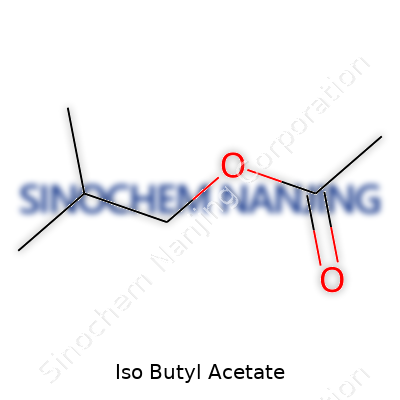
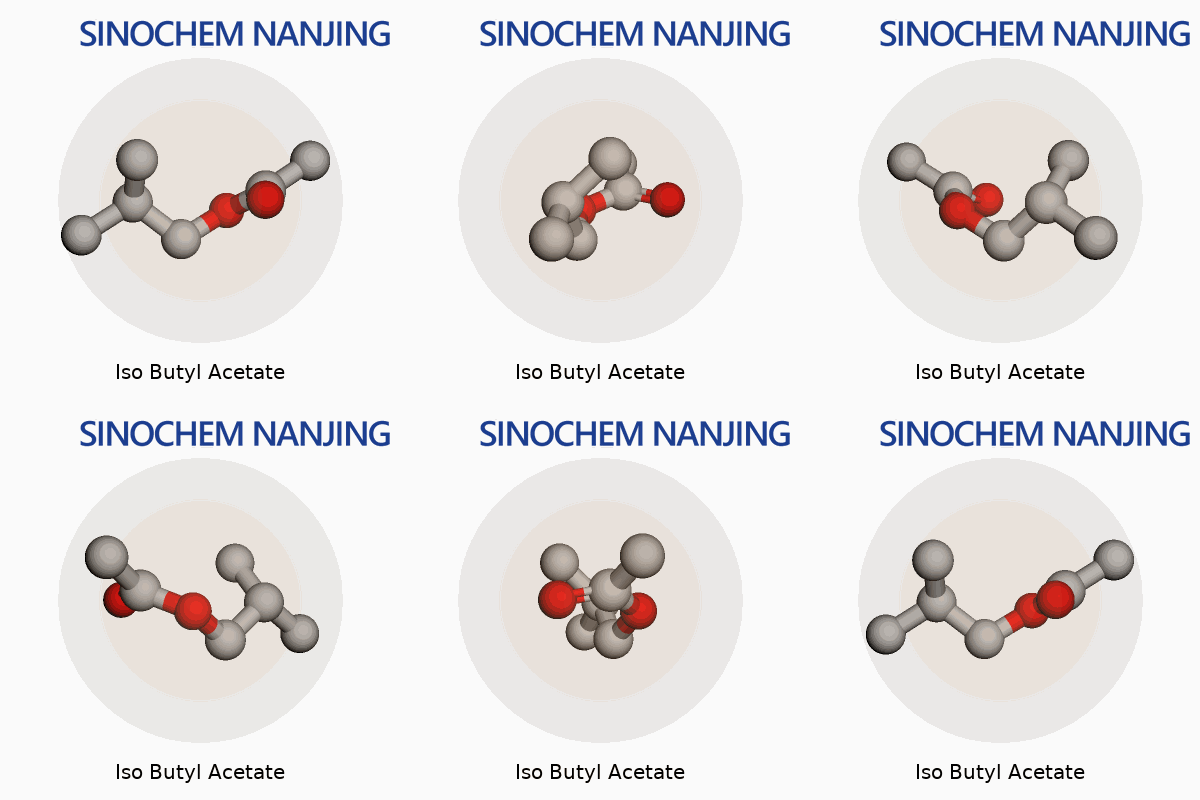
| Names | |
| Preferred IUPAC name | 2-methylpropyl ethanoate |
| Other names |
2-Methylpropyl acetate Isobutyl ethanoate Acetic acid isobutyl ester |
| Pronunciation | /ˌaɪ.soʊˈbjuː.tɪl əˈsiː.teɪt/ |
| Identifiers | |
| CAS Number | 110-19-0 |
| 3D model (JSmol) | `Iso Butyl Acetate JSmol 3D string`: ``` CC(C)COC(=O)C ``` |
| Beilstein Reference | 741246 |
| ChEBI | CHEBI:31237 |
| ChEMBL | CHEMBL269887 |
| ChemSpider | 10420 |
| DrugBank | DB02397 |
| ECHA InfoCard | 03b363b2-43b1-4c96-b1a2-d7762ea13679 |
| EC Number | EC 203-745-1 |
| Gmelin Reference | 585469 |
| KEGG | C21321 |
| MeSH | D002222 |
| PubChem CID | 31276 |
| RTECS number | NI1925000 |
| UNII | 7XD5VD26OH |
| UN number | UN1213 |
| CompTox Dashboard (EPA) | DTXSID6020146 |
| Properties | |
| Chemical formula | C6H12O2 |
| Molar mass | 116.16 g/mol |
| Appearance | Clear, colorless liquid |
| Odor | Fruity |
| Density | 0.870 g/cm3 |
| Solubility in water | 4.0 g/L (20 °C) |
| log P | 1.78 |
| Vapor pressure | 11.3 mmHg (20°C) |
| Acidity (pKa) | 7.20 |
| Basicity (pKb) | 'Basicity (pKb)': 11.34 |
| Magnetic susceptibility (χ) | -8.44×10⁻⁶ cgs |
| Refractive index (nD) | 1.394 - 1.398 |
| Viscosity | 1.4 cP (25°C) |
| Dipole moment | 4.22 D |
| Thermochemistry | |
| Std molar entropy (S⦵298) | 263.6 J·mol⁻¹·K⁻¹ |
| Std enthalpy of formation (ΔfH⦵298) | -482.9 kJ/mol |
| Std enthalpy of combustion (ΔcH⦵298) | -4298.7 kJ/mol |
| Pharmacology | |
| ATC code | J03AX05 |
| Hazards | |
| GHS labelling | GHS02, GHS07 |
| Pictograms | GHS02, GHS07 |
| Signal word | Warning |
| Hazard statements | H226, H336 |
| Precautionary statements | P210, P243, P261, P271, P280, P303+P361+P353, P304+P340, P305+P351+P338, P312, P337+P313, P370+P378, P403+P233, P403+P235, P501 |
| NFPA 704 (fire diamond) | NFPA 704: 2-3-1 |
| Flash point | “22 °C” |
| Autoignition temperature | 421 °C |
| Explosive limits | 1.2% - 7.5% |
| Lethal dose or concentration | LD50 oral rat 13,400 mg/kg |
| LD50 (median dose) | LD50 (median dose): 13,400 mg/kg (oral, rat) |
| NIOSH | NF9325000 |
| PEL (Permissible) | PEL: 150 ppm (parts per million) |
| REL (Recommended) | 150 ppm |
| IDLH (Immediate danger) | 1,500 ppm |
| Related compounds | |
| Related compounds |
Butyl acetate Propyl acetate Isobutyl alcohol Acetic acid Sec-butyl acetate |



