Iron Nitrate: A Straightforward Look at Its Path from the Lab to Modern Industry
Historical Development
Iron nitrate, a salt that’s seen plenty of experiments and a fair bit of careful handling, has come a long way since alchemists first jotted its formulas in their notebooks. The basic formula, Fe(NO3)3, hasn’t changed much, but the story sure has. Its early days linked iron with nitric acid, with experimenters noticing those deep red solutions and pungent fumes. Back then, scientists didn’t always understand the environmental toll or the importance of thorough documentation. As labs grew more organized and regulations spread, iron nitrate found a place in analytical chemistry, research, and a few industrial processes. The shift from curiosity-driven use to targeted, regulated application offered lessons not just for iron nitrate, but for any chemical hoping to hang around for decades.
Product Overview
Most folks meet iron(III) nitrate as a set of pale violet or yellowish crystals, usually sold in hydrate form. The hexahydrate, Fe(NO3)3·6H2O, shows up the most. It dissolves easily in water, which makes it a favorite for those needing a solution, whether they're in a classroom or a plant. Plenty of chemists have had to deal with the way it stains things—or the speed with which it reacts if left open to the air. It’s a chemical with a job to do, but it takes respect to handle it properly.
Physical & Chemical Properties
Iron nitrate draws people’s attention with its striking color and its sharp, acidic odor—a reminder that safety matters here. Its crystals pull moisture out of the air, so storage in a dry, sealed jar keeps it reliable. Toss a chunk in water and it melts evenly, leaving a clear brownish liquid. Chemically, it acts as an oxidizing agent, so it sets off all sorts of reactions when it meets the right substances. Nitrate ions don’t just sit around—they aid in oxidation, especially when some catalyst or extra heat joins the party. That’s helped iron nitrate keep its spot in labs hunting for powerful reagents or stable solutions for metal treatment or etching.
Technical Specifications & Labeling
Lab bottles used to come with bare-bones labels, but now there are more demands for clarity: percentage purity, hydrate form, lot number, and storage warnings all crowd the side. Labels warn about its oxidizing nature and urge against mixing with organic materials. In the warehouse or chemical storeroom, staff now expect iron nitrate to ship in moisture-proof containers and show clear hazard pictograms. For anyone ordering chemicals, a glance at the carton’s description can save time, accidents, and confusion. Expect to see “Oxidizer” highlighted right alongside the formal chemical name and formulas. These standards spring not from paper-pushers but hard-won lessons—one moment with spilled powder or damp air can spell trouble for those who ignore the warnings.
Preparation Method
Making iron nitrate isn’t complicated for a well-trained chemist. The most common approach mixes iron metal or iron oxide with nitric acid under controlled conditions—usually with a fume hood running and careful measurement of acid volumes. The reaction is memorable: bubbles, heat, a shifting color, and finally, a dense solution that, once cooled, starts pushing out chunky crystals. Filtering and evaporating gets you pure iron nitrate, but there’s always a nagging smell and the need for proper ventilation. This synthesis doesn’t happen on a hobbyist’s desk; people deserve to know exactly how much energy gets released and how to prevent runaway reactions. Careful disposal of by-products, monitoring unintended gases, and steady hands have shaped these practices. The process reflects the larger story of chemistry: progress tracked not just by product, but by respect for risk and for those carrying out the task.
Chemical Reactions & Modifications
Iron nitrate does more than dissolve in water. It breaks down when heated, sending off toxic nitrogen oxides and leaving behind iron oxides, perfect for pigment makers on an industrial scale. Drop it into a mix with reducing agents and the iron shifts from Fe3+ down to Fe2+ or even to metallic iron, which comes in handy in metallurgy and analytical labs. It’s strong enough as an oxidizer to start fires if spilled on sawdust or paper, so the stories about “mixing carefully” carry a grain of truth. Chemists working with organic molecules can use iron nitrate to change functional groups, especially in research chasing new pharmaceuticals or complicated organics. Modern modifications sometimes create new catalysts or explore greener reaction conditions; the story isn’t over for making this old salt fit today’s cleaner standards.
Synonyms & Product Names
Iron(III) nitrate goes by a few other names. Ferric nitrate appears in older lab manuals, while European catalogs sometimes stick to the simplest possible “Iron Nitrate.” The hydrate forms add their own alphabet soup—hexahydrate, nonahydrate—though the chemistry rarely changes. Anyone flipping through chemical supply lists or safety files will spot synonyms that matter: knowing these isn’t trivia, it helps avoid dangerous mix-ups as chemicals travel across borders or industries. A little experience makes it clear: learning all the ways a single compound gets labeled or described can keep serious mishaps off the books.
Safety & Operational Standards
Working with iron nitrate calls for gloves, goggles, and plenty of fresh air. It stains everything it touches, but the real problem comes from its oxidizing punch. Spilled iron nitrate can ignite organic material and creates toxic fumes in a fire. That’s why reputable labs keep it away from flammable chemicals and always have spill cleanup supplies in reach. Disposal guidelines, now informed by regulatory crackdowns and old case studies, remind everyone to neutralize solutions and avoid pouring them down drains. Adhering to these routines isn’t just about ticking regulatory boxes—it keeps workers, students, and the local environment safe. Training programs use stories from real accidents to teach these points, since dry regulations alone only take you so far.
Application Area
Iron nitrate doesn’t get much attention in the news, but its reach spans lab benches, water treatment plants, and niche corners of metallurgy. Chemists use it to test potassium and cyanide in analytical labs, and artists who make etchings value its controlled reaction with metals. Industrial wastewater treatment plants sometimes use iron nitrate to control odors by limiting the formation of hydrogen sulfide. In soil remediation, it has a role in driving redox reactions that trap heavy metals and keep them from washing away. The pigment and dye industry extracts color from its decomposition, while chemical research keeps finding new catalysts through iron nitrate-based processes. Anyone working with chemical syntheses or artistic etching has probably tried it once and remembers the distinctive yellow stains it leaves behind. There are new uses always popping up, especially with the pressure for greener chemistry—there’s a sense that iron nitrate may carve out more space as old applications fade and new processes push in.
Research & Development
Over the years, iron nitrate research tracked shifts in technology and taste. One current field of study looks for new catalyst systems that move away from rare or expensive metals, with iron being both cheap and abundant. Researchers tinker with surface coatings, battery technologies, and even soil treatment to see if iron nitrate delivers both performance and affordability. Nanotechnology and materials science keep chasing ways to leverage iron nitrate for better magnetic, electrical, or optical properties. The hunger for lower-carbon, less-toxic chemical production tricks researchers into re-examining older salts like this one. In my own experience, project teams often return to iron nitrate whenever more exotic chemicals break the budget, especially in universities or startups where every dollar counts. Sometimes, small tweaks in preparation methods or purity pay off with surprising improvements, keeping the door open for basic compounds in cutting-edge settings.
Toxicity Research
Any chemical worth its salt draws scrutiny over toxicity. Iron nitrate gets respect because exposure risks go beyond the obvious stains: inhaling the dust or getting drops on skin harms tissues; ingestion, though rare, can lead to far worse. Reports from the field stress the danger of nitric acid fumes and the risk of heating iron nitrate in confined spaces. Larger doses of ingested iron nitrate, though uncommon, can throw off cardiac function, damage organs, and put real stress on healthcare systems in places where protective gear takes a back seat. Continued studies keep prodding for lower exposures, improved protective gear, and treatments, especially for workers in high-exposure industries and labs. Regulators flag iron nitrate as a chemical that demands ventilation and careful handling, setting exposure limits that bring a sense of relief to families once used to hearing about workplace accidents. Real-world safety records show a steady improvement, but complacency still claims new victims—reminding us that safety isn’t just for bureaucrats.
Future Prospects
Metal salts like iron nitrate don’t always make headlines, but as green chemistry and resource conservation get more attention, their practical edge stands out. Iron nitrate remains affordable and available, which prompts researchers to seek out new catalytic cycles where precious metals once ruled. Its potential in environmental cleanup could expand if upcoming research unlocks better, safer release or recycling. A world hungry for effective, low-toxicity water and soil treatments means new applications could spring up where cost and effectiveness line up. As batteries, sensors, and materials get smaller and smarter, demand for versatile reagents with proven safety records keeps iron nitrate in play. In all fields, though, the compound’s future depends not on nostalgia, but on honest science, solid safety habits, and an openness to rethinking even the most familiar chemical players.
What is Iron Nitrate used for?
Iron Nitrate’s Place in Labs and Industry
Walk into most chemistry labs, and you’ll probably see iron nitrate somewhere on the shelves. Teachers use it to show how iron reacts with other elements, or to teach about the role of iron in color changes during chemical reactions. During my undergraduate studies, a bottle of iron nitrate marked with a hazard symbol was a staple in the corner of the fume hood. When mixed with other substances, its deep reddish color made it easy for us to track what was happening in solution.
Beyond the classroom, iron nitrate serves a host of practical purposes. Many water treatment outfits add iron nitrate to help clear out phosphorus. In this context, it binds to phosphorus and keeps it from washing downstream, which can cut back on those harmful algae blooms in rivers and lakes. Too much algae chokes out fish and messes with people’s drinking water, so the need for effective treatment is real.
Steel and Metal Processing
Factories that shape and treat metals often turn to iron nitrate as part of their work. For instance, it shows up in etching for printed circuit boards and in the pickling process that cleans metal surfaces. The stuff eats away at unwanted oxides or thin layers on metals, leaving behind a surface that looks sharper and works better. This job is crucial in electronics manufacturing, where clean, precise metal lines control how signals move on a circuit.
Medicine and Testing
Those little iron nitrate bottles are also useful in medical labs. Some hospitals use it in tests that help to spot bilirubin, an indicator of liver problems. Even though it’s not something found in the medicine cabinet, iron nitrate reactions form the stepping stones in diagnosing or researching issues tied back to iron handling in the body.
Agriculture and Construction
In farming, a few soil treatments rely on iron nitrate as a trace nutrient for plants. Without iron, crops can turn pale and struggle to produce as they should. My grandfather worked on a soybean farm, and the talk of iron deficiency was frequent. In places where natural iron runs low, mixing the right dose of iron nitrate into irrigation systems sometimes gives crops the little extra push they need.
Some concrete workers also add it to mixes to adjust color or work with certain sealants. These uses don’t hit headlines, but for people on these job sites, small tweaks with iron nitrate can deliver results that last for years.
Safety and Environmental Concerns
Accidents with iron nitrate are rare if people follow basic lab safety rules. Direct contact or dust inhalation can irritate skin and eyes, just like many industrial chemicals. Workers wear proper gloves and goggles, and storage areas stay cool and dry. Disposal after use matters because high levels dumped into waterways lead to bigger headaches down the road.
Making Use of Every Tool
Access to reliable supplies of chemicals like iron nitrate enables both day-to-day and breakthrough work across fields as varied as farming, electronics, education, and medicine. Stricter oversight, clear labeling, and ongoing worker training help reduce accidents and keep the focus on innovation. Iron nitrate might not draw much attention, but behind the scenes, it makes a difference for many industries and the people who depend on them.
Is Iron Nitrate hazardous or toxic?
Real Risks Behind that Orange Powder
Iron nitrate has a place in school labs, water treatment, and industrial processes. Most people run into it when handling chemistry kits or working in metal plants. The compound looks harmless—red-orange crystals that look almost like colored salt. Looks can fool, though. In my college days, lab safety drills drilled one thing into my head: treat every chemical with attention, especially ones with a reputation for causing trouble.
Health Warnings Aren’t Just Legal Fine Print
Iron nitrate acts harshly if not taken seriously. It’s a strong oxidizer. I still remember a story about a maintenance worker who set down some steel wool near a spill. Within minutes, smoke started to rise. That’s not comic book science—it’s real chemistry. Iron nitrate gives oxygen to other substances, which sets up fires more easily. Fire safety teams often highlight that lesson in their workshops.
Touching the substance stings your skin. From personal experience, rashes don’t go away fast. If someone doesn’t wash up quickly, irritation grows worse and flakes follow. Breathing in dust or fumes usually causes coughing or a scratchy throat. Folks with sensitive lungs should absolutely keep it out of their workspace unless good ventilation stands in place. Eye contact can lead to pain, burning, even temporary vision issues. That’s a lesson best learned without direct experience: goggles and gloves every time.
People Are Not the Only Ones at Risk
Spilling iron nitrate can wreck nearby water systems. If the compound enters a stream, fish and other wildlife may suffer. Iron nitrate breaks down into nitrate and iron ions. Plants may grow uncontrollably at first from the surge in nutrients, but too much nitrate chokes oxygen out of water, stressing out even tough fish species. Water districts in agricultural areas watch for nitrate pollution daily since excess levels hurt both living creatures and the people who use the water.
Toxicity: It’s About Dose
Iron plays a role in biology, but iron nitrate in quantity causes real harm. Swallowing a chunk of the salt can mean nausea, vomiting, or bigger problems like organ aggravation. Doses that overwhelm kidneys and liver create emergencies—medical teams look for signs of iron poisoning right away. If kids get in contact with even a small amount, or someone mistakes it for an edible salt, the stakes rise fast. Keeping storage areas locked and well-labeled works wonders to stop accidental exposure.
Safer Ways to Handle or Store Iron Nitrate
Engineers and lab professionals don’t rely on luck—they set rules. Store the substance away from heat, flame, and anything easy to ignite. Good containers close tightly, and shelves stay dry and steady. Training new staff to handle oxidizers with respect always pays off. Sharing stories about past incidents makes the information stick better than any manual.
For disposal, public guidelines recommend diluting and neutralizing before letting anything slip down a drain. Many facilities collect chemical waste for pick-up, which keeps local landfills and water systems healthy. Simple steps like logging each use and inspecting containers for leaks keep surprises at bay. Accountability and routine never go out of style in safe labs and shops.
Weighing the Need for Respect
Iron nitrate offers real-world benefits but calls for respect and planning. My own habits changed after seeing one too many careless moments turn risky. Good safety habits—gear, labeling, clear procedures—make all the difference. Facts back up every caution: Iron nitrate, handled carelessly, causes harm far beyond a single spill or burn. Knowledge and preparation protect everyone, from workers in industry to students starting their first experiments.
How should Iron Nitrate be stored?
Storage Can Make a World of Difference
People working with iron nitrate know the red-orange crystals bring plenty of punch to labs, classrooms, and industry. It’s not just about avoiding a mess. Safety takes center stage. If iron nitrate doesn’t stay stable, it can break down or, worse, trigger chemical reactions nobody wants in their storage room. Having spent years teaching chemistry and running experiments, I’ve seen careless storage turn a useful compound into a hazard.
Keep It Cool and Dry
Moisture ruins more than paperwork. Iron nitrate attracts water straight from the air, and with that comes clumping, dissolution, and risk of unwanted chemical reactions. Temperature swings bring more problems. Heat can nudge the compound towards decomposition, giving off nitrogen oxides—nasty for lungs, damaging to most equipment. I’ve made it a habit to set space aside for chemicals like this, away from sinks and off the floor where leaks dampen labels and invite mishaps.
Containers: Don’t Cut Corners
An airtight, corrosion-resistant container keeps iron nitrate uncontaminated. Glass bottles with tight stoppers perform best. Plastics sometimes break down, especially if the chemical sits inside for months. Metal containers spell disaster, as iron nitrate reacts with most metals, leading to dangerous byproducts. I learned early on that manufacturers seal these compounds for a reason; a leaky lid lets in moisture, kicks off crusting and cross-contamination, and pretty soon, what’s inside won’t match what the label promises.
Safe Storage Locations
Nobody should stack iron nitrate next to other reactive chemicals like organics or reducing agents. Cross-reactions hit hard and fast, especially during spills. Segregation saves lives—I keep oxidizers on their own shelf, away from acids and combustibles. Regulations support this approach, as organizations like OSHA stress separate storage and clear labels. Fire marshals often check these details, and there’s a reason insurance companies ask about inventory practices.
Personal Responsibility Means Personal Safety
Wearing goggles, gloves, and a lab coat while handling iron nitrate in storage has become a bit of a mantra. It stains skin, ruins fabric, and stings eyes. Regular training goes a long way toward protecting coworkers and students in shared lab spaces. In my time running undergraduate labs, enforcing simple rules—like not returning unused iron nitrate to original bottles—cuts down on cross-contamination.
Regulatory Requirements and Common Sense
Label everything. Track stock. Dispose of old material following local rules—nobody wants mystery bottles full of corroded sludge. Keep a spill kit close by, stocked with absorbents, neutralizers, and emergency contact info. In practice, these habits stop accidents before curiosity or carelessness has a chance to take over. Investigations into lab fires and spills often find that basic storage tips, ignored for the sake of convenience, led straight to disaster.
The Payoff: Clean, Functional Labs
With the right routine and attitude, nobody finds a corroded cap, ruined batch of iron nitrate, or an accidental spill creeping across the floor. Practicing simple, evidence-based storage habits not only follows the rules but keeps people safe, equipment working, and research moving ahead without the headaches that come from cleaning up preventable messes.
What is the chemical formula of Iron Nitrate?
Getting the Details Right
Ask any high school science teacher about common chemistry test mistakes, and “mixing up iron nitrate’s formula” will probably be near the top of the list. It might sound like a small detail, but in the real world—labs, factories, classrooms—being precise with formulas isn’t a fringe skill. Getting it right knocks out confusion over dosing in industry or accuracy in lab results. The world moves on details, and in chemistry, each number and symbol has meaning.
Iron’s Favorite Forms
Iron nitrate doesn’t just come in one flavor. Iron likes to show up as Fe2+ or Fe3+, so the formulas change. Ferric nitrate, the one with Fe3+, holds the formula Fe(NO3)3. Ferrous nitrate, with Fe2+, gets the formula Fe(NO3)2. Most labs and classrooms run into ferric nitrate more since it’s easier to find and more stable in air, but ferrous nitrate isn’t exactly a unicorn either.
Why It Matters
Iron nitrate gets used to stain wood, treat steel, and in the classroom, it’s part of classic “colorful reactions.” It’s toast-and-butter for folks producing pigments and catalysts. The important part is knowing which kind you’ve got. Mix up the formulas on a worksheet, and you get red ink; mix them up in an experiment, and it can mess up results or even cause safety issues. Ferric nitrate is a strong oxidizer. Miss that point and accidents don’t look so far-fetched.
Choosing the Right One
I remember one summer internship where a team tried using iron nitrate for etching. The order went out for “iron nitrate,” but no one specified if they meant ferric or ferrous. The wrong version showed up and nothing worked as expected. A day wasted, and people grumbling about lost time. In big operations this turns into wasted money and maybe even dangerous byproducts. Lesson learned: Ask for Fe(NO3)3 or Fe(NO3)2—no room for assumptions.
Keeping Chemistry Straight
Schools could do more to hammer home clear labeling and double-checking of chemical names and formulas. Chemistry professionals know: Specificity cuts confusion. Most textbooks still mention both ferric and ferrous forms, but students easily overlook the difference. Labeling isn’t just about safety—it keeps experiments and industrial applications reliable. The Environmental Protection Agency lists ferric nitrate as hazardous because of its oxidizing power and reaction with organic material. Proper naming helps prevent headaches for waste management teams and lab staff.
Practical Ways to Avoid Headaches
Clear communication about which iron nitrate is needed stops most problems before they start. Getting a habit of double-checking the oxidation state—by both students and professionals—saves messes. Many chemical suppliers now add both the formula and oxidation state right on the label. In education, teachers can drive home the habit of peeking for that “ii” or “iii” in names. It pays off once students hit college labs or any job that deals with reagents, from water treatment to manufacturing.
The Bottom Line
No shortcuts: Ferric nitrate, Fe(NO3)3, and ferrous nitrate, Fe(NO3)2, each do different jobs. Getting the formula right means you get the reactions, staining, or industrial process needed. That single detail—one extra NO3—can turn a project from “failure” to “done right.”
What are the safety precautions when handling Iron Nitrate?
Understanding What Iron Nitrate Brings to the Table
Iron nitrate turns up in school labs, water treatment plants, even in certain electronics. The stuff looks harmless at first glance—just a reddish or yellow powder that dissolves in water. Don’t let that fool you. Iron nitrate is more than a fancy salt. It causes serious burns, irritates the lungs, and releases toxic fumes if heated. Even a bit of dust in your eye messes things up fast.
Common-Sense Precautions Start with Gear
Years working with chemicals made me a believer in solid basics. Right gloves—nitrile, not cheap latex—keep this compound from soaking into your skin. I always reach for splash-resistant goggles. Regular safety glasses miss the fine mist or little splashes around beakers. Where spills could splash up, a lab coat and closed shoes work better than old t-shirts or sandals. Several experienced techs I knew carried chemical burns on their hands for life—mostly from skipping gloves “just for a minute.”
Don’t Breathe the Dust or Vapors
If you’ve smelled burning iron nitrate, you remember it. Sharp, metallic, and it hits the throat hard. The compound releases nitrogen oxides, which damage lungs over time. Not long after, workers in one old plant coughed for days after a vent malfunction. Every time I measure out this powder, I turn on the fume hood—even for small batches. Wearing a respirator rated for chemical dust and acid gases blocks most of the hazard. It’s surprising how easy it is to get lax and skip this step when rushed.
Water and Iron Nitrate Get Complicated
Mixing iron nitrate with water is part of most uses, but I learned the hard way that splashes happen without warning. This stuff heats up fast as it dissolves. Slow pouring, and a gentle swirl with a plastic stirrer, beats dumping it in and hoping for the best. In an accidental spill, never touch it barehanded. Shop towels only move the wet mess around. Scoop it up with a dustpan or a scoop, then rinse the surface down with lots of water—it’s better to overdo the cleanup than have irritation down the line.
Don’t Skimp on Storage
Iron nitrate absorbs moisture from the air and forms a puddle if left out. I learned this after a jar lid cracked, and the powder turned into a sticky, corrosive mess overnight. Sealed containers and dry shelves keep things in check. Always label the jar clearly, not with just tape or a marker that might fade. Store away from organics or any fuel—fire officials tell me nitrate salts can feed a fire so fiercely that sprinklers barely dent it.
Immediate Steps for Exposure
Splashes in the eye mean fifteen minutes at the eyewash, even if it feels overkill. Skin contact needs fast rinsing—forget scrubbing, it spreads the burn. Breathing problems after a spill? Get out to fresh air while someone else calls for medical help. Fast action doesn’t just help in emergencies—it stops routine mistakes from getting worse.
An Ounce of Cleanliness
After shutting down for the day, double-check the work area and wash hands, even if gloves looked fine. Over the years, I saw labs run smoothly without major injuries because techs looked out for each other—small habits add up. Safe handling of iron nitrate isn’t high-tech. Simple habits—right gear, ventilation, storage, and cleanup—keep people out of the danger zone.
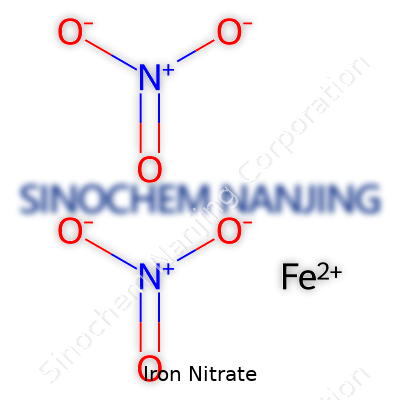
| Names | |
| Preferred IUPAC name | iron(3+) nitrate |
| Other names |
Ferric nitrate Iron(III) nitrate Nitric acid, iron(3+) salt Iron trinitrate |
| Pronunciation | /ˈaɪ.ərn ˈnaɪ.treɪt/ |
| Identifiers | |
| CAS Number | 10421-48-4 |
| Beilstein Reference | 3589932 |
| ChEBI | CHEBI:78035 |
| ChEMBL | CHEMBL1200841 |
| ChemSpider | 21575 |
| DrugBank | DB14506 |
| ECHA InfoCard | ECHA InfoCard: 106-010-005 |
| EC Number | 233-271-6 |
| Gmelin Reference | Gmelin Reference: 14252 |
| KEGG | C18643 |
| MeSH | D017928 |
| PubChem CID | 25034 |
| RTECS number | NO1475000 |
| UNII | J08YQ8K8P6 |
| UN number | UN1466 |
| Properties | |
| Chemical formula | Fe(NO3)3 |
| Molar mass | 241.86 g/mol |
| Appearance | dark violet crystalline solid |
| Odor | Odorless |
| Density | 2.85 g/cm3 |
| Solubility in water | very soluble |
| log P | -2.24 |
| Vapor pressure | Negligible |
| Acidity (pKa) | 3.01 |
| Basicity (pKb) | 6.7 |
| Magnetic susceptibility (χ) | paramagnetic |
| Refractive index (nD) | 1.61 |
| Dipole moment | 3.58 D |
| Thermochemistry | |
| Std molar entropy (S⦵298) | 238.0 J/mol·K |
| Std enthalpy of formation (ΔfH⦵298) | -322 kJ/mol |
| Pharmacology | |
| ATC code | B03AB09 |
| Hazards | |
| Main hazards | Oxidizer, harmful if swallowed, causes skin and eye irritation. |
| GHS labelling | GHS02, GHS07, GHS05 |
| Pictograms | GHS03,GHS07 |
| Signal word | Danger |
| Hazard statements | H272, H302, H314 |
| Precautionary statements | P210, P220, P221, P264, P280, P370+P378, P402+P404, P501 |
| NFPA 704 (fire diamond) | 3 0 2 OX |
| Autoignition temperature | 400 °C (752 °F) |
| Lethal dose or concentration | LD50 Oral Rat 325 mg/kg |
| LD50 (median dose) | LD50 (oral, rat): 276 mg/kg |
| NIOSH | NT0715 |
| PEL (Permissible) | PEL (Permissible Exposure Limit) for Iron Nitrate: 1 mg/m³ (as iron) |
| REL (Recommended) | Iron Nitrate, 2.00 mg/L |
| IDLH (Immediate danger) | No IDLH established. |
| Related compounds | |
| Related compounds |
Iron(II) sulfate Iron(III) sulfate Iron(II) chloride Iron(III) chloride |



