Imidazole: More Than a Simple Ring
Historical Development
Imidazole’s story reaches back over a century, rooted in the curiosity of chemists who encountered it within plant and animal systems. Scientists like Heinrich Debus recognized the value of this five-membered nitrogenous ring and put their lab coats where their mouths were. By the late nineteenth century, imidazole cropped up through methods involving simple condensation reactions, like mixing glyoxal and ammonia. These early efforts set the groundwork for new experiments, as researchers realized imidazole’s skeleton appeared in compounds from histidine to histamine—elements key to biology and medicine. Over decades, imidazole’s relevance kept growing, driven by discoveries in enzymology, organic synthesis, and the pharmaceutical industry.
Product Overview
Imidazole stands out as an aromatic heterocycle that pops up both in natural systems and the chemical industry. It’s a small molecule with a big impact, defined by its structure: two non-adjacent nitrogen atoms embedded in a five-membered ring. This unique arrangement turns imidazole into a basic building block for making antifungal drugs, corrosion inhibitors, and battery electrolytes. What hooks so many chemists is its combination of stability and reactivity—it doesn’t shy away from reactions when pushed, but it also stands up to many harsh conditions, which puts it ahead of more fragile cousins like pyrrole.
Physical & Chemical Properties
Imidazole packs a punch in a modest package. White, crystalline, and with a faint ammonia-like odor, it dissolves well in water and most polar solvents, a trait that owes much to its ability to form hydrogen bonds. Its melting point sits high enough to make storage easy while not so high that it challenges basic lab techniques. The ring is both aromatic and basic, courtesy of those two nitrogen atoms, which gives it a leg up in acid–base reactions compared to many other heterocyclic compounds. The aromaticity of the ring offers added stability, a feature that sets it apart in complex reaction environments.
Technical Specifications & Labeling
Most imidazole supplied for lab and industrial uses gets graded on purity, with technical and analytical standards specified around 98% or higher. Labeling on chemical containers typically flags potential hazards—especially irritation to skin, eyes, and respiratory tract—and highlights basic storage needs. Even experienced chemists watch for a strong warning about its ability to trigger allergic responses. Correct labeling reflects the regulatory push for transparency, part of the effort to keep workplaces safer and ensure no one learns the hard way about young chemists and surprise exposures.
Preparation Method
Producing imidazole tends to rely on accessible starting materials and straightforward reactions. The Debus–Radziszewski method, a mainstay in many labs, mixes glyoxal, ammonia, and formaldehyde, then cranks up the heat. The reaction proceeds rapidly and yields the ring structure in high amounts. For those in the know, this route proves both cost-effective and reliable—it gets plenty of use even in modern manufacturing. Other syntheses tap into pyrrole or related intermediates, but most chemists stick with what works, especially when scaling up.
Chemical Reactions & Modifications
Chemists can’t help but put imidazole’s two nitrogen atoms to work. The molecule accepts protons with ease, making it useful as a base in organic reactions. N-alkylation opens up paths to complex derivatives, helpful in pharmaceuticals and DNA research. Its ring can welcome substituents almost anywhere, which broadens the scope for designing new drugs. Cross-coupling, metal coordination, halogenation—imidazole gets involved in them all. Plenty of enzymes in the body leverage imidazole, especially the ones built from histidine residues, so these reactions echo larger natural processes. In practical research, imidazole-based modifications fuel the discovery of antifungals, antibiotics, and even cancer drugs.
Synonyms & Product Names
In the world of chemistry, one name rarely tells the whole story. Imidazole gets called glyoxaline, 1,3-diazole, or even imidazol when labels shorten for space. Many derivatives get their own names, like histamine or pilocarpine, but each traces a lineage back to the parent ring. Literature and product catalogs often list several synonyms to ensure users are buying or reading about the compound they actually need. Some companies pitch imidazole under proprietary blends, especially in fields like coatings or pharmaceuticals, making the network of trade and academic names more complex.
Safety & Operational Standards
Open a bottle of imidazole and you’ll pick up that sharp scent—a reminder this compound’s no benign powder. Its basicity stings mucous membranes, so goggles and gloves become standard gear in any lab. More stringent workplaces invest in fume hoods to keep vapor levels down. Imidazole doesn’t react explosively in the presence of air or water, but accidental ingestion or large-scale skin contact bring headaches, irritation, or more severe symptoms. Some researchers learn the hard way about cumulative exposure, so handling protocols matter. Proper labeling, lock-tight storage away from strong acids, and regular hazard training contribute to a safer environment for everyone in the lab.
Application Area
Chemists and engineers keep imidazole on their shelves for reasons that change with the application. Drug developers count on it to anchor antifungal agents, while industrial chemists bake it into corrosion inhibitors and epoxy hardeners. In biochemistry, imidazole acts as a buffer in protein purification, helping isolate his-tagged proteins from complex mixtures. The ring structure fits nicely into battery technologies, where it stabilizes electrolytes and improves conductivity. Even the agricultural sector finds uses, tapping into imidazole-based products to protect crops from fungal diseases. These diverse uses highlight its blend of chemical versatility and biological compatibility.
Research & Development
Innovation with imidazole shows no signs of slowing. Scientists chase new ways to modify the ring, tweak the side chains, and push the boundaries of drug design. Drug resistance in fungi sparks fresh research into advanced antifungal imidazoles, like posaconazole and isavuconazole. Materials scientists look for ways to use imidazole polymers in high-performance materials, banking on the thermal and chemical resilience of the core structure. Academic teams continue mining the secrets of imidazole’s natural analogs—like histidine—hoping new insights will inspire more targeted medical treatments. This research culture, built on decades of shared data and rigorous testing, shows genuine scientific maturity: collaboration, creativity, and a refusal to rest on old achievements.
Toxicity Research
Imidazole doesn’t top toxicity charts but deserves respect, particularly in concentrated or repeated exposures. Animal studies point to moderate acute toxicity, mostly affecting the liver and kidneys at high doses. Wildlife and aquatic toxicity haven’t set off alarm bells, though bigger spills can cause local damage. In humans, irritation poses the most common problem, especially for sensitive individuals, so protective gear stays in use. Laboratories and factories balance benefits against risks, supported by clear safety data sheets and evidence from regulatory testing organizations. Long-term effects haven’t matched the drama of other industrial chemicals, but continuous monitoring gives peace of mind and keeps everyone honest about responsible handling.
Future Prospects
The future for imidazole stretches far beyond its origins in a Victorian laboratory. Growing demand in pharmaceuticals, driven by treatment-resistant infections and new disease targets, will keep synthetic chemists busy refining derivatives. The steady trend toward green chemistry promises new, cleaner methods for both making and modifying imidazole. In electronics, push for ever-better electrolyte solutions ensures that battery developers will keep tweaking the molecule’s core. Environmental researchers look for ways to control pollution and waste, closing the loop from production to disposal. If past performance suggests anything, imidazole won’t become obsolete—each new generation finds ways to expand its use and reduce its hazards, keeping this sturdy little compound as relevant as ever.
What are the main uses of Imidazole?
Imidazole in Pharmaceuticals
Walk through any pharmacy, and chances are you’ll use something that started with imidazole chemistry. This small molecule plays a big role in antifungal drugs. Those creams and pills for athlete’s foot, ringworm, and yeast infections often rely on imidazole’s unique structure to stop fungus growth. Drugs like clotrimazole, miconazole, and ketoconazole disrupt fungal cell walls by targeting enzymes. This effect has been proven and is trusted by doctors everywhere. For people dealing with annoying, persistent fungal infections, imidazole-based medicines can feel like a lifesaver.
Imidazole in Biochemistry and Research
Scientists have a different appreciation for imidazole. Walk into a research lab and you’ll spot bottles labeled with its name. Imidazole comes in handy for protein purification, especially with a technique called immobilized metal affinity chromatography (IMAC). The process relies on imidazole to detach proteins from metal ions, making it easier for researchers to study what goes on in our cells. The reason imidazole works so well comes from its chemistry. Its ring structure binds to certain metal ions just tightly enough, allowing proteins to wash away without getting contaminated. Labs trust this method not just for convenience, but because it’s reliable for producing clean protein samples.
Imidazole in Industrial Applications
Step into a factory or an industrial plant, and imidazole shows up in unexpected ways. Corrosion is a constant threat to metal machines and pipelines. Imidazole derivatives get added to protect metal from rusting, especially in water-based systems. They act as corrosion inhibitors and help manufacturers save on costly repairs. Imidazole also helps produce epoxy resins, making adhesives stronger and more resistant to chemicals and heat. Whenever someone glues two surfaces under tough conditions, chances are that adhesive is stronger because of some imidazole chemistry behind it.
Pesticides and Agriculture
Out in the fields, imidazole helps fight pests and diseases attacking crops. Several fungicides and pesticides use imidazole structures to target fungi and insects that damage food supplies. This chemistry keeps plants safer and helps farmers produce higher yields. It’s important, though, to recognize the tension here: what keeps crops healthy can sometimes carry risks for people or the environment when overused. Governments and scientists keep a close eye on how much and how often these chemicals get used. More research continues into safer ways to use imidazole compounds, including products that break down quickly or target pests more specifically.
Imidazole in Everyday Materials
Even outside the lab, factory, and farm, imidazole finds its way into daily life. Emulsifiers made from imidazole help blend ingredients in things like shampoos and lotions. Some photographic developers and dyes also contain imidazole, giving rich color and sharper images. In personal experience, you may not notice imidazole on the ingredient list, but its presence helps many household and personal care products work better.
Toward Safer and Smarter Use
Imidazole’s flexibility comes with responsibility. Overuse in medicine or agriculture can lead to problems like resistance in fungi and damage to beneficial soil organisms. Researchers are looking for ways to design imidazole compounds that only act where they’re needed, breaking down harmlessly after doing their job. Manufacturers and policymakers should encourage training for workers and farmers, so that these chemicals protect human health and the environment while delivering real benefits. More funding for research into greener alternatives and better monitoring in the supply chain helps keep misuse in check.
Seen up close, imidazole connects science and practical living. Anyone who has dealt with athlete's foot, worked in a lab, managed a water treatment plant, grown crops, or even opened a tube of hair color has a reason to care about how this small molecule shapes results that matter.
Is Imidazole safe for human use?
What Is Imidazole and Why Are People Talking About It?
Imidazole isn’t a household name, but it shows up all over the place. Pharmaceutical researchers use it as a building block for antifungal drugs, doctors see it in antifungal creams and some oral meds, and chemists reach for it in labs. It’s a simple ring-shaped molecule made up of nitrogen and carbon, and, like a lot of similar compounds, it pops up in nature and in products you find in pharmacies.
The Human Side: Is Imidazole Worth Worrying About?
Looking at imidazole through the lens of health brings up the real question: does it belong near or inside our bodies? The short answer is that imidazole itself, when used as intended in products checked and approved by medical regulators, doesn’t send up big red flags.
Plenty of antifungal medications, like clotrimazole and miconazole, carry imidazole inside their chemical makeup. Those have been handled safely for years by millions of people, including myself for athlete’s foot as a teenager. I remember the relief far outweighed the mild skin redness I saw for an afternoon—nothing complicated about it.
How Medical Authorities Weigh In
The U.S. Food and Drug Administration signs off on antifungal creams holding imidazole, but only after testing for skin irritation, toxicity, and even potential to cause cancer. Same deal in the EU: the European Medicines Agency gives a green light if tests clear the hurdles on organ health and allergies. No serious patterns have popped up linking these common forms to big risks. Most side effects people notice stay mild—itching, burning, peeling—showing up mostly with overuse or on sensitive skin. Rarer reactions like blisters or hives lead doctors to stop the product and look for another solution.
Exposures Outside Medicine
Imidazole belongs to more than just pharmacy shelves. Chemical researchers use it for plastics and industrial cleaners. These situations, though, bring higher concentrations and different grades, which push the risk fence a lot closer. Folks working hands-on with raw materials face a bigger risk, especially without gloves or masks. In my own undergraduate lab days, rushed handling of any strong base or organic ring like this resulted in sore hands or headaches if the air wasn’t circulated well.
So Why Keeps It Cropping Up Safely?
The key comes down to dose and delivery. Putting a measured amount in a cream for a week, under the care of a dermatologist, isn’t the same as spilling concentrated chemical in a factory. The medical field tracks every batch. Ongoing research checks for new risks, especially as more people use antifungals for longer timeframes. The data pool grows every year, making those rare risks easier to spot.
Practical Steps and Solutions
The right approach takes a few simple steps. Choose products only from pharmacies or reputable stores. Follow the instructions—don’t double applications when itching sticks around. Tell your doctor about any reactions. Folks around strong raw chemicals should wear nitrile gloves, use eye protection, and keep ventilation open. Regulators should continue reviewing safety data and tracking patterns in adverse events.
Imidazole deserves respect, not panic. Monitoring, education, and personal experience suggest the benefits for most people, when used as intended, far outweigh the small chance of harm. Attention to details—using medicines as directed, reporting side effects, and handling the concentrated form with proper protection—keeps this versatile molecule working for us, not against us.
What are the storage requirements for Imidazole?
What’s Imidazole All About?
Imidazole isn’t just another chemical stacked in labs or pharmaceutical plants. It pops up in all sorts of applications, from pharmaceutical synthesis to polymer production. Anyone who’s handled it knows: storing chemicals safely isn’t just about meeting checklists or compliance certificates. It’s about keeping people, products, and the environment out of harm's way. Let’s dig into what it really takes to store imidazole based on experience and grounded research.
Conditions That Make the Difference
Small white crystals, imidazole gives off little warning to the nose or eye, but don’t let its plain look fool you. This is a solid that reacts strongly to water and air when things aren’t right. I’ve seen what happens when you leave a chemical in a humid storeroom—a sticky mess and degraded product. The key to imidazole? Dry, cool, airtight.
Keeping moisture out is the most important step. Imidazole draws in water from humid rooms faster than you’d expect, forming a clump that won’t weigh out evenly or dissolve like it should. Moisture can even trigger unwanted chemical reactions. I recommend airtight containers—glass jars with tight seals, or HDPE bottles that click shut with no leaks. Forget makeshift lids and plastic wrap. Every time a bag gapes open, you’re tossing money and safety out the window.
Temperature comes next. Warm storage encourages decomposition. Most experts agree on below 25°C (77°F). I’ve seen colleagues try the trick of storing imidazole in lab fridges, keeping it away from volatile acids, just in case a leak kicks off a reaction. No matter how crowded your shelf space gets, don’t stack it over radiators or near window sills. Sunlight triggers photodegradation, and once that starts, purity slips fast. A low-light spot, shielded from direct rays, keeps quality steady.
Safety in Practice, Not Just Theory
I once visited a facility where imidazole stocks sat next to bleach products. Hazards like this don’t just increase risk—they invite disaster if someone spills or mixes by mistake. Imidazole shouldn’t mingle with strong oxidizing agents. I’ve seen Material Safety Data Sheets warn about mixing hazards, and for good reason: chemical fires or unexpected fumes are possible outcomes.
Proper labeling matters. Not all powder jars look different in a pinch. A faded label or unlabeled container guarantees confusion, especially during a long shift or changeover. I mark dates of receipt, lot numbers, and concentrations. Old or contaminated imidazole stock shouldn’t go back into circulation—clear records and regular shelf checks help catch these issues before they become problems.
Waste and Environmental Impact
Disposal is often the most neglected link. Pouring leftover imidazole into the sink isn’t just wrong—it can punish local wastewater plants and pollute streams. Local regulations are strict on this. I suggest working with your environmental health office or hazardous waste vendor for collection and safe destruction. I’ve found that setting up clear waste bins and staff reminders cuts down on unsafe disposal noticeably.
Raising the Bar for Storage
Solid protocols build safer workplaces. Basic steps—airtight storage, dry cool rooms, away from light and incompatible chemicals, with routine checks—go a long way. It’s not enough to hope people will “just know” what’s dangerous. Ongoing training and up-to-date materials keep things tight, especially as new staff rotate in. Relying on firsthand insight and science-based practice, keeping imidazole safe never needs to be guesswork.
How should Imidazole be handled in the laboratory?
Why Imidazole Deserves Respect
Many chemists run into imidazole sooner or later. It shows up in drug synthesis, enzyme buffer systems, and plenty of academic experiments. Used wrong, even everyday chemicals bite back. An otherwise harmless-looking powder, imidazole can cause skin and respiratory irritation and trouble if you breathe in particles or get them in your eyes. That’s a lesson I learned early, running a column with bare hands, only to feel a burning sensation that lasted till lunchtime.
Rules that Matter in Handling
No matter how experienced someone feels in a lab, ignore safety for a moment and accidents creep in. Imidazole demands gloves—nitrile if possible—goggles that fit, and working in a fume hood for weighing and transfers. Ventilation keeps dust out of sinuses and lungs, especially when handling bottles that seem clumpy or aged. Small scoops minimize mess: compact imidazole gives the illusion of control, but a moment’s carelessness leads to clouds of dust.
Nobody wins points for inhaling lab powders. I watched a friend get a coughing fit from a poorly sealed bottle on a humid day. He wore gloves, but the tiny crystals ended up on benchtops and sleeves, where they transferred straight onto skin. Letting any chemical, including imidazole, stay on surfaces just raises exposure for everyone else walking in later. Wet wipes and regular bench cleaning go a long way to keep things safe.
Storage Tactics
Imidazole likes dry, cool storage. Damp air shortens shelf life, clumps the product, and can even lower purity. Silica gel packets inside sealed bottles help, especially in crowded reagent cabinets. Label bottles with open dates; this makes tossing old or degraded stock an obvious step. Leaving containers loose or open damages more than just what’s inside—it triggers headaches for whoever tries to salvage the last scraps.
Mixing and Disposal—Don’t Cut Corners
Imidazole solutions should not get mixed by eye. Precision matters, as small errors ruin downstream yields in purification or synthesis. Use a fume hood every time solutions get prepared. Fresh gloves matter if you spill or splash, and goggles shield from eye burns.
Disposing of imidazole follows standard lab waste guidelines, and nobody should dump any leftovers down a drain. Imidazole contaminates water and damages aquatic life. Waste bottles need clear labels, and repeated reminders sink in: treating minor chemicals lightly often multiplies headaches. Encourage students and researchers to read the safety data sheet and check the label—even a small oversight snowballs fast.
Setting a Positive Example
Safe handling grows from habits, not just policies. Senior lab members who set shortcuts soon watch mistakes echo through groups. Open conversations about lab close-calls—no blame, just honesty—keep people sharp. I recall team meetings where someone’s quiet confession about a slip-up taught everyone to look closer at gloves or eye protection. Honest stories and visible compliance do more good than signs posted in a corner.
Labs with a safety culture don’t rely on luck. They run on respect for every step, every precaution, and each person’s life outside the bench. For imidazole, as for all chemicals, the best results come from people taking their own health seriously—no fancy poster or rule ever did that on its own.
What are the potential side effects of Imidazole exposure?
What Happens After Contact with Imidazole?
Imidazole shows up in a lot of places, from chemical labs to pharmaceutical manufacturing. Its uses might seem miles away from daily life, but the risks become very real for anyone working near this chemical. Short-term contact with imidazole—breathing in dust or fumes, getting it on skin, or splashing it in eyes—tends to bring fast responses from the body. Red, itchy skin or eyes show up quickly. Throat and nose might burn if someone has breathed in vapors at work. I remember a friend working in a university lab; one small spill landed him a trip to the campus clinic for irritated skin and tightness in the chest. Even a few hours after exposure, headaches and nausea can stick around. Most folks recover after cleaning up, but not everyone has quick access to proper safety showers or eye wash stations.
What about Long-Term Risks?
Spending months or years around imidazole raises the risk of worse problems. Reports tell of workers developing dermatitis, where the skin just won't heal. Some get long-standing respiratory complaints like wheezing and coughing fits after repeated exposure. That kind of chronic irritation leaves people at higher risk for even more dangerous infections and complications. Limited studies in animal models have raised red flags about the chemical affecting the liver and kidneys after repeated, high exposures. Translating findings from animal data to humans brings plenty of uncertainty, but these warning signs deserve respect and thorough investigation. No one wants to gamble with their long-term health just because cleaning protocols or ventilation systems didn't get proper attention or basic maintenance.
Stories from the Floor—Why This Issue Matters
People often underestimate chemical exposure, probably because everything feels fine for a while. I’ve stood in industrial buildings where workers wipe sweat from their foreheads, sleeves dusty with powders, and there’s hardly a sign about chemical hazards in sight. Too many learn the risks only after an accident. It’s not only the staff on-site; families feel the consequences, too, if someone brings residue home on their hands or clothes. From personal experience, I’ve seen how a few sessions on proper safety gear and storage protocols save people much more grief than any after-the-fact visit to the doctor ever could. Avoiding exposure in the first place always beats treating symptoms later.
Solutions for Staying Safe
Prevention stands taller than any quick cure. Basic measures like gloves, goggles, and sturdy lab coats stop most contact issues before they start. Decent ventilation and exhaust fans keep dust and fumes from filling up workspaces. Simple routines—like washing up after every shift, discarding used gloves, regular training—build a safer environment. For management, swapping out older equipment and making sure material safety data sheets stay on hand gives everyone the information they need if accidents happen. Reporting even minor spills or symptoms makes a difference because early help heads off lasting damage.
Extra Care for Vulnerable GroupsSome workers face bigger risks: those with asthma, eczema, or other allergies might react more strongly. Supervisors can reach out for occupational health reviews to spot who needs extra support on the job. Clear labeling on storage containers cuts down mix-ups. Small changes like establishing formal spill cleanup plans or putting extra safety signage near workstations show employees that their health matters—because it truly does.
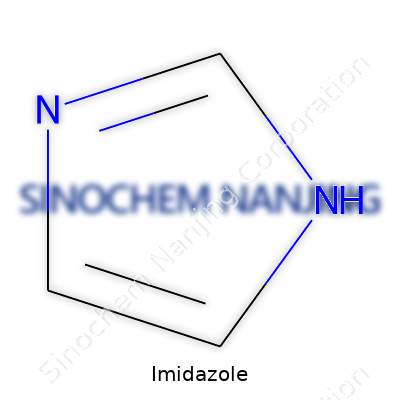
| Names | |
| Preferred IUPAC name | 1H-imidazole |
| Other names |
1,3-Diazole Glyoxaline |
| Pronunciation | /ɪˈmɪdəˌzoʊl/ |
| Identifiers | |
| CAS Number | 288-32-4 |
| 3D model (JSmol) | Imidazole JSmol 3D model string: ``` Imidazole CC1=CN=CN1 ``` |
| Beilstein Reference | 120924 |
| ChEBI | CHEBI:28094 |
| ChEMBL | CHEMBL104 |
| ChemSpider | 829 |
| DrugBank | DB02007 |
| ECHA InfoCard | ECHA InfoCard: 100.003.247 |
| EC Number | EC 206-019-2 |
| Gmelin Reference | 84218 |
| KEGG | C00112 |
| MeSH | D007089 |
| PubChem CID | Imidazole's PubChem CID as a string is: "862 |
| RTECS number | MK4550000 |
| UNII | IMH547VGRY |
| UN number | UN2811 |
| CompTox Dashboard (EPA) | DTXSID7020372 |
| Properties | |
| Chemical formula | C3H4N2 |
| Molar mass | 68.08 g/mol |
| Appearance | White to pale yellow crystalline powder |
| Odor | odourless |
| Density | 1.03 g/cm³ |
| Solubility in water | soluble |
| log P | 0.02 |
| Vapor pressure | 0.0025 mmHg (25°C) |
| Acidity (pKa) | 6.99 |
| Basicity (pKb) | 7.0 |
| Magnetic susceptibility (χ) | -32.2·10⁻⁶ cm³/mol |
| Refractive index (nD) | 1.616 |
| Viscosity | 2.2 mPa·s (25 °C) |
| Dipole moment | 3.67 D |
| Thermochemistry | |
| Std molar entropy (S⦵298) | 96.0 J·mol⁻¹·K⁻¹ |
| Std enthalpy of formation (ΔfH⦵298) | 112.8 kJ/mol |
| Std enthalpy of combustion (ΔcH⦵298) | -1723 kJ mol⁻¹ |
| Pharmacology | |
| ATC code | G01AX05 |
| Hazards | |
| Main hazards | Harmful if swallowed, causes serious eye irritation, causes skin irritation |
| GHS labelling | GHS05, GHS07 |
| Pictograms | GHS07, GHS08 |
| Signal word | Warning |
| Hazard statements | H315, H319, H335 |
| Precautionary statements | P261, P280, P305+P351+P338, P337+P313 |
| NFPA 704 (fire diamond) | 2-1-0 |
| Flash point | 52 °C |
| Autoignition temperature | 801 °C |
| Explosive limits | Explosive limits: 2.4–19% |
| Lethal dose or concentration | LD50 (oral, rat): 970 mg/kg |
| LD50 (median dose) | LD50 (median dose): 970 mg/kg (oral, rat) |
| NIOSH | SN1575000 |
| PEL (Permissible) | PEL: 5 mg/m³ |
| REL (Recommended) | 6 mg/m³ |
| IDLH (Immediate danger) | 800 mg/m3 |
| Related compounds | |
| Related compounds |
Benzimidazole Imidazolidine Imidazoline Histidine Histamine N-Methylimidazole Pyrazole |



