Glyoxal: Unpacking Its Story, Uses, and Where We're Headed Next
Historical Development
Glyoxal’s history feels like it mirrors the story of industrial chemistry itself. In the late nineteenth century, chemists pushed boundaries and found that aldehydes like glyoxal, despite their reactive bite, could cleanly push new reactions. Researchers isolated glyoxal out of the fog of distillation and soon found out its double-aldehyde punch was worth more than a passing glance. For a long time, it hid behind its bigger aldehyde cousins—formaldehyde and glutaraldehyde. With time, advances in synthetic methods and better understanding of its manageable volatility and solubility pushed it into commercial relevance. Factories sought it out in textile and paper production, and labs cared about its role in organic synthesis and as a cross-linking agent. Trace its history, and glyoxal’s path reveals the way industries adapt and find cross-cutting utility in even simple compounds.
Product Overview
Glyoxal carries a straightforward formula: C2H2O2. It looks plain—usually colorless to pale yellow, with a scent that quickly announces its presence. Industrially, you might spot it as a 40% aqueous solution. That might not sound attention-grabbing, but its value comes from its cross-linking ability. You find it in resins, paper coatings, textiles, leather processing, and adhesives. Unlike bulkier molecules, glyoxal interacts closely with fibers and proteins, acting as a bridge between chemical strands. This ability has opened doors in textile finishing and even biomedical fields, especially as manufacturers step away from more toxic aldehydes like formaldehyde.
Physical & Chemical Properties
People working with glyoxal often mention its two aldehyde groups sitting side-by-side; this setup primes it for rapid reactions. It dissolves easily in water, giving clear or slightly yellowish solutions. Glyoxal has a low boiling point, and its vapor reactivity deserves respect. Saturated air over a glyoxal solution picks up enough vapor to create a noticeable acrid smell. Its reactivity can set off chain reactions with nucleophiles—think amines in proteins or our own DNA. Its allure lies in this dual-edge behavior: handy for making durable goods but also raising eyes over its possible health impacts if handled carelessly.
Technical Specifications & Labeling
Anyone storing or shipping glyoxal knows you can’t treat it like a household product. Labels note its chemical nature and hazard class. Regulatory requirements put it in line with other reactive aldehydes. Unsafe use threatens workers through inhalation or skin contact. Labeling standards now require clear statements about concentration, storage stability, and transport rules. Experience shows that inconsistent labeling costs time and money—a misstep could mean degraded product or even an emergency response. That sharp regulatory eye has helped the market develop better packaging, clearer instructions, and safer transport choices as demand grows.
Preparation Method
Traditionally, glyoxal comes from the oxidation of ethanol or acetaldehyde. Labs favor catalytic oxidation using silver or copper salts. Large-scale plants choose processes balancing throughput, purity, and factory safety. Production avoids high temperatures to cut down risks. Some routes use ozonolysis of glycols, but process engineers often stick with established methods because of scale, reliable yields, and manageable byproducts. Process tweaks keep evolving, aiming for greener chemistry. Shifting away from tough oxidants toward milder, more selective approaches looks promising, both in reducing emissions and making safer work environments.
Chemical Reactions & Modifications
Glyoxal’s two aldehyde groups reach out even to small changes, giving chemists much to work with. In textiles, it tames fibers, stiffening and keeping fabrics crisp. It reacts quickly with amino acids and proteins, making it useful for cross-linking in biochemistry and histology. Scientists rely on its behavior for preparing enzyme immobilization carriers or stabilizing tissue samples. Glyoxal polymers—like polyols and polyacetals—show up in adhesives and resins. Long-term use brings innovation, from designing less irritating fixatives to making cross-linked hydrogels for medical devices or drug delivery. That reactivity also means care—glyoxal forms advanced glycation end-products (AGEs) in food or biological systems, raising concerns for health researchers.
Synonyms & Product Names
Chemistry circles alternate between calling it ethanedial and oxalaldehyde; even trade names highlight its dual reactive spots. Product labels list glyoxal, but synonyms appear in older texts and industry reference sheets. Know them, and you’ll track down research, safety data, and handling guidelines more easily—because not every country or company lands on the same terminology, even for such a basic chemical.
Safety & Operational Standards
Day-to-day, working with glyoxal challenges teams to not get comfortable. Its volatility and sensitizing effects have pushed regulators and companies to update their guidance. Guidelines now call for ventilated storage, skin and eye protection, and real attention to spills. Organizations require clear protocols for disposal so it doesn’t mix with watercourses. On the shop floor, experienced techs run air quality tests before approving entry. Working up close, gloves or face shields aren’t negotiable. Trends point to lower exposure limits and updated environmental standards as new data come in about persistent impacts.
Application Area
Glyoxal built its industrial reputation in textiles and paper. Its crisping and cross-linking ability delivers those sharp shirt collars and durable paper products. Leather manufacturers prize it for softening while still tanning the hides. In oil exploration, glyoxal-based fluids handle complex drilling environments. Coating experts turn to glyoxal to develop water-resistant films. In adhesives, cross-linked resins boost strength, often without the sharper toxicity worries attached to formaldehyde. Biologists rely on it for tissue fixation. Research even taps glyoxal for anti-microbial surfaces in hospitals. Demand keeps growing as new uses emerge in green chemistry and sustainable packaging.
Research & Development
As someone who has kept up with the latest research, watching glyoxal’s path through labs and journals is striking. Teams are pushing for more sustainable production by switching to renewable feedstocks and cleaner catalysts. There’s a push to lower residual glyoxal in consumer goods, especially in food packaging or medical products. New biocompatible cross-linking methods rely on tweaking the molecule—thinking beyond tradition. Studies in biomedical engineering look at glyoxal hydrogels for slow-release medication, tissue scaffolds, and even wound dressings. Industry partners, facing global regulatory shifts, invest in making glyoxal finishes that release less free aldehyde and can meet stricter standards on recyclability and safety.
Toxicity Research
Glyoxal’s low molecular weight and twin aldehyde groups mean it interacts with proteins and DNA in ways scientists don’t always predict. Studies point to irritation in skin, eyes, and even the upper respiratory tract. Larger doses bring bigger risks, from dermatitis to potential impacts on internal organs if absorbed in quantity. Animal studies raise flags about repeated exposure—enough to prompt precautionary limits in workplace air. Its ability to form AGEs in foodstuffs or biologically active tissues has turned a spotlight on chronic exposure. Research digs into how glyoxal’s metabolic breakdown links to oxidative stress, diabetes complications, and cell metabolism shifts. People working closely with glyoxal rely on solid ventilation, personal protective gear, and regular monitoring to keep exposures down.
Future Prospects
Glyoxal’s future looks both challenging and hopeful. After decades rooted in industries like textile and paper, it’s now at the center of work on sustainable polymers, biocompatible materials, and even smart packaging. Tighter health and environmental standards push innovation—factories need greener production, lower emissions, and products releasing fewer aldehydes into the environment. Biotech researchers are exploring glyoxal-based cross-linking for tissue engineering and low-toxicity biomaterials. Regulatory discussion centers around chronic exposure limits and sustainable life cycles; no longer can manufacturers ignore the environmental details. The next chapter for glyoxal will likely bring cleaner chemistry, safer workspaces, and surprising new roles where fast, selective reactivity is needed.
What is glyoxal used for?
A Closer Look at Glyoxal’s Role in Daily Life
Most people never hear about glyoxal, but it shapes quite a few things that cross our paths. I remember walking into my uncle’s shirt factory as a teenager, surprised by how crisp the fabric stayed even after being shipped for weeks. A lot of that resilience comes from chemicals like glyoxal woven into the textile finishing process. It’s a small two-carbon aldehyde molecule, but it packs a punch when it comes to changing everyday materials.
Textiles, Paper, and Leather: Everyday Essentials
Many textile workers swear by the finishing agents they use on cotton—glyoxal being one of the mainstays. In practice, it helps fabric resist creasing, giving shirts and trousers a sharper look and a longer shelf life. This means less ironing and fewer chemical washes at home, which feels like a win for both the consumer and the environment.
Paper manufacturing runs on improvements brought about by glyoxal. It acts as a crosslinker, making paper stronger and more durable, even when wet. This small adjustment in the manufacturing line allows offices, schools, and print shops to rely on paper that doesn’t fall apart in damp conditions. Banknotes and important documents owe some of their resilience to glyoxal-based treatments.
Leather goods, too, have caught on. Tanners use glyoxal to boost the flexibility and strength of leather, turning animal hides into long-lasting belts, wallets, and footwear. This chemical also plays a role in making sure colored leathers retain their smooth feel and even finish—even after years of handling.
Beyond Materials: Healthcare and Preservation
The world of healthcare faces persistent challenges with sterilization and preservation. Glyoxal steps in as a hardening and preserving agent, often found in medical labs. It helps preserve tissue samples for pathology analysis, stabilizing delicate structures so pathologists can spot early signs of disease with greater clarity. Research shows that glyoxal provides an alternative to formaldehyde, which is more toxic and causes skin and respiratory irritation. Its adoption grew as more health risk data became public.
Preserving wood proves easier with glyoxal. Builders in wetter regions depend on wood treated with glyoxal-based resins to keep out mold and moisture. Structures last a few more years, which reduces the waste and cost of having to replace rotten beams or siding.
Addressing Health Concerns and Looking for Safer Alternatives
I’ve seen some chemical workers raise concerns about prolonged exposure. Regulatory agencies point out that glyoxal, while not as notorious as formaldehyde, can trigger allergies and skin irritation. Manufacturing plants limit airborne glyoxal with ventilation and gloves. Companies now look for safer ways to achieve similar results—sometimes blending small amounts of glyoxal with other less-reactive resins to cut down health risks. The goal isn’t to eliminate the chemical but to strike a balance between product quality and worker safety.
Innovation and the Search for Better Solutions
Research teams push for biodegradable alternatives, especially in the textile and paper sectors. Enzyme treatments and bio-based crosslinkers edge into the spotlight, aimed at reducing both environmental and health impacts. Producers who invest real effort into green chemistry end up setting new trends in manufacturing, pulling more industries toward smaller chemical footprints.
Glyoxal plays a quiet but critical role behind the scenes. It solves practical problems for industries, even as safety data keeps pushing the market to evolve. The best outcomes come from bringing together engineering, chemistry, and a little common sense.
Is glyoxal harmful to health?
Understanding Glyoxal
Glyoxal turns up in plenty of household products—textile treatments, paper finishes, leather goods, and sometimes even cosmetics. It acts as a preservative and a cross-linking agent, keeping things looking crisp, feeling strong, and lasting longer. Most folks won’t recognize it until their eyes burn from fumes during a renovation or after opening a freshly packaged shirt. The fact that you can’t usually see it or smell it should not overshadow the questions about what this chemical actually does inside the body.
What Science Tells Us
Scientists have spent decades studying the effects of glyoxal on people and the environment. In labs, they’ve found that high concentrations can irritate the skin, eyes, and respiratory tract. Data from the National Institute for Occupational Safety and Health (NIOSH) show these reactions happen faster in people with asthma or sensitive skin. Workers in manufacturing plants, who handle concentrated glyoxal regularly, sometimes develop dermatitis, stinging eyes, or even breathing problems over time.
Animal studies shed light on what happens inside the body. Glyoxal can break down into smaller molecules that cause oxidative stress, damaging cells and possibly DNA. That led some toxicologists to raise concerns about long-term risks like cancer and reproductive problems, especially in rats exposed to large amounts. As for humans, current research remains inconclusive; no major studies link everyday exposure to cancer or birth defects, though experts agree more research is needed.
How Exposure Happens in Daily Life
For most people, exposure comes from touching or breathing in off-gassing from new clothes, treated paper, or building materials. Someone working on a renovation or with commercial cleaning supplies faces much higher levels. Eye or throat irritation usually fades fast after you step outside or air out a room. Still, repeated low-level exposure adds up over years, which gets experts talking about “cumulative risk.” Parents of young kids, folks with allergies, and people spending much of their time indoors worry with good reason—children crawl on the floor, touch surfaces, and put things in their mouths, and none of us want irritating chemicals in everyday items.
Regulation and Consumer Choices
Government agencies like the EPA and the European Chemicals Agency track the use and safety of glyoxal. Europe classifies it as a substance of concern; the US ranks it below formaldehyde but keeps an eye on manufacturing emissions and workplace exposure. Still, regulations lag behind the science. Labels rarely flag glyoxal unless you’re reading the fine print on a chemical drum or a technical data sheet.
Some clothing and home brands advertise low-chemical or eco-friendly finishes, but there’s no universal standard yet. It falls on consumers to press for green certifications and transparency. At home, opening windows, airing out new textiles, and choosing certified products lowers exposure. In workplace settings, gloves, masks, and proper ventilation make a difference—companies following best practice for employee health find fewer problems with irritation or allergic reactions.
What Matters Most
I’ve had red eyes after painting a room and itchy skin from new clothes. It’s easy to brush that off as part of modern life, but it highlights how easily invisible chemicals sneak into our routines. Glyoxal sits in the same gray zone as many other additives: important for product performance, but not risk-free. That reality keeps safety advocates pushing for better testing, clearer labels, and options that don’t trade convenience for long-term health.
What is the chemical formula of glyoxal?
Understanding Glyoxal at Its Core
Glyoxal shows up in the chemical world with a simple but telling formula: C2H2O2. At first sight, those six atoms hardly seem impressive—two carbons, two hydrogens, two oxygens. But glyoxal isn’t some obscure compound locked away in textbooks. Its reach extends much further, popping up everywhere from modern manufacturing plants to biology labs.
A Look at Practical Importance
Factories rely on glyoxal for more than a handful of applications. Textile firms add it to resins to improve crease-resistance in fabrics. That crisp look you see on a new shirt or a fresh bedsheet often owes its thanks to tiny changes made by glyoxal’s chemical structure. Scientists know that those two reactive aldehyde groups pack a punch, letting glyoxal form bonds quickly and easily with other molecules.
This helps papermakers too. Adding glyoxal boosts wet-strength, so even if paper gets damp, it won’t fall apart in your hands. Over years of observing lab tests, glyoxal has always stood out as a reliable crosslinking agent. It works because it connects pieces of cellulose or protein together, creating a net that holds strong under stress.
Everyday Chemistry and Health Concerns
Most people walk through life unaware of glyoxal’s presence. Baking and roasting foods can form tiny amounts of glyoxal, since sugar at high temperatures sometimes breaks down into smaller parts. It doesn’t usually reach worrying levels in a healthy diet, but long-term researchers keep an eye out for links to health risks. Glyoxal can react with DNA and proteins, so lab workers always take precautions to avoid breathing in dust or vapors.
In the medical world, researchers have found that glyoxal can show up in the body as a byproduct of glucose metabolism. Diabetics sometimes show higher levels in their blood, drawing interest from doctors who study complications like kidney or vision problems. This only adds to calls for careful handling, good ventilation in workplaces, and regular blood checks for those who face glyoxal exposure on the job.
Balancing Benefits and Risks
Companies have real reasons to choose glyoxal. It’s effective and doesn’t hang around long in the environment. Bacteria break it down pretty quickly, turning those reactive aldehydes into safer compounds. That short life helps limit buildup in soil or water, a plus for communities living near manufacturing sites.
On the flip side, spills and careless disposal can still harm wildlife or plant growth—no amount of fast breakdown completely erases risk. Those who work with glyoxal every day need proper gloves and eye protection, plus basic training on spill response. A few years ago, a colleague ended up with skin irritation after rushing through a clean-up. That experience taught everyone in the lab to respect even common chemicals.
Moving Toward Safer Workplaces
Rules keep changing as new studies emerge. Today, safety data sheets stress the need for fume hoods, splash goggles, and proper waste storage. Supervisors run regular drills so new staff can spot symptoms of exposure. Companies invest in real-time air monitors to catch leaks before they become serious. These aren’t just formalities—they make a real difference on the factory floor.
Glyoxal’s formula reminds us that even the simplest molecules shape industries and affect lives. Looking at C2H2O2 tells part of the story, but understanding what it does—and how to use it wisely—remains an ongoing responsibility for everyone involved.
How is glyoxal stored and handled?
Understanding Glyoxal in Real Life
Glyoxal, a clear, slightly yellowish liquid, pops up in many workplaces. It finds its way into industries that make resins, disinfectants, textiles, and even paper. If you ever visit a production floor or a storage room, you might see metal drums or plastic containers labeled "glyoxal." Just about every worker who’s spent time around chemicals knows to give it some respect, since missteps can bring headaches, breathing trouble, or skin burns.
Storing Glyoxal Safely
People who work with glyoxal learn to keep the drums in cool, well-ventilated areas. Rooms are set up so no one stacks containers where they could tip over or leak. Heat makes glyoxal break down faster, so companies stash it away from sunlight, radiators, and open flames. In my own experience visiting chemical warehouses, managers check the labels and seals every week. Cracked seals or rusty drums get pulled and fixed before a small problem grows huge.
Most suppliers pack glyoxal in high-density polyethylene drums or tightly sealed metal containers. Patching up leaks quickly counts—glyoxal finds its way through some plastics, so the right choice for storage makes a big difference. A concrete floor with spill containment channels means accidental leaks won’t spread. Not every workplace gets it right, but those that do avoid expensive fines and health scares.
Handling Risks Head-On
Anyone handling glyoxal direct from a drum wears gloves and goggles. This is not a suggestion—I've seen what happens when someone skips the gloves just once. The sting on skin is sharp, worse than a typical cleaner, and a splash in the eyes sends folks racing to the eyewash station.
Workers lean on clear instructions and practical training. New staff watch senior workers before they handle the liquid. Few people ever pour by hand; pumps and siphons limit contact. Smaller users often dilute glyoxal, which lowers the risk but never removes it entirely. Proper ventilation is a must—sour vapors build if fans aren’t running or if hoods go unused. The chemical has a sharp smell that acts like a warning—nobody lingers for long in a room where vapor builds up.
What Can Go Wrong—and How to Prepare
Ignoring precautions lets disaster in. Leaky drums create slippery floors and strong odors. In the worst cases, glyoxal gets into local water or soil, harming plants and animals. Local fire codes often spell out storage size limits and demand specific types of spill kits by the nearest exit. Some facilities stop accidents by using double-walled tanks and install sensors that send alarms at the first sign of trouble.
Training matters. Plenty of places hold drills or run refresher courses through pictures and real-life scenarios. Those who get careless or cut corners usually run into trouble. Good recordkeeping about who stored or moved glyoxal can help find mistakes before they become news. Labels won’t solve every problem, but clear instructions and repeated practice do more to keep everyone safe than fancy gear alone.
Improving Practices
Modern workplaces put resources into better training and simple solutions. Having the right gloves, goggles, and ventilation gear stops most avoidable injuries. Companies win when employees speak up about leaks or funky smells without fearing blame. Taking time for monthly walkthroughs and listening to those on the shop floor uncovers weak points before regulators do. Safer storage and handling of glyoxal doesn’t simply follow checklists—it grows from a workplace where everyone values health, safety, and the environment.
Is glyoxal environmentally safe?
Why People Are Talking About Glyoxal
Glyoxal pops up in a lot of places people rarely think about. It’s found in textiles, paper products, cosmetics, and even as a crosslinker in certain adhesives. Its appeal often stems from being seen as less toxic than some of its cousins, like formaldehyde. I have seen companies use it to replace chemicals that draw regulatory ire, which sounds like progress. But swapping one substance for another doesn’t always mean the earth catches a break.
What Happens to Glyoxal in the Environment
Glyoxal dissolves easily in water. It doesn’t build up in the food chain because it’s pretty reactive and breaks down when exposed to sunlight and air. In rivers, it degrades in about a week, so it doesn’t linger like some of the heavyweights known for sticking around and poisoning fish. The U.S. Environmental Protection Agency lists glyoxal as having moderate acute toxicity for aquatic life, but longer-term effects seem less severe, according to published risk assessments from the European Chemicals Agency.
I remember a textile plant manager once telling me glyoxal cuts their hazardous waste costs because the breakdown products don’t trigger red flags with regulators. Still, just because something breaks down fast, it doesn’t mean all byproducts are harmless. Research points out some breakdown products could still impact micro-organisms and insects that help soil and water thrive.
Comparing Risks in the Real World
In consumer goods, glyoxal shows much lower toxicity to humans compared to many of the alternatives. It’s not classified as a carcinogen, and allergic reactions seem rare. In my own family, nobody had a reaction to household products labeled as containing glyoxal, although some folks with sensitive skin report irritation from cosmetics or wet wipes. Regulatory agencies consider it relatively safer for direct human contact—within set limits.
Problems pop up mostly with industrial use and accidental spills. A large release into a stream still knocks out fish populations. Municipal treatment plants remove most of it from wastewater, but overloaded systems struggle if a plant dumps too much at once. So we come back again and again to the age-old issue: A chemical’s safety depends on how folks use it and what backup systems are in place when things go sideways.
Making Glyoxal Safer—and Greener
Fact is, there’s no chemical in daily use that doesn’t have trade-offs. Companies switching to glyoxal should use it in closed systems that limit exposure for workers and leaks to the outside. Good practices also help, like only buying from suppliers who follow proper manufacturing and waste treatment standards. Regulators must keep updating their guidelines as new research surfaces on byproducts.
In my work with industry leaders, the best advice I’ve seen is pretty basic: Use the smallest amount needed, avoid dumping it untreated, and watch for new data from environmental science labs. If more companies did that, not just with glyoxal but with every substitute chemical, we’d save headaches for ourselves and the next generation. Sometimes “safe enough” really means paying attention and fixing problems before they turn into headlines.
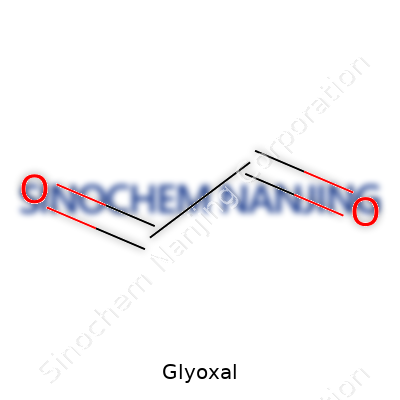
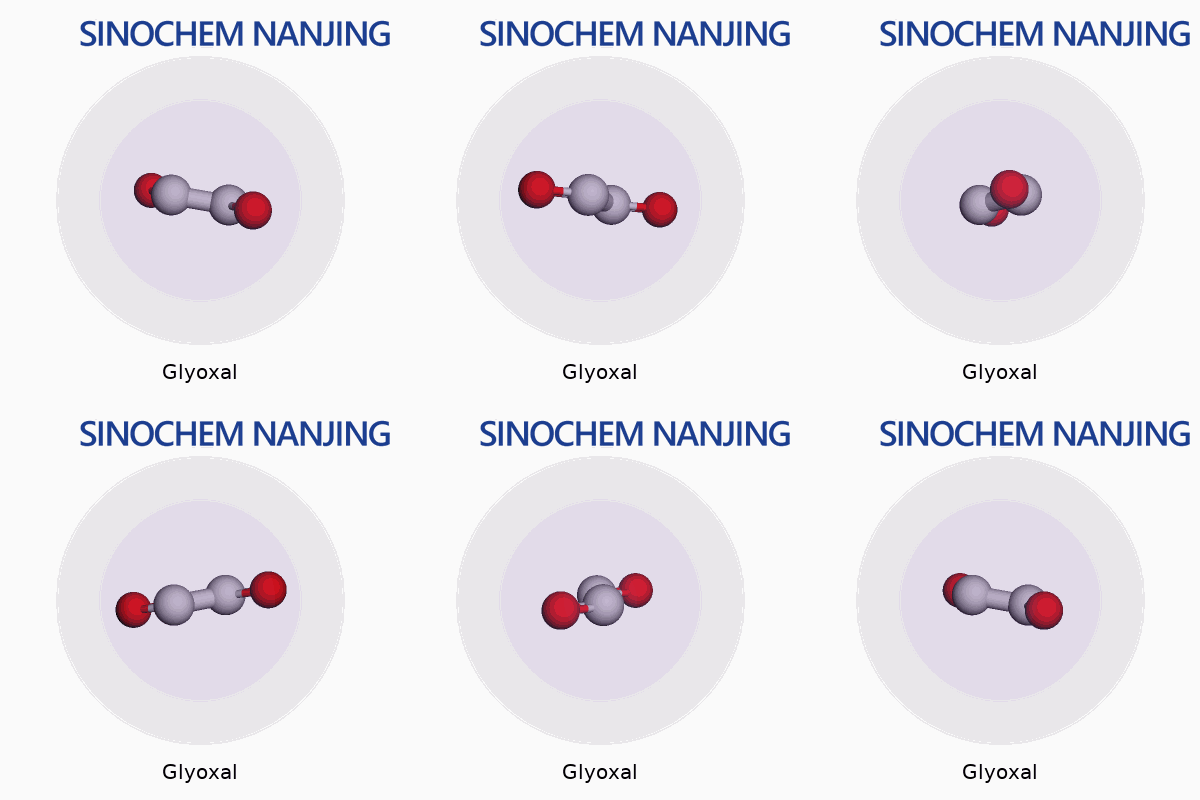
| Names | |
| Preferred IUPAC name | ethane-1,2-dial |
| Other names |
Ethanedial Oxalaldehyde Glycocoll Dialdehyde |
| Pronunciation | /ˈɡlaɪ.əks.æl/ |
| Identifiers | |
| CAS Number | 107-22-2 |
| Beilstein Reference | 1209226 |
| ChEBI | CHEBI:17497 |
| ChEMBL | CHEMBL1387 |
| ChemSpider | 767 |
| DrugBank | DB09450 |
| ECHA InfoCard | echa.europa.eu/infocard/100.001.099 |
| EC Number | 203-821-4 |
| Gmelin Reference | 63206 |
| KEGG | C00792 |
| MeSH | D006034 |
| PubChem CID | 780 |
| RTECS number | MF1400000 |
| UNII | 6U90RUE4QZ |
| UN number | UN1113 |
| CompTox Dashboard (EPA) | DTXSID1020737 |
| Properties | |
| Chemical formula | C2H2O2 |
| Molar mass | 58.04 g/mol |
| Appearance | Yellow liquid |
| Odor | Pungent |
| Density | 1.265 g/cm³ |
| Solubility in water | Miscible |
| log P | -1.16 |
| Vapor pressure | 13 mmHg (20°C) |
| Acidity (pKa) | 13.6 |
| Basicity (pKb) | 13.57 |
| Magnetic susceptibility (χ) | -29.3e-6 cm³/mol |
| Refractive index (nD) | 1.384 |
| Viscosity | 5 mPa·s (25 °C) |
| Dipole moment | 0 D |
| Thermochemistry | |
| Std molar entropy (S⦵298) | 108.6 J·mol⁻¹·K⁻¹ |
| Std enthalpy of formation (ΔfH⦵298) | −192.8 kJ/mol |
| Std enthalpy of combustion (ΔcH⦵298) | -878.6 kJ/mol |
| Pharmacology | |
| ATC code | D08AX06 |
| Hazards | |
| Main hazards | Harmful if swallowed or inhaled, causes skin and serious eye irritation, may cause allergic skin reaction. |
| GHS labelling | GHS02, GHS05, GHS06, GHS08 |
| Pictograms | GHS05,GHS07 |
| Signal word | Warning |
| Hazard statements | Hazard statements": "H302, H315, H317, H318, H331 |
| Precautionary statements | P261, P280, P301+P312, P302+P352, P305+P351+P338, P308+P313 |
| NFPA 704 (fire diamond) | 2-2-0 |
| Flash point | > 68 °C |
| Autoignition temperature | 212 °C |
| Explosive limits | Explosive limits: 2.8–21.5% |
| Lethal dose or concentration | LD50 oral rat 3300 mg/kg |
| LD50 (median dose) | LD50 (median dose): 3300 mg/kg (oral, rat) |
| NIOSH | MU1225000 |
| PEL (Permissible) | PEL (Permissible Exposure Limit) of Glyoxal: "0.1 mg/m³ (inhalable fraction and vapor) as an 8-hour TWA (ACGIH - TLV) |
| REL (Recommended) | 0.1 mg/m³ |
| IDLH (Immediate danger) | 500 mg/m3 |
| Related compounds | |
| Related compounds |
Glycolaldehyde Glyoxylic acid Ethylene glycol Methylglyoxal |



