Formaldehyde: More Than Just a Chemical
Historical Development and Changing Perspectives
Formaldehyde holds a special place in industrial chemistry, tracing its roots back to the 19th century. People started paying attention when chemists like August Wilhelm von Hofmann discovered it during experiments with methanol oxidation. Over time, labs and factories scrambled to put this reactive gas to work. Industry built entire processes around it, especially with the rise of plastics and textiles in the early 1900s. Years later, society woke up to the downside: not every useful substance comes without strings attached. While businesses kept ramping up production, research began drawing clear lines between exposure and health risk. Through most of the 20th century, calls for tougher rules about how factories release formaldehyde and how workers handle it got louder, often backed by folks whose lives were changed by long-term contact.
Product Overview and Where It Lands in Everyday Life
Walk into almost any building from the last fifty years and there’s a good chance you’ll bump into formaldehyde. You see it playing a big role in everything from construction materials like plywood and particleboard to insulation, glues, and even fabric finishes. It’s not just big industry relying on this aldehyde. Health care makes use of it as a preservative and disinfectant, and even some beauty products have found ways to sneak in tiny amounts. Many in the public still don’t realize how deep its roots go into modern life. At the same time, watchdogs and researchers keep sounding alarms wherever uses could threaten indoor air quality or occupational safety.
Physical and Chemical Properties: Why Chemists Care
Formaldehyde is a colorless gas with a pungent, unforgettable odor, soluble in water, with a boiling point around -19 Celsius, which sounds strange to anybody who doesn’t regularly fill scientific glassware. Its high reactivity as an aldehyde gives it prime status among organic compounds—people respect how easily it forms cross-links in polymers and proteins, letting it tie up molecules in ways other chemicals can’t always manage. Some chemical engineers admire it for those sharp reactions; others eye it nervously, knowing it lingers in the air and easily irritates mucous membranes. Lab veterans share stories of opening a fresh container and that sting in the nose reminding them just how potent the stuff is.
Technical Specs, Labeling, and What Users Should Know
Labels on commercial formaldehyde, or its solutions like formalin, often must clearly show its concentration—usually given as percent by weight of formaldehyde, sometimes combined with methanol to slow down polymerization. Every worker around the stuff gets drilled on how every label must show its volatility, flammability, and health hazard icons. Safety Data Sheets dive much deeper, but even without cracking one open, seeing a container stamped with the names “formalin,” “methylene glycol,” or “oxymethylene” is enough to remind someone to treat it with respect. Regulators from different countries land on similar conclusions: communicate the dangers clearly so anyone using the material can make smart choices.
How It’s Made: Preparation and Industrial Realities
Formaldehyde production usually starts with simple feedstocks like methanol, running it across metal catalysts at high temperature. Watching the setup, you notice the focus on precision—an imbalance causes little, harmful byproducts. The process demands control because of both the explosive risk and the health concerns surrounding the resulting gas. Facilities keep extra sensors and clean-up units in place, both to keep workers safe and to avoid putting excess emissions into the air. Stories from people involved in production usually come back to one point: the gains from output can vanish quickly if a leak goes unchecked or an emission breach happens. In many regions, tough standards for emissions force plants to invest in scrubbers, monitoring devices, and rigorous maintenance.
Chemical Reactions and Modifications: A Building Block for Modern Materials
Chemists love talking shop about all the things formaldehyde can do. Its double-bonded oxygen and reactive hydrogen make it handy for synthesizing resins such as urea-formaldehyde and phenol-formaldehyde, which show up everywhere from molded plastics to adhesives. Lab notebooks fill up quick with all the tweaks: reacting with ammonia to yield hexamethylenetetramine or condensing with phenols to form tough, heat-resistant polymers. Biological labs trust formaldehyde to cross-link proteins and preserve tissues, a process that has helped science understand human anatomy for generations. For each major process, there’s a stack of modifications and special conditions chemists need to manage both the yield and purity. It’s hard not to marvel at the tangle of possibilities, but also at the legacy of side-effects and waste that people now have to handle.
Synonyms, Product Names, and Why They Matter
Names like “formalin” or “formol” pop up in scientific and commercial language, often to describe solutions of formaldehyde in water, sometimes with methanol added. “Methylaldehyde,” “methylene glycol,” and “oxymethylene” find their way into technical papers. Why care about all these names? For one, labels and safety documents don’t always agree, and that can confuse users or researchers in a hurry. Over the years, several major incidents traced back at least partly to people missing the link between these synonyms and the risks that come with each form. For folks who use chemicals every day, paying attention to the fine print on the label can be the difference between routine handling and a hard lesson in workplace safety.
Safety and Operational Standards: Walking the Line Between Utility and Risk
Dealing with formaldehyde as a chemical professional means following a steady drumbeat of rules and best practices. Regulatory standards like OSHA, NIOSH, and international agreements have grown stricter as new science emerges. Protective gloves, face shields, fume hoods, and good ventilation move from nice-to-haves to must-haves. Many labs and factories also back up these physical controls with rigorous training—nobody wants to see another case of chemical-induced asthma or skin sensitization. Modern safety education pushes the limits of what’s feasible, trading off between efficiency and health. The specter of chronic effects and cancer risk keeps communities demanding stronger monitoring and faster response to spills. Stories circulate about plant upgrades, near-misses, and lessons learned; they all reinforce the idea that one careless step is too many.
Application Area: Beyond Manufacturing Floors
Formaldehyde shows up wherever materials need to be tough, durable, or preserved long-term. In the building trades, it gives engineered wood its staying power, and in clothing, it delivers easy-care features. Healthcare and mortuary sciences turn to it as a time-tested preservative. People designing consumer products walk a tightrope: they want the performance formaldehyde-based resins deliver, but they battle pushback on emissions from indoor products. Regulatory efforts, especially in North America and Europe, spawn waves of product redesigns and push research into safer alternatives. My own brushes with formaldehyde in lab settings drove home how careful you need to be, not just for yourself, but for everyone downwind of your workspace.
Research and Development: Searching for Safer Paths
A lot of good minds worldwide are trying to rethink how, where, and even if formaldehyde gets used in new products. The push started gaining eager followers as evidence linked lower-level exposures to health issues, especially in tightly sealed buildings. Industrial scientists have worked to cut release levels, driven both by regulations and by fear of lawsuits. New resins with lower emissions get headlines, and biochemists have started collaborating with engineers to invent alternatives that offer comparable toughness. The plastics industry feels the heat from public pressure, funding studies to show they can adapt. Veteran chemists sometimes grumble that “the new stuff just doesn’t work the same,” but the drive for safer materials isn’t going away. It’s clear that market acceptance hinges on proving not just that an innovation works, but that it does so with less risk to people who use, build, or dispose of it.
Toxicity Research and What’s at Stake
The health side of formaldehyde’s story can’t be ignored. Decades of animal studies and reports from exposed workers tie it to everything from upper respiratory irritation to increased cancer risk. WHO and IARC have both sounded alarms about formaldehyde as a known human carcinogen. It seems every round of new research tightens the links between even modest exposures and serious outcomes like leukemia or nasopharyngeal cancer. Workers, students, and homeowners alike pay attention when news spreads of new findings. Air testing at schools and offices often triggers expensive renovations, and for good reason—the cost of prevention always dwarfs the price of failing to act. A lot of folks remember relatives or friends whose stories became cautionary tales about why stronger exposure controls matter far beyond the walls of any one lab or plant.
Future Prospects: Shifting Focus and Sustainable Solutions
Formaldehyde’s future divides opinions. On one side, established uses seem tough to replace, especially for building materials and adhesives. On the other, governments, non-profits, and consumer groups keep pushing toward greener and safer alternatives. Progress keeps coming—new catalysts for production with fewer emissions, resin systems that promise almost zero off-gassing, and construction standards that reward innovation. Some countries expect to lower exposure restrictions even more as monitoring and reporting get easier. Next-gen research hopes to design molecules that match the strengths of formaldehyde-based products but leave out the molecular “gotchas” that turn up toxic. My own experience in the lab taught me that change doesn’t always come easy in chemistry, but it can’t be blocked by nostalgia for old ways. With stakes as big as worker safety and public health, finding the right balance isn’t a technical question alone; it asks everyone in the chain—from scientists and manufacturers to end-users—to push past “good enough” and find solutions worth trusting.
What is formaldehyde used for?
Where Everyday Life Meets Chemistry
Walk through any hardware store, and you’ll spot paint, glues, or pressed wood products. Many of these carry a connection to formaldehyde—this small, colorless gas created a big mark on the products we use daily. Carpentry brings back memories for me: the familiar scent of new particle boards in newly built cabinets, that faint giveaway that formaldehyde-based resins are hard at work keeping things together.
Holding Worlds Together
Resins made from formaldehyde bond hardwood floors, kitchen counters, and bookshelves. Wood panels and cabinets last longer and hold up to years of use thanks to these chemicals. Job sites depend on strong adhesives, particularly in housing construction, and yet, this strength has a cost. Releases from these building materials linger in indoor air, and not everyone feels comfortable with the thought of chemical off-gassing at home.
Keeping Medical Labs and Morgues Running
Formaldehyde serves in laboratories and healthcare, particularly for preservation. Pathologists rely on this chemical to keep samples from breaking down, giving enough time to study tissue under a microscope. Biology classrooms sometimes fill with its sharp scent during dissections. That strong odor stayed with me throughout science class—never quite pleasant, but unmistakably tied to scientific work and learning.
In the Fabric and Personal Care Worlds
If you ever spilled wine on a new shirt and found the stain brushed off more easily than expected, there’s a chance formaldehyde was involved. Some fabrics undergo treatment to boost wrinkle resistance or stain release. Formaldehyde-based finishing can help clothes hold a neat appearance or keep bedding feeling crisp. Hair salons make use of keratin treatments with trace formaldehyde to lock hair shape, though recent concerns put this practice under greater scrutiny.
Facts and Concerns That Can’t Be Ignored
With all these uses, safety matters. Health agencies like the U.S. Environmental Protection Agency and the World Health Organization recognize formaldehyde as a human carcinogen. People exposed regularly, such as workers in plywood factories or funeral workers, run a higher risk of experiencing breathing problems or even developing cancer. Studies show children are more sensitive to indoor air contaminants; policies need to focus on keeping air clean where kids live and learn.
Seeking Safer Paths Forward
Better ventilation and switching to low-formaldehyde or formaldehyde-free products lower exposure risks. Manufacturers have started offering pressed woods with alternative resins, and stricter labeling rules mean buyers can make informed decisions. Routines I use—like opening windows in new houses or checking product labels—reflect a growing awareness. Markets respond when people look for safer options. It helps to push for reforms in workplace safety and more research into non-toxic substitutes.
Everyday Choices Make a Difference
We’re surrounded by products with deep chemical histories. Understanding where formaldehyde shows up lets people have real control over their environments. Strong regulation, careful choices, and better technology together cut down on risks, adding layers of safety without losing the strengths these materials offer. Small shifts—wearing a mask on the job, airing out fresh construction, and asking what’s in your furniture—add up, keeping families safer and letting the best parts of progress shine through.
Is formaldehyde dangerous to health?
Many Products, One Chemical
I’ve walked through aisles of furniture stores and new home developments smelling that sharp, odd note in the air. That’s usually formaldehyde. It shows up not only in pressed wood, plywood, and insulation, but also in some cleaning and personal care items. Formaldehyde also lingers at low levels in cigarette smoke and car emissions. The chemical keeps things looking new, prevents bacteria, and glues wood products together. Its usefulness means it’s everywhere, and that’s part of the problem.
Health Hazards: Not Just a Science Class Warning
I’ve read my share of federal health guidelines and they don’t mince words about formaldehyde. Breathing in even small amounts for long stretches can leave a scratchy feeling in your nose and eyes. Some people have told me about headaches and wheezing after renovating a room filled with new cabinets. The U.S. National Toxicology Program classifies formaldehyde as a known human carcinogen. Studies have linked it to higher risks of cancers like nasopharyngeal cancer and leukemia, especially for workers confined to poor ventilation or frequent exposure in labs and funeral homes.
Short-term exposure irritates and inflames airways. Children, older adults, and people with asthma report symptoms at even lower levels than average. Teachers and students in portable classrooms, hospital workers, and DIY home renovators often describe symptoms they can’t shake until they leave the building. A true story: I once helped a friend lay engineered wood flooring. By the end of the day my eyes burned, and hers watered almost nonstop. We brought in a fan and flung open every window. That’s not a professional fix, just a desperate one.
What Can Households Do?
It’s tough to avoid a substance woven into so many everyday items. Some strategies do help. I advise buying wood products labeled as “low-formaldehyde” or bearing the CARB Phase 2 or NAF (No Added Formaldehyde) mark. New furniture and flooring releases the most in the first few months. Ventilation matters: fresh air, opened windows, dehumidifiers, and air purifiers make a difference. Humidity and heat boost formaldehyde emissions. So does keeping windows shut tight for months. Simple steps like sealing particleboard edges and choosing solid wood instead of cheap plywood cut down on that chemical stink.
Tough Choices for Industry
Manufacturers face a familiar crossroads. There’s a long tradition of using formaldehyde because it works and it’s cheap. Scrap those adhesives, prices jump up, and some products don’t perform as well. Still, stricter rules from governments worldwide keep mounting. Europe and California both require lower emissions. Many companies now pour research into safer glues, better coatings, and techniques for removing leftover gas before products hit the market. That’s not charity—it’s responding to medical research and public pressure. Even with costs in mind, industry can swap out the riskiest ingredients.
Lasting Impact and Moving Forward
Ignoring the health risks isn’t a smart bet. One study published by the CDC found higher rates of asthma and respiratory trouble in kids exposed in their homes. You can see the pattern repeat across different countries and occupations. Eliminating formaldehyde everywhere won’t happen overnight, but we have enough knowledge to limit exposure. Information makes a difference. Every time a household, builder, or manufacturer takes steps to limit formaldehyde, we all breathe a bit easier, and that isn’t something to shrug off.
Where is formaldehyde commonly found?
Formaldehyde in Homes and Furniture
Step into most homes, and you’ll probably find formaldehyde where you least expect it. Pressed-wood products such as particleboard, plywood, and medium-density fiberboard all use adhesives containing formaldehyde. These materials help keep furniture affordable and sturdy, which explains why most cabinets, desks, bookshelves, and even new flooring carry trace amounts. Though the odor is noticeable in new products, outgassing continues for months or even years after installation. It’s easy to underestimate these low, steady exposures, but studies tie indoor air contamination to respiratory problems and increased asthma symptoms, especially in kids. California took the lead in setting tough standards for formaldehyde emissions in wood products, pushing manufacturers to rethink how they source and finish products.
Workplace Exposure: Labs, Factories, and Salons
Factories that produce resins, fertilizers, or coatings see a lot of formaldehyde in the air. It’s still used to preserve biological specimens, making anatomy labs and funeral homes among the places where workers need the most protection. Even the beauty industry faces exposure risks—many hair-straightening products release formaldehyde when heated. The Occupational Safety and Health Administration (OSHA) takes reports of nose and throat irritation, watery eyes, and worse lung problems seriously at these jobs. Some businesses have moved to safer formulas, but occupational monitoring and workplace ventilation make a big difference.
Formaldehyde in Everyday Products
Plenty of household and personal care products boast long shelf lives—laundry cleaners, disinfectants, cosmetics, and glues last longer because formaldehyde keeps bacteria and mold at bay. Nail polishes, eyelash glue, and even shampoos sometimes contain it. Ingredient lists hide it behind names like formalin, methylene glycol, or preservatives that break down and release the gas over time. It’s a bit of a chemical chameleon. Several countries push for tighter disclosure and label reform, giving shoppers more say in what they bring home. Still, not every company discloses ingredients well enough for consumers to make smart choices.
Hidden in Healthcare and Schools
Formaldehyde helps hospitals sterilize equipment and preserve tissue samples, especially where infection control matters most. School science labs can have high exposure risk, since preserved specimens and textbooks or shelving made of pressed wood give off vapors too. Ventilation systems, storage solutions, and updated teaching materials matter a lot in health and safety planning for kids, teachers, and technicians. I remember walking into old science labs in college, and the sharp smell hit before the lesson even began. That experience left a mark—you never quite forget it.
How Communities Can Tackle Exposure
Poor ventilation is a huge factor. Airing out new furniture, choosing low-emitting building materials, and using air purifiers pay off in better health. Shoppers who read labels and push for honest disclosure can nudge stores and manufacturers to shift habits. At work, asking about air monitoring and protective equipment lays the groundwork for safer jobs. Federal and state agencies track exposures and train inspectors, but personal action—opening windows in new spaces, skipping high-formaldehyde goods—helps at home. The science on formaldehyde’s links to allergies, cancer, and long-term illness keeps building. Open information and simple precautions can cut down on risk for everyone.
How can exposure to formaldehyde be reduced?
Why Formaldehyde Matters in Daily Life
Every time I smell that “new” scent from pressed wood furniture or fresh paint, I think about what’s floating in the air. Formaldehyde, found in building materials, cleaning products, and even soft blankets, doesn’t always give a warning sign. Long-term contact doesn’t just make eyes and throats itch—it’s linked to breathing problems and, over the years, a higher risk of cancer. No family wants that risk in their living room.
Spotting Sources Close to Home
Start with the basics. Wood products made with glues, cabinets, or even laminate flooring release fumes. Paints, some permanent-press fabrics, and nail polish add to the mix. It’s surprising how many items in a room can leak low-level formaldehyde for months, sometimes even years. There’s no way to see it, but families breathe it in with every deep sigh.
What Works for Lowering Exposure
I grew up with open windows, not just for fresh air, but to dry out the house. Good ventilation slices the amount of formaldehyde in a room. Cracking a window for an hour or two, using a powerful kitchen fan, or running a bathroom vent pulls contaminated air outside. Air cleaners with a “formaldehyde-specific” filter make a difference, especially in rooms where people spend most hours.
Shopping choices change the story. I scan furniture tags for “low-emitting,” “CARB Phase 2 compliant,” or GREENGUARD certification. Companies have learned how to build wood pieces and floors with adhesives that lock in more of the gas. If it fits the budget, I pick solid wood furniture and natural fibers. Each purchase becomes a vote for healthier products.
Changing Habits at Home
The first weeks after bringing anything new home—furniture, carpet, curtains—matter most. If weather cooperates, I leave doors and windows open to air things out. Heat and humidity speed up off-gassing, so in muggy months, I watch out for heavy, sweet smells. I let store-bought products fully dry or cure in the garage or on the porch, not straight in the playroom.
Cleaning doesn’t have to mean pouring on the chemicals. I wash new clothes and bedding before first use. I stick with gentle, fragrance-free cleaners. By trimming back on scented candles and air fresheners, I keep the air from getting overloaded with new chemicals on top of what’s seeping from building materials.
Pushing for Safer Spaces
Schools, offices, and rental units all benefit from tighter rules. California’s standards for pressed wood products have forced manufacturers to innovate, setting an example for the rest of the country. More people speaking up to landlords, store managers, and local officials can keep safer products at the front of the shelf. Community groups and health organizations translate scientific warnings into simple advice families can trust.
Fighting formaldehyde isn’t one person’s job. It takes motivated parents, informed shoppers, and responsible companies. Every decision chips away at a problem that hides in plain sight, creating homes we breathe easy in for years to come.
What are the symptoms of formaldehyde exposure?
Spotting the Warning Signs
Formaldehyde hangs around in more everyday places than most of us realize. It’s in some pressed-wood furniture, certain cleaning products, and even cigarette smoke. If you’ve ever walked into a room that smells sharply of fresh paint or new carpet, that throat-tightening odor can sometimes be formaldehyde. The body reacts fast, often starting with the eyes, nose, and throat. A raw, burning sensation creeps in, like when cutting onions but more stubborn. Sometimes it feels as though every breath dries out your throat and makes your nose itch.
Everyday Symptoms: More Than Just Irritation
Most folks face symptoms pretty fast if they hit a higher concentration. The eyes serve as the first red flag: watering, burning, almost like allergies on overdrive. Once, while helping a friend renovate an old rental, my own eyes stung for hours after we ripped up worn-down carpet. The runny nose and constant sneezing soon followed. Some people feel headaches that come and go, with a fogginess that lingers long after leaving the room. Shortness of breath sometimes joins in, making simple tasks uncomfortable.
Skin can take a beating too, especially if hands or arms touch products that let off formaldehyde. Redness, itching, and rashes show up. It doesn’t take long; standing in a musty storage area at a thrift store gave me itchy palms I can’t forget. Kids and folks with asthma seem to react hardest. Asthmatic wheezing can ramp up after being around treated building materials or fresh laminate. A child exposed for just a couple hours at a neighbor’s house had a sudden asthma flare-up, only later traced back to new flooring.
Longer Exposure Brings Bigger Problems
Ongoing contact with formaldehyde drags side effects into more serious territory. Beyond simple irritation, people can develop chronic coughs or sinus infections. The World Health Organization calls formaldehyde a human carcinogen. That claim carries weight, supported by research linking long-term contact with higher risks for certain cancers, especially in workplaces where ventilation falls short. Nose and throat cancers stand out in the data. This isn’t just about allergy-like discomfort — it’s about preventing lasting, even deadly health risks.
Ways to Protect Yourself and Your Family
Every home and office can lower its formaldehyde risk without much hassle. Choosing solid wood furniture instead of pressed-wood keeps levels way down. If new cabinets or floors just arrived, give the place lots of fresh air for several days before settling in. Plants like spider plants or Boston ferns, while no cure-all, can help pull certain chemicals from the air. For anyone remodeling or moving, check product labels for certifications like GREENGUARD or CARB Phase 2, which mark lower formaldehyde emissions. Rental properties can pose hidden risks — take a walk-through and sniff around before signing. If a strong odor refuses to fade, ask the landlord to test the air or provide a report.
I’ve found that even small room air purifiers, with filters meant for volatile organic compounds (VOCs), catch enough of the hard stuff to make breathing easier at home. Some offices set up air monitors to keep check. The EPA says staying below 0.1 parts per million in indoor air keeps most people safe from nasty side effects. Everyone should know what formaldehyde feels like and take those first warning signs seriously. Not just for peace of mind, but for long odds of keeping future health problems off the table.
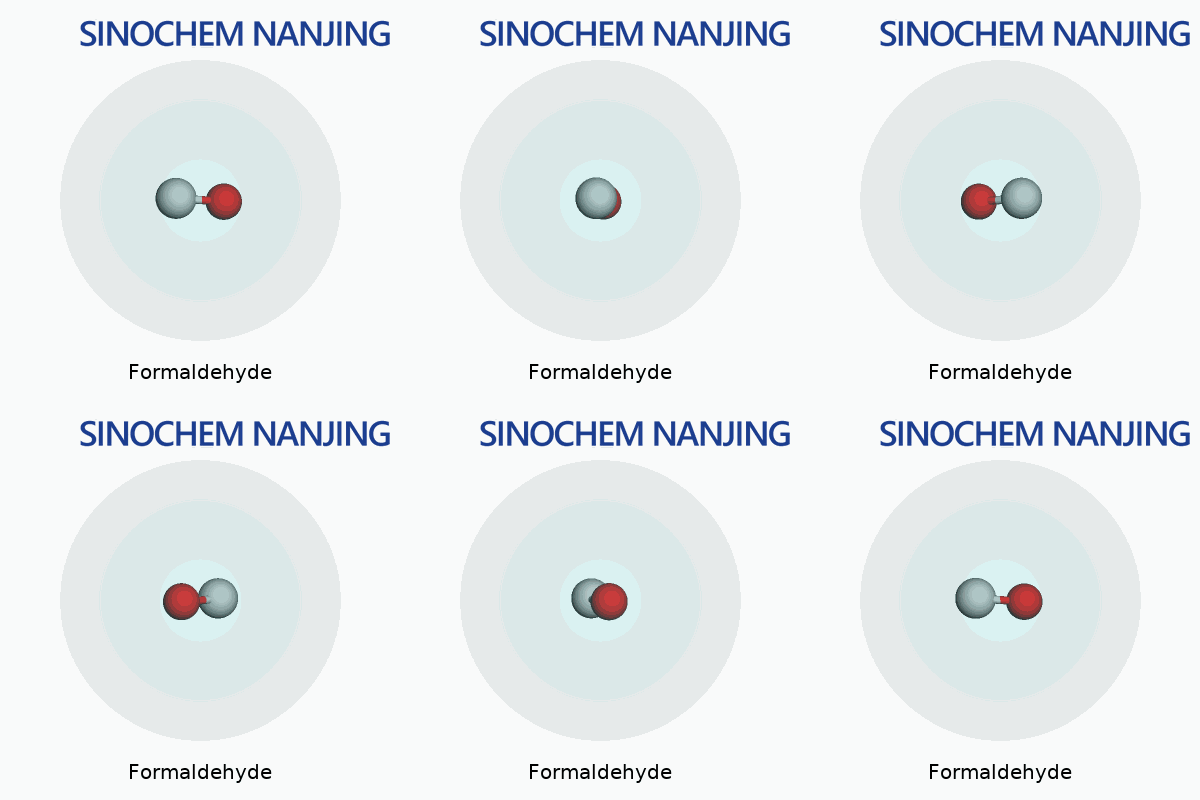
| Names | |
| Preferred IUPAC name | Methanal |
| Other names |
Formalin Methanal Methyl aldehyde Methylene glycol Oxymethylene Oxomethane |
| Pronunciation | /fɔːrˈmæl.dəˌhaɪd/ |
| Identifiers | |
| CAS Number | 50-00-0 |
| Beilstein Reference | 358715 |
| ChEBI | CHEBI:16842 |
| ChEMBL | CHEMBL1166 |
| ChemSpider | 715 |
| DrugBank | DB03815 |
| ECHA InfoCard | 03-2119457550-50-0000 |
| EC Number | 200-001-8 |
| Gmelin Reference | 877 |
| KEGG | C00153 |
| MeSH | D005759 |
| PubChem CID | 712 |
| RTECS number | LP8925000 |
| UNII | W1OKI0DK5A |
| UN number | UN1198 |
| Properties | |
| Chemical formula | CH2O |
| Molar mass | 30.03 g/mol |
| Appearance | Colorless gas with a pungent, suffocating odor |
| Odor | Pungent, irritating |
| Density | 0.815 g/cm³ |
| Solubility in water | Miscible |
| log P | -0.78 |
| Vapor pressure | 530 hPa (20 °C) |
| Acidity (pKa) | 13.27 |
| Basicity (pKb) | 13.3 |
| Magnetic susceptibility (χ) | −19.5×10⁻⁶ |
| Refractive index (nD) | 1.368 |
| Viscosity | 0.6 mPa·s |
| Dipole moment | 2.33 D |
| Thermochemistry | |
| Std molar entropy (S⦵298) | 109.2 J·mol⁻¹·K⁻¹ |
| Std enthalpy of formation (ΔfH⦵298) | -115.9 kJ/mol |
| Std enthalpy of combustion (ΔcH⦵298) | -563.5 kJ/mol |
| Pharmacology | |
| ATC code | V03AB01 |
| Hazards | |
| GHS labelling | GHS02, GHS05, GHS06, GHS08 |
| Pictograms | GHS02,GHS06,GHS08 |
| Signal word | Danger |
| Hazard statements | H301 + H311 + H331, H314, H317, H341, H351, H370 |
| Precautionary statements | P210, P233, P260, P280, P301+P310, P303+P361+P353, P304+P340, P305+P351+P338, P308+P311, P312, P330, P342+P311, P370+P378, P403+P233, P501 |
| NFPA 704 (fire diamond) | 3-2-0-A |
| Flash point | -92 °C |
| Autoignition temperature | 300 °C |
| Explosive limits | 7% (Upper), 7% (Lower) |
| Lethal dose or concentration | LD₅₀ (oral, rat): 100 mg/kg |
| LD50 (median dose) | LD50 (median dose) of Formaldehyde: 100 mg/kg (oral, rat) |
| NIOSH | FAZ00 |
| PEL (Permissible) | 0.75 ppm |
| REL (Recommended) | 0.1 ppm |
| IDLH (Immediate danger) | 20 ppm |
| Related compounds | |
| Related compounds |
Methanal Formalin Paraformaldehyde Trioxane Methylal Methanediol |



