Ethylbenzene: A Closer Look at a Building Block of Industry
Tracing the Journey: The Historical Roots of Ethylbenzene
Ethylbenzene has served the petrochemical sector for close to a century. Back in the early 1920s, the race to supply raw materials for fuels and plastics gained momentum. Refineries, seeking to make the most out of every barrel of crude, found in ethylbenzene a straightforward, high-volume offshoot of benzene alkylation. Over the years, the path from coal tar to catalytic reforming and then to more refined petrochemical processes reflected the hunger for this clear liquid. As time moved on, the boom in the plastics industry meant more demand, pushing chemists and engineers to optimize each step, from feedstock sourcing all the way to the cracking units. Times have changed, but the footprint of ethylbenzene production still shapes the landscape in regions with deep ties to synthetic chemistry and the energy economy.
A Familiar Character: Product Overview
Most people never see ethylbenzene outside labs or industrial plants, yet its presence forms the backbone of a range of products we use every day. Ethylbenzene mostly ends up as styrene, where it lays the groundwork for the massive volume of polystyrene plastics and resins. Walking through any electronics store or packaging warehouse, you’re likely surrounded by materials that owe their form to ethylbenzene’s unique properties. Its use isn’t just about volume—it’s also about how reliability and economic efficiency intersect in industrial chemistry. The industry has stuck with ethylbenzene because, pound for pound, it keeps up with shifting demands while holding costs in check.
The Nuts and Bolts: Physical and Chemical Traits
Ethylbenzene doesn’t hide who it is. At room temperature, it shows up as a clear, colorless liquid with a slightly sweet aroma. With a boiling point of around 136°C and a melting point close to -95°C, it resists freezing in most operational settings. Ethylbenzene’s density stays lower than water, and its volatile character keeps processing designers on guard. It dissolves in organic solvents but shuns water. In atmospheric conditions, it evaporates fairly quickly, enough to be a headache in closed or poorly ventilated spaces. From the lab, I recall the importance of keeping containers tightly sealed and making sure that every fume hood ran smoothly. You never want an uncontrolled build-up, since volatility and reactivity ramp up with heat or sparks.
Keeping Score: Technical Specifications and Labeling
Industrial users rely on clear, regulated standards for purity and composition, and ethylbenzene is no exception. Purity runs high—anywhere from 99% and up—for polymer-grade applications. Impurities like benzene, toluene, and xylene stay tightly controlled due to potential interference in downstream polymerization. Technical sheets show concentration by gas chromatography, sometimes including water and sulfur content as markers. Packaging must include warning labels in line with international agreements on hazardous materials; these are not bureaucratic hurdles but rather practical shields for workers, as even one missed detail could cause a hazard.
Creating the Molecule: Prep Methods and Innovations
The pathway from benzene and ethylene to ethylbenzene relies on robust catalysts and tight process control. Over the years, the evolution from old-school Friedel–Crafts methods with aluminum chloride to modern zeolite-based catalysts marked a leap forward in selectivity and efficiency. These newer processes limit waste and by-products, a big win both for economics and for the plant’s environmental footprint. My own stint shadowing a plant chemist hammered home the difference a tweak can make—minor shifts in temperature or catalyst strength could boost yield or cut costs by meaningful margins. Tech teams now chase “green” tweaks, including energy recovery and minimized emissions, part of a larger race for sustainable chemistry.
Reactivity and Tweaks: Chemical Reactions and Modifications
Ethylbenzene stands out for its relative stability under normal use, but in the world of chemistry, no molecule stays static in the face of heat or strong reagents. Subject it to dehydrogenation, and you get styrene—one of the world’s most heavily produced monomers. Chemists also talk about ring and side-chain oxidations, producing compounds used in surfactants, drugs, and specialty resins. What keeps it popular is not just a low price tag or ease of supply, but how predictably it hands off its ethyl group or aromatic core in the right setting.
In the Name: Synonyms and Common Product Names
Anyone navigating the supply side or research benches knows this molecule by several names. Ethylbenzene is the IUPAC favorite, but older literature and trade references mention "Phenylethane" or less formally "EB." For all the jargon tossed around, it’s always about the same hydrocarbon, recognizable no matter which line of the SDS document you’re reading.
The Line in the Sand: Safety and Operations
Handling ethylbenzene means respecting its health impacts, starting with the risk of inhalation and skin contact. Solvent-like vapors build up quickly, and workers are right to demand strong ventilation and personal protection. Long-term exposure links to dizziness, eye irritation, and, in elevated doses, potential organ damage. The industry response involves engineering controls to limit leaks and routine monitoring to spot hot spots. Fire risk stands out, with ethylbenzene ranking high on flammability charts. Safety standards grew up with bitter lessons learned from past mishaps. Training drills now treat spills or accidental releases with a combination of technical rigor and healthy skepticism—no shortcut ever justifies a gamble with safety gear or established procedures.
Beyond Material: Application Domains
Styrene isn’t the only child of ethylbenzene, though it dwarfs all others in demand. The world of plastics—think insulation, packaging, appliances—leans heavily on styrene-derived materials. Paints, coatings, and synthetic rubber join in as smaller yet still vital consumers. Whenever a process calls for tailored resins or improved thermal performance, legacy chemical companies pull ethylbenzene out of the supply chain. What stands out is the sprawling network that feeds off this one molecule: automotive parts, foam building panels, consumer electronics—countless industries ride the fortunes of ethylbenzene.
Pushing Boundaries: Research and Continuous Improvement
Researchers keep searching for safer, cleaner ways to produce and use ethylbenzene. In the lab, focus gravitates toward better catalysts, improved energy efficiency, and routes that phase out hazardous reagents. Big innovations come slow, but even marginal gains carry real weight for large-scale manufacturers. Investigation into biocatalytic routes or coupled reaction systems could disrupt traditional methods, but scale-up hurdles remain. Environmental impact studies and life cycle assessments pressure producers to look beyond yield and cost, digging deeper into the long-term consequences of persistent production. Each breakthrough, whether in process optimization or exposure monitoring, gets scrutinized for practical impact above all else.
Hard Lessons: Toxicity and Ongoing Risk Assessments
Toxicology reports on ethylbenzene don’t sugarcoat the story. It slips through air and groundwater, and scientists express concern about bioaccumulation and long-term exposure. Animal studies underline risk at high concentrations, with human data pushing regulators to keep close tabs on workplace limits. Regulatory bodies put firm caps on allowable airborne concentrations and water emissions. As a researcher, sitting through safety briefings reveals no tolerance for ambiguity—a little extra caution always beats playing catch-up in the wake of an incident. Efforts to clarify metabolic pathways and chronic effects keep toxicologists busy, and shifting standards often push industry to reformulate processes and reinforce exposure controls.
Turning to the Future: Prospects and Open Questions
Looking ahead, ethylbenzene faces challenges and opportunities as the global push toward sustainability rattles long-standing practices. Demand for plastics still runs high, but environmental and health concerns shape production and disposal methods. Companies scan for alternatives, yet the sheer scale of current ethylbenzene-based supply chains won’t get replaced overnight. The most promising actions come from wringing efficiencies from old formulas: smarter catalysts, closed-loop manufacturing, and lower emission standards. Future generations in chemistry classrooms and boardrooms will debate the role of molecules like ethylbenzene, but right now, it stands as both a case study in industrial adaptation and a touchstone for ongoing innovation. The real test may be how fast chemists, managers, and regulators turn today’s hard-won lessons into tomorrow’s best practices.
What is ethylbenzene used for?
What We’re Really Using Ethylbenzene For
Ethylbenzene doesn’t often make headlines. It’s not a household name, yet everything from a remote control to the foam in a takeout cup owes its existence, in some way, to this compound. Factories all over the world use ethylbenzene every day, mostly to make styrene. That single product fuels a sprawling plastic industry, which makes it worth digging into why ethylbenzene means more than just another long chemical name.
Styrene and Its Everyday Touch
Picture the big box of electronics or the hard plastic toys at the store—there’s a good chance those started with styrene. Most of the ethylbenzene produced goes through chemical reactions to turn into styrene. From that point, companies mold, extrude, and press styrene into all kinds of useful plastics: polystyrene packaging, building insulation, automobile parts, even smartphone cases. Whether it’s an appliance or a lightweight helmet, traces of ethylbenzene’s journey touch the final product.
Industry and Health: What Should We Watch?
Factories handle millions of tons of ethylbenzene every year. The chemical brings obvious benefits, but it also raises questions about safety. Workers who spend years near ethylbenzene can face headaches, dizziness, and ear issues with enough exposure. That information isn’t just tucked away in a safety manual—regulators like the EPA set limits because the risk is real.
Staying safe means monitoring ventilation inside production plants and testing for leaks. Proper storage in tightly sealed tanks and quick responses when things go wrong—these details matter. I’ve listened to stories from plant technicians who treat each valve check and equipment update as a way to protect not just themselves but the people living nearby. There’s pride in not just meeting the letter of the law but doing better, since the chemical doesn’t stay bottled up forever. It can drift into the air or leach into water sources if neglected.
Environmental Pathways and Community Concerns
Communities living near production sites often raise concerns when a new plant goes up. They want health studies, tricky questions answered about long-term effects and possible contamination. And there’s good reason—ethylbenzene can hang around in soil and water longer than many people realize. Routine environmental monitoring can be a real lifeline here. I’ve seen communities come together, pressing local officials and industry leaders for open reports, air sampling, and clearer warning systems. That openness gives people a sense of safety and a way to shape what happens in their own backyard.
Rethinking Plastics and What’s Next
Diving into ethylbenzene brings up a bigger conversation about how the world uses plastic. Single-use wrappers flood landfills, foam trays turn up on beaches. Alternatives such as bioplastics or recycling carry promise, but gaps remain in how well they perform, cost, or biodegrade. Companies and policymakers grapple with whether the answer lies in tighter recycling loops, bans on certain items, or aggressive research into substitutes.
Every product that relies on ethylbenzene represents a trade-off between convenience and long-term impact. Eventually, the way forward comes down to practical choices—making safer workplaces, building trust with communities, and taking honest stock of what ‘disposable’ actually means for the planet’s health.
Is ethylbenzene hazardous to health?
Understanding Ethylbenzene
Ethylbenzene finds itself in cars and homes, riding on fumes from gasoline, paints, and even in glues. The average person might not recognize its name, but most of us cross its path each week. Factories use it to make styrene, a building block of plastics. That link with daily household goods sparks a fair question: what does it do to our bodies?
How It Gets Into Our Bodies
Spending time near traffic or working in industries tied to paint and solvents increases the odds of breathing in ethylbenzene. Those fumes enter the body mainly through our lungs, but skin contact matters, too. Indoor air, especially in poorly ventilated rooms, sometimes carries small amounts. Water and food rarely play a major role, though water sources close to manufacturing plants sometimes test positive.
What the Research Says
Short bursts of breathing air loaded with ethylbenzene can cause symptoms pretty quickly. Eyes, throat, and nose start to feel irritated. On many construction sites, some people complain about headaches or dizziness in enclosed spaces. Health agencies such as the World Health Organization track this chemical closely for those very reasons. According to the U.S. National Toxicology Program, long stretches of high-level exposure raise concerns over hearing loss and effects on the liver and kidneys in animal studies.
Workers in factories that use ethylbenzene typically get regular medical checks, which shows industry knows about the risks. Federal rules in many countries set limits for air levels inside workplaces for a reason. Data collected over decades points to certain risks with constant or heavy contact. Cancer links remain under review. The U.S. Environmental Protection Agency marks ethylbenzene as a possible human carcinogen based mainly on animal results, not direct proof in people. Still, many experts weigh on the side of caution because the stakes involve cancer risk after years of exposure.
Everyday Risk and Real-World Impact
I’ve stood in rooms right after they’ve been freshly painted. The strong chemical smell usually lingers, making some dizzy or even nauseous in minutes. I always found simple steps helped—opening windows or using a fan to blow fumes outside. These fixes bring more comfort than high-tech gadgets. For workers spending eight hours a day with ethylbenzene, the stakes run higher. Wearing a simple mask or keeping up with workplace safety rules helps keep risks down. Nobody should gamble with their health just to finish a shift a little faster.
What Can Be Done?
Picking products that carry less ethylbenzene helps lower contact, but many people don’t get much say in their work environments. Companies have a duty to their employees to provide fresh air, regular breaks, and safety training. Stronger ventilation means less chemical clouding up the space. Everyone benefits when stores and manufacturers phase out chemicals with proven risks and replace them with safer options.
Health experts urge informed choices, not panic. The risks ramp up with repeated or heavy exposure, not an occasional whiff from a new carpet or paint job. Consumers and workers both deserve straight answers. Following established safety limits, pushing for better labeling, and supporting research—all help make workplaces and homes safer for everyone.
What are the storage and handling requirements for ethylbenzene?
Everyday Lessons from Working with Chemicals
Ethylbenzene brings back memories from my early years in a chemical plant, where sharp odors and strict safety protocols became part of daily routine. In those days, I realized that storing and handling something like ethylbenzene is more about protecting people and neighbors than just ticking off regulatory boxes. Anyone trusting a workplace to keep them safe deserves more than shortcuts or guesswork.
Fire Hazards and Real-World Risks
Ethylbenzene’s flammability isn’t theoretical. One misstep with an ignition source could lead to disaster. The National Fire Protection Association rates it as a serious fire hazard. Temperatures above 15°C push it closer to risk. In storage, companies rely on explosion-proof lighting, spark-free tools, and the familiar yellow-and-red signs warning everyone what’s at stake. One worker flicking a lighter near a leaking drum is enough to cause lifelong consequences for families and whole communities.
Storing It Right—Not Just for the Rulebook
Ethylbenzene should stay in tightly sealed, grounded metal containers kept in cool, dry, well-ventilated places. Keeping it away from heat, hot surfaces, and direct sunlight slows down evaporation and reduces the chance of flammable vapors escaping. Stress cracks from weather changes or rough handling should never be ignored; once a drum leaks, the cleanup isn’t simple or cheap. Workers wear chemical-resistant gloves, goggles, and aprons. Proper gear shields against accidental splashes—something I learned after watching someone rush cleanup with bare hands and regret it minutes later.
Health Effects—Why Shortcuts Cost Us Dearly
Inhaling ethylbenzene vapor over time hurts more than people think. Headaches, dizziness, and throat irritation often come before serious lung or kidney trouble. The Centers for Disease Control found higher rates of chronic illness among workers with long-term ethylbenzene exposure without good ventilation or proper respiratory protection. This isn’t distant research; everyone has met someone cleaning a spill or blending paint thinner, brushing off fumes and later struggling with health problems. Installing strong exhaust fans and using closed transfer systems makes a real difference if lives mean more than the cost of a new fan.
Handling Spills—A Test of Preparation
Even with the best storage, spills still happen. Fast action stops the damage from spreading. Employees should have easy access to absorbent materials and chemical spill kits. Regular drills help, because fumbling through a response wastes time during a real emergency. Proper disposal of rags or contaminated soil cuts down on long-term environmental damage. Leaving security to luck creates bad headlines and broken trust in the community.
Moving Forward—Clear Steps Save Lives
Proper labeling, regular inspections, employee training, and up-to-date safety information aren’t bureaucratic red tape—they’re what keep people going home each day in one piece. Ethylbenzene, like many chemicals, doesn’t forgive complacency. It tests a company’s commitment not just to profits, but to its people. Prioritizing safety culture, investing in maintenance, and supporting workers with real knowledge creates a work environment where incidents shrink and confidence grows. Real safety sticks because someone cares, not because someone checked off a form.
What is the chemical formula of ethylbenzene?
Understanding Ethylbenzene’s Formula
Ethylbenzene looks simple on paper but packs a story that touches everything from gas stations to the roots of the chemical industry. The chemical formula for ethylbenzene is C8H10. This structure forms when a benzene ring connects with an ethyl group. You get eight carbon atoms and ten hydrogen atoms working together. I learned this formula the hard way, running my hands through organic chemistry textbooks in college, looking for a clear way to draw and remember it on tests.
Getting Personal with Real-World Impacts
Anybody who’s filled up at a self-serve gas station has probably caught a whiff of the sweet but sharp scent of hydrocarbons. Ethylbenzene, hiding inside gasoline mixtures, gives part of that smell. This compound doesn’t just stay at the pump. The paint on your walls or the plastic objects you use every day often owe their very existence to ethylbenzene. Factories use it to make styrene, which becomes polystyrene foam—think fast-food containers, packing peanuts, or insulation boards. These products help keep goods protected and homes sealed, but few realize the journey started with eight carbons and ten hydrogens.
Health and Environmental Issues
Getting familiar with ethylbenzene also means learning about risk. Studies show it irritates eyes and throat, and long-term exposure connects with liver and kidney damage. Workers in tire plants or paint factories face more of it than most, so good ventilation and protective equipment play a big role. Back in the day, we hardly thought about breathing solvents in a garage or fixing up old paint. Now, the conversation grows more serious, especially as research links chemicals like ethylbenzene with bigger health problems. Air pollution doesn't come just from cars and factories—products inside homes can release volatile organic compounds like this one, which complicates things for local communities.
Fact-Driven Solutions That Matter
Managing exposure means making smart choices, both in industry and at home. Factories now use closed systems, which cut leaks that would have filled the air with fumes. Some companies look at safer substitutes in products, while others invest in personal protective equipment and ongoing health checks for workers. I’ve seen some projects swap traditional paints for those with fewer volatile organic compounds to tackle indoor air pollution. Knowledge becomes power: reading up on product labels or checking Material Safety Data Sheets (MSDS) before starting a home improvement project puts control back in your hands.
Why Chemistry Knowledge Still Matters
Most people rarely stop to think about the molecules behind everyday objects, yet understanding ethylbenzene’s formula—C8H10—unlocks a bigger picture. It shapes industrial strategy, public health decisions, and even choices made in daily life. Direct experience and a close look at data remind us that what seems like a string of letters and numbers can carry a weight that shapes homes, jobs, and the environment. That eight-carbon, ten-hydrogen chain speaks louder than most folks imagine, and recognizing its impact makes real difference in both safety and society.
How should spills or exposure to ethylbenzene be managed?
Understanding the Risks on the Ground
Ethylbenzene often turns up in paints, fuels, and solvents. Anyone who has worked in an automotive garage or construction site knows the smell—it’s sharp and sweet, but that’s not a sign of safety. The stuff isn’t just an irritant—it brings a real threat if spills get ignored or if workers breathe its fumes day in, day out. Short-term exposure usually means headaches, dizziness, or throat irritation. Over long stretches, repeated contact can mess with the nervous system and, according to research, may even increase cancer risk. Take the landmark reviews by agencies like the International Agency for Research on Cancer: they put ethylbenzene in the “possibly carcinogenic” group for humans. Once that red flag goes up, you can’t just shrug it off or treat spills like a mop-and-bucket job.
Simple Steps Work Best in a Crisis
If a drum tips over in a warehouse, scramble time sets in. The first priority: get people clear of the vapors. Open up doors and windows, yank down fans, and give everyone clean air. Those closest need protective gear—a proper cartridge respirator, chemical resistant gloves, goggles. Folk stories about soaking up spills with sawdust can land you in more trouble. Granular absorbents or specialized spill kits work better. Shovel the mess into sealable drums. Professionals know it matters where that waste ends up. Tossing it in regular trash just shifts the danger down the line, maybe into a landfill or water supply.
Controlling the Spread Protects More Than Workers
Some lessons come from bitter experiences. At a paint shop I worked in, a spill once ran down a floor drain before we could stop it—straight into the stormwater system. Monitoring wells later caught traces in nearby ditches. Local groundwater sampling showed the impact could last for years. No one should play roulette with containment. Setting up spill berms or barriers blocks that initial rush; even old towels or sandbags can help in a pinch. After a spill, any lingering vapors might hang around for hours. A proper air monitor or PID sensor tells you when it’s really safe again—better than relying on your nose or waiting until the smell fades.
Education Lowers Risk and Builds Trust
Training doesn’t end with a dusty binder on a shelf. Real preparation means regular drills and up-to-date info. Everyone deserves a heads-up about what ethylbenzene does to the body. Walkthroughs help staff remember not to eat, drink, or smoke in work areas, and why changing clothes after a long shift makes sense. OSHA, NIOSH, and EPA set clear rules here for a reason. Fines don’t change bad habits, but awareness and a sense of personal responsibility do. In the shops that talk things through, new hires ask more questions and seasoned techs lead by example.
Safer Choices for a Healthier Workplace
Look for products with less ethylbenzene—or swap in water-based alternatives where possible. Easy access to clean-up supplies, sturdy PPE, and plenty of fresh air matter most. Those who stack barrels safely and keep labels easy to read help avoid headaches in more ways than one. Prevention wins out over quick fixes every time. Good management of ethylbenzene isn’t just about clearing up messes, it’s about giving everyone the confidence that hazards get taken seriously—before anyone coughs, slips, or regrets coming in.
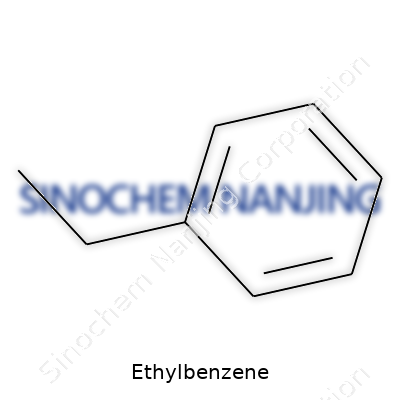
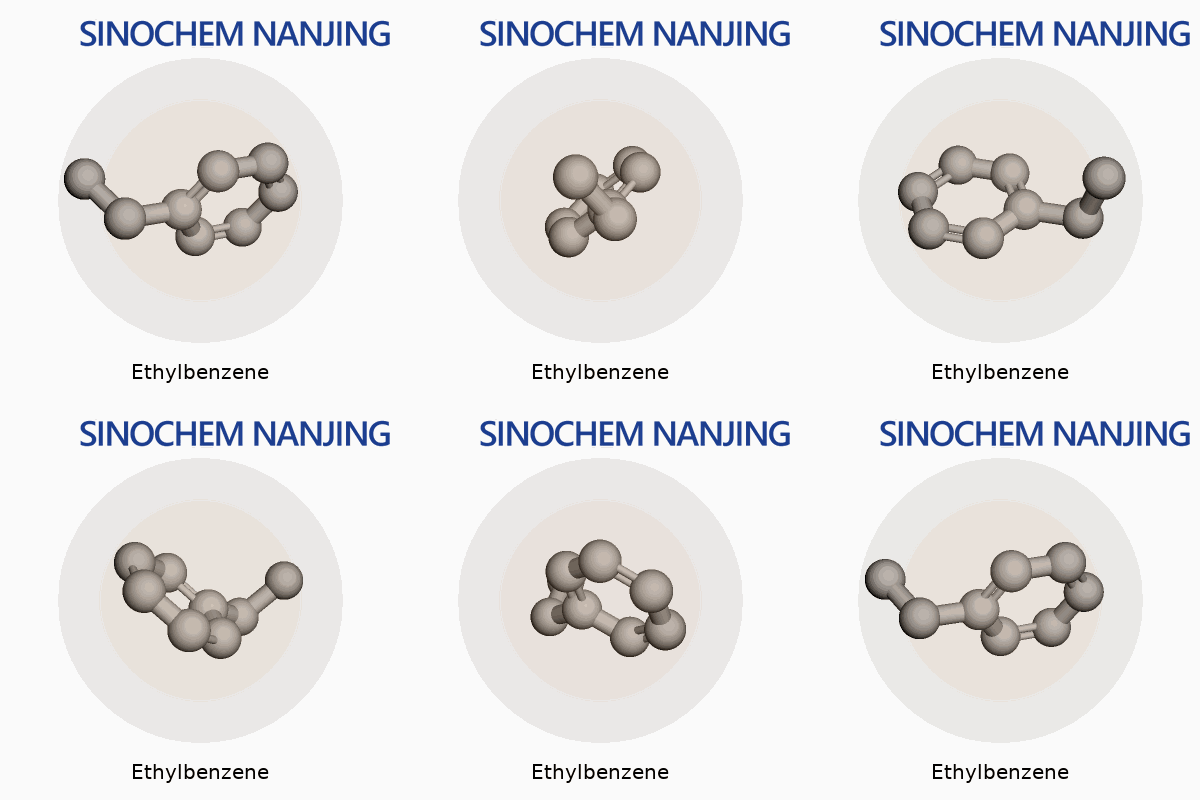
| Names | |
| Preferred IUPAC name | Ethylbenzene |
| Other names |
Phenylethane Ethylbenzol Ethyl-benzene |
| Pronunciation | /ˌiː.θɪlˈbɛn.ziːn/ |
| Identifiers | |
| CAS Number | 100-41-4 |
| Beilstein Reference | 'Beilstein Reference 1902347' |
| ChEBI | CHEBI:18242 |
| ChEMBL | CHEMBL27737 |
| ChemSpider | 7507 |
| DrugBank | DB03366 |
| ECHA InfoCard | 03f95c88-ef13-43fa-b80b-7e6c8379a18f |
| EC Number | 202-849-4 |
| Gmelin Reference | 822 |
| KEGG | C01583 |
| MeSH | D007174 |
| PubChem CID | 7500 |
| RTECS number | CU1400000 |
| UNII | Y384O3U5Q1 |
| UN number | 1175 |
| Properties | |
| Chemical formula | C8H10 |
| Molar mass | 106.17 g/mol |
| Appearance | Colorless liquid |
| Odor | Aromatic |
| Density | 0.867 g/cm³ |
| Solubility in water | 0.015 g/100 mL (20 °C) |
| log P | 3.2 |
| Vapor pressure | 0.9 kPa (at 20 °C) |
| Acidity (pKa) | 43 |
| Basicity (pKb) | 12.38 |
| Magnetic susceptibility (χ) | -74.0E-6 cm³/mol |
| Refractive index (nD) | 1.495 |
| Viscosity | 0.657 mPa·s at 20°C |
| Dipole moment | 0.58 D |
| Thermochemistry | |
| Std molar entropy (S⦵298) | S⦵298 = 322.2 J·mol⁻¹·K⁻¹ |
| Std enthalpy of formation (ΔfH⦵298) | -11.4 kJ/mol |
| Std enthalpy of combustion (ΔcH⦵298) | -3221.4 kJ/mol |
| Hazards | |
| GHS labelling | GHS02, GHS07, GHS08 |
| Pictograms | GHS02,GHS07,GHS08 |
| Signal word | Danger |
| Hazard statements | H225, H304, H319, H332, H373 |
| Precautionary statements | P210, P260, P281, P301+P310, P303+P361+P353, P305+P351+P338, P405, P501 |
| NFPA 704 (fire diamond) | '2-3-0' |
| Flash point | 15 °C (59 °F) closed cup |
| Autoignition temperature | 430 °C |
| Explosive limits | Explosive limits of Ethylbenzene: 1.0% to 7.1% |
| Lethal dose or concentration | LD50 oral (rat): 3500 mg/kg |
| LD50 (median dose) | LD50 (median dose) of Ethylbenzene: "3,500 mg/kg (oral, rat) |
| NIOSH | NIOSH: TWA 100 ppm (435 mg/m³) |
| PEL (Permissible) | 100 ppm |
| REL (Recommended) | 100 ppm |
| IDLH (Immediate danger) | 800 ppm |
| Related compounds | |
| Related compounds |
Benzene Cymene Cumene Styrene Toluene Xylene |



