Understanding Ethylacetoacetate: More Than Just a Building Block
The Historical Journey of Ethylacetoacetate
Ethylacetoacetate often pops up in textbooks as a reagent, but its story winds through the early days of organic chemistry. Scientists in the 19th century searched for compounds that could act as "swing players" in chemical synthesis. They landed on ethylacetoacetate, first discovered by German chemist Anton Geuther in 1863, because its balance between reactivity and stability stood out. Back then, synthesizing complex molecules wasn’t easy, so compounds that could link different chemical families were celebrated. Today, its role hasn't faded. Its value keeps growing as chemists push for more sustainable and efficient synthetic paths.
A Glance at What Ethylacetoacetate Offers
If you walk into a lab, it’s not unusual to find a bottle of ethylacetoacetate tucked on a shelf. Clear and faintly fruity-smelling, this liquid looks plain, but its role in making dyes, flavors, and pharmaceuticals is anything but. Manufacturers crank out tons every year to keep up with the demand for intermediates in paints, perfumes, and medicines. The food industry also makes use of it, as it can introduce a mellow note in artificial flavors. Despite being familiar in industry, ethylacetoacetate’s range still surprises people who saw it once in a classroom reaction.
Physical and Chemical Properties: What Makes It Tick
Ethylacetoacetate’s identity boils down to its chemical backbone. As an ester derived from acetoacetic acid and ethanol, it packs both ketone and ester groups into a single molecule. This dual character is why it slots into so many reactions, blending features of both acids and alcohol derivatives. Its boiling point hovers around 180°C, which puts it in the “liquids that smell a bit like fruit” category. Solubility in water is limited, but it mixes easily with organic solvents like ethanol and ether, a trait that makes it ideal for influencing mixtures and reactions in industrial settings. Its tendency to form enolates also lets it serve as a nucleophile, meaning it can help build larger, more complex molecules.
Technical Specifications & Labeling: What’s in a Label?
Chemistry sometimes gets bogged down in details, but clear labeling isn’t just a paperwork exercise. With ethylacetoacetate, purity matters. Laboratories and factories rely on batches that meet strict standards, often above 99% pure, to prevent impurities from crashing their experiments or manufacturing processes. You’ll often see packaging labeled with CAS number 141-97-9 and details like molecular formula C6H10O3, density, and flash point. Storage and transport rules show up right on the label, reminding handlers to keep it sealed and away from heat. These details don’t just help with regulatory compliance—they also help avoid costly mistakes.
How Ethylacetoacetate Comes Together
Manufacturers typically make ethylacetoacetate through a process called the Claisen condensation, which links two molecules of ethyl acetate under basic conditions and kicks out ethanol. The reaction serves up industrial quantities on demand, so suppliers can quickly replenish stocks for the chemical, food, and pharmaceutical industries. The process is mature, efficient, and usually doesn’t require fancy equipment. Batch control, careful temperature management, and downstream purification all keep the material within tight limits for color, acidity, and residual solvents.
Chemical Reactions and Tweaks: What Chemists Do With It
The versatility of this compound drives its constant presence in research and industry. As a key reagent in alkylation, acylation, and condensation reactions, ethylacetoacetate allows chemists to build complex scaffolds for drugs, agrochemicals, and dyes. Its ability to form enolate ions transforms it into a sort of "chameleon" in the lab—one moment it’s adding a methyl group, another it’s closing a ring to make a new compound. Researchers also lean on its reactivity for constructing heterocyclic rings, critical in modern drug design. This adaptability evens out bottlenecks in multi-step syntheses, making tough molecules reachable with fewer steps and lower cost.
Names Across the Globe
You might hear chemists use different names for this same molecule, depending on where or how they trained. Ethylacetoacetate appears in literature as “Ethyl 3-oxobutanoate,” “Acetoacetic acid ethyl ester,” or simply “Acetoacetic ester.” Synonyms tilt toward its chemical lineage but they all point to the same structure—one that keeps research rolling in fields from chemistry to materials science.
Safety Practices and Operational Know-How
Anyone working with ethylacetoacetate knows safety isn’t just a checklist. While not classed as a highly toxic or explosive substance, it still poses real risks. Direct contact can cost you with skin or eye irritation, and inhaling the vapors isn’t a good idea due to respiratory effects. Most labs and plants keep it stored in tightly-sealed containers, away from open flames and strong oxidizers. It pays to have clear ventilation, gloves, and goggles at the ready. The real hazard often comes from complacency. Regular training on spill response and waste management keeps incidents rare. Even a decade in the lab, I respect the stuff and never cut corners—one splash can change your day in a hurry.
Where Ethylacetoacetate Shows Up
The reach of this chemical runs wider than many expect. Pharmaceutical companies use it to build active ingredients in antibiotics, antipyretics, and anticonvulsants. Dye and pigment manufacturers lean on it to introduce stability and intensity in color formulations. In agriculture, it plays a role in the synthesis of herbicides and fungicides. The flavor and fragrance sector taps it for its fruity undertones. Some artisans even use it to tweak paint drying times or in specialty adhesives. Its adaptability doesn’t end with established industries. Research groups keep finding new ways to twist its reactivity for cutting-edge applications like organic electronics and renewable materials.
Research and Development: Always Room For Improvement
Investigators around the world keep squeezing more utility out of this familiar molecule. Recent pushes target greener, more sustainable pathways for both its synthesis and disposal. Catalysts that reduce waste byproducts, solvent-free protocols, and even bio-catalytic routes are under the microscope. Academic labs and industrial R&D teams also explore how tweaks to its structure might open doors to novel polymers, biodegradable materials, and pharma precursors. The open-endedness pushes young chemists to ask new questions and stretch what’s possible. Open data on new properties and synthesized derivatives keeps the broader community learning together.
Toxicity: Walking the Line
Toxicologists have spent years evaluating risks tied to ethylacetoacetate. Acute toxicity stays pretty modest compared to nastier industrial chemicals, but repeated exposure without protection has triggered headaches, nausea, and skin issues. Animal studies show low-to-moderate toxicity, so keeping exposures below published limits makes sense, especially for workers in production-scale settings. Environmental breakdown occurs over days to weeks, so spills can cause local trouble if unchecked. Wearing proper PPE and limiting vapor buildup can cut the risk to almost negligible levels, as long as routine care doesn’t slip.
Looking Ahead: Ethylacetoacetate’s Next Act
The next chapter for ethylacetoacetate feels promising as chemists look for molecules that work hard and leave a smaller environmental mark. As industries tighten emissions and seek alternatives to harsh processes, compounds like this one get extra attention. There’s interest in using bio-based feedstocks, lowering energy needs, and designing reactions that recycle byproducts. This isn’t just greenwashing. Tighter rules in Europe, North America, and parts of Asia already demand cleaner chemistry. Continued investment in new production routes, coupled with its proven track record, positions ethylacetoacetate to remain a go-to tool in labs and factories alike. This makes every bottle on the shelf part of a bigger shift toward smarter, more responsible chemistry.
What is Ethylacetoacetate used for?
Understanding Ethylacetoacetate
Ethylacetoacetate rarely comes up in casual chat, but it shapes so many familiar products that its absence would leave shelves and supply chains looking empty. Most folks recognize the bright smell that floats up from nail polish remover or certain paints—that’s chemistry at work. Ethylacetoacetate forms the backbone for plenty of these products and more.
Key Roles in Everyday Products
Cosmetics don’t just need pretty colors or fancy packaging—they depend on ingredients that last. Manufacturers pick ethylacetoacetate when crafting fragrances because it sticks around longer than water-based solutions. It acts as a carrier, lifting floral or citrusy notes so that perfume doesn’t vanish in a matter of minutes. For me, it reminds me of how my grandmother’s lilac perfume would linger for hours after she left the room. This compound helps ensure those memories stick around for the next generation, too.
Artists—both professionals and weekend dabblers—rely on paints that dry evenly and display vibrant color. Ethylacetoacetate steps in as a solvent and stabilizer during paint production. It helps pigment spread smoothly, so the lines picked by a painter’s brush remain crisp on the canvas. In nail polish and lacquers, it delivers that smooth glide and quick set, helping people feel put together for an important meeting or big night out.
Pharmaceuticals—and the Quiet Hand of Chemistry
Pharmaceutical labs measure out ethylacetoacetate in careful batches, turning it into building blocks for life-saving drugs. This compound helps chemists synthesize barbiturates, which doctors prescribe for certain sleep disorders, and also plays a role in preparing vitamins and other treatments. Most pills lined up in my medicine cabinet owe their existence to batches of chemicals that started just like this—in a beaker, guided by experienced hands.
Fine Flavors, Everyday Foods
Processed foods fill grocery aisles, many with flavors designed to trigger nostalgia or deliver a specific sensory punch. Ethylacetoacetate pops up in artificial flavors, offering a slight fruity or creamy note to candies, ice cream, or baked goods. Food chemists lean on its power to mimic flavors found in nature. I remember taste-testing cookies as a teen and thinking, “These seem too perfect to be homemade.” Now I understand it’s science working behind the scenes, giving even simple sweets a reliable flavor.
Potential Hazards and the Question of Safety
No chemical stands free from risk. Breathing large amounts of ethylacetoacetate can irritate airways and eyes, so factories set strict rules around its handling. Safety Data Sheets exist for good reason. Workers gear up with gloves, goggles, and respirators—precautions I take seriously in my own garage when tinkering with paint. Production must happen under well-ventilated, controlled conditions to limit risky exposure.
What Should Change?
Tighter oversight and continued research into potential long-term effects will help make ethylacetoacetate even safer for workers. We need better training in smaller shops and consistent labeling on consumer goods. If everyday people know which products rely on compounds like this, they can make smarter choices for themselves and their families. On the upside, growing demand for green chemistry opens new doors; safer synthetic alternatives and bio-based solvents could pave the way for cleaner, healthier industry standards.
Ethylacetoacetate connects chemistry to daily life in a hundred silent ways, shaping smells, flavors and medicines most people take for granted. By respecting its strengths and keeping an eye on its risks, we might all live a bit safer—and a bit more colorful—every day.
What is the chemical formula of Ethylacetoacetate?
Digging Into the Formula: C6H10O3
Ethylacetoacetate carries the chemical formula C6H10O3. This formula isn’t just a collection of numbers and letters. Those six carbons, ten hydrogens, and three oxygens all work in harmony to give the compound its identity. The formula tells you the mix and match of atoms that build up this versatile molecule. What you see on paper matches what happens in the flask—anyone who's spent an afternoon pipetting out an organic ester knows that the formulas aren’t just for exams. They're the recipe book for everything from scent molecules to pharmaceutical building blocks.
Roots of Relevance: From the Lab Bench to Manufacturing
Ethylacetoacetate shows up in many corners of chemistry labs. Back in college, classmates treated it like a fixture—whether running a Claisen condensation or diving into the world of dye chemistry. Factories also lean on this compound to produce flavors, perfumes, and drugs. Take acetaminophen as an example. Its backbone forms with the help of molecules closely related to ethylacetoacetate. Without understanding the chemical formula, it’s like trying to cook without knowing the ingredients. You risk a mess, wasted effort, or a batch that misses its mark.
Health and Safety Rely on Formula Knowledge
Novices may shrug at the formula, but the stakes grow fast in real applications. Safety data sheets for C6H10O3 call for careful handling because those three oxygens hint at potential reactivity. Inhaling or spilling the liquid isn’t something you want on your resume. Knowing the actual chemical makeup helps industry professionals define which masks or gloves they need. It also guides emergency responders if something spills during transport. I’ve seen what guessing can cost—a single overlooked atom means a wasted half-day retesting safety assumptions.
Why Structure Shapes Activity
A closer look at C6H10O3’s skeleton reveals an ester and a keto group. This layout explains its ability to take part in reactions like nucleophilic substitution and condensation. These properties come directly from the structure, which the formula sums up in shorthand. Chemists rely on this information to pick reagents and predict reaction pathways. Sometimes I’ve seen teams chase false leads in synthesis because they overlooked a functional group. The formula anchors everyone on the same page before a single drop of solvent hits glassware.
Building E-E-A-T: The Formula’s Role in Trustworthy Chemistry
Scientific claims travel quickly, especially in our digital age. Trust depends on expertise and transparency. The formula C6H10O3 lets others check the math, repeat experiments, and verify products. This forms the backbone of good manufacturing and laboratory practice. People want to know that their medication or food flavoring starts with the right chemicals—traceability requires more than just a product name. It requires a clear and verified chemical formula, ensuring every bottle or batch matches what’s promised on the label.
Paths Toward Clarity and Solutions
Reliable labeling stands out as a solution to mix-ups and safety lapses. Every student, researcher, and manufacturer should double-check chemical formulas before starting work. Clear training programs in labs and industry sites further reduce mistakes. Regulations mandating upfront display of chemical makeup enhance safety and support better research outcomes. It all circles back to C6H10O3 for ethylacetoacetate—a small symbol that unlocks safe handling, effective science, and trustworthy manufacturing worldwide.
What are the safety precautions when handling Ethylacetoacetate?
Respecting the Risks of Ethylacetoacetate
Ethylacetoacetate comes up in chemistry labs, paint manufacturing, and many other industries that rely on solvents. People rarely spend time thinking about where that chemical goes after it leaves the bottle, but I have seen enough splashes, near misses, and stories to know that underestimating it can end badly. No one sets out to get a chemical burn or inhale a nasty vapor, so putting safety front and center matters much more than saving a few steps.
Why PPE Isn’t Optional
I remember the first week handling solvents. Goggles fogged up and gloves felt awkward, but skipping them left hands vulnerable. Ethylacetoacetate can irritate skin and eyes, and even light exposure brings redness fast. Nitrile gloves block contact. Splash-proof goggles protect eyes. Cotton coats keep droplets off clothes and skin. Once, a colleague rubbed his eye after touching a bottle—pain within seconds, out for most of the day. PPE gives a real advantage.
Ventilation Prevents Headaches and More
The stuff has a sharp, fruity smell that seems harmless. Trouble is, those vapors add up. Working in a small space without air movement leads to headaches, dizziness or much worse if enough time passes. Fume hoods or at least rooms with open windows and active fans control airborne exposure. Fans pointed away from people, not just recirculating air. I keep an eye out for slow ventilation, especially in older labs or tight corners of factories. Safety engineers measure air levels, but senses and common sense play a big role, too.
No Time for Food or Drink Around the Chemical
I have seen folks snack near benches or sip coffee with open containers nearby. Ethylacetoacetate can contaminate hands, which then brings trace amounts into mouths. Swapping gloves and washing hands before breaks goes a long way. A crust of bread or sandwich isn’t interesting enough to risk stomach cramps or a hospital visit. Simple habits make the biggest differences.
Proper Storage Makes All the Difference
This chemical should stay in airtight containers, far from flames or direct sunlight. Serious fires have started when bottles sat near Bunsen burners. Ethylacetoacetate evaporates fast and forms flammable vapors. A cool, dark storage spot, preferably locked, keeps the risk much lower. Compatibility checks matter as well: strong acids or bases can start nasty reactions. Old, rusty caps or cracked glass turn into leaks and hazards.
Cleanups: Small Spills Deserve Immediate Attention
Once, a few milliliters spilled onto a bench. Paper towels and a window open within seconds kept trouble away, but left sitting, that small mess could mean sticky hands or worse. For bigger spills, special absorbent kits grab vapors and liquids at once. Throw-away gloves and goggles join cleanup—not a job for bare hands or your everyday mop. Disposal follows hazardous waste procedures, protecting the environment as well as the next person who works in the space.
Building Safe Habits for the Long Haul
I’ve learned to treat every chemical as a challenge requiring respect. Safety routines save time and pain. Training, reminders, and team effort keep accidents rare. With Ethylacetoacetate, simple habits—wearing proper gear, ensuring fresh air, careful storage, pausing before eating, and quick cleanups—carry people through years without a single scare. Lessons often come the hard way, but passing them along can make every workspace better.
How should Ethylacetoacetate be stored?
Everyday Risks Around the Lab
Every year, stories circulate about accidents involving chemicals like ethylacetoacetate. Sometimes it’s an unfamiliar smell, sometimes a ruined batch, sometimes a fire that started in a crowded storeroom. The root of these problems often comes back to how such liquids sit on the shelf. It’s easy to overlook how quickly a little bit of care, or the lack of it, can turn a harmless bottle into a potential hazard.
Room for Error Shrinks in Warm Storage
Ethylacetoacetate goes by a long name, but the trouble is simple: the liquid evaporates fast and catches fire easily. In most labs, flammable solvents gather near the corner of a bench, usually in thick glass bottles or metal cans. They like best to rest in cool, dark spaces. These aren’t fancy words – just simple facts most chemists and techs pick up after cleaning sticky messes or paying insurance premiums.
On a warm day, even a small leak can fill the room with fumes. Most local fire codes ask for storage below 25°C, but anyone who’s worked through a summer heatwave knows those numbers can creep higher. The best spot? A ventilated fireproof cabinet, often the painted yellow cupboard with a lock on the handle. These aren’t just for show; insurance and safety audits hinge on these precautions.
Caps, Labels, and Common Sense
Keeping the screw caps tight makes a difference. Once a cap cracks or the threads strip, fumes slip out. The smell is the warning, but the risk is in the air you can’t see. Labels matter, too. Rushed handwriting or faded ink has fooled more than one new hire. A bold, waterproof marker doesn’t only help the next worker — it’s a small step that keeps everyone safe.
Ethylacetoacetate tends to attack some plastics over time. Metal or glass containers withstand the liquid best. If the bottle drips, move fast. Paper towels soak it up, but the safest bet calls for sand or vermiculite. Used rags shouldn’t land in open waste bins, as the vapors linger and can build up.
Why Good Habits Outlast Fancy Signs
Routine sets the stage for safety. Old hands might nag about closing doors and swapping out old stock, but every routine started because once, someone stalled or left a bottle open too long. Some labs keep a log sheet for each flammable cabinet. It’s a humble solution; mark date of receipt, shelf location, and last check. This habit costs less than any spilled product or damaged gear.
Fire prevention systems in storage rooms work best as a backup. Most accidents never get to the point that sprinklers activate if workers treat storage as seriously as production. Insurance case studies line up: a clean, organized space suffers fewer claims, better worker health, and less lost time than cramped, neglected sheds.
Setting a Foundation for Safer Work
Proper storage of ethylacetoacetate won't attract much attention on a busy shift, but small, consistent efforts save money, health, and even lives. The biggest lesson comes from taking pride in getting the basics right. These habits pass between generations of workers — not from an abstract safety code, but because the scars of past mistakes run deep.
Training new hands on where and how to store volatile chemicals pays dividends far beyond compliance fines or lab inspections. Real safety builds from these practical routines, not paperwork. The careful placement on a cool, secure shelf means less worry, fewer wasted supplies, and workdays that end quietly, as they should.
Is Ethylacetoacetate hazardous to health?
Understanding Where It Shows Up
Walking into a chemistry lab or certain factories, you might catch a whiff of something fruity or slightly pungent. Ethylacetoacetate, a clear liquid used in perfumes, food flavors, and even as a solvent in various industries, finds its way into quite a few products. Folks working in labs, food flavor manufacturing, or even in art restoration probably have crossed paths with it without much fanfare. I remember in a small-scale flavor house, mixing solutions and noticing how much handling goes on without much pause or discussion about safety.
Possible Health Impacts From Exposure
Exposure happens by breathing in fumes, getting liquid on your skin, or even from swallowing some by accident. During years spent talking to chemists and process operators, it becomes pretty clear that careful handling of chemicals isn’t just bureaucratic red tape. Direct skin contact sometimes causes irritation, with redness or a mild burn cropping up. Breathing in high concentrations makes some people dizzy, nauseous, or headache-y. According to the National Institute for Occupational Safety and Health (NIOSH), sustained exposure at high levels may irritate the nose and throat, and large enough doses over a long period could hurt the kidneys or liver. People tend not to take these effects seriously until someone in the workshop or lab gets an accidental splash and experiences discomfort.
Long-Term Considerations and Data Gaps
So far, strong links to cancer or major genetic damage in humans have not been reported in the main medical literature. Still, information from animal studies does flag up organ toxicity at higher doses. Some peer-reviewed investigations show that high exposure might affect kidney and liver function, especially if someone works without gloves or ventilation day after day. Historically, small manufacturers rarely tracked minor exposures or health complaints, but stories keep surfacing about people feeling unwell after a week of mixing batches in stuffy rooms. Research into specific risks from trace flavor or cosmetic use remains limited.
Practical Steps and Safer Handling
Drawing from years in chemical storage and plant tours, simple steps usually do the most good. Good ventilation, basic gloves, and goggles help protect hands, eyes, and lungs. Industries have started paying more attention, prompted partly by OSHA guidelines and the odd near-miss incident. In food plants, flavor labs, and cosmetic manufacturers, more places now add clear warning signs and keep open bottles inside ventilated fume hoods rather than on open benches. Workers need quick access to safety showers, eye-wash stations, and should have regular training on what to do if something goes wrong.
Why Taking Chemical Risk Seriously Matters
Some may see everyday chemicals like ethylacetoacetate as too familiar to cause trouble. But stories shared during safety meetings and written up in incident reports point to real health problems, especially in small or underfunded operations where shortcuts tempt managers stretched for time or money. Following safe use practices and government regulations doesn’t just box-check. It keeps real people healthy—friends, co-workers, sometimes even family. Problems show up less frequently now than in the old days, but every case teaches that up-to-date safety steps aren’t optional. Keeping everyone out of harm’s way is worth the small bit of extra effort.
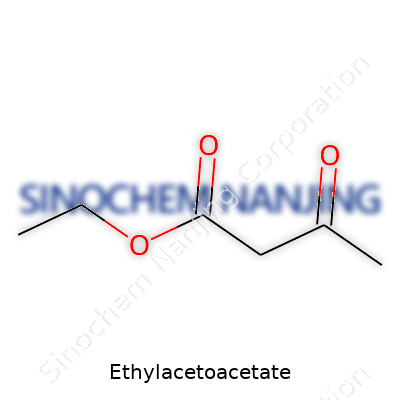
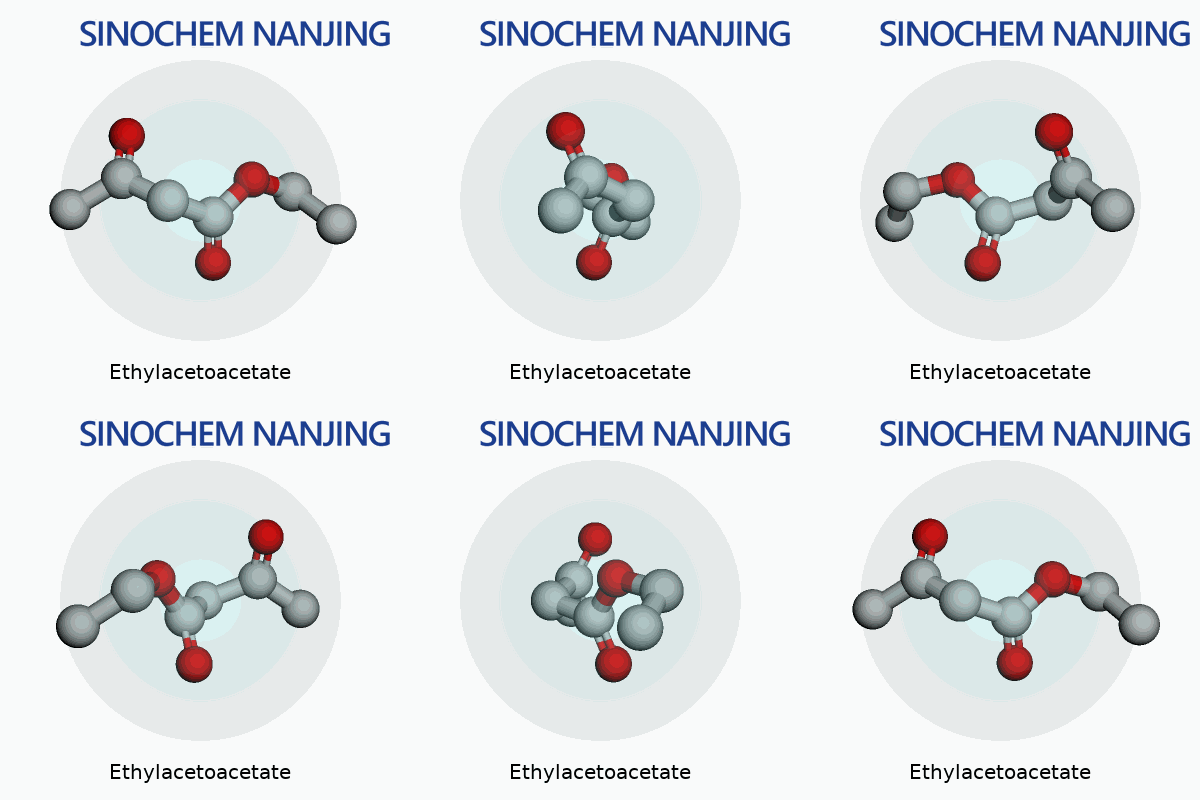
| Names | |
| Preferred IUPAC name | ethyl 3-oxobutanoate |
| Other names |
Acetoacetic acid ethyl ester Ethyl 3-oxobutanoate Ethyl 3-oxobutyrate EAA Ethyl alpha-acetoacetate |
| Pronunciation | /ˌɛθ.ɪl.əˈsiː.təʊˌæs.ɪ.teɪt/ |
| Identifiers | |
| CAS Number | 141-97-9 |
| 3D model (JSmol) | Here is the **JSmol 3D model string** for Ethylacetoacetate: ``` CCOC(=O)CC(=O)C ``` This is the **SMILES** string used for 3D visualization in JSmol. |
| Beilstein Reference | 635272 |
| ChEBI | CHEBI:42238 |
| ChEMBL | CHEBI:17544 |
| ChemSpider | 7798 |
| DrugBank | DB14109 |
| ECHA InfoCard | 100.018.979 |
| EC Number | 205-498-7 |
| Gmelin Reference | 6137 |
| KEGG | C01198 |
| MeSH | D001966 |
| PubChem CID | 8000 |
| RTECS number | EL6475000 |
| UNII | 83P4866Q8I |
| UN number | UN1229 |
| CompTox Dashboard (EPA) | DTXSID6020287 |
| Properties | |
| Chemical formula | C6H10O3 |
| Molar mass | 130.14 g/mol |
| Appearance | Colorless liquid |
| Odor | fruity |
| Density | 1.028 g/mL at 25 °C |
| Solubility in water | slightly soluble |
| log P | 0.78 |
| Vapor pressure | 0.4 mmHg (at 20 °C) |
| Acidity (pKa) | 10.7 |
| Basicity (pKb) | pKb ≈ 15.9 |
| Magnetic susceptibility (χ) | -42.5×10⁻⁶ cm³/mol |
| Refractive index (nD) | 1.418 |
| Viscosity | 1.26 cP (20°C) |
| Dipole moment | 2.91 D |
| Thermochemistry | |
| Std molar entropy (S⦵298) | 218.6 J·K⁻¹·mol⁻¹ |
| Std enthalpy of formation (ΔfH⦵298) | -537.8 kJ/mol |
| Std enthalpy of combustion (ΔcH⦵298) | -1805 kJ/mol |
| Pharmacology | |
| ATC code | Not assigned |
| Hazards | |
| GHS labelling | GHS02, GHS07 |
| Pictograms | GHS02,GHS07 |
| Signal word | Warning |
| Hazard statements | H302, H319 |
| Precautionary statements | P210, P233, P240, P241, P242, P243, P261, P264, P271, P280, P303+P361+P353, P304+P340, P305+P351+P338, P312, P337+P313, P370+P378, P403+P235, P405, P501 |
| NFPA 704 (fire diamond) | 2-2-1 |
| Flash point | Flash point: 102 °C |
| Autoignition temperature | 460 °C |
| Explosive limits | 1.7–8.4% |
| Lethal dose or concentration | LD50 oral rat 1,950 mg/kg |
| LD50 (median dose) | LD50 (median dose): Oral, rat: 8,100 mg/kg |
| NIOSH | AAV |
| PEL (Permissible) | PEL: 50 ppm |
| REL (Recommended) | 3 ml |
| IDLH (Immediate danger) | 400 ppm |
| Related compounds | |
| Related compounds |
Acetoacetic acid Methyl acetoacetate Diethyl malonate Ethyl acetate Ethyl propionate |



