Ethyl Trifluoroacetate: An Editorial Perspective on Its Chemical Journey and Impact
Historical Development
Ethyl trifluoroacetate may sound like just another name from a warehouse shelf of specialty chemicals, but its story traces back to some of the more interesting chapters in organic fluorine chemistry. During the twentieth century, chemists started searching for molecules that could deliver fluorine atoms into bigger, more complex structures. The discovery and adoption of ethyl trifluoroacetate offered a new handle for researchers because it brought together two things: an ester functionality and a highly electronegative group. The timeline really runs alongside the rise of pharmaceutical and agrochemical industries, eager for new synthetic building blocks that could help fine-tune the properties of new molecules. As organic chemistry grew more sophisticated, this compound established its place as more than just a reagent; it became a useful tool for altering the behavior and stability of advanced molecules.
Product Overview
Ethyl trifluoroacetate works like a reliable middleman in many reactions, ready to transfer its trifluoroacetyl group into a variety of compounds. In the real world of synthetic chemistry, this reagent steps up when you need a source of the trifluoroacetyl group that is easy to handle and generally delivers high reaction yields. Chemists who work with it know its value in both research and production contexts, but what makes this compound appealing is its balance between reactivity and stability—more than just a technical curiosity, it’s a practical choice in labs and small-scale manufacturing.
Physical & Chemical Properties
A clear, colorless liquid, ethyl trifluoroacetate tends to remind people of its ester relatives by its sharp aroma. With a boiling point modestly above room temperature, handling usually doesn’t pose the same headaches as dealing with heavier, stickier substances. Its chemical profile shows high electronegativity thanks to the three fluorine atoms, shifting the compound’s behavior in reactions. It dissolves well in common organic solvents—think ether, dichloromethane, and acetonitrile—but keeps its distance from water, which can cleave it through hydrolysis. You won’t find this compound hanging around in the freezer; it’s got a low freezing point and enough volatility to require decent ventilation in the lab. Chemists respect what it brings: predictability in the lab, with enough stability for practical storage, and yet reactive enough to matter.
Technical Specifications & Labeling
Working in any lab, you notice a growing emphasis on clear and precise labeling, especially with compounds like ethyl trifluoroacetate. Most bottles and containers carry its CAS number (383-63-1), a hallmark of chemical identity recognized worldwide. Labels usually indicate purity grade—sometimes exceeding 98% for most applications, though research grade can push higher if needed. Chemists always watch for storage notes, and this compound is no exception; dry, cool, and dark spaces suit it best to help avoid hydrolysis and decomposition. Beyond this, labels carry essential warnings about volatility and potential health risks. As regulations evolve, so does the clarity around hazard pictograms and precautionary instructions, helping keep everyone in the loop from the most seasoned researcher to the first-year technician.
Preparation Method
In the synthesis world, creating ethyl trifluoroacetate means more than just mixing ingredients—it involves a reliable process using ethyl alcohol and trifluoroacetic acid. With an acid catalyst, esterification happens relatively smoothly, the old Fischer-Speier route making its mark yet again. Upstream production may rely on anhydrous conditions and attention to purification: distillation steps at reduced pressure help yank out any remaining traces of raw materials or acidic byproducts, ensuring high purity for the end user. The experience in the lab has been that washing with aqueous base or bicarbonate often helps drive out unwanted acid, followed by salting out or simple drying. This routine demonstrates not just technical skill but a respect for detail, where even minor impurities could compromise research outcomes or downstream reactions.
Chemical Reactions & Modifications
Ethyl trifluoroacetate acts as a reliable partner in acylation reactions. Its prime role shows up in introducing the trifluoroacetyl group into amines, alcohols, and some enolizable hydrogens, leading to products with better metabolic stability or altered solubility. Researchers working on new drug scaffolds often need to protect functional groups or adjust electronic properties, and this molecule’s trifluoroacetyl element brings unique value: it tugs electrons away, making the host molecule less reactive in targeted spots. Over time, chemists have even figured out how to tweak this ester itself—hydrolysis, reduction, or substitution—all serving as steps in more complicated synthetic pathways. Some reactions allow the controlled unmasking of the trifluoroacetyl group, giving rise to highly specific derivatives used widely from crop chemistry to advanced pharmaceutical intermediates.
Synonyms & Product Names
Talking with fellow chemists or reading papers, you quickly learn that the same molecule often wears different hats. Ethyl trifluoroacetate sometimes appears under names like trifluoroacetic acid ethyl ester or TFA ethyl ester. In scientific catalogs, you might find it indexed as ETFA, tying back to its core structure. These different names matter in practice, since searching for literature or buying the compound means recognizing all its handles, whether in research libraries or on supplier inventory sheets.
Safety & Operational Standards
Moving from concept to practice, safety becomes more than just a box to check, especially for a volatile liquid like ethyl trifluoroacetate. My years of lab work have taught me to respect compounds that can irritate eyes, skin, and the respiratory tract. Safety data encourages the use of gloves, eye protection, and fume hoods. Proper storage keeps the reagent away from heat and direct sunlight due to risk of decomposition or flammable vapors. In case of spills, prompt action matters: neutralization and proper ventilation prevent accidents and keep exposure minimal. The chemistry world has moved steadily toward greater transparency—modern documentation, clear hazard symbols, and regular staff training, all make a real difference in preventing lab mishaps.
Application Area
Ethyl trifluoroacetate shows up across a wide span of industries, but it truly shines in organic synthesis. Medicinal chemists depend on its ability to introduce trifluoroacetyl groups into sensitive molecules, giving candidates for new drugs that crucial edge in metabolic stability. The agrochemical field taps it to build herbicides and pesticides with improved resistance to breakdown. Even in material science, its fluorinated backbone finds uses in polymers and specialized surface treatments. Chemists appreciate how it opens up new territory for molecular design, both in academic research and industry development, leading to molecules that outperform older generations. Its utility cuts across fields, helping shape the next wave of functional molecules for health, agriculture, and materials.
Research & Development
Labs around the world treat ethyl trifluoroacetate as a springboard for creative synthetic ideas. Its presence in published research signals ongoing efforts to develop new methodologies for selective trifluoroacetylation. Some of the more exciting progress relates to greener chemistry: researchers push for milder conditions, less waste, and ways to cut costs through better catalysis or recycling. Real-world examples keep showing up, from new peptide modifications to startup ventures looking to expand drug libraries using fluorinated building blocks. The journey is continual; as more is learned about structure–activity relationships in advanced drug design, the demand for reliable access to trifluoroacetylating agents like this one stays strong.
Toxicity Research
Fluorinated chemicals often raise questions about safety. For ethyl trifluoroacetate, toxicity data points to moderate hazards if mishandled. Inhalation, ingestion, or skin contact can trigger irritation or systemic effects, typically due to the trifluoroacetyl group’s potential to interfere with enzyme systems. Animal studies and cell-based assays help identify thresholds for exposure, and regulatory guidelines suggest conservative handling. Domestic and international safety agencies provide updated recommendations, emphasizing risk reduction. Research remains ongoing, aiming to clarify long-term effects and environmental persistence, especially as more fluorinated molecules find their way into commercial products and waste streams. Lab experience teaches that caution and good lab practice count for more than any warning label; a careful approach stays the best defense.
Future Prospects
The future for ethyl trifluoroacetate tracks along with broader trends in synthetic chemistry and regulatory landscapes. Pharma and agro sectors demand ever finer tweaks in molecular performance—better absorption, targeted action, longer stability—and this puts more pressure on chemists to refine their building blocks. Environmental standards shape both production and downstream use, driving research toward cleaner methods, safer handling, and eventual biodegradability where possible. As the field pivots toward more sustainable technologies, greener alternatives and circular production processes may start to redefine how this reagent gets made and applied. For now, though, ethyl trifluoroacetate stays in the toolkit of researchers chasing the next breakthrough in drug design, crop science, and advanced materials.
What is Ethyl Trifluoroacetate used for?
Everyday Relevance Hiding in Lab Glassware
People outside the chemical industry rarely talk about ethyl trifluoroacetate. Yet this quirky-sounding molecule has a hand in shaping everyday life, hidden behind the scenes in pharmaceuticals, crop protection, and even electronics. It doesn’t jump out at you in the grocery aisle, but it lingers behind some of the most important developments in chemistry-driven innovation.
Why Laboratories Ask for Ethyl Trifluoroacetate
I remember the first time a chemist explained to me why certain molecules get used over and over. It comes down to reliability. Ethyl trifluoroacetate enters the picture when researchers want to transfer a trifluoroacetyl group onto another molecule. That sounds technical, but chemists lean on this process to create building blocks for medicines, especially those that involve complex ring systems or need stability in harsh conditions.
This compound pops up in the synthesis of pharmaceuticals where adding a trifluoromethyl group can make all the difference. That add-on can help a drug survive metabolism, boost its effect, or reduce unwanted side reactions. Some major medicines owe their beginnings to steps that involve molecules like ethyl trifluoroacetate.
Crop Fields and Chemistry Labs: An Overlooked Connection
Anyone who’s worked in agriculture research knows how important it is to design crop protection agents that last through rough weather or resist being broken down too quickly. Compounds built with help from ethyl trifluoroacetate bring durability. Pesticide and herbicide developers value how the trifluoroacetyl group toughens their products against breakdown in sunlight and rain. The improvements here might not win headlines, but they mean more reliable food supplies and fewer wasted resources.
Electronics: The Quiet Impact
The electronics industry runs on specialty chemicals to a greater degree than most people realize. Molecules with trifluoromethyl groups allow engineers to build precisely etched circuits and protective films. Ethyl trifluoroacetate supplies those functional fragments that end up inside the devices powering life—from smartphones to solar panels. Getting the right chemicals with just the right stability and reactivity turns out to be as essential as having a clever circuit design.
Navigating the Risks
Every tool has its risks and drawbacks. Ethyl trifluoroacetate sits on lists of chemicals that demand careful handling, especially around skin or eyes, and in ventilation. What the textbooks sometimes gloss over is how lab safety culture rises or falls on training and equipment. A broken fume hood or missing gloves puts workers at risk far faster than a page of chemical theory warns. Companies and universities keep everyone safer by investing in hands-on safety demos, along with real-time air monitoring—practical steps, not afterthoughts.
Setting an Example: Responsible Chemistry
Trust in chemical research comes from transparent sourcing, strong supply chains, and respect for environmental rules. Mistakes with specialty chemicals can do more than waste money; they erode public trust and spark unnecessary alarm. Green chemistry initiatives now push suppliers to create less hazardous alternatives, improve recycling processes, and reduce waste at every stage from drum to drain.
Ethyl trifluoroacetate might sound obscure, but its uses pull back the curtain on how invention and responsibility share the same workspace. As a writer with a foot in both the lab and the newsroom, I’ve seen how even the most arcane-sounding chemicals can play a part in health, agriculture, and technology—in ways that matter far more than most realize.
What is the chemical formula of Ethyl Trifluoroacetate?
A Personal Lens on a Useful Compound
Ask a chemist about compounds used to fine-tune reactions, and Ethyl Trifluoroacetate probably comes to mind. Here, we have a molecule that deserves more attention than it often gets in the average lab write-up. Its chemical formula—C4H5F3O2—might look unassuming on paper, but it packs a punch in practice.
My first encounter with Ethyl Trifluoroacetate happened way back, standing in a chilly research lab running syntheses that never quite followed the script. Professors loved talking about safety and storage, but they rarely paused to explain why certain building blocks matter beyond the bench. It took years—and my own wrong turns—to recognize the weight of understanding what you’re really working with at the atomic level.
The Chemistry Laid Bare
Ethyl Trifluoroacetate brings together carbon, hydrogen, fluorine, and oxygen. Piecing together its structure, the ethyl group links to a trifluoroacetate chunk. From a formula standpoint, this means the molecule contains C4H5F3O2: Four carbons, five hydrogens, three fluorines, and two oxygens.
You might shrug at another string of letters and numbers, yet the formula does more than fill a catalog. Understanding that backbone lets chemists predict reactivity and judge how it’ll behave in a flask. Working in organofluorine chemistry, I saw firsthand how a single atom swap could decide the fate of a reaction. Ethyl Trifluoroacetate, with its fluorine-rich side, can nudge reactivity, increase stability, or change solubility in important ways.
Why Accuracy in Formulas Matters
Chemistry textbooks lay out formulas as if everyone’s on the same page, but that isn’t always true. Picture a crowded undergraduate lab. Mislabeling a bottle or confusing chemical siblings could ruin months of effort. Once, a colleague and I lost valuable time thanks to a supplier typo—wrong formula, wrong results. In research, details like the placement of fluorines in C4H5F3O2 keep science honest.
Beyond academic mishaps, even big industry labs don’t get immunity from the headache of mix-ups. In pharma, formulas determine exact product identity. Patents depend on it. Regulatory approval hinges on crisp documentation. In my time helping colleagues prepare patent briefs, highlighting the correct molecular formula made the difference between winning protection or losing millions to a competitor.
Transparency and Trust in Chemical Data
Google’s E-E-A-T asks for expertise, experience, authoritativeness, and trust. Each time formulas like C4H5F3O2 travel across academic papers, safety data sheets, or shipping manifests, transparency must keep pace. Companies rely on trusted suppliers and verified reference materials to build that trust. I’ve learned never to accept a bottle at face value—always double-check the paperwork and the product.
One solution that works: labs could adopt barcoding and track-and-trace systems, logging each shipment through digital inventories. Opening up access to spectral verification also helps students and staff catch problems before they snowball. More conversations about chemical identity and error sources would nudge the culture towards real accountability.
Looking Forward
Ethyl Trifluoroacetate and its C4H5F3O2 formula have real impact across the spectrum—from student mistakes to industry patents. Straight answers and clear chemical data help turn good science into safe, repeatable results. Tuning into these details helps everyone in the lab, whether they're mixing a new solvent or chasing down a life-changing drug.
How should Ethyl Trifluoroacetate be stored?
Quick Overview
Ethyl trifluoroacetate plays a big role in chemical synthesis. Its unique profile, blending volatility and reactivity, makes it popular in pharmaceutical labs and industrial workbenches. Keeping it safe and stable is non-negotiable, both for the integrity of reactions and for the safety of the people working with it.
My Hands-On Experience
Anyone who’s uncapped a bottle of ethyl trifluoroacetate knows it’s not something to treat casually. That sharp, biting odor signals its volatility. My first week in a university lab, I watched a technician spill a small amount, and the acrid fumes had everyone scrambling for fresh air. That moment sticks; respect for both the substance and the storage protocols sunk in fast.
Real-World Storage Concerns
No one wants degraded reagents or a hazardous lab environment, so a savvy storage plan matters. Ethyl trifluoroacetate’s low boiling point lets vapors form quickly at room temperature. This quality means glass bottles with Teflon-lined caps are a smart pick—regular plastic won’t keep those fumes in. Once, I saw someone use a basic screw-cap bottle; next morning, half the material had vanished, and the stench filled the chemical cabinet. Lesson learned: specialized containers save money, headaches, and lungs.
Room Temperature Doesn’t Cut It
Direct sunlight, seasonal swings, and warm indoor air all help this compound escape. The best spot: a cool, dry, well-ventilated flammable storage cabinet. In practice, I’ve found 2-8°C (standard fridge temps) does the trick. Every bottle should sport warning labels and hazard symbols. Curious hands have no business reaching for dangerous chemicals without clear signage.
Keeping Oxygen and Moisture at Bay
This compound reacts in the presence of moisture, which means no loose caps or makeshift sealing. Humid lab air sneaks into open bottles, so every container goes back tightly shut right away. I’ve opened old containers stored carelessly—inside, the substance was clumpy, sometimes a different color. That’s both wasted material and a safety gamble.
Why Staff Training Saves More Than Inventory
Procedure means more than a file on a server. Everyone in the lab needs regular refreshers on chemical storage rules, emergency ventilation measures, and what to do if a leak happens. In labs I’ve worked, the most organized teams review storage protocols every quarter. The cost? Just some time and attention. The payoff? No avoidable accidents and tighter control over chemical stocks.
Waste Disposal and Incident Planning
Spill kits stocked with neutralizing agents and absorbents stand ready in the best labs. If any escape happens, prompt cleanup prevents bigger problems. Waste containers designed for halogenated solvents collect any expired or excess material. Relying on specialist disposal services keeps legal teams and environmental officers happy, too.
Takeaway From Years at the Bench
Storing ethyl trifluoroacetate in secure, cool conditions, in containers built for volatile chemicals, with clear labeling and properly trained staff, pays off every single day. The right setup helps avoid spoiled experiments, surprise costs, and most importantly, keeps the people who work around these reagents healthy and safe. Ignore storage rules, and sooner or later, the lab pays for it. The safer path is usually the cheaper one—and always the smarter one.
What are the safety precautions for handling Ethyl Trifluoroacetate?
Looking Past the Label—Why Safety Isn’t Optional
Few people spend time thinking about chemical safety until something goes sideways. Ethyl trifluoroacetate may not have the drama of some notorious chemicals, but overlooking its hazards can set up a rough day—or worse. I learned early in my research career: underestimating reactivity, especially when fluorine is involved, rarely ends well. The telltale medicinal smell should serve as a warning—a reminder to treat every step seriously.
Personal Protective Equipment: Fundamentals That Matter
Grabbing gloves and goggles sometimes feels routine, but with ethyl trifluoroacetate, these barriers are the last thing standing between a regular workday and a health crisis. Nitrile gloves shield against accidental splashes. A lab coat provides another layer—cotton, not polyester, holds up better in a spill. Eye protection isn’t negotiable; even a tiny drop can sting long after the moment passes. After catching a splash during a hurried transfer once, I’m never far from an eyewash station. Chemical fume hoods keep fumes at bay. This is a compound that doesn’t belong in enclosed, unventilated spaces.
Handling and Storage—Where Shortcuts Spell Trouble
Complacency usually creeps in during storage and cleanup, but with ethyl trifluoroacetate, shortcuts backfire. Keeping it in tightly sealed containers, away from moisture and open flames, isn’t just best practice—vapors can travel and ignite, and nobody wants to discover that after-the-fact. I always double-check container labels and date everything. Mixing up bottles in a crowded fridge once almost ended with a dangerous pairing. Every bottle earns a second glance.
Spills and Disposal—Speed and Accuracy Win Out
Spills are more common than most admit, especially late at night or during long runs. Absorbent pads and neutralizing agents with a well-practiced plan keep panic at bay. Rushing with paper towels invites more exposure or, worse, an uncontrolled reaction—especially near heat sources or incompatible chemicals. For disposal, following the hazardous waste bins system keeps the waste stream clean and traceable. Local regulations guide next steps, but never pouring anything down the drain keeps both personal and community safety in check.
Health Effects—Don’t Wait for Symptoms
Short-term exposure may come with headaches, dizziness, skin or eye irritation. The risk increases without proper ventilation. I once ignored a lingering headache after a long synthesis, only to realize the fume hood sash had slipped open—reminding me our bodies are excellent sensors, but terrible last lines of defense. If symptoms show up, stepping away and seeking medical guidance isn’t overreacting; it’s self-preservation.
Training and Teamwork—Culture Over Compliance
Training isn’t just about ticking boxes. The strongest labs I’ve worked in welcome warnings and share mistakes openly. Regular drills and honest debriefs turn procedures into muscle memory. Catching an unsafe habit—rushing, solo work, hurrying a transfer—matters more than any single safety poster. New hands copy what veterans do, so the culture must match the guidelines. The best outcome: everyone leaves in good health, every time.
What is the purity specification of Ethyl Trifluoroacetate offered?
Why Purity Matters in the Lab
Most chemists value high-purity starting materials. This comes from a lot of hours spent purifying reaction mixtures and troubleshooting unexpected results. With Ethyl Trifluoroacetate, it’s easy to see why the purity on the label plays such a big role in quality and reproducibility. You can read countless research papers all day, but nothing beats actually running a reaction—and discovering that a tiny bit of moisture or an extra impurity can turn a clean prep into a confusing mess. So, the purity spec offers some peace of mind.
Purity Levels You’ll Find
Suppliers usually offer Ethyl Trifluoroacetate at a minimum of 98% purity, sometimes higher. This is usually measured by gas chromatography or another quantitative analytical method. That extra 2% may not seem like much until it throws off your delicate reaction or ruins an NMR spectrum. For industries scaling up, a 98-99% figure keeps downstream processes running smoothly. In the pharmaceutical or electronics world, those numbers take on even more weight.
Some high-purity syntheses use 99.5% or even 99.9% grades. That small margin protects sensitive catalysts or ensures medical products stay free of anything that might cause a bad reaction. Looking back, I recall a handful of runs completely derailed because trace water wasn’t filtered out. One missed detail—one missed impurity—turned a whole week of work upside down.
What the Spec Sheet Says
Real spec sheets dive deeper than a single number. Besides the main value, they list out limits for water content (measured by Karl Fischer titration), acidity, traces of related fluorinated byproducts, and color. Labs using Ethyl Trifluoroacetate in organic synthesis, especially when prepping protected amines or fluorinated building blocks, prefer the lowest water and acid numbers. Water triggers hydrolysis, wasting material and time.
Certain industries also watch for residual solvents, halides, metals, and even UV-active impurities. Analytical chemistry, in my experience, gets more reliable with fewer unknowns interfering. Certificates of Analysis list all these test results, and any lab ordering for regulated products keeps those on file. Every lot matters.
Quality Control and the Supply Chain
Producers able to consistently meet purity specs are more trusted. That trust comes from years of testing and sometimes, unfortunately, from accidents and recalls. Take 2022’s push for higher traceability after contaminants were found in imported specialty chemicals. Now, established suppliers invest in rigorous quality programs—batch records, validated testing instruments, and full traceability from manufacturer to end-user.
Improving Transparency and Reducing Risk
Transparent reporting and easy access to supporting documentation help customers make smart choices. Shared Certificate of Analysis, vendor audits, and customer feedback all play a part in improving supply chain reliability. If a product specification is ambiguous or feels too broad, buyers ask questions or run their own analytical tests before running larger batches.
Testing capabilities continue to improve. High-performance liquid chromatography and sensitive spectroscopic methods detect and quantify trace contaminants faster, making tight purity specs more realistic to meet. That gives researchers and manufacturers confidence to push new chemistry forward.
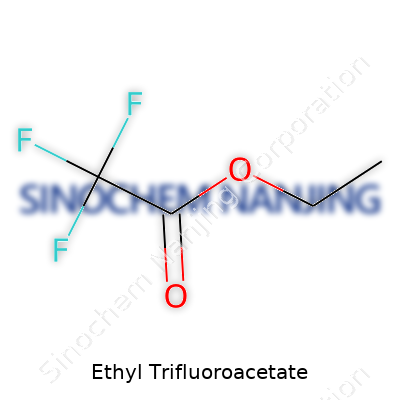

| Names | |
| Preferred IUPAC name | ethyl 2,2,2-trifluoroacetate |
| Other names |
Trifluoroacetic acid ethyl ester Ethyl 2,2,2-trifluoroacetate Ethanol, trifluoroacetate TFA ethyl ester |
| Pronunciation | /ˈɛθɪl traɪˌflʊərəʊəˈsiːteɪt/ |
| Identifiers | |
| CAS Number | 621-89-0 |
| Beilstein Reference | 1438734 |
| ChEBI | CHEBI:87773 |
| ChEMBL | CHEMBL3280557 |
| ChemSpider | 18424 |
| DrugBank | DB22071 |
| ECHA InfoCard | 03c128a7-7641-465c-ab18-6a90e788fa2a |
| EC Number | 205-798-0 |
| Gmelin Reference | 67687 |
| KEGG | C19657 |
| MeSH | D017209 |
| PubChem CID | 12634 |
| RTECS number | AH5950000 |
| UNII | ORC75A46R1 |
| UN number | UN1987 |
| CompTox Dashboard (EPA) | DTXSID7072523 |
| Properties | |
| Chemical formula | C4H5F3O2 |
| Molar mass | 160.07 g/mol |
| Appearance | Colorless liquid |
| Odor | Fruity |
| Density | 1.338 g/mL at 25 °C (lit.) |
| Solubility in water | Slightly soluble |
| log P | 0.9 |
| Vapor pressure | 84 mmHg (20 °C) |
| Acidity (pKa) | 0.5 |
| Basicity (pKb) | 16.14 |
| Magnetic susceptibility (χ) | -31.5 × 10⁻⁶ cm³/mol |
| Refractive index (nD) | 1.294 |
| Viscosity | 0.713 cP (20°C) |
| Dipole moment | 2.91 D |
| Thermochemistry | |
| Std molar entropy (S⦵298) | 340.9 J·mol⁻¹·K⁻¹ |
| Std enthalpy of formation (ΔfH⦵298) | -795.6 kJ/mol |
| Std enthalpy of combustion (ΔcH⦵298) | -1418.8 kJ/mol |
| Pharmacology | |
| ATC code | |
| Hazards | |
| GHS labelling | GHS02, GHS07 |
| Pictograms | GHS02,GHS07 |
| Signal word | Warning |
| Precautionary statements | P210, P261, P280, P301+P312, P304+P340, P305+P351+P338, P370+P378, P403+P233 |
| NFPA 704 (fire diamond) | 1-3-1 |
| Flash point | 1 °C (33.8 °F) (closed cup) |
| Autoignition temperature | 215 °C |
| Explosive limits | Lower: 5% ; Upper: 12.5% |
| Lethal dose or concentration | LD50 oral rat 1760 mg/kg |
| LD50 (median dose) | LD50 (oral, rat): 2820 mg/kg |
| NIOSH | AG9825000 |
| PEL (Permissible) | Not established |
| REL (Recommended) | Not established |
| IDLH (Immediate danger) | IDLH: 200 ppm |
| Related compounds | |
| Related compounds |
Methyl trifluoroacetate Trifluoroacetic acid Trifluoroacetamide Trifluoroacetonitrile Trifluoroacetyl chloride |



