Ethyl Propionate: Small Molecule, Big Impact
A Story Rooted in Chemistry’s Evolution
Ethyl propionate entered the scene as researchers explored the toolbox of esters during the rise of organic chemistry in the late 1800s. The sharp, fruity aroma that wafts off a flask of this compound quickly made it a subject of fascination for both academic labs and the flavor industry. Its roots stretch back to those hands-on days of distillation and trial, where chemists sought better ways to bring fruit notes and pleasant volatility to everything from confections to solvents. Over the decades, with better glassware, improved analytical techniques, and a growing field of synthetic chemistry, ethyl propionate earned a place not just in catalogues, but in the real-world industries of food creation, perfume mixing, and even paints.
Getting to Know the Substance
Pour out a small vial of ethyl propionate and you’ll find a clear liquid with a powerful pineapple-like scent. Boiling just below 100°C, it evaporates fast and mixes readily with most standard organics—ethanol, ether, and the like. Water barely accepts it, so it floats in those two worlds of solubility. Its formula is C5H10O2, sitting among the smaller esters, with sensible molecular heft for quick diffusion. Its density lines up close to water, but a nose walk through a manufacturing floor tells you right away: this chemical disappears into the air at the first excuse, which is exactly what flavor creators and fragrance blenders want. For those who stand over open containers, a gentle warning—high vapor means quick exposure, dryness in the air, sometimes dizziness if you aren’t careful with ventilation. Flash point lands close to room temperature: flammable, sometimes underestimated, demanding the kind of attention one learns only after a few close calls in the lab bench trenches.
Labels That Matter and the Chemistry Behind
Some products carry names people barely notice, but in the case of ethyl propionate, synonyms travel far and wide: propionic acid ethyl ester, ethyl propanoate, and in some circles, “fruit essence” for perfumery short-hand. Every drum or bottle needs a hazard diamond: flammable, an irritant. Regulators ask producers to state purity, typically above 98%, and spell out key physical stats—density, boiling point, and impurity levels—since off-odors even at trace can crush a food-grade or aromatic application. On the technical side, I’ve watched batches run through gas chromatography to pull out every last bit of propionic acid or ethanol, since those leftovers mean sour notes or regulatory snags.
Preparation in Industrial and Research Settings
In the real world, few labs use the old acid-alcohol mix-and-heat trick for scale anymore. Today’s ethyl propionate mostly comes from treating propionic acid with ethanol in the presence of a strong acid catalyst. That classic Fischer esterification is elegant on paper but messy at volume—water builds up, conversion lags. Smart chemists pull off the water as it forms, keep temperatures just right to cut by-products, and recycle unreacted alcohol. Big facilities sometimes swap in other catalysts or run continuous setups, all to squeeze efficiency and clean product. For those working at smaller scales or in teaching labs, the old method stays alive as a hands-on lesson about equilibrium, azeotropes, and practical recovery—one of the rare cases where the method you learn in class doesn’t vanish on entry to “the real world.”
Chemical Behavior and the Quest for Better Products
Anyone who works with esters knows they don’t just sit back quietly. Expose ethyl propionate to water and a strong acid or base and it falls apart—hydrolysis shapes both its use and its limits. In paint formulations and perfumes, stability against breakdown matters plenty, and I’ve seen projects hinge on just how well a lab can tame the hydrolytic snap-back. Chemists experiment with modifications, tweaking the molecule to slow the breakdown or even graft on utility groups for specialty resins or slow-release fragrances. In research, tracking the fate of ethyl propionate in air and biological systems opens up deeper questions about environmental impact and safety.
Safety, Smarts, and Responsibility in Use
The fruity aromatics of ethyl propionate sometimes give a false sense of safety—a tempting aroma, but not a snack. Short-term exposure means possible headache, irritation, and in high vapor zones, unsteady footing or worse. Flammability means storage far from sparks and routine checks on seals, to avoid slow leaks and surprise vapors building up in storage rooms. Regulators lay down strict guidelines: proper labels, PPE for routine handling, ventilation or hoods in labs, and training for spill scenarios. It’s not just paperwork—it comes from hard lessons learned over years of mishaps and close calls. Over the years, standards shifted as more was discovered about chronic exposure, and companies put in better barrier technology and air monitoring, a sign that knowledge brings real world change.
Uses: From Sweetness to Science
Most people experience ethyl propionate unknowingly—in the fresh scent wafting off a strawberry-flavored candy, or the soft kick in a citrus perfume. Food scientists use it for a boost in fruitiness where real juice fails; perfume designers prize it for top notes that fade before growing stale. In paints and inks, it serves as a quick-drying solvent, leaving less residue and helping products set fast. In the research lab, it’s a handy synthetic intermediate, letting researchers graft on new structures, chase down analogues, or build more effective drug candidates. Its role in consumer goods often gets overlooked, but its reliability and decades of study make it a favorite among formulators who need predictability with each batch.
Research, Toxicity, and What the Science Shows
Years of handling and regulatory scrutiny have brought a stack of research on ethyl propionate’s safety and toxicity. Acute toxicity is modest—more risky than table salt but far less than many solvents or industrial chemicals. It breaks down in the body to ethanol and propionic acid, both already handled by human enzymes. That said, frequent inhalation can cause headaches, irritation, or, in rare cases, impact liver enzymes if exposure runs too high for too long—a common finding in occupational hygiene studies. Environmental fate draws attention as well: the substance evaporates quickly, doesn’t linger in soil or water, and tends not to accumulate in living tissue. Chronic toxicity studies monitor effects in animals, and so far, there’s no link to cancer or reproductive harm at likely routes of exposure. That’s a comfort, but not an excuse to relax—compliance with limits still underpins every industrial or laboratory operation, shaped by experience and a steady re-examination of old assumptions.
Looking Forward: Where Innovation Might Lead
Though ethyl propionate feels like an “old standby,” it stands at the edge of updates in green chemistry. Researchers look for catalysts and process controls that limit side products, run on less energy, and develop better recovery streams. As demand for “natural” flavors rises, new routes emerge: biocatalysis using engineered bacteria or enzymes sourced from fruits and plants, keeping regulators and label readers happy. Companies explore tighter process loops, where nothing gets wasted, not even the water spun off as a byproduct, lending a hand to sustainability goals. Analytical scientists keep developing faster, more sensitive ways to spot even trace contaminants or breakdown products, pushing quality higher without driving up cost. In the world of paints and solvents, stricter emission standards drive formulators to rethink blending partners or shift to safer, slower-evaporating cousins where needed. I often see questions in professional forums: can this reliable old compound keep pace with expectations for safety, “clean label” claims, and environmental stewardship? History tells me yes, at least for now, but only through careful, ongoing work.
What is Ethyl Propionate used for?
A Fruity Scent in Everyday Life
Step into a bakery, and that sweet, fruity note drifting from the kitchen could trace back to ethyl propionate. In the world of food flavoring, this colorless liquid stands out for its ability to bring in hints of pineapple and rum—a profile hard to mimic in a lab with natural sources alone. Food manufacturers rely on small amounts to boost the character of baked treats, sodas, candy, and even some dairy products. The compound’s pleasant odor doesn’t just pamper the nose; it creates a memory of freshness in morning pastries or fruit-flavored drinks.
The Backbone of Effective Solvents
Factories and workshops often reach for ethyl propionate as a handy solvent. Paint thinners, lacquers, adhesives, and inks work smoother because of its easy evaporation and compatibility with other chemicals. Unlike some industrial solvents, it doesn’t bring a harsh, chemical sting—its milder aroma makes it more tolerable in spaces where people spend hours mixing, spraying, or cleaning equipment. Printing presses benefit too: the quick dry time keeps business moving and reduces waiting between print runs, which means higher efficiency and less downtime.
Perfumes and Personal Care Products
Perfumers embrace ethyl propionate when chasing light, uplifting top notes. The compound carries a gentleness that doesn’t overpower, making it a favorite addition to scents that lift spirits rather than wear them down. In colognes or body sprays, consumers catch a whiff of something energetic and clean, without the synthetic burn that stronger solvents might bring. For people sensitive to fragrance ingredients, its use helps avoid irritation while preserving an approachable, fresh profile in daily hygiene products.
Chemical Reactions and Intermediate Uses
Inside the lab, ethyl propionate often acts as a bridge. Chemists value it as an intermediate—meaning it helps craft other valuable molecules, especially in the pharmaceutical world. Medicines sometimes start with building blocks like this: small, stable compounds that introduce just the right blend of atoms for bigger, more complex reactions. By using ethyl propionate, manufacturers keep control over purity, which reflects in the quality and predictability of the drugs or vitamins heading to store shelves.
Concerns Over Safety and Regulation
Despite its benefits, oversight matters. In large doses, breathing in concentrated vapors or fiddling with the undiluted liquid can irritate the eyes or skin. Food scientists and perfumers work within safety limits set by regulators like the US Food and Drug Administration and the European Food Safety Authority. Companies clearly label products where exposure could pose a risk, and training protects workers in factories and bottling lines.
Transparent sourcing and detailed records—hallmarks of trusting the supply chain—help limit contamination and keep mislabeling in check. As a consumer, it pays to look for products sold by established, regulated companies. This attention to detail keeps the benefits of ethyl propionate in focus, without cutting corners on safety.
Looking Ahead: Greener Production
New approaches look at reducing waste and swapping petroleum sources for renewable inputs. Some chemical companies pilot greener methods using fermentation, harnessing bacteria to turn natural sugars into ethyl propionate. Early research suggests a shift toward sustainable feedstocks could eventually lower costs while easing the toll on the environment. Though progress takes time, pressure from buyers lifts demand for eco-friendly chemicals and guides industry improvements.
Ethyl propionate’s versatility weaves it through food, fragrance, manufacturing, and medicine, giving it a regular spot in modern life—often without grabbing headlines.Is Ethyl Propionate safe to handle?
Getting to Know Ethyl Propionate
Ethyl propionate shows up in more everyday places than most people realize. It adds a fruity note to flavors and fragrances, turning up in perfumes, baked goods, and some drinks. Factories turn to it for making solvents and resins. At room temperature, this stuff looks like a clear liquid with a pleasant smell. That smell can be misleading, though, and sometimes masks the less friendly side of this chemical.
Everyday Risks and Safety Know-How
Chemicals with a sweet aroma tend to catch people off guard. I’ve seen workers get too casual, thinking something that smells good can’t cause trouble. Ethyl propionate evaporates easily, ignites with little effort, and can catch fire just from a spark on a dry day. Sitting next to an open flame or a lightbulb that’s running hot spells disaster. Without steady air flow, vapor can build up in a room, and there’s always a chance of explosion in confined spaces.
Getting it on your hands might sting, irritate, or dry out your skin. Rubbing your eyes after exposure causes redness and a painful burn. Inhaling the vapors feels like breathing in rubbing alcohol. Dizziness or headaches follow pretty quickly if you get a good whiff. These risks make it plain: gloves, goggles, and a good ventilation setup should come out before you even open the container.
Public Health Evidence
According to the U.S. National Institute for Occupational Safety and Health (NIOSH), ethyl propionate ranks as a substance with “low acute toxicity.” This means it doesn’t pose a big threat on first contact, but exposure in large quantities or over long stretches has real consequences. The Occupational Safety and Health Administration (OSHA) sets limits for workplace exposure, and ignoring those guidelines has led to documented health complaints in industries from manufacturing to lab research.
In my own work, even after short exposure, I’ve seen people complain of skin rashes or start coughing. Long-term exposure remains a question, but several safety sheets note the absence of solid answers about cancer risk or reproductive effects. This leaves some people uneasy. Having clear data about chronic risks would help put more people’s minds at ease or alert them to hidden dangers.
Solutions and Smart Handling
Handling ethyl propionate safely looks simple on paper. Use gloves and goggles. Work in a place with good airflow. Keep anything that could spark or flame far from the storage area. Store it in tightly sealed, labeled containers away from anything reactive.
What often trips people up isn’t the lack of rules, but the attitude that comes with routine. Training helps set a high bar—regular sessions, clear signage, and management that takes safety messages seriously. In smaller businesses with less oversight, accidents happen more often. I’ve found that sharing stories from real workplace mishaps does more to drive safety home than any bulletin board poster. Seeing old coworkers sidelined by bad chemical burns makes the message stick. Good practice isn’t about paranoia, but about expecting the unexpected.
Disposal poses its own set of problems. Pouring leftovers down the drain not only breaks the law, it risks contaminating local water. Working with a licensed hazardous waste disposal company keeps things on the level and protects the community.
Responsible Care Matters
Ethyl propionate has a place in modern manufacturing and food science. Its risks don’t outweigh its benefits, but the right gear and good habits go a long way. Companies owe it to both workers and consumers to treat every chemical with humility and respect. No safety shortcut pays off in the end.
What is the chemical formula of Ethyl Propionate?
What Ethyl Propionate Is All About
Ethyl propionate steps confidently into the world of chemistry as a fruit-scented liquid. Cafés, bakeries, and even perfumeries put it to use because its aroma brings about the sweetness we pick up in ripe fruits and baked treats. Its chemical formula—C5H10O2—captures the backbone of how this compound reads at the molecular level. This formula captures two main building blocks: an ethyl group and a propionic acid group. When these connect, they create a molecule no larger than five carbon atoms, yet it holds impressive versatility.
Why Ethyl Propionate Matters in Everyday Life
No one walks through a bakery and names the ingredients in the air, but ethyl propionate hangs around in those smells we find pleasant and familiar. Companies use it to recreate a natural, appealing scent in foods and fragrances. Its formula also means it won’t linger for weeks or leave behind unwanted bitterness. A handful of other esters hit similar sweet spots, so ethyl propionate doesn’t work alone, but its role stands clear in products aiming for natural, wholesome sweetness without complication from heavy, oily residues.
Making Sense of the Formula
Chemistry turns abstract for many of us, but the practical side often comes down to asking, “What’s in it, and what does it do?” C5H10O2 lays down the facts: five carbons, ten hydrogens, two oxygens. Each element brings expected behaviors. For instance, the oxygen atoms help make the compound what chemists call an ester, which, unlike alcohols or acids, doesn’t irritate the nose and easily evaporates. That volatility explains the clean, sharp notes that food scientists and perfumers value.
Safety and Environmental Notes
Everyday exposure to small amounts poses no health worries for most folks. Trusted organizations, including the U.S. Food and Drug Administration (FDA), rank it as safe when used properly in food products. Wash a strawberry, breathe in when walking past a bakery, and you’re bumping into this compound in harmless doses. The rapid breakdown in the environment helps avoid the sort of persistent buildup causing worry with other synthetic ingredients.
Like many organic compounds, too much ethyl propionate around—usually from spills or mistakes in a lab—can irritate eyes or make breathing uncomfortable. Good ventilation, basic chemical know-how, and responsible sourcing keep these risks in check. It’s more likely to end up sprinkled through a cake than spilled in an unsafe way.
Staying Critical With Everyday Chemicals
Transparency in labeling and rigorous research matter, especially as more synthetic versions crop up in processed foods and fragrances. A healthy dose of skepticism keeps us making choices with our eyes open. Independent testing, easy-to-understand ingredient lists, and ongoing research all keep industry honest and the public safe.
Improving Use and Understanding
An ongoing challenge comes down to education. Most people feel shut out when chemistry jargon enters the conversation. Simple diagrams, short videos, or school labs that show how everyday life and molecules intersect would help close the gap between scientific knowledge and common understanding. Sharing clear facts helps keep chemicals like ethyl propionate in perspective—neither causing unnecessary alarm nor inviting carelessness. Versatile, safe, and easy to trace, ethyl propionate demonstrates how a string of atoms can shape everyday pleasures.
What are the storage requirements for Ethyl Propionate?
Understanding the Risks
Ethyl propionate has a pleasant fruity smell and finds its way into flavorings, solvents, and sometimes laboratories. While it might seem like a friendly liquid, it brings real hazards—flammability is the main concern. A chemical that catches fire easily calls for solid, grown-up safeguards. Stories circulate in the industry where just a small spark, an unplugged electric tool, or static discharge turned an overfilled storage shed into a dangerous scene. Firefighters don’t look for shortcuts with solvents like this, and neither should we.
Picking the Right Storage Place
People working with ethyl propionate want it far from open flames, electrical panels, and even direct sunlight. I’ve seen operations where summer heat built up in a metal shed and the vapors started to leak around the door just from expansion. Ventilation becomes non-negotiable—airflow lowers the risks by moving fumes outside, away from workers and ignition sources. On job sites, staff avoid stacking drums right next to each other. A little breathing room lowers the chances of heat build-up and keeps any spilled liquid from spreading too quickly.
Choosing Containers that Work
Steel drums with tight lids handle ethyl propionate without corroding. Polyethylene containers often work too, as long as they’re labeled for flammable chemicals. What I’ve seen work best is always clear labeling. Hazmat symbols and bold signs don’t just check the box for inspectors; they warn everyone: don’t smoke here, don’t grind metal, don’t use power tools in this room. People sometimes treat the storage site like any old storeroom until something goes wrong. Hazmat signs wake people up before that happens.
Temperature and Vapor Controls
A storage space staying below room temperature does a lot to keep pressure from building up inside containers. Ethyl propionate evaporates at a low temperature, and breathing those vapors day after day makes workers dizzy, affects concentration, and leads to mistakes. Using tight-sealed drums and installing spill trays below them keeps both liquid and vapor in check. For big storerooms, automatic leak detectors paired with alarms alert workers quickly if a drum gets punctured. In smaller outfits, even a simple low-cost vapor monitor near the ceiling goes a long way to protecting everyone on-site.
Fire Suppression and Emergency Planning
I visited a plant that insisted on keeping a dry chemical fire extinguisher just inside the main entrance and posted the evacuation plan on every wall. In practice, nobody should reach for a garden hose if a chemical fire breaks out—water tends to spread flammable liquid fires. Fire suppression gear should match the material risks. Workers benefit from regular safety drills. Panic in a crisis comes from not knowing what to do, not from the danger itself. Workers who practice using spill kits and know which fire extinguisher to grab make a storage area much safer.
Simple Prevention Works Best
Staff always wear gloves and splash-proof eyewear, even during quick inspections. Absorbent pads and spill kits sit close by—the small upfront cost avoids much bigger damage from a spill. Good ventilation with an explosion-proof fan helps more than any exotic technology, as do routine walk-throughs and double-checks after every drum delivery.
Responsible Disposal
Old, leaking, or expired ethyl propionate shouldn’t wait for a convenient day. Waste management services specialize in handling hazardous materials, ensuring no one ends up with contaminated ground, air, or water. Quick action keeps the storage site clean—and keeps neighbors and inspectors happy.
Is Ethyl Propionate flammable?
The Reality in Everyday Terms
Ethyl propionate shows up in a lot more places than most people realize. Makers use it to help food smell better and taste a bit sweeter. It pops up in perfumes and pharmaceutical products, too. Because of this, batches of the chemical often move through factories, trucks, and storerooms—not always under the watchful eye of a trained chemist. The thing is, ethyl propionate is flammable, and overlooking this fact can lead to trouble.
Heat, Sparks, and a Small Window for Error
My first job in food science meant spending hours on the production floor. On a quiet afternoon in the flavoring room, a careless flick of a switch created a small spark. The liquid we used, ethyl propionate, sent up a whiff that hung in the air. Nobody got hurt, but the smell mingled with fear for weeks. From that day, I stopped trusting anything with a chemical label unless it had proof of safe storage away from ignition sources.
Looking at the numbers, ethyl propionate gives off vapors that catch fire at around 16°C (closer to room temperature than most folks would guess). Its “flash point”—the temperature it needs to produce enough vapor to ignite—sits far below boiling water and not much above a cool spring morning. Once those vapors form, even a tiny open flame, static from a shirt, or a spark from a light switch can touch off a blaze.
What Science—and Past Mistakes—Teach Us
The 2019 fire in a warehouse in the Midwest offered a blunt lesson about how easily mishandled chemicals turn into local disasters. Emergency teams traced the fire back to an unnamed ester that smelled “fruity.” On digging through reports, I spotted ethyl propionate as a possible culprit. The warehouse didn’t keep chemical containers sealed tightly. No ventilation system moved air out, so the fumes built up until a heater turned on. By the time firefighters arrived, the flames moved so fast that they needed special foam to put them out.
Numbers from the National Fire Protection Association show that flammable liquids cause thousands of workplace fires in the United States each year. Nearly a third start in storage rooms. Every safety expert I know stresses reading Material Safety Data Sheets and storing flammable liquids in safety cabinets with clear labels. Sometimes people laugh off the warnings—until a story like the one above brings the risk home.
Safer Handling: More Than a Buzzword
Every chemical bottle deserves respect. Ethyl propionate should stay in tightly sealed containers. Storage spaces must keep the temperature down and ventilate air outside. No open flames or electrical sparks nearby. Workers should wear gloves and eye protection, not because rules demand it, but because skin contact and fumes can do real harm over time.
The companies that handle these jobs well pay for training and give staff time to run emergency drills. Simple, clear instructions go a long way: If it smells sweet and the label says “flammable,” keep it locked and grounded. Never pour it down a drain. Check for air movement. I have seen the benefits of these basic habits, watching close calls turn into footnotes instead of headlines.
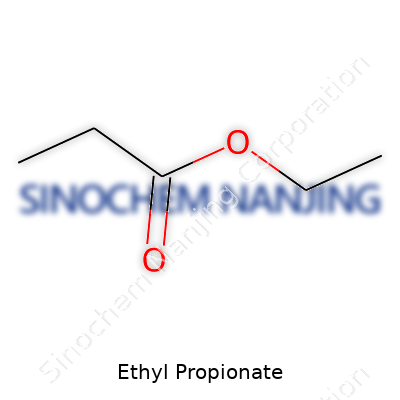
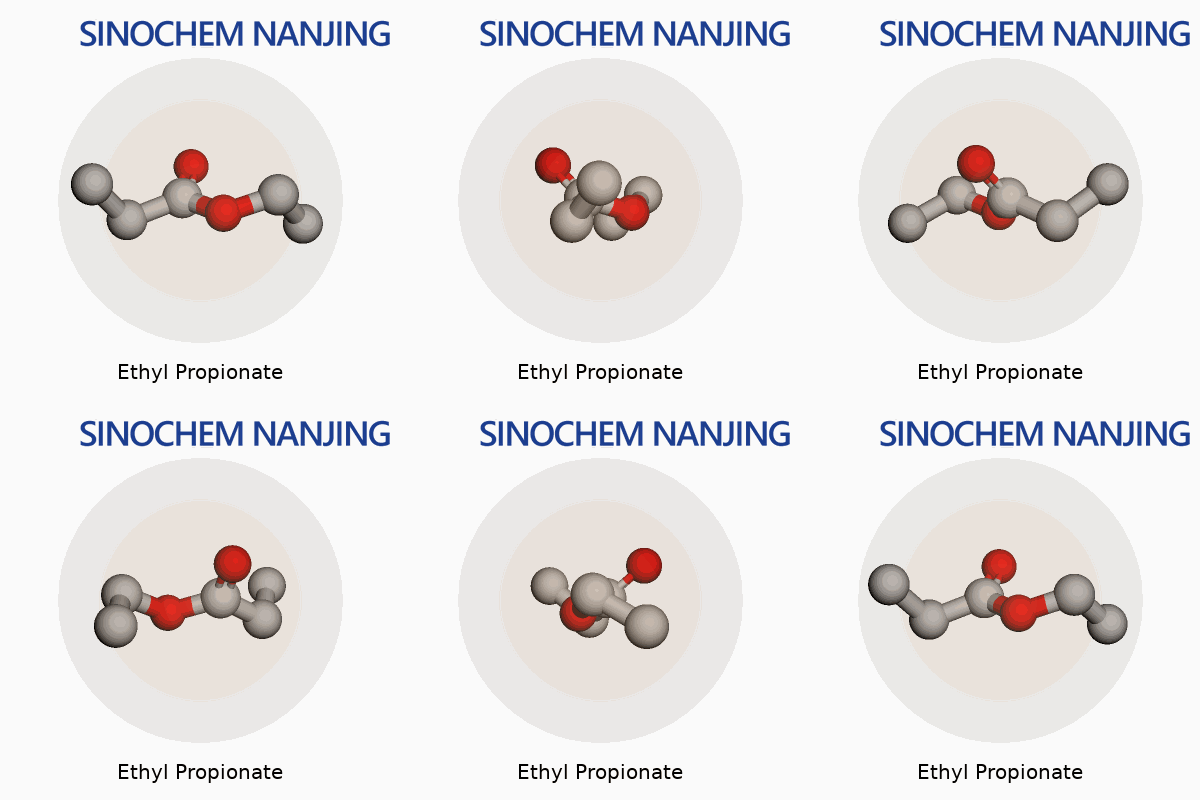
| Names | |
| Preferred IUPAC name | Ethyl propanoate |
| Other names |
Ethyl propanoate Propionic acid ethyl ester Ethyl n-propionate |
| Pronunciation | /ˈiːθɪl proʊˈpiːəneɪt/ |
| Identifiers | |
| CAS Number | 105-37-3 |
| Beilstein Reference | 635234 |
| ChEBI | CHEBI:17590 |
| ChEMBL | CHEMBL154967 |
| ChemSpider | 5868 |
| DrugBank | DB14157 |
| ECHA InfoCard | 13c976df-4a9a-4463-9dc3-faa43d3e6c14 |
| EC Number | 203-940-1 |
| Gmelin Reference | 875 |
| KEGG | C01719 |
| MeSH | D017367 |
| PubChem CID | 8021 |
| RTECS number | UE4985000 |
| UNII | R5J5E4T4A7 |
| UN number | UN1190 |
| CompTox Dashboard (EPA) | 7BQV0987GU |
| Properties | |
| Chemical formula | C5H10O2 |
| Molar mass | 102.132 g/mol |
| Appearance | Colorless liquid |
| Odor | fruity |
| Density | 0.888 g/mL at 25 °C |
| Solubility in water | Moderately soluble |
| log P | 0.96 |
| Vapor pressure | 42 mmHg (20°C) |
| Acidity (pKa) | pKa = 25 |
| Basicity (pKb) | pKb ≈ 15.5 |
| Magnetic susceptibility (χ) | -53.5 × 10⁻⁶ cm³/mol |
| Refractive index (nD) | 1.372 |
| Viscosity | 0.45 mPa·s (20°C) |
| Dipole moment | 1.78 D |
| Thermochemistry | |
| Std molar entropy (S⦵298) | Ethyl Propionate: 318.1 J·mol⁻¹·K⁻¹ |
| Std enthalpy of formation (ΔfH⦵298) | -420.9 kJ/mol |
| Std enthalpy of combustion (ΔcH⦵298) | -2491 kJ/mol |
| Pharmacology | |
| ATC code | JECFA 1107 |
| Hazards | |
| GHS labelling | GHS02, GHS07, Signal Word: Warning, Hazard statements: H226, H336 |
| Pictograms | GHS02,GHS07 |
| Signal word | Warning |
| Hazard statements | H226, H336 |
| Precautionary statements | P210, P233, P240, P241, P242, P243, P261, P271, P280, P303+P361+P353, P304+P340, P305+P351+P338, P312, P337+P313, P370+P378, P403+P235, P501 |
| NFPA 704 (fire diamond) | 1-3-0 |
| Flash point | 16 °C |
| Autoignition temperature | 463 °C |
| Explosive limits | 3.5% - 10.1% |
| Lethal dose or concentration | LD50 oral rat 4,370 mg/kg |
| LD50 (median dose) | LD50 (median dose): Oral (rat) 9370 mg/kg |
| NIOSH | EPY |
| PEL (Permissible) | PEL (Permissible Exposure Limit) for Ethyl Propionate: "EPA: TWA 400 ppm (1400 mg/m³) |
| REL (Recommended) | 5 ppm |
| IDLH (Immediate danger) | 1700 ppm |
| Related compounds | |
| Related compounds |
Propionic acid Ethyl acetate Methyl propionate Propionyl chloride |



