Ethyl Isovalerate: More Than Just a Flavor Ingredient
Tracing the Roots: Ethyl Isovalerate Through the Years
Across the history of chemistry, certain compounds have lingered just outside the limelight, quietly powering entire industries. Ethyl isovalerate deserves a place in that story. Zipping back to the late 19th and early 20th centuries, researchers discovered how a simple reaction between isovaleric acid and ethanol could yield a molecule that captures the smell of fruit. This ester didn’t start out with designer ambitions; early records show it was often a byproduct in distilleries and flavor laboratories. Over time, food scientists and fragrance creators recognized it for its sweet, fruity aroma—sort of reminiscent of apples, pears, and sometimes a whisper of whiskey. It became a staple in both flavor and fragrance kits, often overshadowed by more famous cousins like ethyl butyrate or amyl acetate. Even today, its legacy ties to the broader progress of organic synthesis and the flavor industry’s growth.
Getting a Grip on What Ethyl Isovalerate Actually Is
For those who haven’t spent much time in a lab or on a factory floor, ethyl isovalerate might seem obscure—maybe something for experts tucked away in obscure journals. In truth, bottles of this ester pop up anywhere you find people tinkering with flavors, especially to create a flash of apple or pineapple. Chemically, it is the ethyl ester of isovaleric acid. The structure offers a five-carbon backbone branching off, giving it more heft and a unique scent. With its clear, colorless look and that familiar fruity smell, manufacturers pick it for confections, beverages, and tobacco blends. The properties tell you why it works so well; it dissolves smoothly in alcohol and most oils, but doesn’t disappear in the more watery world—the balance makes it quite versatile for food and fragrance use. Its chemical stability and relatively low cost round out the reasons why it’s more common across so many sectors than most people realize.
Investigating the Substance Itself
Zooming in on the physical and chemical aspects reveals why this ester remains so popular. Ethyl isovalerate boils just above 140°C and melts below freezing, so it’s a liquid at room temperature—perfect for blending and handling. It manages to stay stable, not breaking down in air or light the way some flavor molecules do, which means it sits on shelves without losing potency. Technically inclined folks will point out its reactivity hinges on that ester group; it interacts predictably and doesn’t often surprise handlers with strange byproducts. Density lands a bit under that of water, so it floats to the top in mixtures—a handy trait for basic separation tasks. Those details sound dull until you realize manufacturers stretch the shelf life of a drink or candy by leaning on reliable compounds like this.
The Practicalities: Specs and Labels
Regulators and industry specialists don’t just care about flavor—they demand clean specs and clear labeling. Ethyl isovalerate must pass purity thresholds, usually sitting at 98 percent or higher for food-grade blends. Traces of ethanol and isovaleric acid get monitored to ensure end products don’t surprise end-users or trigger allergic reactions. Labels need to comply with local safety and handling requirements; in some places, the compound counts as a permitted flavor agent with recognized limits. Food and beverage companies check batch logs for this ester, building trust in their products' traceability. These extra steps help keep things straightforward for formulators and consumers alike, especially as countries develop tighter rules for all food additives.
Cracking the Prep Work: How It’s Made
Anyone with an organic chemistry background recognizes the classic Fischer esterification behind this molecule: take isovaleric acid and ethanol, bubble in a bit of acid to catalyze, add heat, and let the reaction roll. The beauty of this reaction lies in its simplicity; modern factories scale it up but don’t have to reinvent the wheel. Post-reaction, fractional distillation strips away the leftovers, purifying the ester until it meets the quality targets. Cutting-edge methods keep popping up, including smarter catalysts that save heat and trim waste, which speaks to broader green chemistry goals. That mix of tradition and technical progress keeps this flavor molecule affordable and widely available.
Chemical Tweaks and Transformations
Apart from making it, researchers keep poking at how this ester reacts under different conditions. In acid or base, it hydrolyzes—switching back to isovaleric acid and ethanol—fairly easily, which matters if it’s headed for environments where pH swings. Its ester group opens doors for more elaborate syntheses as well, though in practice most factories stop at the ready-for-use formula. Scientists do measure its resilience under light, oxidation, and varying storage temperatures, gleaning insight to prevent spoilage across global supply chains. Product developers learn how side reactions creep in, sometimes generating off-flavors or unwanted impurities, and adapt their recipes or storage methods to compensate.
A Rose by Any Name: Synonyms and Aliases
Depending on which catalog you flip through, ethyl isovalerate shows up under a small crowd of names: ethyl 3-methylbutanoate, 3-methylbutyric acid ethyl ester, or even apple oil ester in some food tech circles. This name game means anyone comparing specs across suppliers needs sharp attention, or else a slip in translation could land an order at the wrong shelf. Sometimes labels lean on the trade name that captures its main application—especially in blends for perfumes or beverages. Few products illustrate the importance of internationalized chemical labeling as clearly as this one; cleaner nomenclature ensures a safe trace from production to shelf.
On the Line: Safety and Work Standards
Most folks working with ethyl isovalerate would rather not gamble with uncertain handling procedures. Guidelines from food agencies and chemical safety boards take clear stances: keep the area well-ventilated, minimize skin contact, and store far from flames or oxidizers. Material safety data consistently points out that this compound can irritate if it hits the eyes or gets ingested by the handful—but at levels used in food or perfumery, it seldom causes significant trouble. Some workers who handle large drums report mild headaches or sensory overload after long sessions, a reminder to treat all concentrated flavors with respect. Ongoing improvements in plant safety practices—better ventilation, thorough staff training, and robust inspection protocols—help tamp down the odds of a preventable mishap.
Fields That Count on Ethyl Isovalerate
Food flavorists turn to ethyl isovalerate for its strong, sweet kick that rounds out apple, pear, and sometimes grape profiles. It crops up in hard candies, bakery filings, sodas, and beverages aimed at a young, fun-loving market. The tobacco industry leans on its mellowing touch for certain blends, and e-cigarette fluids sometimes use minor amounts to tweak profiles. In perfumery, this ester blends easily into fruity top notes, adding crispness without smothering the bouquet. A few specialty cleaners and solvents borrow its properties as well—the sweet scent tempers more aggressive odors. The sheer reach reflects how food, fragrance, and even specialty chemical makers rely on certain molecules crossing industry boundaries seamlessly.
Where Science and Application Collide: R&D Around Ethyl Isovalerate
Researchers in flavor chemistry circles continue to dissect how different esters compare head-to-head. Consumer studies test how ethyl isovalerate stacks up alongside synthetic or natural alternatives for aroma, stability, and consumer acceptance. Analytical chemists refine how to measure trace impurities, always searching for new contaminants or breakdown products in global supply chains. In certain agricultural studies, the ester’s occurrence in fruit and fermented foods gets a close look—its natural presence informs debates over labeling and so-called “natural flavor” status. Synthetic biologists, too, jump in, seeing if fermentation or engineered microbes can churn out this ester more efficiently and with fewer byproducts, linking biotechnology trends directly to what lands in flavor jars.
Digging into Toxicity and Health Impacts
Ethyl isovalerate’s toxicity profile draws less concern than many synthetic additives, but researchers keep running new safety trials. At flavor levels in food or drink, regulatory agencies have cleared it for use, recognizing that exposures far exceed those for alcohol or many preservatives. High doses in rodent studies trigger mild liver or kidney changes, leading scientists to keep margins of safety wide in their applications. Inhalation studies, relevant now that vaping is on the rise, look at any subtle irritant effects or long-term inhalation risks. Recent advances in analytical techniques also track how it metabolizes in the body—typically splitting back to isovaleric acid and ethanol, both processed by standard metabolic pathways. Health discussions around this ester turn on the broader challenge: ensuring no hidden impurities creep in and that cumulative exposure doesn’t outstrip what bodies can handle.
Looking Ahead: What’s Next for Ethyl Isovalerate?
Grab a glimpse at where trends point, and ethyl isovalerate seems poised to stick around. Food and beverage innovation pushes for more “natural” flavors, and because this ester occurs naturally in fruit and fermented goodies, it fits the bill when produced through bio-based synthesis. Green chemistry angles, aiming to reduce waste and shrink carbon footprints, will drive new prep methods and tighter quality checks. Technologists build on its stability and pleasant aroma, searching for ways to expand its use in non-food applications—think household care or emerging e-nose tech for artificial scent detection. The push for transparency could turn more attention to detailed product origins, tracing whether a flavor’s roots lie in fermentation tanks, fields, or traditional factories. In my own work with smaller food companies, I’ve watched ingredient trends turn on a dime, and ethyl isovalerate’s mix of safety, affordability, and proven appeal shows why it remains a tool nobody wants to drop from the kit. For the near future, I expect to see more collaborative research, tighter regulatory updates, and creative applications—proving that even behind-the-scenes molecules shape what we taste, smell, and experience each day.
What is Ethyl Isovalerate used for?
Familiar Flavors, From Chemistry to Kitchen
Take a slice of freshly baked apple pie, breathe in the sweet aroma—some of what you smell might actually come from ethyl isovalerate. This little chemical compound pops up quietly in the flavor world. Companies use it to punch up the taste of everything from juicy candies to fruit-flavored beverages. In my time digging through manufacturing labs, the demand for fruity notes surprised me. Ethyl isovalerate delivers that punchy apple scent, often rounding out the flavors in processed snacks or providing a tang to soft drinks.
Fruity flavors don’t just land in food on their own. Skilled food scientists look for affordable and stable flavor agents. Ethyl isovalerate has a reputation for mixing well and sticking around on the shelf. Food safety authorities, such as the U.S. Food and Drug Administration, recognize it as safe in the small amounts used for flavor. I’ve seen flavorists—those ‘chefs’ of the chemical world—reach for this ester to bring out the best in jams, sodas, and even some yogurts.
Beyond Food: Scents, Solvents, and Surprises
Wander down any cleaning aisle or browse through perfumes, and that pleasant fruity whiff may well trace back to ethyl isovalerate. The fragrance industry doesn’t just admire its apple notes. Perfumers turn to ethyl isovalerate for its ability to smooth out floral and citrus tones, giving perfumes and air fresheners a background base that feels natural. In my early days working with fragrance blends, I learned how a drop of the right ester can rescue a formula that smells flat or artificial.
Solvent properties give ethyl isovalerate a few more hats to wear. In specialty industrial products—paints, coatings, inks—it works as a carrier for other chemicals, helping products apply smoothly and evaporate at predictable rates. Companies often seek ingredients that perform reliably over time and don’t break the bank; here, ethyl isovalerate manages to slip through regulatory hoops while staying cost-effective.
Safety, Environment, and Better Choices
Safety isn’t just a buzzword in flavor and fragrance manufacturing; it’s tested at every step. Regulatory bodies put strict rules in place regarding the quantity and application of ethyl isovalerate. Workers suit up in proper gear, labs keep spills in check with solid ventilation, and companies submit safety data covering possible irritations or accidental exposures. So far, research sits on the side of ethyl isovalerate being largely harmless when used as directed, yet manufacturers still need constant vigilance.
But every chemical has a footprint. In today’s world, companies face pressure to lower emissions and waste. Ethyl isovalerate comes from both natural fermentation and synthetic methods. More research into greener production can help ease its environmental impact. From what I’ve seen, moves toward bio-based routes hold promise, especially if consumer demand for ‘clean labels’ and sustainable ingredients keeps rising.
The Right Questions for a Familiar Ingredient
Ask the people in charge of making our food and personal care products about their ingredient lists. Clean manufacturing, transparent sourcing, and steady investment can keep compounds like ethyl isovalerate safe and sustainable. Pushing for strict testing, open labeling, and eco-friendly production isn’t just nice talk; it’s what builds trust in the products we eat, drink, and use every day.
Is Ethyl Isovalerate safe for human consumption?
Understanding Ethyl Isovalerate
Ethyl isovalerate pops up in ingredient lists for foods and drinks ranging from fruit-flavored candy to certain liqueurs. Chemically, it’s an ester, created from isovaleric acid and ethanol. Most people don’t recognize it by name, but might recognize its fruity aroma, similar to apples or pears. As someone who reads food labels out of curiosity, I've seen it in a few unexpected places, especially in products meant to mimic natural fruit flavors.
What the Science Says
The U.S. Food and Drug Administration lists ethyl isovalerate as “generally recognized as safe” (GRAS) when used as a flavoring agent. This status comes after review by experts who looked at animal studies, observed human consumption patterns, and considered how the body processes this molecule. The European Food Safety Authority reached a similar decision, noting no evidence of risk when used in standard food applications. The flavor industry also relies on guidance from FEMA (Flavor and Extract Manufacturers Association), which cleared the compound after their own safety reviews.
Scientific resources highlight that ethyl isovalerate breaks down in the body through pathways similar to many other flavor esters. The digestive system hydrolyzes it, turning it into ethanol and isovaleric acid, both of which are quickly processed and excreted. The quantities found in commercially flavored foods end up far below any dose linked with problems in research animals, according to published toxicological data.
Why Safety Status Matters
Many people worry about “artificial” ingredients or unfamiliar chemical names, especially when it comes to what children might eat. I share this concern—I like to check whether such ingredients stick around in the human body, whether allergies have popped up, and whether regulators worldwide have flagged them for health concerns. In this case, decades of safe use and repeated assessment by food safety authorities add some peace of mind. The structure of ethyl isovalerate resembles naturally occurring molecules already present in fruits, and the body reacts to it in much the same way.
Transparency and Dosing Make the Difference
Issues sometimes arise when food makers overdo it on additives in pursuit of flavor. No one enjoys a product overloaded with chemical notes or a label sporting an endless string of unfamiliar words. Responsible industry actors keep flavorings like ethyl isovalerate well below thresholds of concern—usually under ten parts per million in most foods and beverages. Toxicologists have set conservative limits far above anything used in commercial practice, making everyday exposure through food quite limited.
Allergies and Individual Sensitivities
There’s always someone sensitive to a specific compound. So far, ethyl isovalerate hasn’t drawn attention as an allergen or irritant in healthy adults. People with rare metabolic issues, such as isovaleric acidemia, might want to be aware, but typical eaters can relax knowing the compound doesn't linger or accumulate in tissues. The scientific literature hasn’t turned up cases of poisoning, even among factory workers exposed at higher concentrations.
Better Choices Through Information
Safety boils down to transparency and informed consumer choice. Labels must clearly show food additives, so anyone with concerns can make a call for themselves or their family. Plus, manufacturers can win trust by keeping artificial flavors to a minimum and sourcing from producers who follow best practices. Clear communication helps consumers spot patterns in their reactions and decide what works best for their own health. Shoppers today have more information than ever, making it easier to stay informed about ingredients like ethyl isovalerate.
What are the main applications of Ethyl Isovalerate in industry?
Bringing Flavor and Fragrance to Life
Working in the food and beverage world for years, you get a sense of how little pieces make a big picture. Ethyl isovalerate stands as one of those unsung heroes, showing up in surprising places. Its fruity, somewhat creamy aroma pops up in everything from hard candies to ready-to-drink cocktails. Many companies count on it to add that extra note to imitation pineapple or apple, something real fruit puree can’t always offer. It slides easily into sodas, yogurts, and baked treats without throwing off the main flavors.
Fragrance companies tap into ethyl isovalerate for similar reasons. The sweet, fruity character helps round out perfumes, air fresheners, and even personal care products like lotions and shampoos. That’s the kind of consistency that keeps big brands at the top of consumer preferences: when a body spray smells “fresh” or “juicy,” there’s a good chance this compound is playing a quiet role.
Why Food Safety and Quality Matter
Thinking about what makes an additive valuable, safety comes up first on any list. Regulatory bodies like the FDA and EFSA have given ethyl isovalerate the green light for use in food and fragrance, as long as companies stick to approved levels. Its safety profile relies on decades of studies. I recall talking with quality assurance folks at a flavor house—they treat ingredients with a level of scrutiny that rivals pharma. Every drum, every shipment requires careful tracking. There’s no room for shortcuts when millions eat and drink these products every day.
Pushing food manufacturers to adopt transparent sourcing and documentation still challenges the industry. The consumer shift toward “clean labels” means companies hunt for natural-sounding ingredients. Ethyl isovalerate, usually produced through controlled chemical synthesis, competes against extracts labeled as “natural.” Some firms recently started turning to fermentation-derived versions, using yeast or bacteria, which fits the demand for more eco-friendly, naturally sourced components. Cost can run higher, but that premium taps into shoppers’ willingness to pay for perceived purity.
Not Just About Taste or Scent
The story stretches past tastes and smells. In pharmaceuticals, ethyl isovalerate steps in as a masking agent. Tablets, syrups, and chewable medicines don’t always taste great. Adding a dose of fruity scent does quite a bit to take the edge off, especially in kids’ medicines. It doesn’t alter the actual therapeutic value, but if you’ve ever tried to convince a six-year-old to take cough syrup, you know how much that flavor boost matters.
On another front, ethyl isovalerate finds a seat in the solvents and specialty chemicals market. Paints, coatings, or plasticizers sometimes need an additive that improves flow and drying without strong, unpleasant odors. Chemists favor its mild aroma and relative stability. It avoids the harshness of some petrochemical solvents, which helps workplaces keep air quality safer for workers. Replacing stronger-smelling, more volatile chemicals makes a difference for those on the factory floor and the end-user alike.
Forward Steps: Cleaner and Smarter Choices
Eco-conscious manufacturing keeps rewriting the rules. Demand for sustainable goods means suppliers search for greener production routes for ethyl isovalerate. Fermentation methods look promising—less waste and fewer harsh chemicals used upfront. Industry partnerships, new technology, and honest consumer communication together shape a safer, friendlier landscape. Watching all this, I see opportunity for both makers and shoppers to choose better, while still getting to enjoy those vibrant tastes and scents.
What is the chemical formula and structure of Ethyl Isovalerate?
Understanding the Molecule
Ethyl isovalerate isn’t exactly a household name, but people around the world have likely enjoyed its scent or flavor without realizing it. The chemical formula jumps right out as C7H14O2. This formula tells a simple story: seven carbons, fourteen hydrogens, and two oxygens. The name breaks down into two familiar fragments—a two-carbon ethyl group and a five-carbon isovaleric acid unit. Chemistry uses these building blocks to create countless cases of flavor and fragrance.
Picturing the Structure
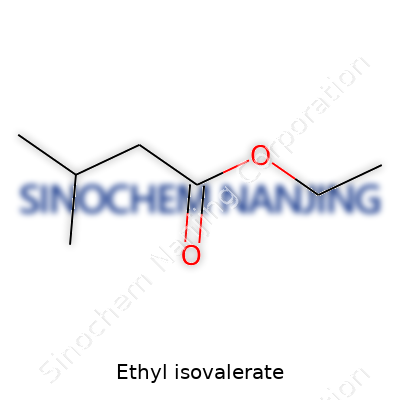
Ethyl isovalerate forms through a reaction between ethanol and isovaleric acid. The structure shows up as familiar to anyone who’s studied esters. You’ve got the ethyl group (CH3CH2–) anchoring to the oxygen of the acid. On the other side, the isovaleric bit stretches out as (CH3)2CHCH2COO–. All together, the chemical structure lines up as:
CH3CH2OOCCH2CH(CH3)2
This kind of linkage—an ester bond—turns ordinary acids and alcohols into something that smells and tastes a whole lot better. Here, it throws off a fruity, apple-like aroma. I’ve smelled bottled ethyl isovalerate in food labs, and the scent might fool almost anyone into believing they’re in an orchard, not a classroom wearing a lab coat.
Why the Formula and Structure Matter
The details of the molecule do more than fill a textbook. For food safety and product design, precision makes a difference. Mislabeling or carelessness in the structure could mean additives don’t pass food regulatory checks. The United States Food and Drug Administration, as well as the European Food Safety Authority, demand crystal-clear identification before granting approval. If the structure were even slightly off, the body might handle it differently, potentially leading to allergic reactions or other health effects.
Manufacturers often blend ethyl isovalerate into flavors for candy, baked goods, beverages, or even perfumes. The right formula ensures reproducibility—a must for meeting consumer expectations, especially for global brands crafting the same taste in different factories. Missteps in the chemistry can cause off-flavors. That means waste, lost revenue, and often recalls—costly both for companies and for the trust of regular people like you and me.
Building Better Oversight and Solutions
Every professional handling food additives or aromatic compounds needs a working knowledge of structures like ethyl isovalerate. Relying blindly on supplier claim sheets without internal lab verification poses risks. Companies staying ahead send samples for NMR or mass spectrometry confirmation, double-checking what’s on paper matches what’s in the barrel.
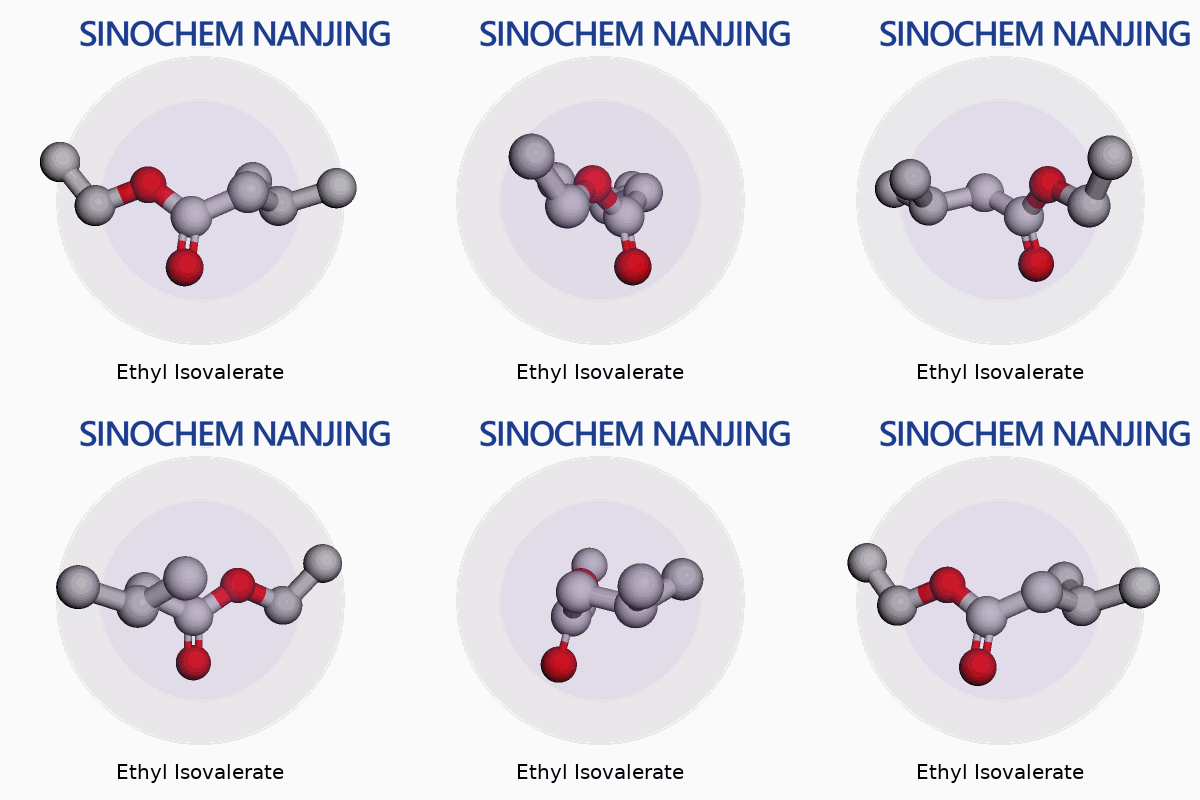
Universities and technical schools can close gaps by insisting students actually draw or model these molecules. In my own student days, making space-filling models out of kits solidified what those lines and letters on paper represented in three dimensions. If you want to reduce quality errors, there’s no substitute for this hands-on exposure in the curriculum—regardless if a person winds up designing chewing gum or managing chemical storage.
With more consumers reading labels and regulators raising their guard, detailed chemical literacy isn’t just a job skill. It helps protect public trust in food, flavor, and fragrance industries. Every time the right molecule ends up in the right place, and people get what they expect, it’s chemistry at work supporting daily life—often behind the scenes, but absolutely essential.
Does Ethyl Isovalerate have any known allergens or side effects?
Getting to Know the Compound
Most people have never heard of ethyl isovalerate, but the chemical shows up in more places than you’d guess. It's a flavoring ingredient, found in things like candy, cakes, and even some fruit drinks. Food scientists like it because it brings a fruity note—a bit like apple or pineapple—to whatever they’re working on. You’ll also find it listed in perfumes and cosmetics, which means people end up in contact with it more often than they probably realize.
What We Really Know About Allergies
Concerns about allergies come up these days with almost every additive. Recent data from regulatory agencies, including the FDA and the European Food Safety Authority, shows ethyl isovalerate doesn’t make the common allergen lists. No one has reported widespread issues such as contact dermatitis, and the flavoring industry sees very little evidence pointing to actual allergic responses.
Looking at my experience in the food sector, food technologists spend a lot of time tracking consumer complaints. Reports of sneezing, rashes, or hives after eating products with ethyl isovalerate don’t surface in any significant numbers. Some people may still mention sensitivity, and every body is different. Trace allergies to completely unrelated flavoring agents exist, but published clinical trials and food safety panels have cleared ethyl isovalerate as a low-risk substance on that front.
Examining Side Effects and Safety
Every ingredient carries some level of risk, especially if you use it way beyond what's meant for human consumption. High doses in animal testing (usually much, much higher than anyone would ever get from eating regular food) haven’t shown lasting negative effects. No clear link ties reasonable use of ethyl isovalerate to organ toxicity, hormonal disruption, or long-term health problems in people.
Regulators put a lot of weight behind these safety decisions. The Joint FAO/WHO Expert Committee on Food Additives classed ethyl isovalerate as safe for use in food, and global food standards bodies set maximum use levels to make sure it stays far below any dose that triggers concern. In Europe, flavorings get tough scrutiny before approval, and ethyl isovalerate made the cut.
Why It Still Matters to Watch Ingredients
People react differently to substances—even the safe ones. Anyone with a tendency toward chemical sensitivities, asthma, or rare metabolic conditions should keep track of reactions when trying a new food or cosmetic. Doctors often recommend patch testing or ingredient tracking for those who notice patterns of sensitivity. Food labels carry more detailed information than ever before, making it easier for consumers to avoid anything they suspect as a trigger.
On industry side, producers need to keep assessment records up-to-date as science advances. Transparency about ingredient sourcing and purity keeps trust high. Health professionals suggest consumers look for trusted certifications and read up if they’re unsure about a label.
Building a Smarter Approach
No ingredient should escape regular review just because it’s been labeled non-allergenic or safe so far. Constant research and public feedback help update the safety record. If anyone notices changes in how their body reacts to new products, it helps to keep a food diary and talk with a medical expert. Companies who listen to these experiences—rather than just regulatory guidelines—can stay ahead in keeping the public safe.
| Names | |
| Preferred IUPAC name | ethyl 3-methylbutanoate |
| Other names |
Ethyl 3-methylbutanoate Ethyl isopentanoate Butanoic acid, 3-methyl-, ethyl ester |
| Pronunciation | /ˈiːθɪl aɪˌsəʊˈvæləreɪt/ |
| Identifiers | |
| CAS Number | 108-64-5 |
| Beilstein Reference | Beilstein 1721189 |
| ChEBI | CHEBI:8773 |
| ChEMBL | CHEMBL3205682 |
| ChemSpider | 14110 |
| DrugBank | DB14186 |
| ECHA InfoCard | 100.120.00 |
| EC Number | 203-299-8 |
| Gmelin Reference | 8228 |
| KEGG | C09676 |
| MeSH | D02.241.223.211.890 |
| PubChem CID | 7772 |
| RTECS number | NJ3325000 |
| UNII | RK484UN83D |
| UN number | UN1993 |
| CompTox Dashboard (EPA) | DTXSID3039240 |
| Properties | |
| Chemical formula | C7H14O2 |
| Molar mass | 130.187 g/mol |
| Appearance | Colorless to pale yellow liquid |
| Odor | fruity, sweet, pleasant |
| Density | 0.867 g/cm³ |
| Solubility in water | Insoluble |
| log P | 2.44 |
| Vapor pressure | 0.2 mmHg (20°C) |
| Acidity (pKa) | Estimated pKa ≈ 25 |
| Magnetic susceptibility (χ) | -7.72·10⁻⁶ |
| Refractive index (nD) | 1.399 - 1.404 |
| Viscosity | 2.425 mPa·s (20 °C) |
| Dipole moment | 1.78 D |
| Thermochemistry | |
| Std molar entropy (S⦵298) | 389.6 J·mol⁻¹·K⁻¹ |
| Std enthalpy of formation (ΔfH⦵298) | -532.9 kJ/mol |
| Std enthalpy of combustion (ΔcH⦵298) | -3331.0 kJ/mol |
| Hazards | |
| GHS labelling | GHS02, GHS07 |
| Pictograms | GHS02,GHS07 |
| Signal word | Warning |
| Hazard statements | H319: Causes serious eye irritation. |
| Precautionary statements | P210, P233, P240, P241, P242, P243, P280, P303+P361+P353, P304+P340, P305+P351+P338, P405, P501 |
| NFPA 704 (fire diamond) | 1-2-0 |
| Flash point | 87 °C |
| Autoignition temperature | 463°C |
| Explosive limits | Explosive limits: 0.9–6.4% |
| Lethal dose or concentration | LD₅₀ (oral, rat): 9,700 mg/kg |
| LD50 (median dose) | LD50 (median dose): Rat oral 8300 mg/kg |
| NIOSH | EIW |
| PEL (Permissible) | PEL: Not established |
| REL (Recommended) | 500 mg/L |
| Related compounds | |
| Related compounds |
Isovaleric acid Ethyl acetate Isoamyl acetate Isobutyric acid Methyl isovalerate |



