Erucamide: An In-Depth Look at Its Development and Modern Role
Historical Development
Erucamide grew out of the chemistry labs of the 20th century, shaped by the relentless demand for better materials in plastics and packaging. Chemists first noticed that certain fatty acid amides worked wonders for sliding plastics past each other. In that hunt to make polyethylene and polypropylene less sticky and easier to work with, erucamide emerged as a top performer. Its story crosses from agricultural crops—like rapeseed and mustard seeds—straight to conveyor belts and stretch films. Market records from the 1970s show factories moving from basic fatty amides toward erucamide, not because it was trendy, but because it made film production faster and cleaner. Adjustments over the years kept pace with changing regulations, especially in Europe and North America, which pushed manufacturers to tighten up purity and sourcing. Efficiency in extraction and synthesis advanced its availability, so even today, the commodity owes much to research rooted in the oilseed boom of the last century.
Product Overview
Erucamide stands out as a white, waxy solid at room temperature, packaged everywhere from bags on a chemical supplier’s floor to high-tech bottles in research labs. Industrial clients get it in powder or pellet form, measured by purity, melting point, and trace chemical residues. Makers check every batch by gas chromatography and spectrometry. The scale runs from a few metric tons a year for small converters to massive streams for multinational plastics groups. Suppliers highlight the substance’s ability to lower friction without breaking down under heat. In a market where reliability means everything, companies often stick with branded erucamide or demand traceable supply chains, avoiding cross-contamination with animal by-products.
Physical & Chemical Properties
Erucamide belongs in the family of fatty acid amides and carries the chemical formula C22H43NO. Its signature comes from the long hydrocarbon tail—derived from erucic acid—giving the molecule an almost greasy feel. The melting point ranges between 81°C–85°C, which means it handles moderate process heat without breaking down, unlike its shorter-chained cousins. Its molecular weight hovers around 337.6 g/mol. Water can't dissolve it, thanks to that long tail, so it floats to the surface in most processes. Yet, it holds up well in nonpolar solvents and keeps its shape. Odorless and stable under most light and storage conditions, it keeps films smooth and easy to peel apart, even after months in a warehouse.
Technical Specifications & Labeling
Industry standards set the minimum erucamide content at 98% or higher, and most producers list residual acidity and loss on drying on each shipment. Packaging bears hazard symbols only if lab analysis picks up trace amines or unsaponifiable residues. Logistics teams often track lot numbers from field to finished roll, following REACH regulations in the EU or TSCA codes in the US. Reliable labels carry not just purity, but key details like heavy metal content under parts per million, and peroxide values to spot shelf-life problems. In large-volume deals, clients sign off on certificates confirming compliance with ISO 9001 or similar quality schemes.
Preparation Method
In practice, chemical plants synthesize erucamide by reacting erucic acid with ammonia or a suitable amine. Erucic acid usually arrives from pressed seed oil, cleaned and refined to pharmaceutical standards. Workers combine the acid and ammonia under heat—sometimes around 200°C—using dehydrating agents to strip water from the mix. This step solidifies erucamide, which then cools, gets washed, and runs through a recrystallization process to strip out side products. The separation, drying, and grinding steps take place in closed systems to keep operators and the neighborhood safe from volatile fumes. Chemical engineers watch for temperature swings and pH changes so the product stays on spec.
Chemical Reactions & Modifications
Most erucamide entering the market stays chemically unchanged, though the molecule's amide group means it could, in theory, transform under harsh enough conditions. Contact with strong acids or bases can split the amide back into erucic acid and ammonia. In controlled environments, those reactions help recycle off-spec material. Some labs attach side groups to boost stability for high-performance film. A more recent twist involves hydrogenation, converting the unsaturated bond in erucamide’s side chain to a saturated form, improving shelf stability and, in some cases, making the material safer for food contact films. But most everyday packaging sticks with the traditional, unsaturated form for cost and ease of integration.
Synonyms & Product Names
Erucamide appears in sales sheets and chemical catalogs under a range of names: 13-Docosenamide, (Z)-; erucic acid amide; cis-13-Docosenamide; and sometimes just fatty acid C22 amide. In some markets, brands attach their own code, like "Erucol," especially in the polymer and fiber additives sector. Workers recognize it by its fatty feel and white-to-off-white color. For customs paperwork and international shipping, the trade always lists CAS No. 112-84-5. Knowing these names helps logistics folks avoid mix-ups, especially where chemical regulations need precision.
Safety & Operational Standards
Factory managers measure air quality whenever erucamide is in play, even if major risks stay low for finished product. Dust and fine powders can irritate the throat, so filtration and masks are routine. The raw chemical doesn't ignite easily, but precautions against static electricity and dust clouds remain non-negotiable, given that milling and bagging large amounts sometimes trigger small fires. Storage recommendations in every major market include keeping erucamide dry, away from direct sunlight, and off the warehouse floor to stop cross-contamination or accidental spills. Near any food-contact operations, lines need zero animal by-product contamination and clean recordkeeping for recalls. Safety data sheets note the chemical degrades slowly, with little risk to aquatic life at realistic levels, but central authorities still check for residual amines or breakdown products in effluent streams heading to municipal treatment plants.
Application Area
Stretch film, shrink wrap, and molded plastics make up the core use cases for erucamide. Equipment operators sprinkle it into masterbatches for polyethylene and polypropylene, watching production lines pick up speed because bags and sheets stop sticking. Cable and wire manufacturers also depend on it to keep insulation smooth. Some textilers brush it onto fibers for better weaving and knitting. Outside plastics, a handful of ink and paint manufacturers blend small amounts into pastes and dispersions for better flow. Operating engineers see the difference in fewer jams and cleaner rolls. The cosmetic and food packaging sectors lean on its plant origin and stability, provided documentation keeps the supply chain transparent.
Research & Development
Academic labs dig into the molecular tweaks that could stretch erucamide’s properties. Polymer physicists at leading universities keep working on additives that balance anti-block performance with long-term migration resistance, aiming to cut contamination in food packages. Some groups look for greener synthesis methods by using enzyme catalysts or less energy-intensive heat sources. Long-term collaborations between corporations and public agencies seek safe alternatives with lower erucic acid content, following up on old reports about its effects in food. Analytical chemists work on high-sensitivity methods to spot erucamide residues in packaging, supporting ongoing efforts to match tighter food safety laws. A solid stream of patents in the last decade covers improvements in blending, dispersion, and even recycling erucamide-packed plastics into new products.
Toxicity Research
Medical and toxicology studies since the 1980s show erucamide doesn't soak into skin or accumulate in organs at the rates of concern for humans outside of exceptional workplace exposure. Oral and dermal toxicity values land in the “practically non-toxic” range for mammals. Regulatory agencies in the US, Europe, and Japan check every five years or so, prompted by changing food contact guidelines or fresh animal studies. Occasional occupational health reviews focus on dust inhalation, but chronic issues rarely turn up outside of older plants with poor filtration. Environmental researchers have tracked its slow breakdown in soil and water, usually logging no impact until levels rise well above those ever seen near real production. That said, as plant-based chemicals go, erucamide keeps a clean record, though studies keep rolling in to confirm it.
Future Prospects
With sustainability pressures rising, the market steers toward certified, plant-based feedstocks and techniques that leave a lighter footprint. European Union regulators, working side by side with chemical companies, continue to review safe limits in food and pharma contact films. There’s growing push to link erucamide production with traceable agriculture, giving big buyers transparent records on pesticide use and GMO status for erucic acid sources. Startups in biotechnology experiment with genetically modified oilseeds that pump out higher yields with less intensive farming, which could reduce costs and environmental burden. Digital tracking, advanced QC, and automation help plants keep material flows tight and safe, bridging tradition with a new era for industrial chemistry. There’s talk among converters and brand owners about recyclable or biodegradable films and fibers. Here, erucamide faces fresh competition, since it must compete with new slip agents made from side-streams or fermentation processes built around circular economy models. Whatever path the chemicals sector takes, trust in supply transparency, ongoing safety benchmarks, and collaborative research will hang over erucamide’s future role in everyday life and industrial progress.
What is Erucamide used for?
What Role Does Erucamide Play?
Erucamide turns up in more places than most people realize. I first came across it while helping a friend sort out batch defects in packaged snack foods, and that led me down a rabbit hole. It’s an organic compound, coming from the fatty acid erucic acid found in certain seeds like canola. In industry, folks rely on erucamide to resolve some surprisingly common problems tied to plastics, packaging, and even textiles.
Slippery Films and Frustration-Free Packages
Anyone who’s tried to tear open a stubborn snack bag or roll out cling film knows that plastic can act a little too clingy for convenience. Erucamide offers a simple trick—make the surface of plastic packaging just slick enough to separate easily. I learned that polymer film manufacturers add tiny amounts during the melt phase, letting the molecule migrate to the surface. This change reduces friction between layers so manufacturers and consumers both see fewer jammed machines and stuck-together bags.
According to a 2022 report from Grand View Research, slip agents such as erucamide help cut downtime and waste in film packaging lines. That’s a real impact for companies fighting thin margins and trying to improve user experiences.
Textiles, Inks, and More
Erucamide doesn’t only help out plastics. In textile production, it reduces surface friction to make synthetic fibers and yarns glide through high-speed machinery. I’ve toured small-scale textile facilities where the lack of proper slip agents meant jammed looms and shredded fabric, turning production into a headache.
Printing depends on erucamide too. Inks and coatings need good leveling properties to avoid streaks or patchy coverage, especially in glossy magazines or colorful product wrappers. Here, erucamide acts as an anti-blocking additive, keeping sticky surfaces from fusing together during stacking or storage.
Food Safety and Health Perspectives
Any chemical in the supply chain for packaging or textiles needs scrutiny. The FDA permits erucamide in food packaging, within certain limits. Regulators in Europe take a similar line, referencing studies that point to low toxicity at permitted levels. Still, awareness around endocrine disruptors and cumulative chemical exposure is growing. I’ve heard from parents and consumer groups raising questions about food contact materials, even the obscure ones.
It makes sense to keep tabs on how much of this compound migrates from packaging into food—especially since different plastics might interact with additives in complex ways. Ongoing research and transparent labeling could help earn more confidence from consumers.
Challenges and New Directions
Sourcing matters, too. Most commercial erucamide is made from vegetable oils, pushing toward more sustainable supply chains. It’s still wise to consider the environmental toll of extraction and chemical processing. In countries with strict pollution controls, manufacturers adopt closed-loop systems and safer solvents, which reduces waste.
Researchers hunt for even safer bio-based slip agents. Some companies experiment with blends from corn and castor oil, aiming to keep the functional benefits but limit possible risks to health and the environment.
Looking Forward
So, a single molecule manages to influence packaging, clothing, printing, and even how easy it is to open a bag of chips. Paying attention to the sourcing, safety studies, and alternatives will keep erucamide’s benefits in balance with the concerns of modern consumers.
Is Erucamide safe for use in food packaging?
What Is Erucamide?
Erucamide turns up everywhere from plastic wraps to bread bags. Food manufacturers like it because it keeps packaging from sticking together. Think about trying to peel off a fresh slice of cheese without the plastic getting in the way; that slick feeling comes in part from erucamide. This fatty acid amide is made from rapeseed oil and gets used as a "slip agent" to reduce friction in all sorts of plastics.
Is It Safe Around Food?
Plenty of folks wonder whether it’s okay for a chemical like this to mingle with anything you eat. The U.S. Food and Drug Administration (FDA) and European Food Safety Authority (EFSA) both set rules for how much erucamide can land in food packaging. In the United States, the FDA allows erucamide in certain types of packaging as long as it stays below 0.005 milligrams per square inch of packaging. This limit exists to avoid migration—the tiny bit that could work its way from the plastic into your food.
Scientific studies show that erucamide doesn’t build up in the human body at these levels. Rats fed erucamide for long periods didn’t show health problems, according to EFSA data. The World Health Organization, too, doesn’t flag it as a cancer risk or reproductive toxin.
Concerns That Deserve Attention
No chemical is totally risk-free. Sometimes more erucamide can sneak from packaging into fatty foods, especially when heat is involved. Leftover pizza heated in the microwave or hot lasagna wrapped in clingfilm could pull slip agents out of the plastic. While studies say migration levels from erucamide in food are well below the maximum limits set by regulators, watchdog groups still call for regular testing, especially since eating patterns and packaging habits keep changing.
Real-life cases of allergies or toxicity from erucamide are rare. Most complaints trace back to internet rumors or confusion with erucic acid, a component in rapeseed oil that’s less safe—but totally different chemically. As someone who pays close attention to food safety research, I haven't found evidence suggesting erucamide causes problems in healthy adults or children at permitted levels.
What Can Help Protect Consumers?
Trust works best when companies and regulators don’t keep secrets. Packaging companies should share what slip agents they use and stick to strict testing. Packaging made just for food, labeled as food grade, comes with extra scrutiny and testing. Regulators already require manufacturers to run migration studies—the kind that expose packaging to acids, oils, and heat to mimic worst-case use.
I think regular reviews matter, especially as food packaging changes with new plastics or coatings. A food safety system needs authorities who actively sample supermarket products. Food companies that test their products and tell consumers what’s inside gain loyalty and confidence.
Looking for solutions, better food safety education helps a lot. Simple label transparency—saying what additives go into each package—makes a big difference. Pushing for new, plant-based or biodegradable slip agents can also shrink any long-term risk, especially as more natural solutions reach the market.
Final Thoughts
In all the years erucamide has lined supermarket shelves, science hasn’t linked it to any major human health crisis. Still, nobody benefits from carelessness. Both the food industry and the people watching over it owe it to shoppers to keep up honest testing, thoughtful limits, and clear communication. After all, food safety works best when everyone knows the facts and takes practical steps to keep packaging safe.
What is the difference between Erucamide and Oleamide?
Understanding Both Additives
In film production and plastics, many overlook the hidden helpers that make the process smoother. Erucamide and oleamide often show up in conversations around slip additives. Both come from fatty acids, both shape the feel and running of plastic films, but their differences play a huge role in performance and final product quality.
Digging Into Chemistry and Source
Erucamide has a longer carbon chain compared to its cousin, oleamide. Each molecule tells a story. Oleamide’s pile of 18 carbon atoms makes it a bit more flexible, while erucamide stretches out to 22, making it a little bulkier. These differences affect melting points, migration rates, and even how they interact with other ingredients or coatings in a formula.
Most erucamide comes out of the rapeseed oil refining process. Oleamide typically starts from animal fat or vegetable oil. Sustainability and sourcing pop up here — many companies now chase plant-based sourcing to meet environmental promises.
Physical Properties Mean Real-World Changes
I’ve run tests in a workshop where we made polyethylene bags on the same line, swapping oleamide for erucamide. With erucamide in the mix, bags unrolled from the core with less friction. Even in high-speed packing, these bags slid off the machinery with less static, helping avoid snags and jams. Oleamide, faster migrating, blankets the film surface more quickly after extrusion. It shows its full slip effect in less time — a handy trait for fast-moving production or thin films.
Sliding your thumb across a bag made with erucamide feels different too. It leaves a smoother, almost waxy sensation. Oleamide makes surfaces slick, but the feeling is more fleeting. In humidity, erucamide stands up better. It lingers on the surface, not rushing into the polymer matrix, and manages to hang onto its slip action for months.
Concerns in Use and Potential Solutions
Working with these additives calls for trust in the data and some real-world wisdom. Erucamide proves better in applications where longevity or tough conditions matter, like agricultural films sitting in a field or industrial packaging exposed to heat. Oleamide works well for single-use films and applications where immediate slip is critical, like grocery bags or food wrappers.
Not every formula loves erucamide. For food packaging, leaching into the food stays low, but regulators in some regions draw lines about which amides pass muster. Oleamide, thanks to its faster migration, can drift into contact food zones more quickly than intended. This forces producers to check batch purity and migration rates through testing.
Layered films can also give headaches. Too much slip agent can cause ink adhesion problems — print comes out ghostly or just rubs off. In more complicated multilayer films, companies sometimes blend both erucamide and oleamide, aiming for a quick-fix plus a long-term slip performance. That means dialing in the percentage of each and hooking up quality control at every step. Skipping those checks leads to costly callbacks and waste.
Getting It Right — Why Picking the Right Amide Matters
After years in manufacturing, I learned to never just pick an additive for cost or convenience. Field trials, shelf tests, checking compatibility with colorants or barrier layers — these steps save trouble down the road. Choosing erucamide or oleamide isn’t about which sounds more technical, but about what your final product will face out in the world. Plenty of equipment breaks down from films sticking in hot weather or labels not sticking on slip-heavy bags.
Paying attention to basics like storage, climate conditions, and end-user handling brings fewer complaints and better brand reputation. Green chemistry now pushes us to study cleaner synthesis and tighter controls — another reason to match additive to application, rather than leaning on habit or old data.
How is Erucamide applied in the manufacturing process?
Why Erucamide Matters on the Factory Floor
Some raw ingredients earn quiet respect in the industrial world. Erucamide holds a steady place among those unsung heroes, especially for anyone who’s handled plastics, films, or packaging. Its slick, waxy feel isn’t just about the material itself but what it does to make materials behave better. Factories rely on additives like erucamide to work out daily headaches, from sticky conveyor jams to packaging rolls that won’t unwrap without tearing.
How Erucamide Enters the Process
My years around plastics plants taught me that erucamide does its work during extrusion and molding. Operators load it in with pellets or powders, dose it in precise amounts, and watch for it to spread through the blend. Heat and pressure do most of the work. Erucamide quickly migrates to the surface of the finished polymer, turning it from grabby and stubborn to smooth and easy to handle.
This surface action makes all the difference. Polyethylene and polypropylene—two of the most common plastics—come off machinery with a slight tackiness that gums up production or causes problems down the line. A touch of erucamide, and the tack peels away. Films run through rollers faster, bags stack neater, and food packaging feels crisp but not slippery enough to cause trouble on assembly lines.
Beyond Slickness: Erucamide’s Safety Track Record
Some days, plant managers worry about the invisible stuff—additives no one sees but everyone uses. Erucamide has a long record of safety, especially when used in packaging touching food. The FDA has reviewed it and set limits, but decades pass without widespread issues. This track record rests on scientific studies showing it doesn’t leach out in harmful quantities under normal use. Manufacturers still have to test each batch, especially for sensitive applications.
Challenges and Solutions at the Factory Level
Working with erucamide isn’t always smooth sailing. Too much of it, and films lose printability or get so slick they slip out of machines. Not enough, and lines slow to a crawl. Tight controls, testing, and steady training solve most problems. Factories invest in good measurement tools and keep operators up to date. Technicians learn to notice symptoms—film surface too shiny, edges curling, machines getting sticky—and tweak formulas as needed.
Recycling also drives new thinking. Because erucamide tends to move to surfaces and stay there, it remains in recycled plastic. This persistence forces recycling firms to adapt. Some might wash pellets more thoroughly, others try to sort out contaminated scraps. Companies reach out to suppliers for new grades that break down more easily or wash out without expensive treatments.
Keeping Watch for Tomorrow’s Standards
Experts keep an eye on ingredient lists, not just for efficiency but for health and environmental reasons. European standards tighten every few years, so global producers look ahead, testing alternatives and collecting thorough documentation for risk assessments. Investing in quality sourcing matters: the best manufacturers trace every batch, audit supply chains, and publish their findings. This transparency lets buyers, regulators, and consumers trust the end result.
Personal Perspective on Reliable Additives
Over the course of my career, every step toward better additive management saved money, prevented accidents, and raised product quality. Workers grew confident knowing what went into their machines, and line speed picked up without the jam-ups of cheap or poorly measured alternatives. Good erucamide isn’t about shiny sales brochures but about the way work gets done: safer, faster, less frustrating. The job’s easier when you understand what makes your raw materials click.
What are the storage and handling requirements for Erucamide?
The Basics of Erucamide Safety
Erucamide pops up everywhere, from plastic films to lubricants and dyes. Its waxy texture and slick feel mark its value in manufacturing, but those same traits present challenges if workers and facility managers don’t respect what safe handling of this substance requires. Even after years of dealing with specialty chemicals, erucamide still surprises people who think it behaves like any other slip agent.
Staying Ahead of Moisture and Heat
Moisture acts as a real enemy for erucamide. The first time my team left an unsealed bag of flakes in the open air during a hot, muggy summer, clumping and discoloration followed. The lesson became simple: control the environment, or face contaminated product. Keeping erucamide in a dry, cool area protects its slip qualities and prevents degradation. Most facilities use ventilated, dedicated storage rooms set below 30°C, and keep relative humidity under 60%. Costs rise when product spoils, so it saves money over time to monitor storage conditions rather than clean up after mistakes.
Proper Containers Make a Difference
Steel drums lined with food-grade plastic or sealed fiberboard drums offer the most reliable protection, but thick polyethylene bags can do the trick if handled the right way. Open-topped or damaged containers leave erucamide exposed, and any contamination can cause entire batches of film to lose critical properties. Some plants adopted a double-bagging process after finding dust residues had made their way into expensive machinery downstream. It’s a straightforward change, but it prevents shutdowns and complaints from customers demanding higher standards for food-grade plastics.
Tackling Spills and Dust
Erucamide flakes create slippery floors in an instant. Anyone who worked on a conversion line can remember near-misses from poor cleanup routines. Quick spills require action with dry absorbent material, and disposal follows local regulations due to possible environmental harm. My old supervisor once insisted every shift post clear signs and keep spill kits close. Some rolled their eyes, but insurance claims and minor injuries disappeared as a result.
Dealing with erucamide powder ramps up the stakes. Tiny airborne particles irritate lungs—N95 masks, gloves, and tight-fitting goggles become non-negotiable instead of optional. Ventilation systems with HEPA filters keep the workspace safe. Several companies learned these lessons only after a string of reports about headaches and coughing—protecting health is always worth the hassle.
Documented Controls and Traceability
Companies that treat erucamide as a commodity instead of a chemical risk chaos. Good recordkeeping—tracking batch numbers, usage rates, and temperature logs—gives strong quality control. This protects workers and keeps regulators satisfied, as slip additives tied to food packaging face close scrutiny for purity. It doesn’t matter if you’re a multinational firm or a small converter: Gaps in documentation derail shipments and strain relationships with partners up and down the supply chain.
Training and Culture Shift
Strong training earns its keep. People quickly forget a lecture but remember hands-on sessions. Bringing new staff onto the shop floor, walking them through labeling, chemical handling, and spill drills ensures no one guesses about safety. Employees hold each other accountable, and word spreads fast about the old “it’s just a slip agent” myth.
Keeping erucamide stable, clean, and under control takes more than a checklist. It means setting up responsible routines, educating workers, and focusing on safe, quality-driven results every day—not just during an audit.
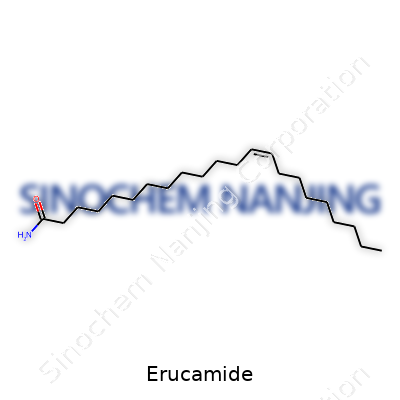
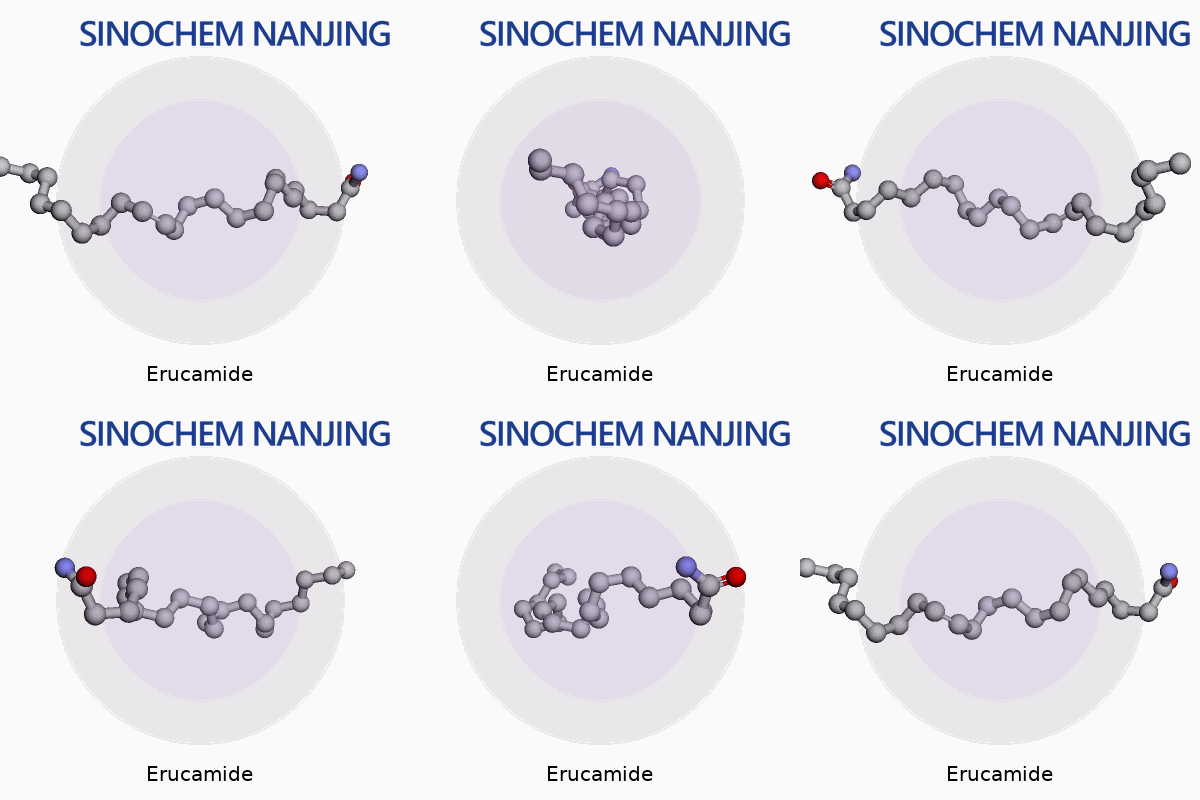
| Names | |
| Preferred IUPAC name | (E,Z)-docos-13-enamide |
| Other names |
erucylamide cis-13-docosenamide 13-docosenamide 1-amido-docos-13-ene |
| Pronunciation | /ɪˈruːkəˌmaɪd/ |
| Identifiers | |
| CAS Number | 112-84-5 |
| Beilstein Reference | 1722529 |
| ChEBI | CHEBI:51421 |
| ChEMBL | CHEMBL21737 |
| ChemSpider | 69515 |
| DrugBank | DB14096 |
| ECHA InfoCard | ECHA InfoCard: 100.005.218 |
| EC Number | 207-899-4 |
| Gmelin Reference | 6136 |
| KEGG | C14832 |
| MeSH | D000437 |
| PubChem CID | 8004 |
| RTECS number | MI7700000 |
| UNII | 967O876Y38 |
| UN number | UN3077 |
| CompTox Dashboard (EPA) | DTXSID1039220 |
| Properties | |
| Chemical formula | C22H43NO |
| Molar mass | 337.57 g/mol |
| Appearance | White powder |
| Odor | Odorless |
| Density | 0.855 g/cm³ |
| Solubility in water | Insoluble |
| log P | 7.7 |
| Vapor pressure | Negligible |
| Acidity (pKa) | 14.0 |
| Basicity (pKb) | 3.36 |
| Magnetic susceptibility (χ) | -55.0e-6 cm³/mol |
| Refractive index (nD) | 1.453 |
| Viscosity | Viscous solid |
| Dipole moment | 1.37 D |
| Thermochemistry | |
| Std molar entropy (S⦵298) | 229.6 J·mol⁻¹·K⁻¹ |
| Std enthalpy of formation (ΔfH⦵298) | -204.1 kJ/mol |
| Std enthalpy of combustion (ΔcH⦵298) | -1644 kJ/mol |
| Pharmacology | |
| ATC code | No ATC code |
| Hazards | |
| Main hazards | May cause respiratory irritation. May cause drowsiness or dizziness. |
| GHS labelling | GHS07, GHS08 |
| Pictograms | GHS07,GHS09 |
| Signal word | Warning |
| Hazard statements | H319: Causes serious eye irritation. |
| Precautionary statements | Precautionary statements: P261, P262, P264, P273, P280 |
| Flash point | > 199.6 °C |
| Autoignition temperature | 400°C |
| Lethal dose or concentration | LD50 (Rat, oral): > 5,000 mg/kg |
| LD50 (median dose) | LD50 (median dose): Oral-rat LD50: > 5,000 mg/kg |
| NIOSH | NA9100000 |
| PEL (Permissible) | 10 mg/m³ |
| REL (Recommended) | 10 mg/m³ |
| Related compounds | |
| Related compounds |
Oleamide Stearamide Behenamide Linoleamide |



