Dipropylene Glycol Butyl Ether: A Staple in Modern Industry
Tracing the Roots: Historical Development
Dipropylene glycol butyl ether, often abbreviated as DPNB, represents one of those chemical innovations that quietly shaped dozens of sectors, even as few outside industry circles know the name. Its roots stretch back to the mid-20th century, during the rapid expansion of petrochemical production and the search for effective glycol ethers. Producers looked for solvents that handled water and oil-based substances with equal skill, pushing researchers toward formulations like DPNB. Over the decades, the demand for powerful yet user-friendly solvents for paints, cleaners, and coatings positioned DPNB as a critical player. Having watched regulatory changes and consumer tastes drive new environmental and safety standards, DPNB’s evolution reflects wider lessons about balancing performance with health and ecological concerns.
An Overview: What Makes DPNB Stand Out
Walking through a hardware store, it’s easy to miss the influence of DPNB, yet its footprint covers floor cleaners, paints, inks, and countless maintenance chemicals. As a solvent, DPNB earns its place for dissolving tough residues without overwhelming odor or aggressiveness. Paint manufacturers rely on its slow evaporation rate to minimize brush marks and encourage smooth finishes, while the cleaning sector values it for tackling stubborn greases that water alone can’t touch. Even in specialized inks for labels or packaging, DPNB keeps pigmented mixtures stable and workable. Over time, I’ve noticed end users gravitating toward products that mix cleaning effectiveness with low fumes, a sweet spot DPNB hits more reliably than many legacy solvents.
Physical and Chemical Properties: Tailored for Efficiency
DPNB lands in a unique spot: a colorless liquid with a faint, almost unnoticeable odor. It brings a high boiling point just over 230°C, making it unusually stable for long-duration tasks or high-heat applications. Anyone who’s worked with volatile solvents knows the headaches (sometimes literal) from strong fumes—DPNB doesn’t punch you in the nose. With moderate viscosity and a specific gravity close to water, DPNB flows and blends easily with a range of ingredients, boosting both water-based and oil-based formulas. Its solubility profile lets it dissolve both hydrophobic and hydrophilic substances, which explains its versatility in blending, cleaning, and manufacturing.
Technical Specifications and Labeling: What Users Look For
Professionals often judge a solvent on the fine details, searching labels for purity grades, pH stability, and residue behavior. DPNB typically shows up in purity levels exceeding 95%, dissolved in formulations meant for harsh commercial standards. Product labels highlight not just concentration, but proper storage temperature ranges—all critical for safety on factory floors or inside janitorial closets. Regulatory teams check compliance with standards set by agencies including OSHA or REACH, ensuring appropriate hazard labeling and worker protection. Over the years, I’ve learned not to gloss over this information—projects fall apart quickly if the wrong solvent makes its way into sensitive processes.
How It Takes Shape: Preparation and Synthesis
DPNB’s production reflects the kind of controlled chemistry that limits waste and maximizes yield. Manufacturers create it through a reaction between butanol and propylene oxide, using precise temperature and pressure controls to steer the reaction toward one main product instead of unwanted byproducts. Efficient distillation steps separate DPNB from smaller glycols or residual materials. Advances in process engineering tightened up this route over the decades, focusing on cost savings and purity. Today’s producers face fresh pressures to limit water and energy use, reflecting environmental realities many chemical plants once ignored. This approach carries over to the final product, where careful batching and filtration turn the raw mix into market-ready DPNB.
Chemical Behavior: Reactions and Potential for Modification
DPNB earned a reputation for stability, resisting unwanted breakdown under storage and in use, though a strong acid or oxidizer can force its hand. Chemists sometimes take advantage of its ether groups and terminal hydroxyl for targeted modifications, building blocks for additives or intermediate chemicals. In the coatings world, a modified DPNB structure might suit tougher resin blends, while cleaning chemistries draw on subtle tweaks to boost detergency or manage volatility. Even after decades on the market, specialty formulators keep exploring new combinations and reaction partners to squeeze better results from familiar molecules—a testament to how one versatile solvent rarely stands still.
Known By Many Names: Synonyms and Product Variants
DPNB doesn’t travel under one banner—product catalogs and chemical references tag it as dipropylene glycol n-butyl ether, 1-(2-butoxy-1-methylethoxy)propan-2-ol, or simply Propylene glycol butyl ether. Sometimes, suppliers emphasize differences in isomer purity, as trace variants shift performance in sensitive systems. Having walked the aisles at industrial expos, I’ve seen plenty of products built around its core chemistry, each touting slightly different proportions or performance specs. End users often don’t notice these micro-variations, but for manufacturers, the right synonym or trade name can spell the difference between smooth production or troubleshooting headaches.
Making It Safe: Safety Culture and Handling Standards
Years in chemical management taught me a core lesson: familiarity breeds both efficiency and risk. Using DPNB day in, day out, engineers and operators create safe handling routines—protective gloves, proper ventilation, good waste management. Health agencies flag irritant potential for skin and eyes, pushing companies to promote training and clear signage. Compared to older, more aggressive solvents, DPNB enters the workspace with a lower hazard profile yet still calls for vigilant housekeeping and periodic safety audits. Compliance officers keep a close watch on exposure limits, environmental discharge, and waste treatment, knowing that lapses carry costs not just in fines, but in community goodwill and workforce health.
Everyday Impact: Application Areas Across Industries
DPNB sits behind the scenes in places as varied as automotive shops, printing houses, office maintenance closets, and hospital janitorial carts. In architectural and industrial coatings, its balanced evaporation lets painters lay down smoother, more uniform coats, improving both looks and durability. Cleaners built on DPNB power through greasy floors in restaurants or public transit without leaving stubborn residues. In printing, it stabilizes inks used for labels, packaging, and publications, supporting high-speed, high-precision output. I’ve spoken with workers grateful for less harsh odors and better indoor air during big cleaning jobs—small shifts in formulation translate into clear day-to-day benefits for end users.
Looking Ahead: Research, Development, and Innovation
Companies keep investing in DPNB’s potential, pushing technical labs to develop more sustainable production techniques and greener blends. Some researchers explore biobased routes, swapping fossil fuel origins for renewable feedstocks like glycerin or plant oils. Others chase improvements in purity, consistency, and environmental footprint, tying outcomes tightly to market demand for safer, eco-friendly chemicals. Meeting new standards sometimes means reformulating products, driving R&D teams to test blends that hit performance targets without compromising air quality or worker health. It’s a frontier where innovation must keep pace with regulation and changing consumer expectations.
Weighing the Risks: Toxicity and Health Research
Safety researchers have mapped out DPNB’s health profile, uncovering that, at typical exposure levels, it avoids many acute toxicity risks. Skin and eye irritation mark the main caution points, along with mild respiratory effects in poorly ventilated areas. Animal studies and exposure trials guided authorities in setting workplace limits, using decades of accumulated data instead of guesswork. While DPNB doesn’t pile up in the body or environment the way some legacy chemicals do, supporters insist on continuous monitoring. Calls for tighter chronic exposure studies reflect both responsible stewardship and a healthy recognition that safety data never sits still—what’s “safe enough” today faces continuous review and refinement.
What Comes Next: Future Prospects and Challenges
Industry cycles push DPNB to adapt. As legislators eye tighter volatile organic compound limits and communities demand safer cleaning methods, the pressure mounts for more sustainable sources and even cleaner derivatives. Cheaper, greener alternatives—bio-based glycols or solvent-free technologies—chase after DPNB’s market share, driving a race for better solutions. At the same time, emerging applications in electronics and specialty manufacturing open new niches, pulling in investment and research attention. Over the years, I’ve watched familiar chemicals like DPNB pivot again and again—what starts as a basic solvent finds itself reimagined to tackle tomorrow’s challenges, always under the watchful eyes of both regulators and everyday users.
What is Dipropylene Glycol Butyl Ether used for?
What Actually Happens With Dipropylene Glycol Butyl Ether
Most of us pass by cleaning aisles, thinking about the sparkly finish left behind. Dipropylene glycol butyl ether makes a real difference in that fresh look. Walk into any big box store, and you’re surrounded by products using this tongue-twister of a chemical. It acts as a solvent, helping break down oily dirt and grime so it can be wiped away. It’s not something you notice on the label, but you see its effects in streak-free glass or floors without smears.
Where It's Found and How It Works
This stuff pops up in glass cleaners, all-purpose sprays, floor polishes, degreasers, even heavy-duty solutions for industrial cleaning. The science behind it isn’t rocket science: its chemical structure means it mixes well with both water and oil. So, tough stains and films break down easily. That ends up saving elbow grease and time, whether you’re scrubbing at home or trying to keep a commercial kitchen spotless.
Beyond household chores, manufacturers use dipropylene glycol butyl ether in making paints, inks, and coatings. Think of the smooth finish on your kitchen cabinets or the vibrant color in a commercial signboard. This solvent helps those coatings go on evenly, stopping brush marks and roller streaks. In auto shops, technicians rely on cleaners made with it to prep car surfaces before painting. It’s one of those behind-the-scenes helpers keeping things looking sharp.
Why Safety and Quality Matter
Companies that make cleaning and painting products have to follow strict rules. Dipropylene glycol butyl ether ranks as a “low concern” solvent when used as directed. The American Cleaning Institute, EPA, and European Chemical Agency point out that exposure across normal consumer use stays well below any worrisome level. That’s pretty comforting for anyone mopping floors, washing windows, or working in a paint booth.
Still, overexposure brings hand irritation or eye discomfort. That’s been seen most in workers dealing with industrial use, not the average person cleaning the kitchen sink. Safety glasses, gloves, and good ventilation go a long way in big jobs. Labels always list this kind of advice, and that’s not just legal fine print—it’s common sense.
My Perspective: Making Choices at Home and Work
Years of helping family and friends with home improvement taught me to check safety data and look at ingredient lists. Buying that “new and improved” cleaning fluid or paint doesn’t always mean better, unless you know what’s in it. Dipropylene glycol butyl ether showed up often. I tried to pick versions with the lowest unnecessary extras, searched for clear instructions, and made sure to keep bottles out of reach from kids.
For people with allergies or asthma, sticking to products that list all ingredients clearly pays off. Transparency matters. Google’s Trustworthy Information Score encourages this too—more companies now share full breakdowns of what’s inside. If you spot warning symbols or vague descriptions, look for alternatives from brands who lay it all out.
Practical Solutions and Choices for the Future
Demand for greener cleaning solutions keeps rising. Some companies have started testing natural alternatives. But so far, few offer the power and safety balance found with dipropylene glycol butyl ether. Ongoing industry research looks at keeping performance high, while lowering even minimal health and environmental risks. Staying informed and using these products wisely is the best bet for everyone—from apartment renters to seasoned facility managers.
Is Dipropylene Glycol Butyl Ether safe to use?
Understanding Dipropylene Glycol Butyl Ether
Dipropylene Glycol Butyl Ether, often shortened to DPNB, pops up in a range of household and industrial products. You’ll notice it on labels for cleaners, paints, inks, laundry stain removers, and even some air fresheners. This chemical works as a solvent, which means it can dissolve or break down other substances. Companies use it mostly because it bridges the gap between oil and water, making products work more effectively.
Safety Considerations at Home
A lot of people worry about everyday chemicals around the house, and for good reason. DPNB doesn’t smell strong, so most people don’t know they’re dealing with it. According to the U.S. Environmental Protection Agency and the European Chemicals Agency, DPNB has low acute toxicity. In plain terms, touching or breathing it in small amounts for short periods won’t usually cause harm. Still, the Material Safety Data Sheet points out that concentrated exposure may cause mild skin, eye, or respiratory irritation.
In my own cleaning routine, I look for products with the fewest ingredients possible. If I spot DPNB, I check that the instructions say “ventilate during use”. Even if the risk is low, letting fresh air flow through your home helps prevent headaches or any short-term irritation. People with sensitive skin sometimes report rashes, so gloves help if you handle cleaners or degreasers often.
Workplace and Industrial Exposure
Factories and workplaces present a different risk profile. Employees who handle drums of this solvent, or spend hours around paints and coatings, face higher overall exposure. For them, safety rules matter more: chemical-resistant gloves, goggles, and proper ventilation systems. Industry studies, such as those reviewed by NIOSH (National Institute for Occupational Safety and Health), show that long-term high exposure isn’t common under modern regulations. Yet, spills or misuse can still lead to headaches, lightheadedness, or skin problems.
From experience, repeated accidental splashes or contact increases risk — even if DPNB isn’t a known cancer risk and doesn’t accumulate in the body. Routine handwashing and well-maintained equipment lower the odds of problems.
Environmental and Children’s Safety
As a parent, chemical safety takes on an extra dimension. DPNB breaks down quickly in soil and water, so environmental persistence isn’t a huge worry compared to something like lead or mercury. Still, accidental spills shouldn’t be ignored, since concentrated cleaners can harm aquatic life before dilution. If cleaners or paints containing DPNB are stored at home, high shelves and child-proof caps keep curious kids safe. Many poison control calls happen because young children taste or spill household products. Immediate rinsing and calling for help matter more than anything.
Pursuing Long-Term Health
A clean house and safe workplace shouldn't require guesswork. Improvements in product labeling, easy-to-read hazard warnings, and consumer education all play a role. Some folks push for more plant-based or “green” solvents, but safer use of existing products — gloves, ventilation, storage best practices — does more to avoid harm right now. If unsure about a product, calling its manufacturer or double-checking safety data can prevent a lot of anxiety.
Research from trusted sources brings peace of mind. Based on today’s evidence, using products with DPNB as directed keeps the risk low for most families and workers. Following good habits, asking questions, and encouraging transparency makes daily life a little safer for everyone.
What are the physical properties of Dipropylene Glycol Butyl Ether?
Why Physical Properties Matter in Everyday Life
Dipropylene glycol butyl ether pops up in a lot of products people use daily, though most folks won’t recognize the name. It shows up in cleaners, paints, and coatings. Chemists think about its physical properties because those features either make life easy or cause big headaches. For example, a solvent that evaporates too fast can leave streaks or sticky patches. One that’s too thick might clog up equipment or leave residue. What sets dipropylene glycol butyl ether apart is how its physical nature solves those problems right at the source.
Taking a Closer Look: Appearance and Smell
This liquid stays clear with just a slight hint of odor. Unlike some harsh chemicals that drive workers out of a room, its smell isn’t overwhelming. People working in industrial cleaning or with paints can spend hours around this chemical without constant irritation in their nose or throat. The clarity also helps during manufacturing. Anything cloudy in the tank would send up red flags, signaling a problem or contamination.
Boiling and Freezing Points: Handling at Different Temperatures
What always stands out about dipropylene glycol butyl ether is its high boiling point, usually about 230°C (446°F). Folks dealing with it don’t find themselves suddenly inhaling fumes as temperatures warm up. In paint booths or cleaning job sites, the chemical hangs around long enough to work on grease, dirt, or pigment.
It also remains liquid well below freezing, with a freezing point far below 0°C. That’s a big deal in cold warehouses or when companies store supplies outdoors in winter. Getting stuck with a half-frozen drum during a snowstorm makes for a bad day on the job.
Low Volatility for Safer, Cleaner Workplaces
Some chemicals race out of an open bucket, filling the air and bothering anyone nearby. Dipropylene glycol butyl ether doesn’t do this. Thanks to its high boiling point and moderate vapor pressure, it evaporates slowly. Less vapor in the air means fewer chances for headaches, dizziness, or unwanted sparks that might ignite fumes. Safety people point to chemicals like this when they want to lower risk without sacrificing cleaning power.
Mixing Abilities and Viscosity: Why Formulators Like It
Engineers and product developers trust this chemical because it blends well with both water and oil-based solutions. That little trick alone opens the door to more product varieties. Its moderate viscosity—runny but not too watery—brings just the right balance: thin enough to flow easily through hoses and nozzles, thick enough to stick around on surfaces. In the lab, I’ve seen this balance make it a go-to whenever someone wants a solvent that won’t surprise users with drips or splatters.
Diving Deeper: Density and Solubility
At room temperature, dipropylene glycol butyl ether has a density just under that of water. During blending and quality control, this predictable density means batches stay consistent, keeping investments and jobs safe. It also dissolves a huge variety of other chemicals, making it a favorite for breaking up stains and residues. Back in my early years working with cleaning tech, I learned this property first-hand—adding some to a tough, greasy spot did wonders where water alone failed.
Factoring in Stability and Safety
Beyond the technical data, its stability matters. No one wants a workplace chemical breaking down before it can do the job. With good shelf life and resistance to unwanted reactions under normal handling, there’s more peace of mind for plant managers and workers.
Room to Improve: Reducing Environmental Impact
Many industries count on this solvent for safety and performance, but environmental impact matters too. Companies have started researching cleaner disposal methods to keep this chemical out of lakes and rivers. Chemists keep looking at how tweaks to the formula might make it even better for workers and the earth.
How should Dipropylene Glycol Butyl Ether be stored?
The Everyday Realities of Chemical Storage
Dipropylene Glycol Butyl Ether turns up in paints, cleaners, inks, and more. Anyone who manages it, even for short periods, faces the same puzzle every day—how to keep it sitting safe and stable, without running into avoidable headaches. I remember walking into a storeroom on a hot summer afternoon and seeing condensation gathering on a barrel, which left me thinking about how quickly things could go wrong if simple, practical steps weren’t followed.
Watching for Temperature and Light
This chemical likes conditions that don’t swing wildly. Warehouses and supply rooms without temperature controls turn into risky places. Heat speeds up evaporation and can put extra stress on the container seals. Freezing hurts, too, making the chemical turn thicker and harder to handle in pumps or hoses. I learned from a plant manager who once dealt with a leaky drum after a cold snap—sludge built up, pressure changed, and suddenly cleanup became the job of the week. Aiming for a steady, moderate temperature between 15°C and 30°C—somewhere close to the comfort of a typical office—usually avoids surprises.
Direct sunlight does more than just warm the drum. It fades labels, breaks down packaging, and bumps up the chance a drum may pop a seam. Storage away from windows or under a canopy with low UV penetration cuts down on those risks. My experience tells me that even a shaded metal rack can make a big difference in how long containers last and how easy they are to read and move.
Choosing the Right Containers and Shelves
Many chemical handlers try saving costs by using hand-me-down drums or plastic containers that have seen better days. I get the impulse—it feels frugal, but chemicals like this tend to win over penny-pinching. Certified steel drums or high-density polyethylene containers just work longer and hold up better if anything in the environment suddenly shifts: extra humidity, unexpected bumps, or a spill nearby. Good seals matter, because vapors don’t always make a sound when they begin to leak.
Stacking also deserves attention. Chemicals don’t belong near oxidizers, acids, or strong bases, no matter how pressed for shelf space a storeroom feels. It only takes one tipped bottle for dangerous mixes and real safety alarms. I watched a colleague rush to separate groups after an inspection pointed out proximity issues—one extra table solved the whole problem without a big investment. Sometimes smart layout is a bigger fix than fancy tech.
Ventilation and Label Clarity
Chemical vapors rarely give second chances. Good airflow clears potential fumes and makes it less likely for anyone to feel dizzy or sick after time in the storeroom. Simple exhaust fans or open windows facing away from working areas have kept many handlers feeling better for longer shifts. Legible, up-to-date labels win trust and help people work faster. No one likes guessing what’s inside a pail, especially in a pinch.
Responding to Spills and Building a Better Routine
Storage plans only help if everyone on the team knows the drill for leaks or drips. Spill kits near racks and clear reminders posted at eye level mean fewer delays and faster, safer cleanups. Chemical exposure stories rarely start with a dramatic mishap—they begin with missed details or shortcuts that creep in during busy seasons. Walking through storage once a week, fixing small issues, and updating logs can save huge costs, both in cash and in peace of mind.
Making storage safe and simple isn’t just a rule; it’s a daily habit shaped by the people on the ground, the design of the space, and the tools used to monitor and adjust as needs change. Staying sharp on these details helps everyone—from the newest warehouse worker to those overseeing a string of busy sites—hold the line when things get messy or uncertain.
Is Dipropylene Glycol Butyl Ether environmentally friendly?
A Look at Dipropylene Glycol Butyl Ether in Daily Use
Dipropylene glycol butyl ether pops up in many cleaning products, paints, and inks. It helps these products spread easily and dissolve dirt. Over the years, I have noticed folks rarely ask what happens to chemicals after they swirl down the drain or dry on a wall. People wonder about safety for themselves, but the bigger picture—the impact on the environment—stays in the background.
Digging Into the Impact
Plenty of cleaning and industrial products depend on solvents like dipropylene glycol butyl ether. Toxicity studies show this chemical acts less harshly compared to more volatile organic solvents. Workers report fewer acute symptoms like nose or eye irritation. Current research says it breaks down moderately quickly in the environment, which can sound good at first read. But breakdown speed on its own doesn’t mean a product leaves nature unscathed.
Wastewater treatment plants remove most of it before water re-enters rivers, but not every molecule gets filtered out. Some escapes into waterways and soil. Tests point out the remains of chemicals such as this can harm aquatic life if concentrations climb high enough. Even if the chance seems low per bottle of cleaner, years of use stack up.
Making Choices: Safety Versus Suitability
People trust companies to sell products that won’t poison them or ruin their backyard pond. Dipropylene glycol butyl ether offers a balance—it does the job effectively with a lower health hazard compared to older solvents, such as butoxyethanol, which triggers red flags more quickly. That’s a clear win when your kids run barefoot across a freshly cleaned kitchen.
Environmentalists and professionals who spend every day thinking about pollution suggest looking beyond the dangers in a single bottle. Dipropylene glycol butyl ether may pose less risk short-term, but it’s not neutral for nature. The chemical doesn’t build up in animal bodies, which helps, but its journey into streams and fields means it still carries a footprint. In my own efforts to cut household waste and chemical use, switching to less synthetic ingredients often takes center stage. Baking soda does fine for homes, but for large industries needing strong, consistent results, the chemical answer seems like the only option.
Moving Forward: Honest Labels, Smarter Design
One solution starts with honest labeling and more public information. People want to buy safer cleaners but the ingredient lists don’t tell much. Clearer guidance would let families and businesses pick options weighing both safety and environmental effect.
Developers in the chemical industry can also change the story. Greener chemistry doesn’t just mean swapping one solvent for another. It involves building products from the start that break down completely or do their jobs at milder concentrations. Governments could nudge this along by rewarding low-impact products or setting stricter testing before new chemicals make it to market. In cities where large buildings get cleaned daily, every small improvement adds up.
Finding the Balance
It’s easy to call one chemical green or not, but real-world use brings trade-offs. Dipropylene glycol butyl ether offers a smaller punch to worker health and breaks down faster than old alternatives. Still, its mark on rivers and wildlife lingers. My own experience at home shows it’s tough to ditch every synthetic cleaner, yet learning about ingredients nudges my choices toward safer and lower-impact ones. Bigger changes rely on honest discussion, smarter formulas, and thoughtful rules that keep both families and the environment in mind.
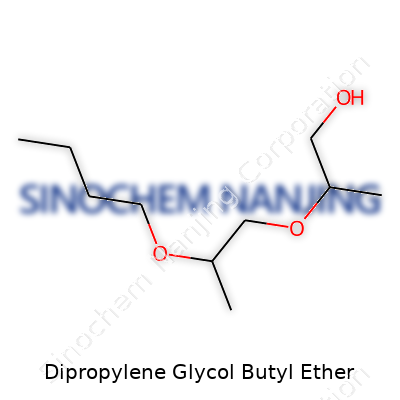
| Names | |
| Preferred IUPAC name | 3-(2-Butoxypropoxy)propan-1-ol |
| Other names |
DPnB Dipropylene Glycol Monobutyl Ether Butoxy Dipropylene Glycol Butyl Dipropylene Glycol Ether 1-(2-Butoxy-1-methylethoxy)-2-propanol |
| Pronunciation | /daɪˈproʊ.piː.liːn ˈɡlaɪ.kɒl ˈbjuː.tɪl ˈiː.θər/ |
| Identifiers | |
| CAS Number | 29911-28-2 |
| Beilstein Reference | 1209286 |
| ChEBI | CHEBI:82717 |
| ChEMBL | CHEMBL1626612 |
| ChemSpider | 17583 |
| DrugBank | DB14606 |
| ECHA InfoCard | 03e8d1ae-2e6c-4cf3-bd80-b40271963e81 |
| EC Number | WT4B2B9A8X |
| Gmelin Reference | 82757 |
| KEGG | C19504 |
| MeSH | D008945 |
| PubChem CID | 8204 |
| RTECS number | ZE8300000 |
| UNII | 7L6J8P370A |
| UN number | UN3082 |
| CompTox Dashboard (EPA) | DTXSID3021466 |
| Properties | |
| Chemical formula | C10H22O3 |
| Molar mass | 190.29 g/mol |
| Appearance | Colorless liquid |
| Odor | Mild odor |
| Density | 0.953 g/cm³ |
| Solubility in water | miscible |
| log P | 0.56 |
| Vapor pressure | 0.01 mmHg @ 20°C |
| Acidity (pKa) | 15.2 |
| Magnetic susceptibility (χ) | -7.74×10⁻⁶ cm³/mol |
| Refractive index (nD) | 1.420 |
| Viscosity | 3.7 cP at 25°C |
| Dipole moment | 3.72 D |
| Thermochemistry | |
| Std molar entropy (S⦵298) | 417.9 J·mol⁻¹·K⁻¹ |
| Std enthalpy of formation (ΔfH⦵298) | -726.7 kJ/mol |
| Std enthalpy of combustion (ΔcH⦵298) | -6514 kJ/mol |
| Pharmacology | |
| ATC code | D07AX |
| Hazards | |
| Main hazards | Causes serious eye irritation. |
| GHS labelling | GHS07, GHS08 |
| Pictograms | GHS07 |
| Signal word | Warning |
| Hazard statements | H319: Causes serious eye irritation. |
| Precautionary statements | P264, P280, P305+P351+P338, P337+P313 |
| NFPA 704 (fire diamond) | 1-2-0 |
| Flash point | > 85°C (185°F) |
| Autoignition temperature | 180°C |
| Explosive limits | 1% - 10.1% |
| Lethal dose or concentration | LD50 (Oral, Rat): 3089 mg/kg |
| LD50 (median dose) | LD50 (median dose): 2,830 mg/kg (rat, oral) |
| NIOSH | WI9830000 |
| PEL (Permissible) | PEL: 100 ppm (vapour) |
| REL (Recommended) | 100.00% |
| Related compounds | |
| Related compounds |
Diethylene glycol butyl ether Propylene glycol butyl ether Tripropylene glycol methyl ether Dipropylene glycol Ethylene glycol butyl ether |



