Digging Into Dipropyl Carbonate: A Closer Look at Its Role in Modern Chemistry
Historical Development
Chemists first stumbled across the wider world of organic carbonates in the late 1800s, but the focus stayed mostly on dimethyl and diethyl carbonate for decades. Research on dipropyl carbonate didn’t draw major attention until cleaner processes made industrial carbonates more practical after the 1970s. The chemical industry moved toward safer, less toxic reagents, and the need to limit phosgene-based syntheses opened doors for alternatives like dialkyl carbonates. Over time, interest in green chemistry grew, and with it came efforts to develop scalable production of higher alkyl carbonates, dipropyl included. Remembering safety scares with chloroform and methyl chloride has definitely played a part in this shift. Projects in Japan and Europe led the charge, seeking less hazardous base chemicals and cleaner processes for the future.
Product Overview
Dipropyl carbonate, with its clear, nearly colorless appearance, has become an important tool for chemists looking for mid-sized carbonates. Its combination of moderate boiling point, good stability, and solvency makes it attractive in labs and specialty industrial settings. People use it as a building block, especially when a little extra chain length can fine-tune reaction properties, solubility, or volatility. Unlike much simpler methyl and ethyl carbonates, the propyl version slips in when a touch of hydrophobicity helps with process selectivity or product isolation. Its chemical structure—two propyl groups attached to a central carbonate moiety—might look plain on paper, but the molecule punches above its weight in applications as a solvent, intermediate, and sometimes as a plasticizer.
Physical & Chemical Properties
This compound sits as a low-viscosity, slightly heavier liquid compared to water. You don’t get much odor unless you handle larger quantities. The boiling point lives up around 185–190°C, which helps in its use for mid-range reaction temperatures. It dissolves pretty well in organic solvents and stays stable in standard storage, unless strong acids or bases find their way in. Its limited water solubility can actually come in handy in separation steps or extraction, letting it mix with organics but not water phases. Dipropyl carbonate doesn’t love heat or open flames—the flash point hits at a level that demands caution in process scale-up. From a reactivity perspective, those propyl groups resist hydrolysis better than their methyl cousins, yet the central carbonate makes the molecule open to transesterification and controlled decomposition when pushed.
Technical Specifications & Labeling
Folks in the business usually prefer a minimum purity of 99% for sensitive transformations, though less demanding work can do with slightly less. Water content needs monitoring, since adventitious moisture can throw off reactions and storage. Proper labeling means indicating both the IUPAC name and familiar synonyms, and drum storage should account for slow hydrolysis in humid climates. Regulations often classify it as a combustible liquid, so standard safety pictograms and clear hazard warnings are the norm. Research bottles sometimes carry QR codes for batch traceability—one change in industry practice that helps chemists link experimental results to specific production lots.
Preparation Method
Traditional methods depended on phosgene, a method with a legacy clouded by toxicity risks. The big shift came with oxidative carbonylation, which uses alcohols and carbon monoxide to make dialkyl carbonates, with copper or palladium catalysts at center stage. For dipropyl carbonate, you start with propanol in the presence of CO and base, pushing for high conversion and careful by-product removal. Recent approaches in green chemistry circles swap phosgene for safer routes, including transesterification between other carbonates and propanol. Scaling these methods can be tricky—the balancing act between yield, safety, and waste management keeps process chemists busy.
Chemical Reactions & Modifications
Chemists choose dipropyl carbonate for transesterification steps, where it can donate its carbonate group to other alcohols under gentle conditions. It also serves as a carbonylation agent, especially in places where phosgene’s too hazardous and simpler carbonates fail to deliver the right balance. Functional group transformations involving alkoxides, phenols, and amines pop up in the literature, especially when fine-tuning polymers or pharma intermediates. Once in a while, modifications to the propyl groups lead to tailored derivatives for niche uses in coatings or engineering plastics, sliding this carbonate into research on biodegradable materials.
Synonyms & Product Names
If you leaf through catalogs or chemical databases, you’ll see dipropyl carbonate turn up as propyl carbonate or DPC. Some researchers use its systematic name, propan-1-ol carbonate, but most labs stick to the familiar short forms. Mixing up di- and mono-propyl compounds happens, so cross-checking structures or looking up CAS numbers before ordering cuts down on wasted time and money. Brand names from suppliers may tweak spellings or use abbreviations—one reason consistent labeling in workplaces and publications matters.
Safety & Operational Standards
Anyone handling this solvent needs to pay attention to flammability. The vapors ignite under the right conditions, and spills leave slippery films. Labs store it in steel or HDPE drums away from oxidizers and heat, with ventilation that handles small leaks. Splash goggles and gloves keep skin exposure down, and even though acute toxicity rates low, splashes or inhalation can bring on headaches, dizziness, or mild irritation. Industry guidelines sit pretty close to those for similar dialkyl carbonates—handle with respect, ventilate well, and never smoke around open containers.
Application Area
Dipropyl carbonate finds its groove in the specialty solvents world. Organic chemists pull it off the shelf for alkylation, carbonylation, and extraction, especially for compounds that like nonpolar environments. Paints, inks, and coatings producers count on its volatility and solvency, choosing it over lower chain options when they want a slower evaporation rate. In some corners, researchers play with it in battery electrolytes and biodegradable plastics, hoping that its mid-range properties bring better performance than simpler carbonates. Biologists steer clear, since its hydrolysis products don’t sit well in living systems, but chemical engineers look for ways to use it as a process solvent or carrier. Some new work in polymer science hints at growing relevance in biodegradable and specialty materials, adding fresh attention in academic circles.
Research & Development
Development in recent years has leaned into greener processes. Catalysts that skip heavy metals, routes that avoid phosgene, and batch designs that squeeze out every bit of product per resource—these efforts all aim to lower costs and improve environmental metrics. One exciting path involves solid-supported bases or ionic liquids, which could make purification much easier and scale-up friendlier. Researchers also look for ways to recycle dipropyl carbonate byproducts, paying special attention to circular economy ideas. Patent activity has picked up, as companies see dipropyl carbonate bridging the gap between traditional solvents and next-gen specialty chemicals.
Toxicity Research
Most public data suggests that dipropyl carbonate breaks down pretty quickly in soil and water, especially once hydrolyzed. Rat toxicity studies show low acute effects by oral and dermal exposure, though large amounts could bring respiratory or gastric disruption in test animals. Chronic data runs thin—long-term ecological effects need more animal studies and real-world monitoring, especially as use goes up. Waste treatment workers and researchers are pushing for more data, not just on human health, but on aquatic fate and possible metabolites.
Future Prospects
The world wants safer, greener chemicals—dipropyl carbonate has a shot at wider use as new routes and cleaner starting materials come online. Its role in custom polymers and specialty coatings could really take off if costs continue dropping. On the safety front, stricter standards and more reliable hazard labeling should ease entry into new sectors. One thing holding it back: limited market demand for mid-chain carbonates compared to their smaller cousins. If industry-driven research lands on new uses—maybe in batteries or renewable plastics—production volumes and visibility should climb, with new data following close behind to support safe use and waste management.
What is Dipropyl Carbonate used for?
Not Just Chemistry—A Tool for Today’s Industries
Dipropyl carbonate might sound like something you’d only hear about in a college lab, but its impact stretches out into more corners of our day-to-day lives than you’d guess. I’ve spent time in manufacturing settings where solvents matter just as much as machines, and it always surprises people how big an effect these colorless, low-odor liquids can have on both production lines and product quality.
Where Factories and Research Meet
The uses for dipropyl carbonate land mostly in the coatings, paints, and specialty chemical industries. Painters and manufacturers often need something to dissolve resins or help chemicals spread evenly across surfaces. In those jobs, dipropyl carbonate steps in because it evaporates at a predictable rate and doesn’t leave behind a heavy smell or residue. The consistency this brings means coatings go on smoother, dry faster, and cause fewer headaches for workers or the folks who use the finished products.
Lately, companies have been reaching for solvents that treat the environment with a bit more respect. Dipropyl carbonate falls in this category for a couple of reasons. Companies have found it doesn’t build up as dangerous fumes, and it tends to break down pretty easily if spilled. That’s not just a relief for folks running a busy plant; it’s a nod toward long-term thinking about the air we breathe and the water we drink. Several peer-reviewed studies confirm the substance has lower toxicity compared to heavier solvents like xylene or toluene, which have been linked to worker health complaints and concerns about volatile organic compound (VOC) pollution.
Modern Industry Looks for Greener Choices
Most people know the harm that strong chemical solvents can cause both inside and outside the plant. Exposure can hit workers with respiratory headaches, and runoff can do a number on water supplies nearby. As we learn more about these effects, industries keep moving toward solvents that won’t haul the same environmental baggage. Dipropyl carbonate appeals to the folks in product development and environmental safety because it’s less likely to build up in the environment or leave long-lasting residue. Its biodegradability, highlighted in a recent report from the European Chemicals Agency, places it in an emerging category of solvents that don’t just meet regulatory requirements—they often help exceed them.
Challenges and Room for Growth
This all sounds positive, but the story’s not entirely rosy. Supply chains for specialty chemicals can get choppy, especially when raw materials don’t arrive from reliable sources or prices spike. I’ve seen buyers scramble in response to sudden cost jumps—often triggered by global market swings for alcohols and carbonate feedstocks. Laboratory staff and purchasing managers hope for better transparency and more options. Researchers are also testing ways to produce dipropyl carbonate from renewable sources, like bio-based alcohols, to help cut down on fossil fuel dependence.
Moving Forward With Smarter Choices
If you step back and look at the broader pattern, more companies want to tighten up their environmental footprint and protect their workers. Chemical engineers keep up with these shifts by seeking out substances like dipropyl carbonate that cause fewer problems over time. The move toward safer, more sustainable chemicals in industry comes from a mix of smarter regulations, better consumer awareness, and clear scientific evidence. This change doesn’t always come fast and smooth, but every step toward safer choices leaves a mark on both the workplace and the world we pass down. In my time dealing with procurement and safety audits, any solution that protects health and the environment while helping factories keep pace—that’s something worth keeping an eye on.
Is Dipropyl Carbonate safe to handle?
The Everyday Reality of Handling Chemicals at Work
Few people look at a jug of chemicals and think of anything except danger. Maybe a laboratory coat and a stack of warning labels come to mind. The truth is, some compounds like dipropyl carbonate enter all kinds of workplaces, from research labs handling tiny amounts to industrial settings moving drums of the material. So, how risky is it to interact with this liquid, and do those risks line up with the way it’s often used?
What Dipropyl Carbonate Actually Does
Dipropyl carbonate works as a solvent, carrying other chemicals or thinning substances down so they flow or blend better. Some companies use it in specialty coating or lubrication. From the chemical safety sheets, you might not see a horror story—the main warning typically flags skin and eye irritation, along with some warnings about inhaling vapors in very concentrated spaces.
The Science and the Risk
Researchers and manufacturers point out that this compound is considered low in acute toxicity by itself. In plain language, short-term exposure from an accidental splash or brief inhalation isn’t likely to cause lasting harm for a healthy adult. Government safety agencies list dipropyl carbonate as falling below some of the more concerning thresholds, meaning it doesn’t get restricted like many harsher solvents. In my own lab work, gloves, goggles, and decent ventilation have kept any mishaps from turning serious, even when mistakes happened. Nobody wants direct contact, but spills have led to nothing worse than red skin cleaned up in a minute.
Trouble Comes From Taking Shortcuts
Complacency creates more problems than the compound itself. People get too comfortable or skip basic steps, thinking something “mild” doesn’t ask for attention. I’ve seen coworkers flick a drop off their gloves with a shrug, or lean in close to sniff a mix. That’s where risk grows. Like with any chemical, repeated exposures stack up, and once-in-a-while sharp headaches, nausea, or rashes can signal your body is protesting. It might not send someone to the emergency room, but a pattern of ignoring protective gear can create bigger health troubles or spark an investigation by workplace safety regulators.
Simple Solutions Rooted in Practice
Using basic common sense keeps handling safe. Wear gloves and goggles—the cheap, disposable kind will do. Open a window or use a small fan if the room feels stuffy. Bottles should be labeled clearly, and any unused material ought to stay capped. I’ve watched safety culture improve by making those steps almost automatic. Teams that talk about near-misses or compare stories end up taking hazards more seriously, and new people learn the right habits before bad ones set in.
Looking Ahead
Workplaces rely on chemicals that sound complicated. The real key is thinking beyond the label. No one wins by treating any liquid—mild or severe—as harmless. Dipropyl carbonate doesn’t require a panic, but it deserves respect. Up-to-date safety sheets, honest reporting of problems, and keeping training fresh keep workplaces running and folks out of harm’s way. The safest lab or shop spots aren’t sterile—they’re run by people who pay attention, share what they know, and treat every bottle as worth a double-check.
What are the storage requirements for Dipropyl Carbonate?
Understanding Why Proper Storage Matters
I’ve seen storage mishaps in labs cause wasted chemicals and safety scares. Dipropyl carbonate, used in chemical synthesis and sometimes as a solvent, should never be shoved into any cabinet you find. This stuff is a clear, flammable liquid. That fact alone raises red flags about fire risk, fumes, and even container damage if things get sloppy.
Conditions for Safe Storage
Chemical safety experts all say the same thing for good reason: store flammable solvents in a cool, well-ventilated spot, far away from ignition sources. For dipropyl carbonate, temperature control means keeping it below 25°C and out of direct sunlight, not just for safety but for shelf life too. Fluctuating warmth speeds up decomposition, and you don’t want to breathe those byproducts or risk a pressurized bottle. Storing with a tight cap prevents evaporation and stops moisture or contaminants from getting inside.
Humidity control deserves attention. High moisture levels can damage the chemical, mess with reaction outcomes, and corrode metal parts on storage containers. Silica gel packs or dehumidified storage cabinets help with that. I’ve used cheap options like resealable bins and silica packs in garages and labs with good success – simple but effective.
Location and Compatibility
Many overlook the importance of chemical compatibility. Pooling all organic liquids together increases accident risks, so do not put dipropyl carbonate next to acids, strong bases, or oxidizers. Even a minor leak could cause heat or toxic fumes. I’ve seen labels fade and chemicals end up misidentified, so it’s crucial to clearly mark every bottle and review existing labels every few months.
Building managers and lab workers both get lazy, but regular shelf checks save time and money in the end. Steel flammable cabinets serve as the gold standard. These resist fire and, if ventilated, keep fumes from building up. I always recommend self-closing cabinet doors, since they shut themselves even if someone leaves them open while distracted.
Risks From Cutting Corners
I once helped clean up a storeroom after a minor solvent spill. Cleaning up was easier because the chemical was separated, capped, and stored inside a ventilated cabinet. The whole thing could have gotten ugly with pooled flammable vapors or spreading leaks. Compliance isn’t just for audits – it means less risk to anyone walking by or working late.
Practical Tips That Hold Up
- Label every bottle and keep an up-to-date inventory.
- Store below eye level to reduce splashing risks.
- Keep clear spill kits nearby for quick containment.
- Do not forget routine inspection for leaks or corrosion.
Choosing the Right Approach
Regulations from OSHA and NFPA call for flammable liquids storage away from direct light and heat, with secondary containment trays and approved flame-resistant containers. I always find people benefit from straightforward policies and training. Making safety routines simple keeps people from skipping steps and helps everyone remember why storing dipropyl carbonate correctly protects health, equipment, and the lab’s budget. Taking shortcuts just doesn’t add up in the long run.
What is the chemical formula of Dipropyl Carbonate?
The Structure Behind Dipropyl Carbonate
Dipropyl carbonate doesn’t show up on the front lines of chemistry class discussions, but its formula, C7H14O3, packs a lot into a small sequence. Looking at this molecule, you see seven carbon atoms, fourteen hydrogen atoms, and three oxygen atoms woven together. In practical terms, it means two propyl groups are connected by a carbonate group. The structure falls into the family of organic carbonates, and the key to understanding it lies in its backbone: the actual carbonate group, formed as a bridge between those propyl chains through oxygen bonds.
Why This Formula Matters in Daily Work
For anyone who’s tinkered with solvents or hunted for greener alternatives to traditional chemicals, dipropyl carbonate comes across as a fresh answer. Many traditional solvents create safety headaches, environmental persistence, and health concerns from inhalation or spills. People working in labs look for compounds with lower environmental risks that don’t leave behind messy residues or threaten worker safety. Dipropyl carbonate offers a less toxic profile, partly thanks to that robust carbonate structure and its ability to break down more easily under mild conditions. The combination of the C7H14O3 backbone and clear properties makes it valuable for those wanting something safe and functional.
Applications Needing Smarter Choices
Industries using coatings, adhesives, and specialty chemistry want solvents that won’t linger or pollute. I’ve seen some projects grind to a halt because teams couldn’t nail down a solvent that balanced evaporation rate with safety and efficiency. Dipropyl carbonate slots in right where those needs overlap. Its formula ensures moderate volatility—slow enough to handle, fast enough to finish a job. That makes it suitable for precision work in electronics and for coatings that can’t afford the risks of unchecked slow-drying residues or overly aggressive chemicals.
Research and Sustainable Chemistry
Current reports show that organic carbonates like dipropyl carbonate decompose more cleanly and don’t release problematic byproducts found in classic petrochemical solvents. The very makeup—those three oxygen atoms between propyl chains—helps keep the molecule reactive enough for industrial work, yet points toward cleaner environmental breakdown. That’s not just good science; that’s genuine impact. Studies published over the past three years point to these compounds as having lower aquatic toxicity than older solvent classes, which gives manufacturers a reason to invest in alternatives.
Challenges and Smarter Pathways
No compound checks every box. Dipropyl carbonate costs more than some older choices, and sourcing can fluctuate with volatility in propanol supply. Those on the front end of chemical manufacturing can look at scalable green production routes—methods using carbon dioxide and renewable alcohol feedstocks have already started scaling up. Chemists continue to design catalysts that boost yield without raising costs. By focusing on practical synthesis improvements and waste reduction, the industry can extend dipropyl carbonate’s reach without turning to shortcuts.
The Road Ahead In Chemical Selection
Digging into chemical structures like C7H14O3 isn’t just for textbooks or academic journals—it shapes how products touch lives and how industries minimize their footprint. Every atom and bond relates to efficiency, impact, and future safety standards. Companies and labs choosing their next generation of solvents would do well to look beyond the safety sheets and to consider how molecular formulas, like that of dipropyl carbonate, drive real-world change. Recognizing the importance of molecular structure in daily practice will keep us thinking, testing, and moving toward safer innovation.
How should Dipropyl Carbonate be disposed of?
Understanding the Substance
Dipropyl carbonate shows up in research labs and certain industrial processes. Known for its solvent properties, it won’t cause explosions, but ignoring safety guidelines invites problems nobody wants to clean up later. Every bottle, jug, or container carries responsibilities along with those hazard symbols. Some folks glance at a chemical’s label and think, “It’s not so risky, so the drain will do.” That attitude fails people, communities, and our water supply.
Risks of Careless Handling
I’ve seen lab benches cluttered with open containers, the air tinged with that hard-to-place chemical smell. Habits make or break safety records. While dipropyl carbonate avoids the worst list of toxins, letting solvents go down the sink lines law and science against you. Anything organic can linger, enter groundwater, or disrupt wastewater treatment. The U.S. Environmental Protection Agency and local environmental regulators both expect compliance, even with less notorious compounds. Chemical disposal costs money, but so does reversing pollution or paying fines. I’d rather stash waste in a sealed drum than gamble with my city’s water or my workplace reputation.
Proper Steps for Disposal
Disposal starts with information. Look at the Safety Data Sheet (SDS) for dipropyl carbonate. You won’t find instructions telling you to just “toss it.” There’s guidance to send waste through a licensed hazardous waste contractor. Most academic labs have a point person for hazardous chemicals; keep them in the loop. Small shops can reach out to chemical suppliers, who nearly always have take-back services or contacts for disposal firms. Collect all unused or old dipropyl carbonate in labeled, sealable containers—polyethylene or glass, depending on storage guidelines in the SDS. Never mix with other chemicals, especially acids or oxidizers. Each waste drum should carry its own log of contents. When that drum is ready to go, hand it off to your approved waste handler—they know the rules, have the paperwork, and use the right landfill or treatment method for organics.
What Happens After Pickup
After the hazardous waste company collects the material, chemicals get sorted for incineration or chemical treatment. Incineration keeps organic solvents out of landfills and converts them into water vapor and carbon dioxide at high heat. Some solvents, if clean enough, get recycled, saving raw materials. Reputable disposal services provide documentation—manifest forms track the whole journey from your facility to final treatment. That record protects you in case authorities ever start asking where your waste ended up.
Why Community and Worker Safety Comes First
Workplace safety isn’t just about goggles and gloves—it’s about what happens at shift’s end, too. Anything poured down a sink sets a bad example for the next person and could cause a costly environmental issue. Clear instructions, visible collection containers, and regular training drills all reinforce safer workplace culture. In my experience, teams that handle chemical waste with care tend to pay attention to the rest of the safety protocol as well.
Building a Responsible Habit
The more often a lab or shop handles chemicals the right way, the easier it becomes. Supervisors should check often and reward proper habits. Small victories, like a well-labeled drum or an error-free manifest, cut accidents and keep both workers and neighbors safer. Keeping things aboveboard pays back in trust, reputation, and money not wasted on emergencies or legal trouble. Dipropyl carbonate won’t grab headlines, but responsible disposal shows a company means what it says about safety for people and the planet.
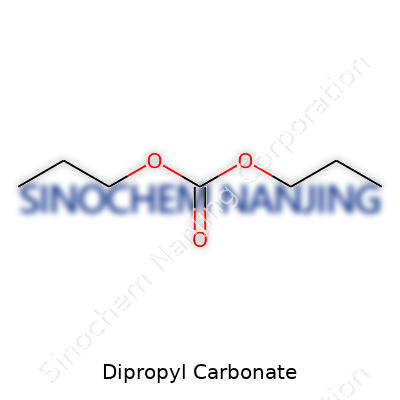
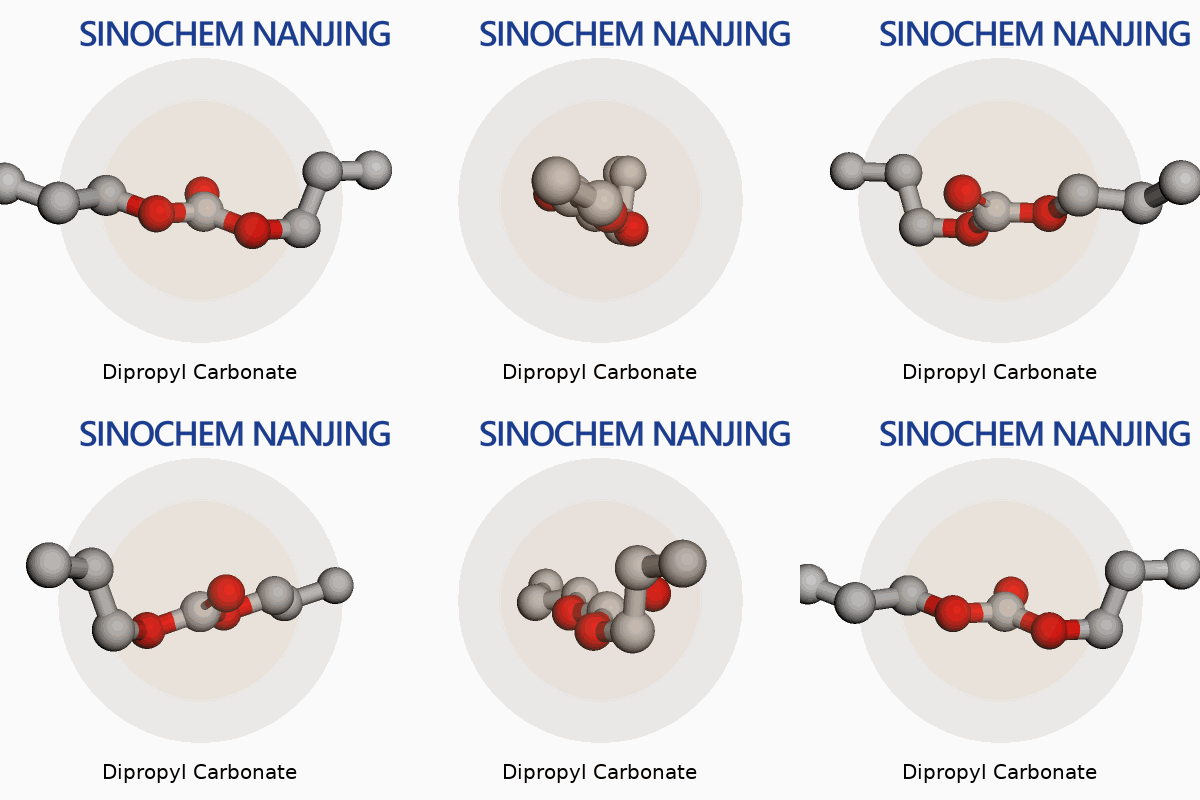
| Names | |
| Preferred IUPAC name | Dipropyl carbonate |
| Other names |
Carbonic acid dipropyl ester Propyl carbonate Dipropyl carbonate |
| Pronunciation | /daɪˈprəʊpɪl ˈkɑːbənət/ |
| Identifiers | |
| CAS Number | 623-96-1 |
| Beilstein Reference | 1778736 |
| ChEBI | CHEBI:86458 |
| ChEMBL | CHEMBL3187808 |
| ChemSpider | 94857 |
| DrugBank | DB11266 |
| ECHA InfoCard | 03b90268-1e85-4947-a369-536ed6dc6efd |
| EC Number | 211-704-4 |
| Gmelin Reference | 110770 |
| KEGG | C19205 |
| MeSH | Dipropyl Carbonate |
| PubChem CID | 12346 |
| RTECS number | FG9625000 |
| UNII | S6V6U47E6D |
| UN number | UN1992 |
| Properties | |
| Chemical formula | C7H14O3 |
| Molar mass | Molar mass of Dipropyl Carbonate: "174.22 g/mol |
| Appearance | Colorless liquid |
| Odor | Odorless |
| Density | 0.97 g/cm3 |
| Solubility in water | slightly soluble |
| log P | 1.74 |
| Vapor pressure | 0.04 mmHg (20 °C) |
| Acidity (pKa) | pKa ≈ 24 |
| Basicity (pKb) | 10.71 |
| Magnetic susceptibility (χ) | -62.1·10⁻⁶ cm³/mol |
| Refractive index (nD) | 1.401 |
| Viscosity | 1.9 mPa·s (20 °C) |
| Dipole moment | 1.44 D |
| Thermochemistry | |
| Std molar entropy (S⦵298) | 389.1 J·mol⁻¹·K⁻¹ |
| Std enthalpy of formation (ΔfH⦵298) | -589.6 kJ/mol |
| Std enthalpy of combustion (ΔcH⦵298) | -4227.8 kJ/mol |
| Pharmacology | |
| ATC code | D01AE24 |
| Hazards | |
| GHS labelling | GHS02, GHS07 |
| Pictograms | GHS02,GHS07 |
| Signal word | Warning |
| Hazard statements | H319: Causes serious eye irritation. |
| Precautionary statements | P210, P233, P280, P303+P361+P353, P305+P351+P338, P370+P378 |
| NFPA 704 (fire diamond) | 1-1-0 |
| Flash point | 77 °C |
| Autoignition temperature | The autoignition temperature of Dipropyl Carbonate is "241 °C". |
| Explosive limits | Explosive limits: 1.2–7.6% (in air) |
| Lethal dose or concentration | LD50 Oral Rat 13064 mg/kg |
| LD50 (median dose) | LD50 (median dose): Oral rat 10,200 mg/kg |
| PEL (Permissible) | PEL (Permissible Exposure Limit) for Dipropyl Carbonate: Not established |
| REL (Recommended) | 100 mg/L |
| Related compounds | |
| Related compounds |
Dimethyl carbonate Diethyl carbonate Dibutyl carbonate Ethylene carbonate Propylene carbonate |



